
Genetics Aa XX XY DNA GCAT Gregor Mendel







- Slides: 40
Genetics Aa XX XY DNA GCAT
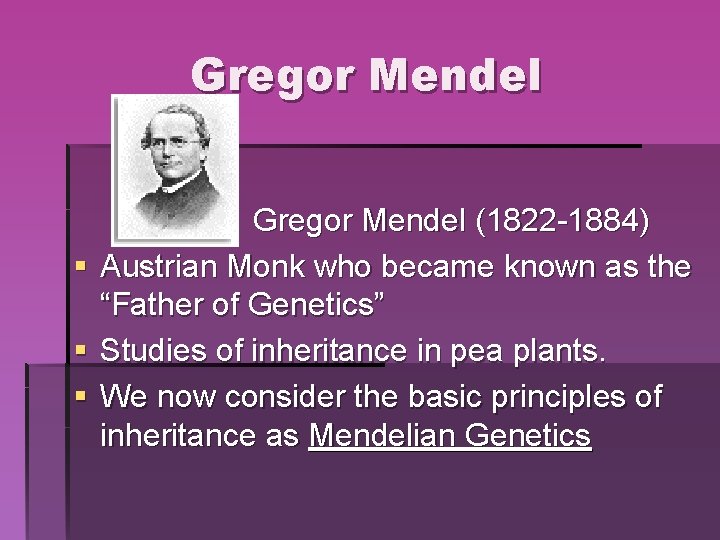
Gregor Mendel § § § Gregor Mendel (1822 -1884) Austrian Monk who became known as the “Father of Genetics” Studies of inheritance in pea plants. We now consider the basic principles of inheritance as Mendelian Genetics
Mendel discovered: § characteristics such as height, seed colour and texture, as well as flower colour were inherited from generation to generation, § certain patterns were observable. From these observations, he was able to theorise that some characteristics exhibited dominance over others.
Dominance A characteristic that is considered dominant is one that will “cancel” the recessive character that is the alternative form. E. g. : tall and short varieties of the same plant. If the tall plant is the dominant, the short is recessive. This means that when a tall plant is bred (crossed) with a short plant, we’ll get tall plants in the offspring. This is dominance.
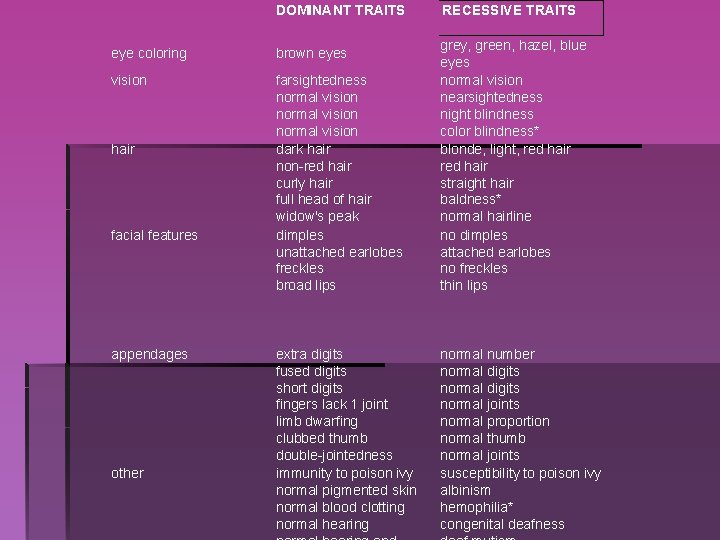
DOMINANT TRAITS RECESSIVE TRAITS eye coloring brown eyes vision farsightedness normal vision dark hair non-red hair curly hair full head of hair widow's peak dimples unattached earlobes freckles broad lips grey, green, hazel, blue eyes normal vision nearsightedness night blindness color blindness* blonde, light, red hair straight hair baldness* normal hairline no dimples attached earlobes no freckles thin lips extra digits fused digits short digits fingers lack 1 joint limb dwarfing clubbed thumb double-jointedness immunity to poison ivy normal pigmented skin normal blood clotting normal hearing normal number normal digits normal joints normal proportion normal thumb normal joints susceptibility to poison ivy albinism hemophilia* congenital deafness hair facial features appendages other
Further crosses Mendel also noticed that if you crossed the offspring of the tall x short plants, you predominantly got tall plants, but sometimes got a short one. How could we explain this? Mendel came up with his laws on inheritance, and to this day they still apply in most situations.
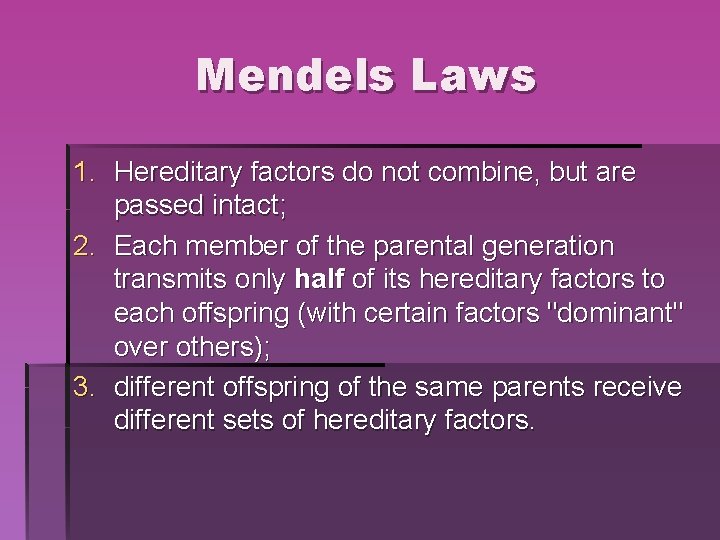
Mendels Laws 1. Hereditary factors do not combine, but are passed intact; 2. Each member of the parental generation transmits only half of its hereditary factors to each offspring (with certain factors "dominant" over others); 3. different offspring of the same parents receive different sets of hereditary factors.
Ploidy refers to the number of sets or copies of each chromosome an organism has. Most organisms are Diploid. This means they have two complete sets of chromosomes.
Haploidy § When some cell divisions occur, the cells divide, leaving half of their chromosomes(or one complete set) in each new cell. § This is called Haploidy (or being haploid)
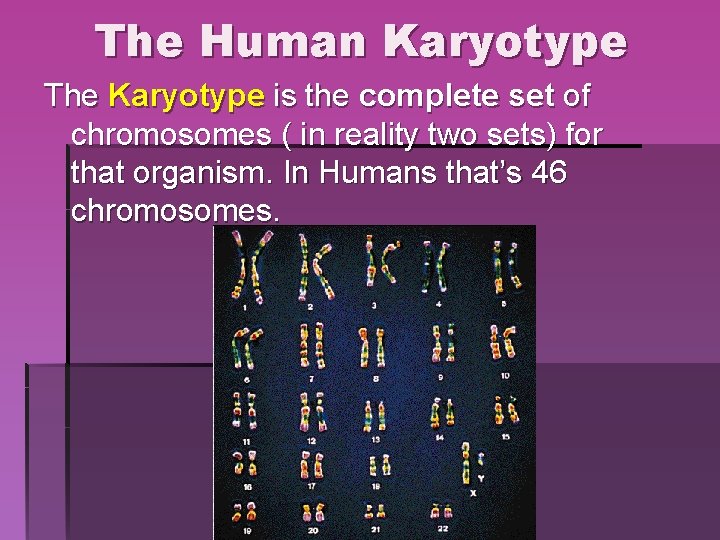
The Human Karyotype The Karyotype is the complete set of chromosomes ( in reality two sets) for that organism. In Humans that’s 46 chromosomes.
The Human Genome § The genome is all of an organism’s hereditary information. In humans that is 23 chromosomes § The karyotype is two genomes (in diploid organisms)
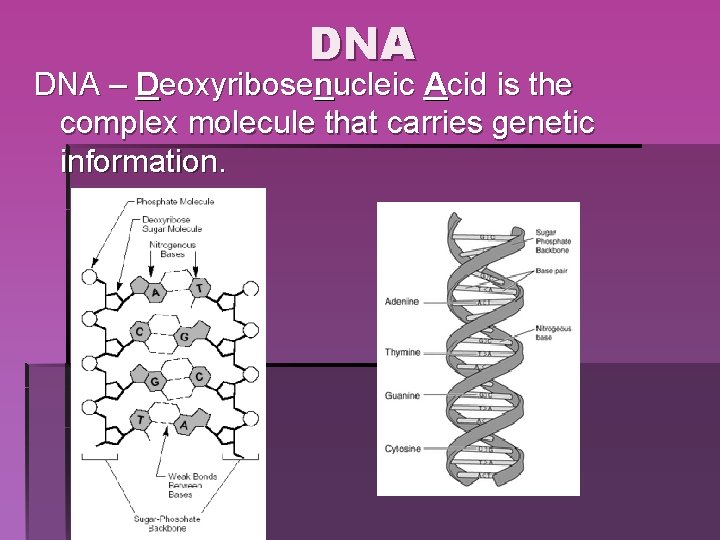
DNA – Deoxyribosenucleic Acid is the complex molecule that carries genetic information.
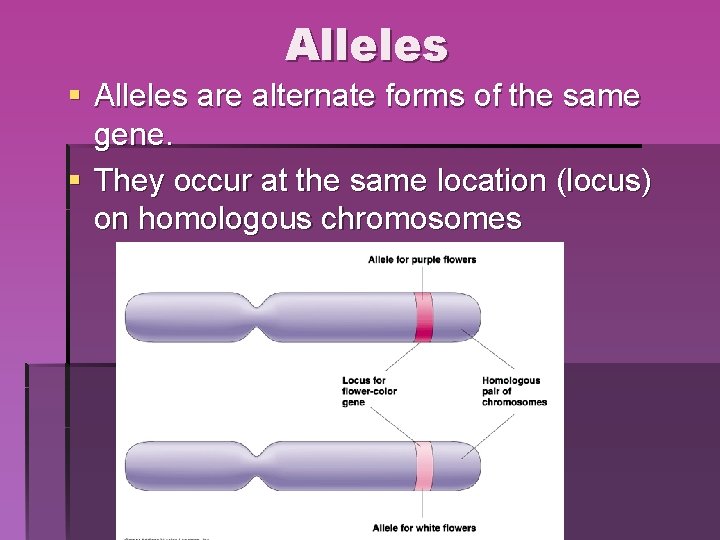
Alleles § Alleles are alternate forms of the same gene. § They occur at the same location (locus) on homologous chromosomes
Dominance & Recessiveness § Alleles that are Dominant “mask” the effect of the Recessive alleles which “hide” their characteristics
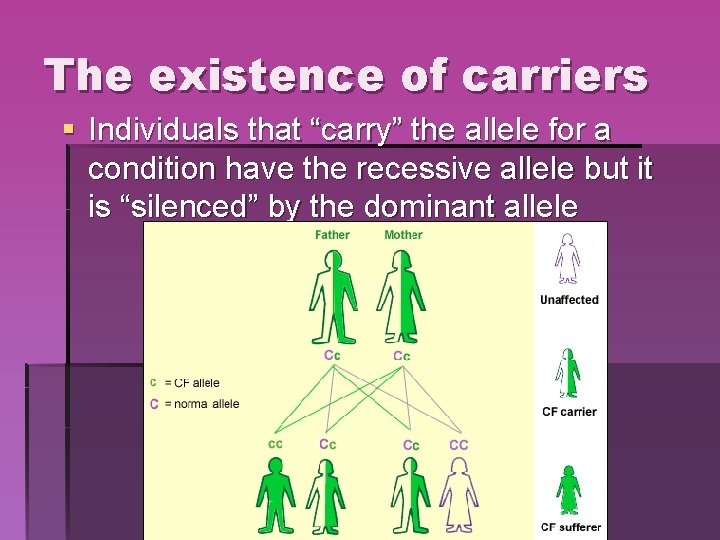
The existence of carriers § Individuals that “carry” the allele for a condition have the recessive allele but it is “silenced” by the dominant allele
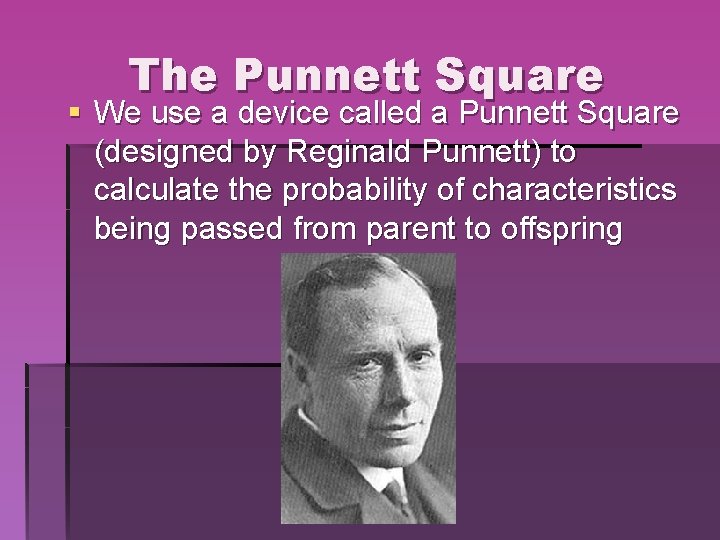
The Punnett Square § We use a device called a Punnett Square (designed by Reginald Punnett) to calculate the probability of characteristics being passed from parent to offspring
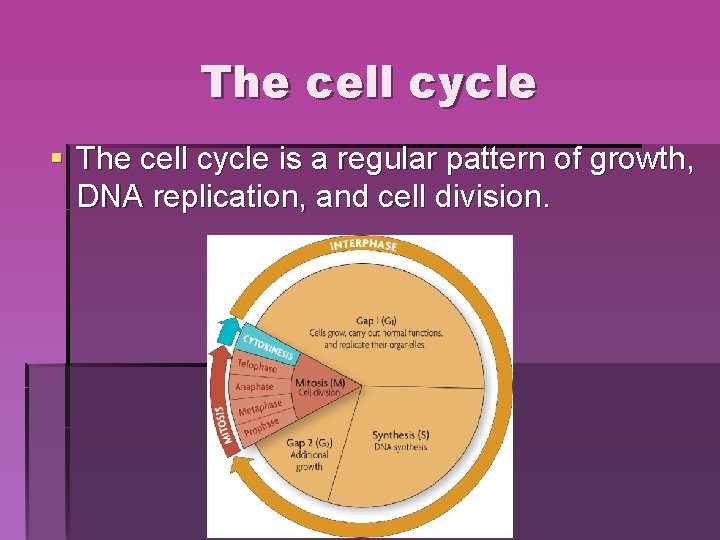
The cell cycle § The cell cycle is a regular pattern of growth, DNA replication, and cell division.
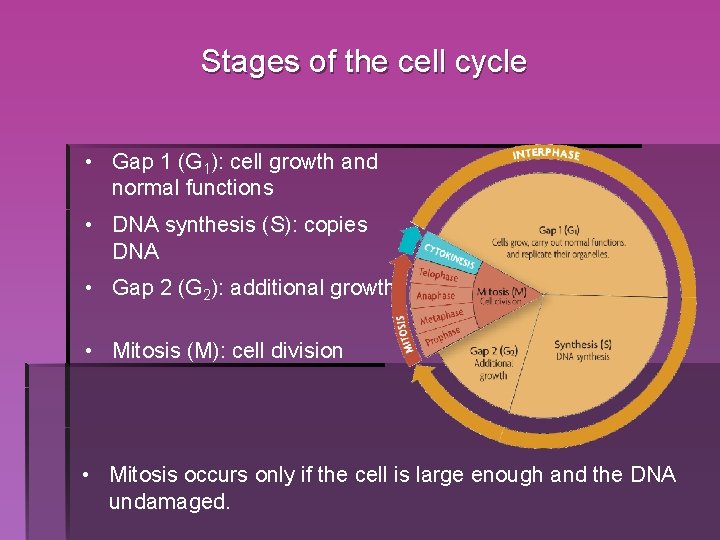
Stages of the cell cycle • Gap 1 (G 1): cell growth and normal functions • DNA synthesis (S): copies DNA • Gap 2 (G 2): additional growth • Mitosis (M): cell division • Mitosis occurs only if the cell is large enough and the DNA undamaged.
Mitosis § Mitosis is a cellular division that results in 2 daughter cells identical to the parent cell. § It is the form of cell division that occurs continuously in growth and asexual reproduction. § Asexual reproduction requires only one parent and produces offspring identical to the parent. § There is no exchange of genetic information in asexual reproduction.
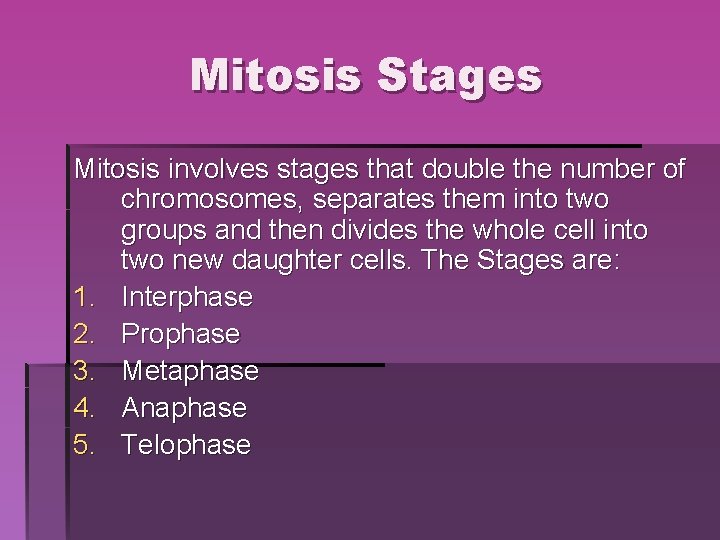
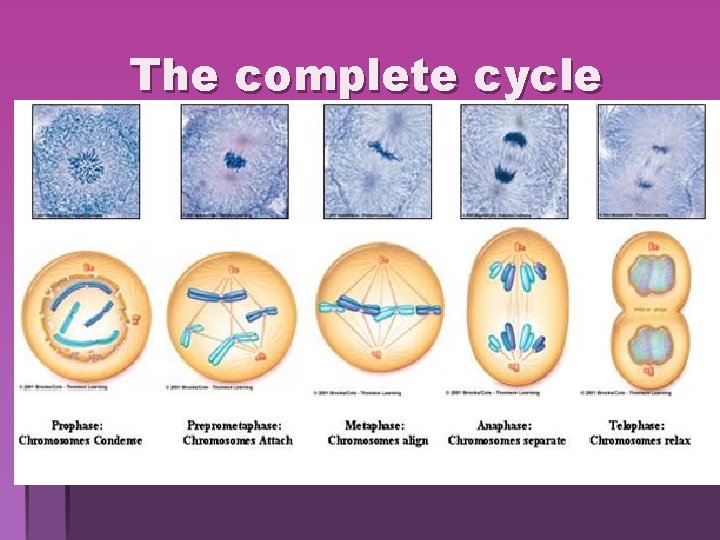
Mitosis Stages Mitosis involves stages that double the number of chromosomes, separates them into two groups and then divides the whole cell into two new daughter cells. The Stages are: 1. Interphase 2. Prophase 3. Metaphase 4. Anaphase 5. Telophase
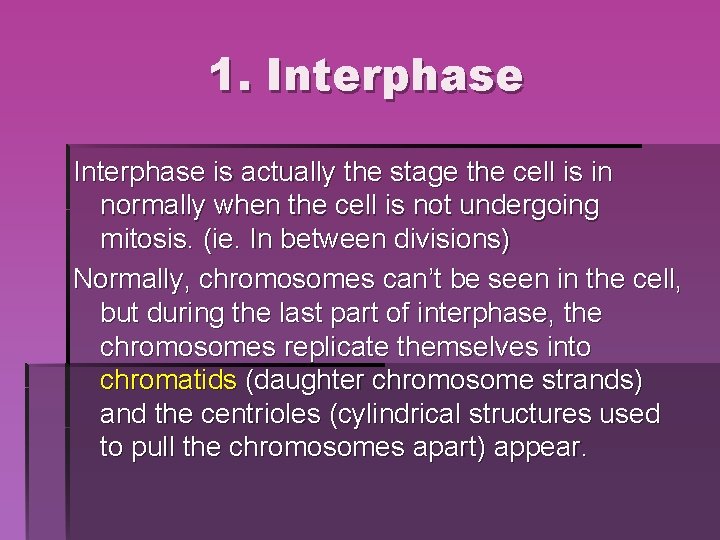
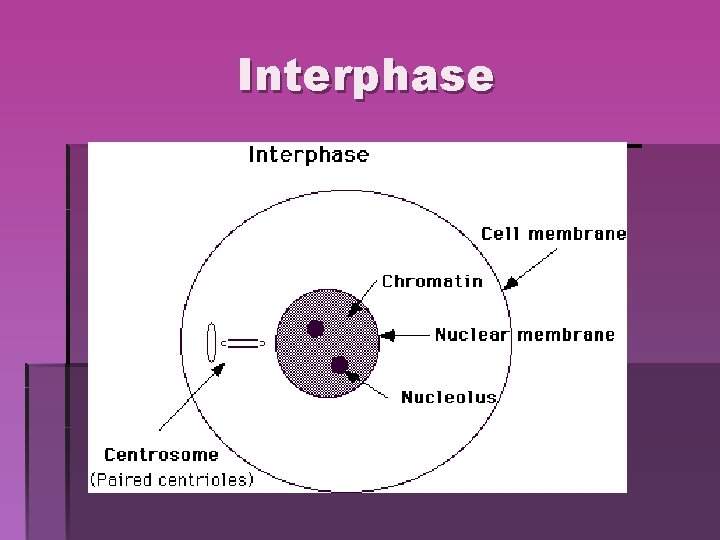
1. Interphase is actually the stage the cell is in normally when the cell is not undergoing mitosis. (ie. In between divisions) Normally, chromosomes can’t be seen in the cell, but during the last part of interphase, the chromosomes replicate themselves into chromatids (daughter chromosome strands) and the centrioles (cylindrical structures used to pull the chromosomes apart) appear.
Interphase
2. Prophase § § § The first true “mitosis” stage, Chromosomes become visible, Doubling of the chromosomes is completed Spindle fibres appear Centrioles begin to head to opposite sides of the cell. The nuclear envelope begins to disappear also.
Metaphase § the nuclear membrane disappears, § spindles finish forming § chromosomes align in the centre of the cell (the equator).
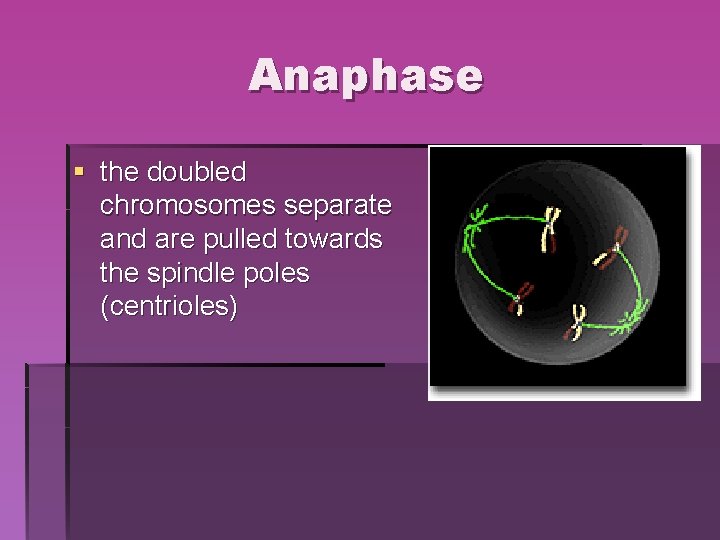
Anaphase § the doubled chromosomes separate and are pulled towards the spindle poles (centrioles)
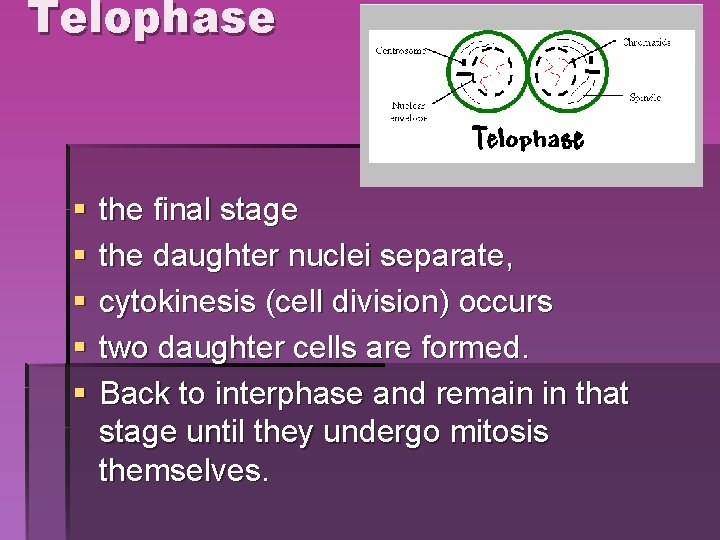
Telophase § § § the final stage the daughter nuclei separate, cytokinesis (cell division) occurs two daughter cells are formed. Back to interphase and remain in that stage until they undergo mitosis themselves.
The complete cycle
Meiosis (sexual reproduction) differs from mitosis (asexual reproduction) in the way that genetic information is altered and exchanged from generation to generation. § Chromosomes are replicated once (like mitosis) and then divided twice (unlike mitosis) producing four haploid daughter cells with half the amount of genetic material of the diploid parent cell.
Meiosis Stages Superficially, meiosis is similar to mitosis with Interphase, Prophase, Metaphase, Anaphase and Telophase, but from Prophase onwards, this happens twice.
1. Prophase (1) § Same as with mitosis, except that each chromosome pairs up with its homologue, and parts of each chromosome exchange. § This is called crossing over and is one way that genetic material gets “mixed up”
Metaphase (1) § Similar again to mitosis, the nuclear membrane disappears, spindles finish forming and chromosomes align in the centre of the cell (the equator), § Except that chromosome pairs line up on either side of the equator (so that each new cell gets a pair of chromosomes, not one of each. § The chromatids don’t get separated.
Anaphase (1) § As with mitosis, the spindle fibres pull the chromosomes to the ends of the cell, but in meiosis, a complete chromosome (pair) is drawn each way, not one
Telophase (1) Mitosis is complete, but this time, the daughter cells have different genetic material to the parent cell. At this stage the daughter cells of Meiosis 1 are diploid (2 pairs of chromosomes = 46)
Prophase (2) § Chromosomes thicken but do not replicate
Metaphase (2) § Chromosomes align at the equator (metaphase plate)
Anaphase (2) § Chromosomes are halved and drawn towards the poles
Telophase (2) § The cell completes its division with each cells ending up as haploid daughter cells.
Meiosis Overview § Meiotic division is a “double division” (reduction division) where one parent cell gives four daughter cells with half the chromosome count of the parent cell. The genetic information held in the chromosomes has been altered by crossing over and independent assortment ( 1 chromosome of each pair always goes to each daughter cell)
Mitosis vs Meiosis