
Genetically Modified Organisms GMOs By Hannah Caesar Jace
Genetically Modified Organisms (GMOs) By: Hannah, Caesar, & Jace
The Science Behind GMOs The simplest method for creating a new GMO is to use natural enzymes to manipulate DNA and take out the desired trait Next is to take that fragment of DNA and introduce it either directly by microinjection or indirectly by a kind of virus This takes the process of an organism evolving over hundreds or thousands of years and speeds it up to as early as two/three generations

What is a GMO? - Cultivation grown with genetically engineered DNA - Used to plant more than 90% of corn, soybeans, and cotton - 70% of prepackaged food in grocery stores contain GMOs
CONS - Triggering of food allergies - Antibiotic-resistant bacteria - Prone to developing cancer - Food meant to be fed to slaughterhouse animals are being consumed by humans as well - Cross pollination
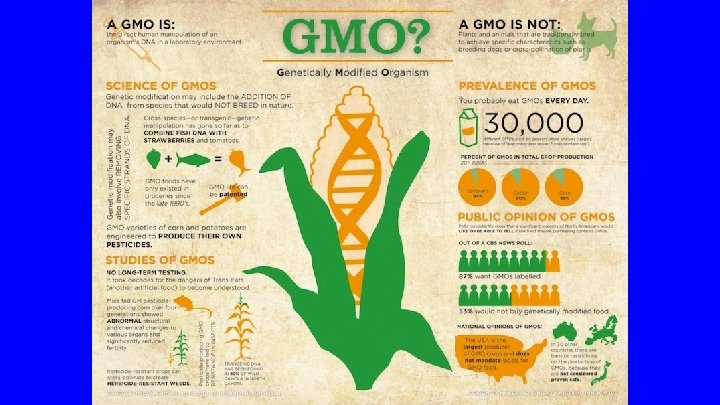

Benefits of GMO Crops ● Up to 37% less pesticides used per crop ● Crops able to grow in undesirable climates/drought/soil conditions ● GMO crops are usually higher in nutrient content, color, texture, and taste.
Golden Rice Project All over the world there is a deficiency of Vitamin A, Zinc, and Iodine. With the GMO technology, researchers are able to enrich the rice plant with these essential nutrients and supply this “Golden Rice” to third world countries. With this technology we have the potential to prevent around 50, 000 early onset blindness in youth and close to 2 million deaths linked to dietary deficiencies.
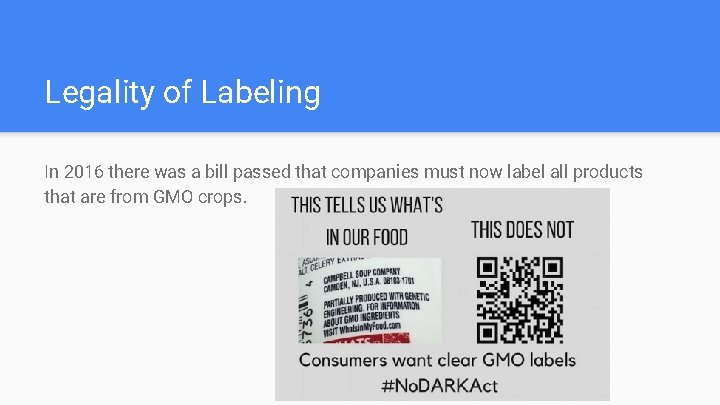
Legality of Labeling In 2016 there was a bill passed that companies must now label all products that are from GMO crops.
Predicted Consequences GMO technology is still very young, no human or animal death has been solely linked to GMO technology Transgenic Potato is a potato plant that can carry an injected form of a pharmaceutical immunization to treat diarrhea. It’s possible that plants will be able to carry treatments for many diseases. They predict a transmittable treatment via GMO crops for cholera all the way to AIDS.
10 US Foods that Are Ban in Other Countries 1. Farm raised Salmon 2. Genetically Engineered papaya (grown in Hawaii) 3. Ractopamine-Tainted meats 4. Flame retardant drinks (Citrus flavored drinks, Mountain Dew) 5. Foods with artificial colors and dyes (boxed mac n cheese) 6. Arsenic-laced chicken (arsenic is found in the chicken feed)
- Slides: 10