
Genetically Modified Foods From CrossBreeding to Genetic Engineering
? Genetically Modified Foods
From Cross-Breeding to Genetic Engineering • Farmers have used artificial selection (Cross-Breeding) to develop genetically improved crops – Takes 15 years or more • Genetic Engineering – Changes to DNA – Faster – More versatile
Early Genetically Altered Crops • Flavr Savr tomato: – Advantage: longer shelf life – 1992: FDA approved – 1994: on the market – Business issues sunk Celgene • Bt cotton plants: – Advantage: resistant to insects • Several crops: – Advantage: resistant to Roundup (allows no-till)
Objectives of Genetic Modification • • Resistance to disease Increase tolerance for environmental conditions Improve nutritional value Incorporation of human vaccines (a stretch)
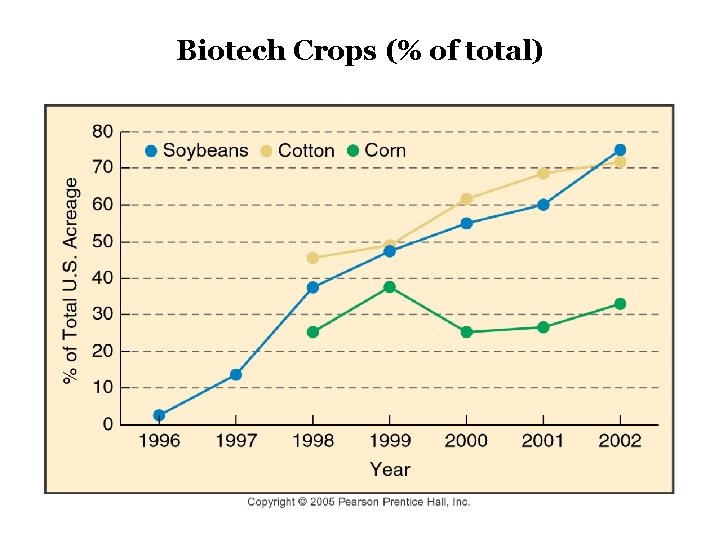
Biotech Crops (% of total)
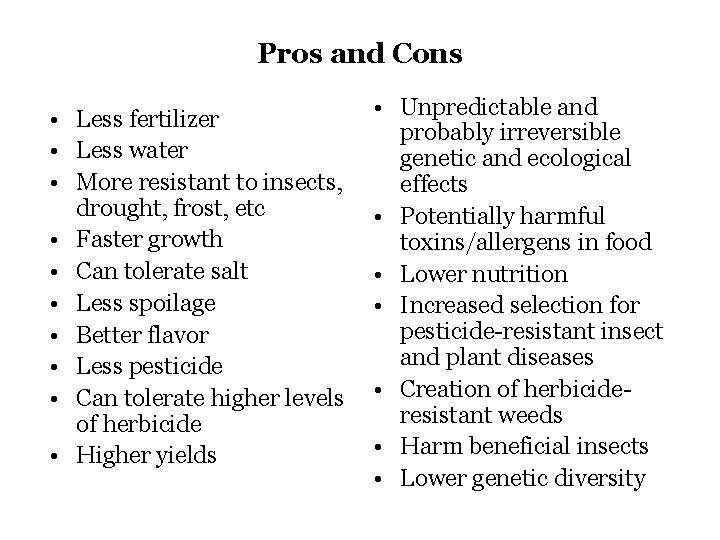
Pros and Cons • Less fertilizer • Less water • More resistant to insects, drought, frost, etc • Faster growth • Can tolerate salt • Less spoilage • Better flavor • Less pesticide • Can tolerate higher levels of herbicide • Higher yields • Unpredictable and probably irreversible genetic and ecological effects • Potentially harmful toxins/allergens in food • Lower nutrition • Increased selection for pesticide-resistant insect and plant diseases • Creation of herbicideresistant weeds • Harm beneficial insects • Lower genetic diversity
- Slides: 7