
Genetic Variation in Prokaryotes AP Biology Chapter 27
Genetic Variation in Prokaryotes AP Biology Chapter 27
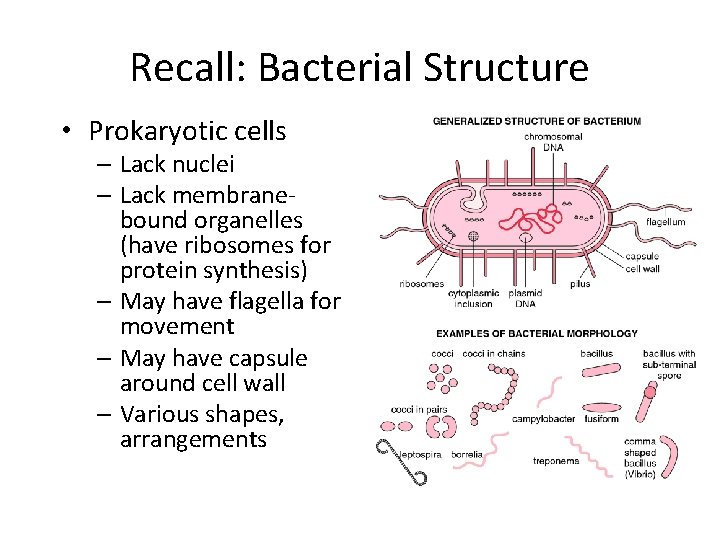
Recall: Bacterial Structure • Prokaryotic cells – Lack nuclei – Lack membranebound organelles (have ribosomes for protein synthesis) – May have flagella for movement – May have capsule around cell wall – Various shapes, arrangements
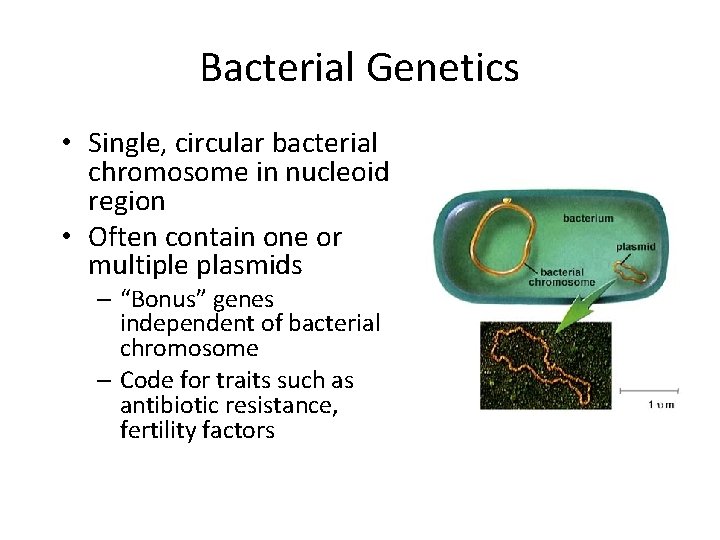
Bacterial Genetics • Single, circular bacterial chromosome in nucleoid region • Often contain one or multiple plasmids – “Bonus” genes independent of bacterial chromosome – Code for traits such as antibiotic resistance, fertility factors
Bacterial Variation • Even though bacteria are asexual, they are not clones! • Variation introduced by: – Mutations • – – Chromosome and/or plasmid replication Transformation Transduction Conjugation Transposable elements/transposons
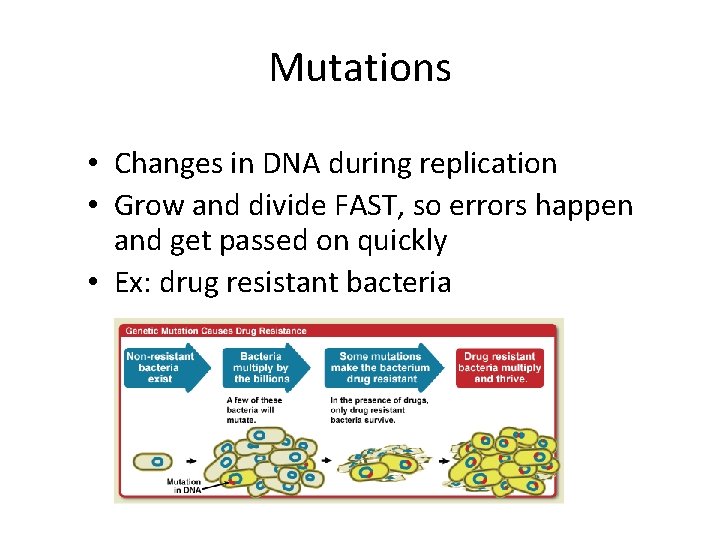
Mutations • Changes in DNA during replication • Grow and divide FAST, so errors happen and get passed on quickly • Ex: drug resistant bacteria
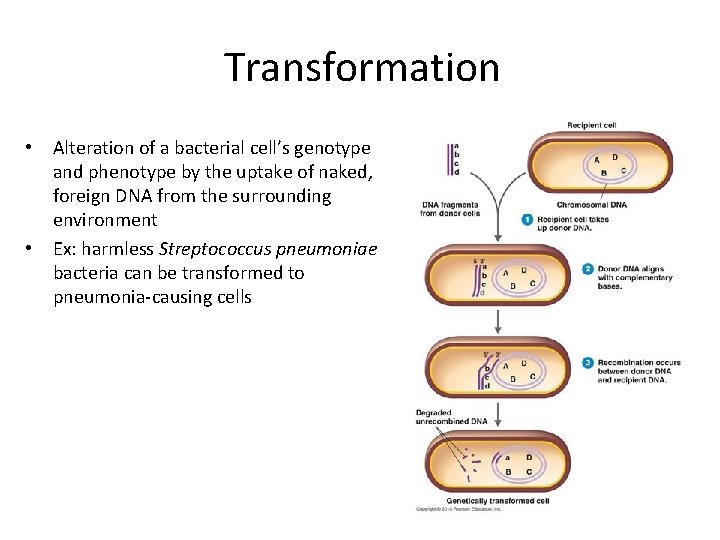
Transformation • Alteration of a bacterial cell’s genotype and phenotype by the uptake of naked, foreign DNA from the surrounding environment • Ex: harmless Streptococcus pneumoniae bacteria can be transformed to pneumonia-causing cells
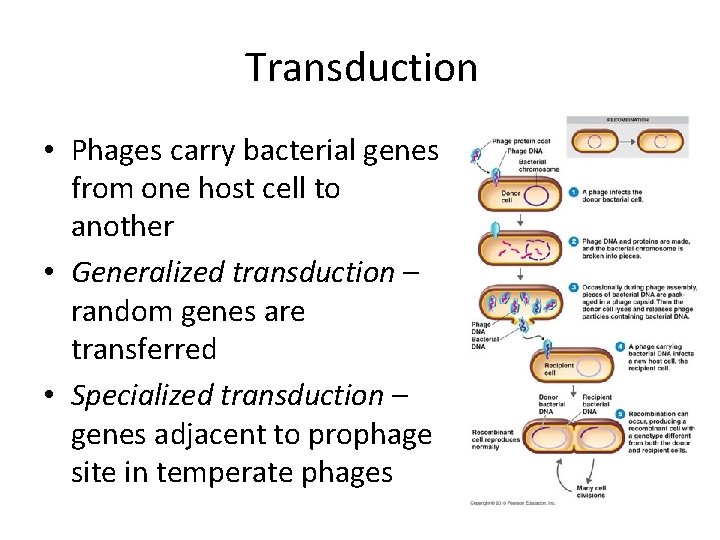
Transduction • Phages carry bacterial genes from one host cell to another • Generalized transduction – random genes are transferred • Specialized transduction – genes adjacent to prophage site in temperate phages
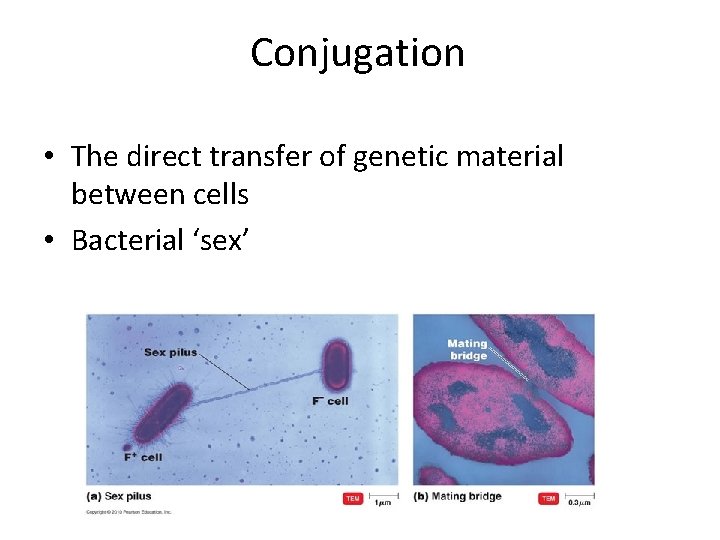
Conjugation • The direct transfer of genetic material between cells • Bacterial ‘sex’
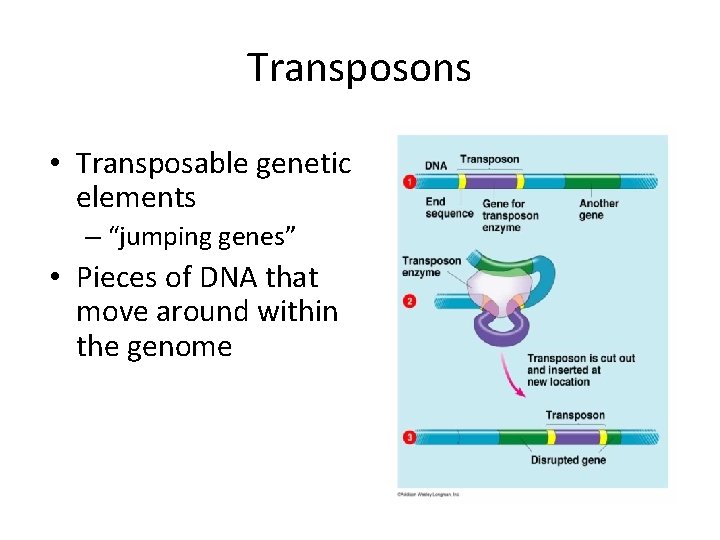
Transposons • Transposable genetic elements – “jumping genes” • Pieces of DNA that move around within the genome
- Slides: 9