
Genetic Selection as a Tool for Battling the
Genetic Selection as a Tool for Battling the Decline in Reproductive Performance: A Dairy Perspective Kent A. Weigel, Ph. D. Department of Dairy Science University of Wisconsin
Background
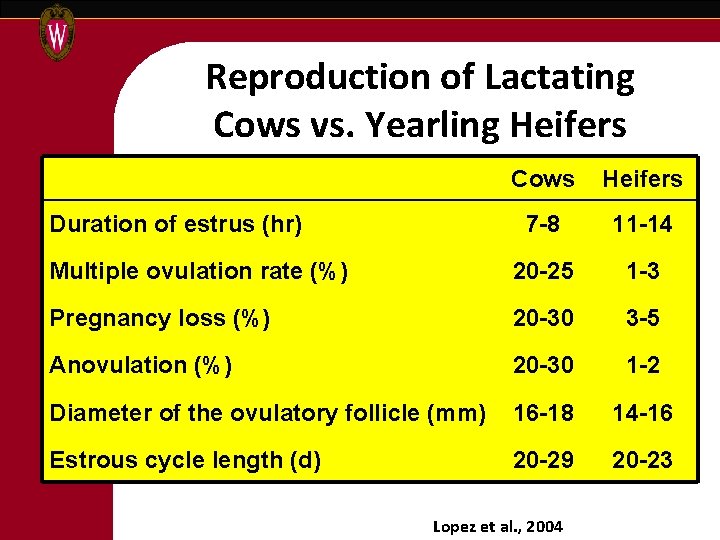
Reproduction of Lactating Cows vs. Yearling Heifers Cows Heifers 7 -8 11 -14 Multiple ovulation rate (%) 20 -25 1 -3 Pregnancy loss (%) 20 -30 3 -5 Anovulation (%) 20 -30 1 -2 Diameter of the ovulatory follicle (mm) 16 -18 14 -16 Estrous cycle length (d) 20 -29 20 -23 Duration of estrus (hr) Lopez et al. , 2004
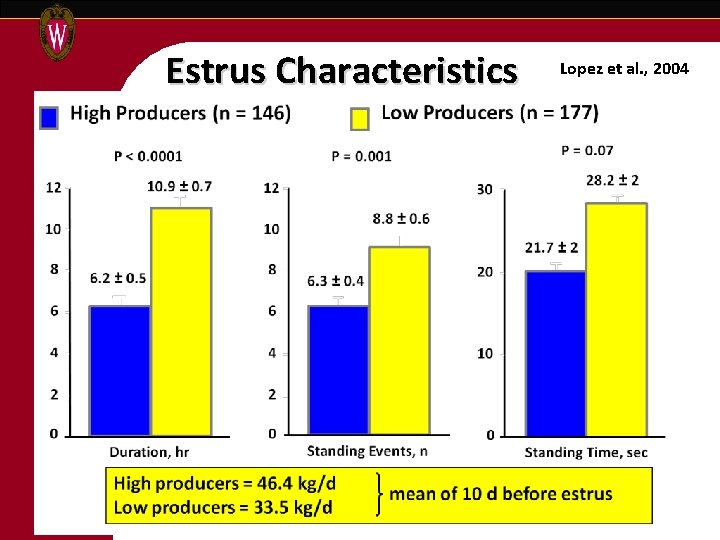
Estrus Characteristics Lopez et al. , 2004
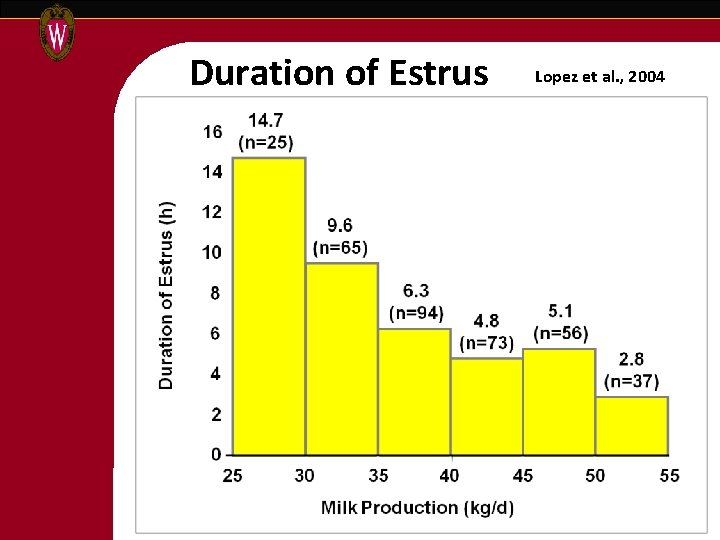
Duration of Estrus Lopez et al. , 2004
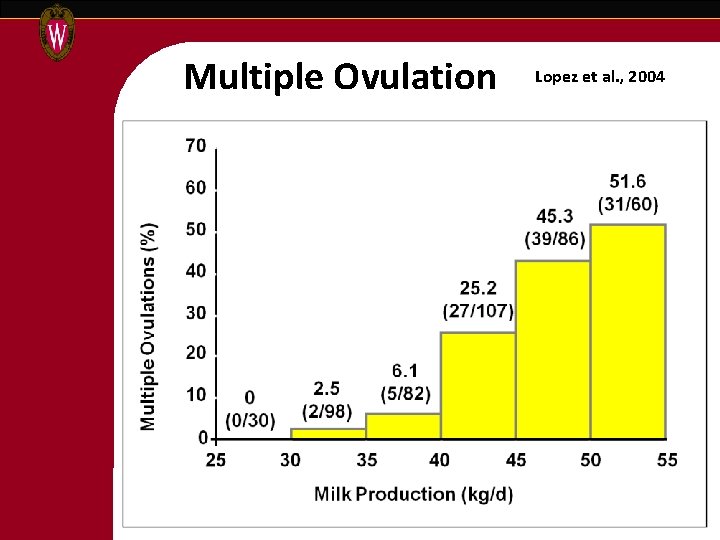
Multiple Ovulation Lopez et al. , 2004
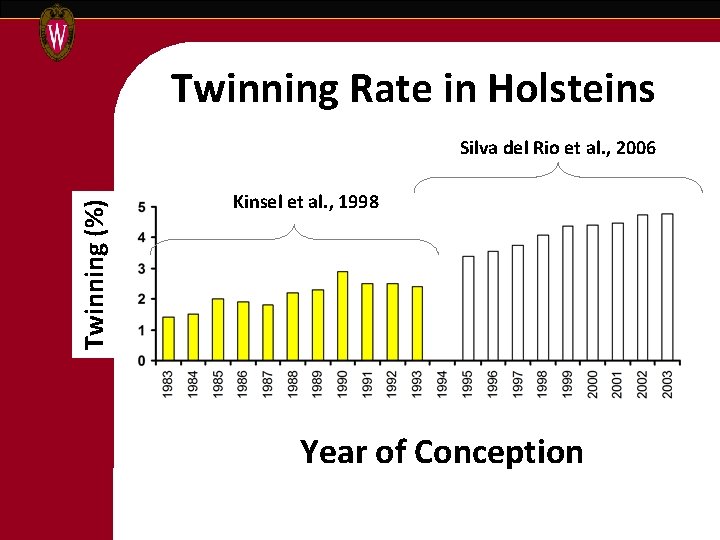
Twinning Rate in Holsteins Twinning (%) Silva del Rio et al. , 2006 Kinsel et al. , 1998 Year of Conception
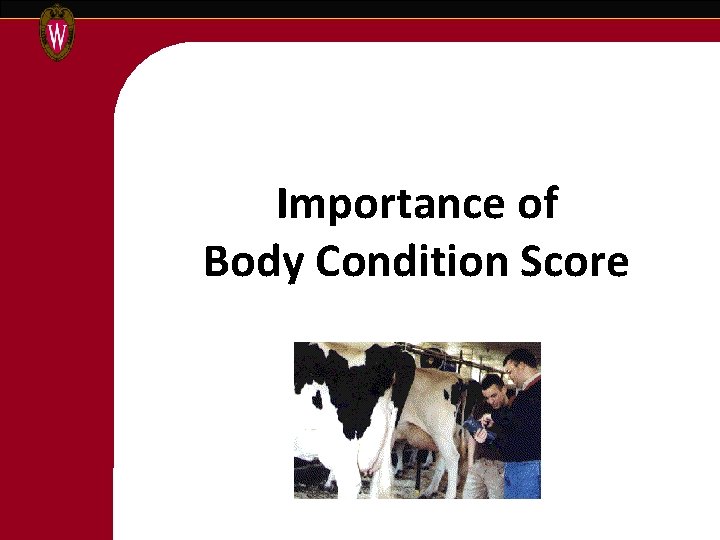
Importance of Body Condition Score
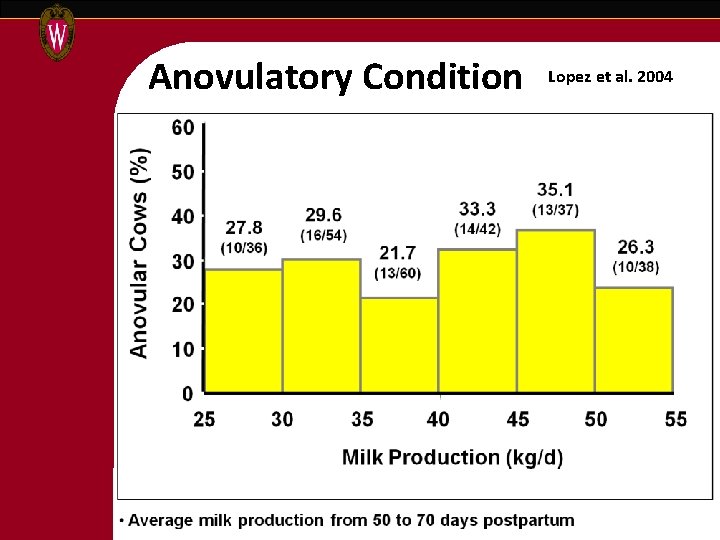
Anovulatory Condition Lopez et al. 2004
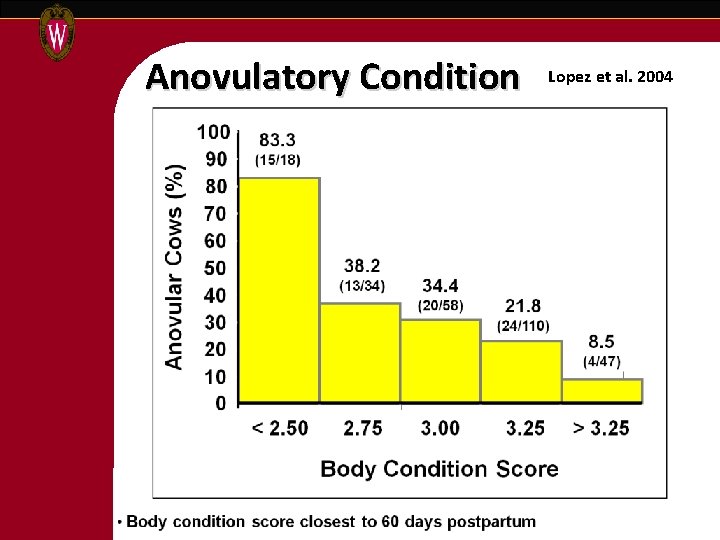
Anovulatory Condition Lopez et al. 2004
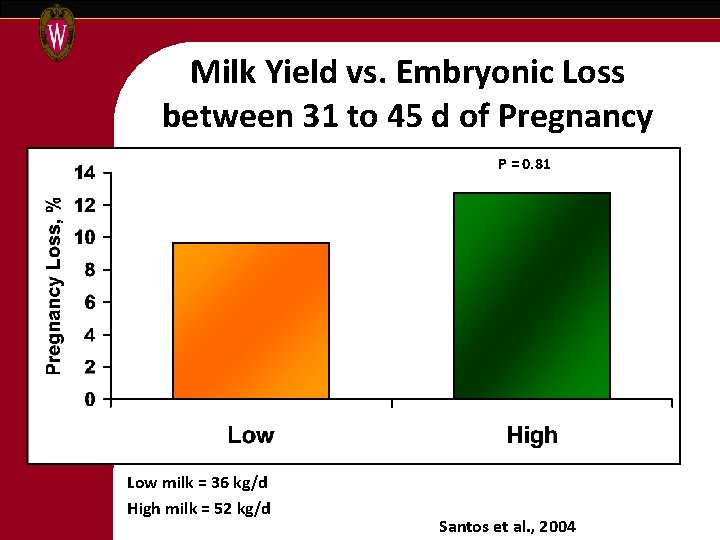
Milk Yield vs. Embryonic Loss between 31 to 45 d of Pregnancy P = 0. 81 Low milk = 36 kg/d High milk = 52 kg/d Santos et al. , 2004
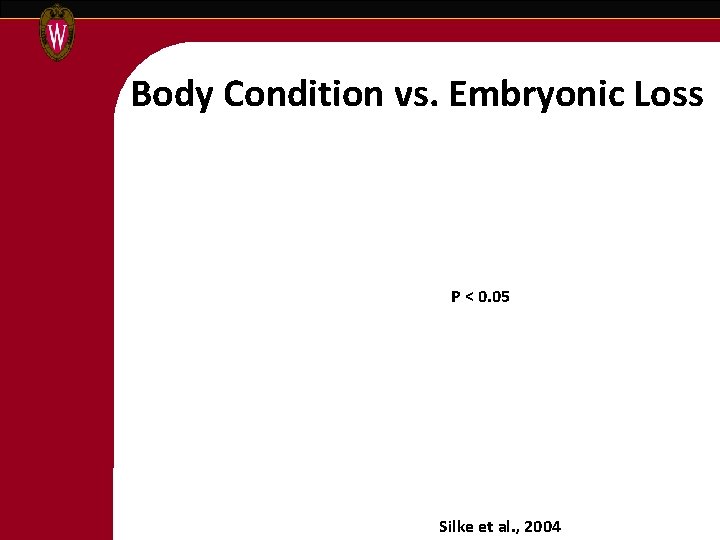
Body Condition vs. Embryonic Loss N=250 P < 0. 05 N=147 N=103 Silke et al. , 2004
Selection for Female Fertility
Indirect Selection for Fertility Length of Productive Life (available since 1994) Total months in milk by 7 years of age Limit of 10 months per lactation Rewards a short calving interval Dairy Form (received negative economic weight in 2005) Poor body condition = poor fertility Can measure milk production directly Shouldn’t reward angularity
Evaluation of Female Fertility USDA Animal Improvement Programs Laboratory introduced national genetic evaluations for female fertility in 2003 Dairy sires from all breeds are evaluated based on the fertility of their daughters The animal model system for fertility is the same as for production traits Evaluations are released 3 times per year
Evaluation of Female Fertility Input data are days open measurements from the DHI milk recording system Days open (calculated from the last reported insemination) is confirmed with subsequent calving dates, if possible Animals with no subsequent calving are assigned an arbitrary value of 250 days Days open data are transformed to -day pregnancy rates 21
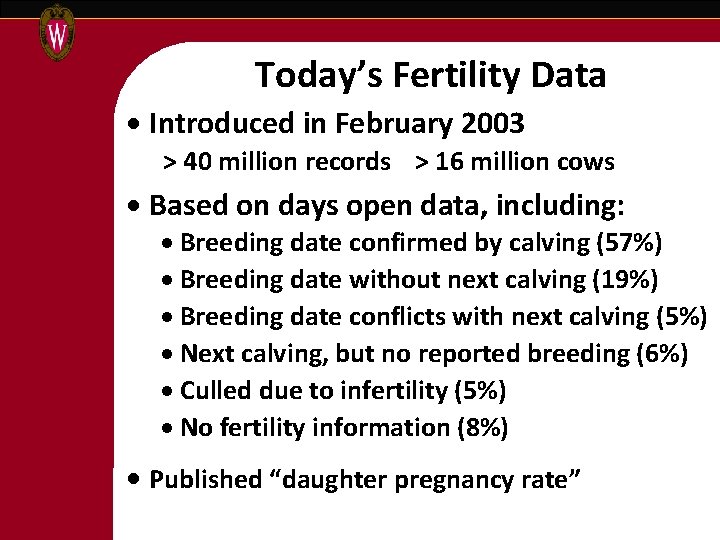
Today’s Fertility Data Introduced in February 2003 > 40 million records > 16 million cows Based on days open data, including: Breeding date confirmed by calving (57%) Breeding date without next calving (19%) Breeding date conflicts with next calving (5%) Next calving, but no reported breeding (6%) Culled due to infertility (5%) No fertility information (8%) Published “daughter pregnancy rate”
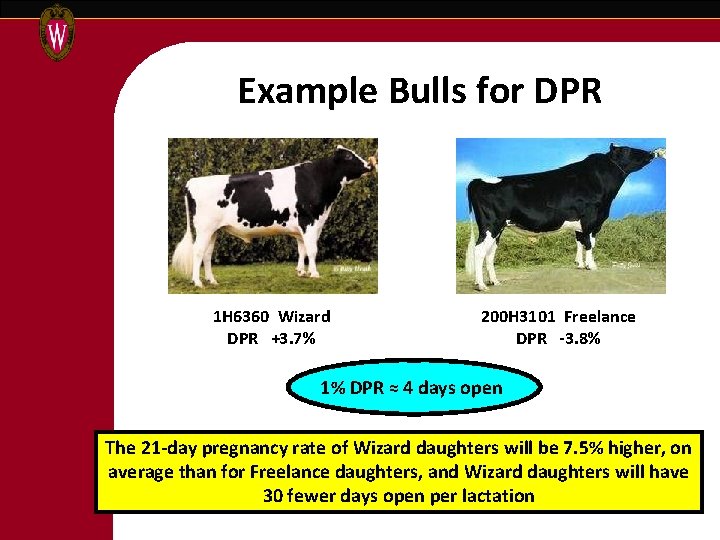
Example Bulls for DPR 1 H 6360 Wizard DPR +3. 7% 200 H 3101 Freelance DPR -3. 8% 1% DPR ≈ 4 days open The 21 -day pregnancy rate of Wizard daughters will be 7. 5% higher, on average than for Freelance daughters, and Wizard daughters will have 30 fewer days open per lactation
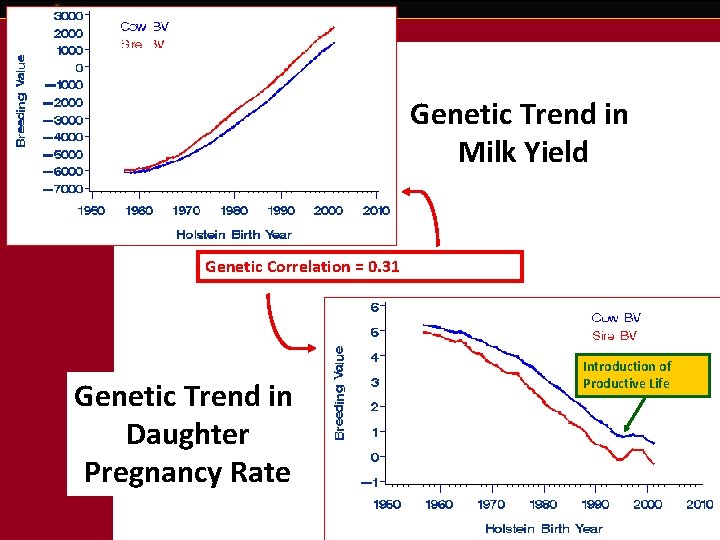
Genetic Trend in Milk Yield Genetic Correlation = 0. 31 Genetic Trend in Daughter Pregnancy Rate Introduction of Productive Life
Selection for Male Fertility
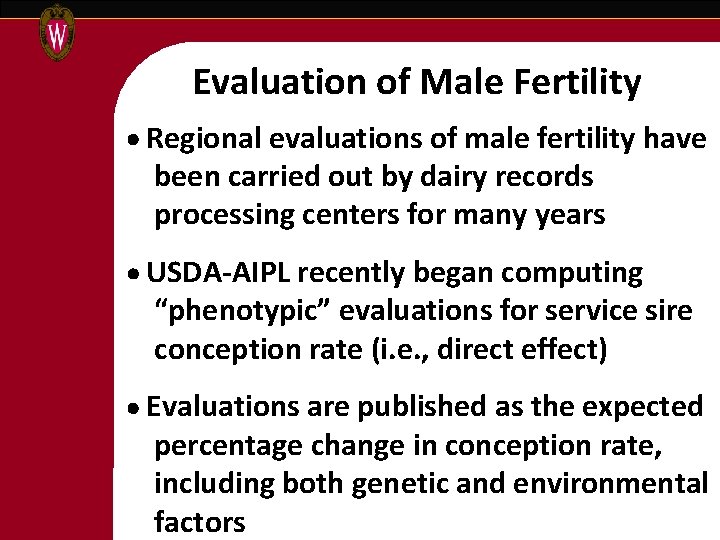
Evaluation of Male Fertility Regional evaluations of male fertility have been carried out by dairy records processing centers for many years USDA-AIPL recently began computing “phenotypic” evaluations for service sire conception rate (i. e. , direct effect) Evaluations are published as the expected percentage change in conception rate, including both genetic and environmental factors
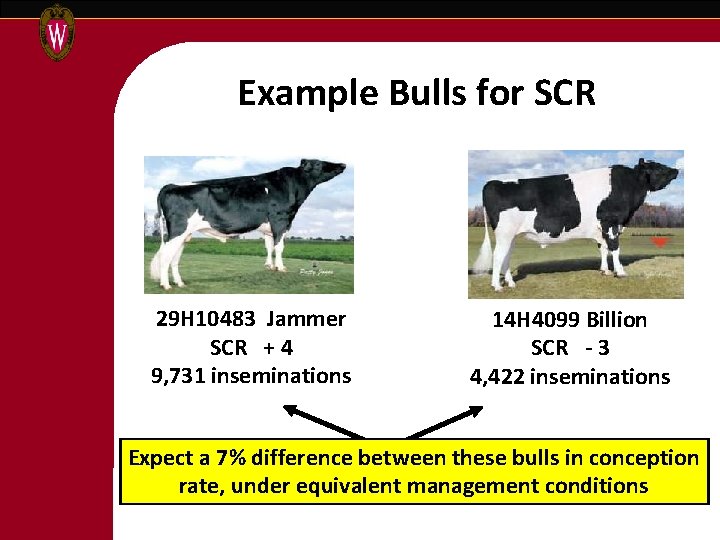
Example Bulls for SCR 29 H 10483 Jammer SCR + 4 9, 731 inseminations 14 H 4099 Billion SCR - 3 4, 422 inseminations Expect a 7% difference between these bulls in conception rate, under equivalent management conditions
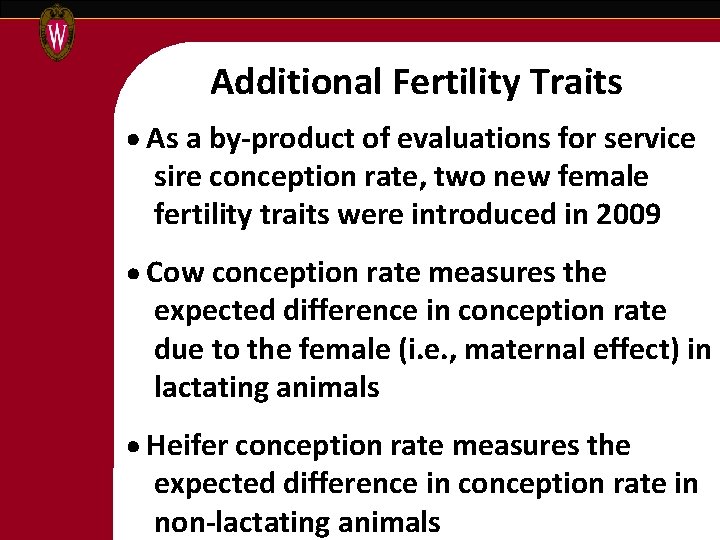
Additional Fertility Traits As a by-product of evaluations for service sire conception rate, two new female fertility traits were introduced in 2009 Cow conception rate measures the expected difference in conception rate due to the female (i. e. , maternal effect) in lactating animals Heifer conception rate measures the expected difference in conception rate in non-lactating animals
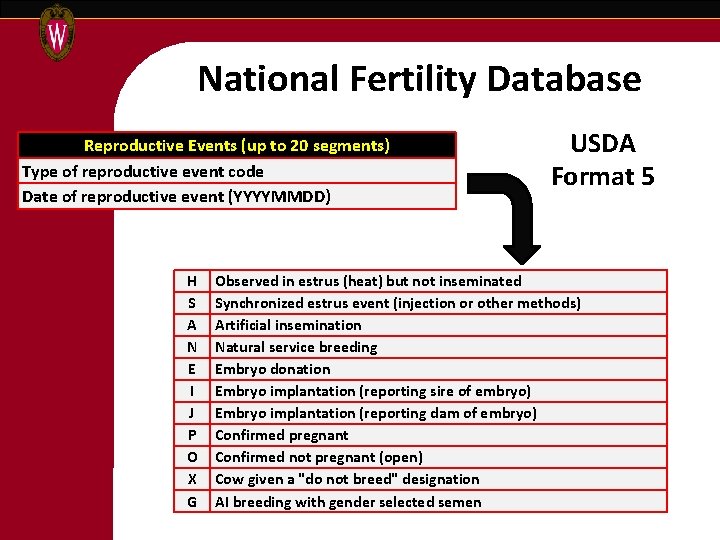
National Fertility Database Reproductive Events (up to 20 segments) Type of reproductive event code Date of reproductive event (YYYYMMDD) H S A N E I J P O X G USDA Format 5 Observed in estrus (heat) but not inseminated Synchronized estrus event (injection or other methods) Artificial insemination Natural service breeding Embryo donation Embryo implantation (reporting sire of embryo) Embryo implantation (reporting dam of embryo) Confirmed pregnant Confirmed not pregnant (open) Cow given a "do not breed" designation AI breeding with gender selected semen
Selection for Animal Health
Risk of Pregnancy Risk by Calving Disorder
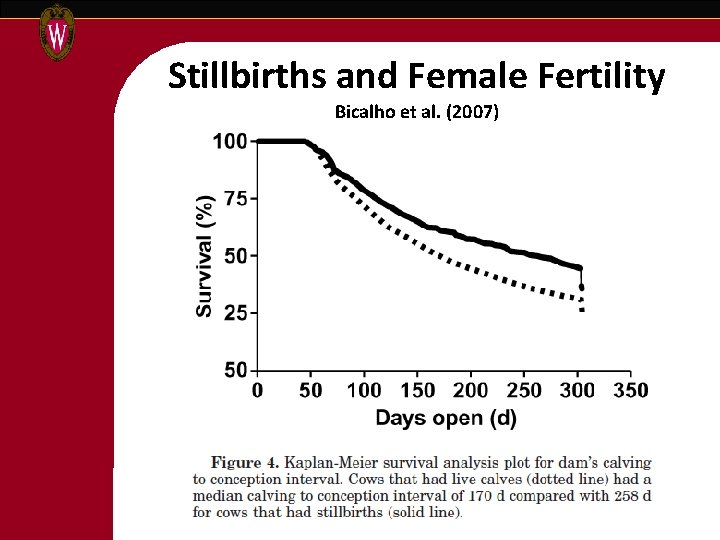
Stillbirths and Female Fertility Bicalho et al. (2007)
Risk of Pregnancy Risk by Repro. Disorder Reproductive Disorder (in 1 st 75 d Postpartum)
Risk of Pregnancy Risk by Mastitis Infection (in 1 st 75 d Postpartum)
Risk of Pregnancy Risk by Metabolic Disorder (in 1 st 75 d Postpartum)
Risk of Pregnancy Risk by Mobility Disorder (in 1 st 75 d Postpartum)
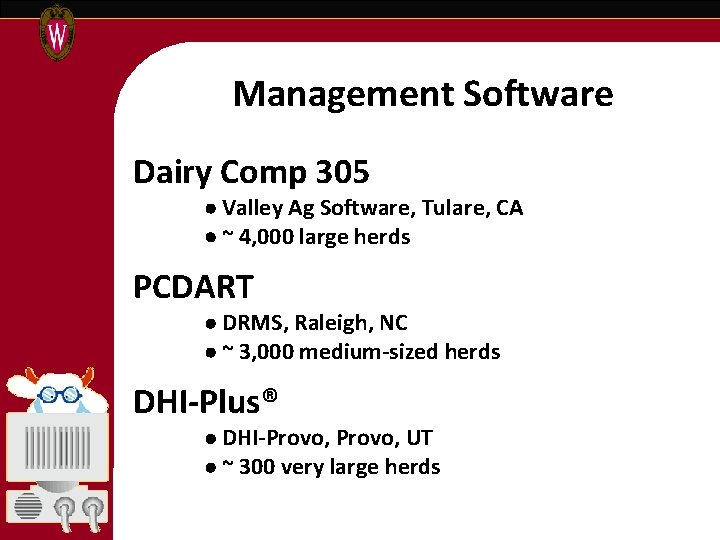
Management Software Dairy Comp 305 Valley Ag Software, Tulare, CA ~ 4, 000 large herds PCDART DRMS, Raleigh, NC ~ 3, 000 medium-sized herds DHI-Plus® DHI-Provo, UT ~ 300 very large herds
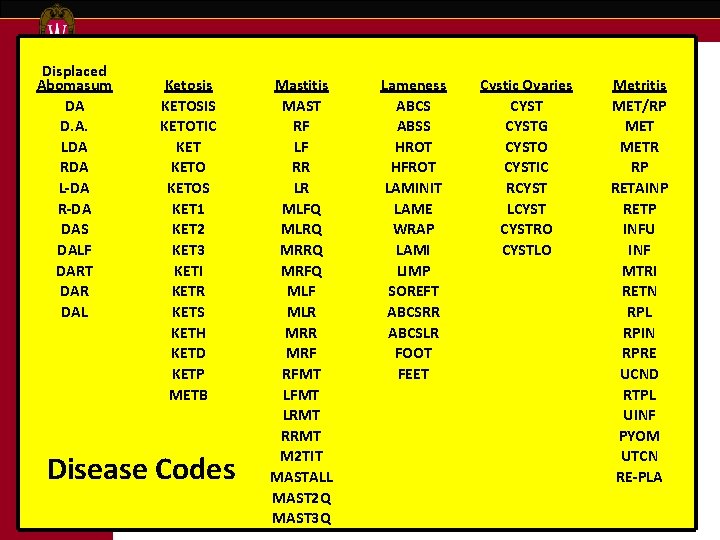
Displaced Abomasum DA D. A. LDA RDA L-DA R-DA DAS DALF DART DAR DAL Ketosis KETOSIS KETOTIC KETOS KET 1 KET 2 KET 3 KETI KETR KETS KETH KETD KETP METB Disease Codes Mastitis MAST RF LF RR LR MLFQ MLRQ MRFQ MLF MLR MRF RFMT LRMT RRMT M 2 TIT MASTALL MAST 2 Q MAST 3 Q Lameness ABCS ABSS HROT HFROT LAMINIT LAME WRAP LAMI LIMP SOREFT ABCSRR ABCSLR FOOT FEET Cystic Ovaries CYSTG CYSTO CYSTIC RCYST LCYSTRO CYSTLO Metritis MET/RP METR RP RETAINP RETP INFU INF MTRI RETN RPL RPIN RPRE UCND RTPL UINF PYOM UTCN RE-PLA
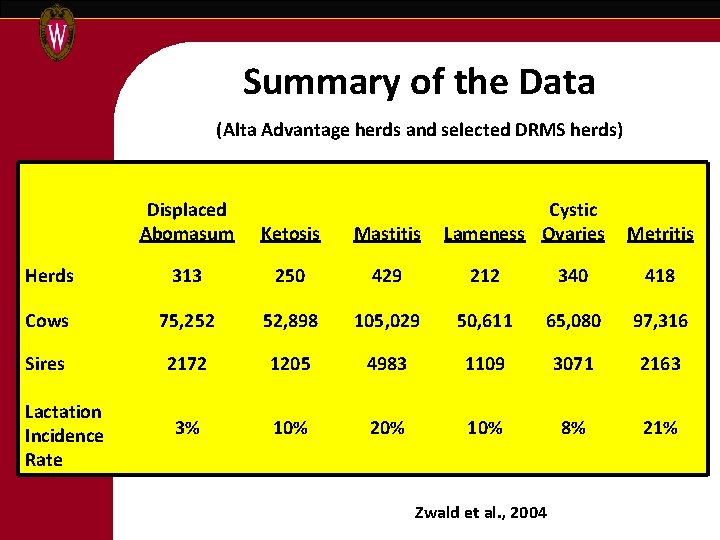
Summary of the Data (Alta Advantage herds and selected DRMS herds) Displaced Abomasum Ketosis Mastitis Herds 313 250 429 212 340 418 Cows 75, 252 52, 898 105, 029 50, 611 65, 080 97, 316 Sires 2172 1205 4983 1109 3071 2163 3% 10% 20% 10% 8% 21% Lactation Incidence Rate Cystic Lameness Ovaries Zwald et al. , 2004 Metritis
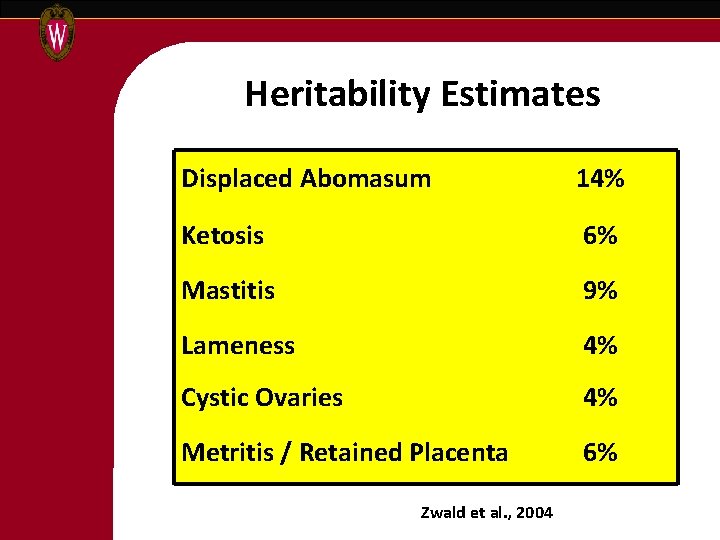
Heritability Estimates Displaced Abomasum 14% Ketosis 6% Mastitis 9% Lameness 4% Cystic Ovaries 4% Metritis / Retained Placenta 6% Zwald et al. , 2004
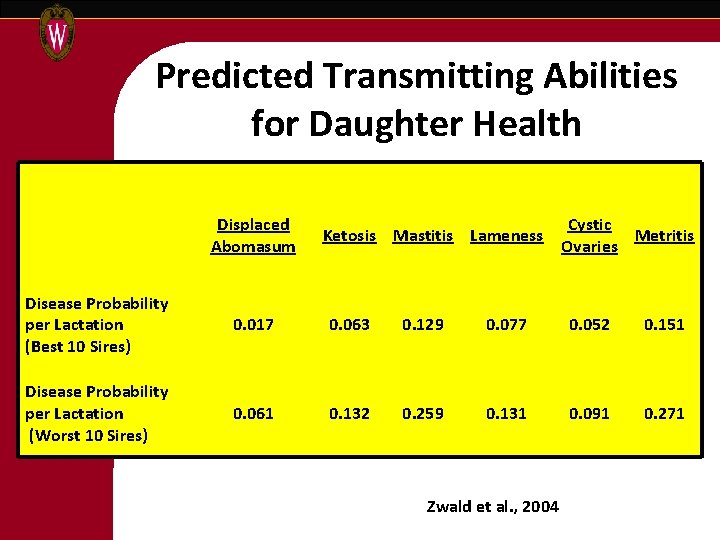
Predicted Transmitting Abilities for Daughter Health Displaced Abomasum Ketosis Mastitis Lameness Cystic Metritis Ovaries Disease Probability per Lactation (Best 10 Sires) 0. 017 0. 063 0. 129 0. 077 0. 052 0. 151 Disease Probability per Lactation (Worst 10 Sires) 0. 061 0. 132 0. 259 0. 131 0. 091 0. 271 Zwald et al. , 2004
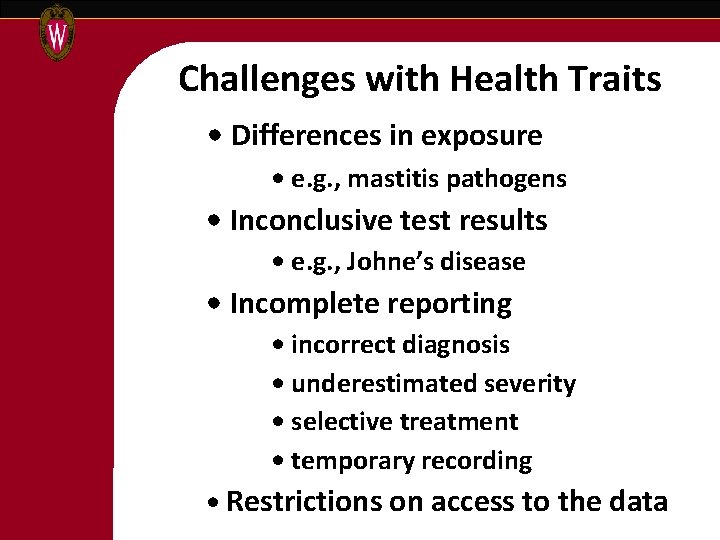
Challenges with Health Traits • Differences in exposure • e. g. , mastitis pathogens • Inconclusive test results • e. g. , Johne’s disease • Incomplete reporting • incorrect diagnosis • underestimated severity • selective treatment • temporary recording • Restrictions on access to the data
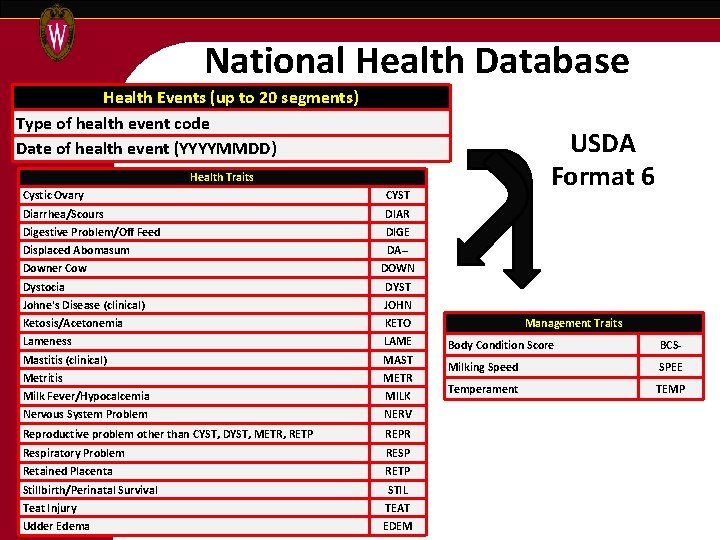
National Health Database Health Events (up to 20 segments) Type of health event code Date of health event (YYYYMMDD) USDA Format 6 Health Traits Cystic Ovary CYST Diarrhea/Scours DIAR Digestive Problem/Off Feed DIGE Displaced Abomasum DA-- Downer Cow DOWN Dystocia DYST Johne's Disease (clinical) JOHN Ketosis/Acetonemia KETO Lameness LAME Mastitis (clinical) MAST Metritis METR Milk Fever/Hypocalcemia MILK Nervous System Problem NERV Reproductive problem other than CYST, DYST, METR, RETP REPR Respiratory Problem RESP Retained Placenta RETP Stillbirth/Perinatal Survival STIL Teat Injury TEAT Udder Edema EDEM Management Traits Body Condition Score BCS- Milking Speed SPEE Temperament TEMP
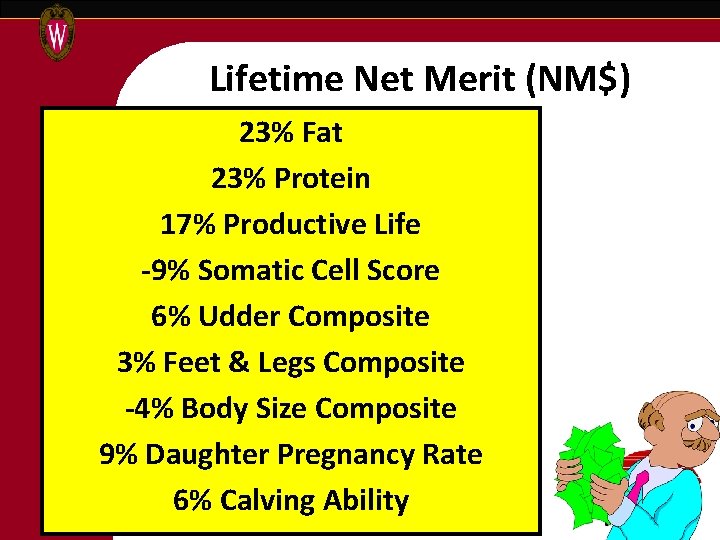
Lifetime Net Merit (NM$) 23% Fat 23% Protein 17% Productive Life -9% Somatic Cell Score 6% Udder Composite 3% Feet & Legs Composite -4% Body Size Composite 9% Daughter Pregnancy Rate 6% Calving Ability
Impact of Crossbreeding
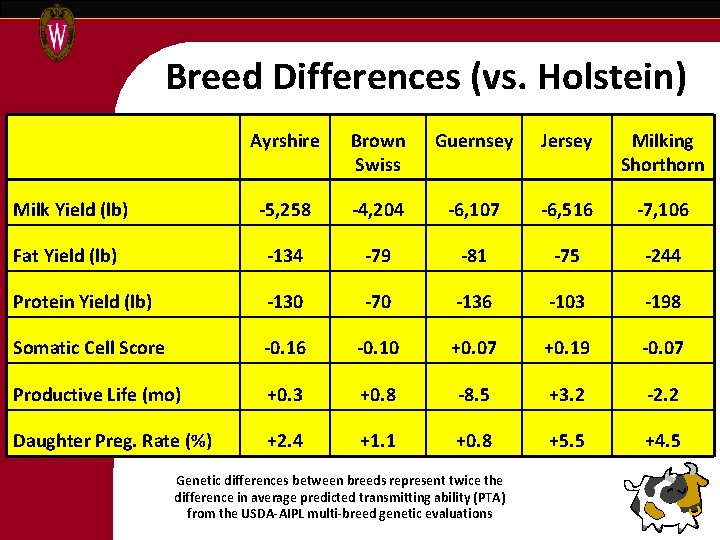
Breed Differences (vs. Holstein) Ayrshire Brown Swiss Guernsey Jersey Milking Shorthorn Milk Yield (lb) -5, 258 -4, 204 -6, 107 -6, 516 -7, 106 Fat Yield (lb) -134 -79 -81 -75 -244 Protein Yield (lb) -130 -70 -136 -103 -198 Somatic Cell Score -0. 16 -0. 10 +0. 07 +0. 19 -0. 07 Productive Life (mo) +0. 3 +0. 8 -8. 5 +3. 2 -2. 2 Daughter Preg. Rate (%) +2. 4 +1. 1 +0. 8 +5. 5 +4. 5 Genetic differences between breeds represent twice the difference in average predicted transmitting ability (PTA) from the USDA-AIPL multi-breed genetic evaluations
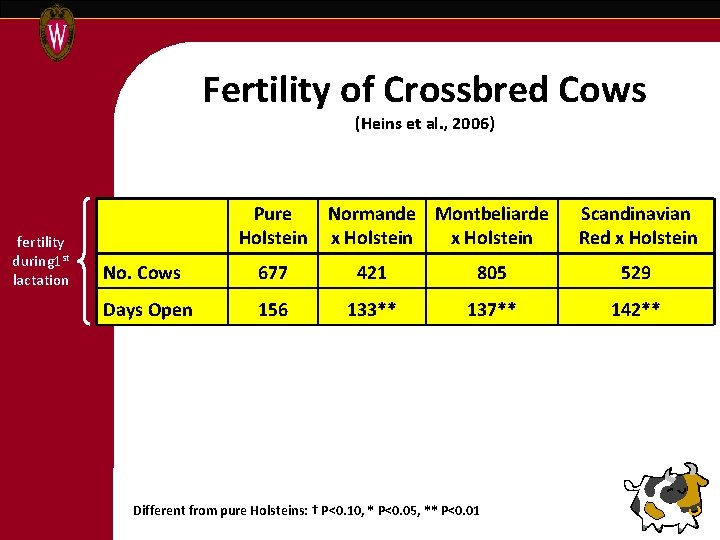
Fertility of Crossbred Cows (Heins et al. , 2006) fertility during 1 st lactation Pure Holstein Normande Montbeliarde x Holstein Scandinavian Red x Holstein No. Cows 677 421 805 529 Days Open 156 133** 137** 142** Different from pure Holsteins: † P<0. 10, * P<0. 05, ** P<0. 01
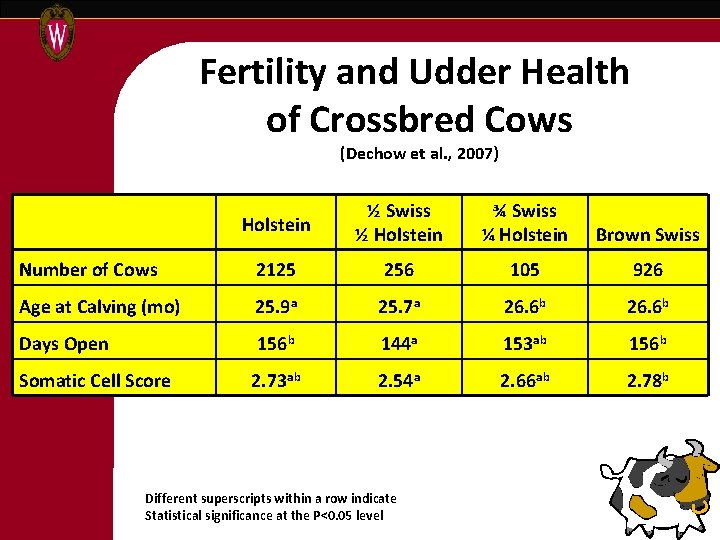
Fertility and Udder Health of Crossbred Cows (Dechow et al. , 2007) Holstein ½ Swiss ½ Holstein ¾ Swiss ¼ Holstein Brown Swiss Number of Cows 2125 256 105 926 Age at Calving (mo) 25. 9 a 25. 7 a 26. 6 b Days Open 156 b 144 a 153 ab 156 b Somatic Cell Score 2. 73 ab 2. 54 a 2. 66 ab 2. 78 b Different superscripts within a row indicate Statistical significance at the P<0. 05 level
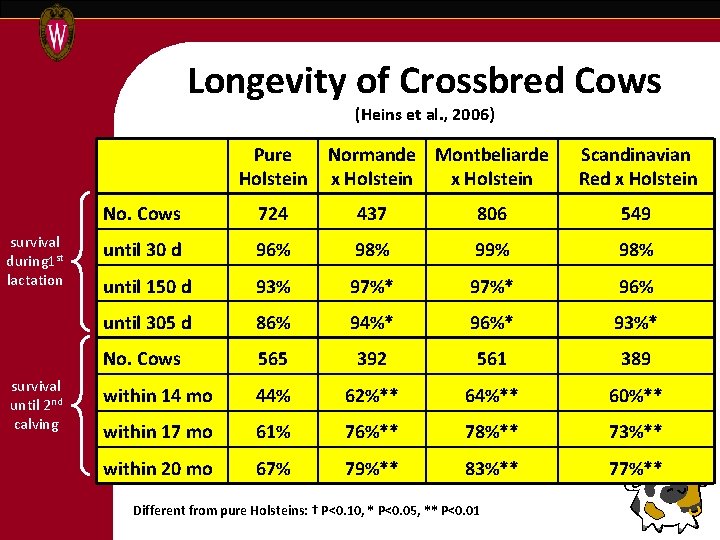
Longevity of Crossbred Cows (Heins et al. , 2006) Pure Holstein survival during 1 st lactation survival until 2 nd calving Normande Montbeliarde x Holstein Scandinavian Red x Holstein No. Cows 724 437 806 549 until 30 d 96% 98% 99% 98% until 150 d 93% 97%* 96% until 305 d 86% 94%* 96%* 93%* No. Cows 565 392 561 389 within 14 mo 44% 62%** 64%** 60%** within 17 mo 61% 76%** 78%** 73%** within 20 mo 67% 79%** 83%** 77%** Different from pure Holsteins: † P<0. 10, * P<0. 05, ** P<0. 01

http: //www. wisc. edu/dysci UW-Madison Dairy Science…Committed to Excellence in Research, Extension and Instruction Any Questions?
- Slides: 45