
GENETIC MUTATIONS Section 5 6 Pg 259 Mutation
- Slides: 24
GENETIC MUTATIONS Section 5. 6 Pg. 259
Mutation: A change in the DNA sequence that is inherited as the DNA is transmitted through cell division.
Categorising mutations 1. By effect on structure 2. By consequences on resulting proteins
1. Mutations by effect on structure a) Point mutations Mutations that occur to a specific base pair in the genome. b) Chromosomal mutations Mutations that involve large segments of DNA.
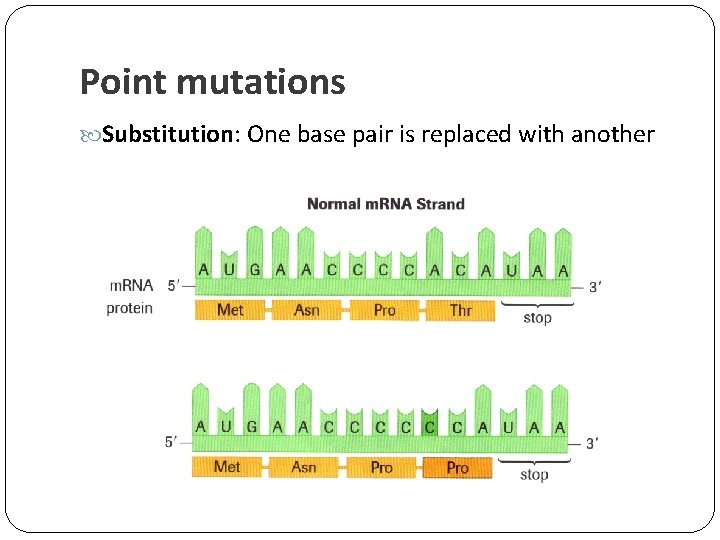
Point mutations Substitution: One base pair is replaced with another
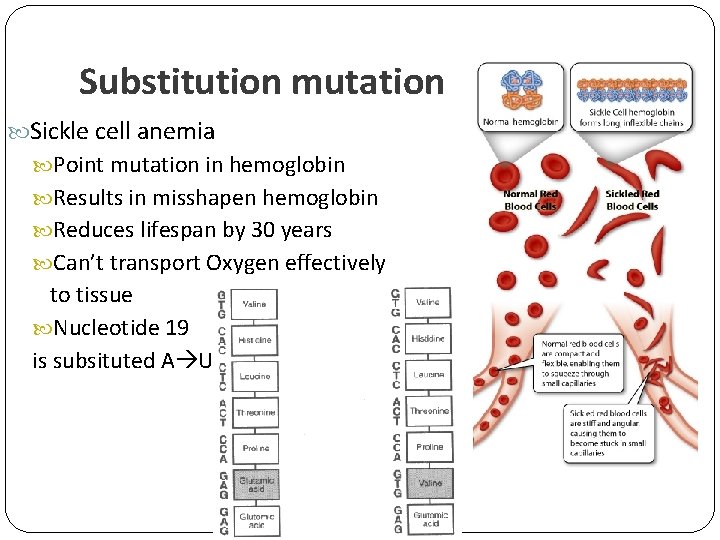
Substitution mutation Sickle cell anemia Point mutation in hemoglobin Results in misshapen hemoglobin Reduces lifespan by 30 years Can’t transport Oxygen effectively to tissue Nucleotide 19 is subsituted A U
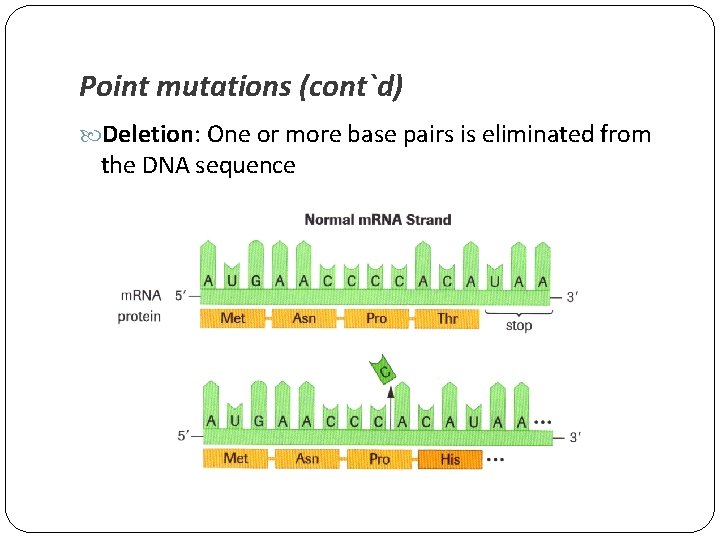
Point mutations (cont`d) Deletion: One or more base pairs is eliminated from the DNA sequence
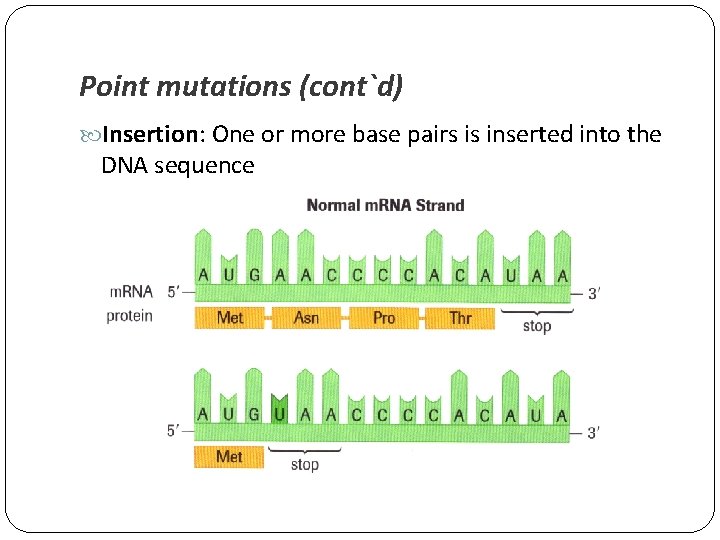
Point mutations (cont`d) Insertion: One or more base pairs is inserted into the DNA sequence
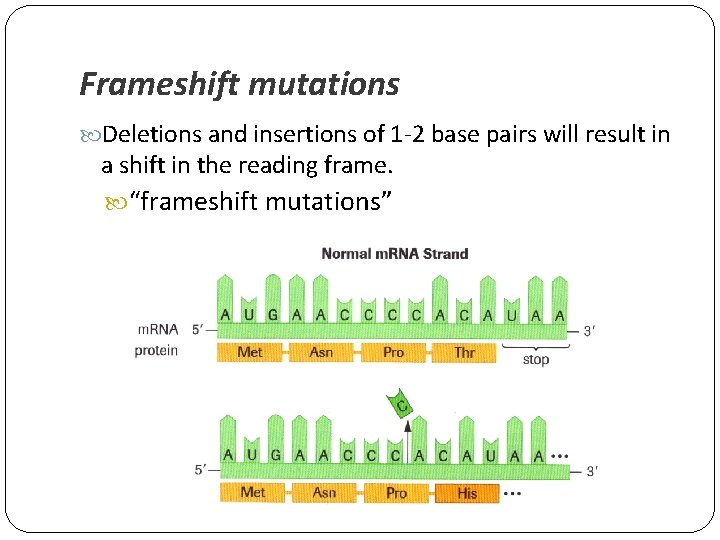
Frameshift mutations Deletions and insertions of 1 -2 base pairs will result in a shift in the reading frame. “frameshift mutations”
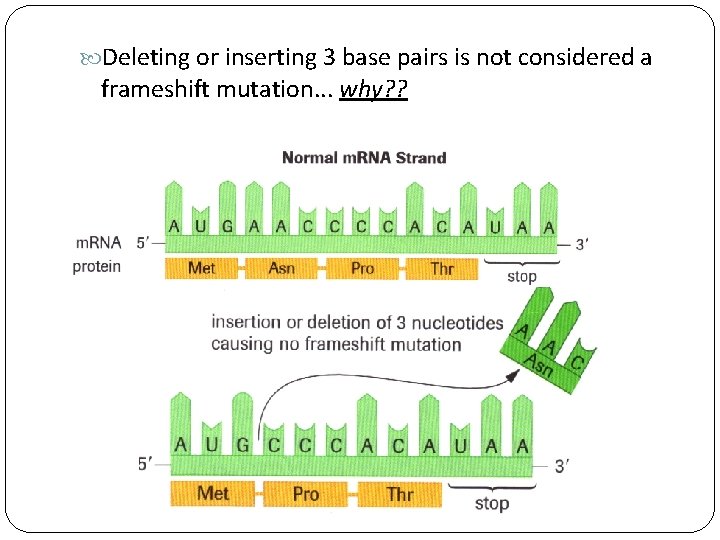
Deleting or inserting 3 base pairs is not considered a frameshift mutation. . . why? ?
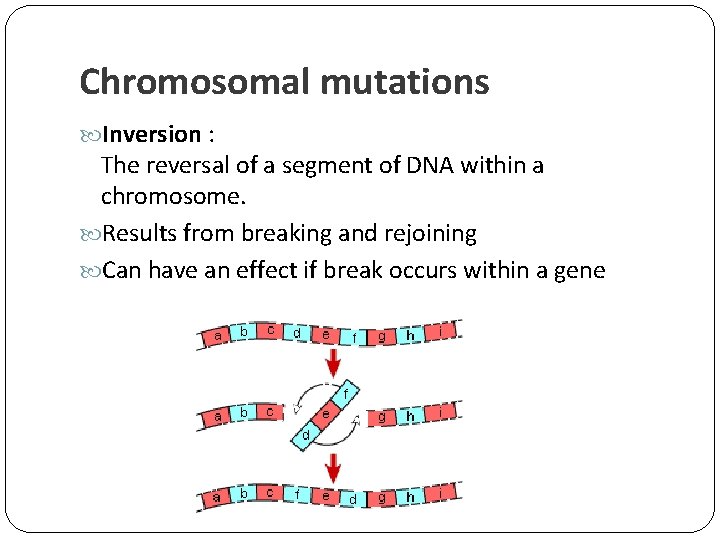
Chromosomal mutations Inversion : The reversal of a segment of DNA within a chromosome. Results from breaking and rejoining Can have an effect if break occurs within a gene
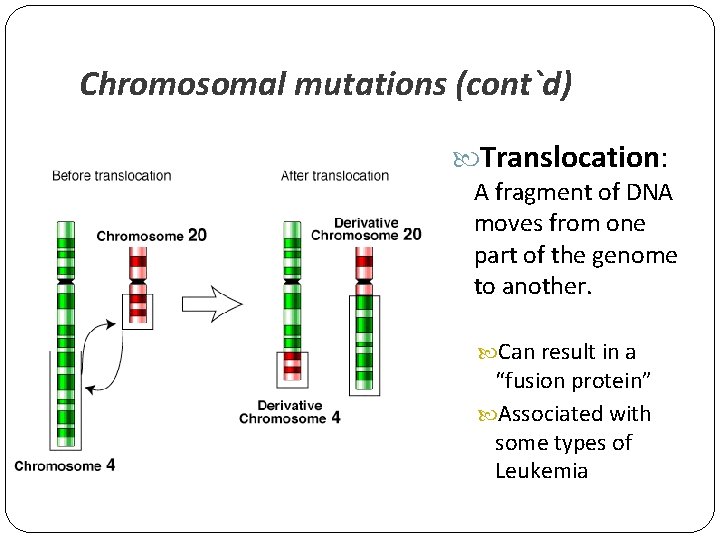
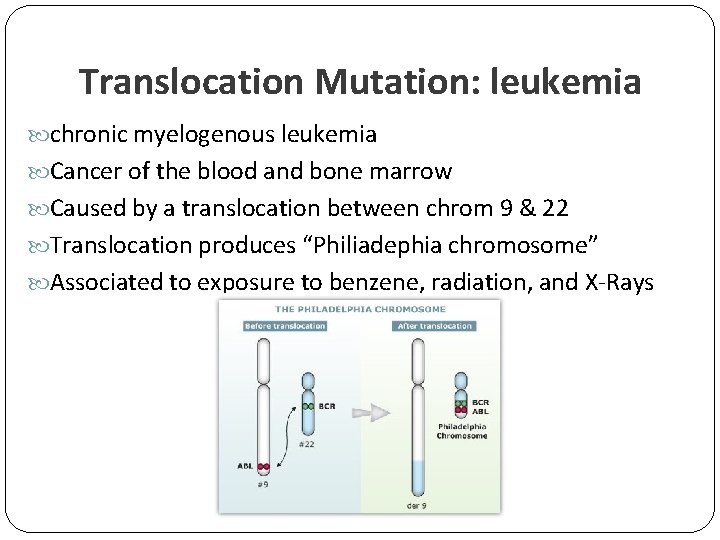
Chromosomal mutations (cont`d) Translocation: A fragment of DNA moves from one part of the genome to another. Can result in a “fusion protein” Associated with some types of Leukemia
Translocation Mutation: leukemia chronic myelogenous leukemia Cancer of the blood and bone marrow Caused by a translocation between chrom 9 & 22 Translocation produces “Philiadephia chromosome” Associated to exposure to benzene, radiation, and X-Rays
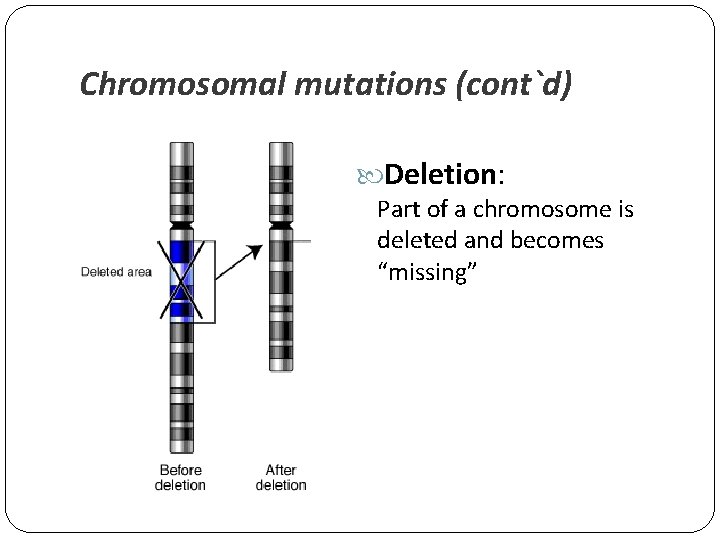
Chromosomal mutations (cont`d) Deletion: Part of a chromosome is deleted and becomes “missing”
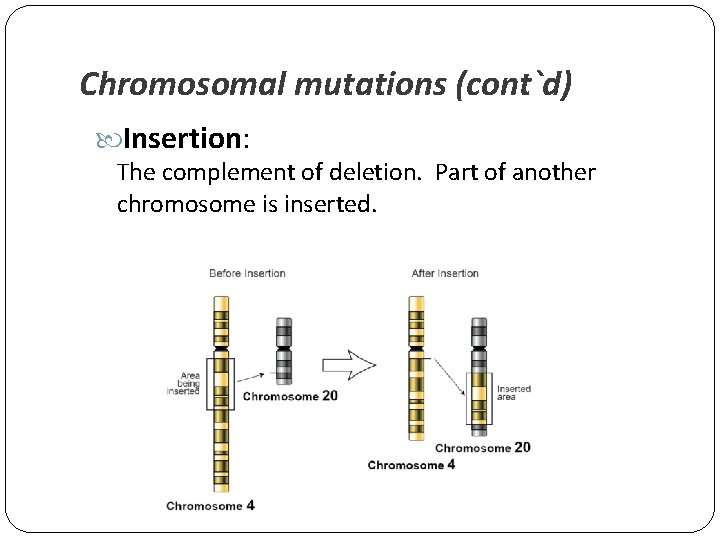
Chromosomal mutations (cont`d) Insertion: The complement of deletion. Part of another chromosome is inserted.
2. Mutations by consequence on resulting protein a) Silent mutations b) Missense mutations c) Nonsense mutations
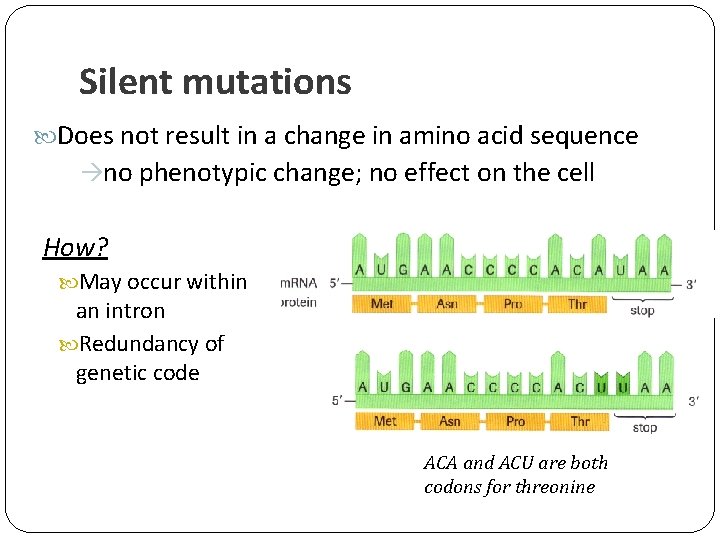
Silent mutations Does not result in a change in amino acid sequence no phenotypic change; no effect on the cell How? May occur within an intron Redundancy of genetic code ACA and ACU are both codons for threonine
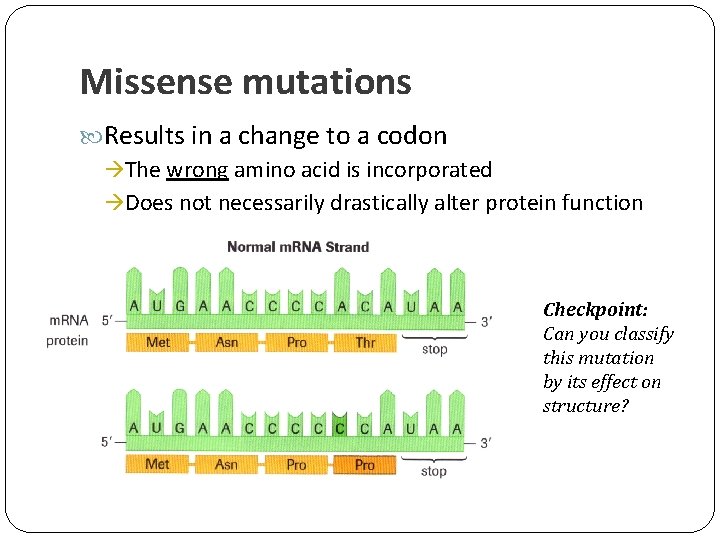
Missense mutations Results in a change to a codon The wrong amino acid is incorporated Does not necessarily drastically alter protein function Checkpoint: Can you classify this mutation by its effect on structure?
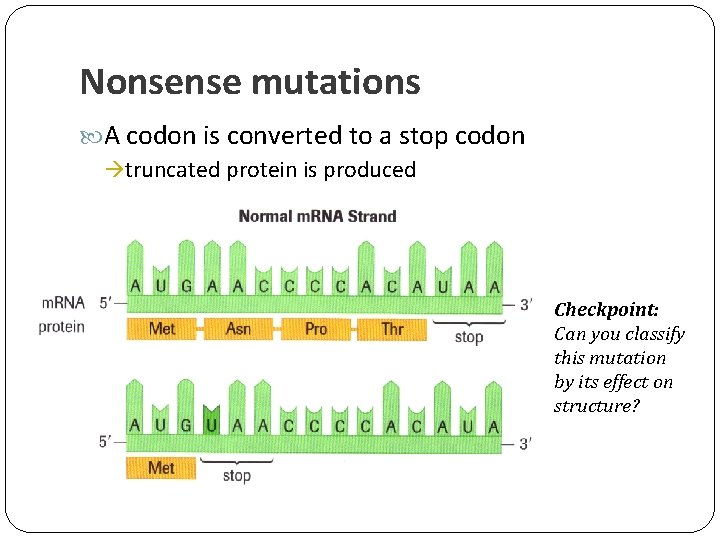
Nonsense mutations A codon is converted to a stop codon truncated protein is produced Checkpoint: Can you classify this mutation by its effect on structure?
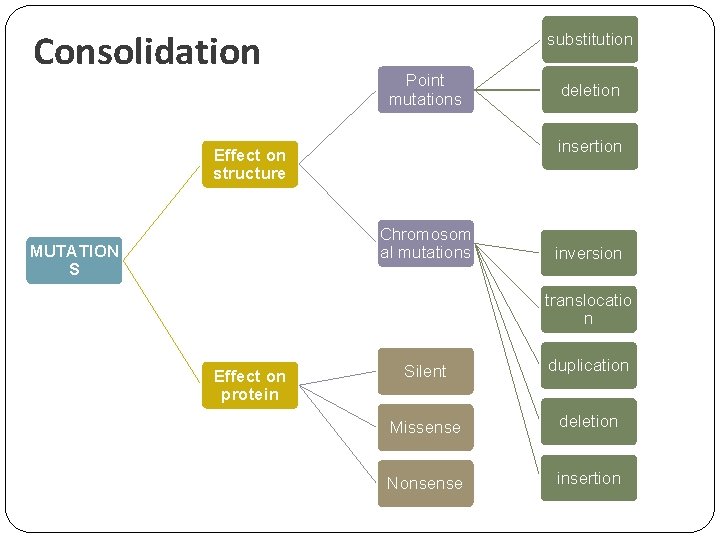
Consolidation substitution Point mutations insertion Effect on structure Chromosom al mutations MUTATION S deletion inversion translocatio n Effect on protein Silent duplication Missense deletion Nonsense insertion
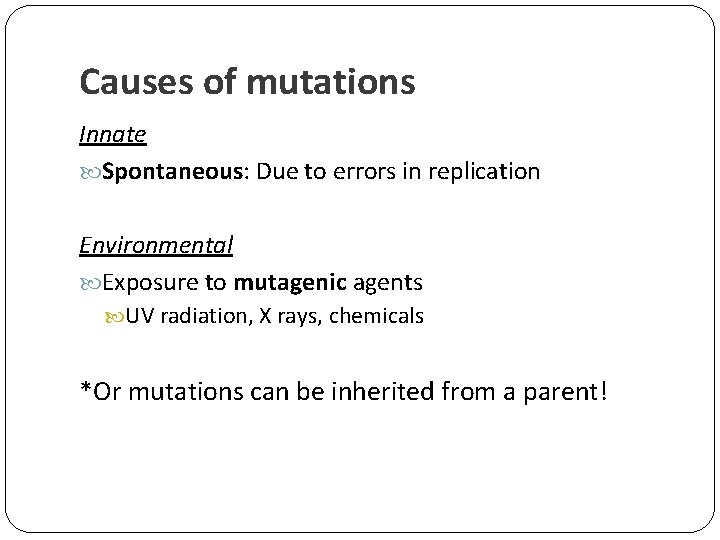
Causes of mutations Innate Spontaneous: Due to errors in replication Environmental Exposure to mutagenic agents UV radiation, X rays, chemicals *Or mutations can be inherited from a parent!
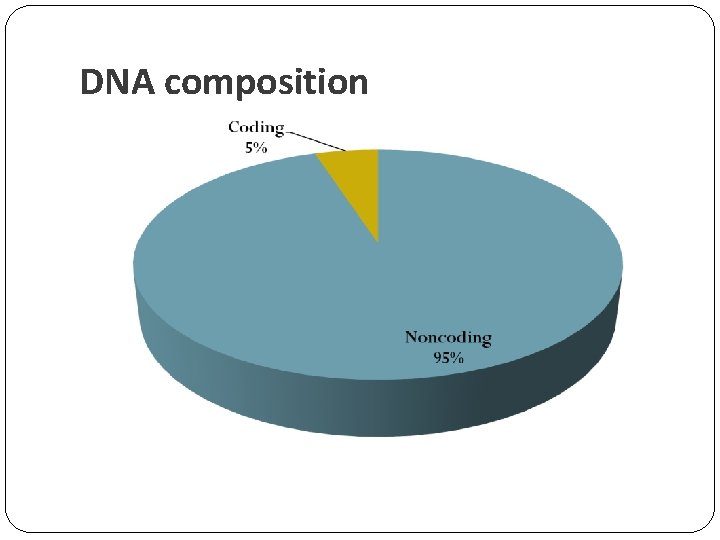
DNA composition
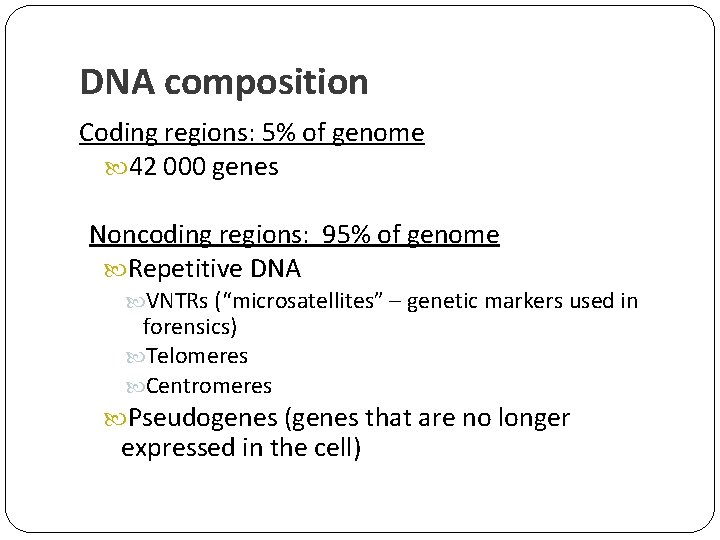
DNA composition Coding regions: 5% of genome 42 000 genes Noncoding regions: 95% of genome Repetitive DNA VNTRs (“microsatellites” – genetic markers used in forensics) Telomeres Centromeres Pseudogenes (genes that are no longer expressed in the cell)
Homework Mutations: Pg. 263 #1 -7