
Genetic Manipulation Key tools Enzymes from bacteria which
Genetic Manipulation
Key tools • Enzymes from bacteria which cut in very specific places – restriction enzymes. Used to cut select DNA in specific places • Vectors – carry DNA • Ligase – seals DNA • DNA polymerase – copies strands of DNA • Gel electrophoresis – separates out DNA/RNA/Proteins based in size through a gel using an electrical current.

Tools in genetic engineering This Photo by Unknown Author is licensed under CC BY
Restriction enzymes • Found naturally in bacterial cells as a form of defence • Used on ice (buy them in) and different enzyme cut different base pairs • Eco. R 1 – E. coli restriction endo nuclease enzyme one • Forms sticky end • Cut a vector at same location then sealed with DNA ligase. • Vector (plasmid) put in same culture/broth as E. coli • Cold shock – ice then heat with calcium ions increases update of genetic material
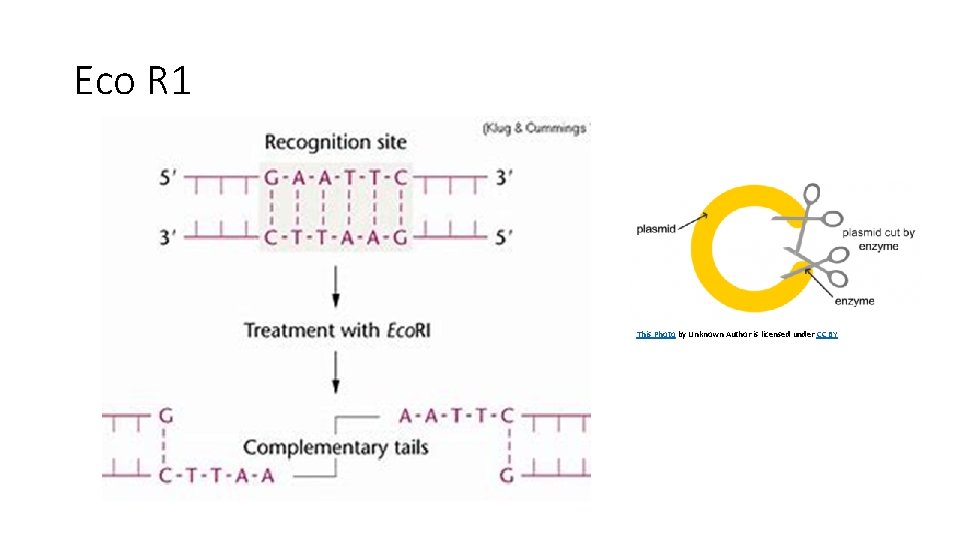
Eco R 1 This Photo by Unknown Author is licensed under CC BY

Ti plasmid vector used in plants
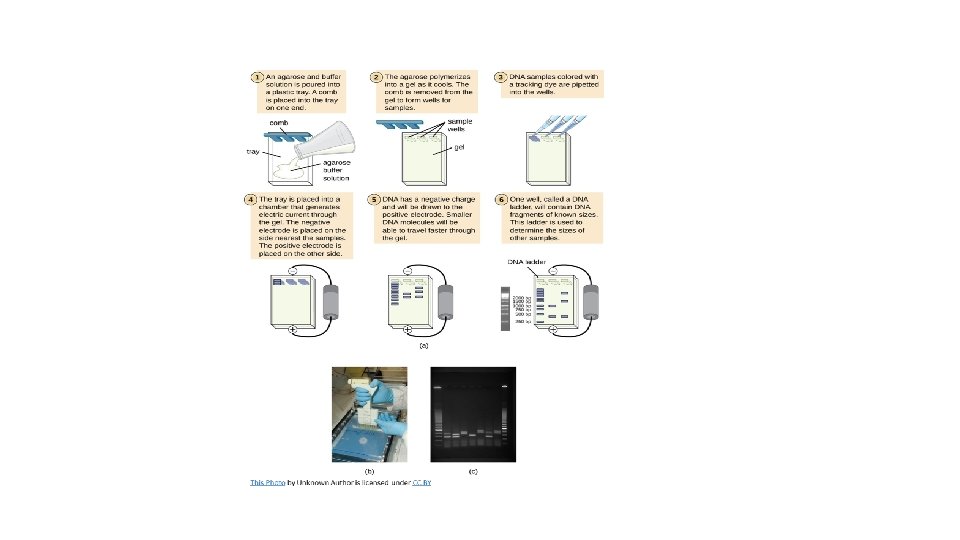
Gel electrophoresis • Making gel • Pour EDTA into conical flask with agarose powder (like making jelly) • Put in microwave for 2 mins • Should be dissolved – pour into mould with comb • Leave until solid (feels bouncy) • Remove comb • Place gel in tank - make sure completely covered by buffer solution • Add lid and set up current in right direction.
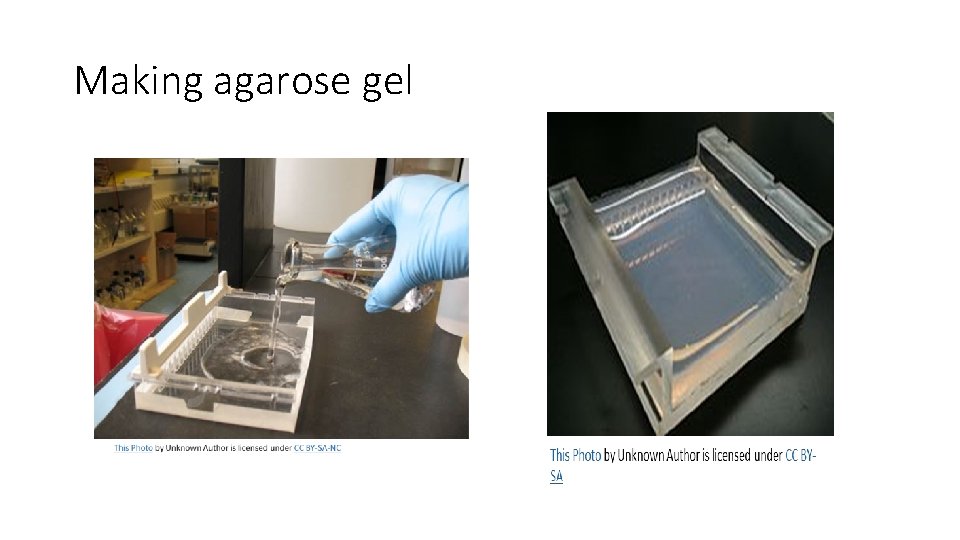
Making agarose gel
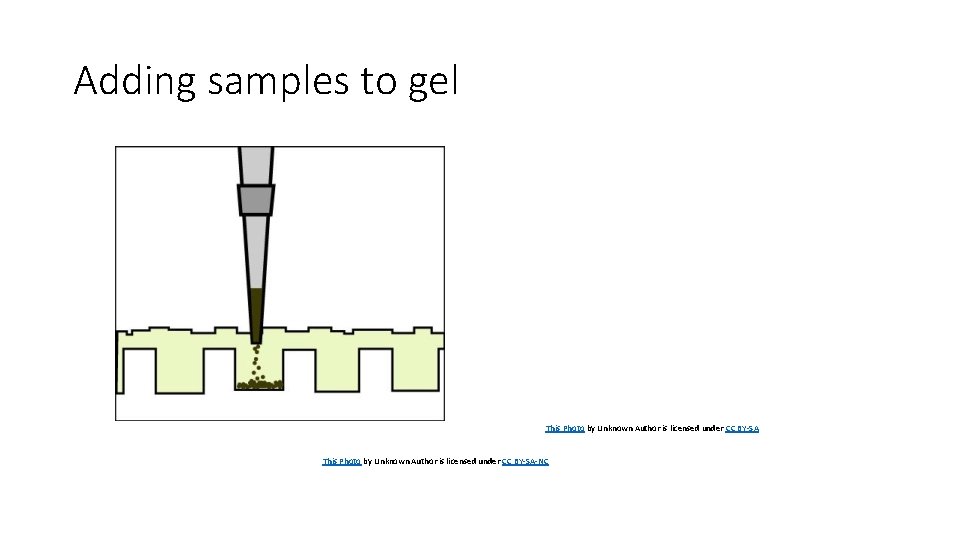
Adding samples to gel This Photo by Unknown Author is licensed under CC BY-SA-NC
Gel electrophoresis • DNA samples move depending on size. • Smallest ones move fastest in the gel matrix • Largest strands move slowest • Use markers to trace movement • UV markers can be seen under UV lamp – picture taken to measure size This Photo by Unknown Author is licensed under CC BY-SA
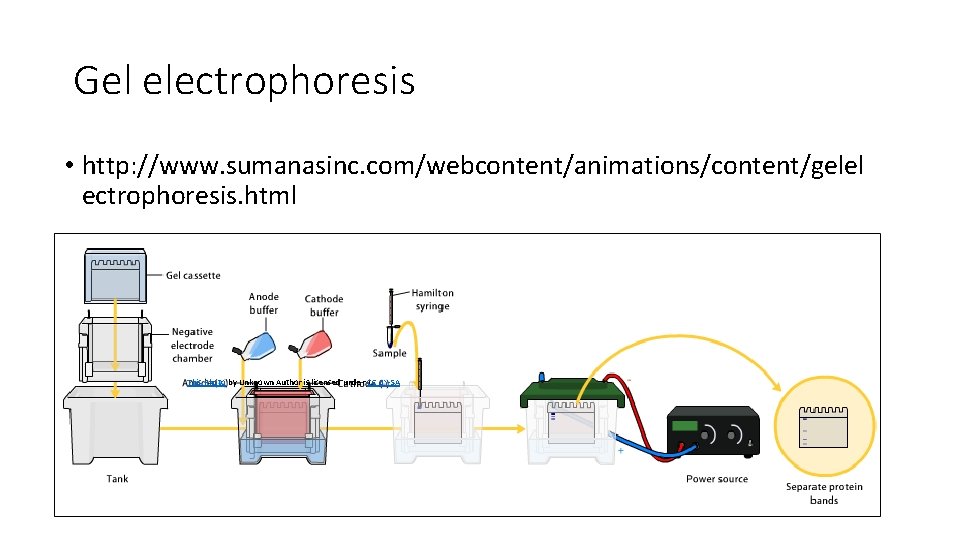
Gel electrophoresis • http: //www. sumanasinc. com/webcontent/animations/content/gelel ectrophoresis. html This Photo by Unknown Author is licensed under CC BY-SA
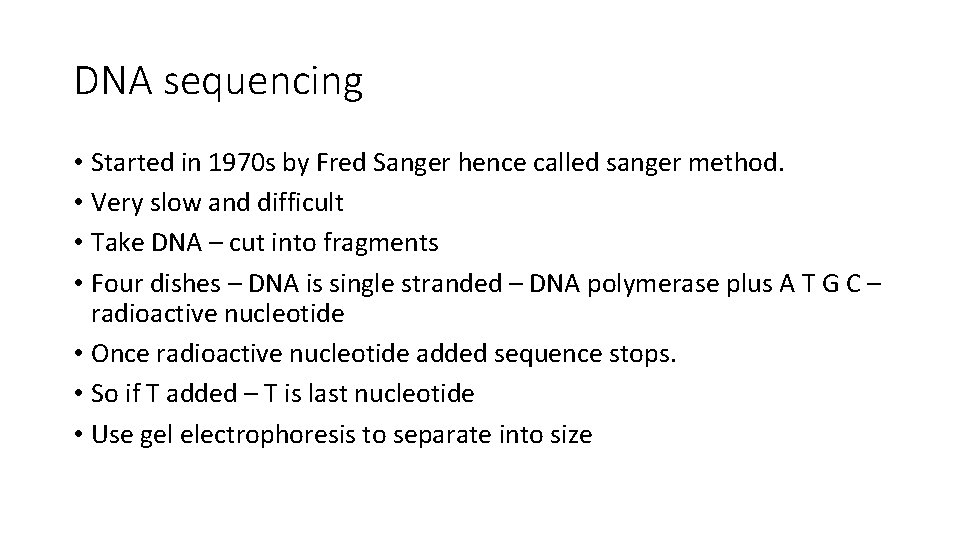
DNA sequencing • Started in 1970 s by Fred Sanger hence called sanger method. • Very slow and difficult • Take DNA – cut into fragments • Four dishes – DNA is single stranded – DNA polymerase plus A T G C – radioactive nucleotide • Once radioactive nucleotide added sequence stops. • So if T added – T is last nucleotide • Use gel electrophoresis to separate into size
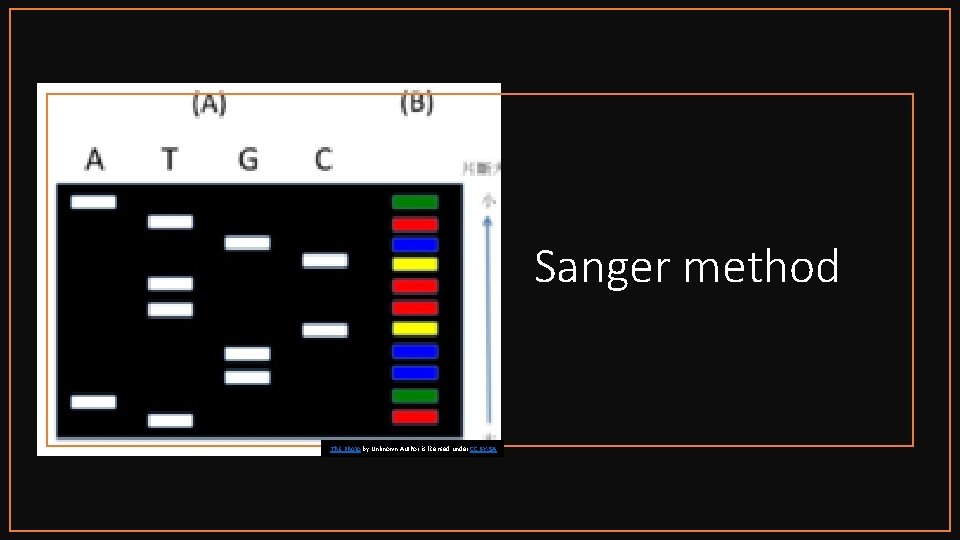
Sanger method This Photo by Unknown Author is licensed under CC BY-SA
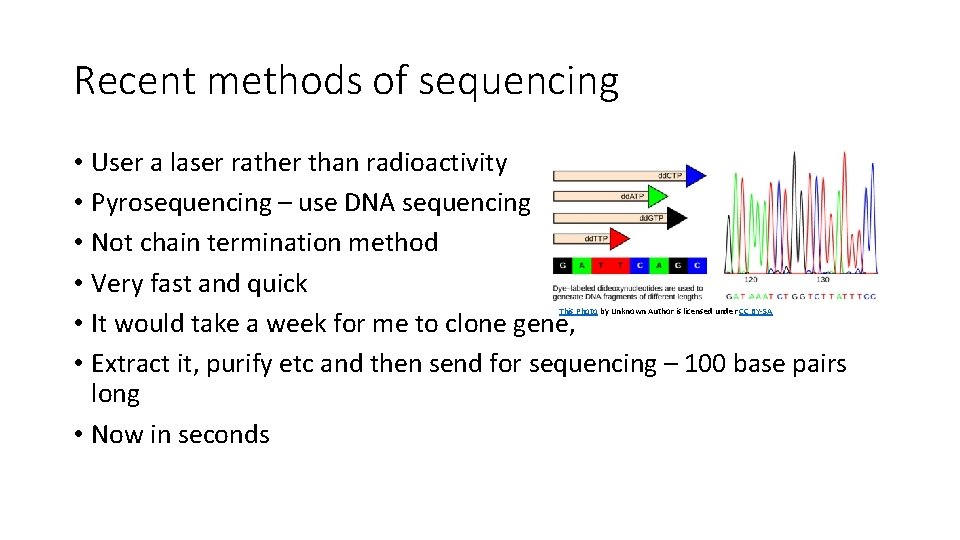
Recent methods of sequencing • User a laser rather than radioactivity • Pyrosequencing – use DNA sequencing • Not chain termination method • Very fast and quick • It would take a week for me to clone gene, • Extract it, purify etc and then send for sequencing – 100 base pairs long • Now in seconds This Photo by Unknown Author is licensed under CC BY-SA
Pyrosequencing • DNA split by pressure and air into lots of fragments • Form ss. DNA – templates and can be immobilised • Add primer (strand needed for DNA), DNA polymerase added with modified nucleotides – ATP, TTP, CTP, GTP + other enzymes + luciferin. • Only one nucleotide added at each time, each nucleotide has three phosphates – two phosphoryl groups are released pyrophosphate PPi
Pyrosequencing • APS + enzymes ATP sulfurylase convert PPi into ATP • ATP converts luciferin into oxyluciferin with luciferase – generates visible light. • Different nucleotides produce different lights wavelengths
- Slides: 17