
GENETIC FINGERPRINTING A look at a powerful forensic
- Slides: 25
GENETIC FINGERPRINTING A look at a powerful forensic investigative tool! Casey Stroz SBF-03
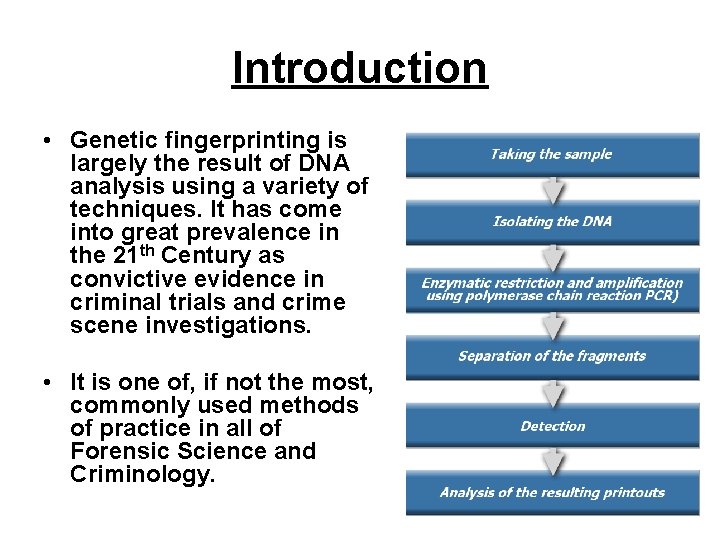
Introduction • Genetic fingerprinting is largely the result of DNA analysis using a variety of techniques. It has come into great prevalence in the 21 th Century as convictive evidence in criminal trials and crime scene investigations. • It is one of, if not the most, commonly used methods of practice in all of Forensic Science and Criminology.
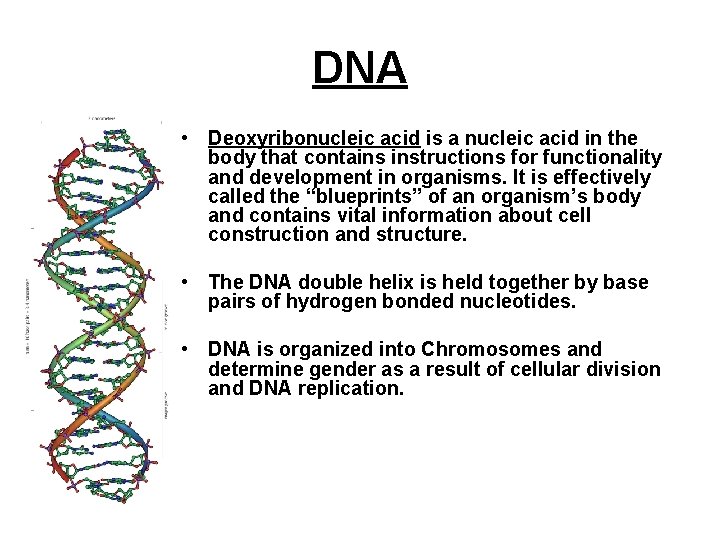
DNA • Deoxyribonucleic acid is a nucleic acid in the body that contains instructions for functionality and development in organisms. It is effectively called the “blueprints” of an organism’s body and contains vital information about cell construction and structure. • The DNA double helix is held together by base pairs of hydrogen bonded nucleotides. • DNA is organized into Chromosomes and determine gender as a result of cellular division and DNA replication.
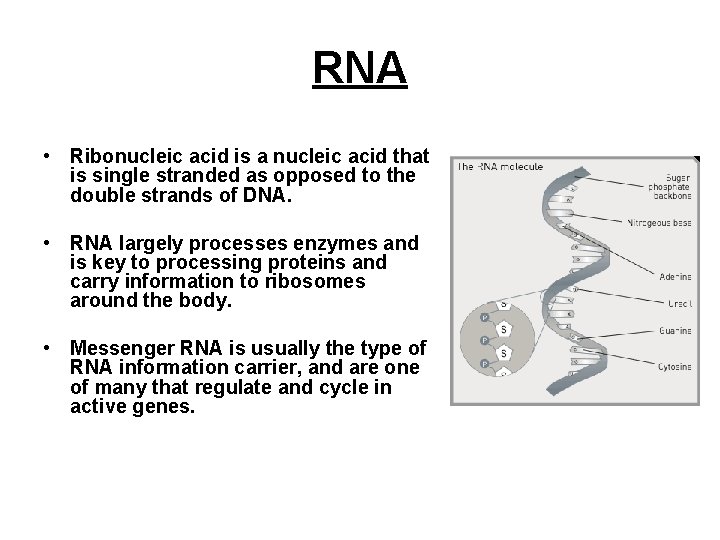
RNA • Ribonucleic acid is a nucleic acid that is single stranded as opposed to the double strands of DNA. • RNA largely processes enzymes and is key to processing proteins and carry information to ribosomes around the body. • Messenger RNA is usually the type of RNA information carrier, and are one of many that regulate and cycle in active genes.
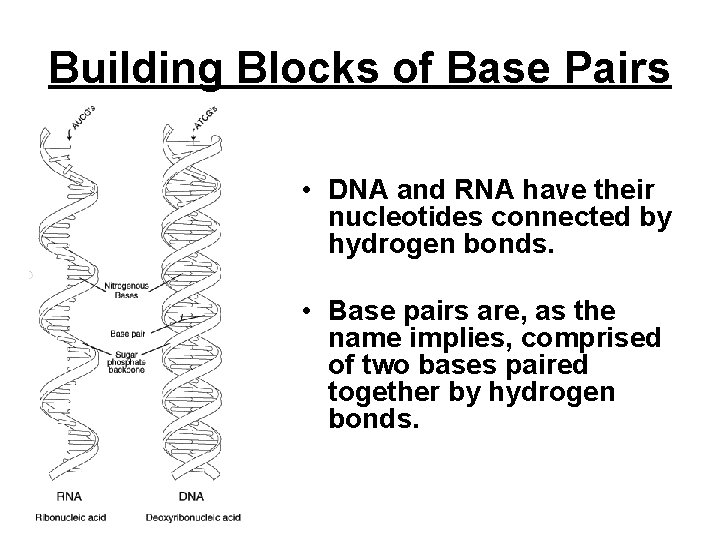
Building Blocks of Base Pairs • DNA and RNA have their nucleotides connected by hydrogen bonds. • Base pairs are, as the name implies, comprised of two bases paired together by hydrogen bonds.
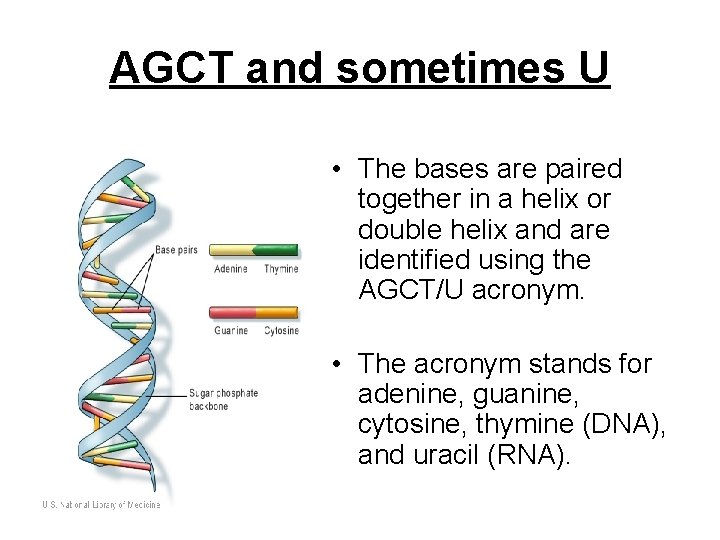
AGCT and sometimes U • The bases are paired together in a helix or double helix and are identified using the AGCT/U acronym. • The acronym stands for adenine, guanine, cytosine, thymine (DNA), and uracil (RNA).
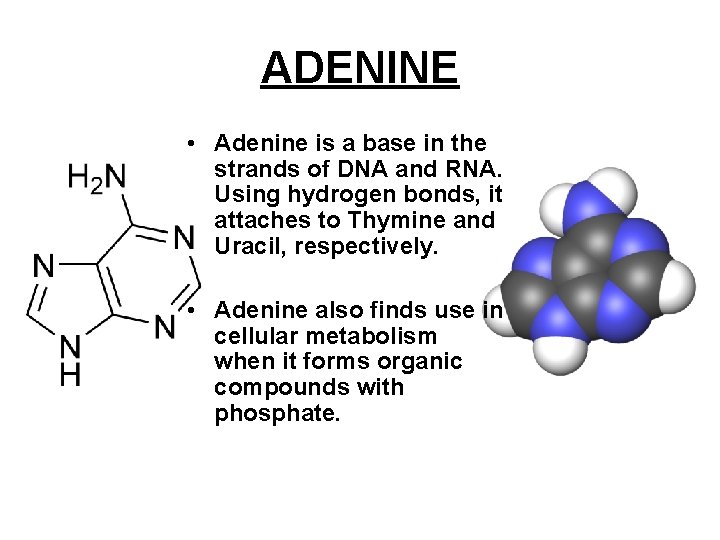
ADENINE • Adenine is a base in the strands of DNA and RNA. Using hydrogen bonds, it attaches to Thymine and Uracil, respectively. • Adenine also finds use in cellular metabolism when it forms organic compounds with phosphate.
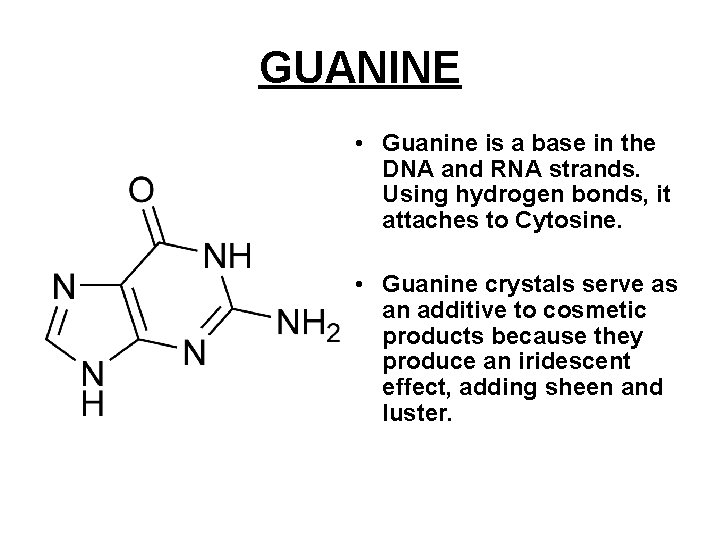
GUANINE • Guanine is a base in the DNA and RNA strands. Using hydrogen bonds, it attaches to Cytosine. • Guanine crystals serve as an additive to cosmetic products because they produce an iridescent effect, adding sheen and luster.
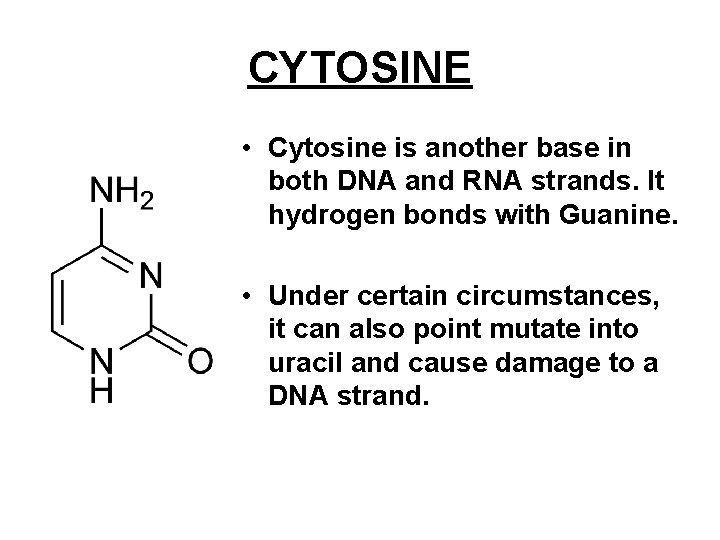
CYTOSINE • Cytosine is another base in both DNA and RNA strands. It hydrogen bonds with Guanine. • Under certain circumstances, it can also point mutate into uracil and cause damage to a DNA strand.
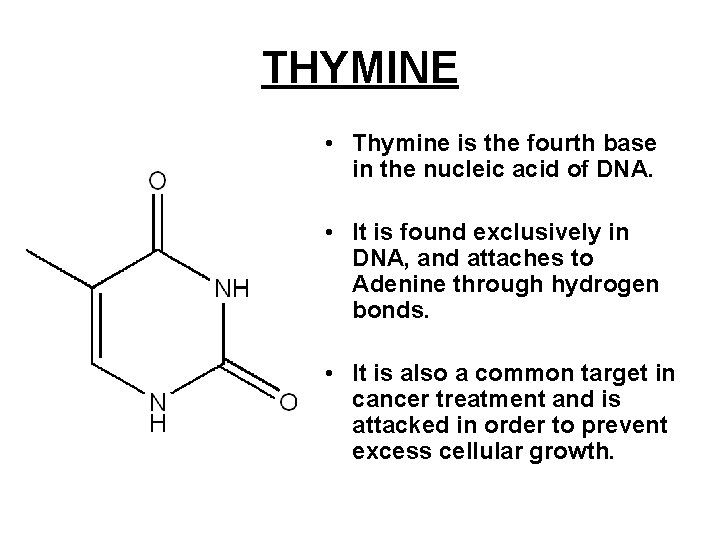
THYMINE • Thymine is the fourth base in the nucleic acid of DNA. • It is found exclusively in DNA, and attaches to Adenine through hydrogen bonds. • It is also a common target in cancer treatment and is attacked in order to prevent excess cellular growth.
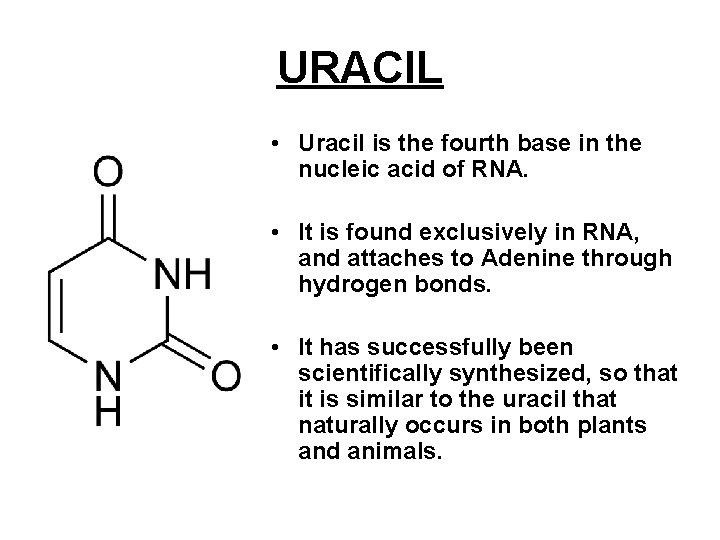
URACIL • Uracil is the fourth base in the nucleic acid of RNA. • It is found exclusively in RNA, and attaches to Adenine through hydrogen bonds. • It has successfully been scientifically synthesized, so that it is similar to the uracil that naturally occurs in both plants and animals.
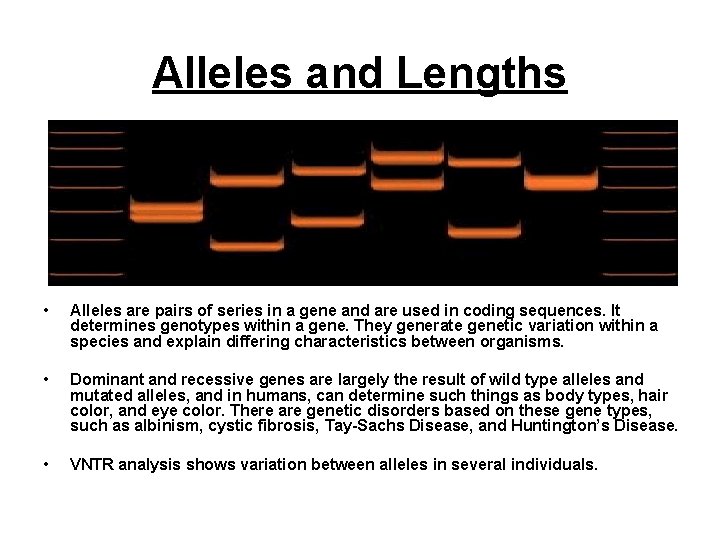
Alleles and Lengths • Alleles are pairs of series in a gene and are used in coding sequences. It determines genotypes within a gene. They generate genetic variation within a species and explain differing characteristics between organisms. • Dominant and recessive genes are largely the result of wild type alleles and mutated alleles, and in humans, can determine such things as body types, hair color, and eye color. There are genetic disorders based on these gene types, such as albinism, cystic fibrosis, Tay-Sachs Disease, and Huntington’s Disease. • VNTR analysis shows variation between alleles in several individuals.
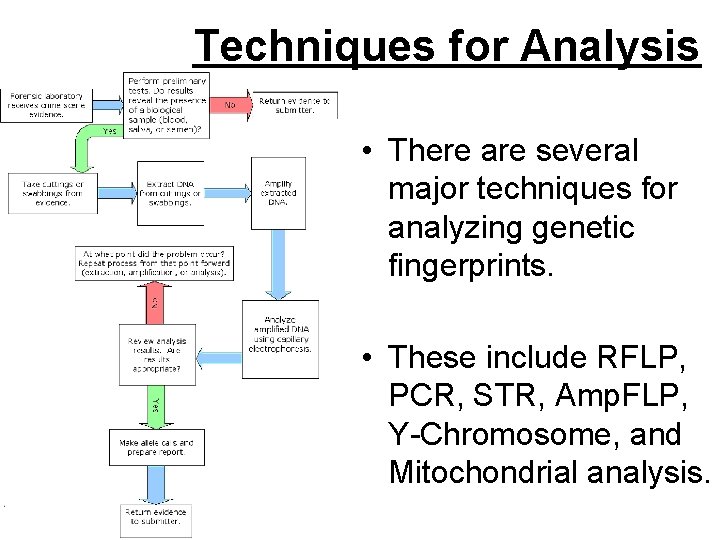
Techniques for Analysis • There are several major techniques for analyzing genetic fingerprints. • These include RFLP, PCR, STR, Amp. FLP, Y-Chromosome, and Mitochondrial analysis.
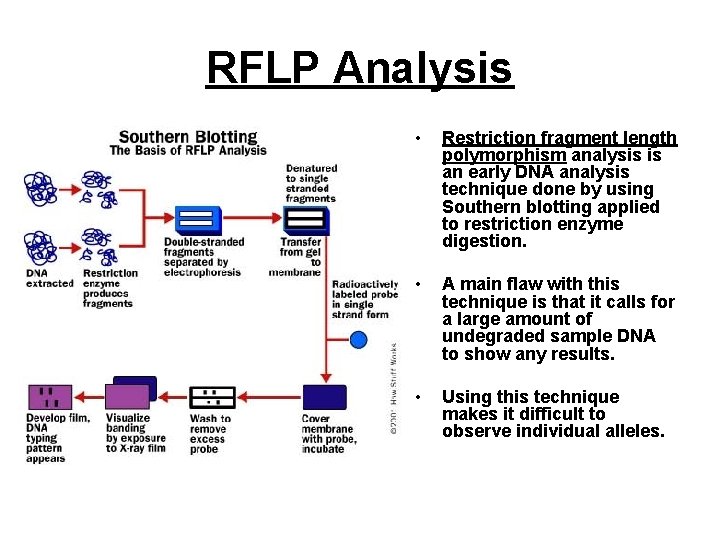
RFLP Analysis • Restriction fragment length polymorphism analysis is an early DNA analysis technique done by using Southern blotting applied to restriction enzyme digestion. • A main flaw with this technique is that it calls for a large amount of undegraded sample DNA to show any results. • Using this technique makes it difficult to observe individual alleles.
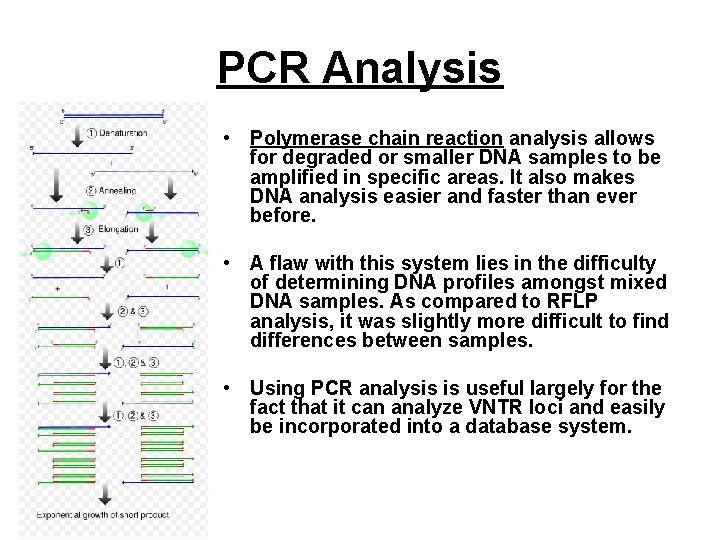
PCR Analysis • Polymerase chain reaction analysis allows for degraded or smaller DNA samples to be amplified in specific areas. It also makes DNA analysis easier and faster than ever before. • A flaw with this system lies in the difficulty of determining DNA profiles amongst mixed DNA samples. As compared to RFLP analysis, it was slightly more difficult to find differences between samples. • Using PCR analysis is useful largely for the fact that it can analyze VNTR loci and easily be incorporated into a database system.
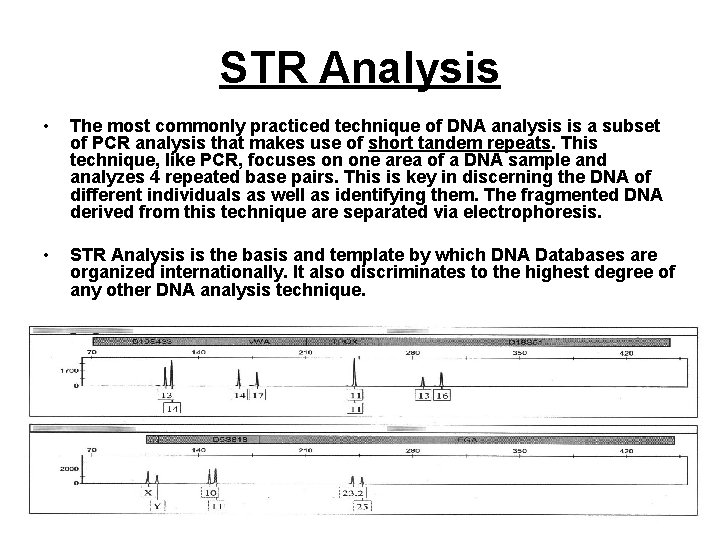
STR Analysis • The most commonly practiced technique of DNA analysis is a subset of PCR analysis that makes use of short tandem repeats. This technique, like PCR, focuses on one area of a DNA sample and analyzes 4 repeated base pairs. This is key in discerning the DNA of different individuals as well as identifying them. The fragmented DNA derived from this technique are separated via electrophoresis. • STR Analysis is the basis and template by which DNA Databases are organized internationally. It also discriminates to the highest degree of any other DNA analysis technique.
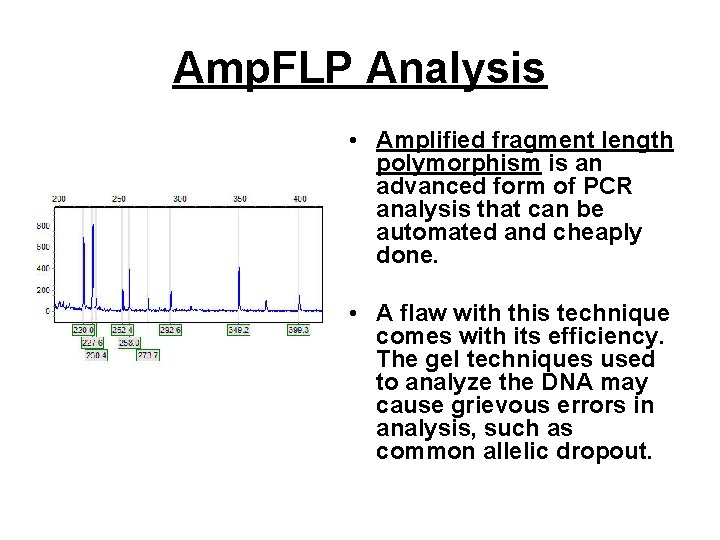
Amp. FLP Analysis • Amplified fragment length polymorphism is an advanced form of PCR analysis that can be automated and cheaply done. • A flaw with this technique comes with its efficiency. The gel techniques used to analyze the DNA may cause grievous errors in analysis, such as common allelic dropout.
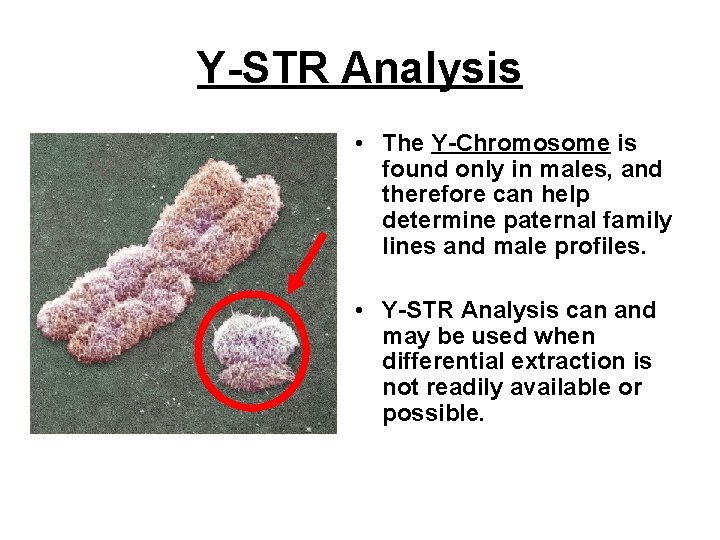
Y-STR Analysis • The Y-Chromosome is found only in males, and therefore can help determine paternal family lines and male profiles. • Y-STR Analysis can and may be used when differential extraction is not readily available or possible.
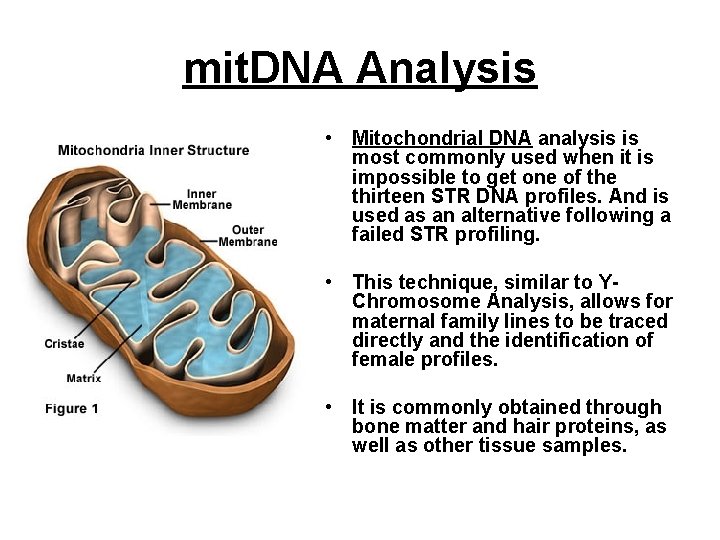
mit. DNA Analysis • Mitochondrial DNA analysis is most commonly used when it is impossible to get one of the thirteen STR DNA profiles. And is used as an alternative following a failed STR profiling. • This technique, similar to YChromosome Analysis, allows for maternal family lines to be traced directly and the identification of female profiles. • It is commonly obtained through bone matter and hair proteins, as well as other tissue samples.
Databases • National DNA Databases are set up internationally and are organized by country. • The first to be set up was the United Kingdom National DNA Database in 1995. • Databases are also broken down by region and state. In the United States, each of the 50 states has its own DNA database. • Whether repeat criminal offenders or normal civilians are entered in a database is left to government regulation.
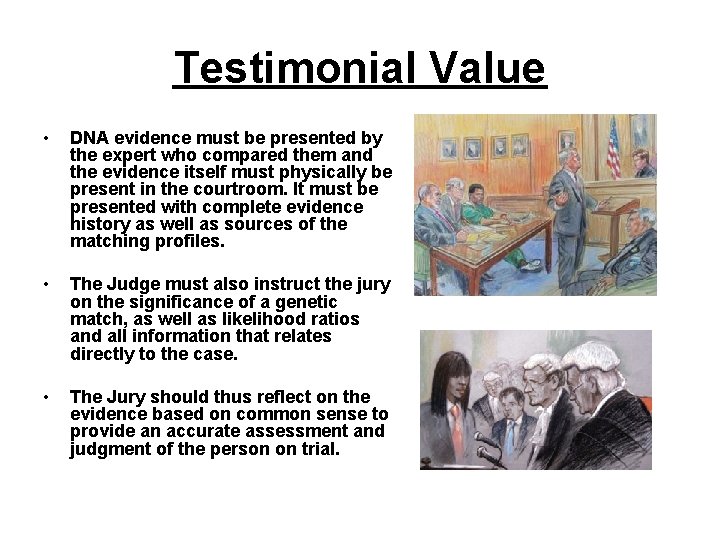
Testimonial Value • DNA evidence must be presented by the expert who compared them and the evidence itself must physically be present in the courtroom. It must be presented with complete evidence history as well as sources of the matching profiles. • The Judge must also instruct the jury on the significance of a genetic match, as well as likelihood ratios and all information that relates directly to the case. • The Jury should thus reflect on the evidence based on common sense to provide an accurate assessment and judgment of the person on trial.
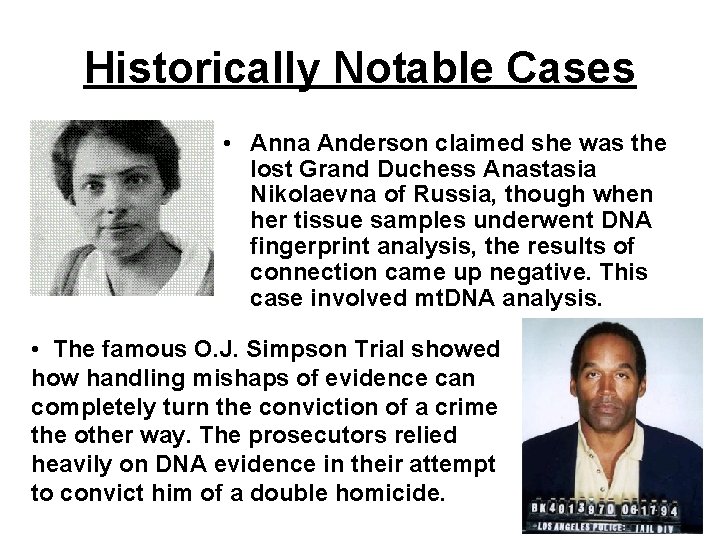
Historically Notable Cases • Anna Anderson claimed she was the lost Grand Duchess Anastasia Nikolaevna of Russia, though when her tissue samples underwent DNA fingerprint analysis, the results of connection came up negative. This case involved mt. DNA analysis. • The famous O. J. Simpson Trial showed how handling mishaps of evidence can completely turn the conviction of a crime the other way. The prosecutors relied heavily on DNA evidence in their attempt to convict him of a double homicide.
More Historic Cases • Dr. Richard Schmidt was connected to a second degree murder when a connection was also made between viral DNA, HIV, and AIDS. He injected his girlfriend with HIV, killing her. • Tommie Lee Andrews was the first rapist convicted largely as a result of DNA evidence swabbed from his victim. • “The South Side Strangler, ” Timothy Spencer, was the first man in the US to be sentenced to death as a result of the connection between him and several related crimes via DNA analysis.
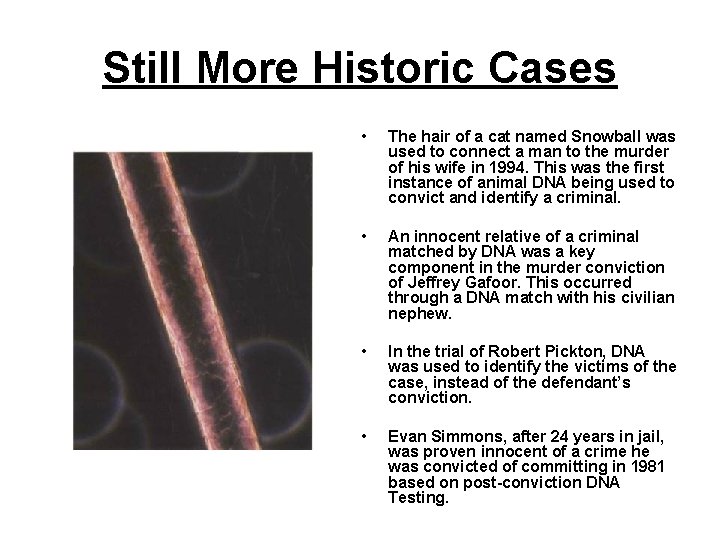
Still More Historic Cases • The hair of a cat named Snowball was used to connect a man to the murder of his wife in 1994. This was the first instance of animal DNA being used to convict and identify a criminal. • An innocent relative of a criminal matched by DNA was a key component in the murder conviction of Jeffrey Gafoor. This occurred through a DNA match with his civilian nephew. • In the trial of Robert Pickton, DNA was used to identify the victims of the case, instead of the defendant’s conviction. • Evan Simmons, after 24 years in jail, was proven innocent of a crime he was convicted of committing in 1981 based on post-conviction DNA Testing.
Informative Sources • • • http: //www. ncbi. nlm. nih. gov/projects/genome/probe/doc/Tech. RFLP. shtml http: //www. sumanasinc. com/webcontent/animations/content/pcr. html http: //www. cstl. nist. gov/biotech/strbase/index. htm http: //www. keygene. com/keygene/techs-apps/index. php http: //www. bradshawfoundation. com/stephenoppenheimer/ http: //www. wikicrimeline. co. uk/index. php? title=DNA_profiling#Presentation_and_evaluation_of_evidence_of_p artial_or_incomplete_DNA_profiles