
Genetic Equilibrium Population genetics looks at evolution at
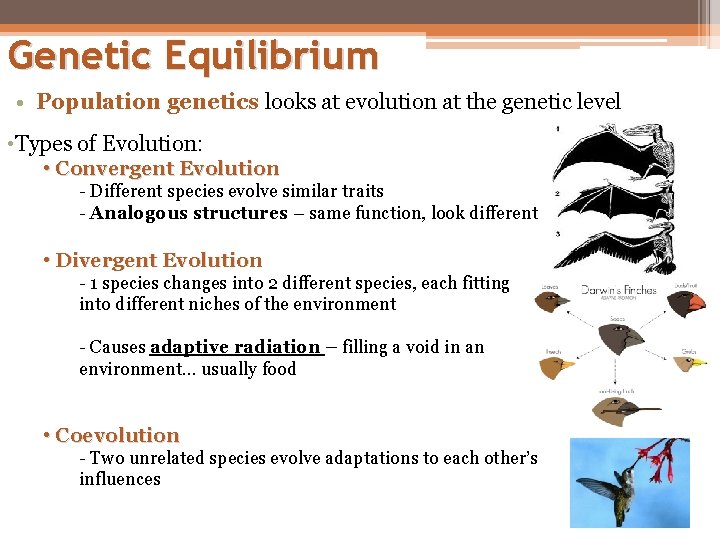
Genetic Equilibrium • Population genetics looks at evolution at the genetic level • Types of Evolution: • Convergent Evolution - Different species evolve similar traits - Analogous structures – same function, look different • Divergent Evolution - 1 species changes into 2 different species, each fitting into different niches of the environment - Causes adaptive radiation – filling a void in an environment… usually food • Coevolution - Two unrelated species evolve adaptations to each other’s influences

Genetic Equilibrium • In a population, there are different variations for genes, which is called the gene pool • The allele frequency is how often a dominant or recessive allele shows up in an organism’s genotype • The phenotype frequency is how often a trait is expressed • Hardy-Weinberg Equilibrium ▫ Genotype frequencies tend to remain the same through generations, unless it is changing through evolution ▫ Shows that populations are at equilibrium most of the time

Disruptions to Genetic Equilibrium • Any change to the genetic equilibrium of a population results in evolution Disruption to Genetic Equilibrium: 1. Mutations ▫ Radiation or chemicals can cause changes in the DNA sequence, causing new alleles to be created ▫ Beneficial mutations are a vital part of evolution 2. Gene Flow ▫ Genes move from one population to another � Ex: Immigration & emigration; seed dispersal ▫ New alleles are introduced into populations

Disruptions to Genetic Equilibrium 3. Genetic Drift ▫ ▫ Allele frequencies change randomly or as a result of chance Founder effect: newly populated areas have less diversity 4. Non-random mating ▫ ▫ ▫ Mating is often influenced by location; related individuals can mate Also caused by organisms selecting traits similar to theirs Traits can become amplified in populations 5. Natural Selection ▫ Favorable traits are selected for and persist in a population
- Slides: 4