
Genetic Engineering and Biotechnology Topic 4 Genetics Genetic

Genetic Engineering and Biotechnology Topic 4 Genetics
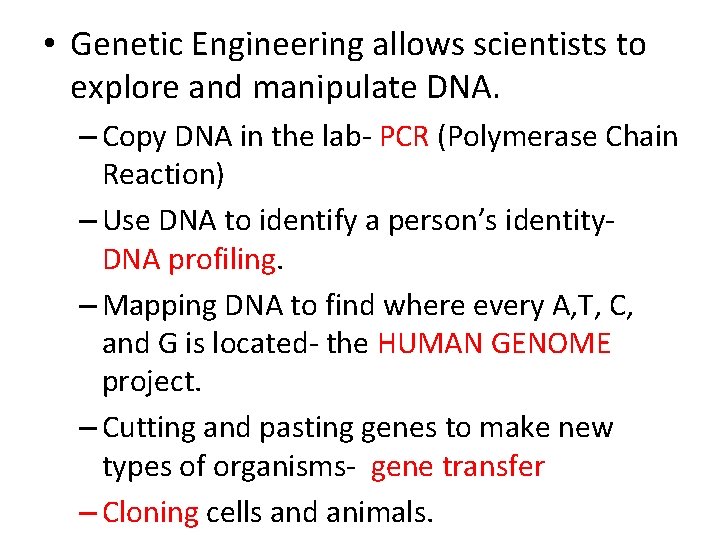
• Genetic Engineering allows scientists to explore and manipulate DNA. – Copy DNA in the lab- PCR (Polymerase Chain Reaction) – Use DNA to identify a person’s identity. DNA profiling. – Mapping DNA to find where every A, T, C, and G is located- the HUMAN GENOME project. – Cutting and pasting genes to make new types of organisms- gene transfer – Cloning cells and animals.
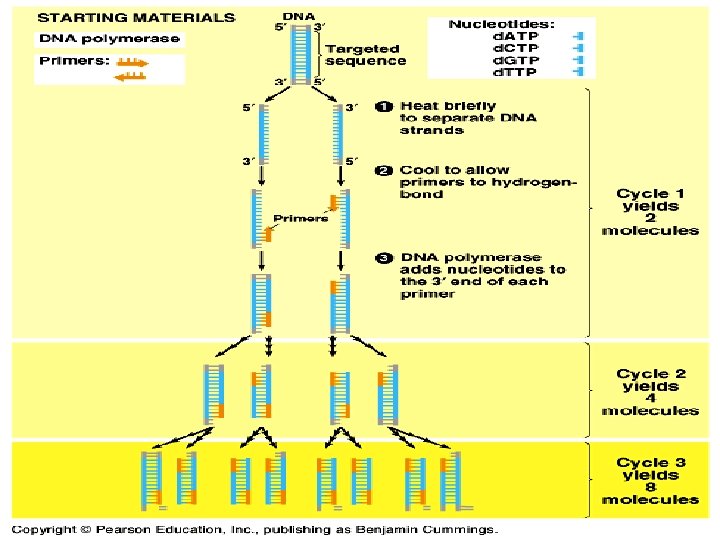
PCR Copying Samples of DNA • Allows a small sample of DNA to be quickly amplified (copied) into millions of copies of DNA in just a few hours. • It produces large enough quantities of DNA for analysis. • Ex) Crime scene DNA samples, embryo prenatal screening, or analysis of fossilized organisms.
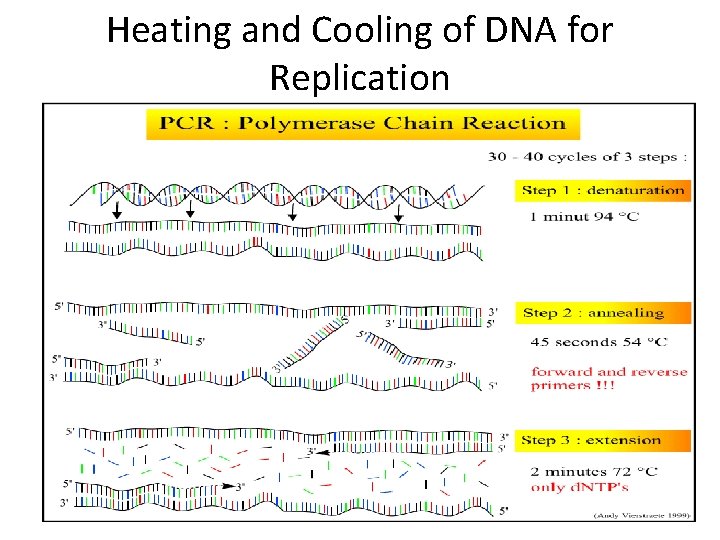
Heating and Cooling of DNA for Replication
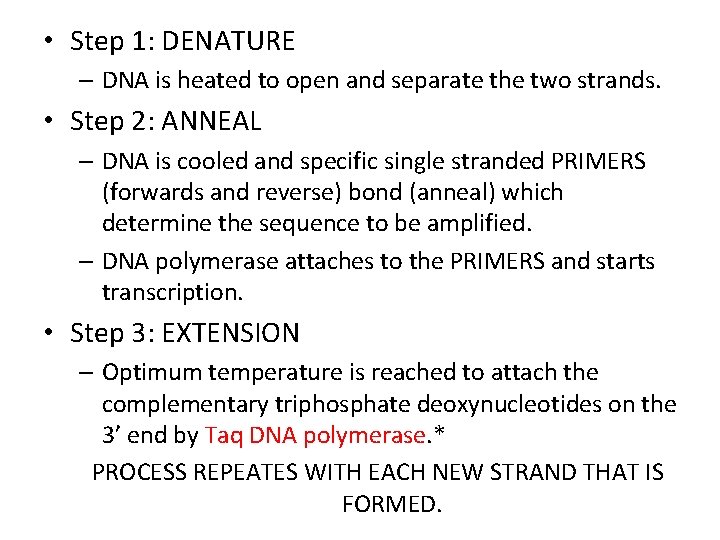
• Step 1: DENATURE – DNA is heated to open and separate the two strands. • Step 2: ANNEAL – DNA is cooled and specific single stranded PRIMERS (forwards and reverse) bond (anneal) which determine the sequence to be amplified. – DNA polymerase attaches to the PRIMERS and starts transcription. • Step 3: EXTENSION – Optimum temperature is reached to attach the complementary triphosphate deoxynucleotides on the 3’ end by Taq DNA polymerase. * PROCESS REPEATES WITH EACH NEW STRAND THAT IS FORMED.
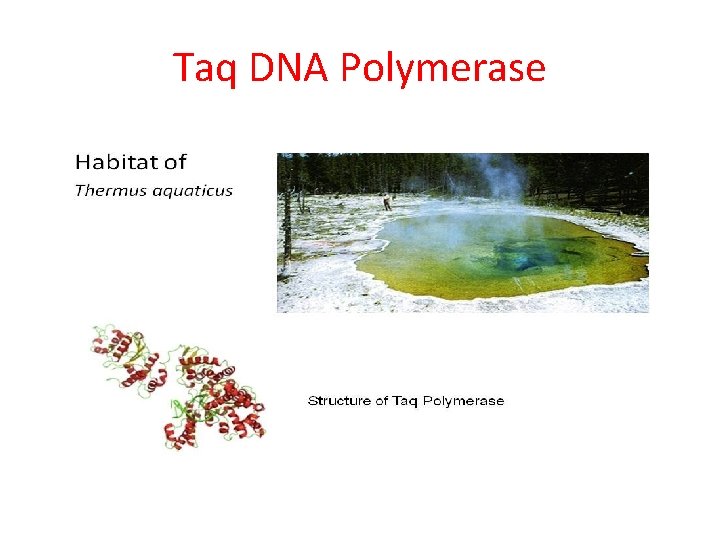
Taq DNA Polymerase
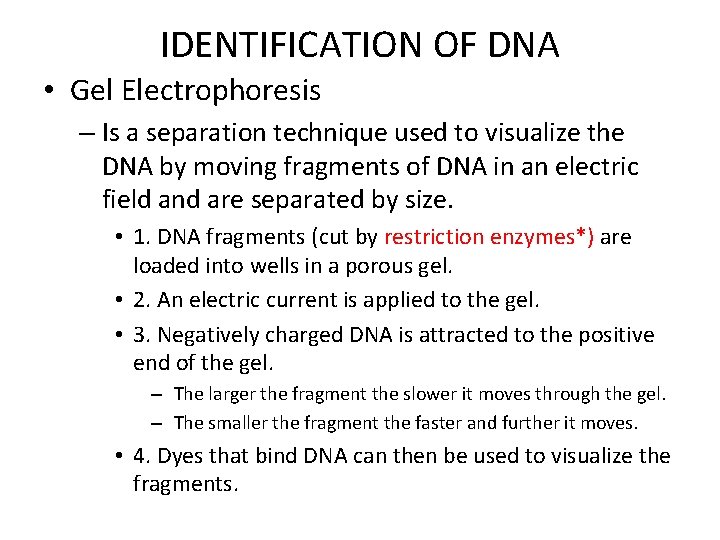
IDENTIFICATION OF DNA • Gel Electrophoresis – Is a separation technique used to visualize the DNA by moving fragments of DNA in an electric field and are separated by size. • 1. DNA fragments (cut by restriction enzymes*) are loaded into wells in a porous gel. • 2. An electric current is applied to the gel. • 3. Negatively charged DNA is attracted to the positive end of the gel. – The larger the fragment the slower it moves through the gel. – The smaller the fragment the faster and further it moves. • 4. Dyes that bind DNA can then be used to visualize the fragments.
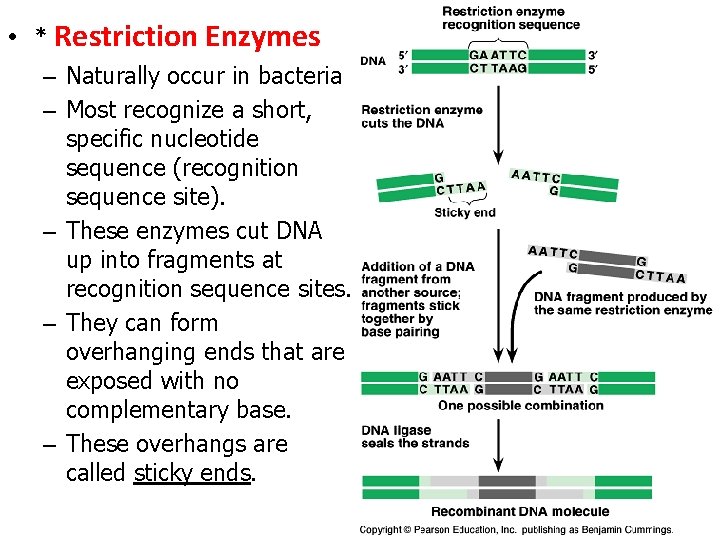
• * Restriction Enzymes – Naturally occur in bacteria – Most recognize a short, specific nucleotide sequence (recognition sequence site). – These enzymes cut DNA up into fragments at recognition sequence sites. – They can form overhanging ends that are exposed with no complementary base. – These overhangs are called sticky ends.
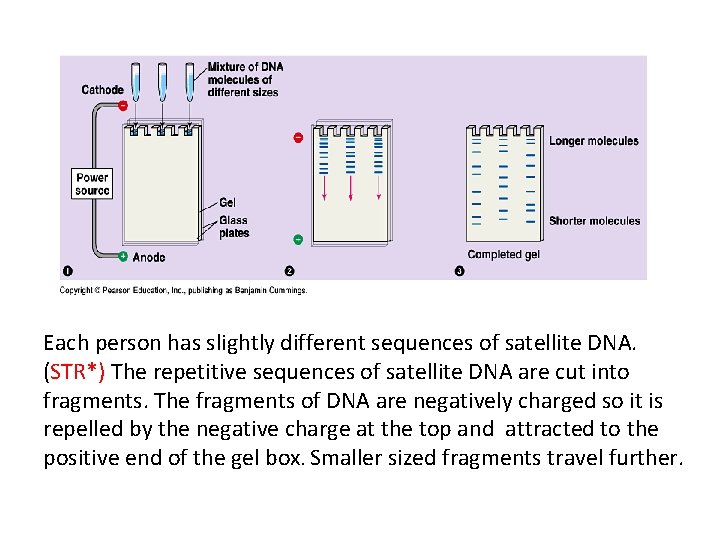
Each person has slightly different sequences of satellite DNA. (STR*) The repetitive sequences of satellite DNA are cut into fragments. The fragments of DNA are negatively charged so it is repelled by the negative charge at the top and attracted to the positive end of the gel box. Smaller sized fragments travel further.
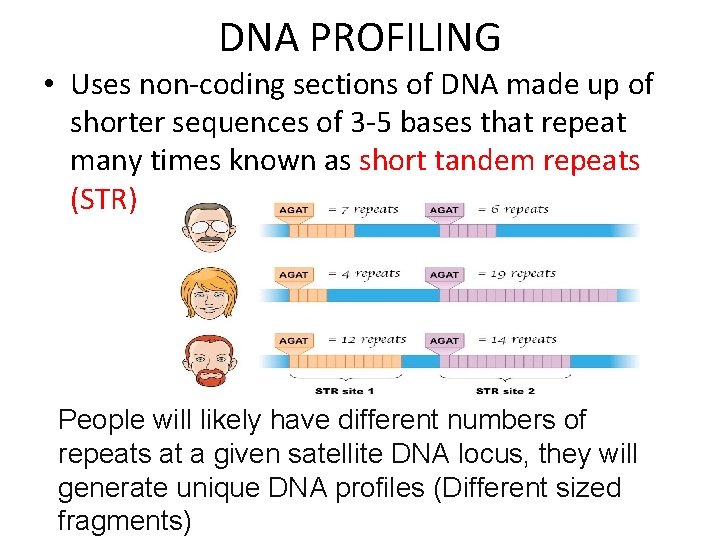
DNA PROFILING • Uses non-coding sections of DNA made up of shorter sequences of 3 -5 bases that repeat many times known as short tandem repeats (STR) People will likely have different numbers of repeats at a given satellite DNA locus, they will generate unique DNA profiles (Different sized fragments)
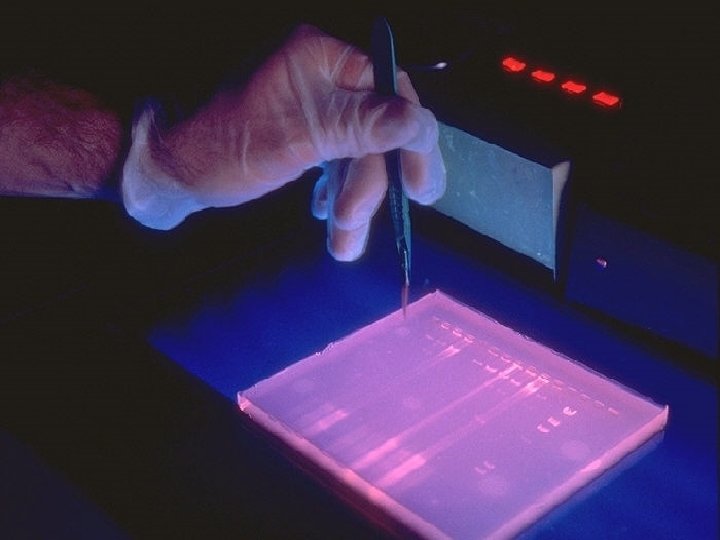
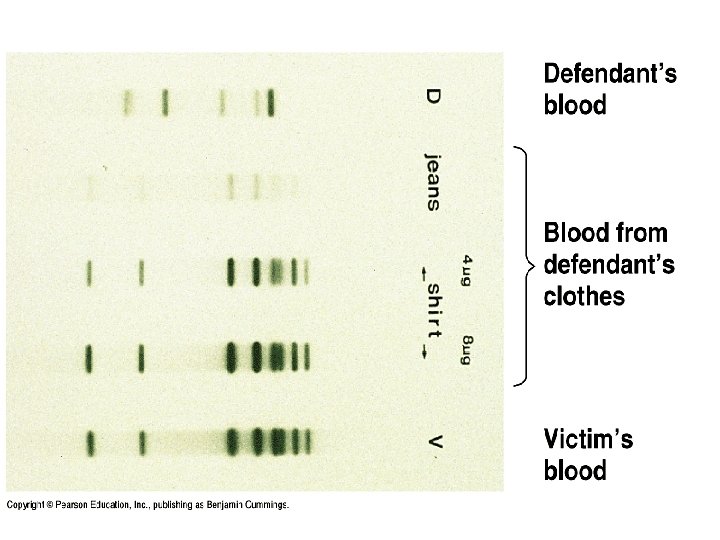
Applications of Gel Electrophoresis GEL ELECTROPHORESIS IS USED IN DNA PROFILING. – Provides a unique fingerprint of an individual. – Location of genes on a chromosome. – Used in criminal investigations (murder or rape). – Used to identify people dead for many years (mummies/Russian tsars) – To determine who are the biological parents of a child.
DNA PROFILE ANALYSIS The Process of Matching an Unknown Sample of DNA to a Known Sample. “DNA FINGERPRINTING”
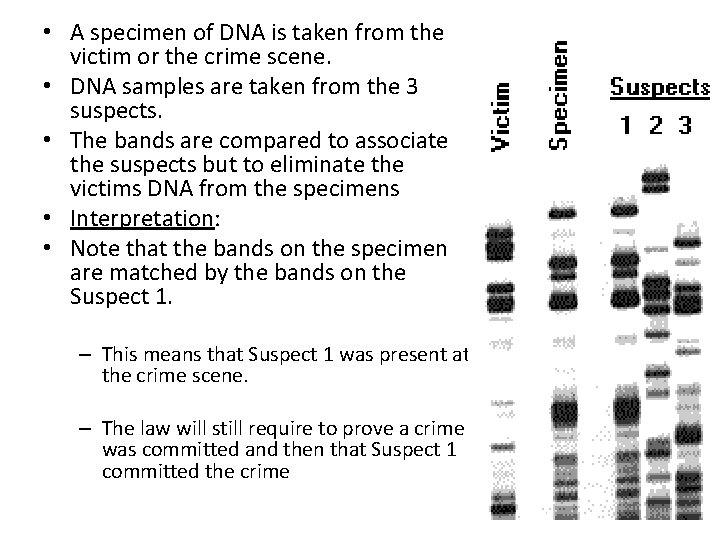
• A specimen of DNA is taken from the victim or the crime scene. • DNA samples are taken from the 3 suspects. • The bands are compared to associate the suspects but to eliminate the victims DNA from the specimens • Interpretation: • Note that the bands on the specimen are matched by the bands on the Suspect 1. – This means that Suspect 1 was present at the crime scene. – The law will still require to prove a crime was committed and then that Suspect 1 committed the crime
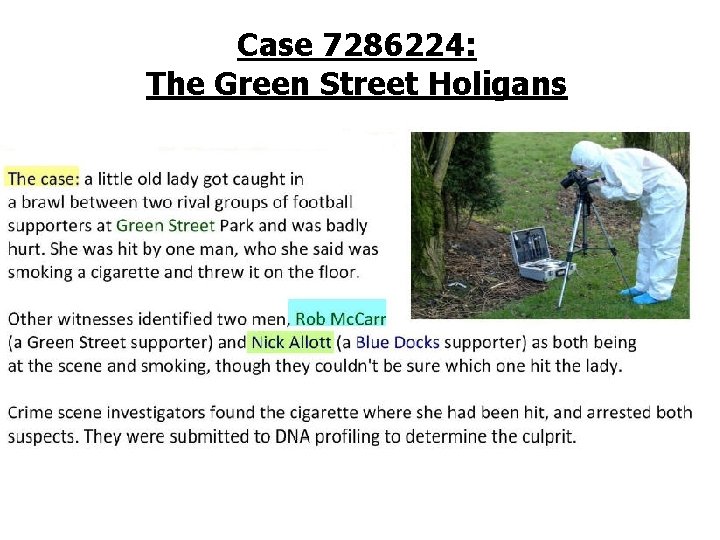
Case 7286224: The Green Street Holigans
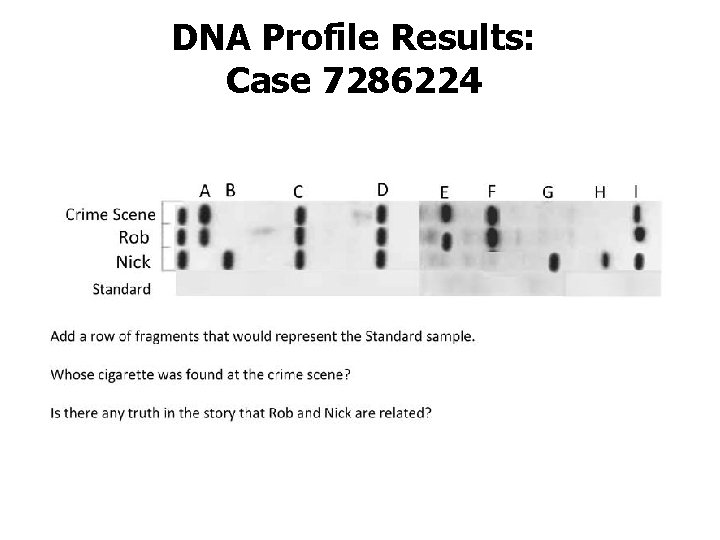
DNA Profile Results: Case 7286224
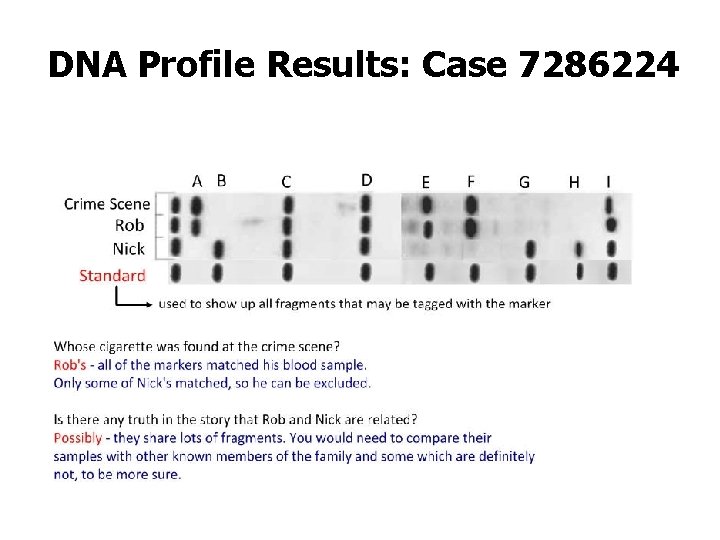
DNA Profile Results: Case 7286224
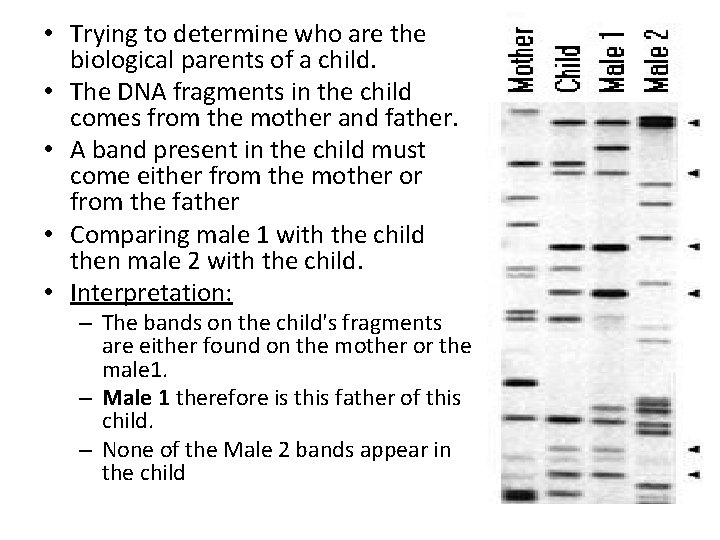
• Trying to determine who are the biological parents of a child. • The DNA fragments in the child comes from the mother and father. • A band present in the child must come either from the mother or from the father • Comparing male 1 with the child then male 2 with the child. • Interpretation: – The bands on the child's fragments are either found on the mother or the male 1. – Male 1 therefore is this father of this child. – None of the Male 2 bands appear in the child
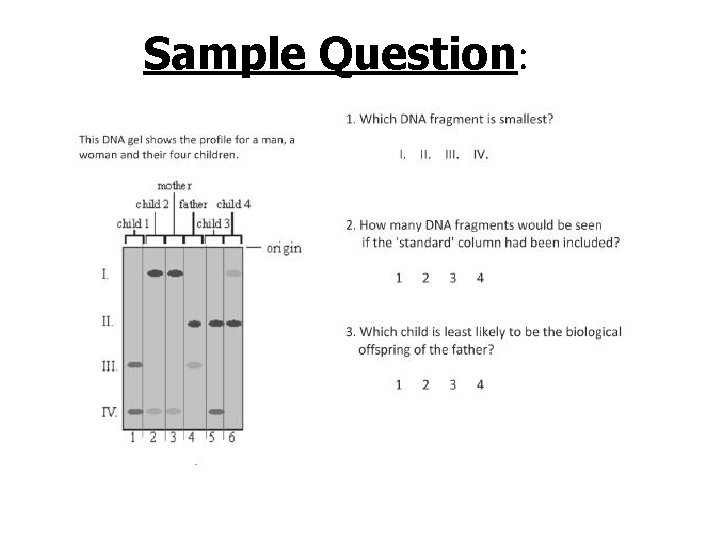
Sample Question:
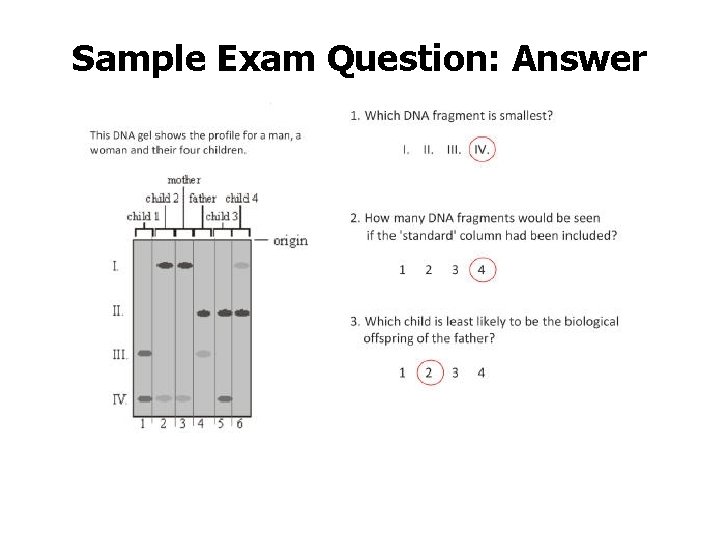
Sample Exam Question: Answer
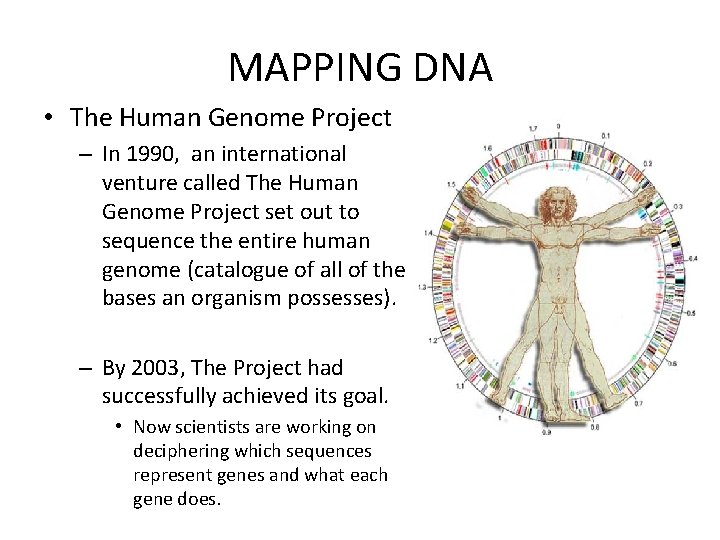
MAPPING DNA • The Human Genome Project – In 1990, an international venture called The Human Genome Project set out to sequence the entire human genome (catalogue of all of the bases an organism possesses). – By 2003, The Project had successfully achieved its goal. • Now scientists are working on deciphering which sequences represent genes and what each gene does.
Applications of Sequencing the Human Genome • 1. Find the location of the genes of genetic disorders. • Can be used to screen parents for possessing the alleles for the genetic disorder and to get a better understanding of the disorder. • 2. The production of new medications. – Find the coding for the gene that produces beneficial molecules in healthy people. – Copy that gene and use its instructions to synthesize the molecule in the lab.
• 3. Comparison of the genetic make up of human populations around the world and our human genome compared to other organisms. – Reveals information about ancestry and how humans have migrated and mixed their genes with other populations. – See the similarities and differences between the human species and other species to see genetic relatedness.
DNA= UNIVERSAL CODE • The genetic code is UNIVERSAL. – All known organisms use the bases A, T, C, and G to code for their protein production. – The codons they form always code for the same amino acids. So……………… – If we transfer a gene from one species to another it should still be transcribed and translated into the same protein. GENE TRANSFER
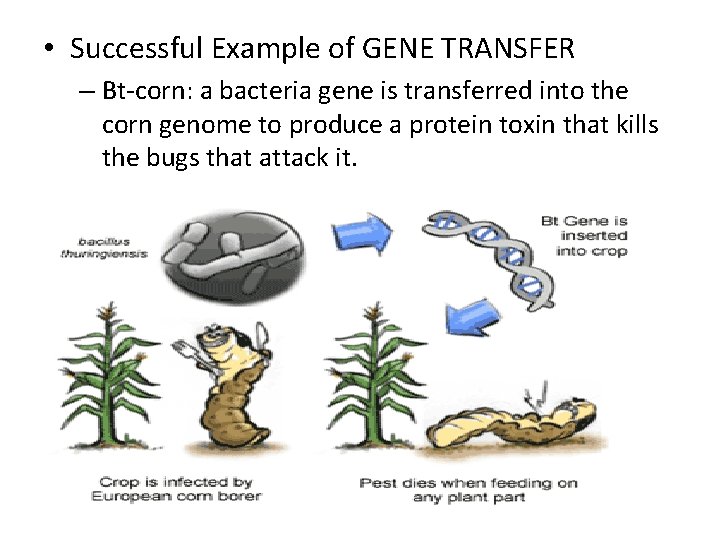
• Successful Example of GENE TRANSFER – Bt-corn: a bacteria gene is transferred into the corn genome to produce a protein toxin that kills the bugs that attack it.

Bt- corn Gene Transfer
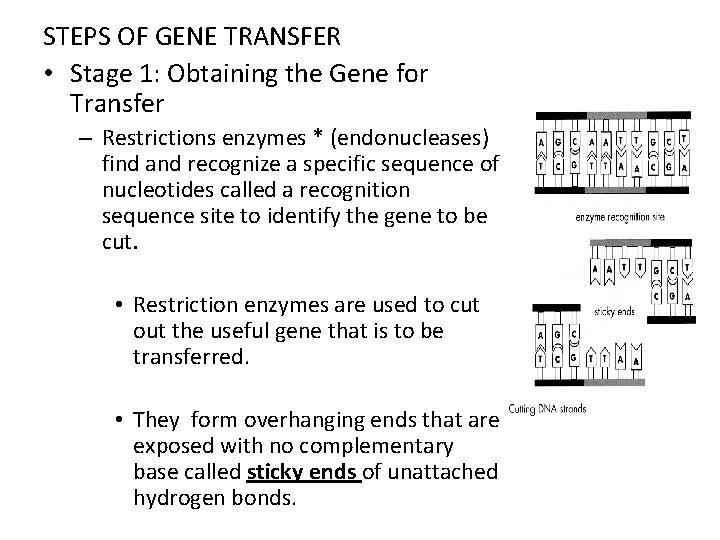
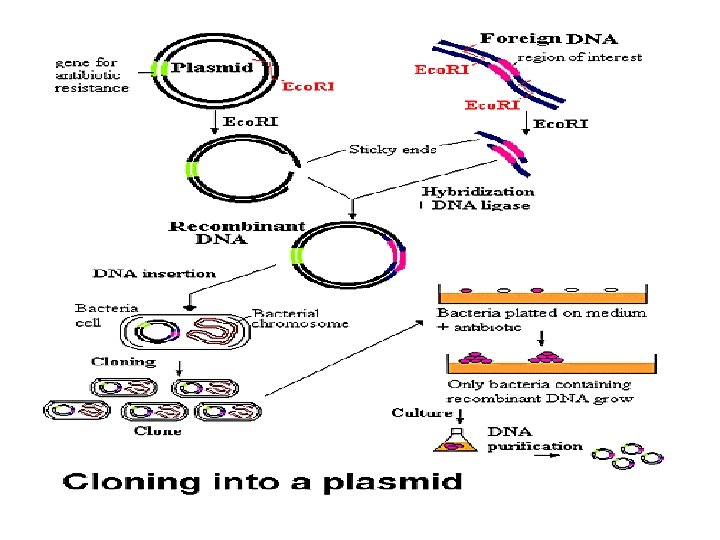
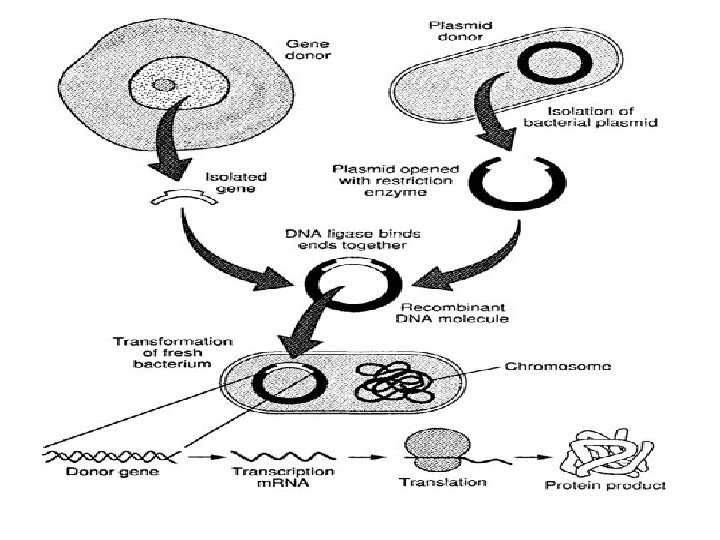
STEPS OF GENE TRANSFER • Stage 1: Obtaining the Gene for Transfer – Restrictions enzymes * (endonucleases) find and recognize a specific sequence of nucleotides called a recognition sequence site to identify the gene to be cut. • Restriction enzymes are used to cut out the useful gene that is to be transferred. • They form overhanging ends that are exposed with no complementary base called sticky ends of unattached hydrogen bonds.
• Stage 2: Preparing a VECTOR or a means of transferring the DNA for a gene transfer. – Common vectors are PLASMIDS of bacteria, viruses, and sometimes yeast cells. – The VECTOR must be “cut” with the same restriction enzyme as the gene to be transferred. – This produces the same sticky ends that are complementary to each other.
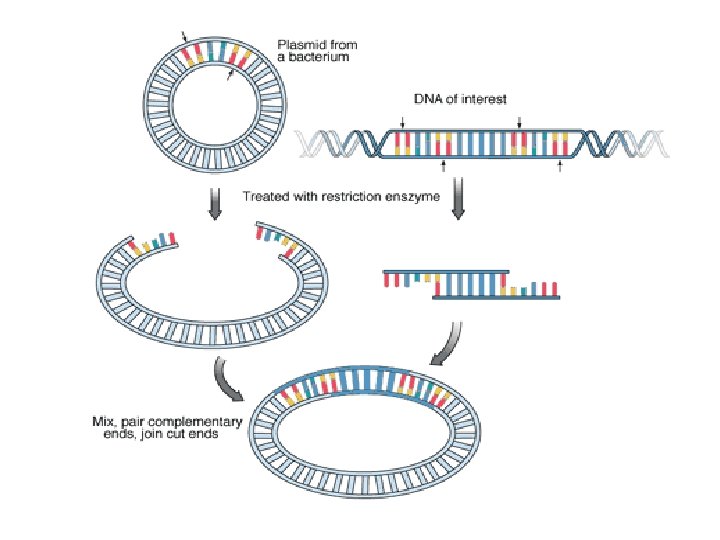
• Stage 4 Recombinant DNA – The “sticky end” bases of the plasmid and the gene to be transferred HYDROGEN bond together. – DNA LIGASE “glue” the sugar phosphate backbone together.
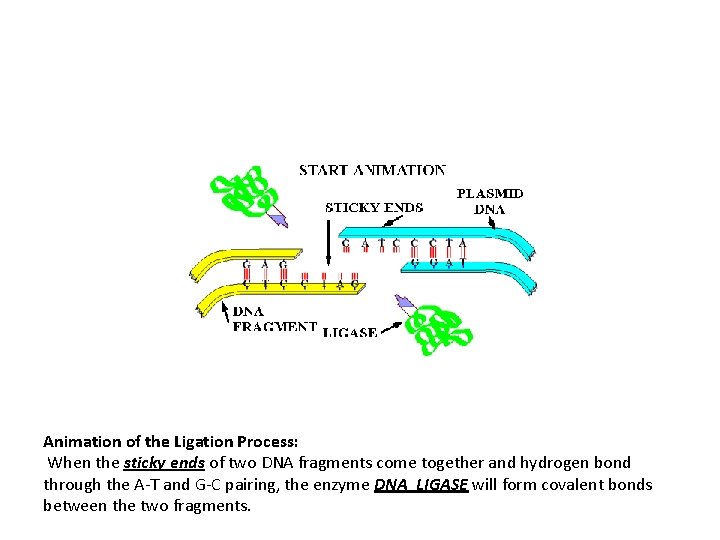
Animation of the Ligation Process: When the sticky ends of two DNA fragments come together and hydrogen bond through the A-T and G-C pairing, the enzyme DNA LIGASE will form covalent bonds between the two fragments.
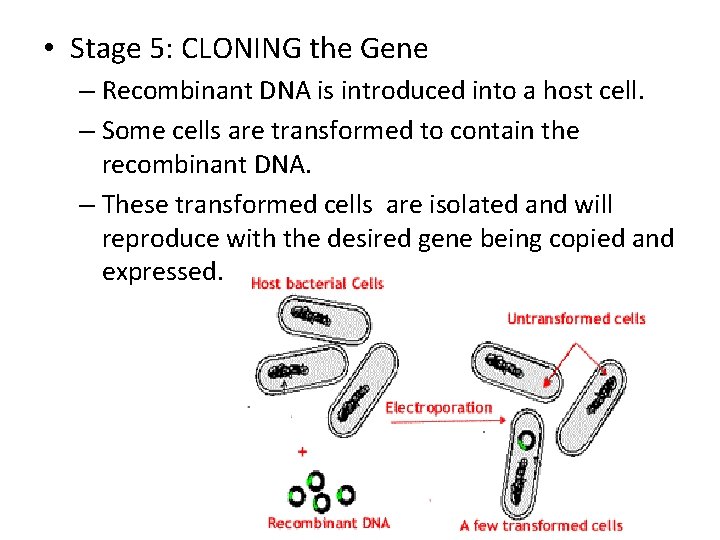
• Stage 5: CLONING the Gene – Recombinant DNA is introduced into a host cell. – Some cells are transformed to contain the recombinant DNA. – These transformed cells are isolated and will reproduce with the desired gene being copied and expressed.
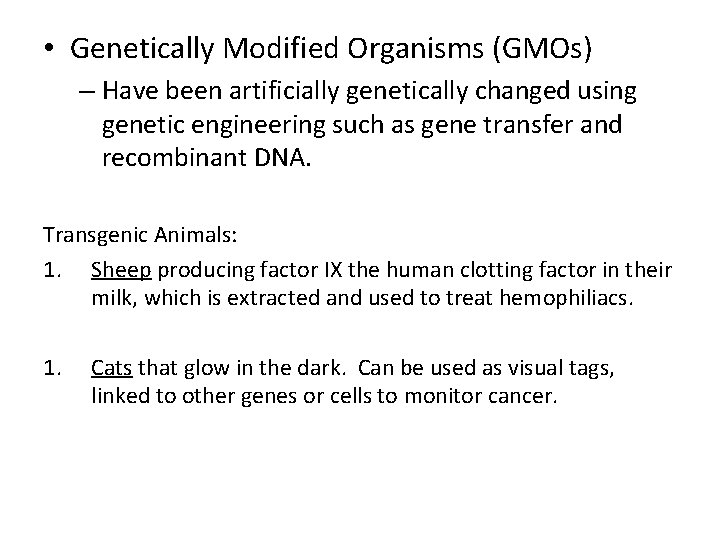
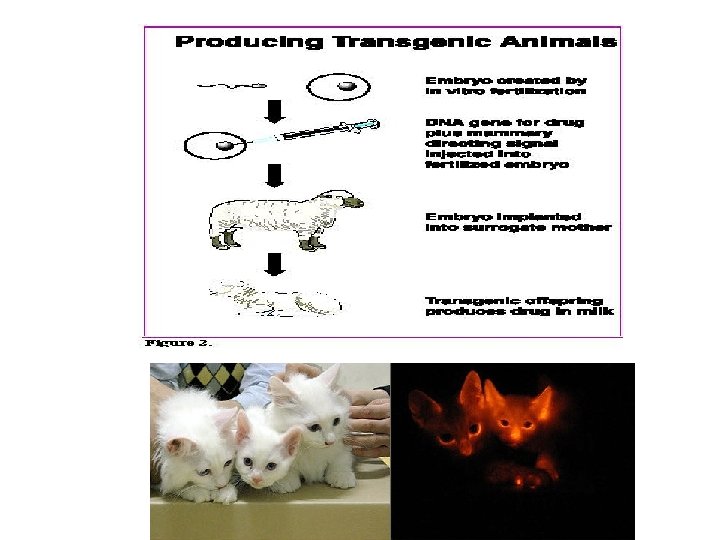
• Genetically Modified Organisms (GMOs) – Have been artificially genetically changed using genetic engineering such as gene transfer and recombinant DNA. Transgenic Animals: 1. Sheep producing factor IX the human clotting factor in their milk, which is extracted and used to treat hemophiliacs. 1. Cats that glow in the dark. Can be used as visual tags, linked to other genes or cells to monitor cancer.
• Transgenic Plants 1. Bt-Corn containing insecticides 2. Golden Rice enriched with beta-carotene which converts into vitamin A 3. Tomatoes/Strawberries grow in cold conditions because of the insertion of arctic fish genes.
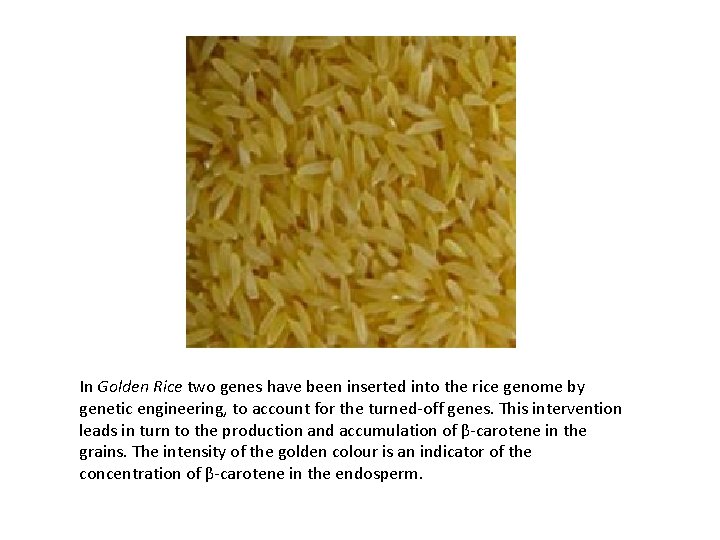
In Golden Rice two genes have been inserted into the rice genome by genetic engineering, to account for the turned-off genes. This intervention leads in turn to the production and accumulation of β-carotene in the grains. The intensity of the golden colour is an indicator of the concentration of β-carotene in the endosperm.

Bt- corn Gene Transfer
Benefits and risks of Genetic Transfer (GMO) • Example Corn (Maize) crop can be damaged by corn borer insects. A gene from a bacterium has been transferred to maize. The gene codes for a bacterial protein called Bt toxin that kills the corn borers. Potential benefit 1. Less pest/high yields 2. Less land need to grow 3. Less insecticides sprays Potential harm 1. Animals may be harmed by Bt 2. Other insects (pollinators) could be harmed. 3. Population of wild plants may cross pollinate spreading the Bt gene * 4. Decreased biodiversity.
Clone • 'A clone is a group of genetically identical organisms or a group of cells artificially derived from a single parent cells' – There are both natural and artificial examples of cloning. The former is based on the process of asexual reproduction which relies on mitosis for the production of offspring.
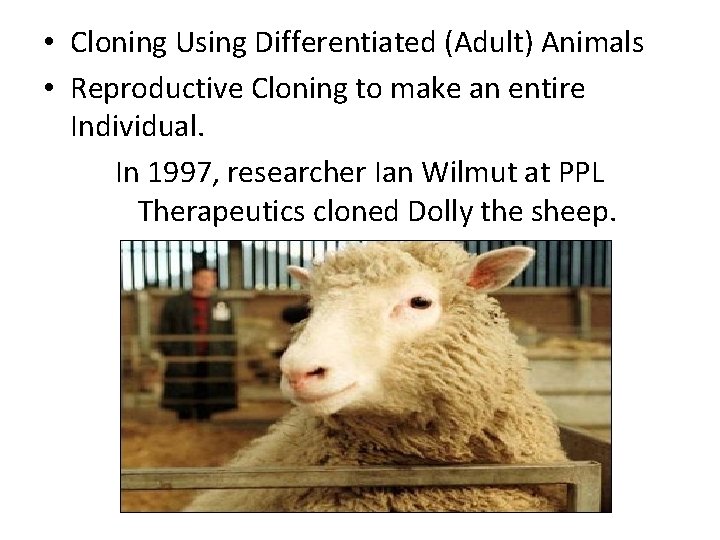
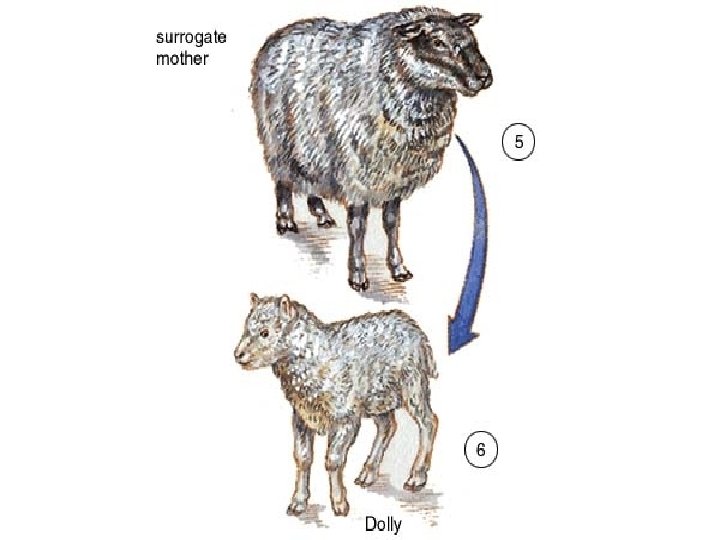
• Cloning Using Differentiated (Adult) Animals • Reproductive Cloning to make an entire Individual. In 1997, researcher Ian Wilmut at PPL Therapeutics cloned Dolly the sheep.
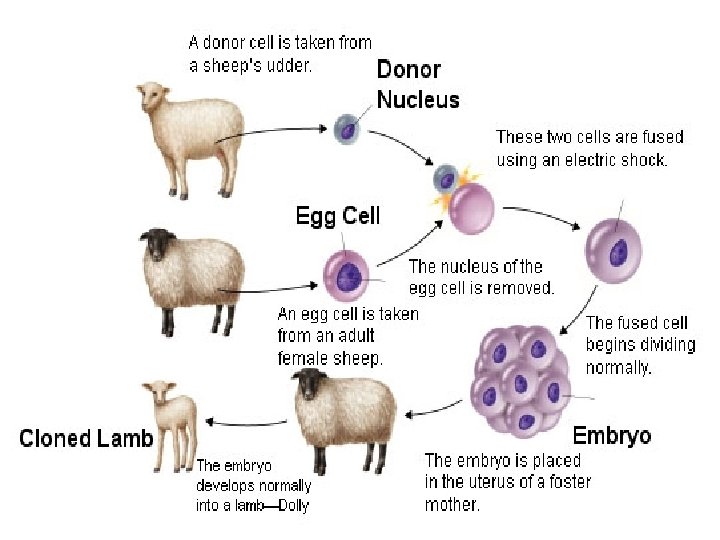
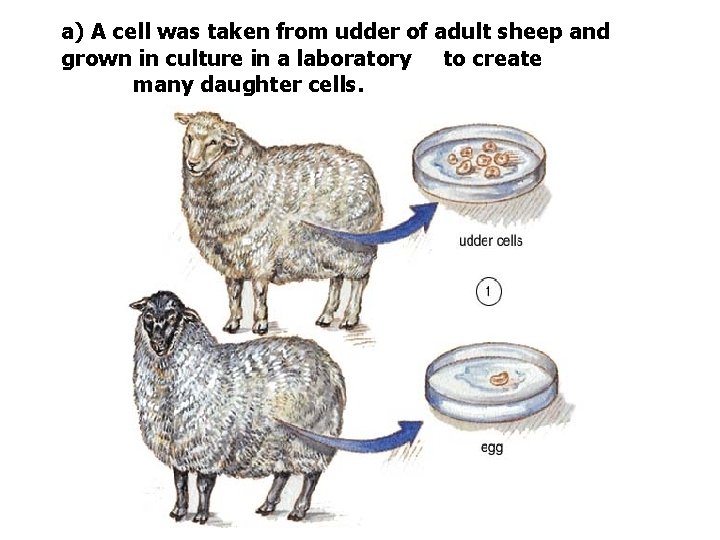
a) A cell was taken from udder of adult sheep and grown in culture in a laboratory to create many daughter cells.
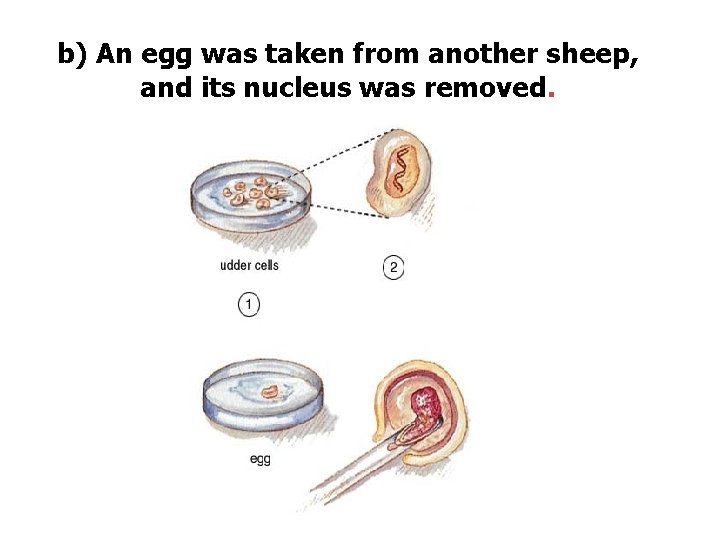
b) An egg was taken from another sheep, and its nucleus was removed.
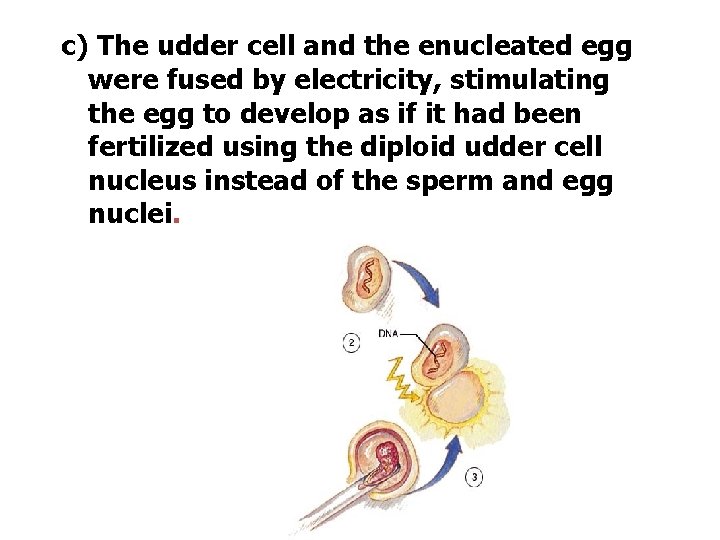
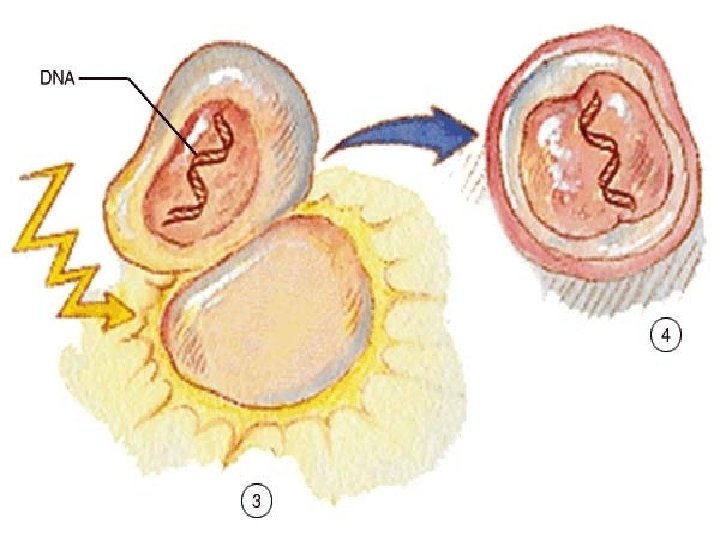
c) The udder cell and the enucleated egg were fused by electricity, stimulating the egg to develop as if it had been fertilized using the diploid udder cell nucleus instead of the sperm and egg nuclei.
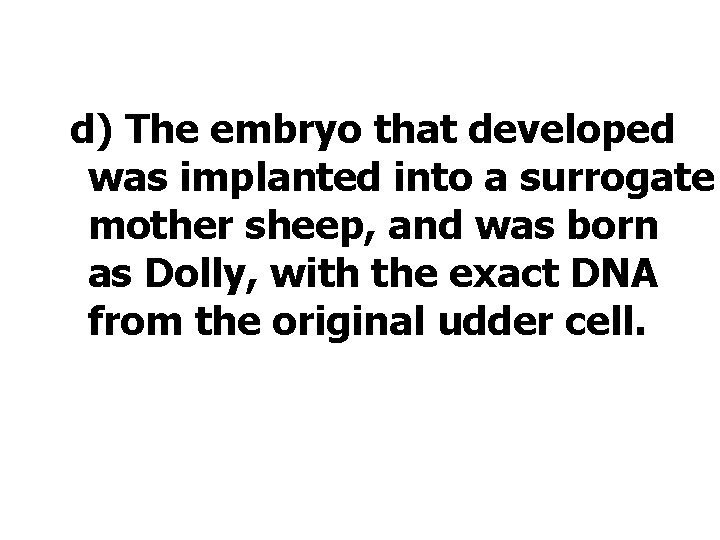
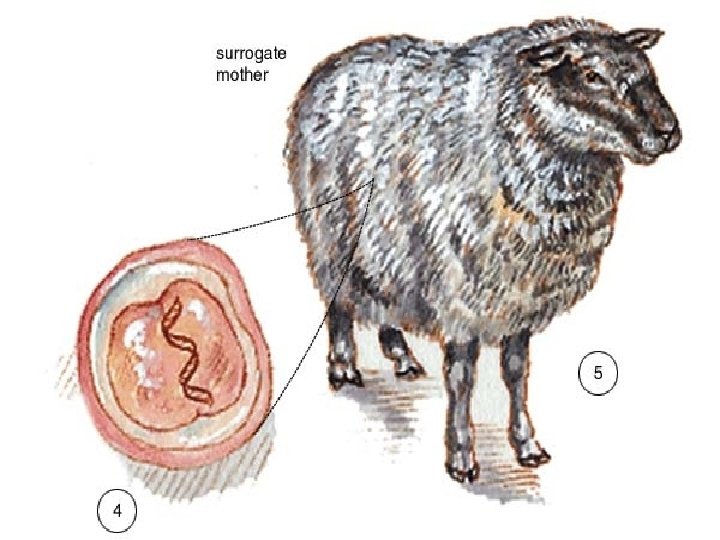
d) The embryo that developed was implanted into a surrogate mother sheep, and was born as Dolly, with the exact DNA from the original udder cell.
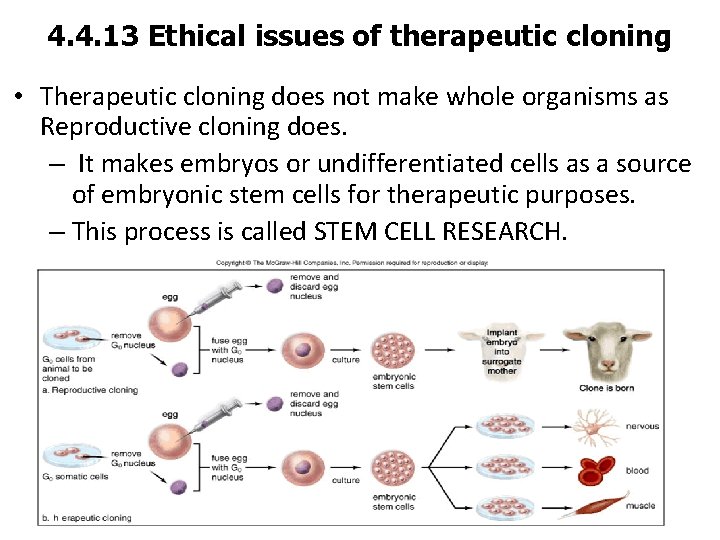
4. 4. 13 Ethical issues of therapeutic cloning • Therapeutic cloning does not make whole organisms as Reproductive cloning does. – It makes embryos or undifferentiated cells as a source of embryonic stem cells for therapeutic purposes. – This process is called STEM CELL RESEARCH.
PROS • Embryonic stem cells can grow into any body cell. • They might be cultured into nerve cells, skin cells, or even into entire organs. • Therapeutic cloning could be used to treat deadly diseases like diabetes and Parkinson's, where a specific type of cell no longer functions and replacing those cells with health cells. • Entire organs could be produced from “self” cells with out rejection.
CONS • The destruction of embryos once cells have been harvested. • Should a new individual be created for “spare parts” • In nature embryos are created for reproduction only.
- Slides: 55