
Genetic Disorders What is a Genetic Disorder Caused

- Slides: 18
Genetic Disorders
What is a Genetic Disorder? • Caused by abnormalities in an individual’s genetic material (the DNA, or the genome). • There are four different types of genetic disorders: ▫ Single-gene is mutated ▫ Multifactorial problems ▫ Chromosomal changes-entire areas of the chromosome can be missing or misplaced. ▫ Teratogenic problems
Single Gene Mutation • A single gene is responsible for abnormality • Greater risks of inheritance • Dominant: One of the genes from the parent is abnormal • Recessive: Both parents have abnormal genes. • X-linked: Determined by the genes on the X chromosome. (Mainly affects males)
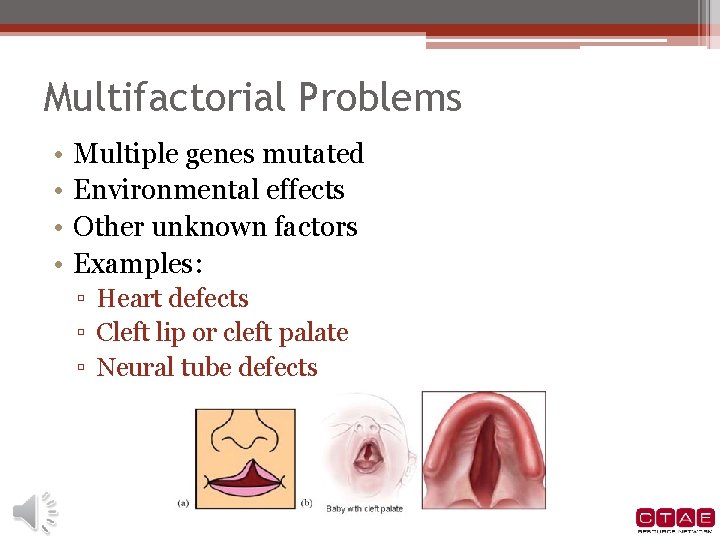
Multifactorial Problems • • Multiple genes mutated Environmental effects Other unknown factors Examples: ▫ Heart defects ▫ Cleft lip or cleft palate ▫ Neural tube defects
Chromosomal Abnormalities • • May be inherited or occur with no family history Aneuploidy: More or few chromosomes than normal Deletion: Part of a chromosome is missing Inversion: Chromosome breaks and reattaches itself upside down • Translocation: Rearrangement of a chromosome segment from one location to the other • Mosaicism: Presence of two or more chromosome patterns in the cells of a person
Teratogenic Problems • Occur when the baby is exposed to certain substances • During the first trimester- organs are forming • Known teratogens: ▫ ▫ ▫ Certain medications Alcohol Radiation Lead Certain infections
Top Ten Most Common Genetic Disorders 1. 2. 3. 4. Cystic Fibrosis Huntington’s Disease Down Syndrome Duchenne Muscular Dystrophy 5. Sickle Cell Anemia 6. Celiac Disease 7. Becker Muscular Dystrophy 8. Noonan Syndrome 9. Thalassemias 10. Turner Syndrome
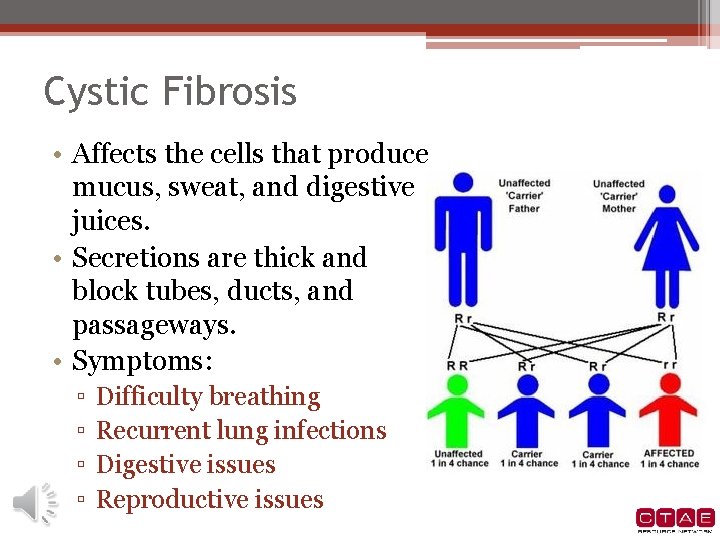
Cystic Fibrosis • Affects the cells that produce mucus, sweat, and digestive juices. • Secretions are thick and block tubes, ducts, and passageways. • Symptoms: ▫ ▫ Difficulty breathing Recurrent lung infections Digestive issues Reproductive issues
Huntington's Disease • Causes the progressive breakdown of nerve cells in the brain • Can cause: ▫ Problems with movement ▫ Thinking disorders ▫ Psychiatric disorders • Usually develop signs and symptoms around age 30 or 40
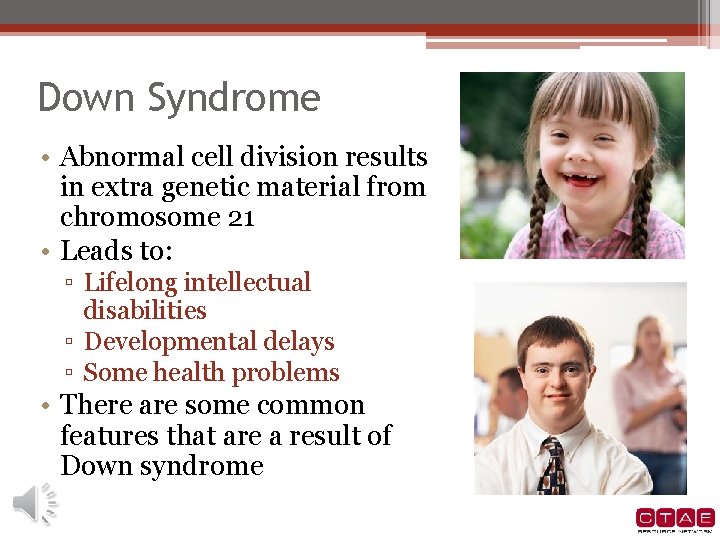
Down Syndrome • Abnormal cell division results in extra genetic material from chromosome 21 • Leads to: ▫ Lifelong intellectual disabilities ▫ Developmental delays ▫ Some health problems • There are some common features that are a result of Down syndrome
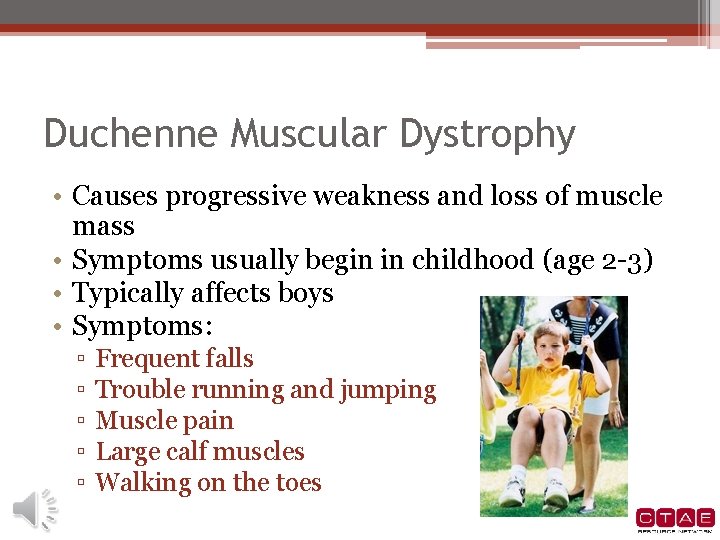
Duchenne Muscular Dystrophy • Causes progressive weakness and loss of muscle mass • Symptoms usually begin in childhood (age 2 -3) • Typically affects boys • Symptoms: ▫ ▫ ▫ Frequent falls Trouble running and jumping Muscle pain Large calf muscles Walking on the toes
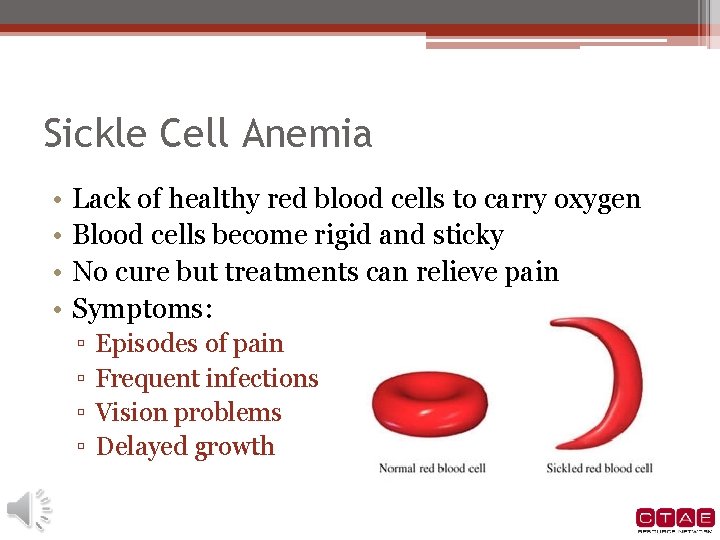
Sickle Cell Anemia • • Lack of healthy red blood cells to carry oxygen Blood cells become rigid and sticky No cure but treatments can relieve pain Symptoms: ▫ ▫ Episodes of pain Frequent infections Vision problems Delayed growth
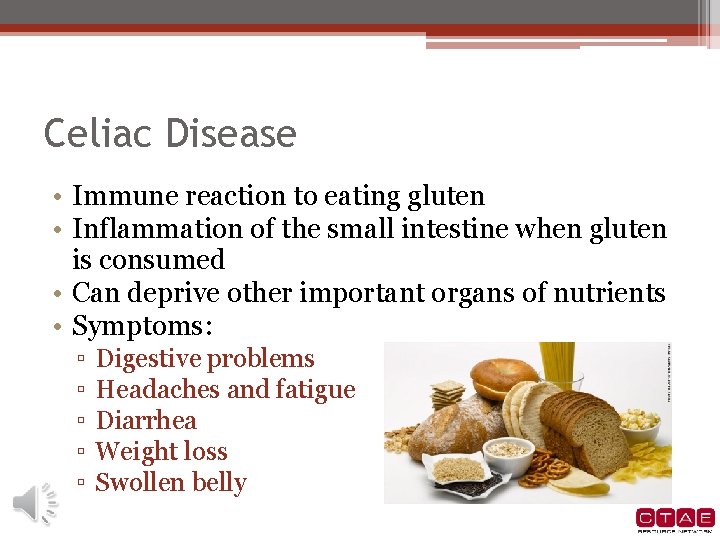
Celiac Disease • Immune reaction to eating gluten • Inflammation of the small intestine when gluten is consumed • Can deprive other important organs of nutrients • Symptoms: ▫ ▫ ▫ Digestive problems Headaches and fatigue Diarrhea Weight loss Swollen belly
Becker Muscular Dystrophy • Degenerative disease that affects voluntary muscles • Onset is late childhood or adolescence • Gets worse at a much slower rate than DMD • Symptoms: ▫ ▫ Difficulty walking (usually unable at age 30) Loss of muscle mass Frequent falls Muscle weakness
Noonan Syndrome • Prevents normal development • May cause: ▫ ▫ Unusual facial characteristics Short stature Heart defects Other physical problems • About 80% people affected have congenital heart disease
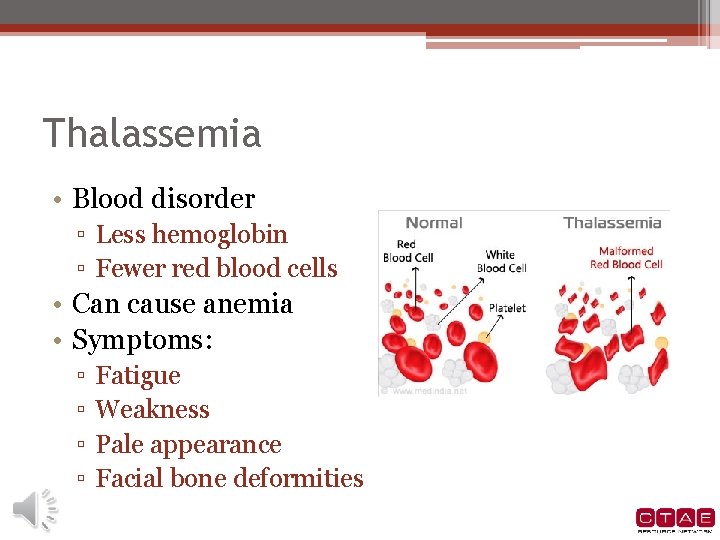
Thalassemia • Blood disorder ▫ Less hemoglobin ▫ Fewer red blood cells • Can cause anemia • Symptoms: ▫ ▫ Fatigue Weakness Pale appearance Facial bone deformities
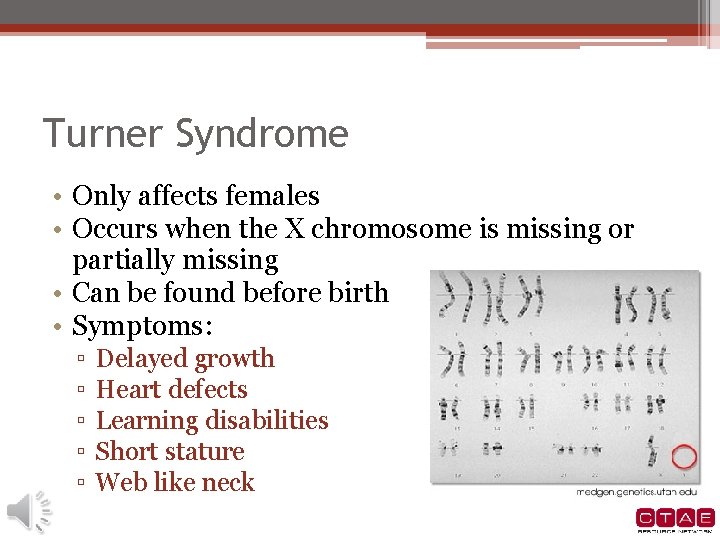
Turner Syndrome • Only affects females • Occurs when the X chromosome is missing or partially missing • Can be found before birth • Symptoms: ▫ ▫ ▫ Delayed growth Heart defects Learning disabilities Short stature Web like neck
References • http: //www. activebeat. com/yourhealth/children/the-10 -most-common-geneticsdisorders/ • http: //www. doctorslounge. com/studlounge/do wndirty/genetic. htm • http: //www. urmc. rochester. edu/encyclopedia/c ontent. aspx? Content. Type. ID=90&Content. ID=P 0 2505