
Genetic Disorder Notes Genetic Disorder Pattern of inheritance
- Slides: 13
Genetic Disorder Notes Genetic Disorder Pattern of inheritance Characteristics
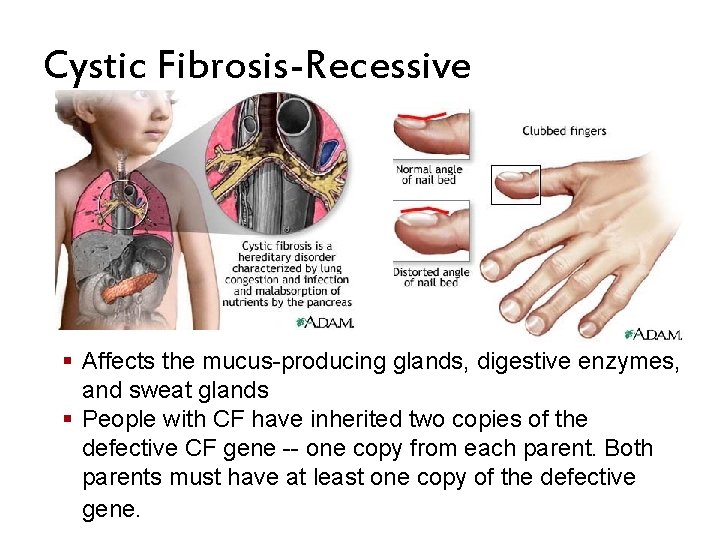
Cystic Fibrosis-Recessive § Affects the mucus-producing glands, digestive enzymes, and sweat glands § People with CF have inherited two copies of the defective CF gene -- one copy from each parent. Both parents must have at least one copy of the defective gene.
PKU phenylketonuria-Recessive • Recessive disorder • absence of an enzyme that processes amino acid phenylalanine. • Damages CNS • Noticed when children begin drinking milk • test for few days after birth. • Treat with special diet
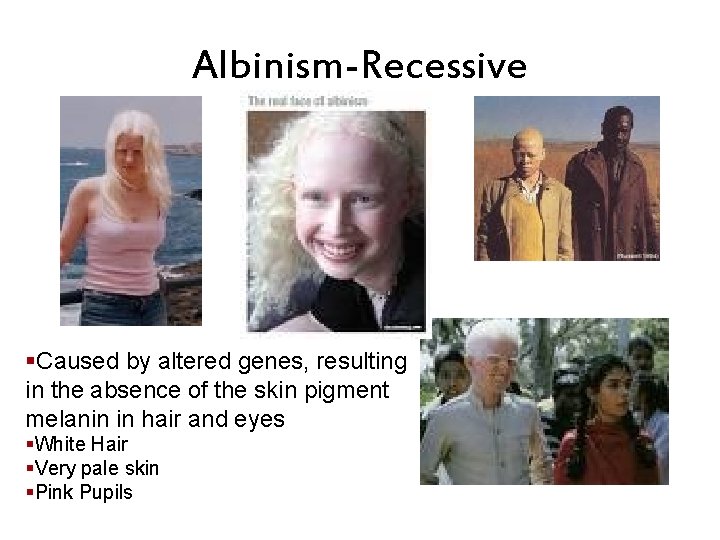
Albinism-Recessive §Caused by altered genes, resulting in the absence of the skin pigment melanin in hair and eyes §White Hair §Very pale skin §Pink Pupils
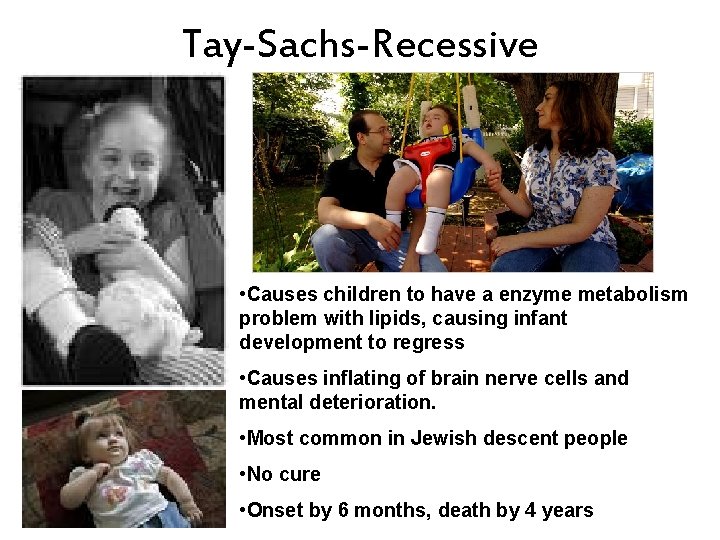
Tay-Sachs-Recessive • Causes children to have a enzyme metabolism problem with lipids, causing infant development to regress • Causes inflating of brain nerve cells and mental deterioration. • Most common in Jewish descent people • No cure • Onset by 6 months, death by 4 years
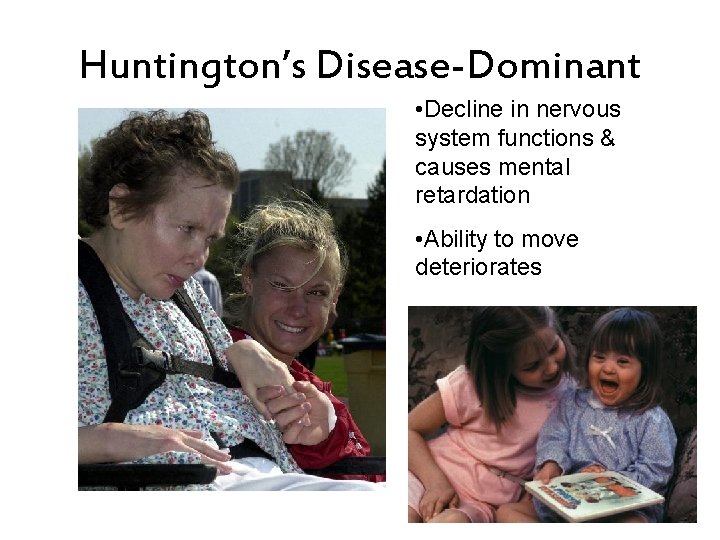
Huntington’s Disease-Dominant • Decline in nervous system functions & causes mental retardation • Ability to move deteriorates
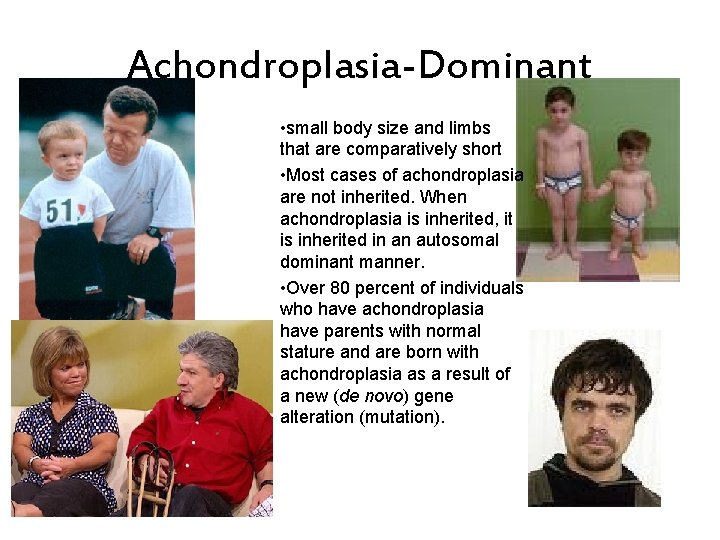
Achondroplasia-Dominant • small body size and limbs that are comparatively short • Most cases of achondroplasia are not inherited. When achondroplasia is inherited, it is inherited in an autosomal dominant manner. • Over 80 percent of individuals who have achondroplasia have parents with normal stature and are born with achondroplasia as a result of a new (de novo) gene alteration (mutation).
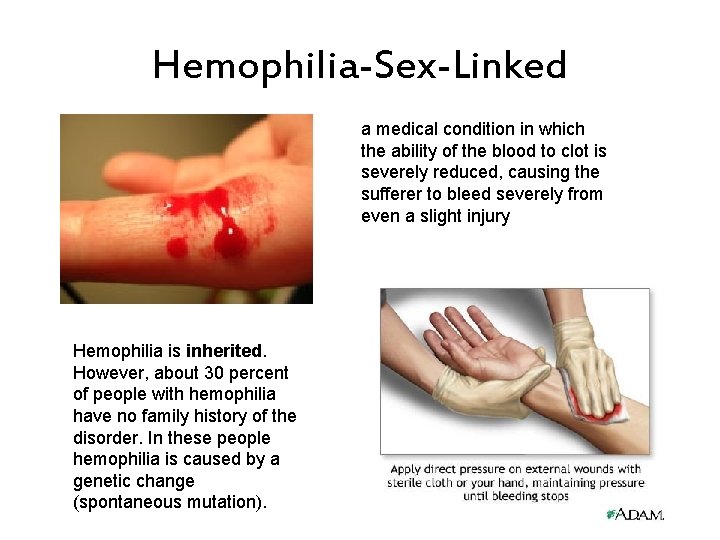
Hemophilia-Sex-Linked a medical condition in which the ability of the blood to clot is severely reduced, causing the sufferer to bleed severely from even a slight injury Hemophilia is inherited. However, about 30 percent of people with hemophilia have no family history of the disorder. In these people hemophilia is caused by a genetic change (spontaneous mutation).
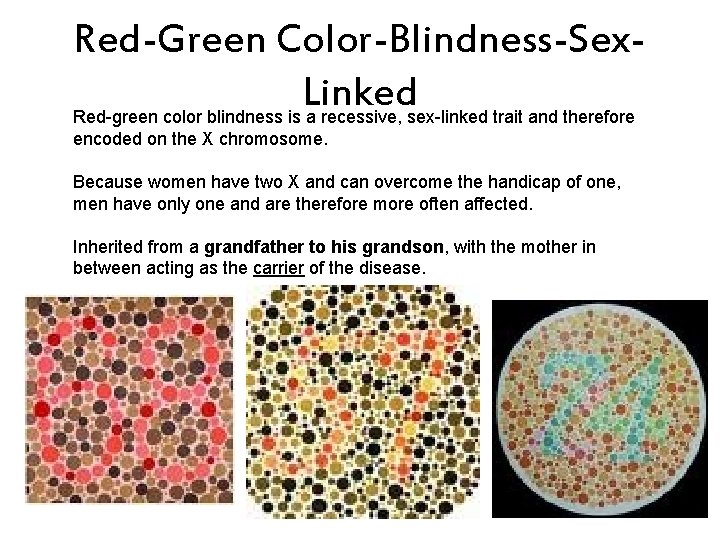
Red-Green Color-Blindness-Sex. Linked Red-green color blindness is a recessive, sex-linked trait and therefore encoded on the X chromosome. Because women have two X and can overcome the handicap of one, men have only one and are therefore more often affected. Inherited from a grandfather to his grandson, with the mother in between acting as the carrier of the disease.
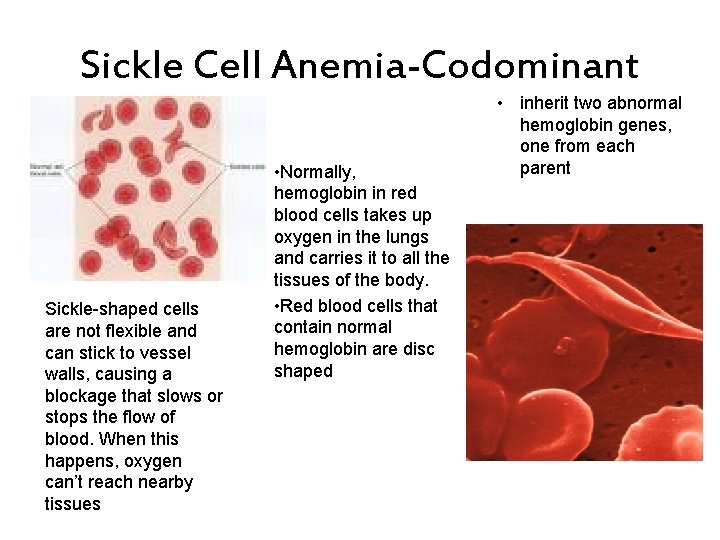
Sickle Cell Anemia-Codominant Sickle-shaped cells are not flexible and can stick to vessel walls, causing a blockage that slows or stops the flow of blood. When this happens, oxygen can’t reach nearby tissues • Normally, hemoglobin in red blood cells takes up oxygen in the lungs and carries it to all the tissues of the body. • Red blood cells that contain normal hemoglobin are disc shaped • inherit two abnormal hemoglobin genes, one from each parent
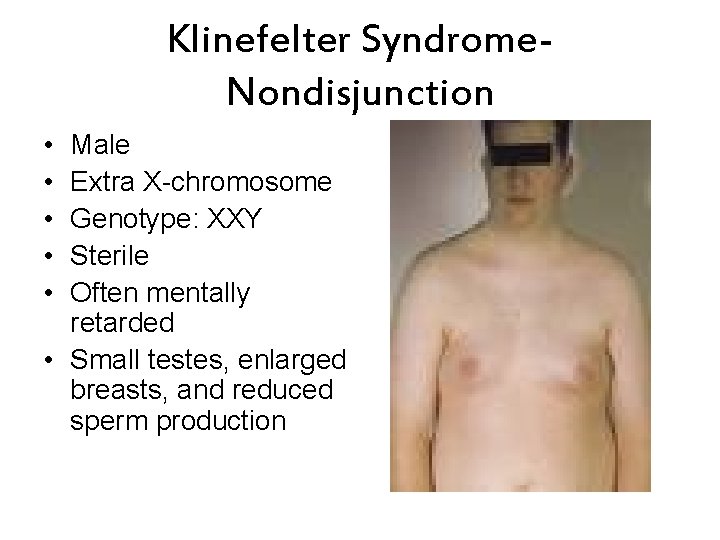
Klinefelter Syndrome. Nondisjunction • • • Male Extra X-chromosome Genotype: XXY Sterile Often mentally retarded • Small testes, enlarged breasts, and reduced sperm production
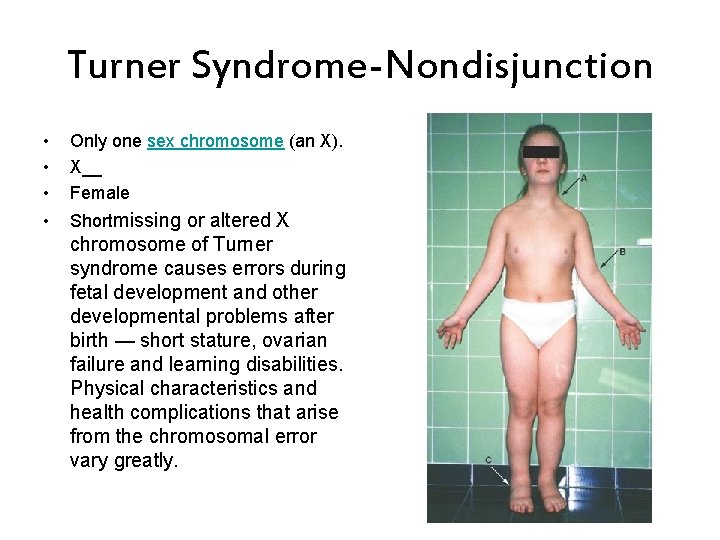
Turner Syndrome-Nondisjunction • • • Only one sex chromosome (an X). X__ Female • Shortmissing or altered X chromosome of Turner syndrome causes errors during fetal development and other developmental problems after birth — short stature, ovarian failure and learning disabilities. Physical characteristics and health complications that arise from the chromosomal error vary greatly.
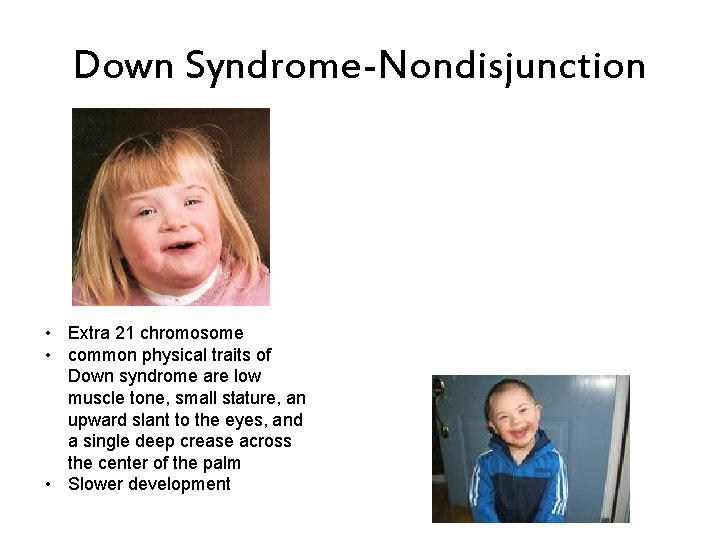
Down Syndrome-Nondisjunction • Extra 21 chromosome • common physical traits of Down syndrome are low muscle tone, small stature, an upward slant to the eyes, and a single deep crease across the center of the palm • Slower development