
Genetic diseases with primary effects on growth Turner


- Slides: 9
Genetic diseases with primary effects on growth
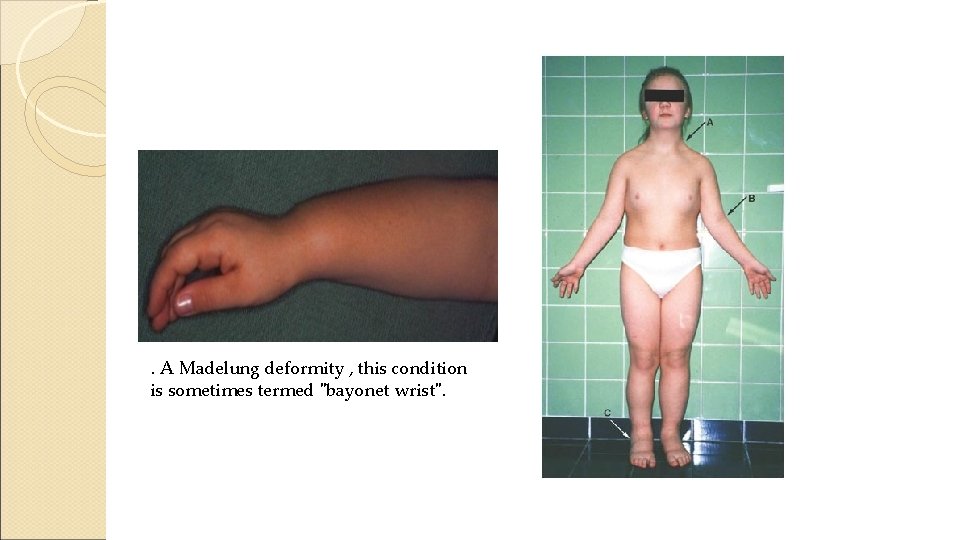
Turner syndrome is an important consideration in girls with short stature and especially growth failure, because shortness may be the presenting feature of the syndrome. Virtually all girls with Turner syndrome have short stature, with an average adult height about 20 cm shorter than predicted by the mid-parental height. In addition, affected patients usually have absent or very delayed pubertal development and may have a square "shield" chest, webbed neck, cubitus valgus (increased carrying angle of the arm), genu valgum (inward tilting knees), shortened fourth metacarpals, and Madelung deformity of the forearm. Prompt diagnosis of Turner Syndrome is important because of associated cardiovascular, renal, and endocrine abnormalities, which may require treatment, including growth hormone therapy.
. A Madelung deformity , this condition is sometimes termed "bayonet wrist".
Prader-Willi syndrome (PWS) is the most common syndromic form of obesity. Obesity and hyperphagia typically develop during early childhood and can be severe. Other common clinical characteristics are hypotonia and feeding problems during infancy, developmental delay, and hypogonadism. Short stature is common but may not develop until late childhood when the child fails to undergo a pubertal growth spurt. Treatment with growth hormone improves linear growth and body composition.
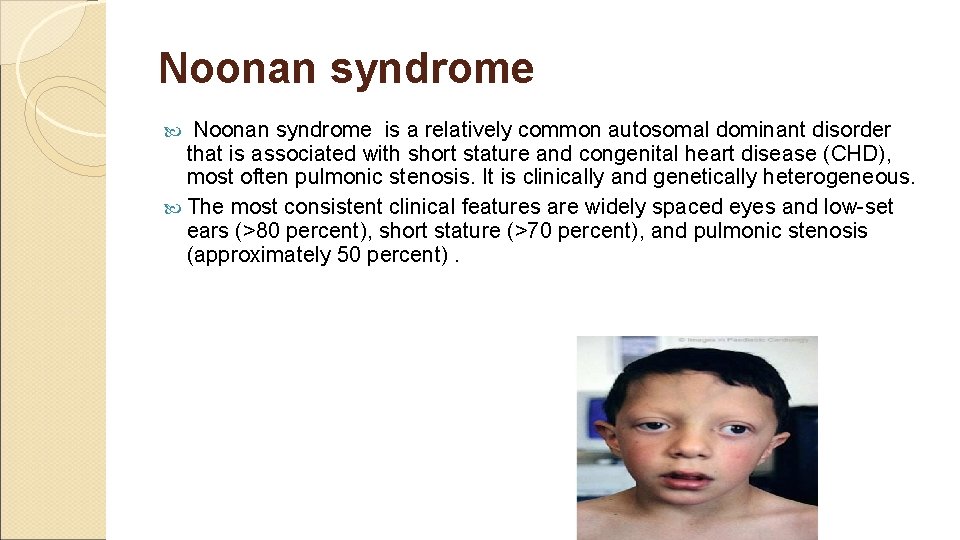
Noonan syndrome is a relatively common autosomal dominant disorder that is associated with short stature and congenital heart disease (CHD), most often pulmonic stenosis. It is clinically and genetically heterogeneous. The most consistent clinical features are widely spaced eyes and low-set ears (>80 percent), short stature (>70 percent), and pulmonic stenosis (approximately 50 percent).
• Short stature associated with Noonan syndrome can be treated effectively with growth hormone.
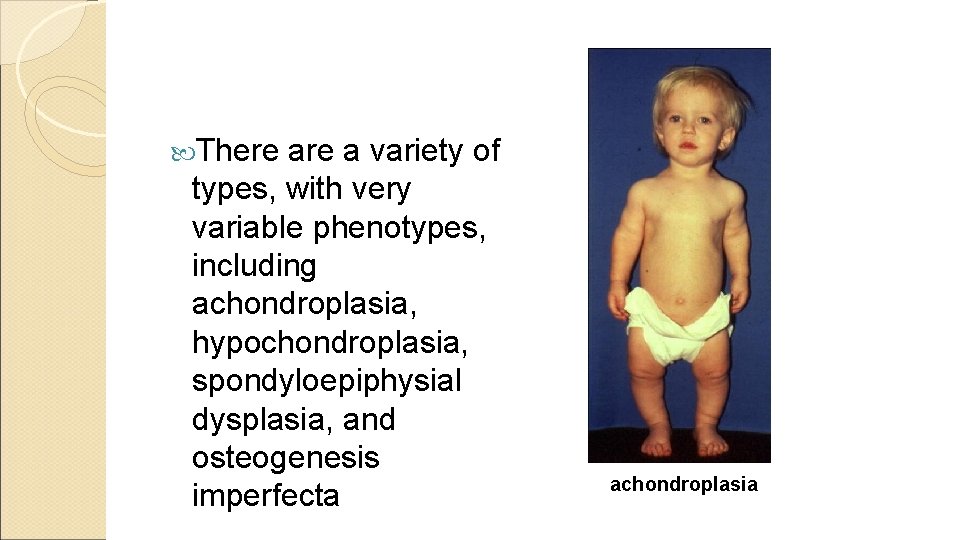
Skeletal dysplasias associated with short stature are caused by inherited defects in cartilage/bone development and are often associated with disproportionate short stature (with limbs disproportionately short for the trunk, or vice versa). Bone age tend to be advanced and growth response to puberty is impaired These disorders should be suspected in a child presenting with short stature and bone deformities, recurrent fractures, or abnormal findings on radiographs (eg, enchondromas, bowing or shortening of the long bones, vertebral defects, or rib abnormalities).
There a variety of types, with very variable phenotypes, including achondroplasia, hypochondroplasia, spondyloepiphysial dysplasia, and osteogenesis imperfecta achondroplasia