
Genetic control of Protein structure and function DNA

- Slides: 14
Genetic control of Protein structure and function
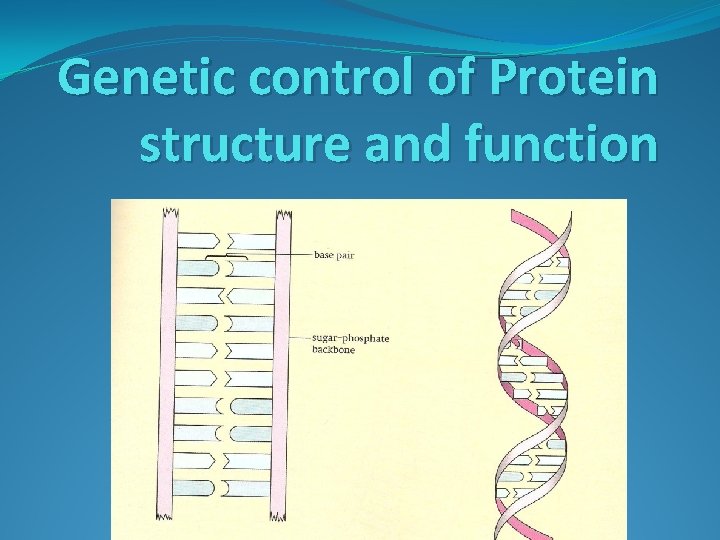
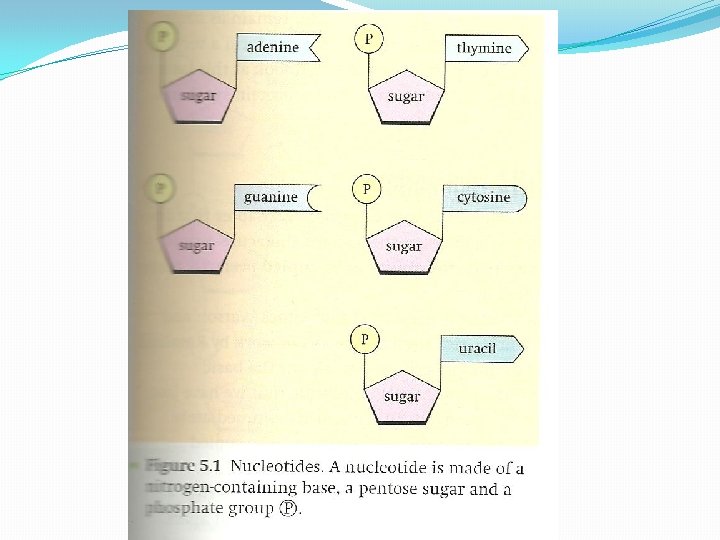
DNA and RNA �Both macromolecules have the ability to replicate PERFECTLY millions of times. �Structure of nucleotides – The rungs of the DNA ladder =Phosphate, sugar and a nitrogen containing base �Phosphate bases are Adenine, Guanine, Thymine, Cytosine, Uracil �DNA can contain A-T, T-A, G-C, C-G �RNA contains U in place of T
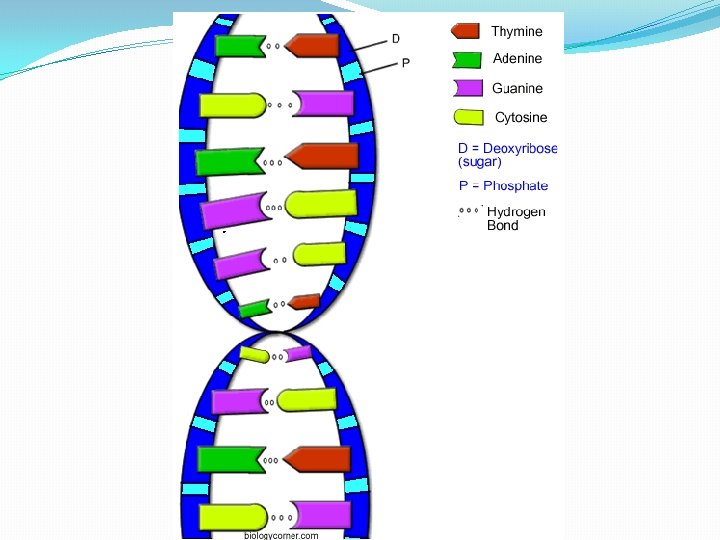
Polynucleotides �The nucleotides build up as macromolecules, the sugar phosphate forming a backbone, like the support structure of the ladder. �DNA has two backbones, RNA has just one �DNA contains the 4 nucleotides A, T, G, C �RNA contains AGCU �The bases join to each other with hydrogen bonds. �Always A-T, C-G,
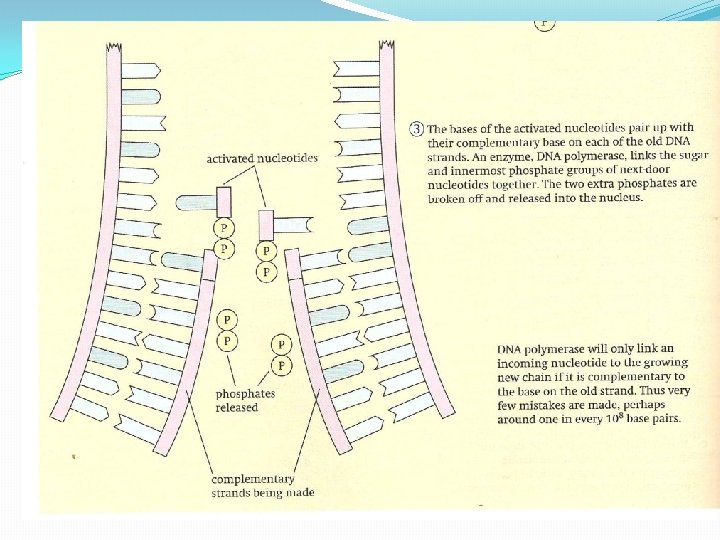
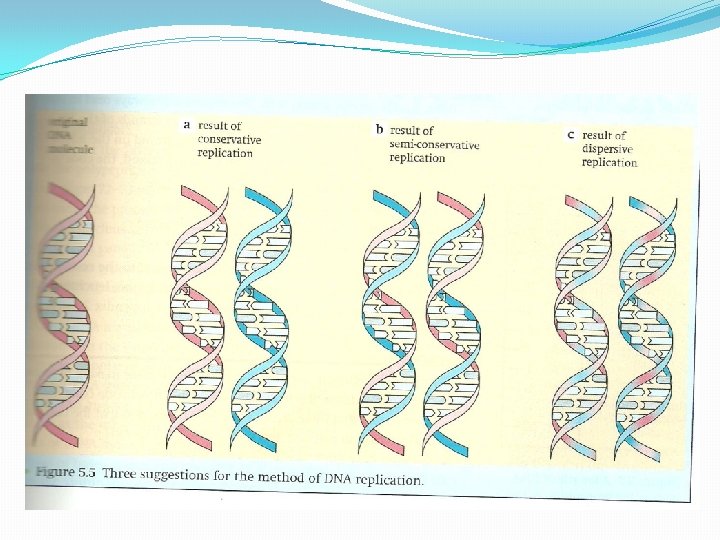
DNA replication �One of the key properties of DNA is the ability to be copied perfectly many times. �This is possible because only certain bases are able to combine. �Thymine - Adenine �Cytosine-Guanine �To replicate, the hydrogen bonds break, allowing the nucleotides to “unzip”. �The two halves will then attract their appropriate pairing bases, creating 2 strands of DNA in a system called semi conservative coupling (conserving half the original molecule)
Previous theories �Conservative replication_ one completely new double helix copied from the old one. �Semi conservative replication- half the original conserved. �Dispersive replication- old and new bits of DNA scattered throughout two new strands. �In 1958 Meselson and Stahl tested reproduction of E. coli and found evidence for the semi conservative theory.
DNA, RNA and protein synthesis �All chemical reactions in the cell are controlled by DNA. �DNA builds up proteins �Proteins build Enzymes, �Enzymes control the cells activities
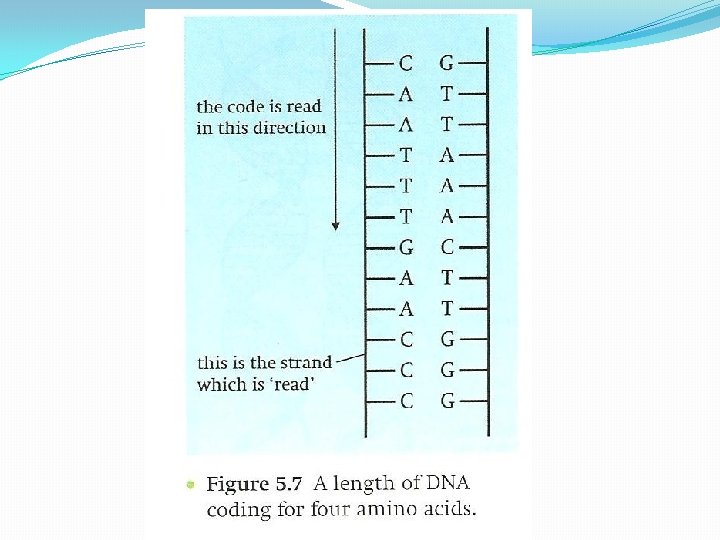
Protein synthesis �The DNA bases contain codes for building proteins. �Three DNA bases contain the code for one amino acid �This code is called the triplet code. �Examples of the code �CAA builds Valine �TTT builds Lysine �GAA builds Leucine �CCC builds glycine �Remember, there are 20 amino acids to build up all possible proteins.
Genes and Genomes �The human genome is enormous, though only 3 percent of DNA is the code for proteins, the function of the rest is unknown. �Human DNA contains 30 000 genes. �These genes make up the human genome, which scientists around the world started to map in 1990 and are still working on today.
Messenger RNA and t. RNA �m. RNA uses one copy of the strand of DNA, which has left the nucleus and attached to a ribosome in the cytoplasm. �This is where the final copies of the proteins are made. �Refer to figure 5. 8 for more detail Figure 5. 8 �t. RNA is found floating around in the cytoplasm, it is used to build the proteins contained in the m. RNA sequence �The two stages involved are called transcription ‘reading information’ and translation ‘using it to build proteins’