
Genetic Carrier Screening Danielle M Esters MD Carrier




- Slides: 104
Genetic Carrier Screening Danielle M. Esters, MD
Carrier Screening OBJECTIVES • Define the role of carrier screening in perinatal care • Review the genetic basis for and limitations of carrier screening • Review the guidelines for carrier screening • Introduce expanded carrier screening • Review genetic disorders included in these carriers screens
Traditional Carrier Screening • Type of genetic testing used to identify • Asymptomatic individuals • Negative family history • Heterozygous trait for a recessive disorder • Autosomal recessive • X-linked recessive • At risk for passing on the disorder to their children
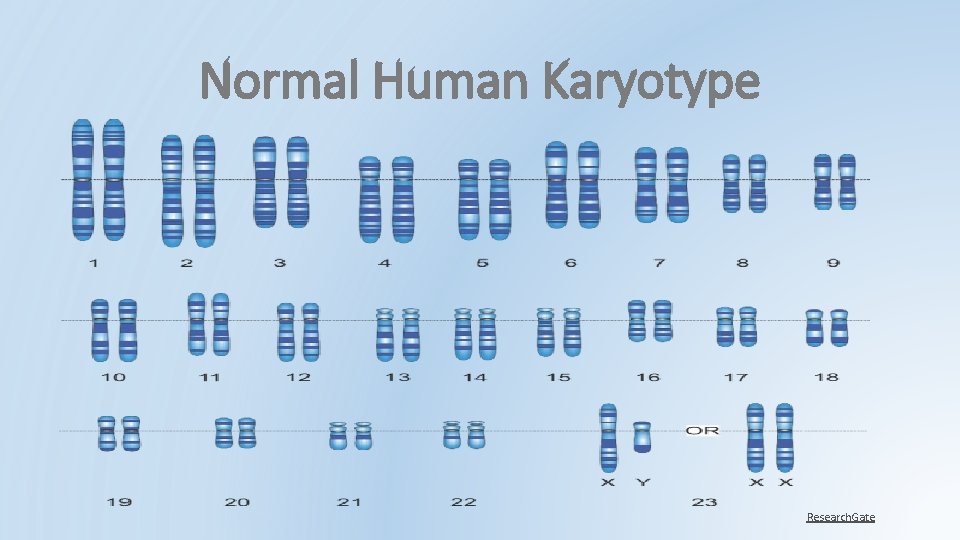
Normal Human Karyotype Research. Gate
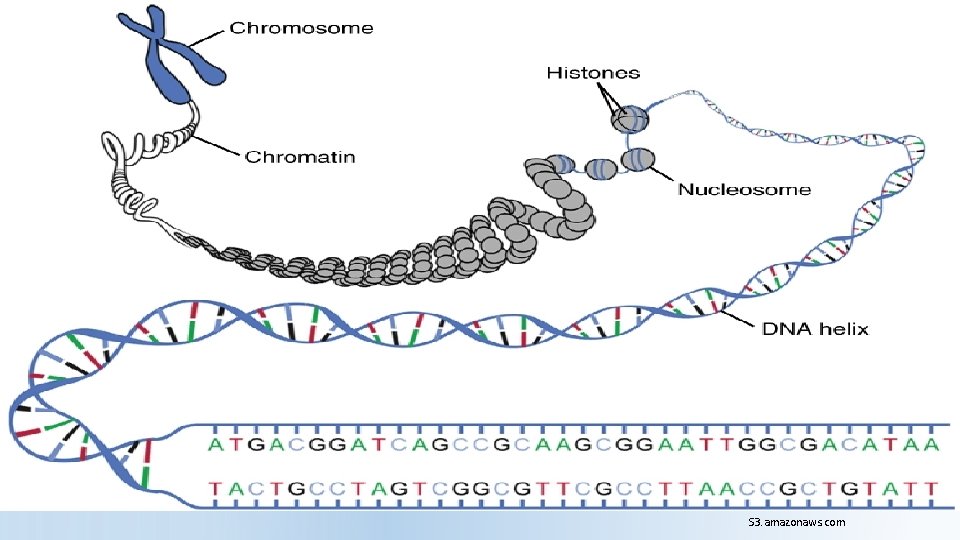
S 3. amazonaws. com
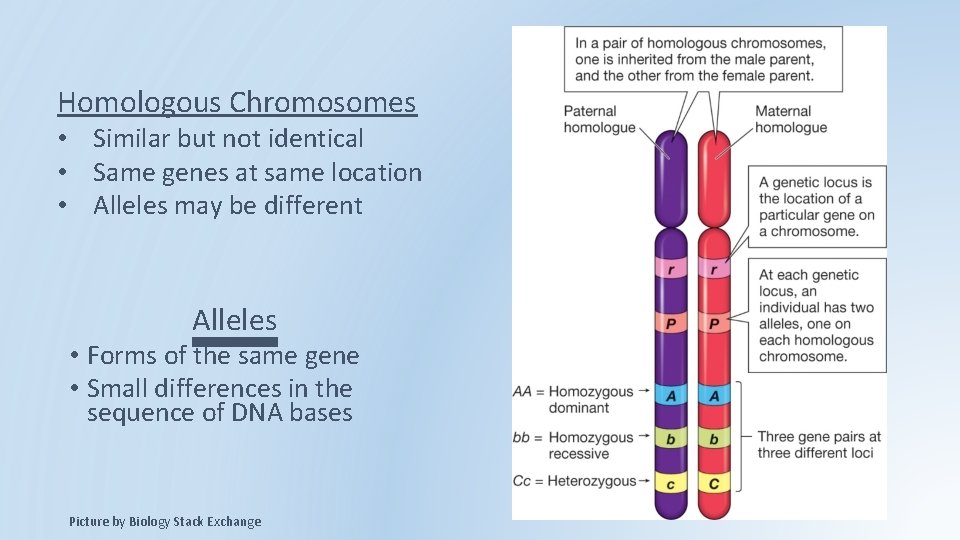
Homologous Chromosomes • Similar but not identical • Same genes at same location • Alleles may be different Alleles • Forms of the same gene • Small differences in the sequence of DNA bases Picture by Biology Stack Exchange
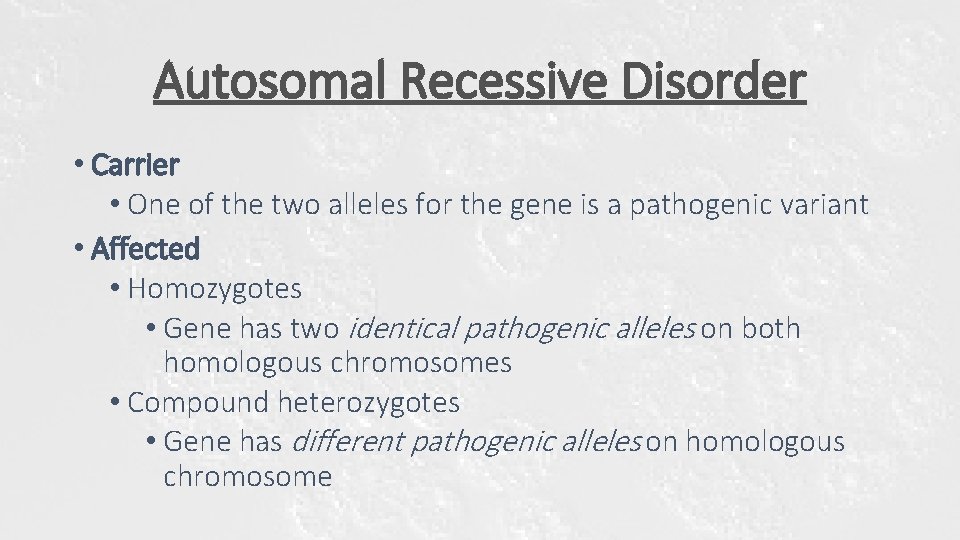
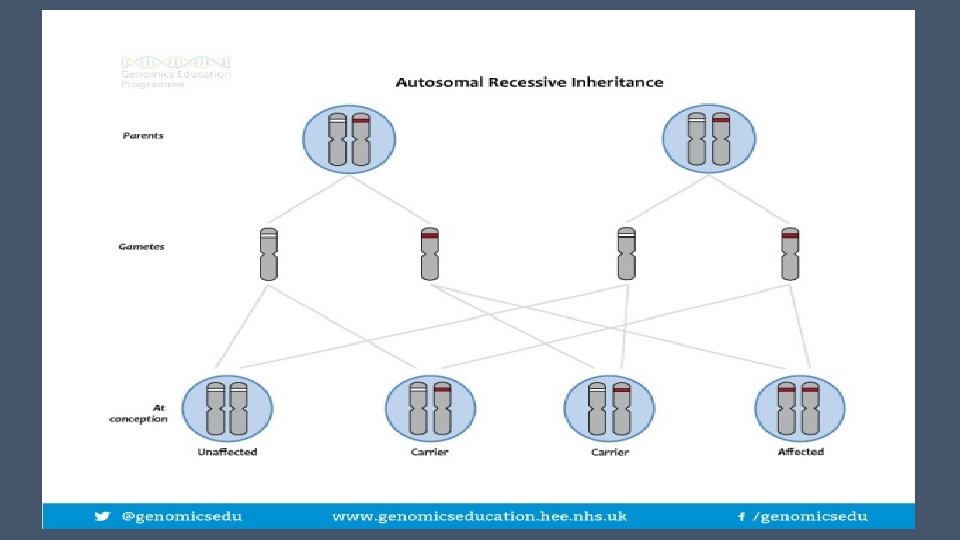
Autosomal Recessive Disorder • Carrier • One of the two alleles for the gene is a pathogenic variant • Affected • Homozygotes • Gene has two identical pathogenic alleles on both homologous chromosomes • Compound heterozygotes • Gene has different pathogenic alleles on homologous chromosome
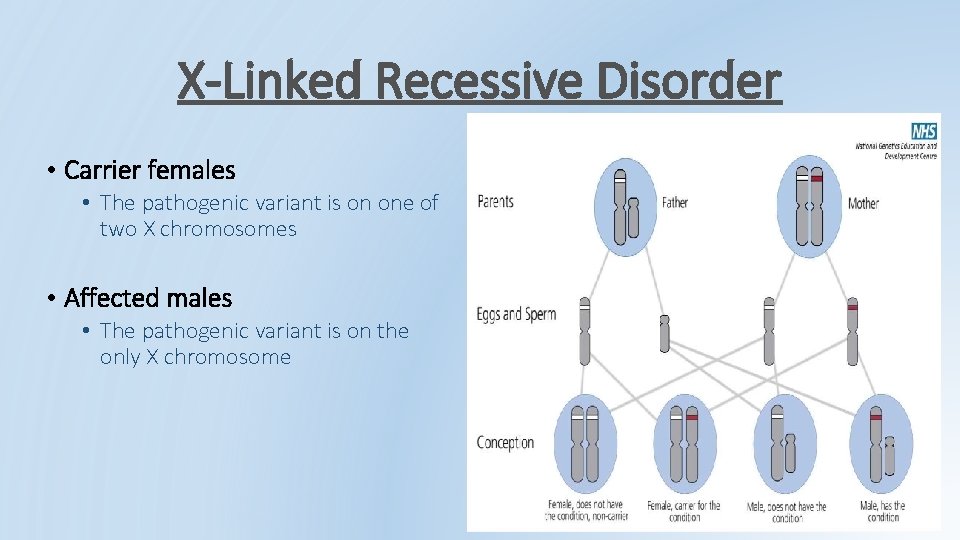
X-Linked Recessive Disorder • Carrier females • The pathogenic variant is on one of two X chromosomes • Affected males • The pathogenic variant is on the only X chromosome
Single-Gene Disorder • Usually inherited • A certain gene is known to cause a particular disease • Over 10, 000 human disorders are caused by pathogenic variants in a single gene • Prevalence varies among racial or ethnic groups • Rationale for traditional carrier screening
Single Gene Disorders The Disease Burden ØSingle-gene disorders – 1% of all newborns Ø‘The global prevalence of all single gene diseases at birth is approximately 10/1000. ‘ www. who. int/genomics/public/genetic diseases/en/index 2. html
Birth Defects • United States • 3% of all newborns • 120, 000 newborns annually
Birth Defects • United States • 3% of all newborns • 120, 000 newborns annually • Worldwide births • 6% of all newborns • 7. 9 million newborns annually
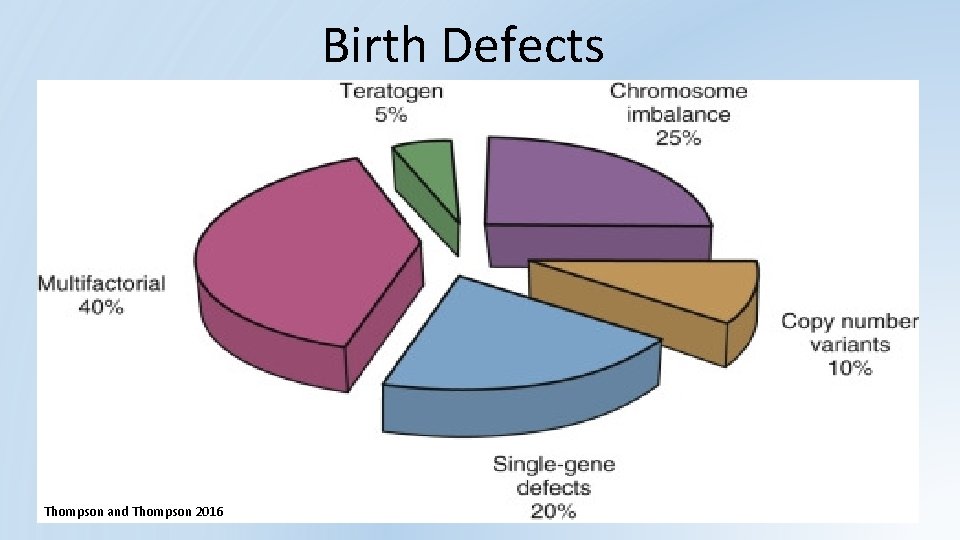
Birth Defects Thompson and Thompson 2016
Carrier Screening • The goal is to provide couples with information to optimize pregnancy outcomes based on their personal values and preferences.
Carrier Screening • Full scope of reproductive decision making • Option of prenatal diagnosis for at risk couples • Early identification of affected pregnancies • Condition specific counseling and care
Carrier Screening – Pretest Counseling • Informed consent • Disease • Describe the disorder and range of severity • Conditions vary in severity • The test • Available literature
Carrier Screening – Pretest Counseling • Paternity – biological father • Understand the limitations of the test • Voluntary • Option to accept / decline • Document in medical record
Carrier Screening – Pretest Counseling ACOG Patient education brochures April 2017 • Cystic Fibrosis – AP 171 • Carrier Screening – AP 179 ACOG FAQ brochures April 2017 • Carrier Screening – 179 • Customized literature
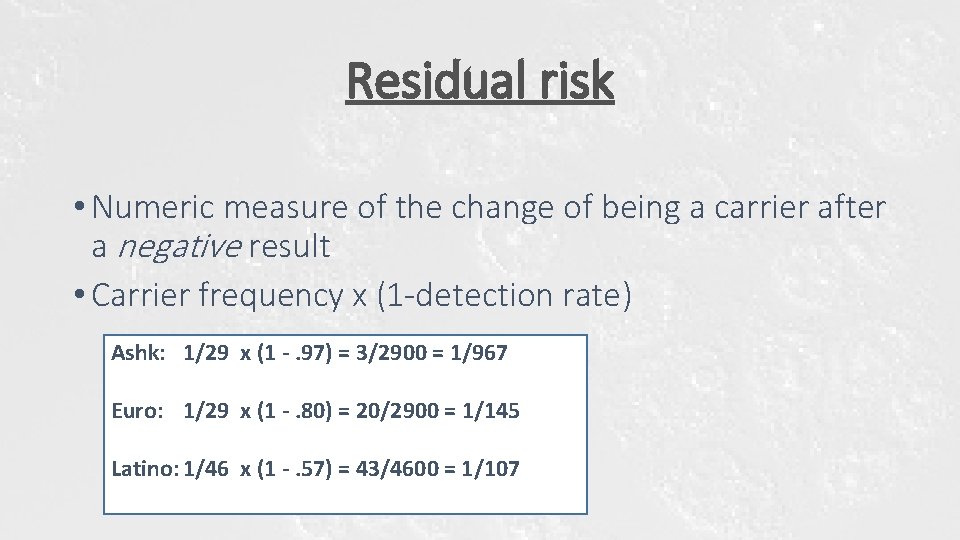
Carrier Screening – Pretest Counseling CARRIER TEST RESULTS • Screen positive result • Screen negative result • Residual risk for being a carrier • Residual risk for affected offspring
Residual risk • Numeric measure of the change of being a carrier after a negative result • Carrier frequency x (1 -detection rate) Ashk: 1/29 x (1 -. 97) = 3/2900 = 1/967 Euro: 1/29 x (1 -. 80) = 20/2900 = 1/145 Latino: 1/46 x (1 -. 57) = 43/4600 = 1/107
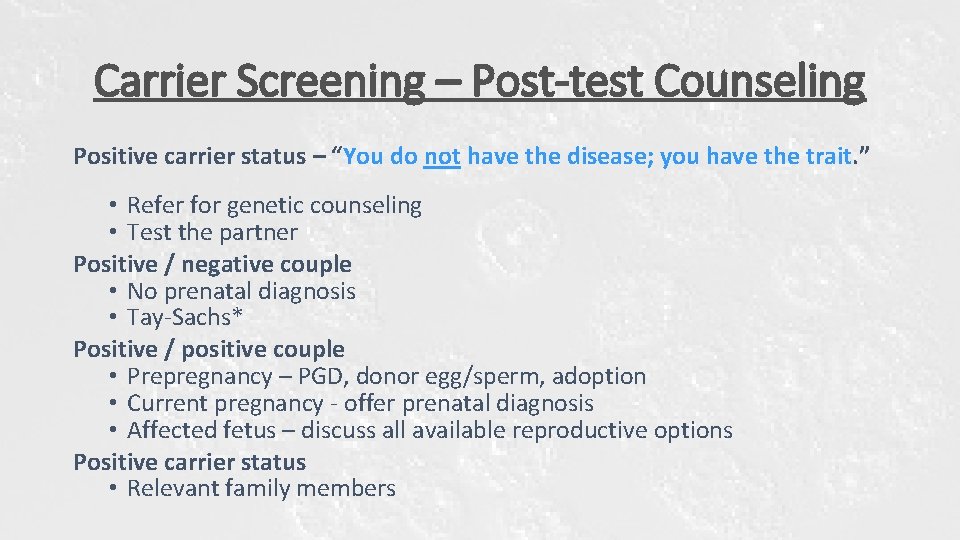
Carrier Screening – Post-test Counseling Positive carrier status – “You do not have the disease; you have the trait. ” • Refer for genetic counseling • Test the partner Positive / negative couple • No prenatal diagnosis • Tay-Sachs* Positive / positive couple • Prepregnancy – PGD, donor egg/sperm, adoption • Current pregnancy - offer prenatal diagnosis • Affected fetus – discuss all available reproductive options Positive carrier status • Relevant family members
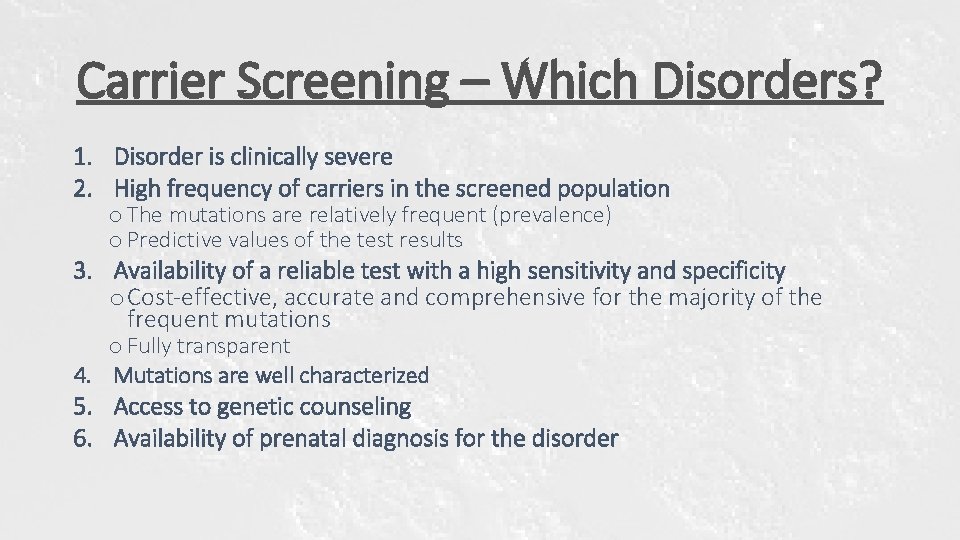
Carrier Screening – Which Disorders? 1. Disorder is clinically severe 2. High frequency of carriers in the screened population o The mutations are relatively frequent (prevalence) o Predictive values of the test results 3. Availability of a reliable test with a high sensitivity and specificity o Cost-effective, accurate and comprehensive for the majority of the frequent mutations o Fully transparent 4. Mutations are well characterized 5. Access to genetic counseling 6. Availability of prenatal diagnosis for the disorder
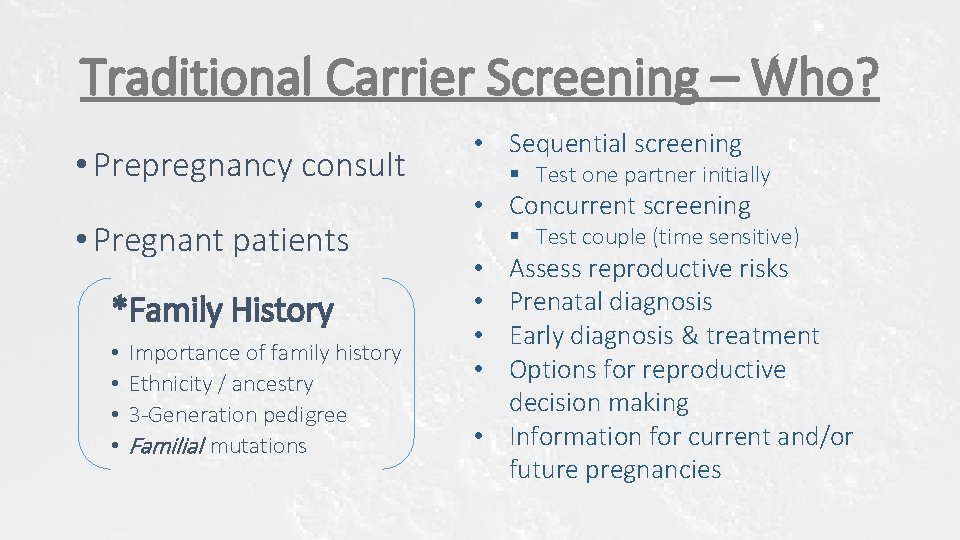
Traditional Carrier Screening – Who? • Prepregnancy consult • Pregnant patients *Family History • • Importance of family history Ethnicity / ancestry 3 -Generation pedigree Familial mutations • Sequential screening § Test one partner initially • Concurrent screening § Test couple (time sensitive) Assess reproductive risks Prenatal diagnosis Early diagnosis & treatment Options for reproductive decision making • Information for current and/or future pregnancies • •
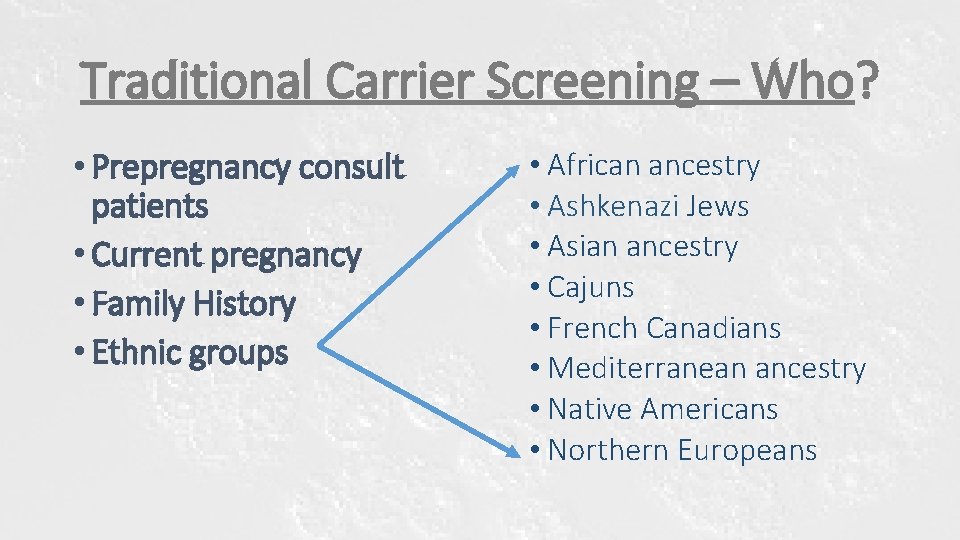
Traditional Carrier Screening – Who? • Prepregnancy consult patients • Current pregnancy • Family History • Ethnic groups • African ancestry • Ashkenazi Jews • Asian ancestry • Cajuns • French Canadians • Mediterranean ancestry • Native Americans • Northern Europeans
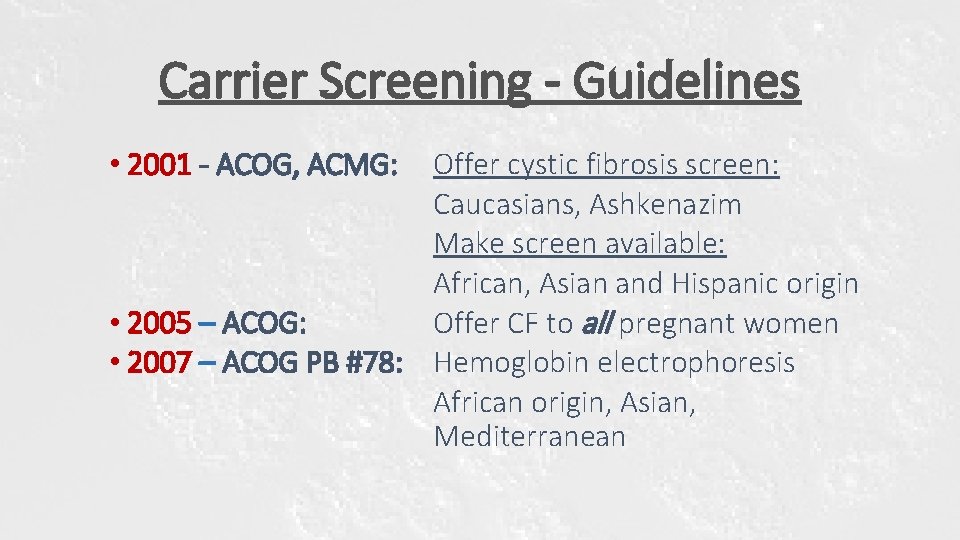
Carrier Screening - Guidelines • 2001 - ACOG, ACMG: Offer cystic fibrosis screen: Caucasians, Ashkenazim Make screen available: African, Asian and Hispanic origin • 2005 – ACOG: Offer CF to all pregnant women • 2007 – ACOG PB #78: Hemoglobin electrophoresis African origin, Asian, Mediterranean
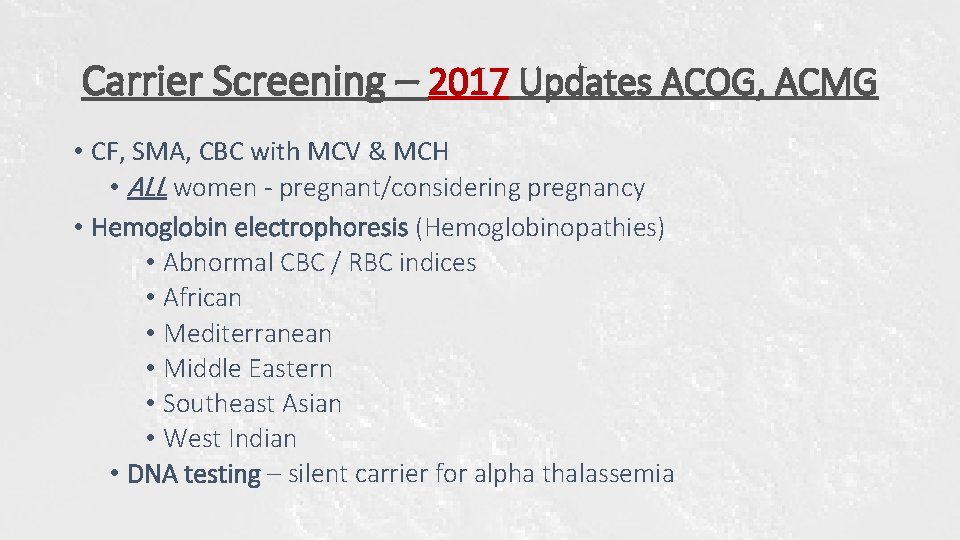
Carrier Screening – 2017 Updates ACOG, ACMG • CF, SMA, CBC with MCV & MCH • ALL women - pregnant/considering pregnancy • Hemoglobin electrophoresis (Hemoglobinopathies) • Abnormal CBC / RBC indices • African • Mediterranean • Middle Eastern • Southeast Asian • West Indian • DNA testing – silent carrier for alpha thalassemia
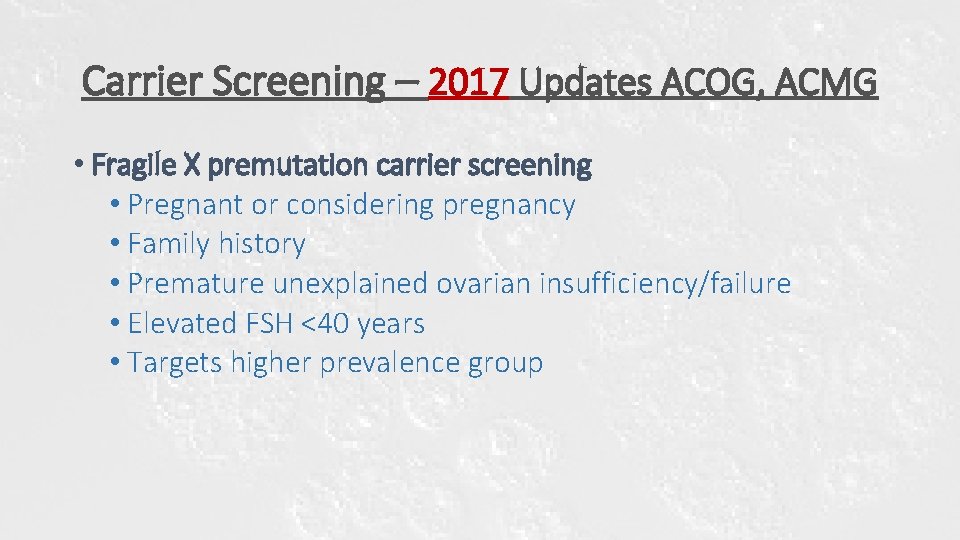
Carrier Screening – 2017 Updates ACOG, ACMG • Fragile X premutation carrier screening • Pregnant or considering pregnancy • Family history • Premature unexplained ovarian insufficiency/failure • Elevated FSH <40 years • Targets higher prevalence group
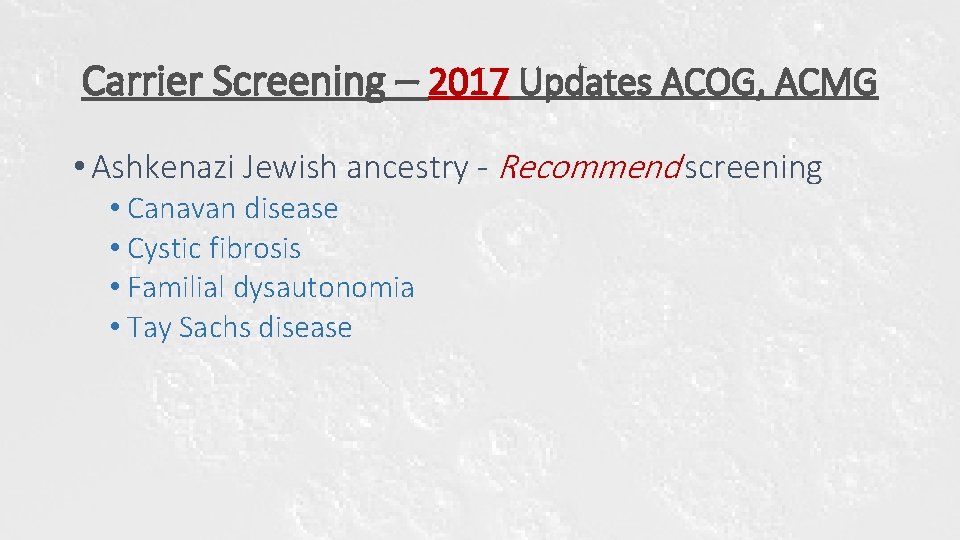
Carrier Screening – 2017 Updates ACOG, ACMG • Ashkenazi Jewish ancestry - Recommend screening • Canavan disease • Cystic fibrosis • Familial dysautonomia • Tay Sachs disease
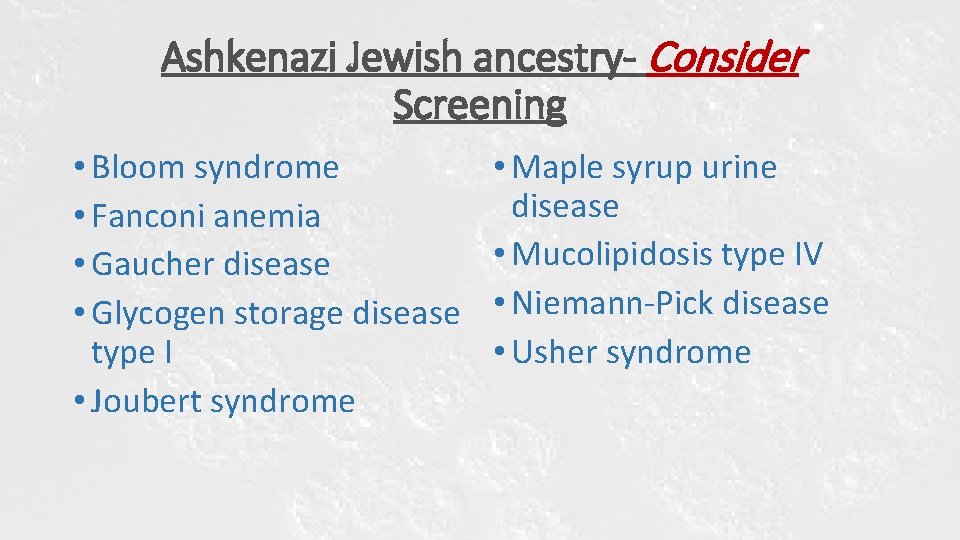
Ashkenazi Jewish ancestry- Consider Screening • Bloom syndrome • Fanconi anemia • Gaucher disease • Glycogen storage disease type I • Joubert syndrome • Maple syrup urine disease • Mucolipidosis type IV • Niemann-Pick disease • Usher syndrome
Expanded Carrier Screening
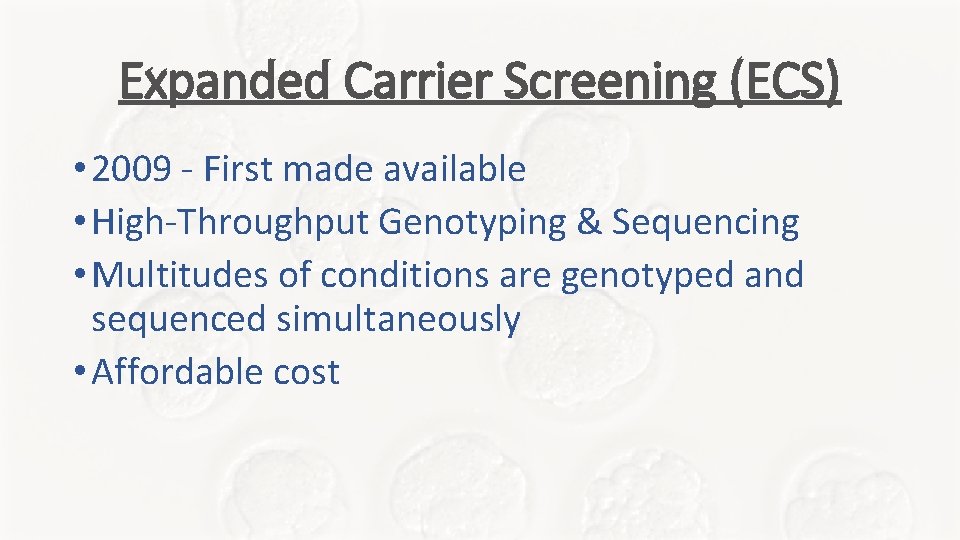
Expanded Carrier Screening (ECS) • 2009 - First made available • High-Throughput Genotyping & Sequencing • Multitudes of conditions are genotyped and sequenced simultaneously • Affordable cost
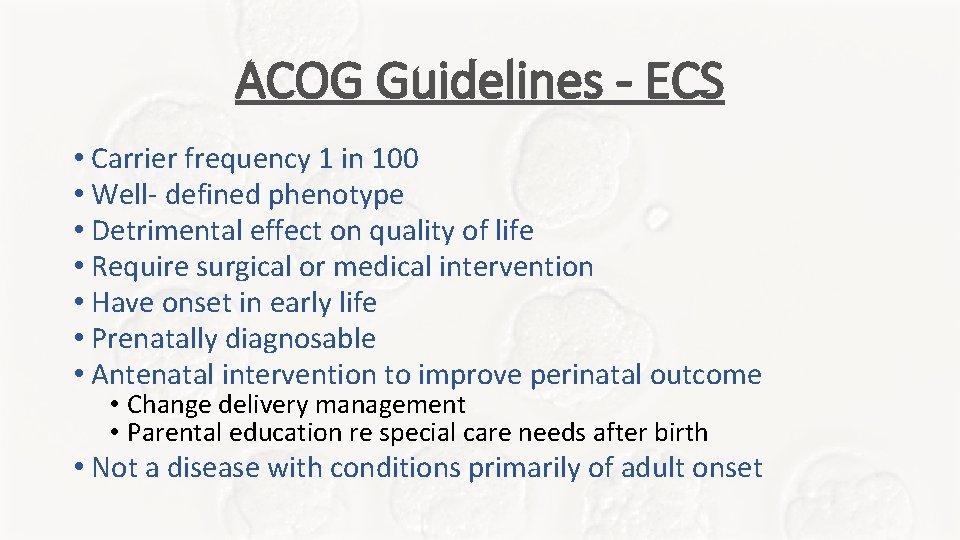
ACOG Guidelines - ECS • Carrier frequency 1 in 100 • Well- defined phenotype • Detrimental effect on quality of life • Require surgical or medical intervention • Have onset in early life • Prenatally diagnosable • Antenatal intervention to improve perinatal outcome • Change delivery management • Parental education re special care needs after birth • Not a disease with conditions primarily of adult onset
Expanded Carrier Screening • Same set of conditions is offered (> 100) • All individuals • No regard for race/ethnicity
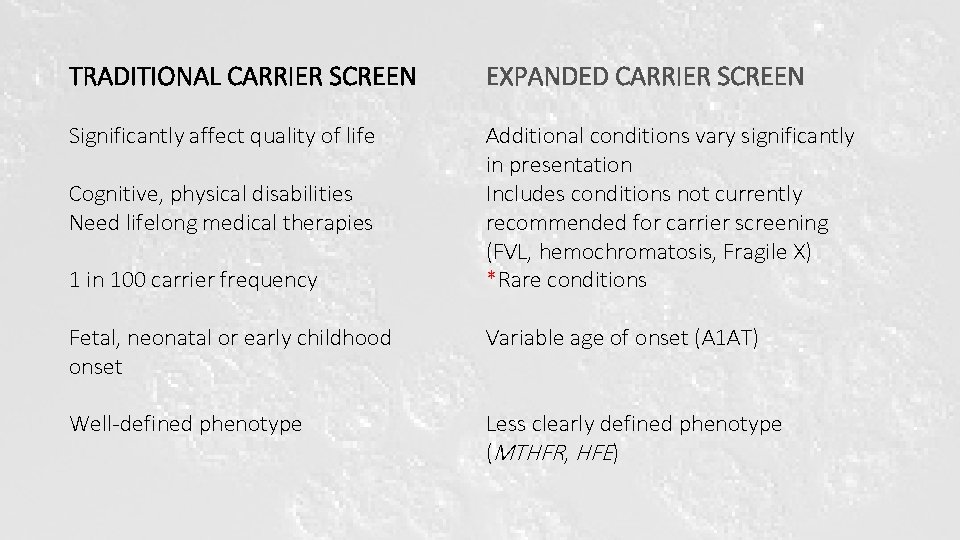
TRADITIONAL CARRIER SCREEN EXPANDED CARRIER SCREEN Significantly affect quality of life Additional conditions vary significantly in presentation Includes conditions not currently recommended for carrier screening (FVL, hemochromatosis, Fragile X) *Rare conditions Cognitive, physical disabilities Need lifelong medical therapies 1 in 100 carrier frequency Fetal, neonatal or early childhood onset Variable age of onset (A 1 AT) Well-defined phenotype Less clearly defined phenotype (MTHFR, HFE)
Expanded Carrier Screening • Includes rare conditions • Precise carrier frequency is unknown • Proportion of disease causing variants that can be detected is unknown • Residual risk calculation
Expanded Carrier Screening Model • Includes rare conditions • Pretest counseling – • Less well defined phenotypes • Less reliable residual risks • Negative results = Reduced risks • Carrier rescreening is typically not advised
Expanded Carrier Screening Model • Molecular methods are less accurate • Hemoglobinopathies – MCV, hemoglobin electrophoresis • Tay-Sachs – HEXA enzyme testing is best method for all ethnic groups
Expanded Carrier Screening Model • Autosomal-recessive (majority) • X-linked single gene (some) • Autosomal-dominant single gene (some)
Limitations of Condition-directed Carrier Screening • Inaccurate knowledge of ancestry • Multiethnic society • Inter-ethnic marriages • Adoption / unknown ancestry • Population mobility • Genetic conditions do not occur solely in specific ethnic groups • Screening for individual conditions limits the amount of accessible genetic information for participants
Expanded Carrier Screening – Who? • Preconception - women of reproductive age • Sequential or Concurrent screening • Pregnancy • Gamete donors • Family history of a genetic condition • ECS does not replace genetic counseling or assessment of familial risk • Newborn screen
Expanded Carrier Screening – Who? • ACOG Committee Opinion #690, March 2017 • Low level – display posters and pamphlets • Patient inquiries • Routinely offer
Expanded Carrier Screening – Pretest • Voluntary • Informed consent • Option to decline • Document in medical record • Confidential genetic test results
Expanded Carrier Screening – Pretest • Possible carrier test results • Carrier for more than one condition • Partner testing • Discordant carrier status • Concordant carrier status • New diagnosis of a tested condition
ECS – More Points to Consider • Mass media • GINA
Mass Media & Health Information • Emphasis on health innovations and breakthroughs and individual effect. (Coleman, Thorson &Wilkins, 2011) • Health issues are framed in mass media • What to think about • Topics • How to think about it • Sources (Mc. Combs & Ghanem, 2001)
Expanded Carrier Screening – Pretest • Confidential genetic test results • Genetic Information Non-Discrimination Act of 2008 (GINA)
GINA • Health insurance decision • Employment decisions
GINA • Life insurance • Disability insurance • Long term care insurance
GINA • VA • The Federal Employees Health Benefits Plan • Indian Health Service
Concerns About ECS • Lack of familiarity • Providers & patients • Service logistics • Time requirements (pre / post test counseling) • Availability of genetic professionals • Which diseases to include in panel • Cost • Family members • Future insurance plans
Summary 1. The contribution of single gene disorders to disease burden of birth defects is significant 2. Genetic carrier screening is the standard of care nationally and globally 3. ACOG and ACMG have updated carrier screening guidelines 4. An informed patient is key
CYSTIC FIBROSIS
Cystic Fibrosis 10 Million Americans are asymptomatic carriers
CYSTIC FIBROSIS DISEASE FREQUENCIES • White newborns – 1 in 2500 to 3500 • Hispanic Americans – 1 in 13, 500 • 15. 4% of US population are Hispanic • 7% of CF patients in the US are Hispanic • African Americans – 1 in 15, 100 to 1 in 17, 000 • 12% US population are African Americans • 4. 2% of CF patient in the US are African Americans • Asian Americans / Pacific Islanders – 1 in 31, 000 to 1 in 100, 000 • Native American Indians/Alaska Natives • Common among American Indians (Pueblo and Zuni)
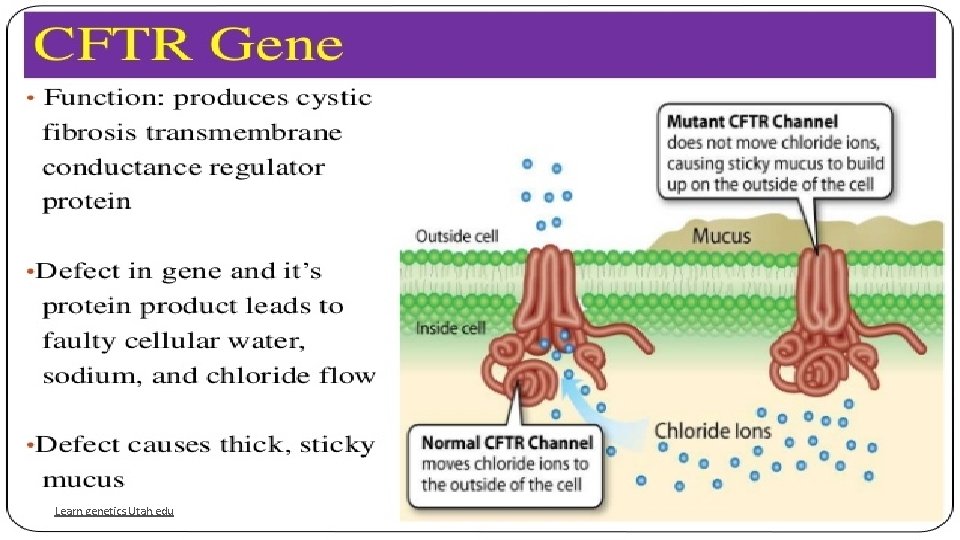
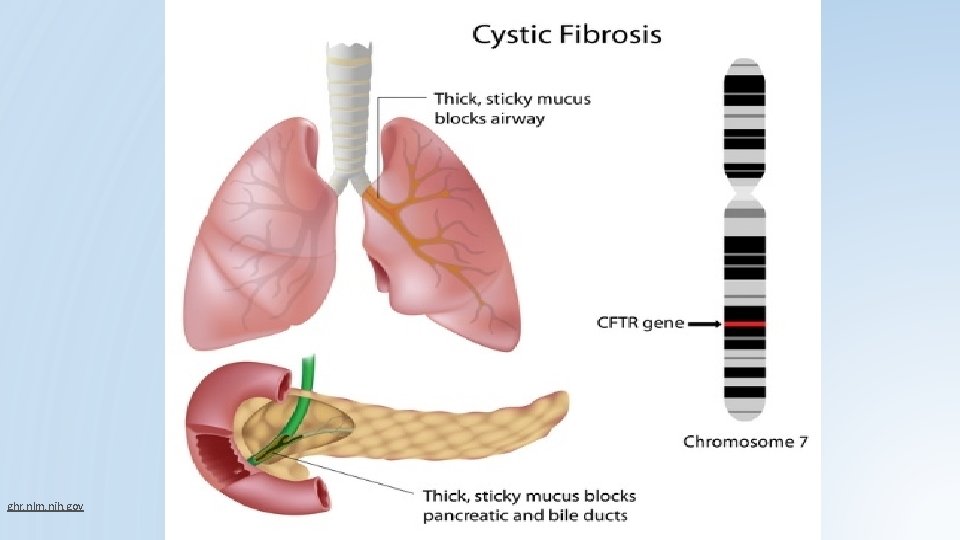
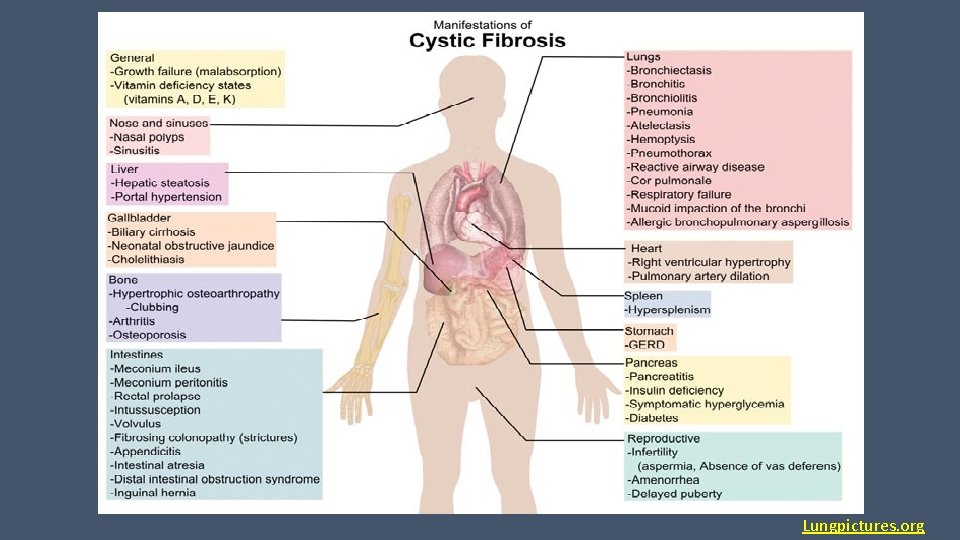
CYSTIC FIBROSIS (CF) • Autosomal recessive disease • Buildup of thick, sticky mucus that can damage multiple organs • Progressive damage to respiratory system • Chronic digestive system problems
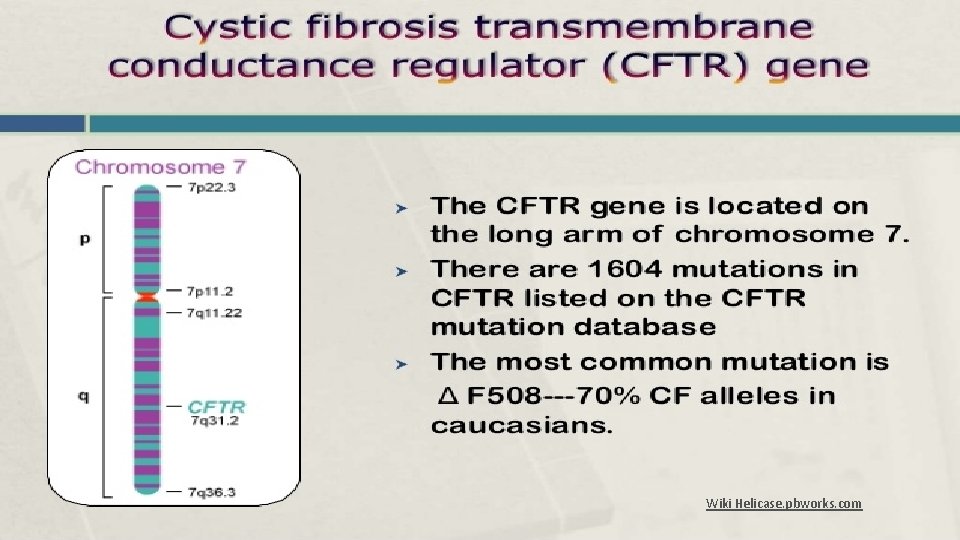
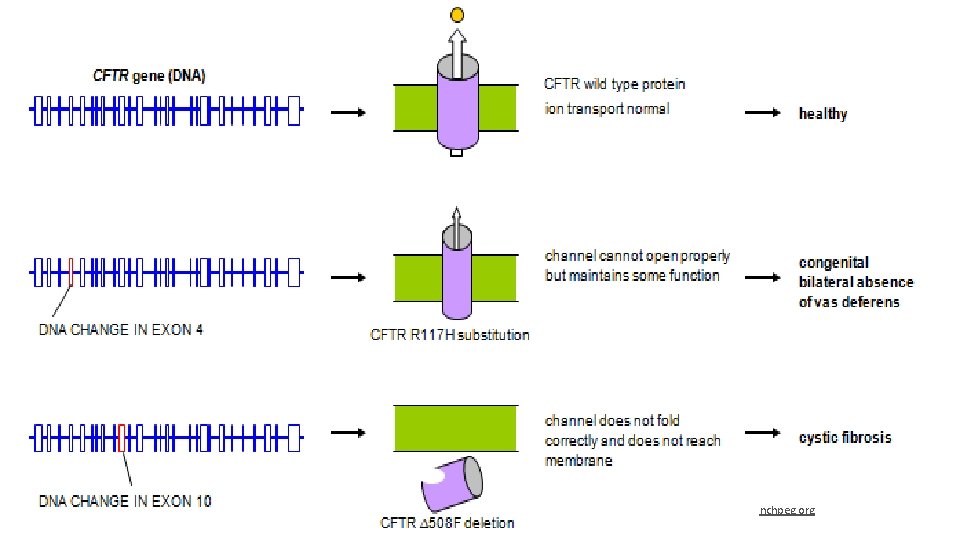
CF Mutations • 1700 mutations • Screen panel – minimum of 23 most common mutations • Common mutations • Delta F 508 • Variants • Poly T tract: 5 T/ 7 T/9 T • Milder forms • Male fertility - CBAVD
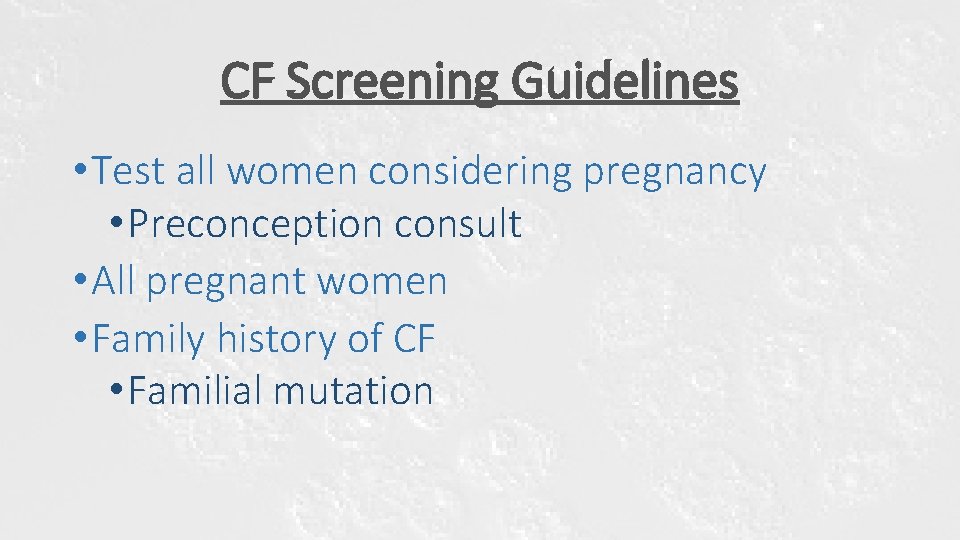
CF Screening Guidelines • Test all women considering pregnancy • Preconception consult • All pregnant women • Family history of CF • Familial mutation
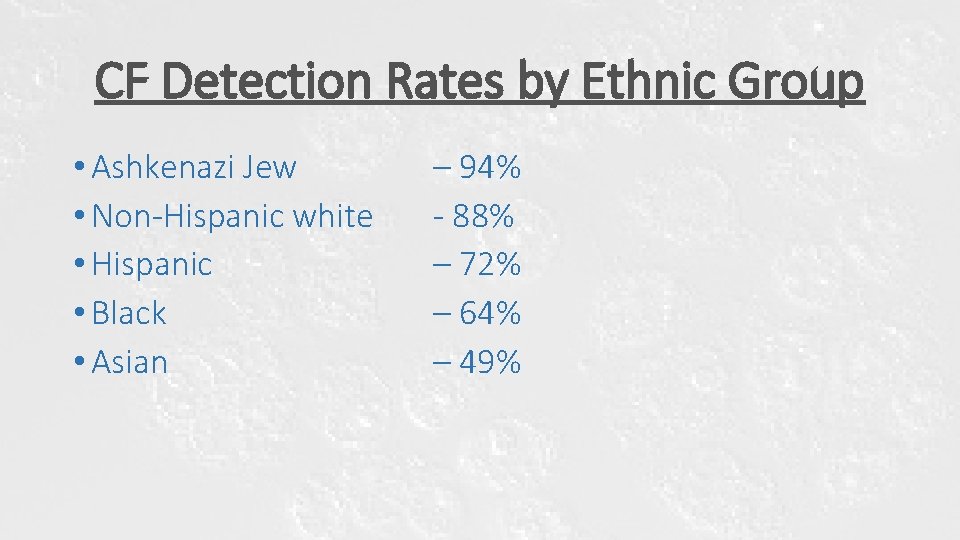
CF Detection Rates by Ethnic Group • Ashkenazi Jew • Non-Hispanic white • Hispanic • Black • Asian – 94% - 88% – 72% – 64% – 49%
Wiki Helicase. pbworks. com
nchpeg. org
Learn. genetics. Utah. edu
ghr. nlm. nih. gov
Lungpictures. org
SPINAL MUSCULAR ATROPHY
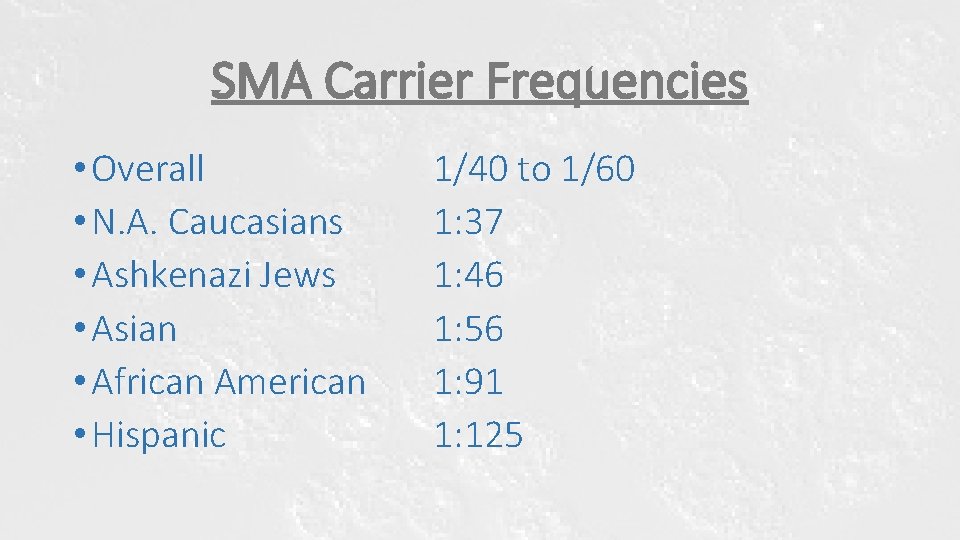
SMA Carrier Frequencies • Overall • N. A. Caucasians • Ashkenazi Jews • Asian • African American • Hispanic 1/40 to 1/60 1: 37 1: 46 1: 56 1: 91 1: 125
SPINAL MUSCULAR ATROPHY (SMA 1) • Prevalence 1 in 6000 to 1 in 10, 000 live births • Leading genetic cause of infant death • AR inheritance pattern • Second most common fatal AR disorder after CF • Severe neuromuscular disease • Degeneration of alpha motor neurons in the spinal cord • Progressive proximal muscle weakness • Paralysis
Type I SMA (Werdnig-Hoffmann) • At birth or within first 3 months • severe progressive generalized muscle weakness • hypotonia • Bulbar dysfunction - poor suck ability, reduced swallowing • Death from respiratory failure usually within first 2 years of life • Median survival 7 months
Type I SMA (Werdnig-Hoffmann) • Impaired fetal movements observed in 30% • Skeletal and limb deformities may be seen at birth • Fasciculation of tongue at 4 -6 months
Type I SMA (Werdnig-Hoffmann) • Prone to pulmonary infections • Scoliosis • Joint contractures • Poor head control • Retarded leg control and weight bearing • Unable to sit up • Intercostal muscle weakness • Small chest • Large abdomen • Breathes through stomach • Weak cough • Fluid buildup in lungs • Risk of aspiration while eating
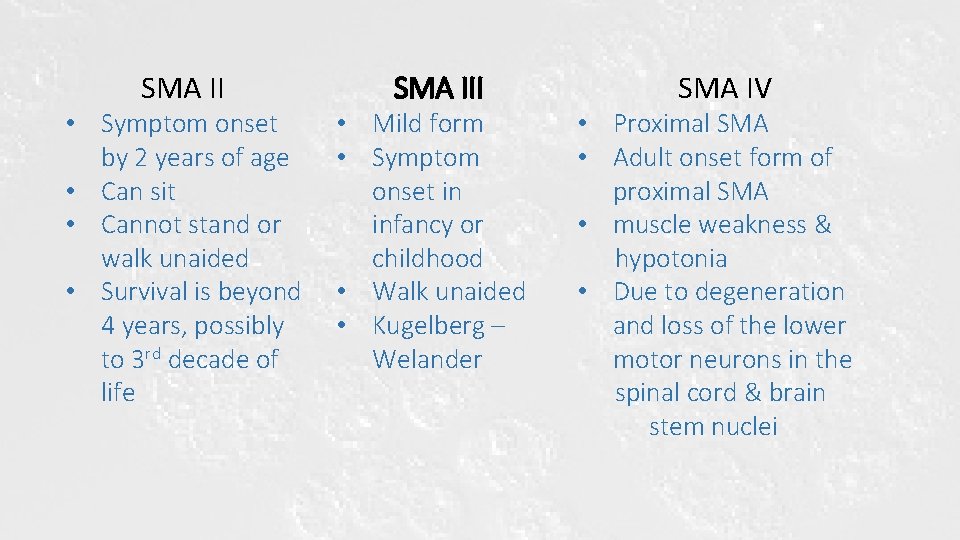
SMA II • Symptom onset by 2 years of age • Can sit • Cannot stand or walk unaided • Survival is beyond 4 years, possibly to 3 rd decade of life SMA III • Mild form • Symptom onset in infancy or childhood • Walk unaided • Kugelberg – Welander SMA IV • Proximal SMA • Adult onset form of proximal SMA • muscle weakness & hypotonia • Due to degeneration and loss of the lower motor neurons in the spinal cord & brain stem nuclei
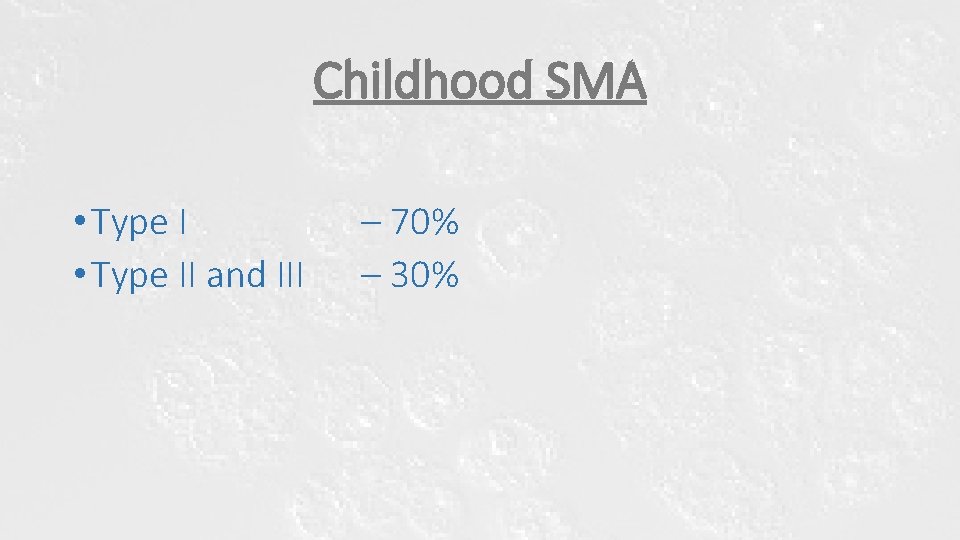
Childhood SMA • Type II and III – 70% – 30%
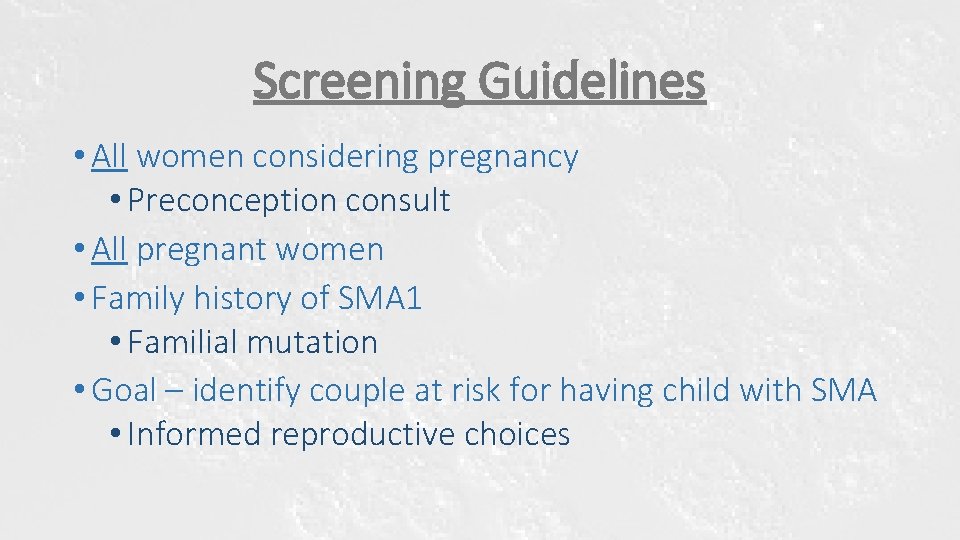
Screening Guidelines • All women considering pregnancy • Preconception consult • All pregnant women • Family history of SMA 1 • Familial mutation • Goal – identify couple at risk for having child with SMA • Informed reproductive choices
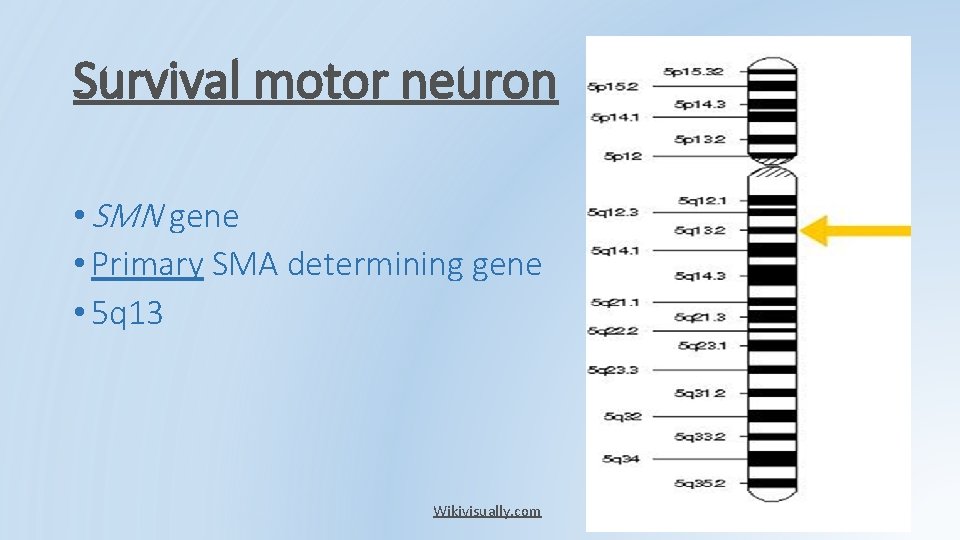
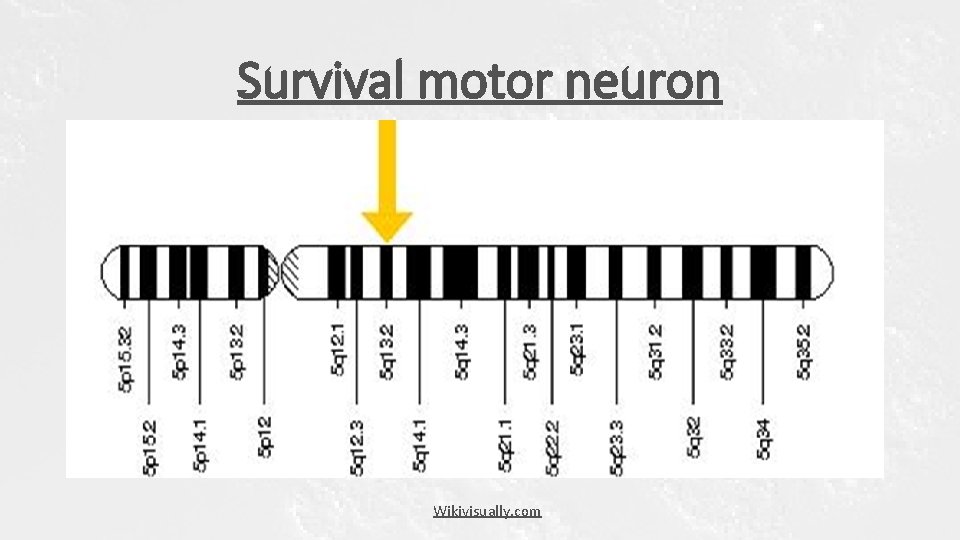
Survival motor neuron • SMN gene • Primary SMA determining gene • 5 q 13 Wikivisually. com
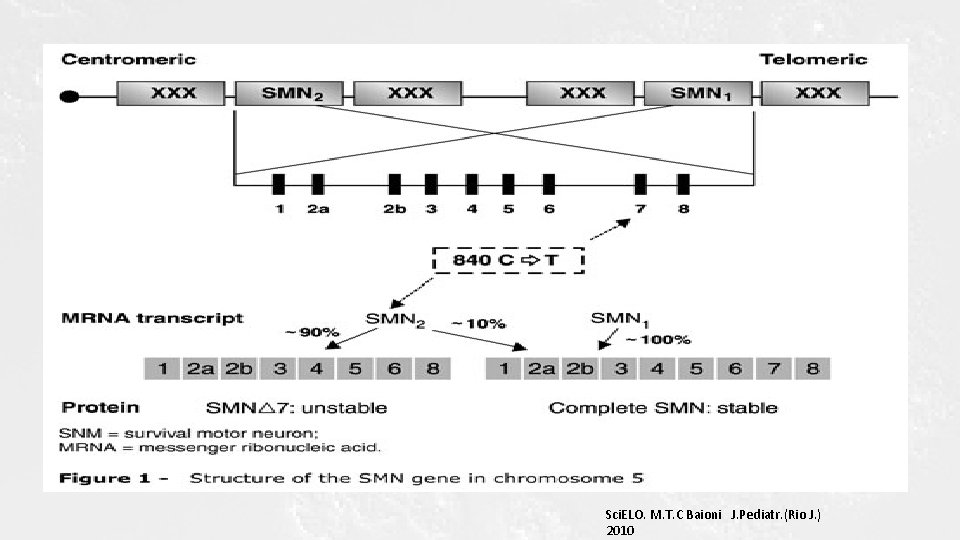
SMN Gene • Two almost identical SMN genes • SMN 1 gene – 9 exons for full length transcript • SMN 2 gene – 840 C to T change • C to T change in exon 7 disrupts splicing • Majority of SMN 2 transcripts lack exon 7 • Low functional SMN protein levels
Survival motor neuron Wikivisually. com
Sci. ELO. M. T. C Baioni J. Pediatr. (Rio J. ) 2010
SMA Carrier Testing • Dosage analysis* • Detects the number of SMN 1 genes • Highly accurate detection for SMN 1 gene • 90% detection rate • False negatives
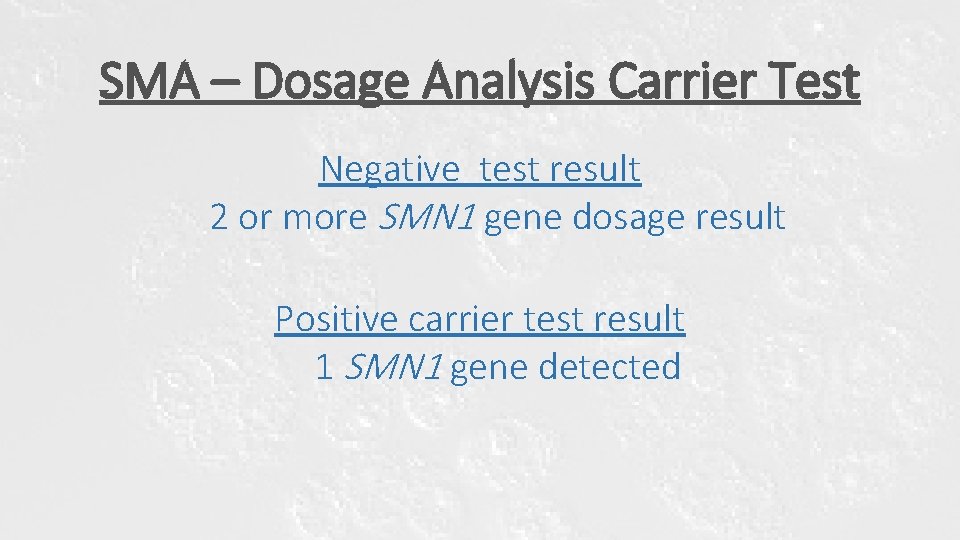
SMA – Dosage Analysis Carrier Test Negative test result 2 or more SMN 1 gene dosage result Positive carrier test result 1 SMN 1 gene detected
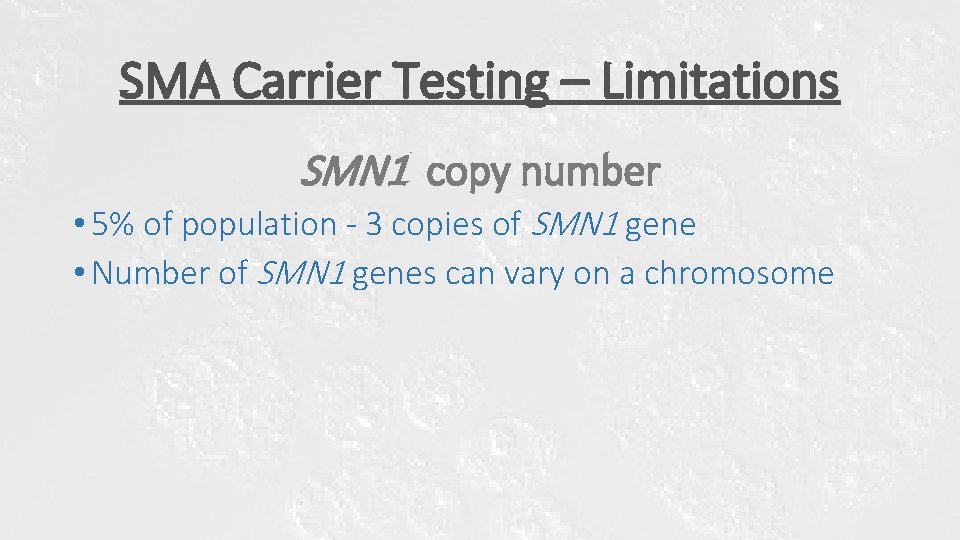
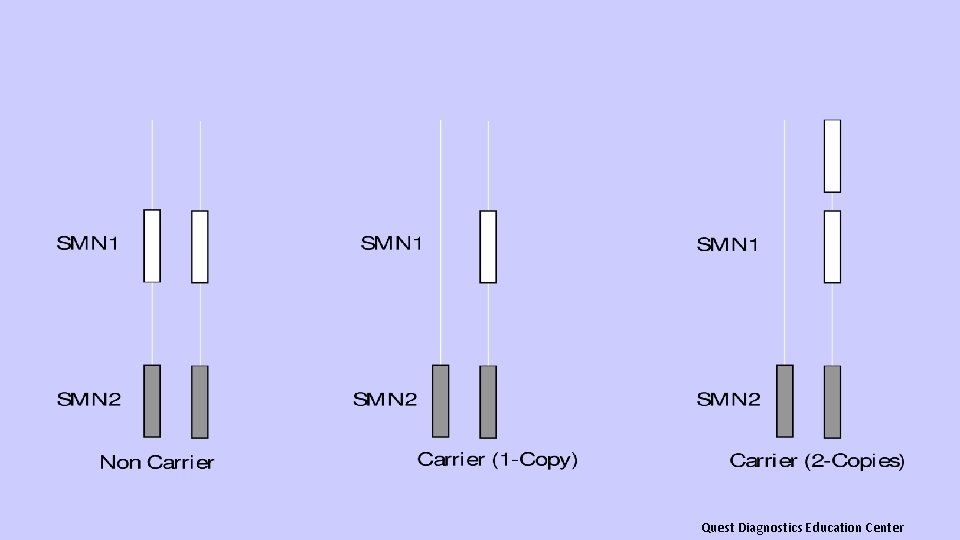
SMA Carrier Testing – Limitations SMN 1 copy number • 5% of population - 3 copies of SMN 1 gene • Number of SMN 1 genes can vary on a chromosome
Quest Diagnostics Education Center
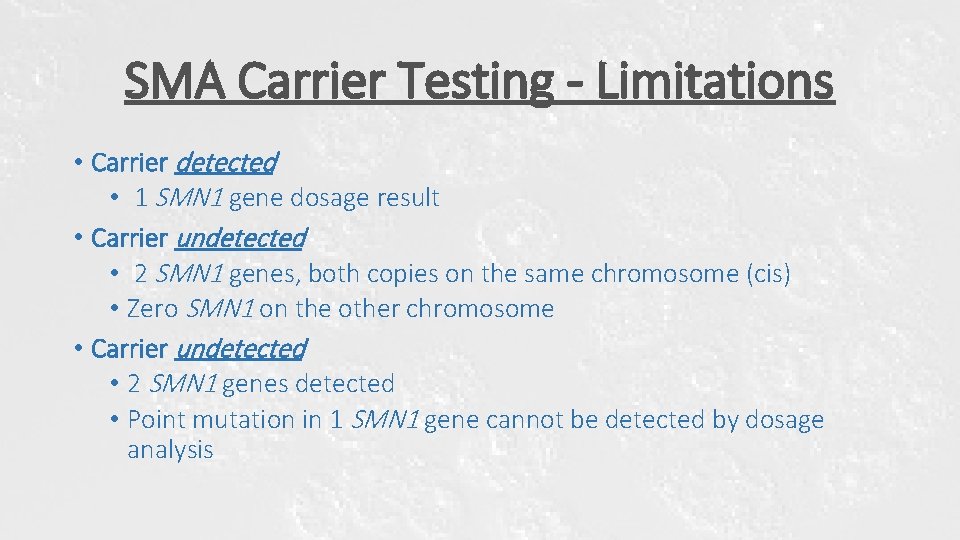
SMA Carrier Testing - Limitations • Carrier detected • 1 SMN 1 gene dosage result • Carrier undetected • 2 SMN 1 genes, both copies on the same chromosome (cis) • Zero SMN 1 on the other chromosome • Carrier undetected • 2 SMN 1 genes detected • Point mutation in 1 SMN 1 gene cannot be detected by dosage analysis
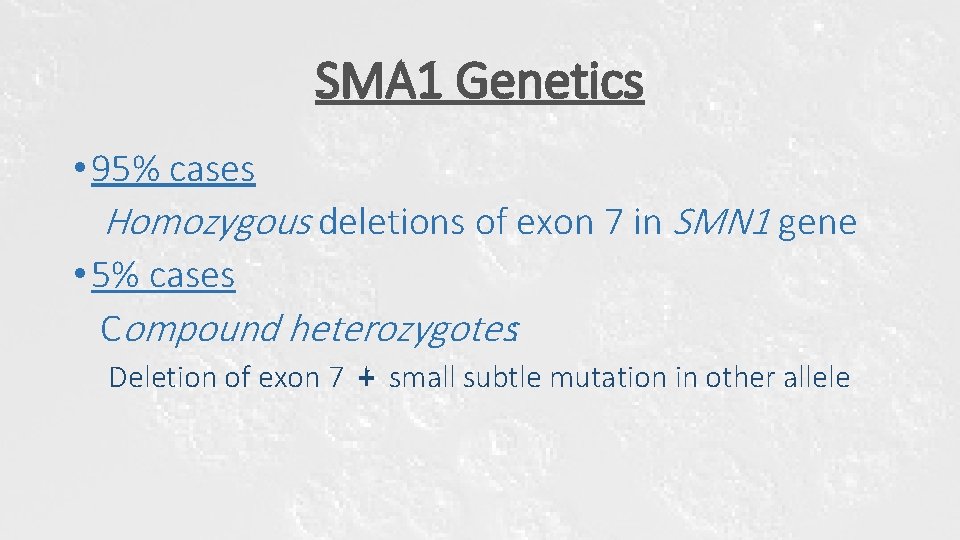
SMA 1 Genetics • 95% cases Homozygous deletions of exon 7 in SMN 1 gene • 5% cases Compound heterozygotes: Deletion of exon 7 + small subtle mutation in other allele
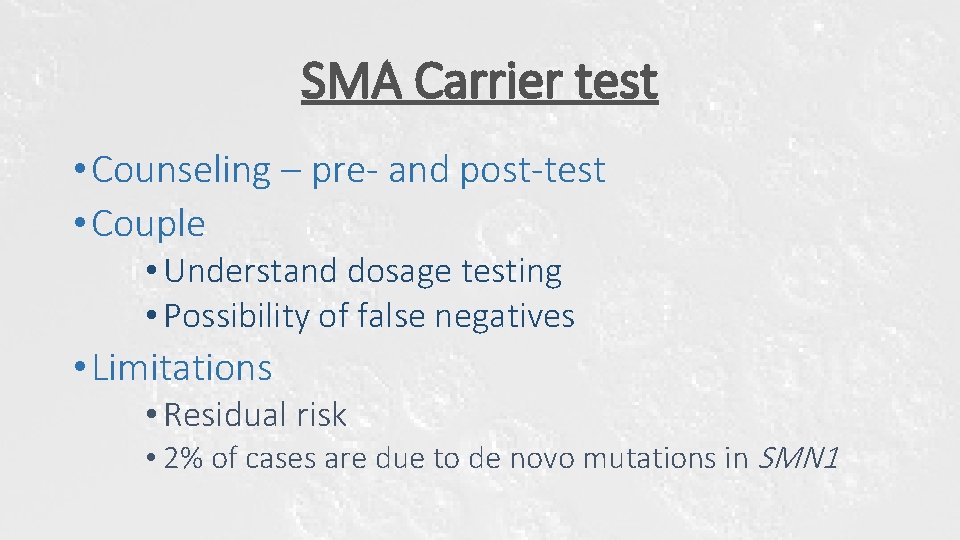
SMA Carrier test • Counseling – pre- and post-test • Couple • Understand dosage testing • Possibility of false negatives • Limitations • Residual risk • 2% of cases are due to de novo mutations in SMN 1
THE HEMOGLOBINOPATHIES
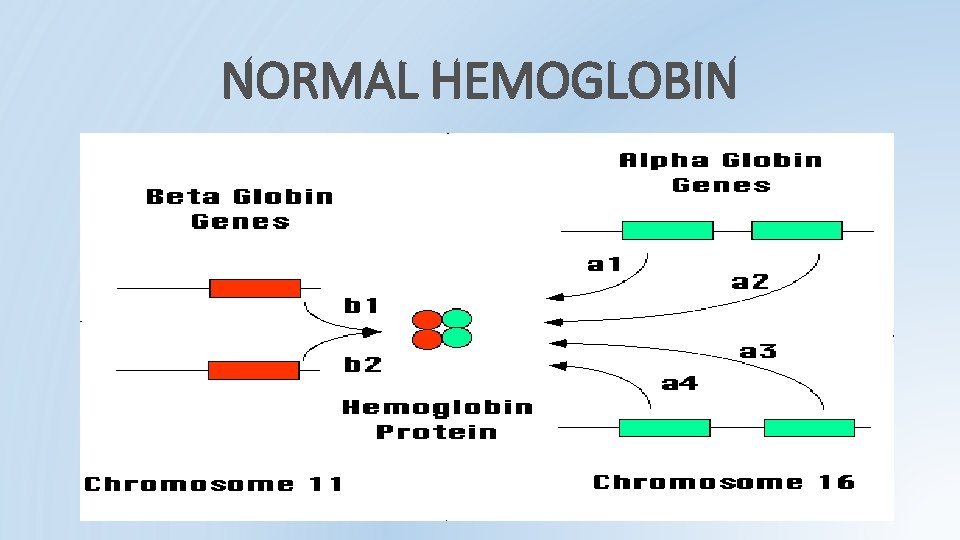
NORMAL HEMOGLOBIN
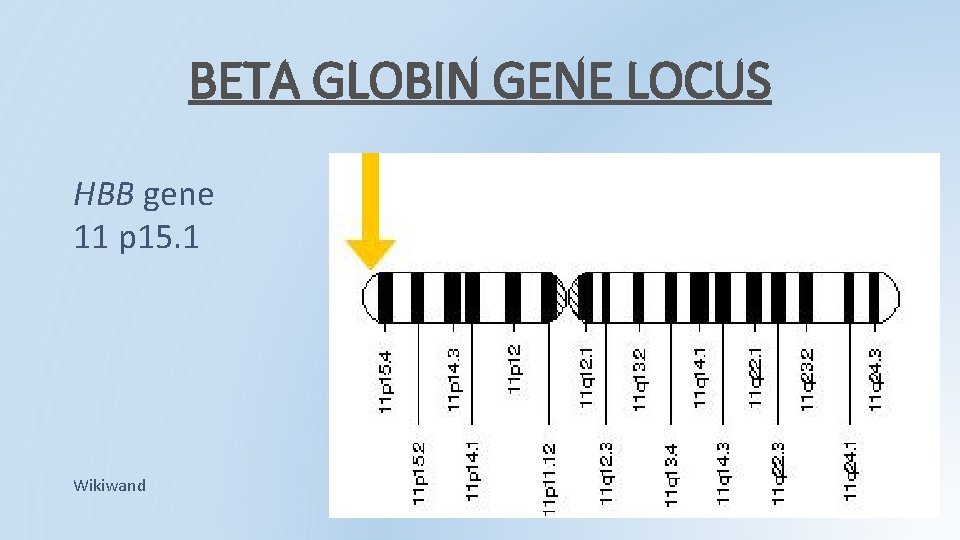
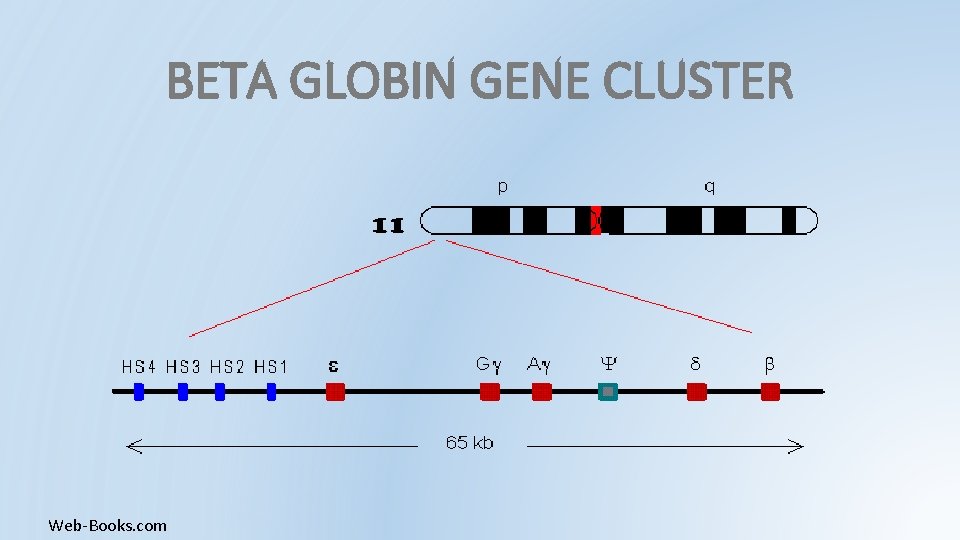
BETA GLOBIN GENE LOCUS HBB gene 11 p 15. 1 Wikiwand
BETA GLOBIN GENE CLUSTER Web-Books. com
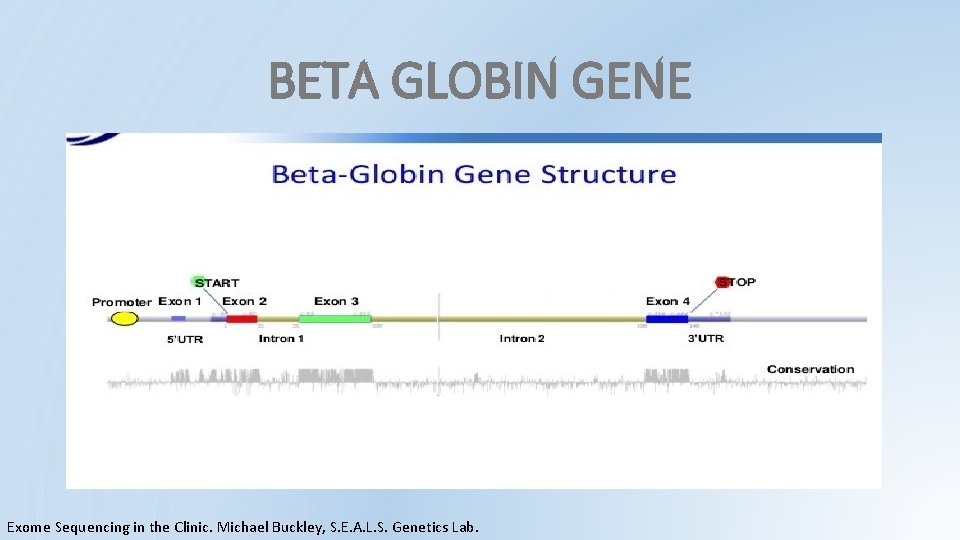
BETA GLOBIN GENE Exome Sequencing in the Clinic. Michael Buckley, S. E. A. L. S. Genetics Lab.
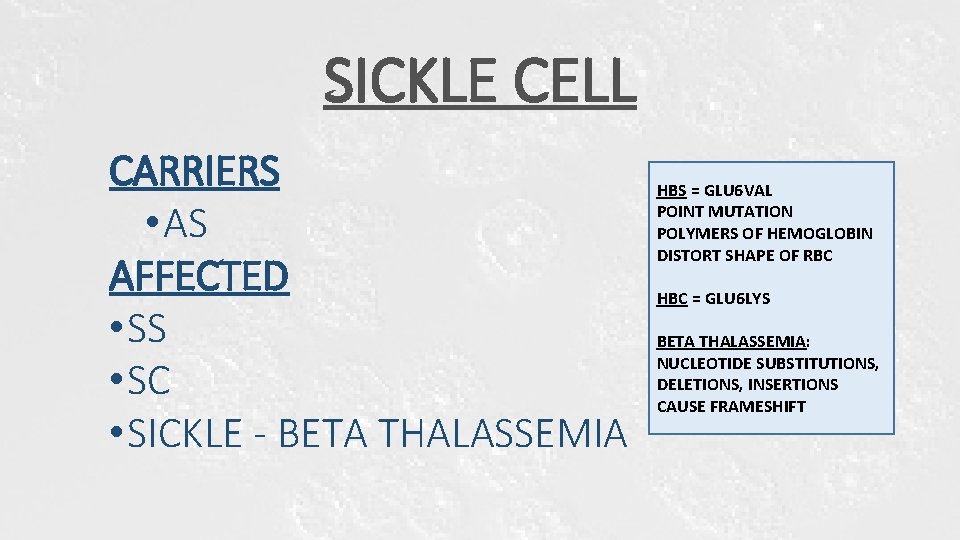
SICKLE CELL CARRIERS • AS AFFECTED • SS • SC • SICKLE - BETA THALASSEMIA HBS = GLU 6 VAL POINT MUTATION POLYMERS OF HEMOGLOBIN DISTORT SHAPE OF RBC HBC = GLU 6 LYS BETA THALASSEMIA: NUCLEOTIDE SUBSTITUTIONS, DELETIONS, INSERTIONS CAUSE FRAMESHIFT
SICKLE CELL DISEASE CLINICAL FEATURES • Sickle cell crisis • Vasoocclusive disease • Autosplenectomy • Kidneys, lung, brain • Acute Chest Syndrome
BETA THALASSEMIA • 200 different pathogenic variants for HBB gene • Frameshift (splice site) • Substitutions, deletions, insertions • B+ - thalassemia • B 0 - thalassemia
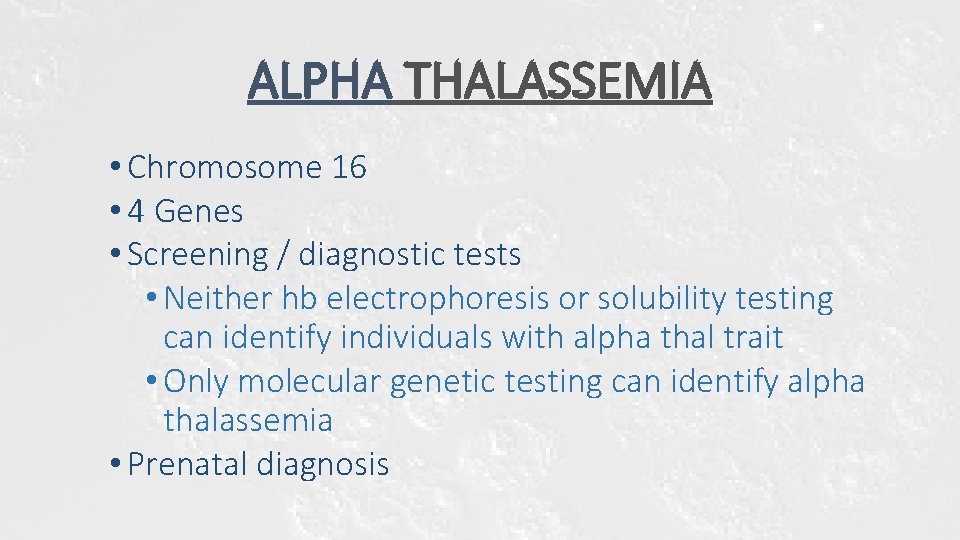
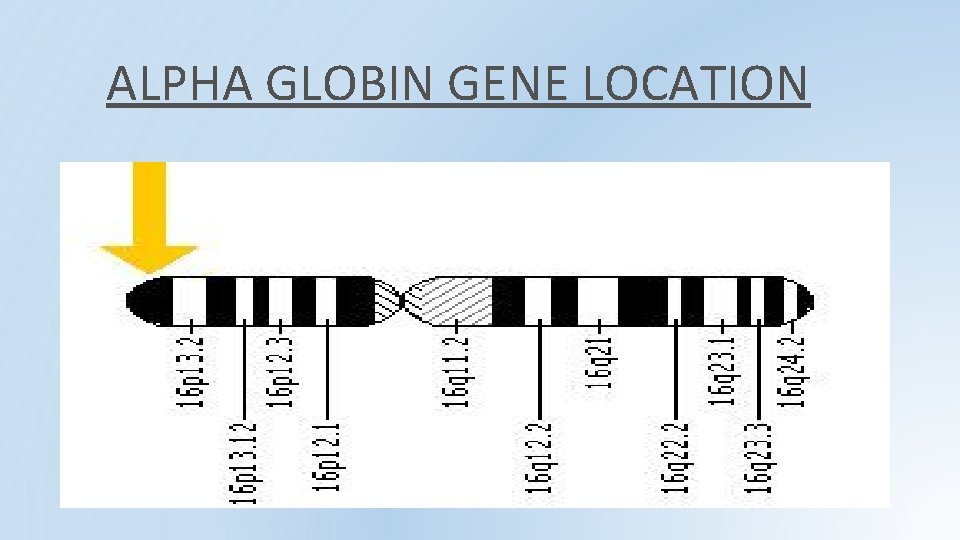
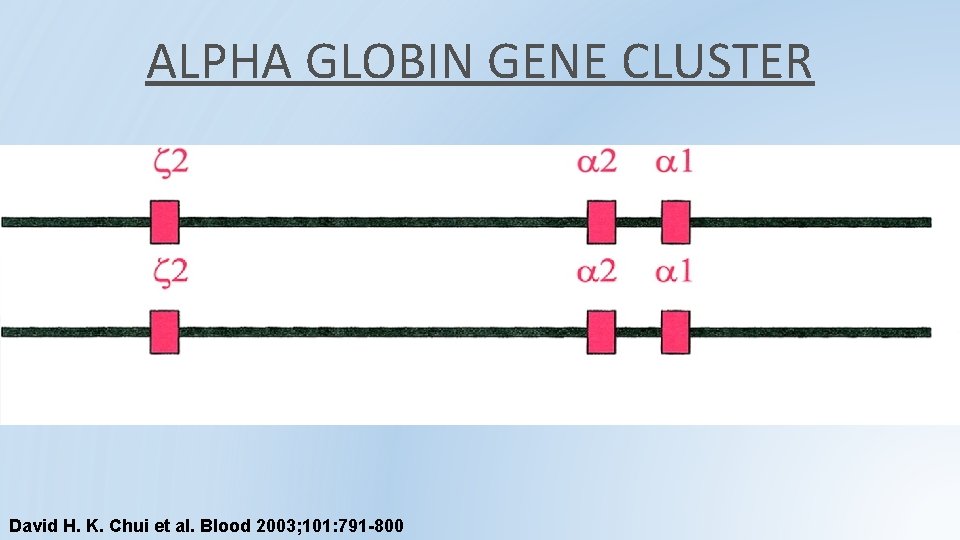
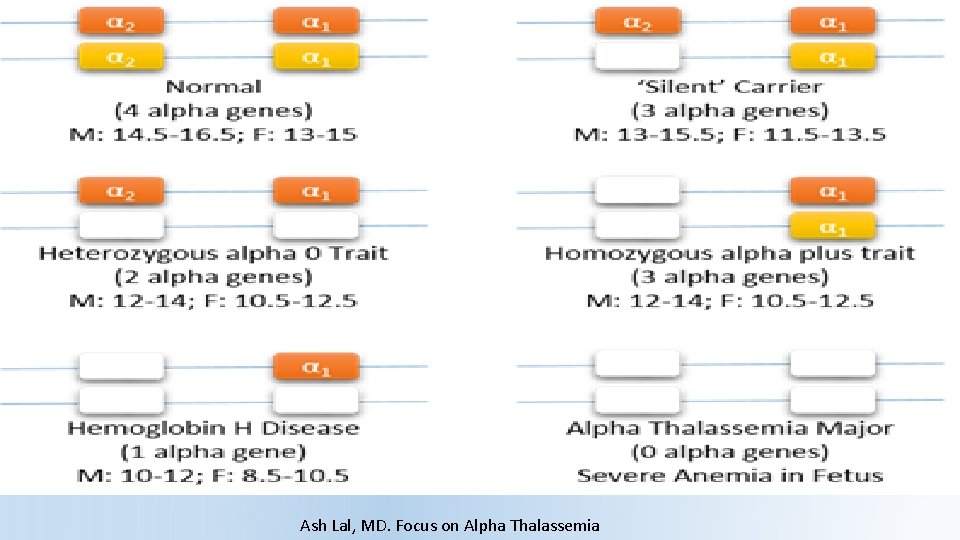
ALPHA THALASSEMIA • Chromosome 16 • 4 Genes • Screening / diagnostic tests • Neither hb electrophoresis or solubility testing can identify individuals with alpha thal trait • Only molecular genetic testing can identify alpha thalassemia • Prenatal diagnosis
ALPHA GLOBIN GENE LOCATION
ALPHA GLOBIN GENE CLUSTER David H. K. Chui et al. Blood 2003; 101: 791 -800
Ash Lal, MD. Focus on Alpha Thalassemia
FRAGILE X SYNDROME
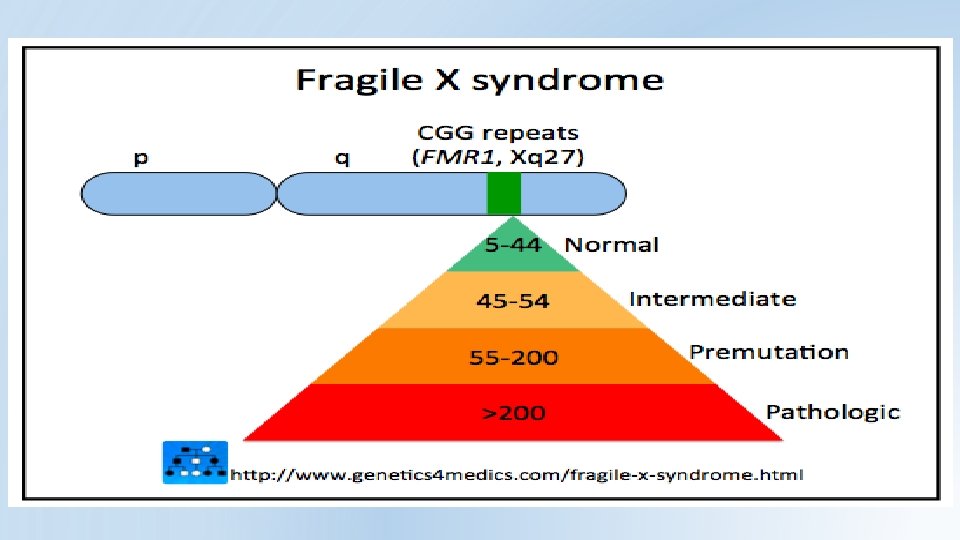
Fragile X Syndrome • X-linked dominant • Clinical features • Intellectual disability or impairment • Learning disabilities • Cognitive disabilities • Behavioral disabilities – autism with intellectual disability; attention deficit – hyperactivity disorder or both • Prevalence – males, females • Phenotype
Fragile X Syndrome Diagnosed in 25% of persons with autism or autism spectrum disorder behaviors with intellectual disability • Carrier frequency prevalence • 1 in 257 of US women with no known risk factors for fragile X syndrome • 1 in 157 among 36, 000 Israeli women with no family history of intellectual disability or developmental abnormalities • 1 in 86 with family history of intellectual disability
Fragile X Syndrome • THE GENETICS • X-linked disorder • CGG repeat • Expansion of CGG trinucleotide repeat alters transcription of FMR 1 gene • DIAGNOSIS • DNA based molecular diagnosis – Southern blot, PCR
Summary 1. The contribution of single gene disorders to disease burden of birth defects is significant 2. Genetic carrier screening is the standard of care nationally and globally 3. ACOG and ACMG have updated carrier screening guidelines 4. An informed patient is key
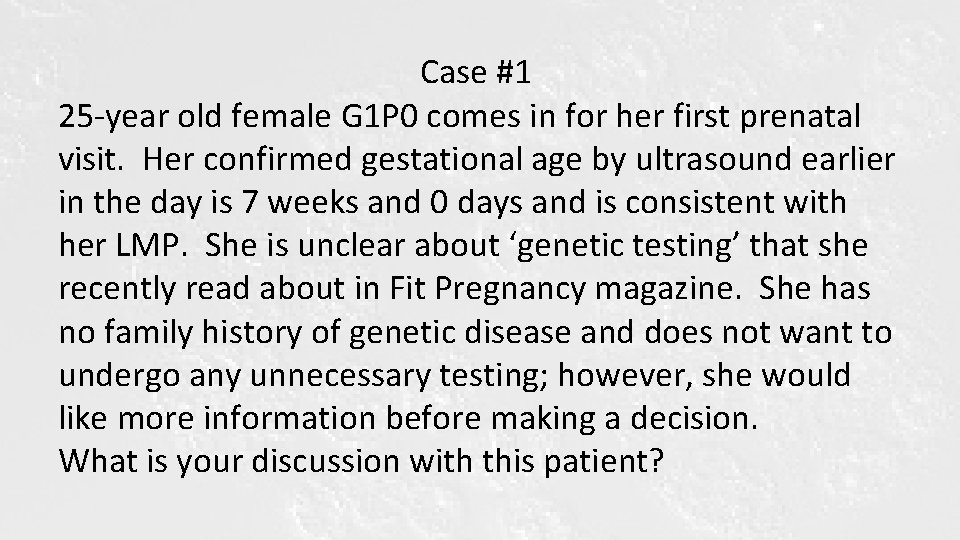
Case #1 25 -year old female G 1 P 0 comes in for her first prenatal visit. Her confirmed gestational age by ultrasound earlier in the day is 7 weeks and 0 days and is consistent with her LMP. She is unclear about ‘genetic testing’ that she recently read about in Fit Pregnancy magazine. She has no family history of genetic disease and does not want to undergo any unnecessary testing; however, she would like more information before making a decision. What is your discussion with this patient?
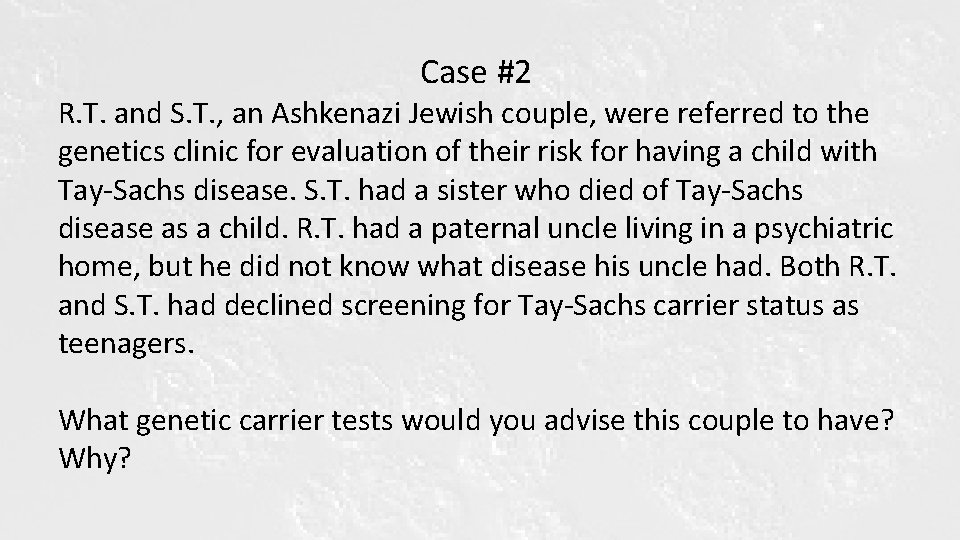
Case #2 R. T. and S. T. , an Ashkenazi Jewish couple, were referred to the genetics clinic for evaluation of their risk for having a child with Tay-Sachs disease. S. T. had a sister who died of Tay-Sachs disease as a child. R. T. had a paternal uncle living in a psychiatric home, but he did not know what disease his uncle had. Both R. T. and S. T. had declined screening for Tay-Sachs carrier status as teenagers. What genetic carrier tests would you advise this couple to have? Why?