
Genetic Basis of Psychology 3 4 What Is
Genetic Basis of Psychology
3. 4 What Is the Genetic Basis of Psychological Science? • Explain how genes are transmitted from parent to offspring • Discuss the goals and methods of behavioral genetics • Explain how both environmental factors and experience influence genetic expression

What Is the Genetic Basis of Psychological Science? • The term genetics is typically used to describe how characteristics are passed along to offspring and to the processes involved in turning genes “on” and “off” • Genetic predispositions are important in determining the environments we select for ourselves • Biology and environment mutually influence each other

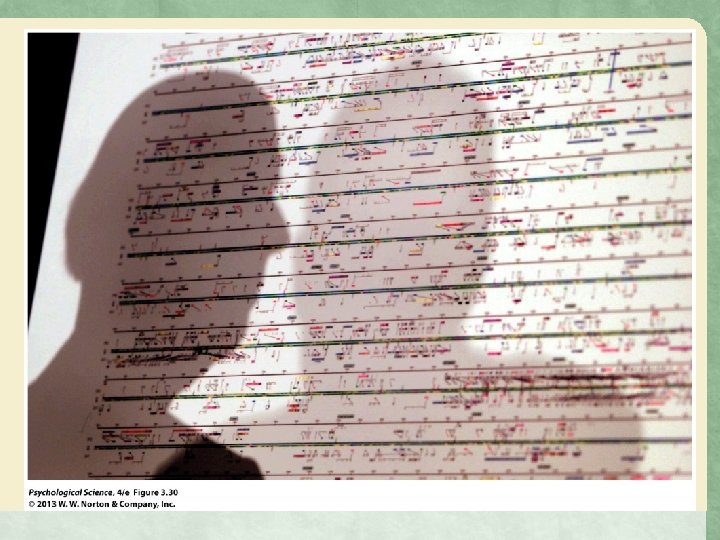
All of Human Development Has a Genetic Basis • The genome is the master blueprint for making an entire organism • “The genome provides the option, and the environment determines which option is taken” (Marcus, 2004) • Chromosomes: made of deoxyribonucleic acid (DNA), consisting of two intertwined strands of molecules in a double helix shape • Genes: segments of DNA strands • Human Genome Project: mapped the entire structure of human DNA

Heredity Involves Passing Along Genes through Reproduction • Mendel (ca. 1866): cross-pollinated different colored pea plants to see which color flowers the plants would produce • Discovered clues to the mechanisms responsible for heredity • Dominant gene: expressed whenever it is present in either parent • Recessive gene: expressed only when it is matched with a similar gene from the other parent
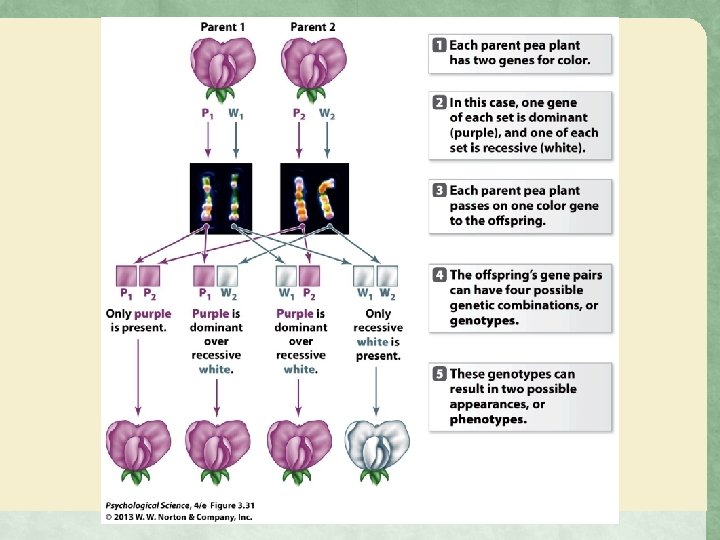

Genotype and Phenotype • Genotype: an organism’s genetic makeup; never changes • Phenotype: an organism’s observable physical characteristics; always changing • Genetics (nature) and environment (nurture) both influence phenotype
Polygenic Effects • Polygenic trait: a trait that is influenced by many genes • The range of skin tones among Americans shows that human skin color is not inherited the same way as flower color was in Mendel’s research • Skin tone is not the end product of a single dominant/recessive gene pairing (genotype) but rather shows the effects of multiple genes
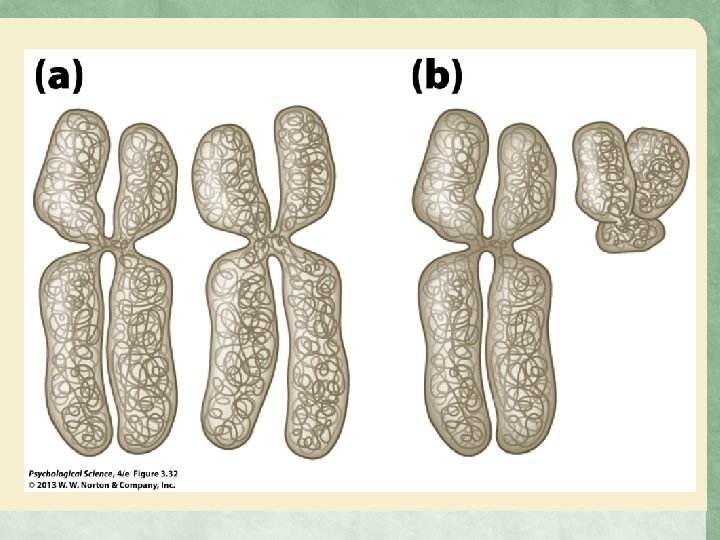
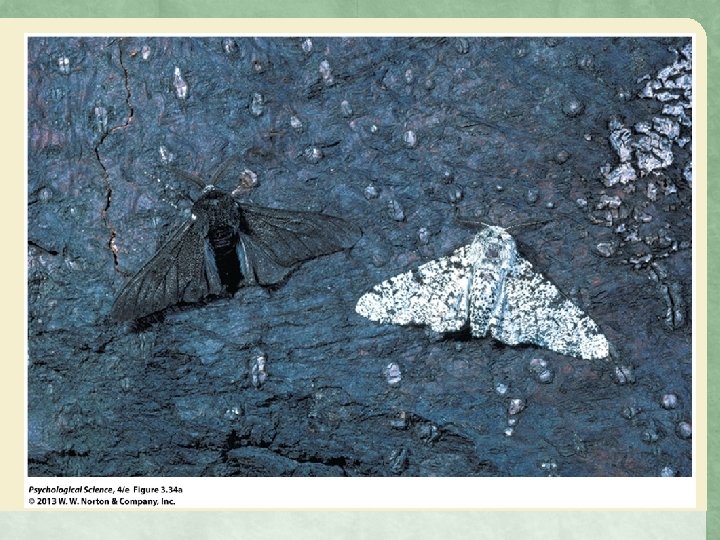
Genetic Variation Is Created by Sexual Reproduction • From any two parents, 8 million different combinations of the 23 chromosomes are possible • The human zygote grows through cell division; errors sometimes occur during cell division and lead to mutations • Mutations produce an ability or behavior that may be advantageous/disadvantageous to the organism
Genes Affect Behavior • A person’s abilities and psychological traits are influenced by the interaction of genes and environment • Behavioral genetics: the study of how genes and environment interact to influence psychological activity • People are born like “undeveloped photographs”: The image has been captured, but the way it eventually appears depends on the development process
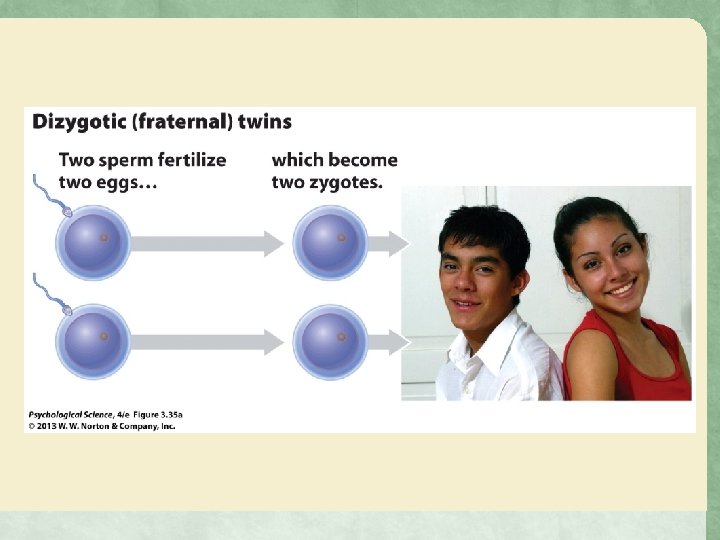
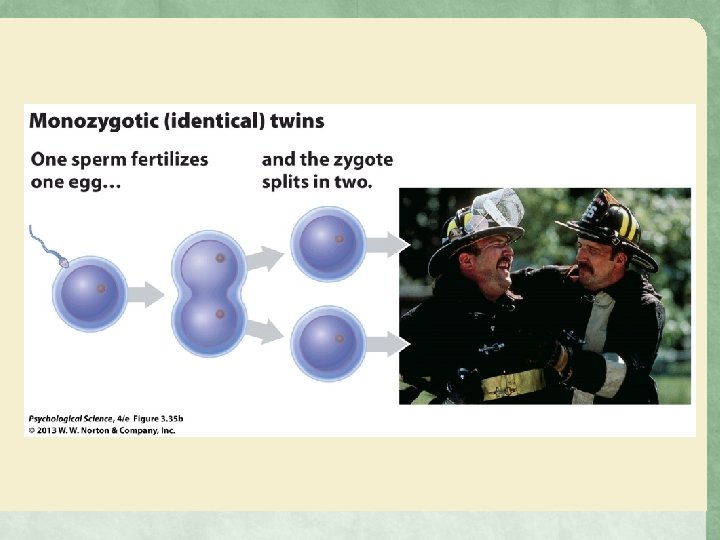
Behavioral Genetics Methods • Behavioral geneticists use two methods to assess the degree to which traits are inherited: • Twin studies: compare similarities between monozygotic (identical) and dizygotic (fraternal) twins to determine the genetic basis of specific traits • Greater similarity of monozygotic twins (raised together or apart) is likely due to genetic influence • Adoption studies: compare biological relatives and adoptive relatives
Understanding Heritability • Heritability: a statistical estimate of the genetic portion of the observed variation in some specific trait • Heritability refers to populations, not to individuals • Example: In a certain population, height has a heritability of. 60, which means 60 percent of height variation among individuals in that population is genetic. It does not mean that any one individual gets 60 percent of his or height from genetics and 40 percent from environment • Estimates of heritability are concerned only with the extent that people differ in terms of their genetic makeup within the group
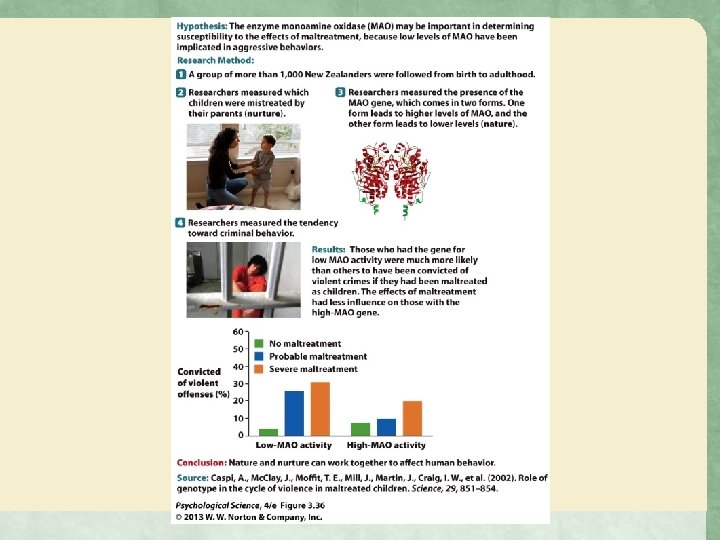
Social and Environmental Contexts Influence Genetic Expression • Caspi et al. (2002) followed more than 1, 000 New • • Zealanders from birth until adulthood Every few years information was collected about the participants When the participants were 26 years old, investigators examined which factors predicted who had become a violent criminal Mistreatment at home + low MAO gene accounted for nearly 50 percent of criminality Study is a good example of how genes and social context interact to affect behavior (phenotype)
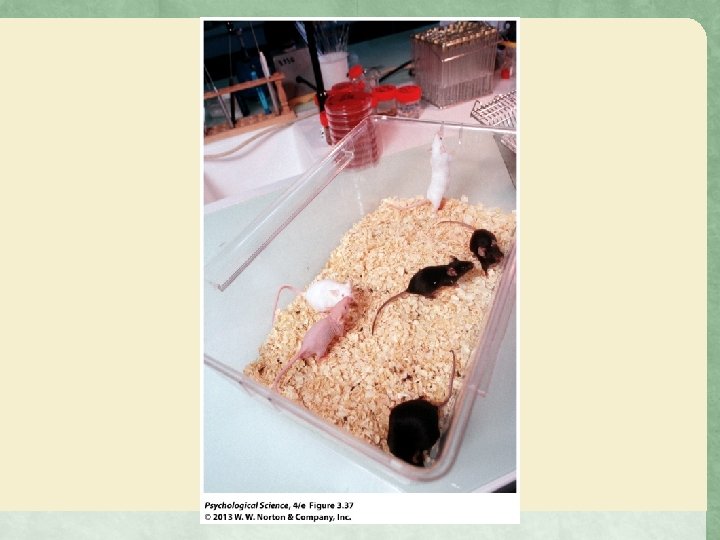
Genetic Expression Can Be Modified • Gene manipulation techniques can enhance or reduce the expression of a particular gene; genes from one animal species can be inserted into the embryo of another • Changing a single gene can dramatically change behavior • Example: A gene from the highly social prairie vole was inserted into the developing embryos of normally antisocial mice. The resulting transgenic mice exhibited social behavior more typical of prairie voles (Insel& Young, 2001) • Changing one gene’s expression leads to the expression of other genes, which ultimately influences behavior
3. 5 How Does the Brain Change? • Explain how environmental factors and experience influence brain organization. • Describe sex differences in brain structure and function.
How Does the Brain Change? • Despite the great precision and the specificity of its connections, the brain is extremely malleable • Plasticity: a property of the brain that allows it to change as a result of experience, drugs, or injury
The Interplay of Genes and Environment Wires the Brain • Nature and nurture constantly interact to affect DNA’s activity and the products of that activity • Brain plasticity reflects the interactive nature of our biological and environmental influences
Cell Identity Becomes Fixed Over Time • As an embryo develops, each cell becomes more and more committed to its identity • Tissue transplanted early enough completely transforms into whatever type is appropriate for its new location; transplanting cells too late may disfigure the organism • Many people are excited about the possibility of transplanting fetal cells because they are undeveloped enough to become any type of tissue
Experience Fine-Tunes Neural Connections • Experience is important for normal brain development and maybe even more so for superior development • Example: • One group of rats was raised in a “normal” lab environment (featureless boxes with bedding at the bottom, plus dishes for food and water); another group was raised in an enriched environment • The “enriched” group developed bigger, heavier brains than the first group (Rosenzweig, Bennett, & Diamond, 1972)
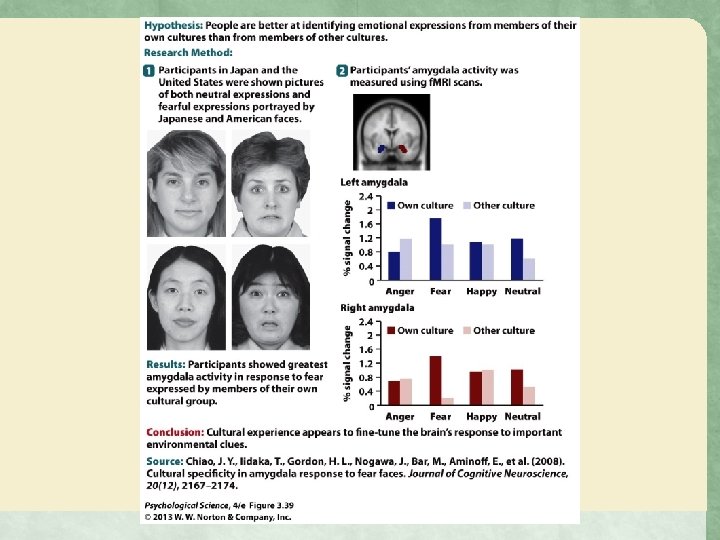
Culture Affects the Brain • Our cultural experiences contribute to different patterns of brain activity • Example: • One group of participants in Japan and another group in the United States were shown pictures of both neutral and fearful facial expressions portrayed by Japanese and American faces. • Activity in the amygdala was greatest when participants viewed fearful expressions within their own cultural group (Chiao et al. , 2008)
The Brain Rewires Itself throughout Life • Although brain plasticity decreases with age, the brain can grow new connections among neurons and even grow neurons into very old age • The rewiring and growth within the brain represents the biological basis of learning
Change in the Strength of Connections Underlies Learning • Changes in the brain due to experience are mainly in the strength of existing connections • Hebb’s “fire together, wire together” catchphrase: When two neurons fire simultaneously, the synaptic connection between them strengthens • Entirely new connections can grow between neurons. • Neurogenesis: New neurons are produced in some brain regions (e. g. , the hippocampus) • Neurogenesis may underlie neural plasticity
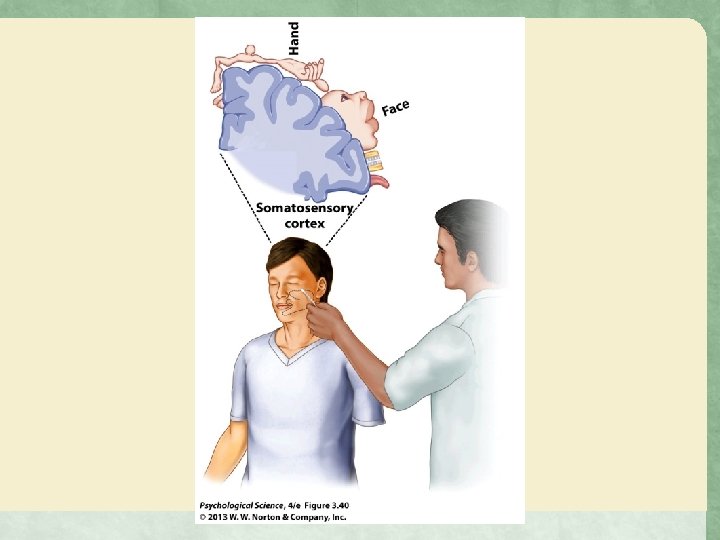
Changes in the Brain • Wiring in the brain is affected by amount of use (e. g. , recall the London taxi drivers) • Phantom limb: the intense sensation that an amputated body part still exists • Phenomenon suggests that the brain has not reorganized in response to the injury and that the missing limb’s cortical representation remains intact • An amputee who has lost a hand may, when his or her eyes are closed, perceive a touch on the cheek as if it were on the missing hand (Ramachandran&Hirstein, 1998)
The Puzzles of Synesthesia • Synesthesia: For synesthetes, sensory experiences are crossed • One man reported the he hates driving because the sight of road signs tastes to him like a mixture of pistachio ice cream and ear wax (Mc. Neil, 2006) • The brain area involved in seeing colors is physically close to the brain area involved in understanding numbers, thus people with color/number synesthesia, may have some connections or crosswiring between brain areas (Ramachandran& Hubbard, 2001)
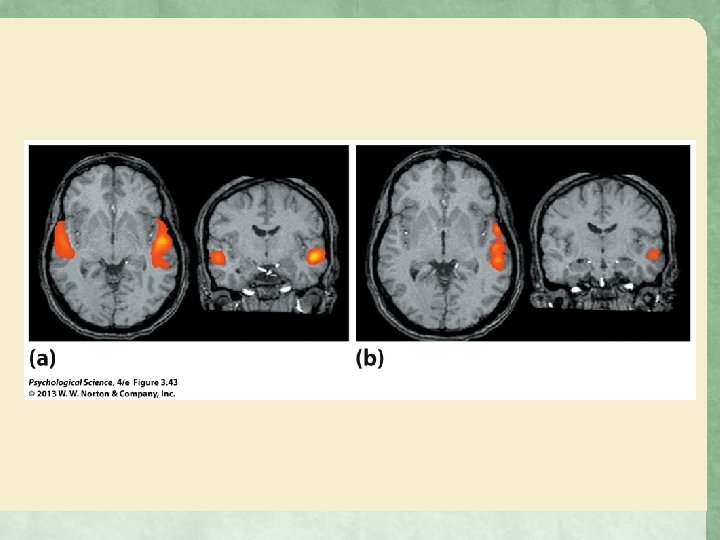
Females’ and Males’ Brains Are Similar and Different • Females and males differ in their life experiences and hormonal makeup, which leads to differences between their brains • Males tend to have larger brains • Females and males may solve some complex problems differently, with females using language-related brain regions and males using spatialrelated brain regions (Haier et al. , 2005) • Brain areas important in processing language are more likely to be found in both halves of females’ brains than in males’ brains
The Brain Can Recover from Injury • Following an injury in the cortex, the surrounding gray matter assumes the function of the damaged area • Radical hemispherectomy: After the surgical removal of an entire cerebral hemisphere, the remaining hemisphere eventually takes on most of the lost hemisphere’s functions • One of the most exciting (and controversial) areas of neurological research is the transplantation of human fetal tissue (stem cells) into the brain to repair damage • Instead of using fetal stem cells, new methods are emerging that allow researchers to create stem cells by reprogramming adult cells
- Slides: 37