
Genetic and Pediatric Diseases Chapter 6 CYTOGENETIC DISORDERS



- Slides: 33
Genetic and Pediatric Diseases Chapter 6
CYTOGENETIC DISORDERS Cytogenetic Disorders Involving Autosomes Cytogenetic Disorders Involving Sex Chromosomes
Cytogenetic Disorders Involving Autosomes • Trisomy 21 (Down Syndrome) • TRISOMY 18: EDWARDS SYNDROME • TRISOMY 13: PATAU SYNDROME
Trisomy 21 (Down Syndrome): transverse crease abnormal across the palm of each hand
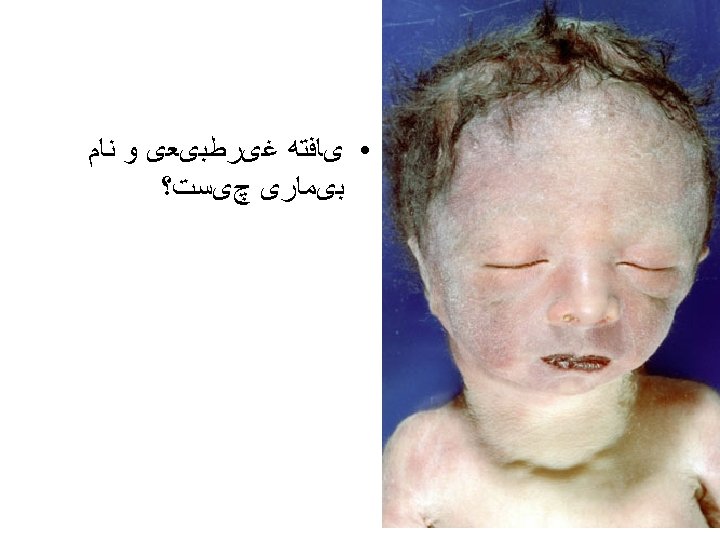
trisomy 18 (e. g. , 47, XY, +18). The face is small in proportion to the head, with micrognathia.
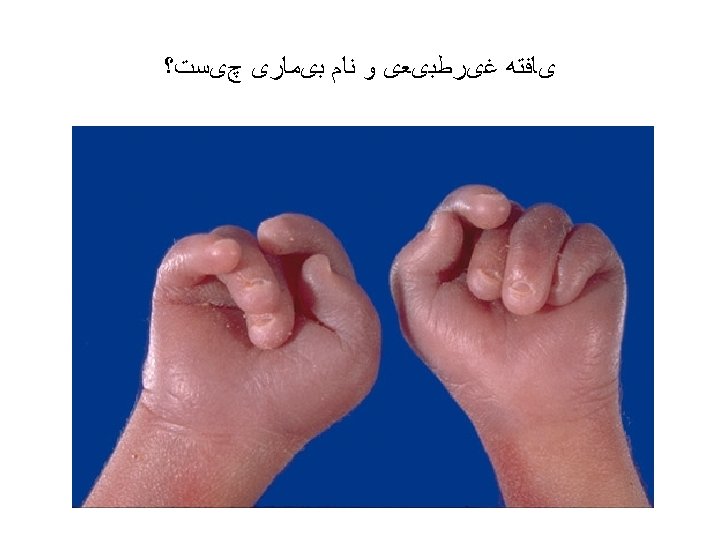
camptodactyly (fingers bent over) and clinodactyly (fingers inclined to one side or the other). trisomy 18
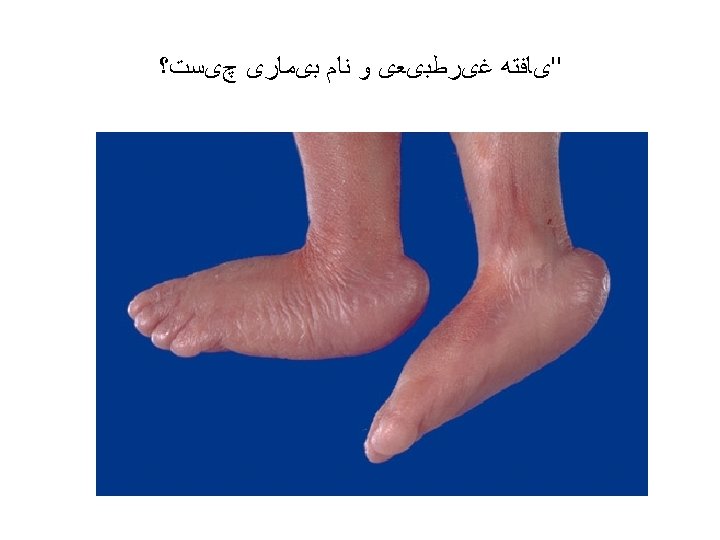
rocker bottom" foot with a prominent calcaneus and rounded bottom. trisomy 18
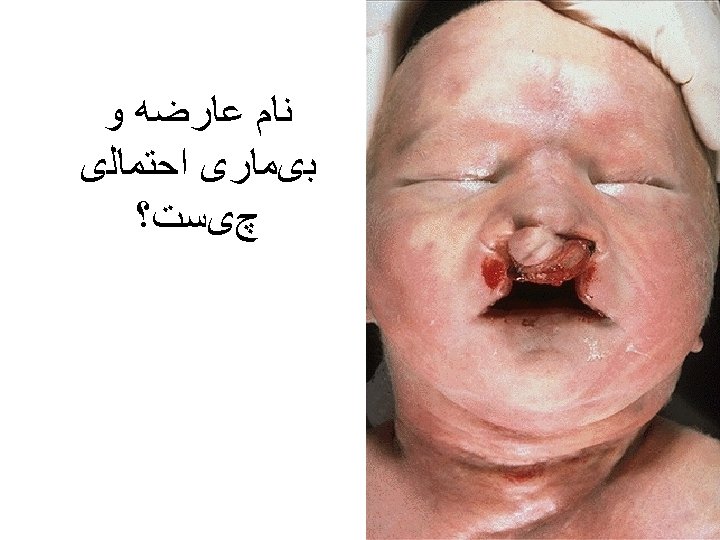
a large bilateral cleft lip TRISOMY 13: PATAU SYNDROME
PEDIATRIC DISEASES
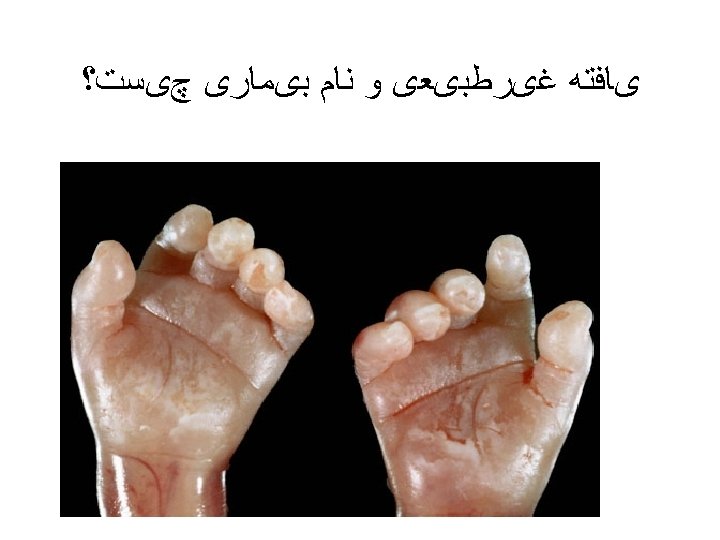
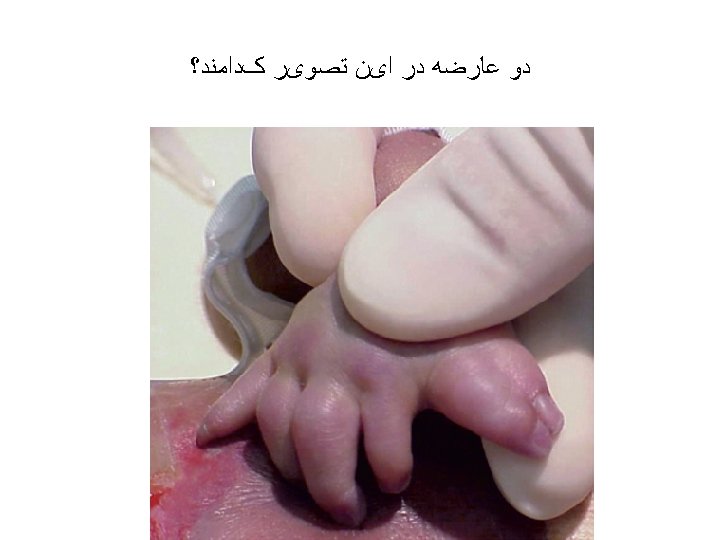
Polydactyly (one or more extra digits) and syndactyly (fusion of digits)
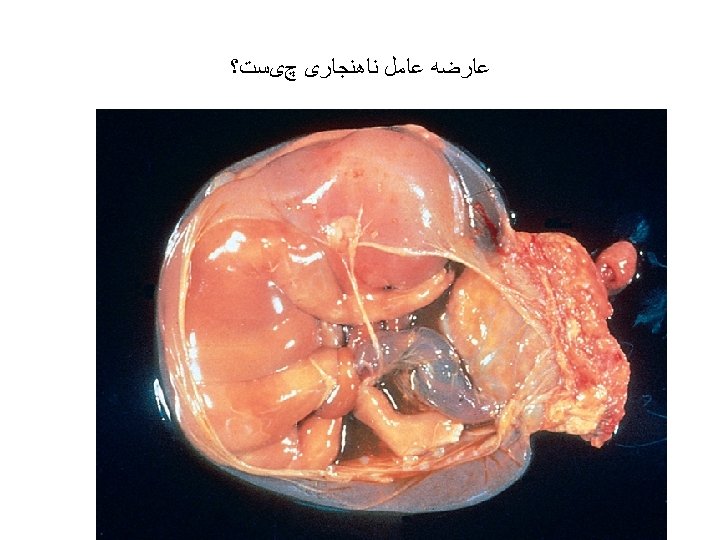
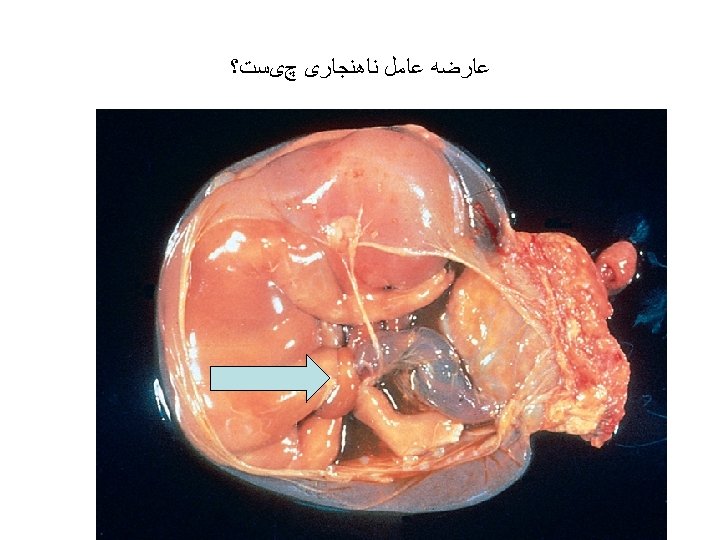
Amniotic bands are a frequent cause of disruptions.
• Amniotic bands are a frequent cause of disruptions. • the placenta is at the right of the diagram, and the band of amnion extends from the top portion of the amniotic sac to encircle the leg of the fetus.
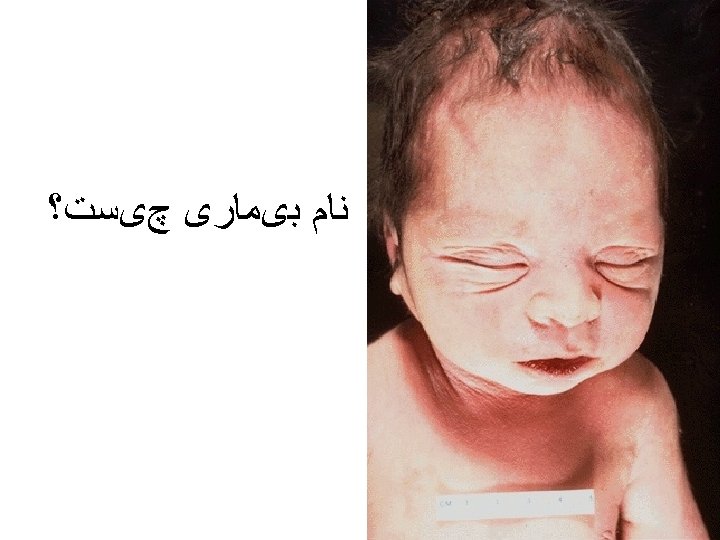
the oligohydramnios (Potter) sequence
Infant with oligohydramnios (Potter) sequence • Note flattened facial features and deformed foot (talipes equinovarus).
Potter's facies" with " prominent infraorbital folds
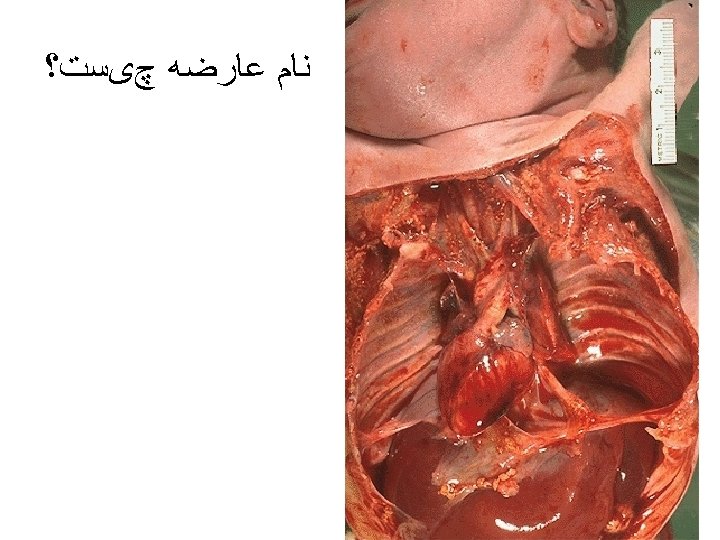
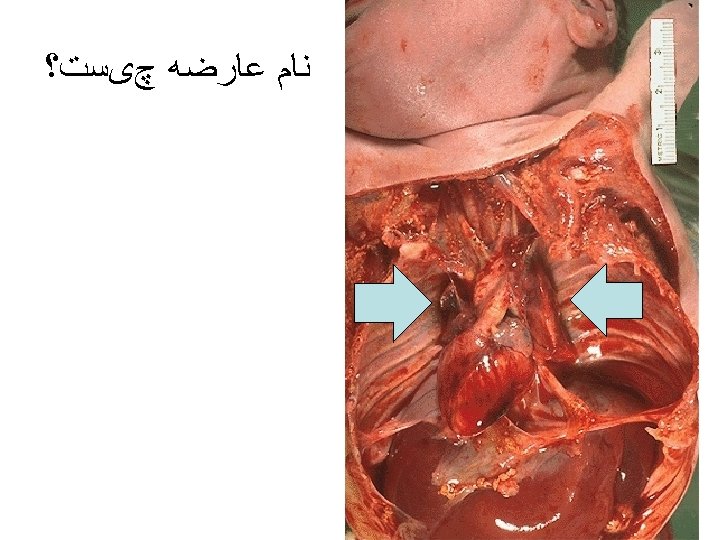
pulmonary hypoplasia
• The most serious consequence of oligohydramnios is pulmonary hypoplasia. Note the extremely small lungs in this case on each side of the heart in the middle of the chest.
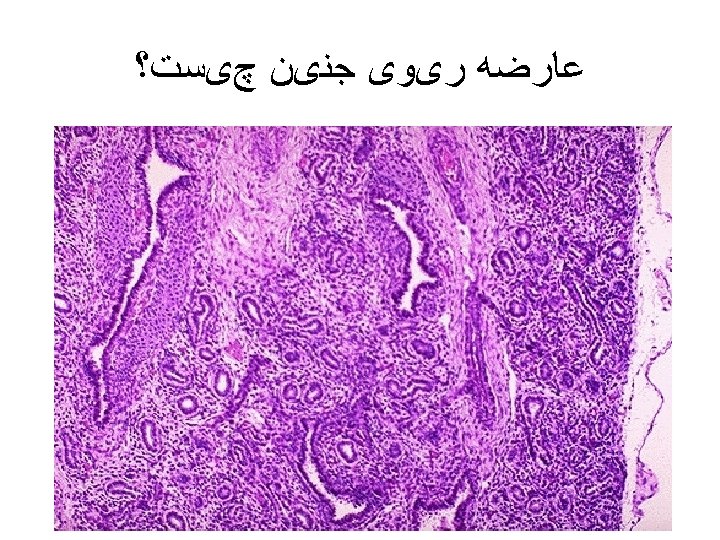
pulmonary hypoplasia
• Microscopic examination of the lung reveals no alveolar development, only tubular bronchioles incapable of significant gas exchange, in this premature baby with pulmonary hypoplasia from oligohydramnios.