
Genetic Abnormalities Mutation any mistake or change in
Genetic Abnormalities
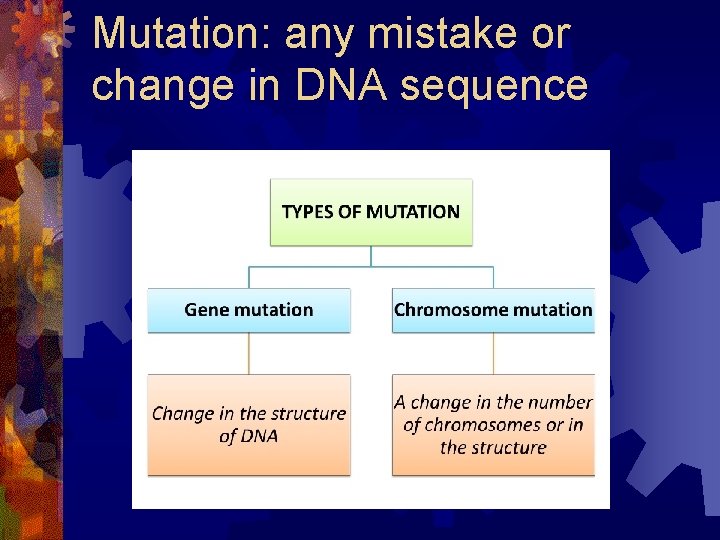
Mutation: any mistake or change in DNA sequence
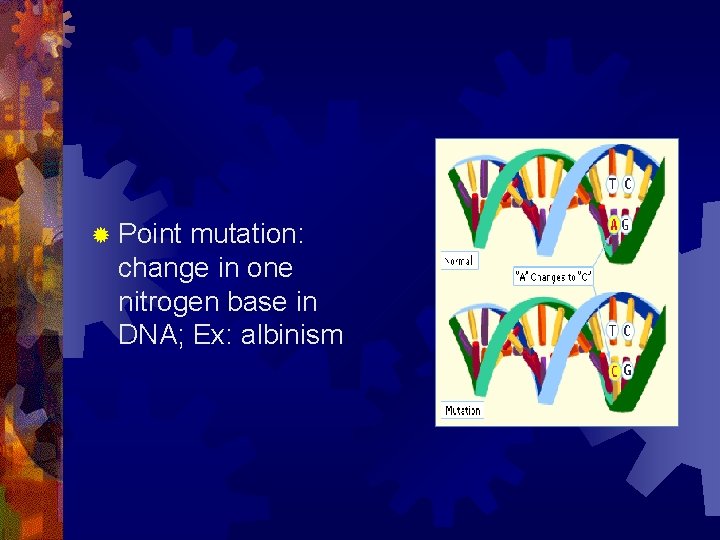
® Point mutation: change in one nitrogen base in DNA; Ex: albinism

® Silent: results in same aa (or one that does not negatively impact protein) ® Nonsense: premature STOP (sickle cell) ® Missense: codes for different aa
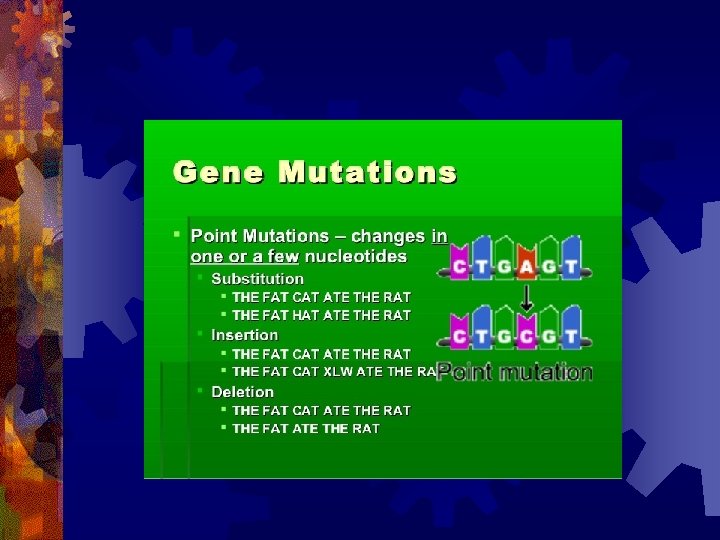

Frameshift Mutation
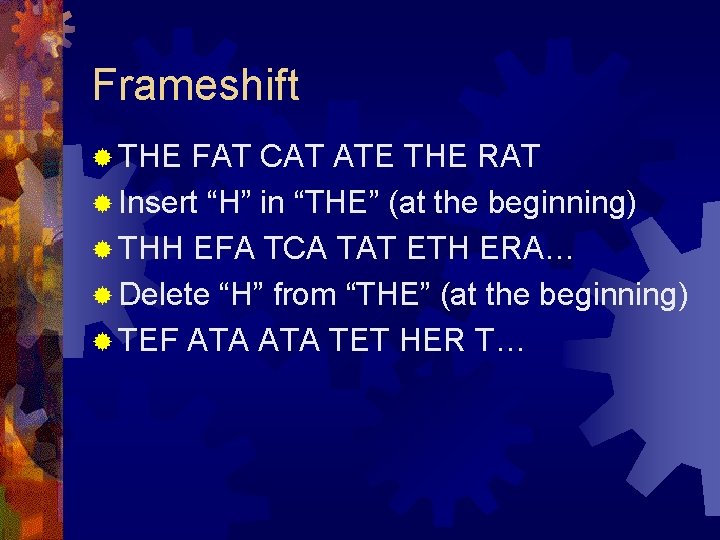
Frameshift ® THE FAT CAT ATE THE RAT ® Insert “H” in “THE” (at the beginning) ® THH EFA TCA TAT ETH ERA… ® Delete “H” from “THE” (at the beginning) ® TEF ATA TET HER T…
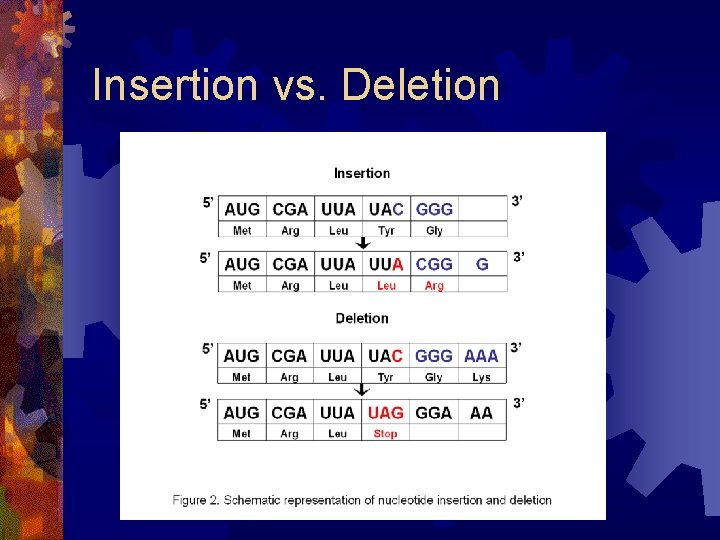
Insertion vs. Deletion
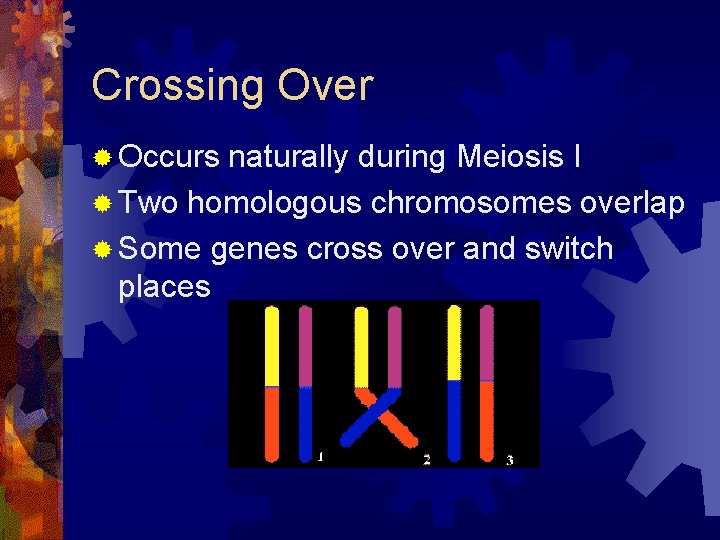
Crossing Over ® Occurs naturally during Meiosis I ® Two homologous chromosomes overlap ® Some genes cross over and switch places
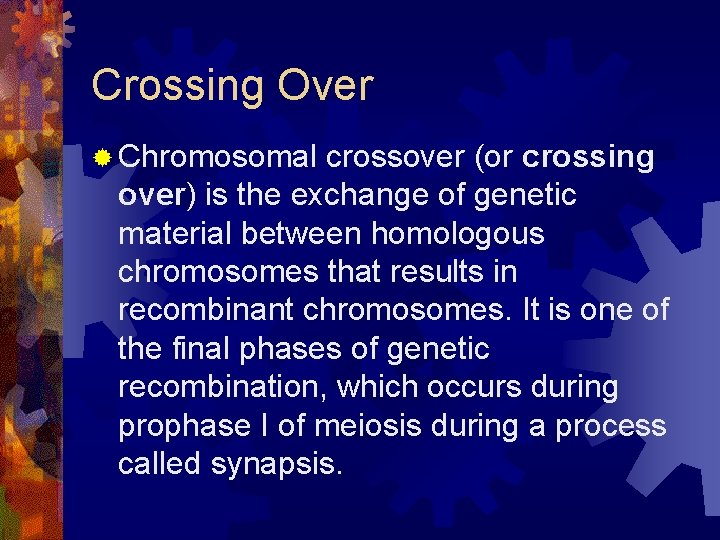
Crossing Over ® Chromosomal crossover (or crossing over) is the exchange of genetic material between homologous chromosomes that results in recombinant chromosomes. It is one of the final phases of genetic recombination, which occurs during prophase I of meiosis during a process called synapsis.
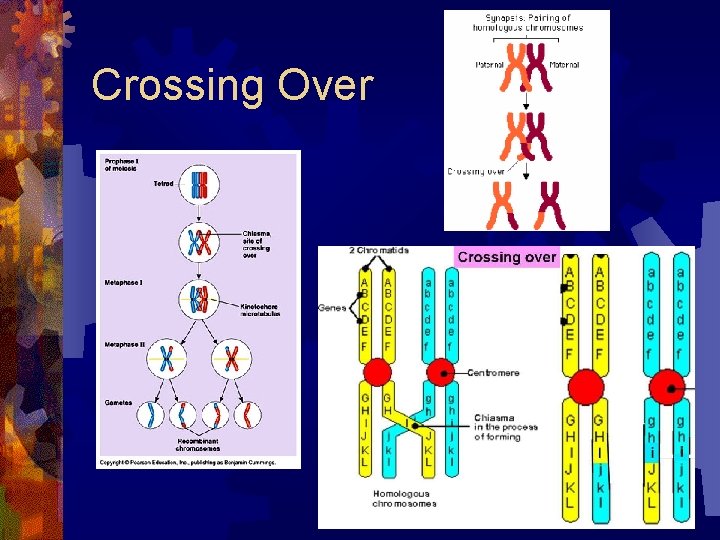
Crossing Over
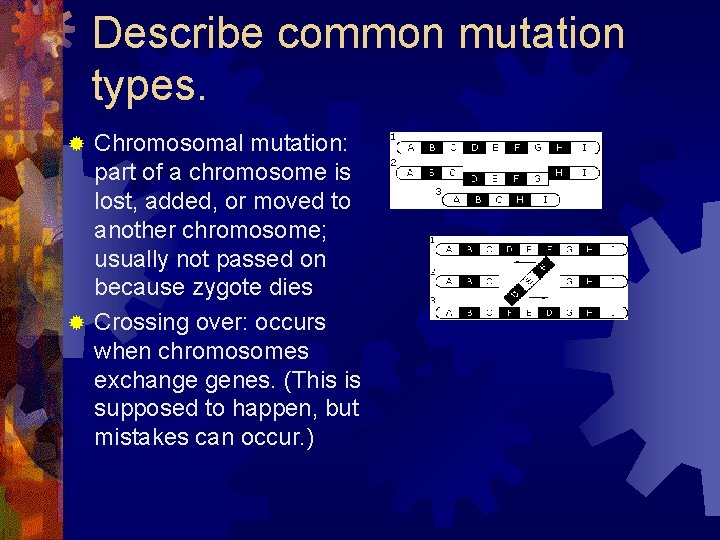
Describe common mutation types. Chromosomal mutation: part of a chromosome is lost, added, or moved to another chromosome; usually not passed on because zygote dies ® Crossing over: occurs when chromosomes exchange genes. (This is supposed to happen, but mistakes can occur. ) ®

Chromosomal Mutations
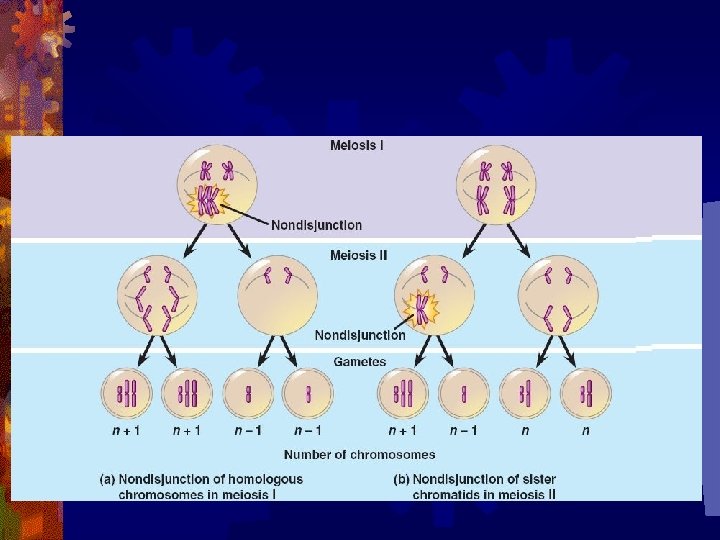
Nondisjunction ® Nondisjunction: occurs when a chromosome pair fails to separate properly during meiosis ® Results in gamete with abnormal number of total chromosomes
Types of nondisjunction ® Monosomy: when gamete has one less chromosome than it should; if it joins with another gamete the zygote would have only 45 chromosomes ® Ex: Turner syndrome ® Missing a sex chromosome
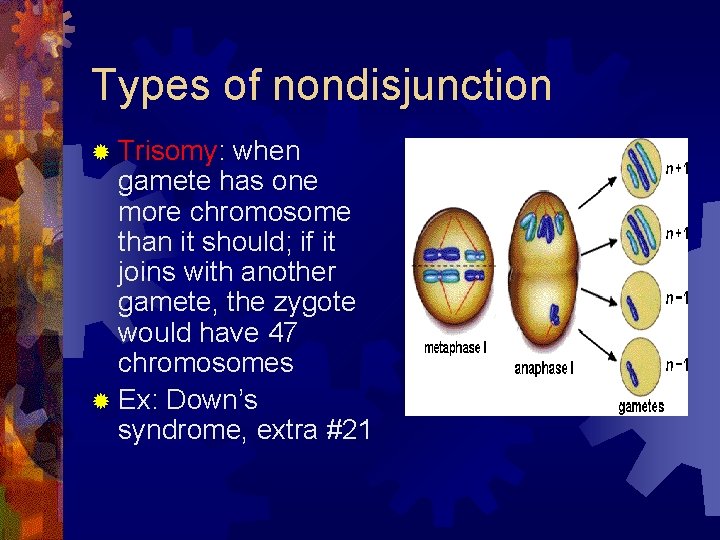
Types of nondisjunction ® Trisomy: when gamete has one more chromosome than it should; if it joins with another gamete, the zygote would have 47 chromosomes ® Ex: Down’s syndrome, extra #21
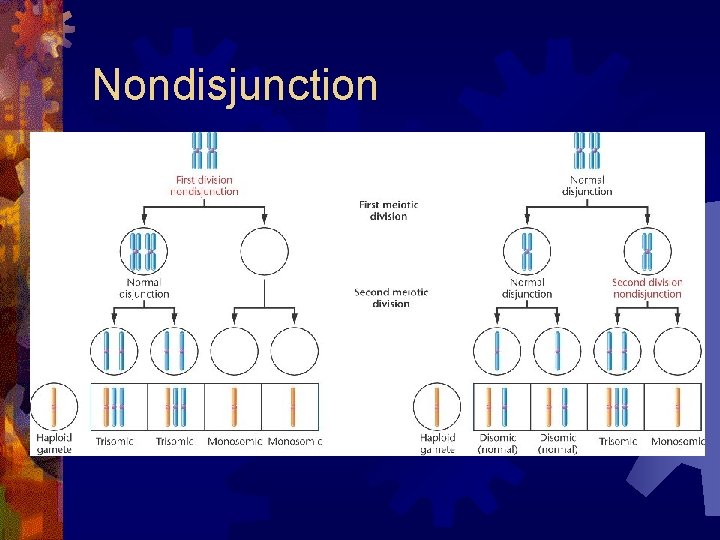
Nondisjunction
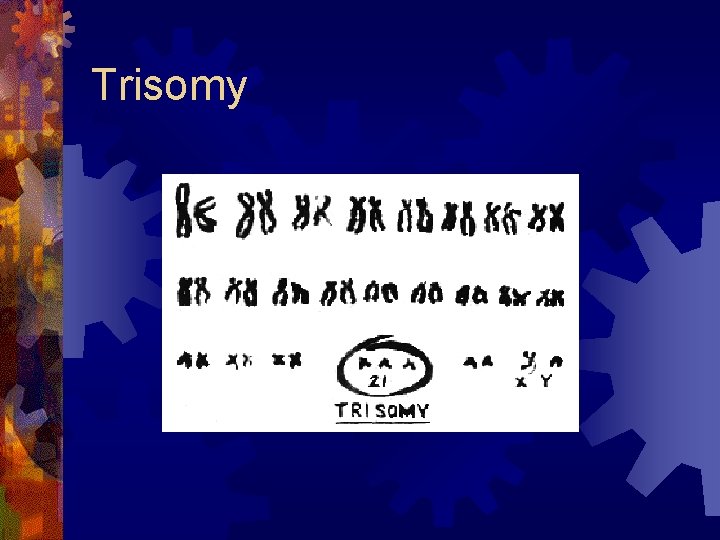
Trisomy
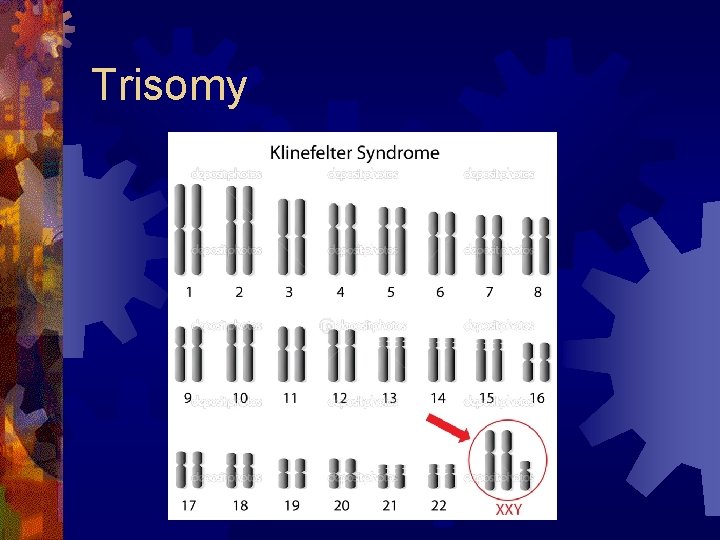
Trisomy
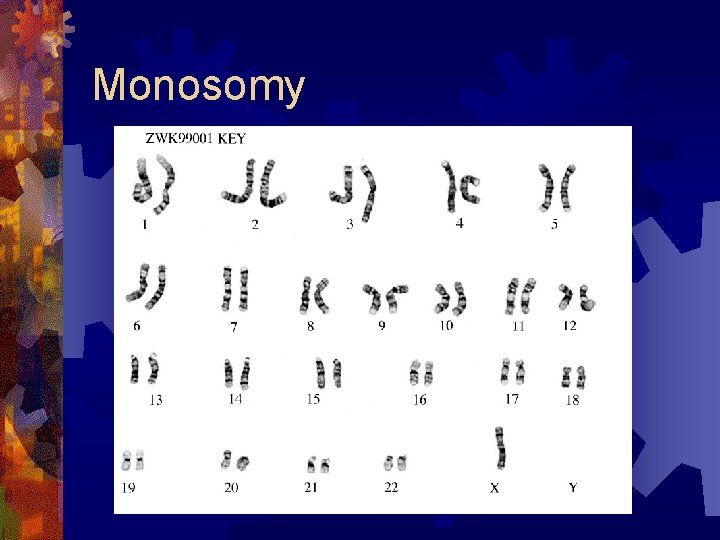
Monosomy
Karyotype vs. Pedigree ® Karyotype: a photo of an individual’s chromosomes ® Pedigree: a family tree (usually tracing the occurrence of a particular trait or disease)
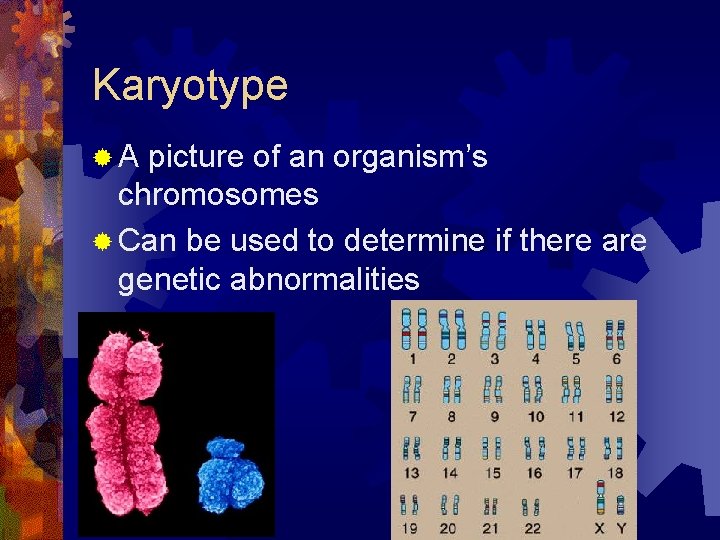
Karyotype ®A picture of an organism’s chromosomes ® Can be used to determine if there are genetic abnormalities
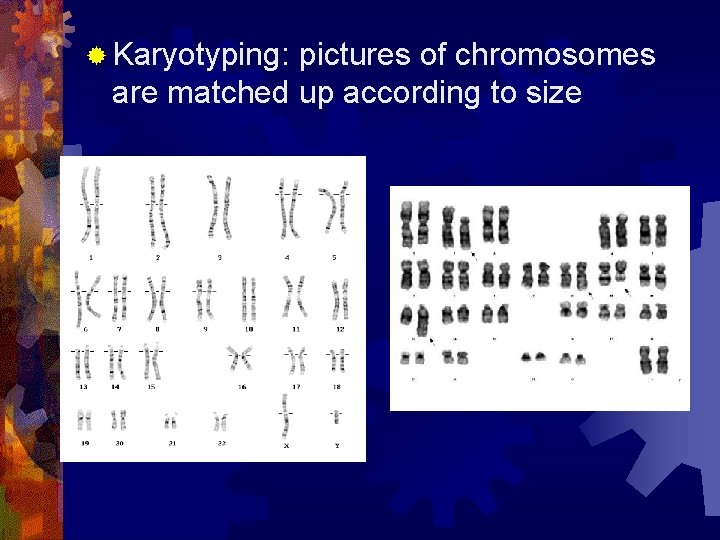
® Karyotyping: pictures of chromosomes are matched up according to size
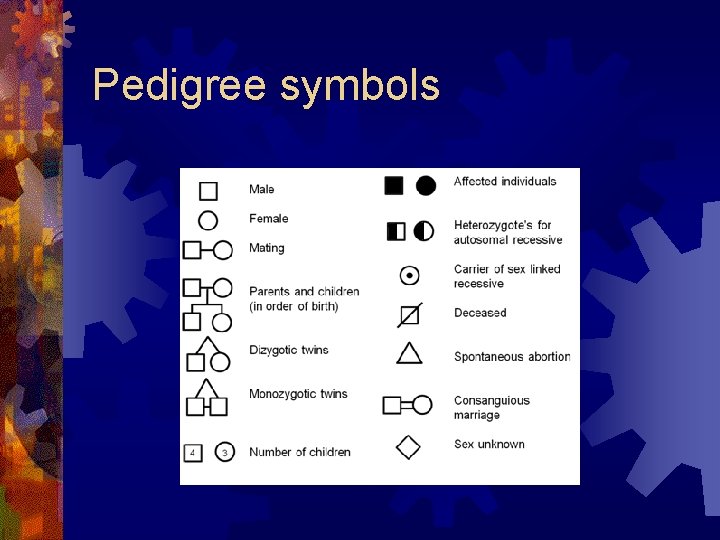
Pedigree symbols
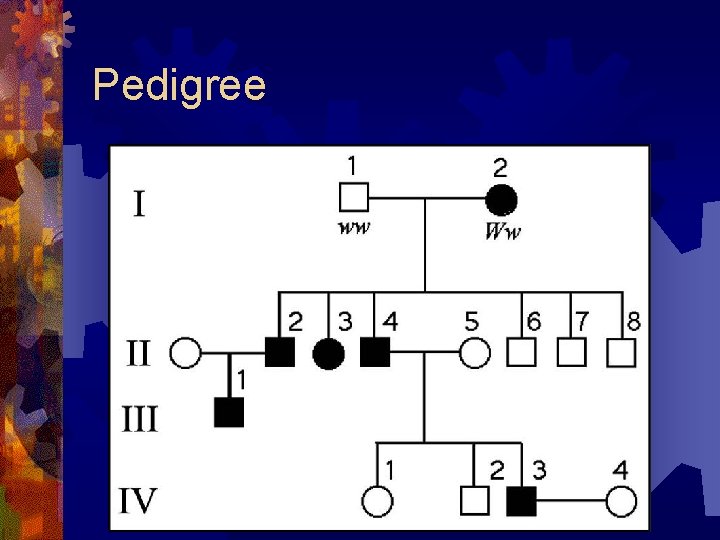
Pedigree
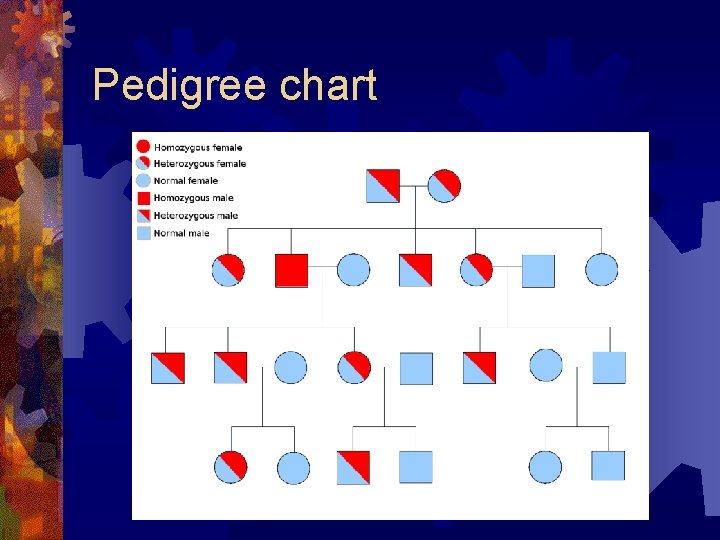
Pedigree chart

Pedigree ® Generations ® Individuals

Sex Linked Trait Pedigree

Describe methods of detection ® Ultrasound: sound waves are used to generate an image of the unborn child. Used to detect abnormalities of limbs, organs, etc. ® Also called sonogram
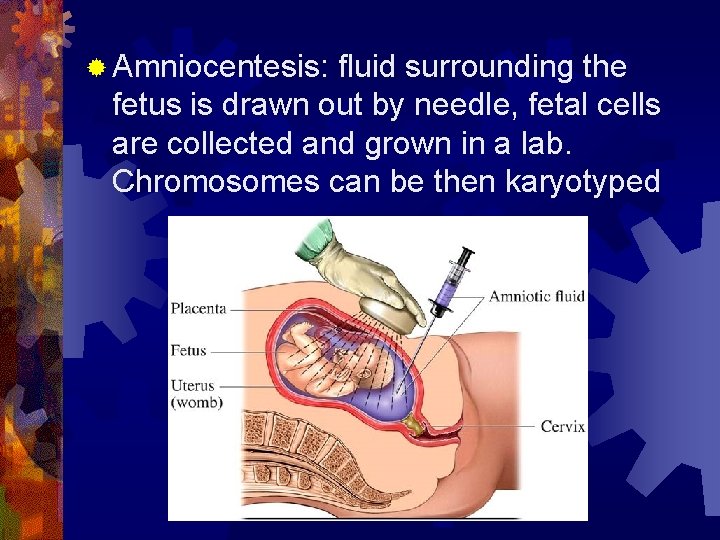
® Amniocentesis: fluid surrounding the fetus is drawn out by needle, fetal cells are collected and grown in a lab. Chromosomes can be then karyotyped
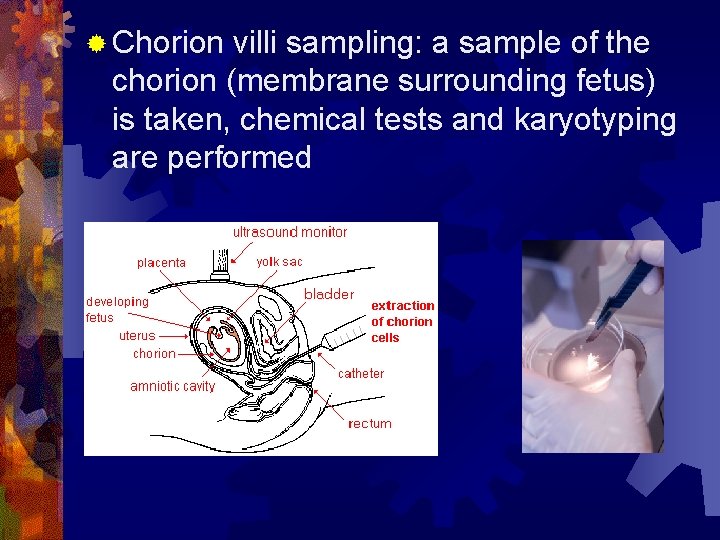
® Chorion villi sampling: a sample of the chorion (membrane surrounding fetus) is taken, chemical tests and karyotyping are performed
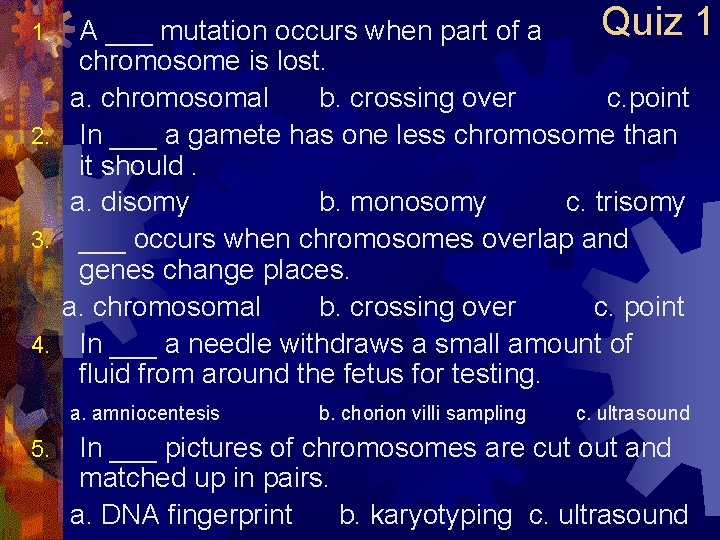
Quiz 1 A ___ mutation occurs when part of a chromosome is lost. a. chromosomal b. crossing over c. point 2. In ___ a gamete has one less chromosome than it should. a. disomy b. monosomy c. trisomy 3. ___ occurs when chromosomes overlap and genes change places. a. chromosomal b. crossing over c. point 4. In ___ a needle withdraws a small amount of fluid from around the fetus for testing. 1. a. amniocentesis 5. b. chorion villi sampling c. ultrasound In ___ pictures of chromosomes are cut out and matched up in pairs. a. DNA fingerprint b. karyotyping c. ultrasound
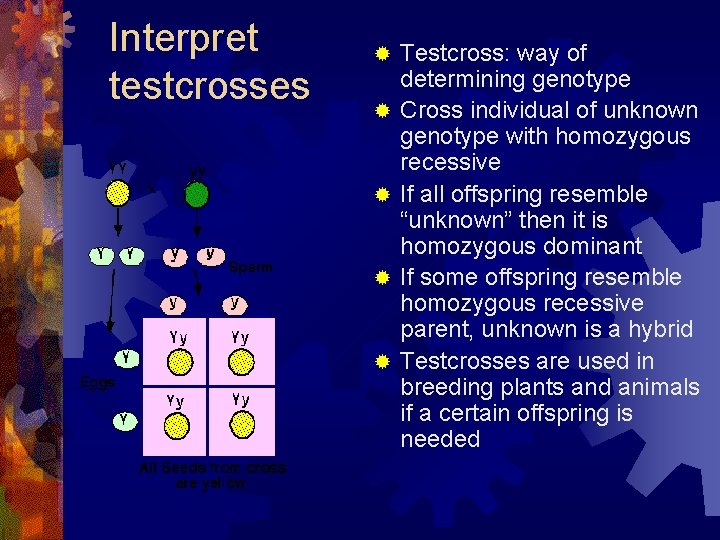
Interpret testcrosses ® ® ® Testcross: way of determining genotype Cross individual of unknown genotype with homozygous recessive If all offspring resemble “unknown” then it is homozygous dominant If some offspring resemble homozygous recessive parent, unknown is a hybrid Testcrosses are used in breeding plants and animals if a certain offspring is needed

Interpret pedigrees ® Pedigrees: graphic representation of family tree ® Symbols identify sex, if they are carriers, if they have a certain trait, etc. ® May be used if testcross cannot be made
- Slides: 35