
Genes and Genomes in Populations and Evolution Population

- Slides: 30
Genes and Genomes in Populations and Evolution Population genomics and comparative genomics molecular evolution what happens at the level of DNA when organisms change and evolve Daniel Jeffares
Population genomics and comparative genomics Part 1 (last lecture): Population genomics Understanding genetic differences within a species. Relates to topics from Autumn: GWAS, population genetics mutation, genetic drift and molecular evolution selection, maintenance of genetic variation population structure Part 2 (this lecture): Comparative genomics Understanding differences between species
Review of concepts in population genomics From last lecture All the articles that I mention can be found here: https: //paperpile. com/shared/RYh 93 p
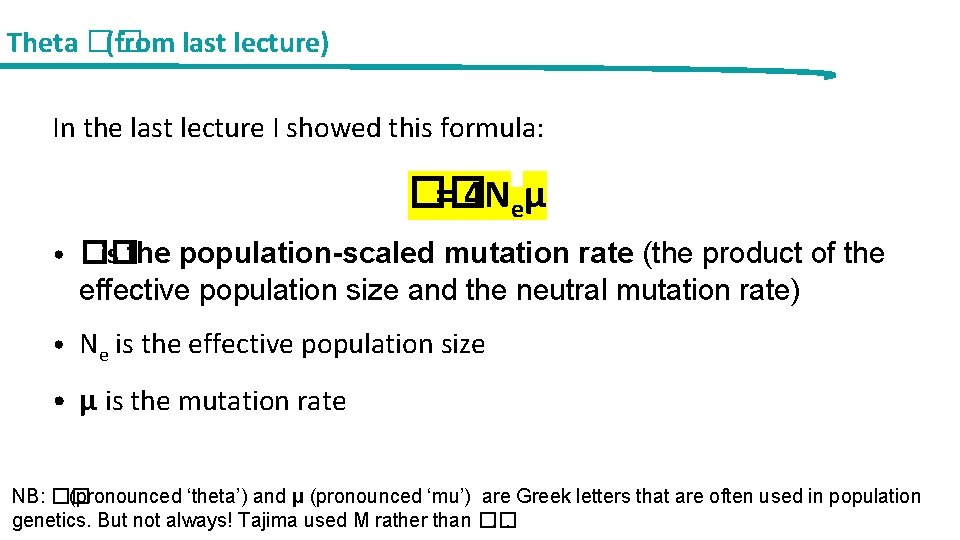
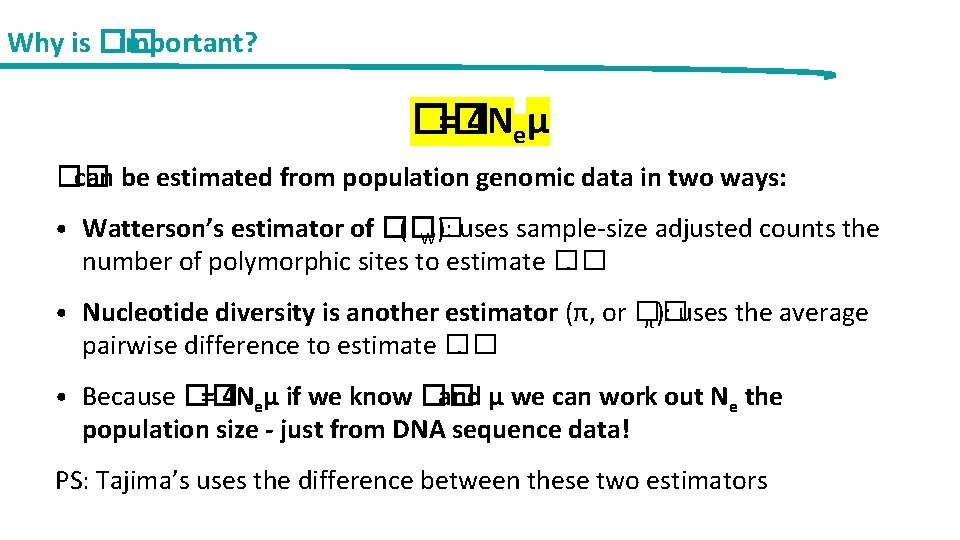
Theta �� (from last lecture) In the last lecture I showed this formula: �� = 4 Neμ • �� is the population-scaled mutation rate (the product of the effective population size and the neutral mutation rate) • Ne is the effective population size • μ is the mutation rate NB: �� (pronounced ‘theta’) and μ (pronounced ‘mu’) are Greek letters that are often used in population genetics. But not always! Tajima used M rather than �� …
Why is �� important? �� = 4 Neμ �� can be estimated from population genomic data in two ways: • Watterson’s estimator of �� (�� W): uses sample-size adjusted counts the number of polymorphic sites to estimate ��. • Nucleotide diversity is another estimator (π, or �� π): uses the average pairwise difference to estimate ��. • Because �� = 4 Neμ if we know �� and μ we can work out Ne the population size - just from DNA sequence data! PS: Tajima’s uses the difference between these two estimators
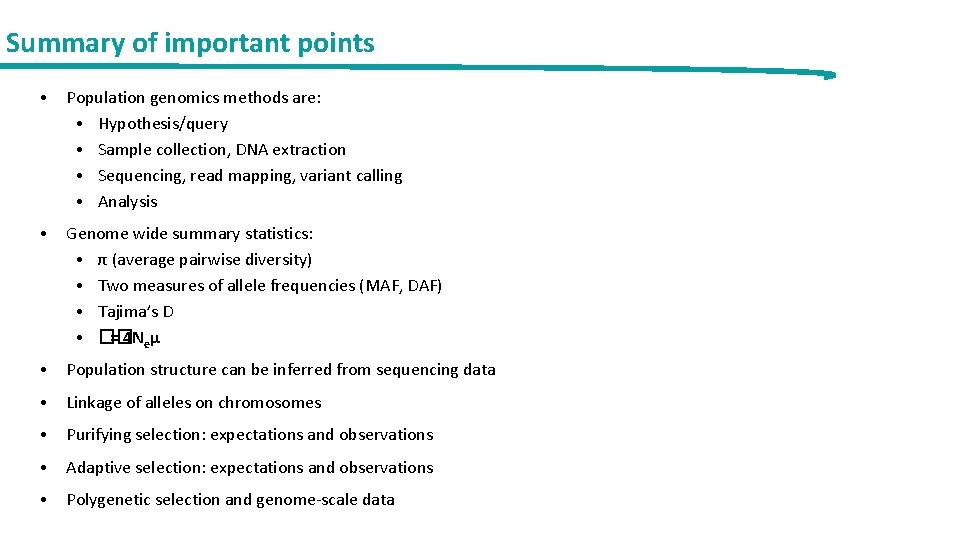
Summary of important points • Population genomics methods are: • Hypothesis/query • Sample collection, DNA extraction • Sequencing, read mapping, variant calling • Analysis • Genome wide summary statistics: • π (average pairwise diversity) • Two measures of allele frequencies (MAF, DAF) • Tajima’s D • �� = 4 Neμ • Population structure can be inferred from sequencing data • Linkage of alleles on chromosomes • Purifying selection: expectations and observations • Adaptive selection: expectations and observations • Polygenetic selection and genome-scale data
pause point 1 Next: comparative genomics
Comparative genomics
Part 2: Comparative genomics This lecture: comparative genomics What is comparative genomics? How we gather the data. What can we find out from comparative genomics Concepts: • Diversity within species gives rise to divergence between species • Evolutionary rates • Purifying selection (constraint): expectations and observations • Adaptive evolution: expectations and observations, tests for selection • Polygenetic selection and genome-scale data • Case studies: • Evolutionary constraint in mammalian genomes • The Mc. Donald-Kreitman test and evolution in the human genome • • All the articles that I mention can be found here: https: //paperpile. com/shared/RYh 93 p
What is comparative genomics? Comparative genomics is the comparison of genomes between species (population genomics looks at differences within species). This involves analysis of: • gene orthologs/paralogs, gene family expansions • gene loss/gain • evolutionary rates of genes (fast/slow evolving genes) • conserved genic and non-genic regions • conservation/changes in synteny (gene order)
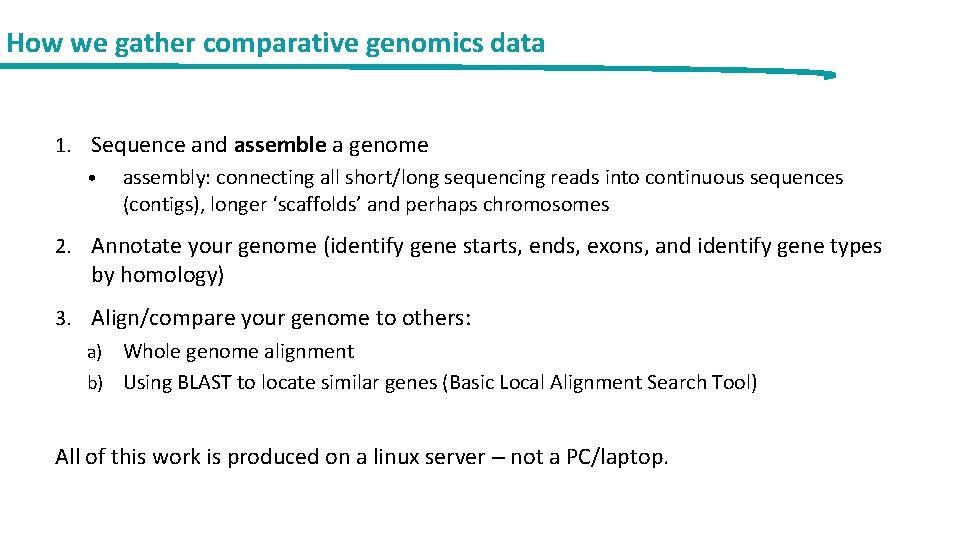
How we gather comparative genomics data 1. Sequence and assemble a genome • assembly: connecting all short/long sequencing reads into continuous sequences (contigs), longer ‘scaffolds’ and perhaps chromosomes 2. Annotate your genome (identify gene starts, ends, exons, and identify gene types by homology) 3. Align/compare your genome to others: a) Whole genome alignment b) Using BLAST to locate similar genes (Basic Local Alignment Search Tool) All of this work is produced on a linux server – not a PC/laptop.
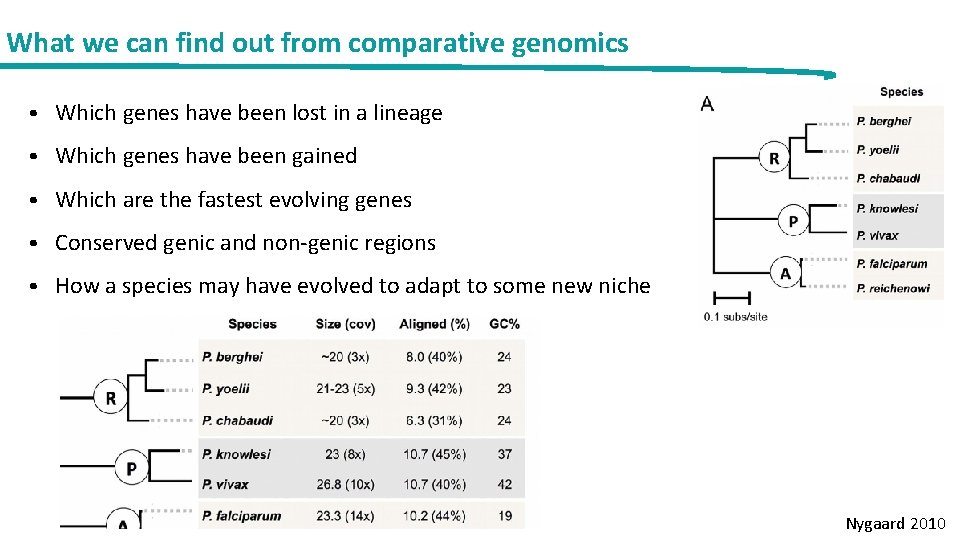
What we can find out from comparative genomics • Which genes have been lost in a lineage • Which genes have been gained • Which are the fastest evolving genes • Conserved genic and non-genic regions • How a species may have evolved to adapt to some new niche Nygaard 2010
Concepts in comparative genomics
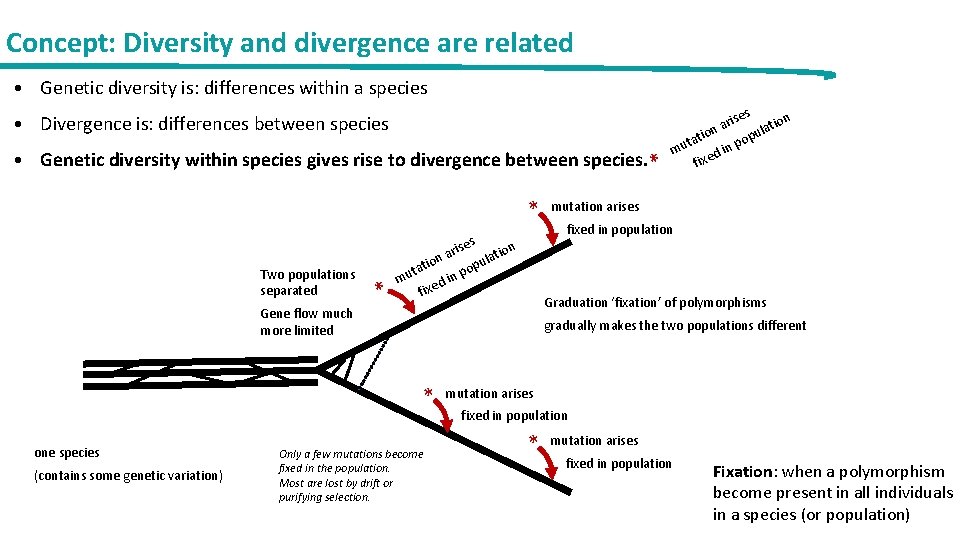
Concept: Diversity and divergence are related • Genetic diversity is: differences within a species • Divergence is: differences between species • Genetic diversity within species gives rise to divergence between species. * * ses Two populations separated * ari tion a n l o u i tat pop n i mu d fixed in population gradually makes the two populations different * (contains some genetic variation) mutation arises Graduation ‘fixation’ of polymorphisms Gene flow much more limited one species s rise ation a tion popul a t mu d in if xe Only a few mutations become fixed in the population. Most are lost by drift or purifying selection. mutation arises fixed in population * mutation arises fixed in population Fixation: when a polymorphism become present in all individuals in a species (or population)
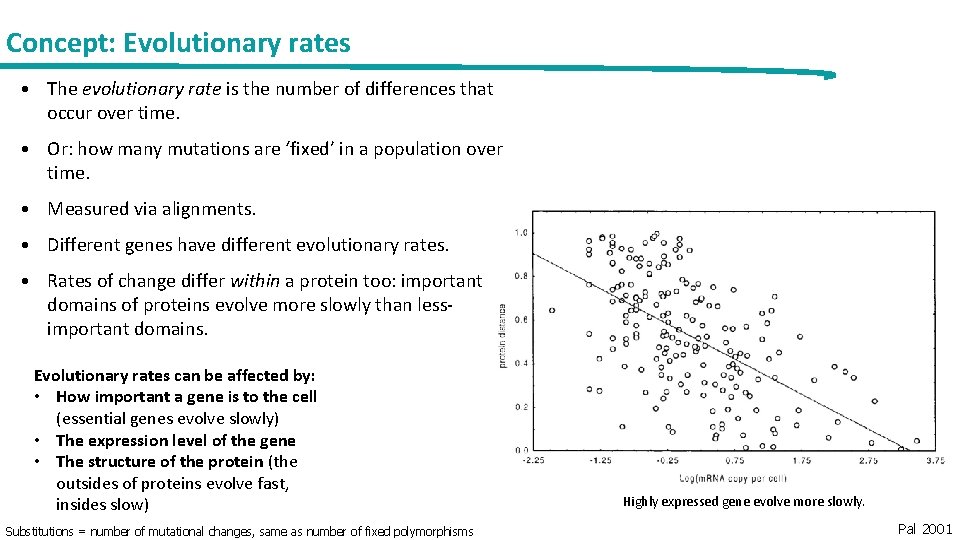
Concept: Evolutionary rates • The evolutionary rate is the number of differences that occur over time. • Or: how many mutations are ‘fixed’ in a population over time. • Measured via alignments. • Different genes have different evolutionary rates. • Rates of change differ within a protein too: important domains of proteins evolve more slowly than lessimportant domains. Evolutionary rates can be affected by: • How important a gene is to the cell (essential genes evolve slowly) • The expression level of the gene • The structure of the protein (the outsides of proteins evolve fast, insides slow) Substitutions = number of mutational changes, same as number of fixed polymorphisms Highly expressed gene evolve more slowly. Pal 2001
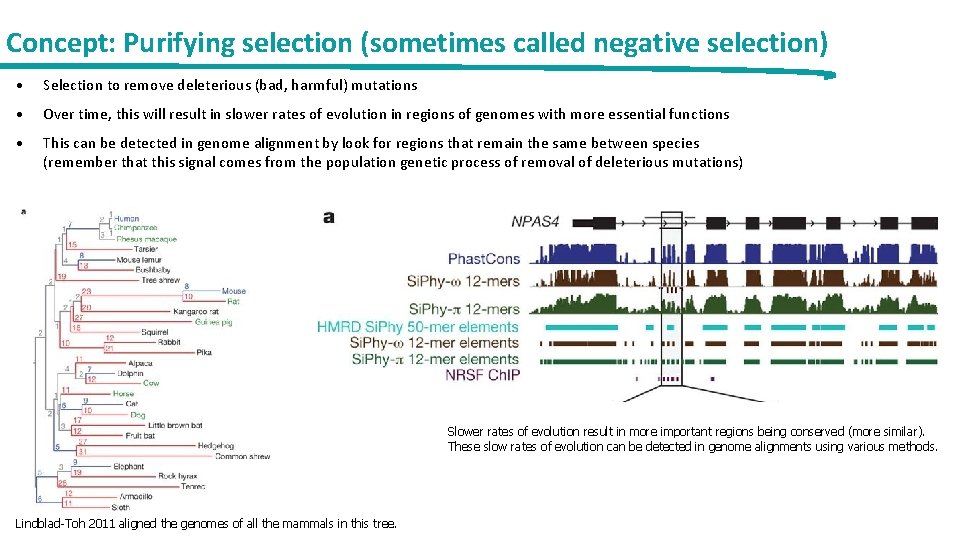
Concept: Purifying selection (sometimes called negative selection) • Selection to remove deleterious (bad, harmful) mutations • Over time, this will result in slower rates of evolution in regions of genomes with more essential functions • This can be detected in genome alignment by look for regions that remain the same between species (remember that this signal comes from the population genetic process of removal of deleterious mutations) Slower rates of evolution result in more important regions being conserved (more similar). These slow rates of evolution can be detected in genome alignments using various methods. Lindblad-Toh 2011 aligned the genomes of all the mammals in this tree.
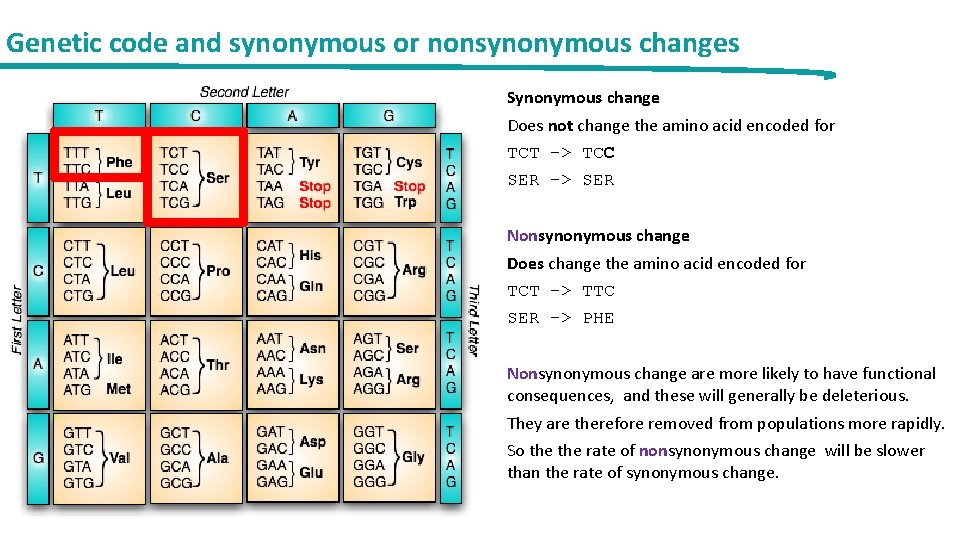
Genetic code and synonymous or nonsynonymous changes Synonymous change Does not change the amino acid encoded for TCT -> TCC SER -> SER Nonsynonymous change Does change the amino acid encoded for TCT -> TTC SER -> PHE Nonsynonymous change are more likely to have functional consequences, and these will generally be deleterious. They are therefore removed from populations more rapidly. So the rate of nonsynonymous change will be slower than the rate of synonymous change.
Concept: Adaptive evolution (sometimes called positive selection) • Some genes/genomic regions evolve to have new/improved functions. • This is one path to adaptation. • Such genes change faster than we expect by chance. • Various tests have been designed to detect such regions from genome/gene data. • The d. N/d. S test (or Ka/Ks test): • d. N: the rate of non-synonymous changes (change the amino-acid coding of a gene) • d. S: the rate of synonymous changes (do not change the amino-acid coding of a gene) • Genes that change their function rapidly may have a higher d. N than d. S (so d. N/d. S > 1) • Mc. Donald-Kreitman test: • Use for detecting adaptive change between species • And for detecting balancing selection within a species
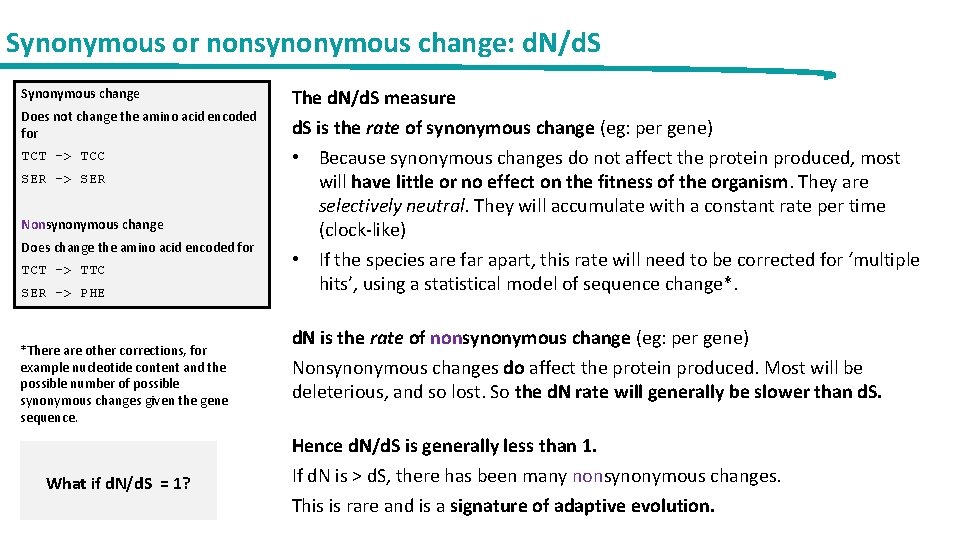
Synonymous or nonsynonymous change: d. N/d. S Synonymous change Does not change the amino acid encoded for TCT -> TCC SER -> SER Nonsynonymous change Does change the amino acid encoded for TCT -> TTC SER -> PHE *There are other corrections, for example nucleotide content and the possible number of possible synonymous changes given the gene sequence. What if d. N/d. S = 1? The d. N/d. S measure d. S is the rate of synonymous change (eg: per gene) • Because synonymous changes do not affect the protein produced, most will have little or no effect on the fitness of the organism. They are selectively neutral. They will accumulate with a constant rate per time (clock-like) • If the species are far apart, this rate will need to be corrected for ‘multiple hits’, using a statistical model of sequence change*. d. N is the rate of nonsynonymous change (eg: per gene) Nonsynonymous changes do affect the protein produced. Most will be deleterious, and so lost. So the d. N rate will generally be slower than d. S. Hence d. N/d. S is generally less than 1. If d. N is > d. S, there has been many nonsynonymous changes. This is rare and is a signature of adaptive evolution.
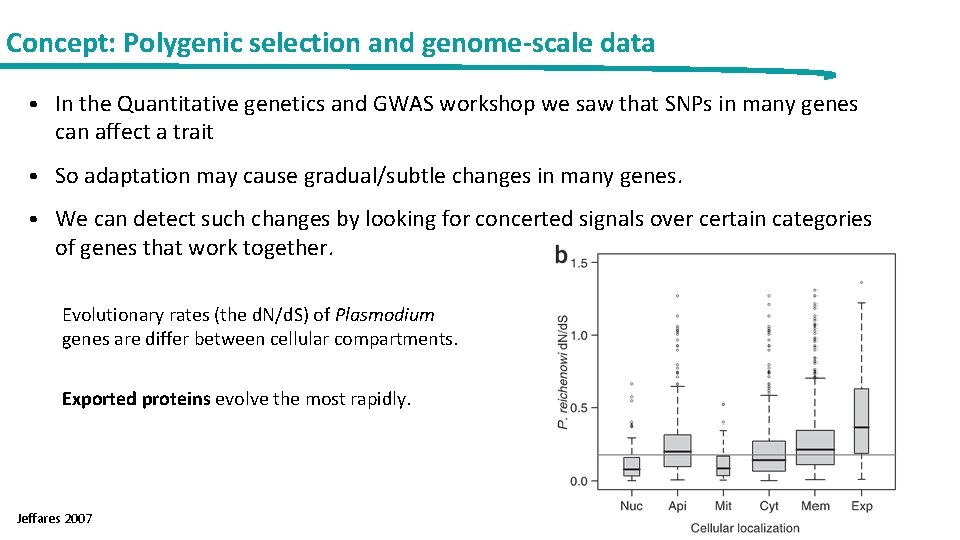
Concept: Polygenic selection and genome-scale data • In the Quantitative genetics and GWAS workshop we saw that SNPs in many genes can affect a trait • So adaptation may cause gradual/subtle changes in many genes. • We can detect such changes by looking for concerted signals over certain categories of genes that work together. Evolutionary rates (the d. N/d. S) of Plasmodium genes are differ between cellular compartments. Exported proteins evolve the most rapidly. Jeffares 2007
pause point 2 Next: case studies
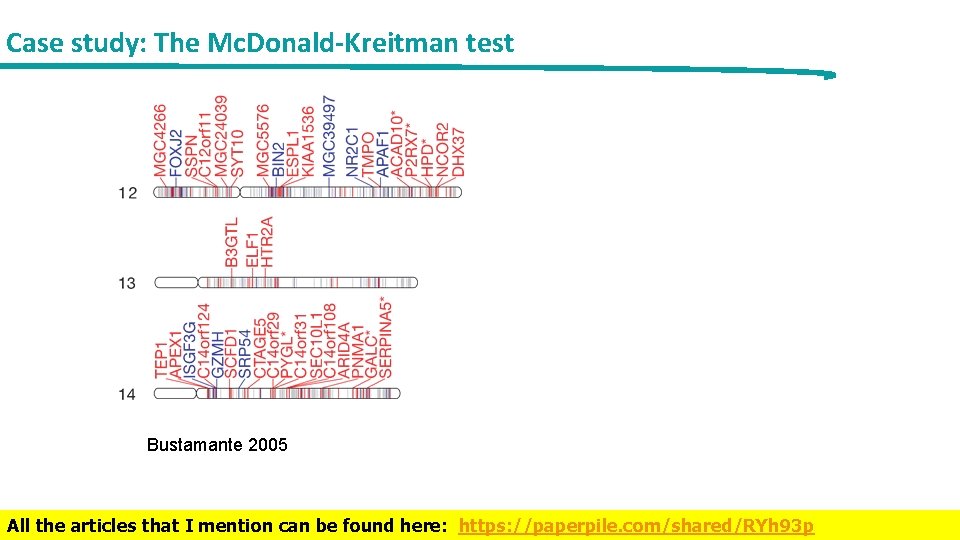
Case study: The Mc. Donald-Kreitman test Bustamante 2005 All the articles that I mention can be found here: https: //paperpile. com/shared/RYh 93 p
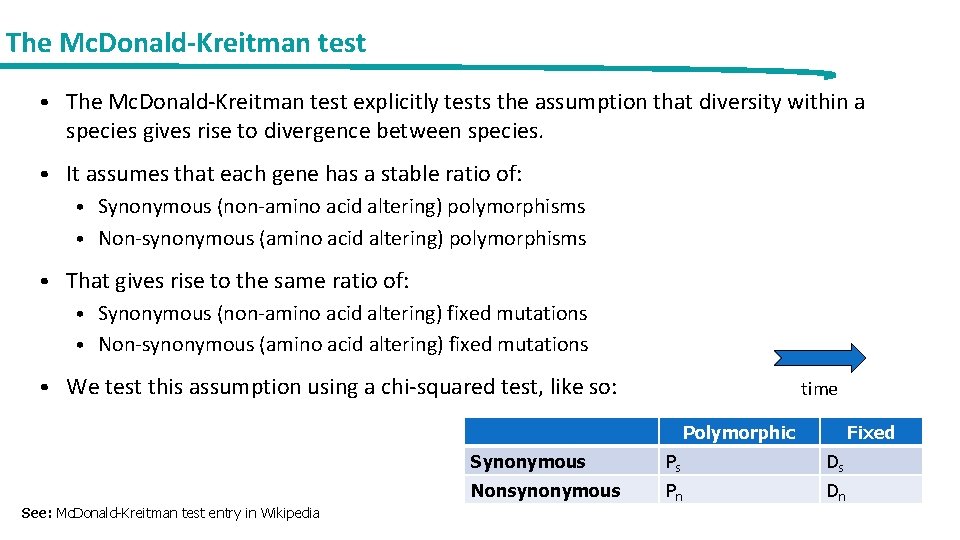
The Mc. Donald-Kreitman test • The Mc. Donald-Kreitman test explicitly tests the assumption that diversity within a species gives rise to divergence between species. • It assumes that each gene has a stable ratio of: • Synonymous (non-amino acid altering) polymorphisms • Non-synonymous (amino acid altering) polymorphisms • That gives rise to the same ratio of: • Synonymous (non-amino acid altering) fixed mutations • Non-synonymous (amino acid altering) fixed mutations • We test this assumption using a chi-squared test, like so: time Polymorphic See: Mc. Donald-Kreitman test entry in Wikipedia Fixed Synonymous Ps Ds Nonsynonymous Pn Dn
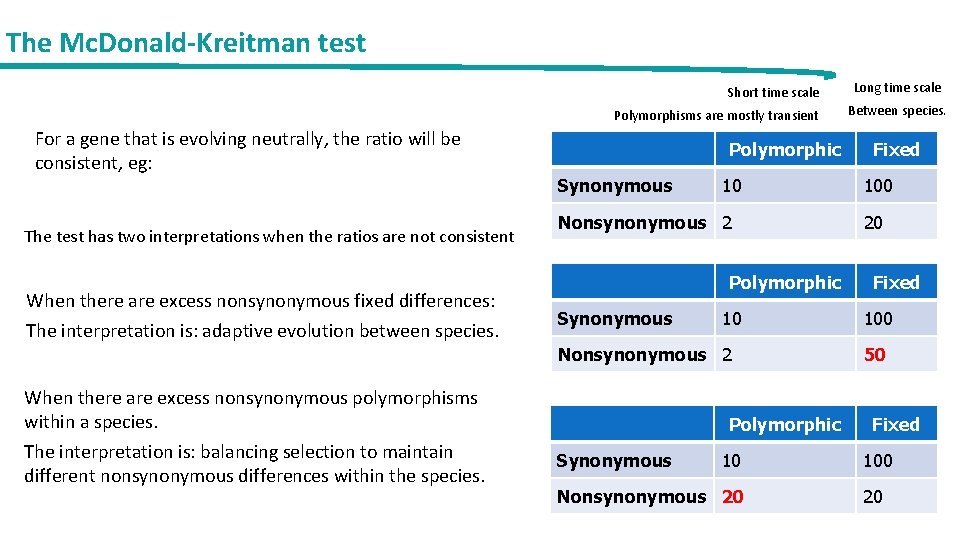
The Mc. Donald-Kreitman test Short time scale Polymorphisms are mostly transient For a gene that is evolving neutrally, the ratio will be consistent, eg: The test has two interpretations when the ratios are not consistent When there are excess nonsynonymous fixed differences: The interpretation is: adaptive evolution between species. Polymorphic Synonymous 10 Nonsynonymous 2 When there are excess nonsynonymous polymorphisms within a species. The interpretation is: balancing selection to maintain different nonsynonymous differences within the species. Polymorphic Synonymous 10 Nonsynonymous 20 Long time scale Between species. Fixed 100 20 Fixed 100 50 Fixed 100 20
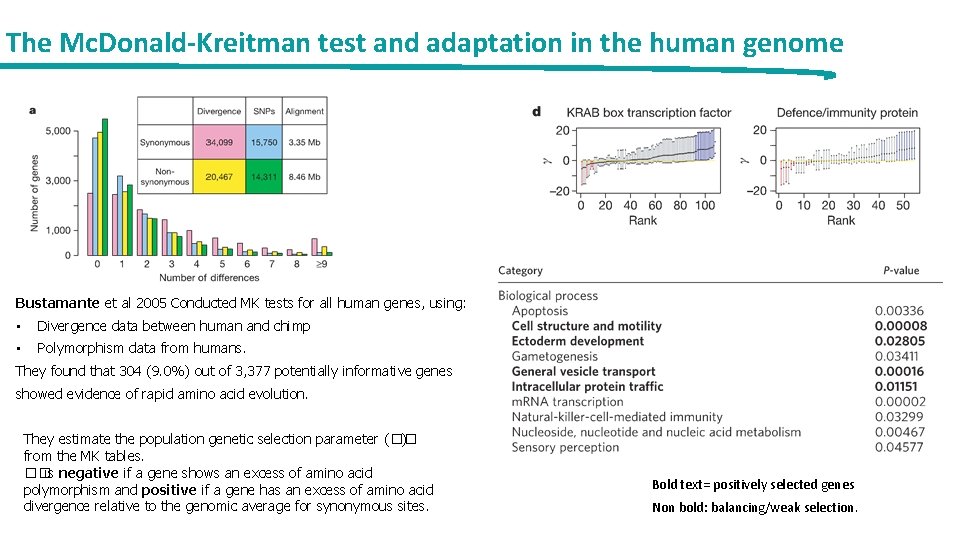
The Mc. Donald-Kreitman test and adaptation in the human genome Bustamante et al 2005 Conducted MK tests for all human genes, using: • Divergence data between human and chimp • Polymorphism data from humans. They found that 304 (9. 0%) out of 3, 377 potentially informative genes showed evidence of rapid amino acid evolution. They estimate the population genetic selection parameter (�� ) from the MK tables. �� is negative if a gene shows an excess of amino acid polymorphism and positive if a gene has an excess of amino acid divergence relative to the genomic average for synonymous sites. Bold text= positively selected genes Non bold: balancing/weak selection.
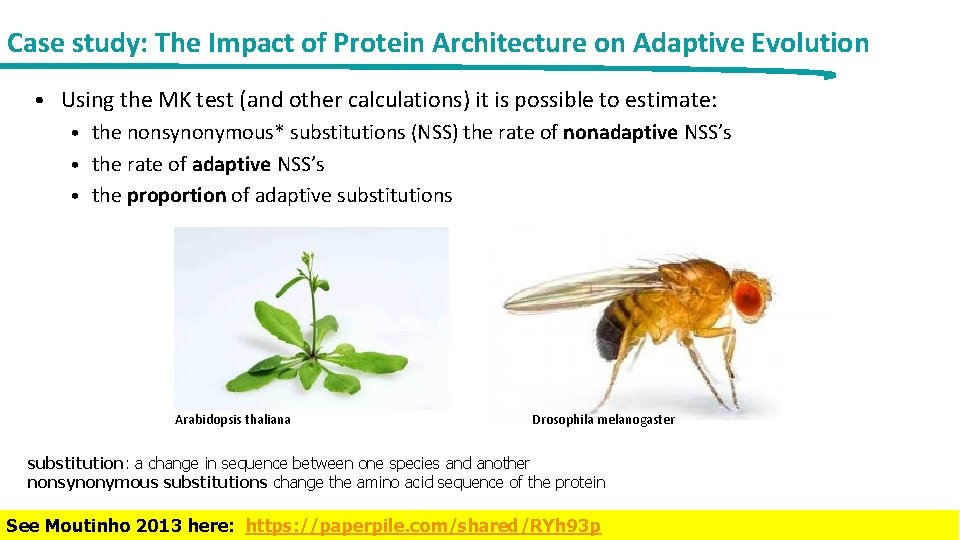
Case study: The Impact of Protein Architecture on Adaptive Evolution • Using the MK test (and other calculations) it is possible to estimate: • the nonsynonymous* substitutions (NSS) the rate of nonadaptive NSS’s • the rate of adaptive NSS’s • the proportion of adaptive substitutions Arabidopsis thaliana Drosophila melanogaster substitution: a change in sequence between one species and another nonsynonymous substitutions change the amino acid sequence of the protein See Moutinho 2013 here: https: //paperpile. com/shared/RYh 93 p
Case study: The Impact of Protein Architecture on Adaptive Evolution
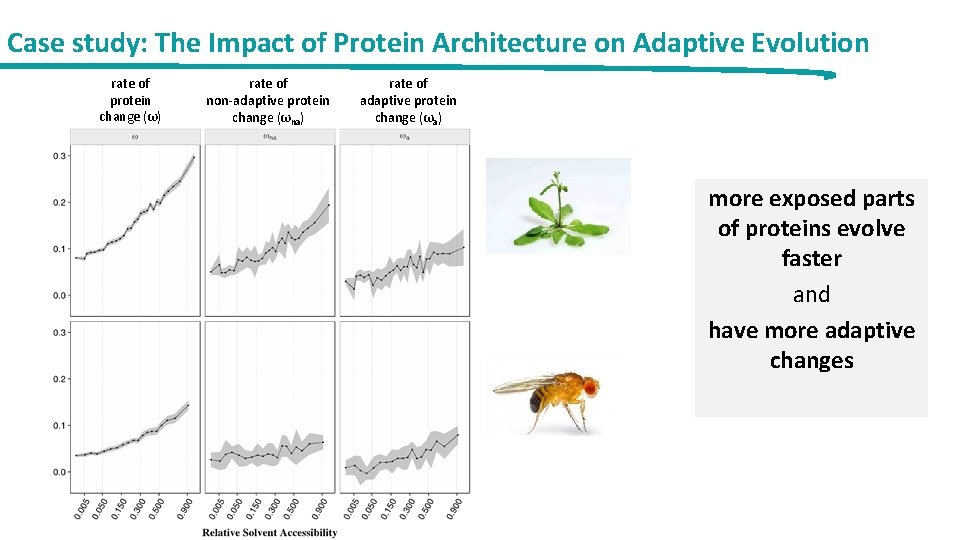
Case study: The Impact of Protein Architecture on Adaptive Evolution rate of protein change (ω) rate of non-adaptive protein change (ωna) rate of adaptive protein change (ωa) more exposed parts of proteins evolve faster and have more adaptive changes
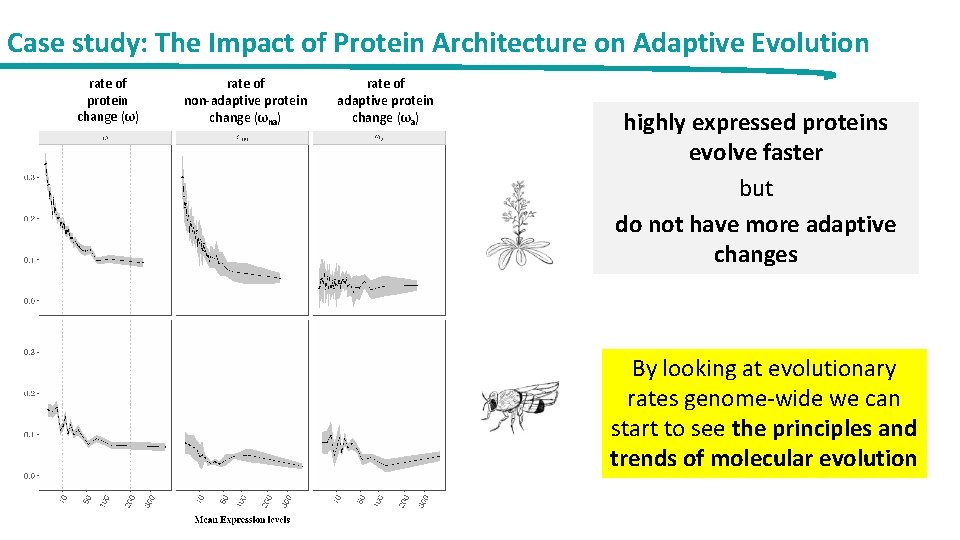
Case study: The Impact of Protein Architecture on Adaptive Evolution rate of protein change (ω) rate of non-adaptive protein change (ωna) rate of adaptive protein change (ωa) highly expressed proteins evolve faster but do not have more adaptive changes By looking at evolutionary rates genome-wide we can start to see the principles and trends of molecular evolution
Summary of important points • Methods in comparative genomics: • Hypothesis or clade (species group) of interest • Obtain high quality DNA from multiple species • Sequence, de novo assemble and annotate genomes (+extra data, like RNAseq) • Align genomes • Analyse • Important concepts • Diversity and divergence are related • Evolutionary rates vary between genes • Purifying selection (constraint): expectations and observations • Adaptive evolution: expectations and observations, tests for selection • Polygenetic selection and genome-scale data • With genome-scale data, we can observe principles of molecular adaptation