
Genes 3 1 Essential Idea Heritable traits are
Genes (3. 1) Essential Idea: Heritable traits are passed down to offspring through genes
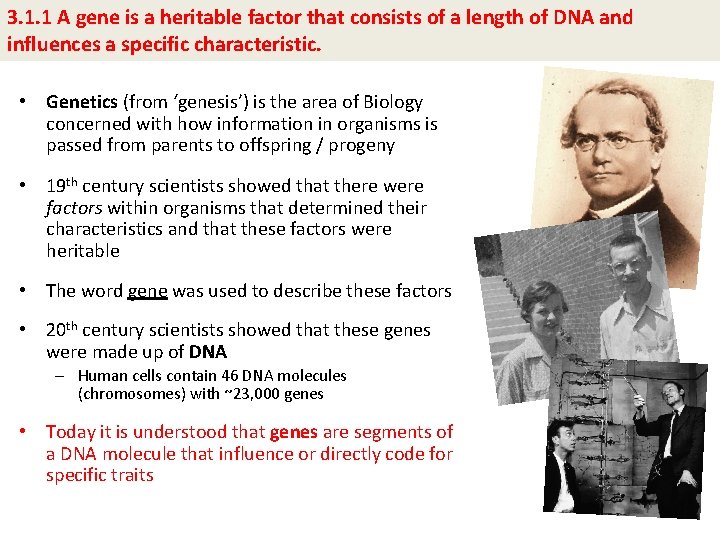
3. 1. 1 A gene is a heritable factor that consists of a length of DNA and influences a specific characteristic. • Genetics (from ‘genesis’) is the area of Biology concerned with how information in organisms is passed from parents to offspring / progeny • 19 th century scientists showed that there were factors within organisms that determined their characteristics and that these factors were heritable • The word gene was used to describe these factors • 20 th century scientists showed that these genes were made up of DNA – Human cells contain 46 DNA molecules (chromosomes) with ~23, 000 genes • Today it is understood that genes are segments of a DNA molecule that influence or directly code for specific traits
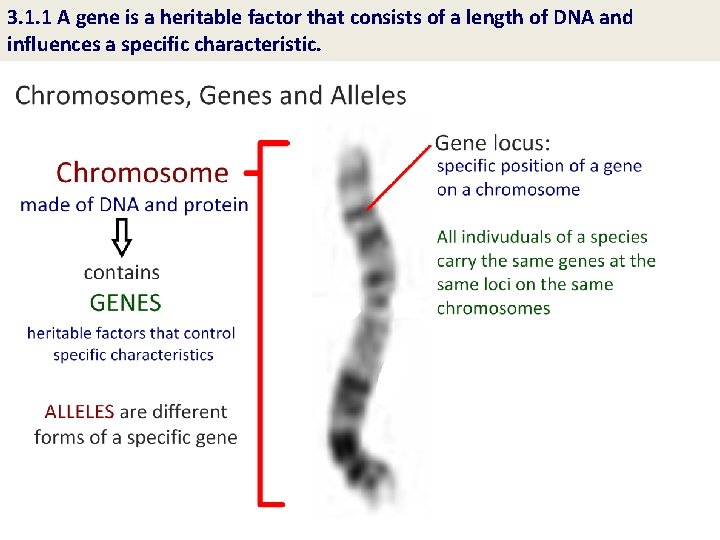
3. 1. 1 A gene is a heritable factor that consists of a length of DNA and influences a specific characteristic.
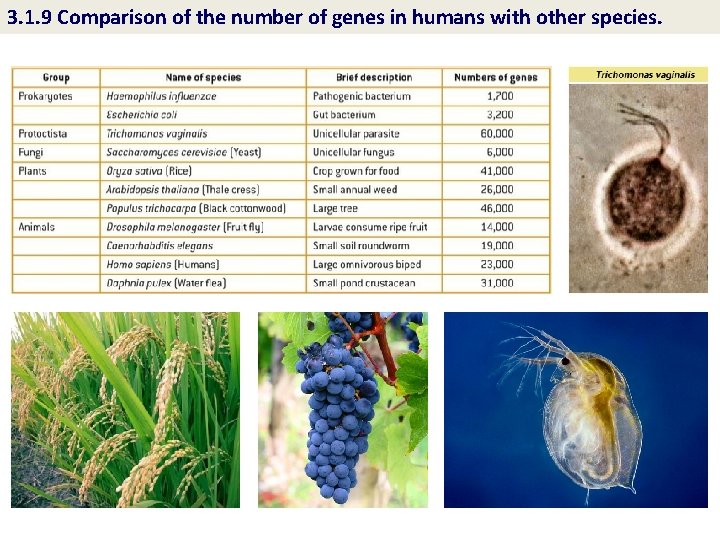
3. 1. 9 Comparison of the number of genes in humans with other species.
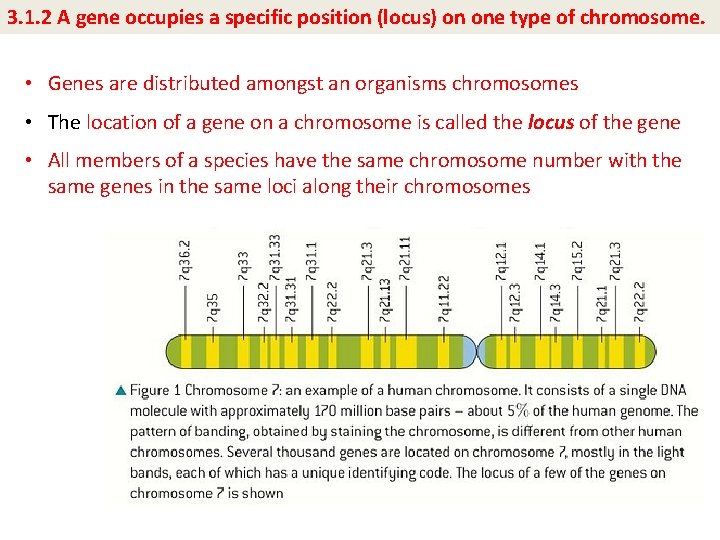
3. 1. 2 A gene occupies a specific position (locus) on one type of chromosome. • Genes are distributed amongst an organisms chromosomes • The location of a gene on a chromosome is called the locus of the gene • All members of a species have the same chromosome number with the same genes in the same loci along their chromosomes
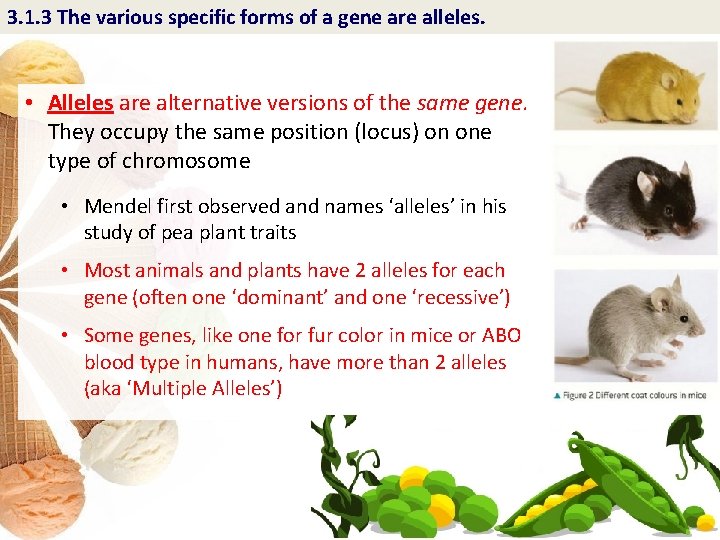
3. 1. 3 The various specific forms of a gene are alleles. • Alleles are alternative versions of the same gene. They occupy the same position (locus) on one type of chromosome • Mendel first observed and names ‘alleles’ in his study of pea plant traits • Most animals and plants have 2 alleles for each gene (often one ‘dominant’ and one ‘recessive’) • Some genes, like one for fur color in mice or ABO blood type in humans, have more than 2 alleles (aka ‘Multiple Alleles’)
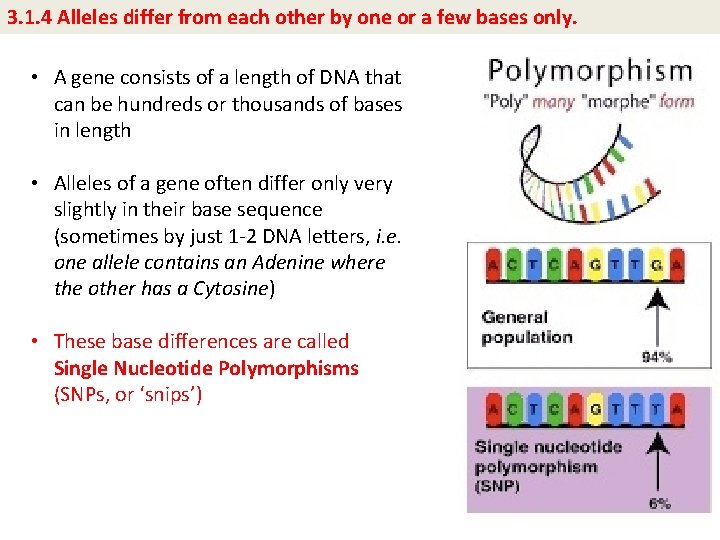
3. 1. 4 Alleles differ from each other by one or a few bases only. • A gene consists of a length of DNA that can be hundreds or thousands of bases in length • Alleles of a gene often differ only very slightly in their base sequence (sometimes by just 1 -2 DNA letters, i. e. one allele contains an Adenine where the other has a Cytosine) • These base differences are called Single Nucleotide Polymorphisms (SNPs, or ‘snips’)
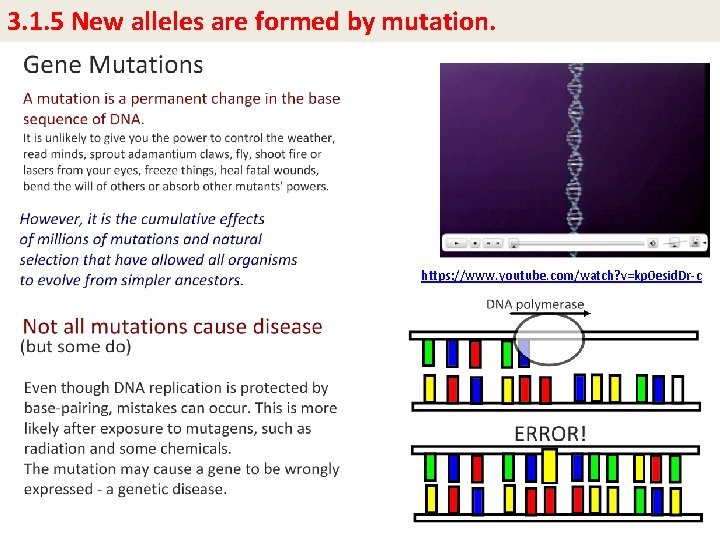
3. 1. 5 New alleles are formed by mutation. https: //www. youtube. com/watch? v=kp 0 esid. Dr-c
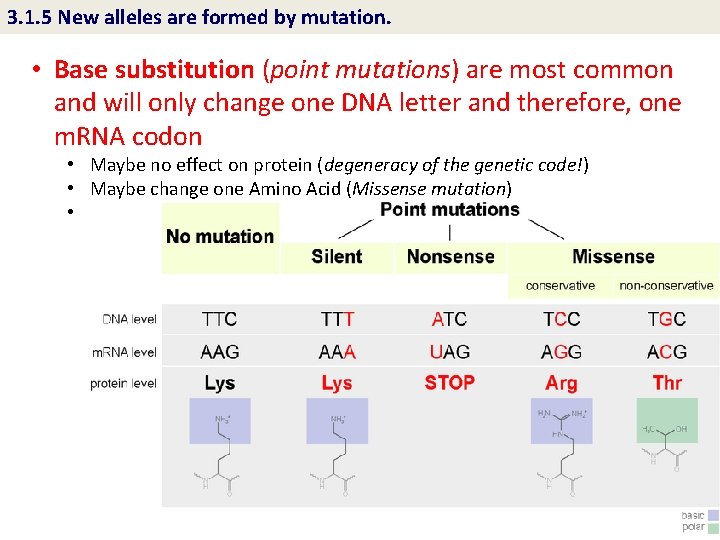
3. 1. 5 New alleles are formed by mutation. • Base substitution (point mutations) are most common and will only change one DNA letter and therefore, one m. RNA codon • Maybe no effect on protein (degeneracy of the genetic code!) • Maybe change one Amino Acid (Missense mutation) • Maybe code for an early stop codon (Nonsense mutation)
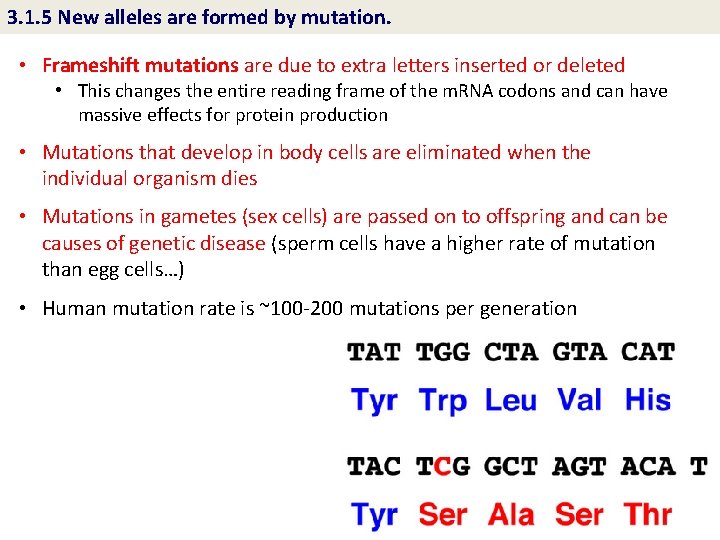
3. 1. 5 New alleles are formed by mutation. • Frameshift mutations are due to extra letters inserted or deleted • This changes the entire reading frame of the m. RNA codons and can have massive effects for protein production • Mutations that develop in body cells are eliminated when the individual organism dies • Mutations in gametes (sex cells) are passed on to offspring and can be causes of genetic disease (sperm cells have a higher rate of mutation than egg cells…) • Human mutation rate is ~100 -200 mutations per generation
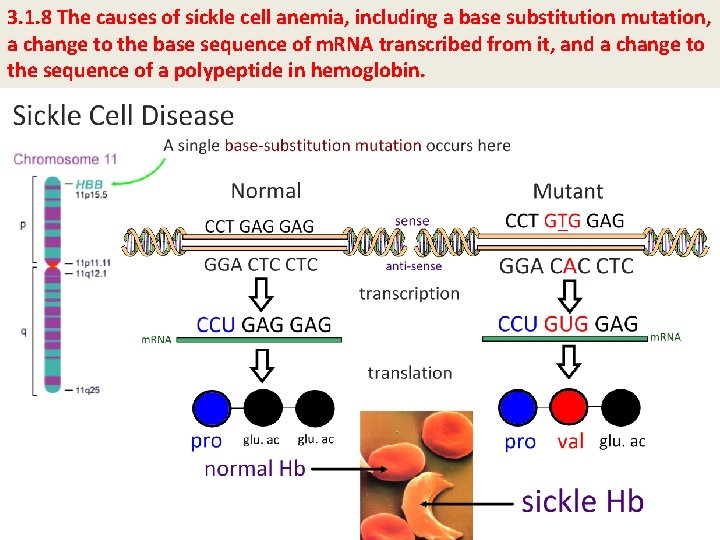
3. 1. 8 The causes of sickle cell anemia, including a base substitution mutation, a change to the base sequence of m. RNA transcribed from it, and a change to the sequence of a polypeptide in hemoglobin.
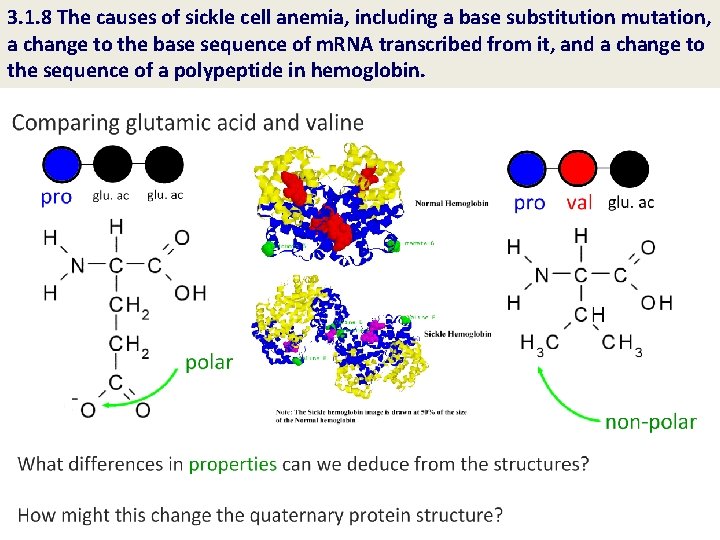
3. 1. 8 The causes of sickle cell anemia, including a base substitution mutation, a change to the base sequence of m. RNA transcribed from it, and a change to the sequence of a polypeptide in hemoglobin.
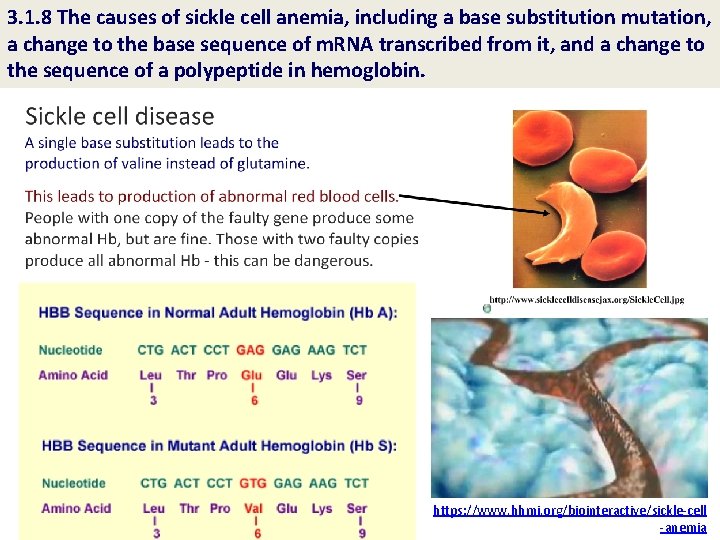
3. 1. 8 The causes of sickle cell anemia, including a base substitution mutation, a change to the base sequence of m. RNA transcribed from it, and a change to the sequence of a polypeptide in hemoglobin. https: //www. hhmi. org/biointeractive/sickle-cell -anemia
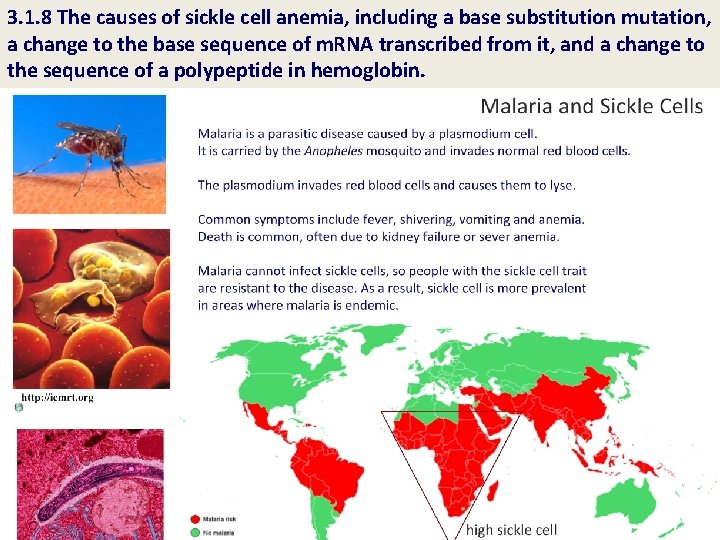
3. 1. 8 The causes of sickle cell anemia, including a base substitution mutation, a change to the base sequence of m. RNA transcribed from it, and a change to the sequence of a polypeptide in hemoglobin.
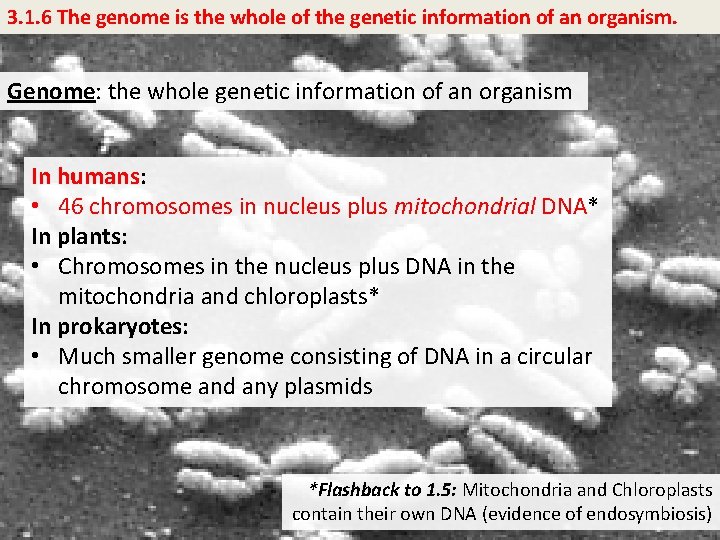
3. 1. 6 The genome is the whole of the genetic information of an organism. Genome: the whole genetic information of an organism In humans: • 46 chromosomes in nucleus plus mitochondrial DNA* In plants: • Chromosomes in the nucleus plus DNA in the mitochondria and chloroplasts* In prokaryotes: • Much smaller genome consisting of DNA in a circular chromosome and any plasmids *Flashback to 1. 5: Mitochondria and Chloroplasts contain their own DNA (evidence of endosymbiosis)
3. 1. 7 The entire base sequence of human genes was sequenced in the Human Genome Project. The Human Genome Project (HGP) began in 1990 and produced a full copy of a human genome in 2003… • All humans genomes vary due to SNPs, but 99. 9% of the genome is identical among all humans • Public / private competition and collaboration drove incredibly rapid biotech research and development • HGP produced a vast set of data in the form of the ~3. 2 billion base letter sequence of human DNA • Scientists are still in the process of decoding these sequences to ID specific genes • ~23, 000 genes were identified (much fewer than predicted!) • Discovered much of the genome is NOT transcribed • Highly-repetitive sequences originally-called “junk DNA” but now recognized as having a number of key functions
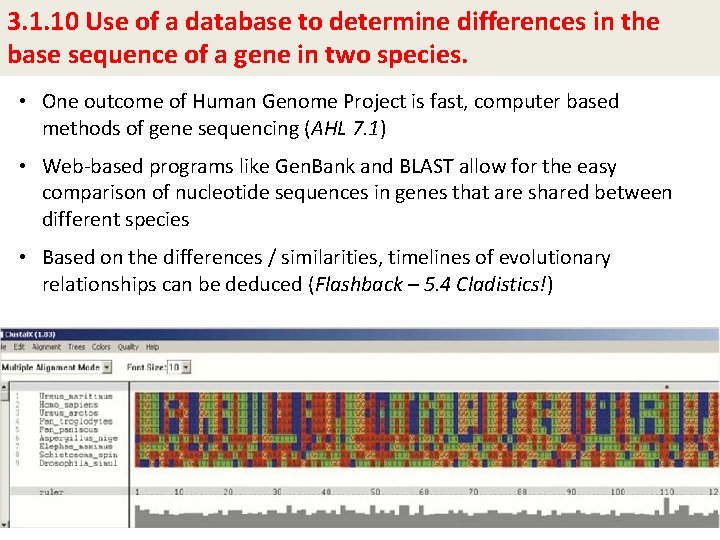
3. 1. 10 Use of a database to determine differences in the base sequence of a gene in two species. • One outcome of Human Genome Project is fast, computer based methods of gene sequencing (AHL 7. 1) • Web-based programs like Gen. Bank and BLAST allow for the easy comparison of nucleotide sequences in genes that are shared between different species • Based on the differences / similarities, timelines of evolutionary relationships can be deduced (Flashback – 5. 4 Cladistics!)
Bibliography / Acknowledgments Jason de Nys Chris Paine
- Slides: 18