
Generators Motors Eddy Currents Maxwells Four Equations AP
- Slides: 20
-Generators -Motors -Eddy Currents -Maxwell’s Four Equations AP Physics C Mrs. Coyle
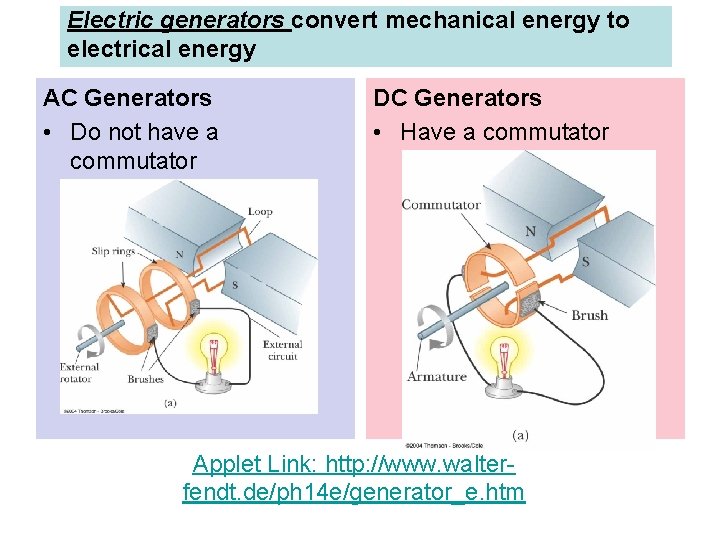
Electric generators convert mechanical energy to electrical energy AC Generators • Do not have a commutator DC Generators • Have a commutator Applet Link: http: //www. walterfendt. de/ph 14 e/generator_e. htm
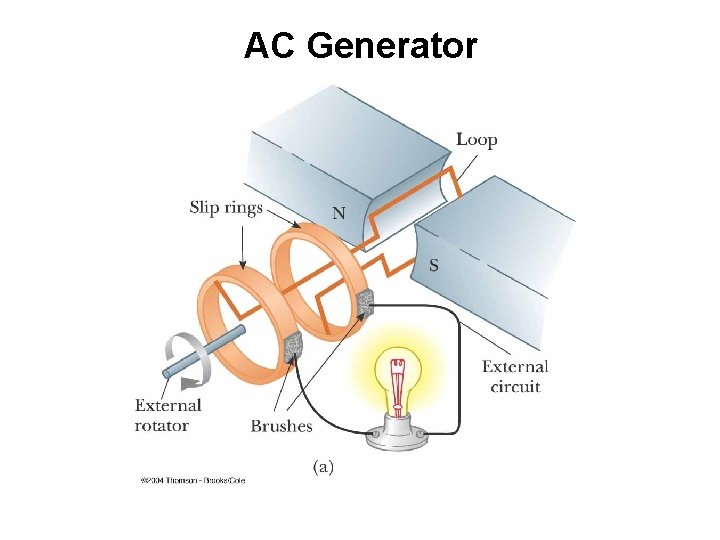
AC Generator
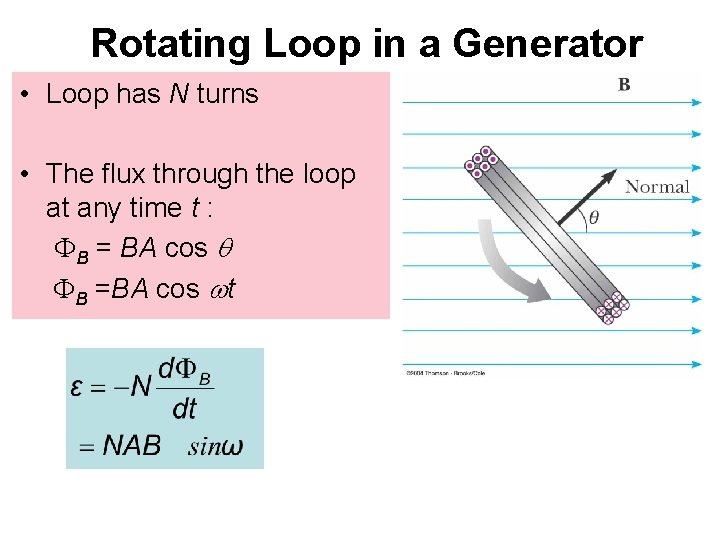
Rotating Loop in a Generator • Loop has N turns • The flux through the loop at any time t : FB = BA cos q FB =BA cos wt
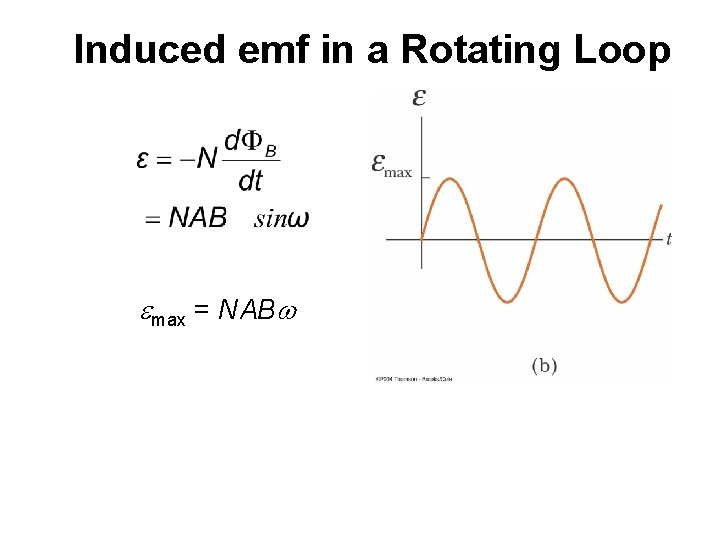
Induced emf in a Rotating Loop emax = NABw
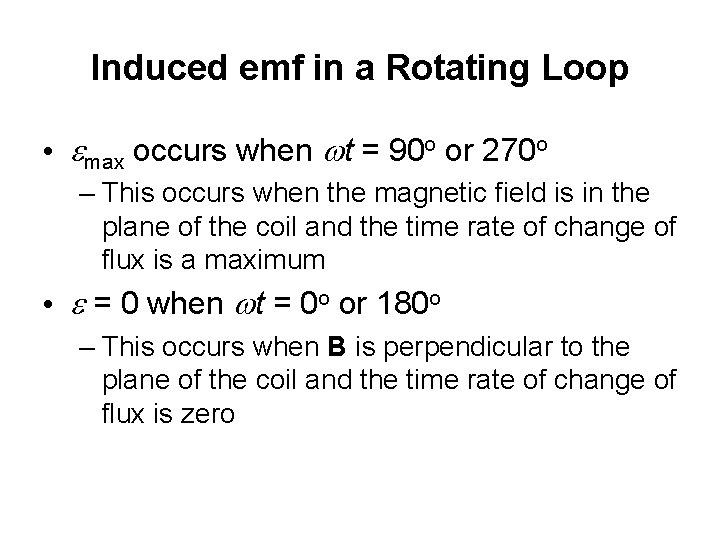
Induced emf in a Rotating Loop • emax occurs when wt = 90 o or 270 o – This occurs when the magnetic field is in the plane of the coil and the time rate of change of flux is a maximum • e = 0 when wt = 0 o or 180 o – This occurs when B is perpendicular to the plane of the coil and the time rate of change of flux is zero
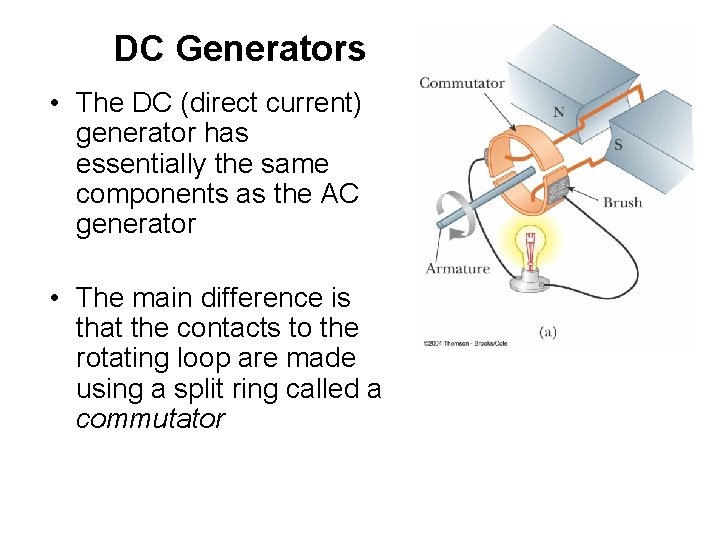
DC Generators • The DC (direct current) generator has essentially the same components as the AC generator • The main difference is that the contacts to the rotating loop are made using a split ring called a commutator
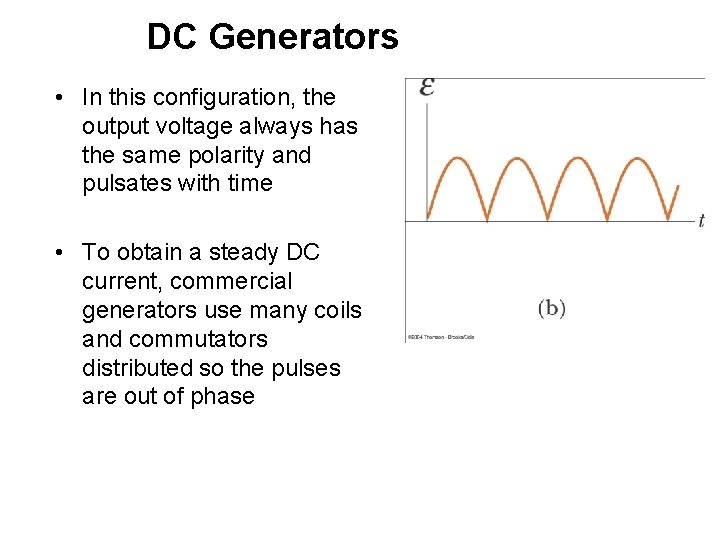
DC Generators • In this configuration, the output voltage always has the same polarity and pulsates with time • To obtain a steady DC current, commercial generators use many coils and commutators distributed so the pulses are out of phase
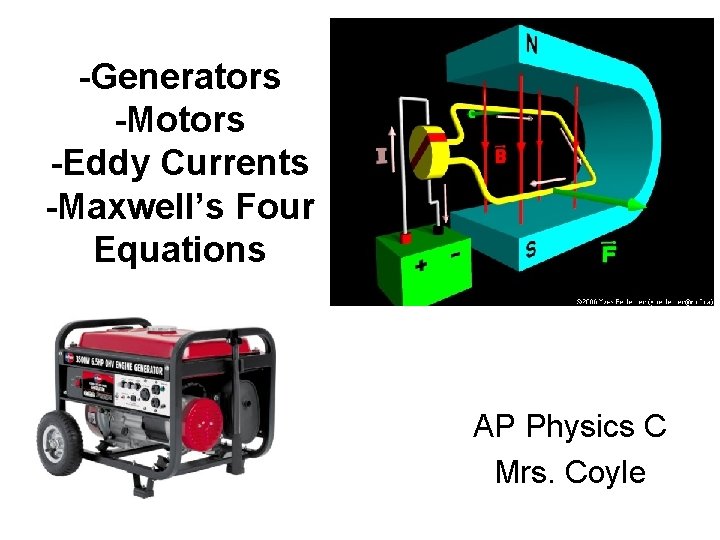
Motors • A motor is a generator operating in reverse • Electrical energy is converted to mechanical energy • A current is supplied to the coil by a battery and the torque acting on the current-carrying coil causes it to rotate
Back emf of a Motor • As the coil rotates in a magnetic field, an emf is induced in the coil – This induced emf always acts to reduce the current in the coil and is called back emf – The back emf increases in magnitude as the rotational speed of the coil increases
• The power requirements for starting a motor and for running it are greater for heavy loads than for light ones
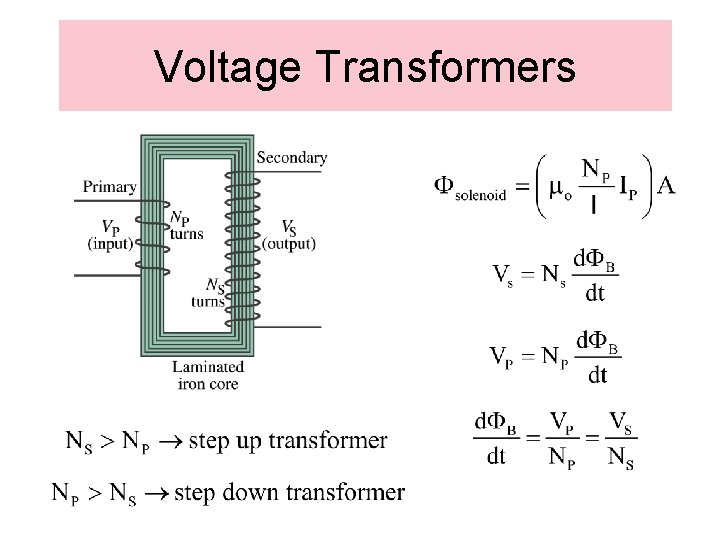
Voltage Transformers
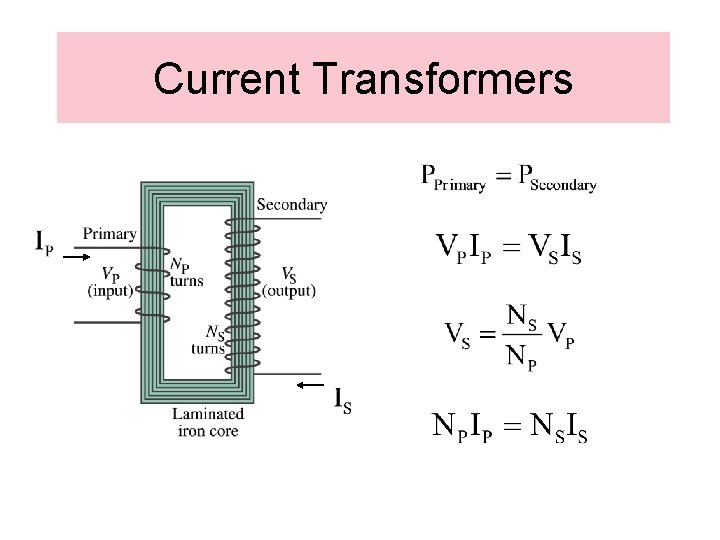
Current Transformers
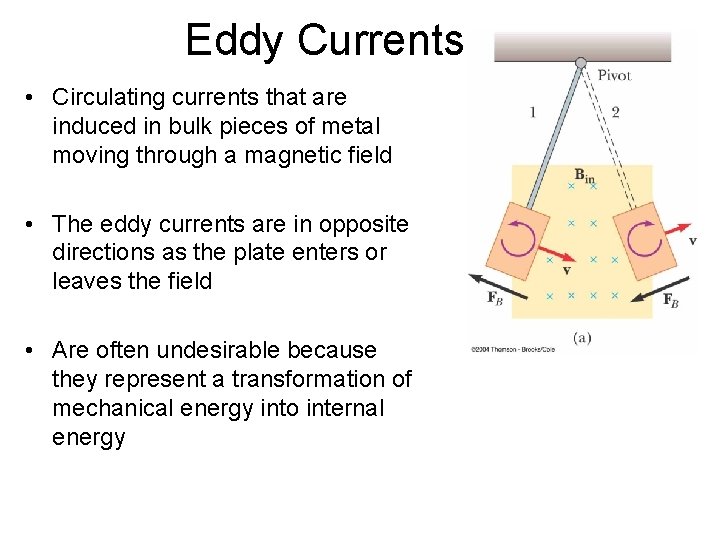
Eddy Currents • Circulating currents that are induced in bulk pieces of metal moving through a magnetic field • The eddy currents are in opposite directions as the plate enters or leaves the field • Are often undesirable because they represent a transformation of mechanical energy into internal energy
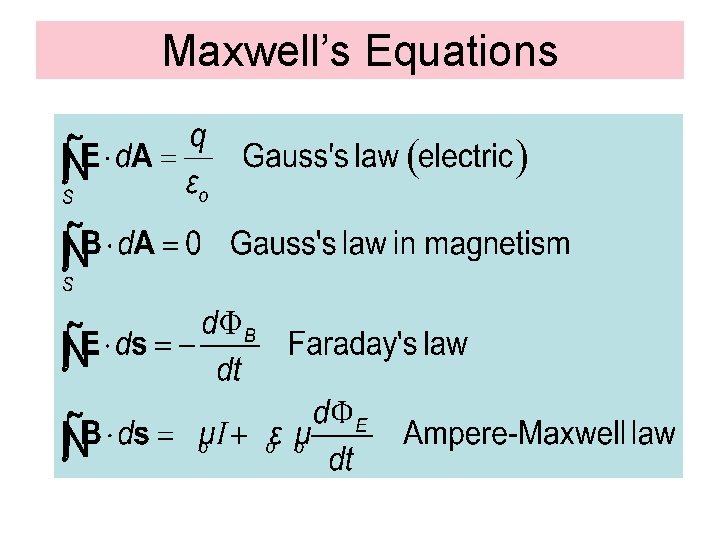
Maxwell’s Equations
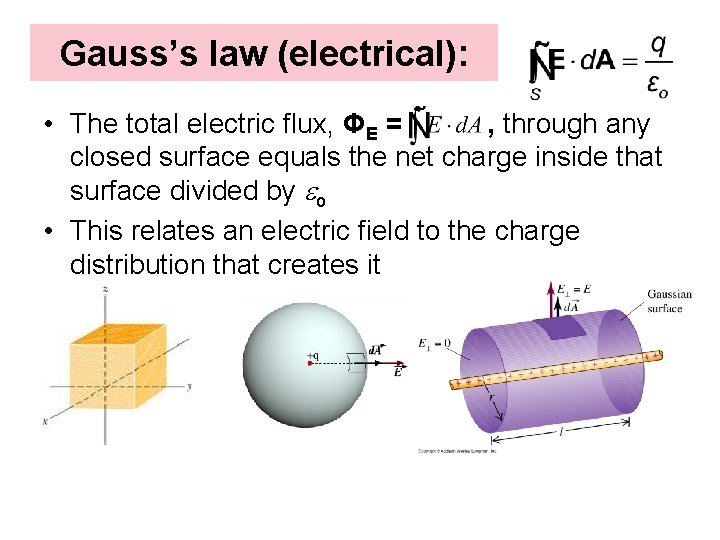
Gauss’s law (electrical): • The total electric flux, ΦE = , through any closed surface equals the net charge inside that surface divided by eo • This relates an electric field to the charge distribution that creates it
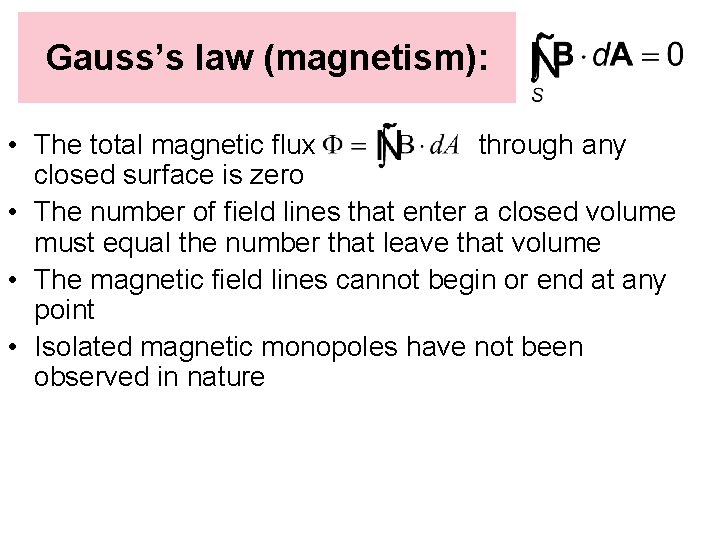
Gauss’s law (magnetism): • The total magnetic flux through any closed surface is zero • The number of field lines that enter a closed volume must equal the number that leave that volume • The magnetic field lines cannot begin or end at any point • Isolated magnetic monopoles have not been observed in nature
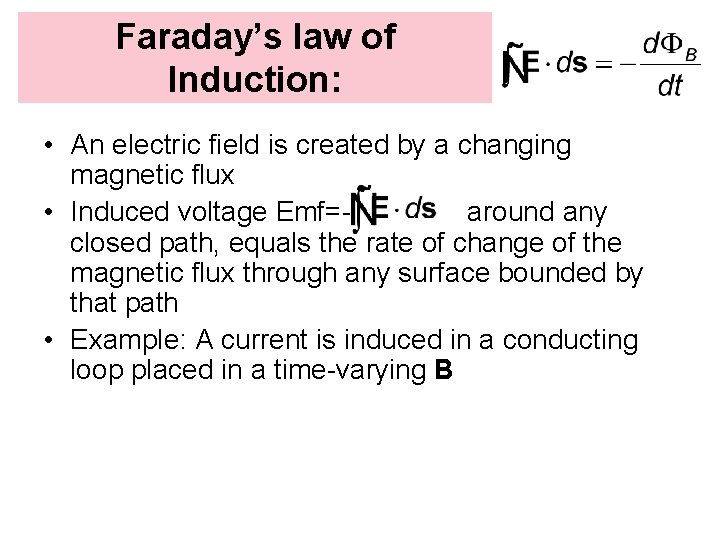
Faraday’s law of Induction: • An electric field is created by a changing magnetic flux • Induced voltage Emf=around any closed path, equals the rate of change of the magnetic flux through any surface bounded by that path • Example: A current is induced in a conducting loop placed in a time-varying B
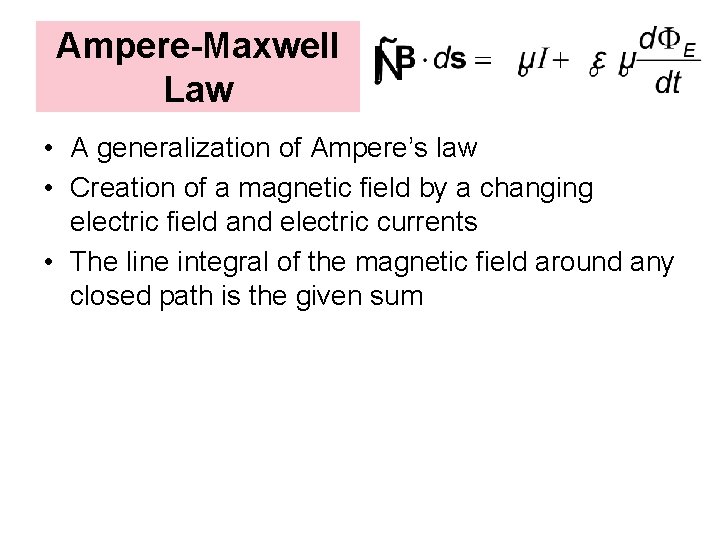
Ampere-Maxwell Law • A generalization of Ampere’s law • Creation of a magnetic field by a changing electric field and electric currents • The line integral of the magnetic field around any closed path is the given sum
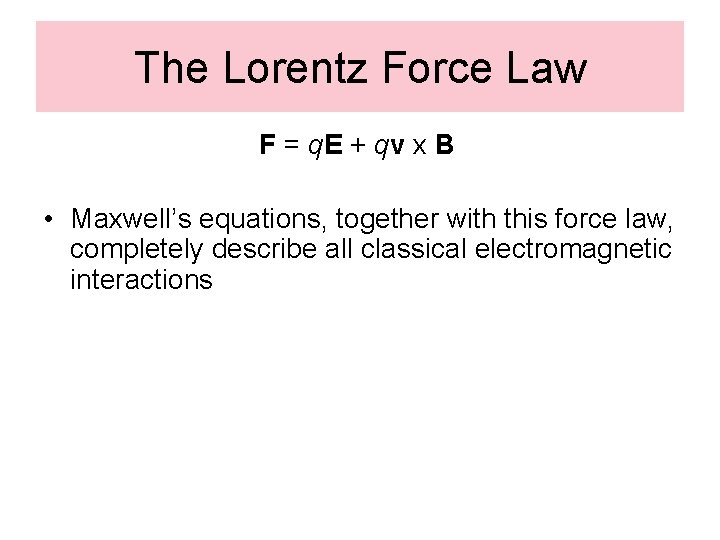
The Lorentz Force Law F = q. E + qv x B • Maxwell’s equations, together with this force law, completely describe all classical electromagnetic interactions