
Generations of wireless technology 1 G was analog
- Slides: 14
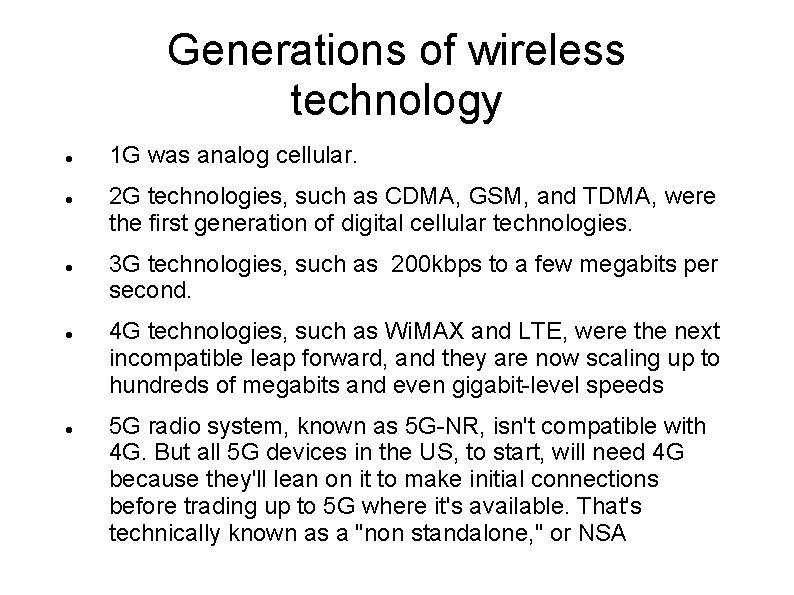
Generations of wireless technology 1 G was analog cellular. 2 G technologies, such as CDMA, GSM, and TDMA, were the first generation of digital cellular technologies. 3 G technologies, such as 200 kbps to a few megabits per second. 4 G technologies, such as Wi. MAX and LTE, were the next incompatible leap forward, and they are now scaling up to hundreds of megabits and even gigabit-level speeds 5 G radio system, known as 5 G-NR, isn't compatible with 4 G. But all 5 G devices in the US, to start, will need 4 G because they'll lean on it to make initial connections before trading up to 5 G where it's available. That's technically known as a "non standalone, " or NSA
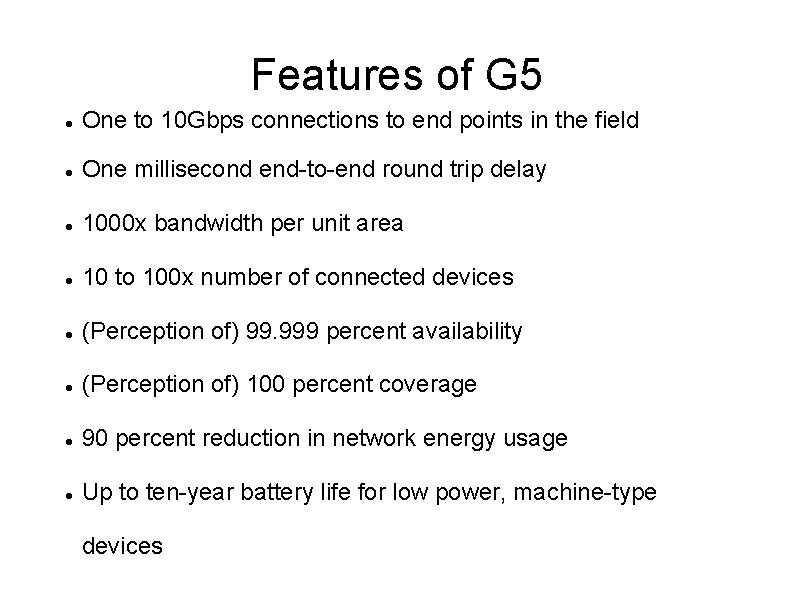
Features of G 5 One to 10 Gbps connections to end points in the field One millisecond end-to-end round trip delay 1000 x bandwidth per unit area 10 to 100 x number of connected devices (Perception of) 99. 999 percent availability (Perception of) 100 percent coverage 90 percent reduction in network energy usage Up to ten-year battery life for low power, machine-type devices
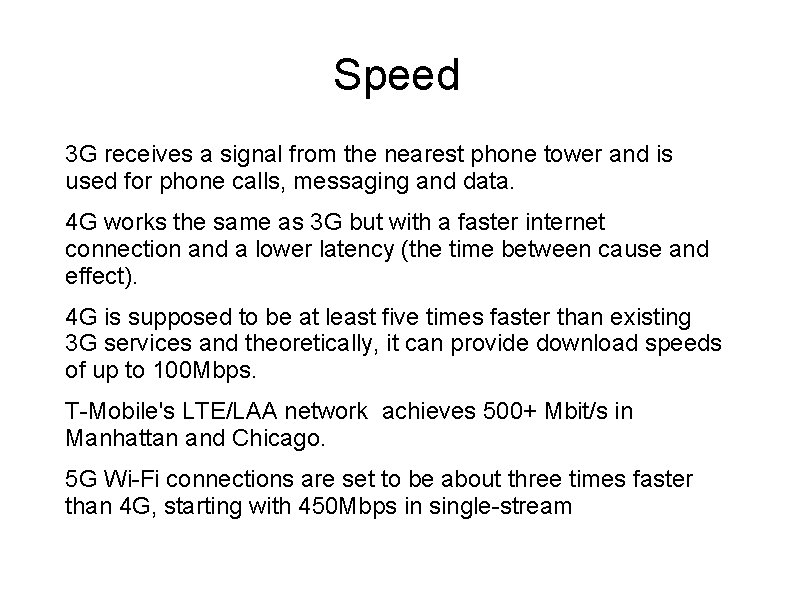
Speed 3 G receives a signal from the nearest phone tower and is used for phone calls, messaging and data. 4 G works the same as 3 G but with a faster internet connection and a lower latency (the time between cause and effect). 4 G is supposed to be at least five times faster than existing 3 G services and theoretically, it can provide download speeds of up to 100 Mbps. T-Mobile's LTE/LAA network achieves 500+ Mbit/s in Manhattan and Chicago. 5 G Wi-Fi connections are set to be about three times faster than 4 G, starting with 450 Mbps in single-stream
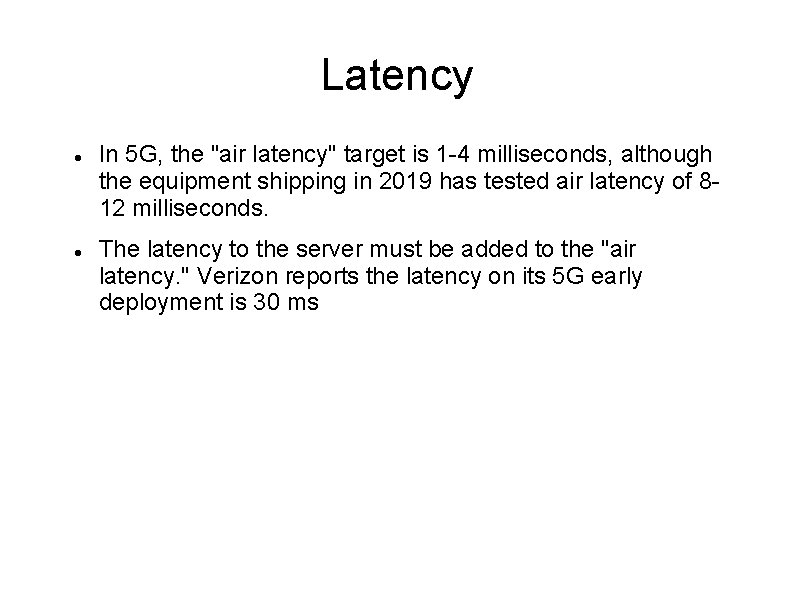
Latency In 5 G, the "air latency" target is 1 -4 milliseconds, although the equipment shipping in 2019 has tested air latency of 812 milliseconds. The latency to the server must be added to the "air latency. " Verizon reports the latency on its 5 G early deployment is 30 ms
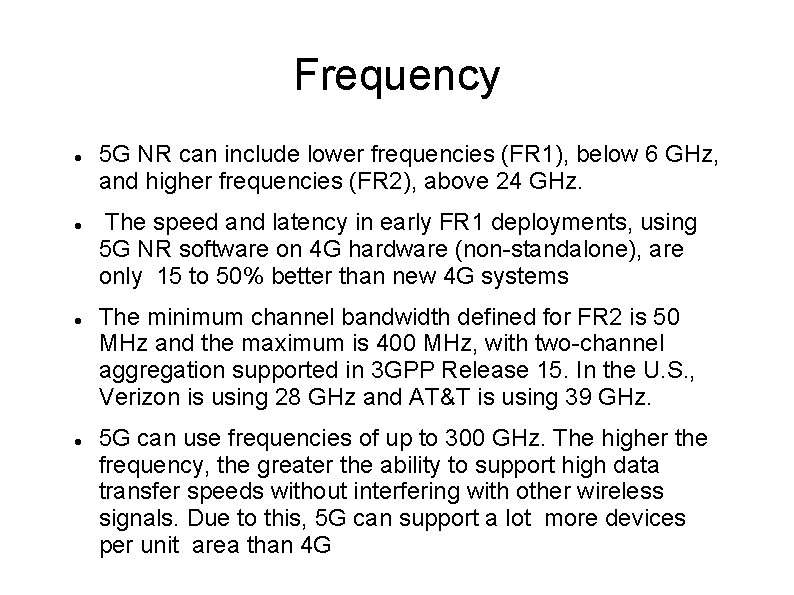
Frequency 5 G NR can include lower frequencies (FR 1), below 6 GHz, and higher frequencies (FR 2), above 24 GHz. The speed and latency in early FR 1 deployments, using 5 G NR software on 4 G hardware (non-standalone), are only 15 to 50% better than new 4 G systems The minimum channel bandwidth defined for FR 2 is 50 MHz and the maximum is 400 MHz, with two-channel aggregation supported in 3 GPP Release 15. In the U. S. , Verizon is using 28 GHz and AT&T is using 39 GHz. 5 G can use frequencies of up to 300 GHz. The higher the frequency, the greater the ability to support high data transfer speeds without interfering with other wireless signals. Due to this, 5 G can support a lot more devices per unit area than 4 G
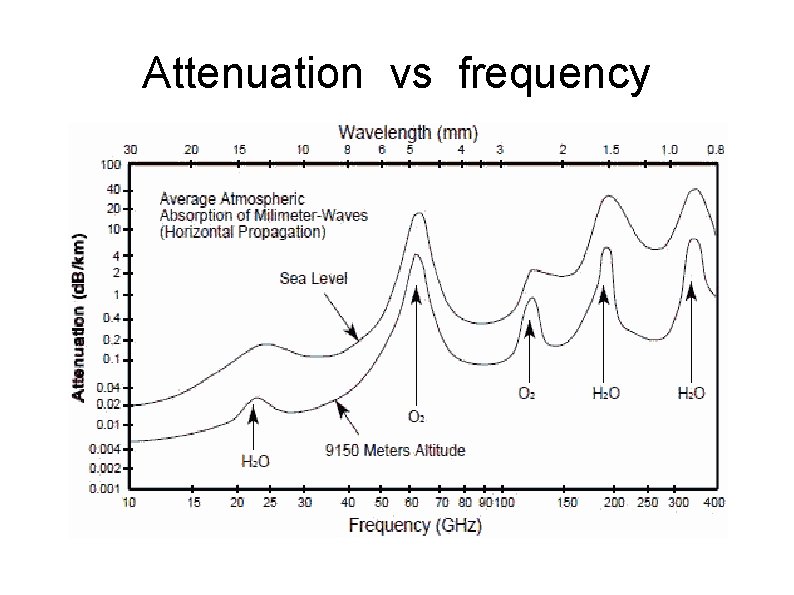
Attenuation vs frequency
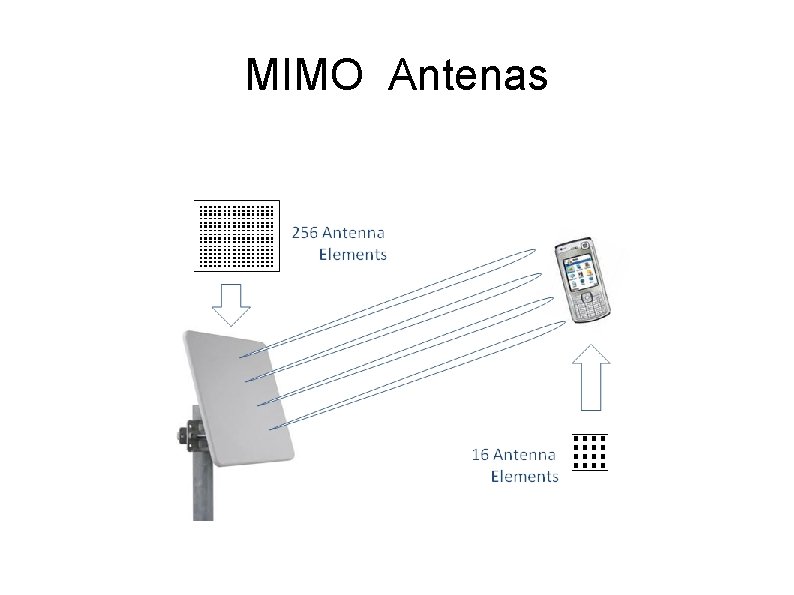
MIMO Antenas
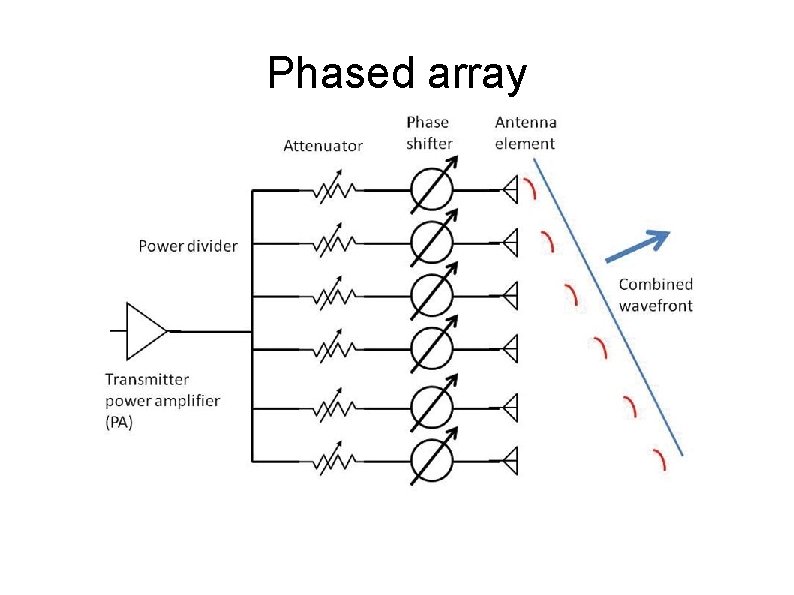
Phased array
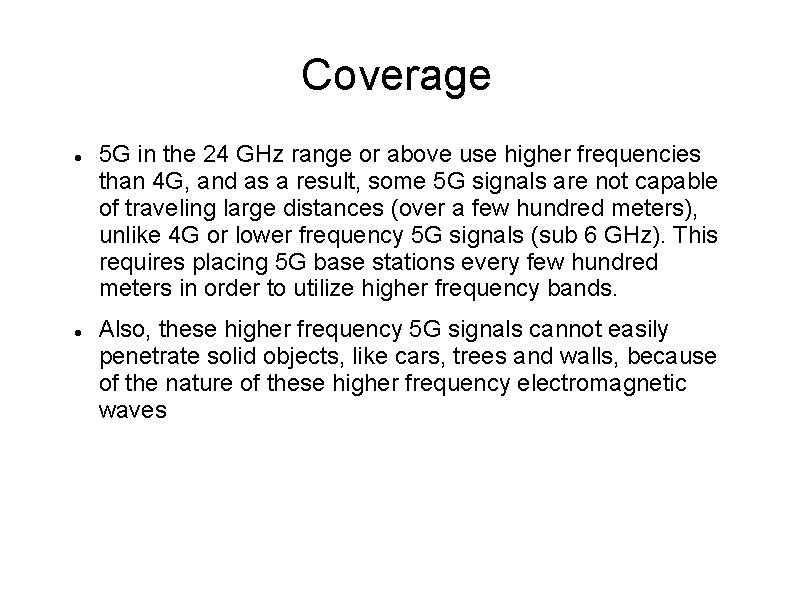
Coverage 5 G in the 24 GHz range or above use higher frequencies than 4 G, and as a result, some 5 G signals are not capable of traveling large distances (over a few hundred meters), unlike 4 G or lower frequency 5 G signals (sub 6 GHz). This requires placing 5 G base stations every few hundred meters in order to utilize higher frequency bands. Also, these higher frequency 5 G signals cannot easily penetrate solid objects, like cars, trees and walls, because of the nature of these higher frequency electromagnetic waves
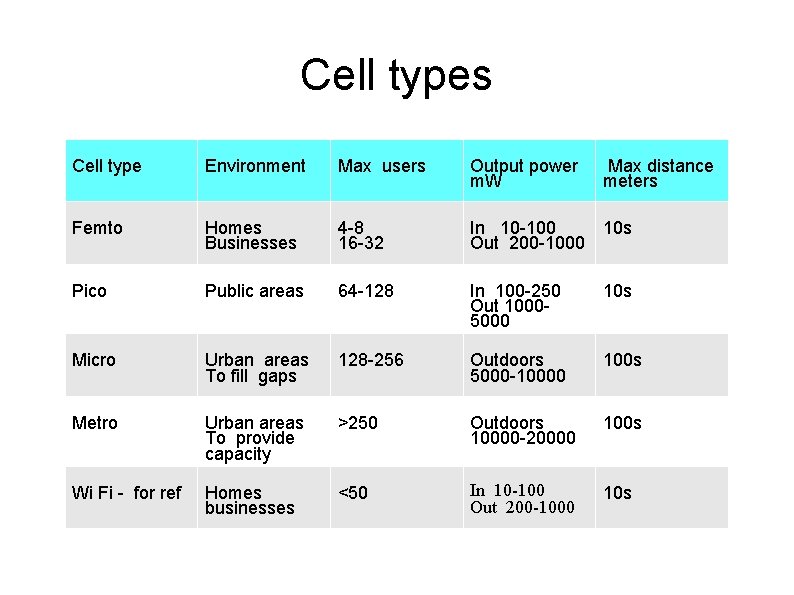
Cell types Cell type Environment Max users Output power m. W Max distance meters Femto Homes Businesses 4 -8 16 -32 In 10 -100 10 s Out 200 -1000 Pico Public areas 64 -128 In 100 -250 Out 10005000 10 s Micro Urban areas To fill gaps 128 -256 Outdoors 5000 -10000 100 s Metro Urban areas To provide capacity >250 Outdoors 10000 -20000 100 s Wi Fi - for ref Homes businesses <50 In 10 -100 Out 200 -1000 10 s
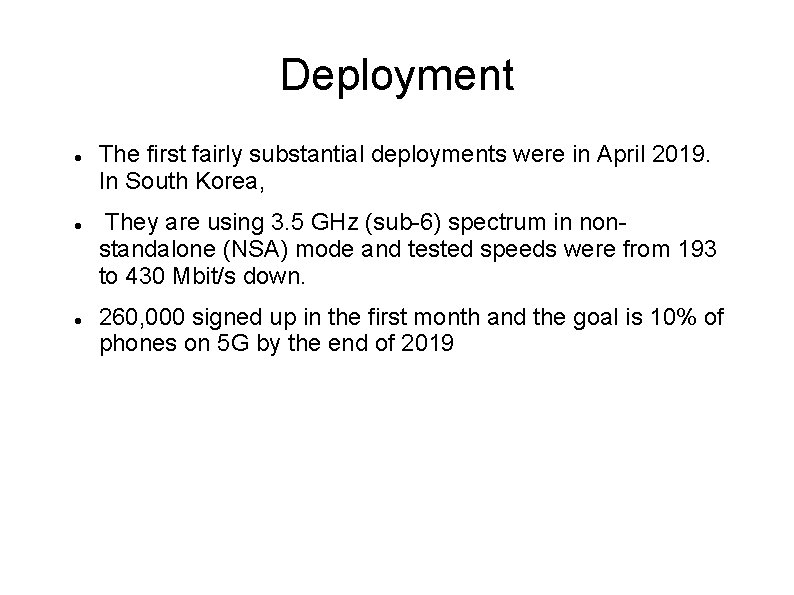
Deployment The first fairly substantial deployments were in April 2019. In South Korea, They are using 3. 5 GHz (sub-6) spectrum in nonstandalone (NSA) mode and tested speeds were from 193 to 430 Mbit/s down. 260, 000 signed up in the first month and the goal is 10% of phones on 5 G by the end of 2019
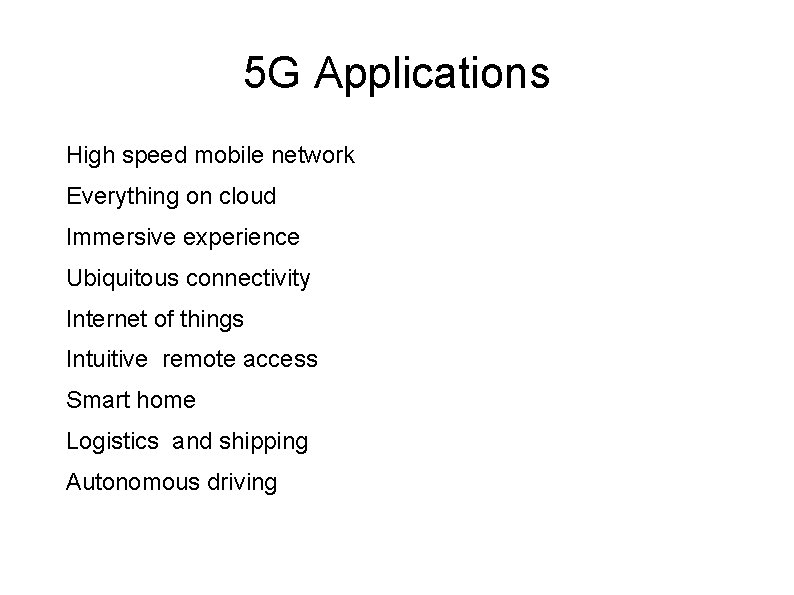
5 G Applications High speed mobile network Everything on cloud Immersive experience Ubiquitous connectivity Internet of things Intuitive remote access Smart home Logistics and shipping Autonomous driving
5 G Applications Smart farming Fleet management Health care and mission critical applications Drone operations Security and surveillance
References 1. What Is 5 G? By Sascha Segan 2. An overview of millimeter radio waves, their characteristics, pros and cons, and applications. By Lou Frenzel 3. The electromagnetic wave energy effect(s) in microwave–assisted organic syntheses (MAOS) Satoshi Horikoshi, Tomoki Watanabe, Atsushi Narita, Yumiko Suzuki & Nick Serpone 4. Electromagnetic Radiation and Human Health: A Review of Sources and Effects By Ali Zamanian and Cy Hardiman 5. Electromagnetic Waves and Human Health By Feyyaz Ozdemir and Aysegul Kargi