
Generational Shift Why We Should Modify Our Instructional
- Slides: 24
Generational Shift: Why We Should Modify Our Instructional Strategies for the Next Generation of Aviators Mary Niemczyk, Ph. D NTAS 2017
Overview • Generational Cohorts • Characteristics of the Millennial Generation • 4 A’s of Learning • Instructional Strategies (Gagne’s 9 Events) • What Millennials Say They Need for Success
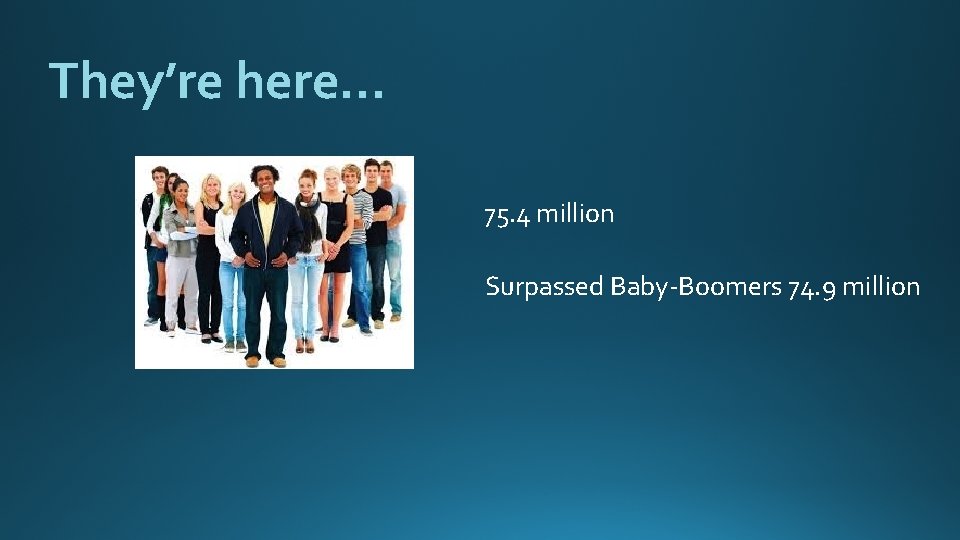
They’re here… 75. 4 million Surpassed Baby-Boomers 74. 9 million
Differences between generations can be the by-product of unique historical circumstances that members of an age cohort experience, particularly during a time when they are in the process of forming opinions. - Pew Research Center
Generational Cohorts • Veterans (1922 - 1943) • Baby Boomers (1944 - 1964) • Generation X (1965 - 1980) • Gen Y - Millennials (1981 – 2000) • Gen Z (2001 Generational characteristics tend to be fixed
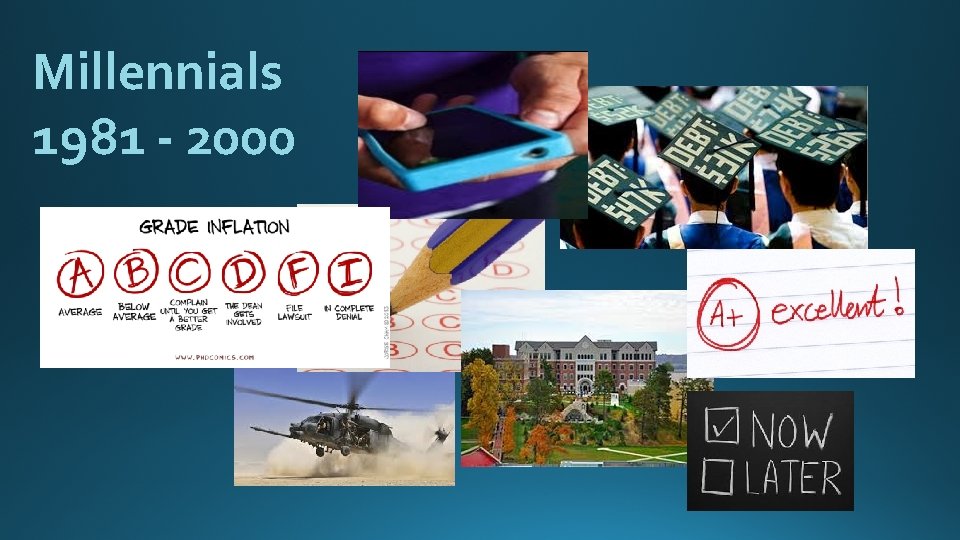
Millennials 1981 - 2000
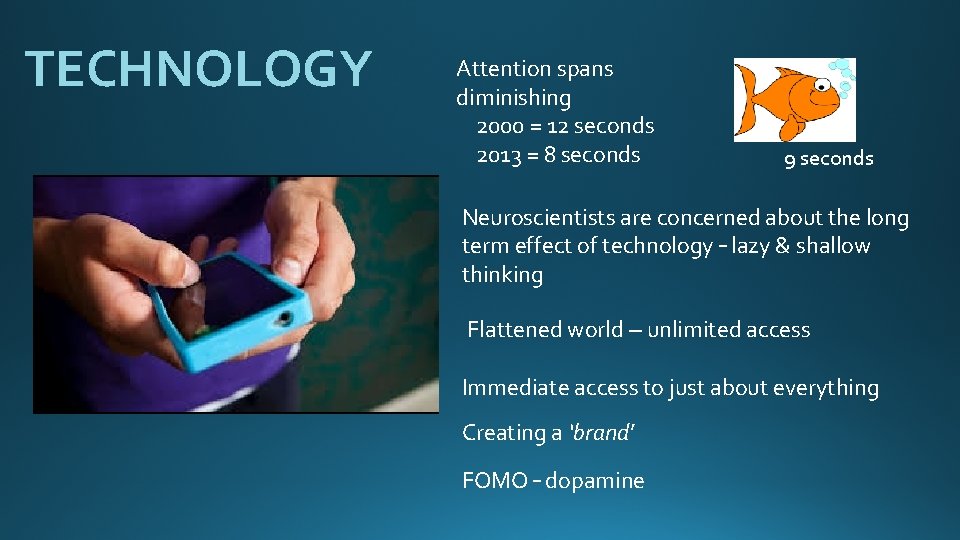
TECHNOLOGY Attention spans diminishing 2000 = 12 seconds 2013 = 8 seconds 9 seconds Neuroscientists are concerned about the long term effect of technology – lazy & shallow thinking Flattened world – unlimited access Immediate access to just about everything Creating a ‘brand’ FOMO – dopamine
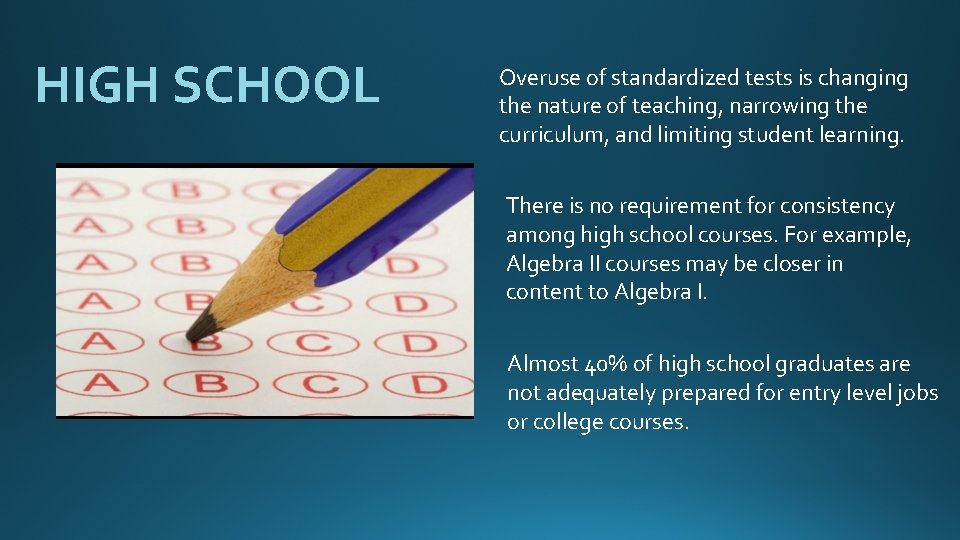
HIGH SCHOOL Overuse of standardized tests is changing the nature of teaching, narrowing the curriculum, and limiting student learning. There is no requirement for consistency among high school courses. For example, Algebra II courses may be closer in content to Algebra I. Almost 40% of high school graduates are not adequately prepared for entry level jobs or college courses.
COLLEGE Most educated generation = higher student debt ($27 K average) Fewer individuals read books which leads to a decline in the skills necessary to read long passages of text More than 36% of first-year college students reported taking some remedial coursework especially math PIAAC results (22 countries): Literacy - US millennials scored higher than only 2 countries – Spain & Italy Numeracy - ranked last, along with Spain & Italy Problem Solving - also ranked last, along with the Slovak Republic, Ireland, & Poland
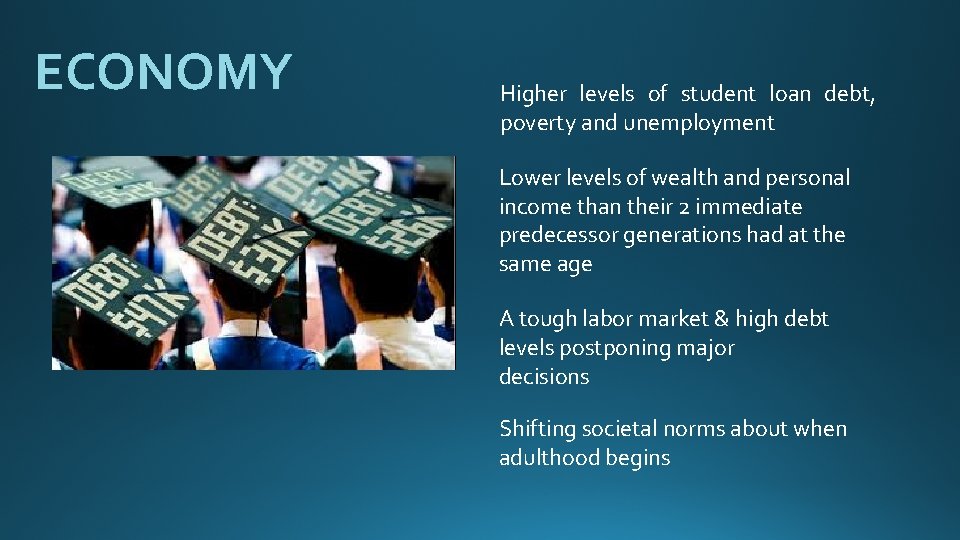
ECONOMY Higher levels of student loan debt, poverty and unemployment Lower levels of wealth and personal income than their 2 immediate predecessor generations had at the same age A tough labor market & high debt levels postponing major decisions Shifting societal norms about when adulthood begins
What Can Educators Do?
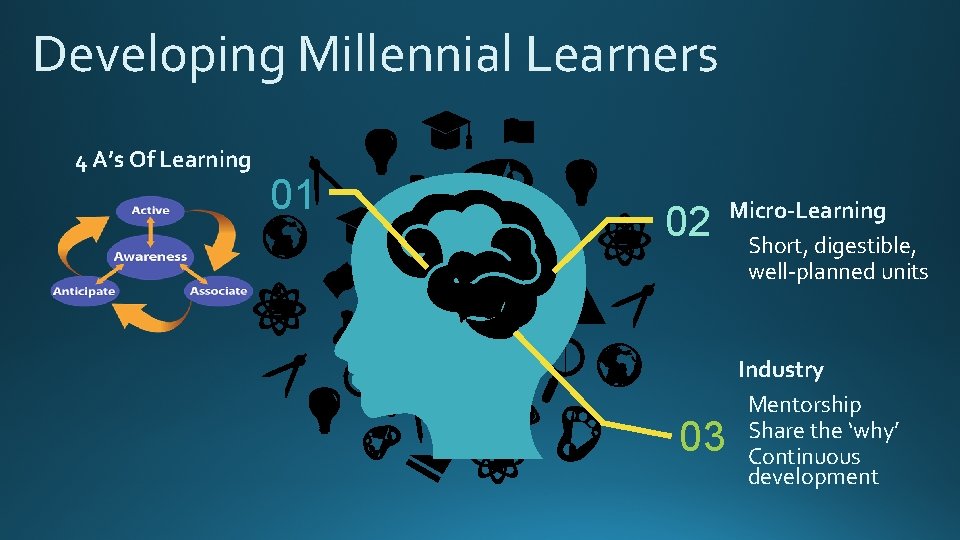
Developing Millennial Learners 4 A’s Of Learning 01 02 03 Micro-Learning Short, digestible, well-planned units Industry Mentorship Share the ‘why’ Continuous development
4 A’s of Learning
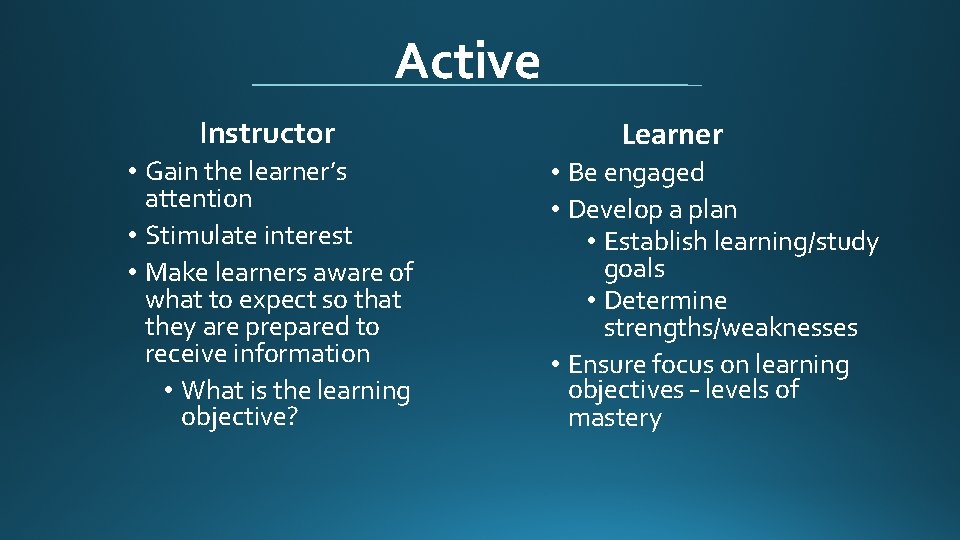
Active Instructor • Gain the learner’s attention • Stimulate interest • Make learners aware of what to expect so that they are prepared to receive information • What is the learning objective? Learner • Be engaged • Develop a plan • Establish learning/study goals • Determine strengths/weaknesses • Ensure focus on learning objectives – levels of mastery
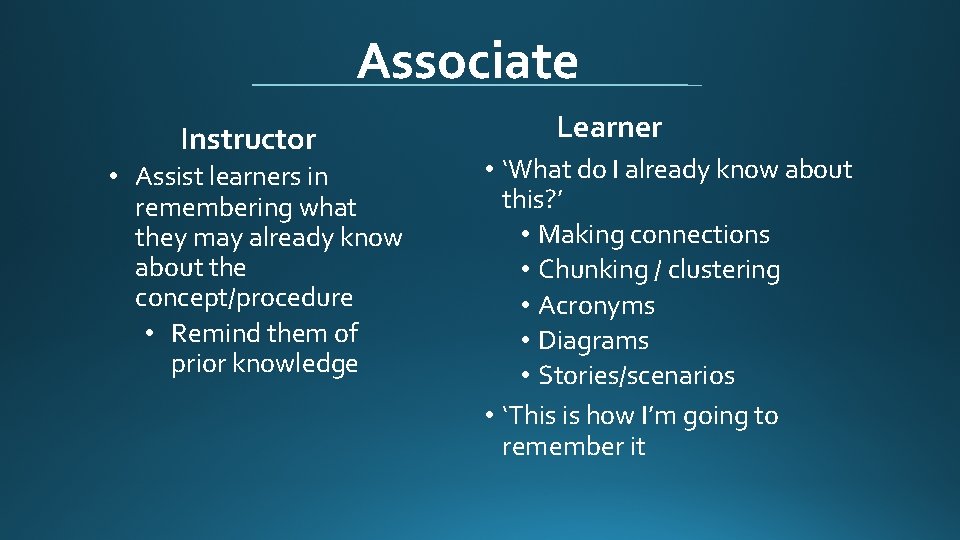
Associate Instructor • Assist learners in remembering what they may already know about the concept/procedure • Remind them of prior knowledge Learner • ‘What do I already know about this? ’ • Making connections • Chunking / clustering • Acronyms • Diagrams • Stories/scenarios • ‘This is how I’m going to remember it
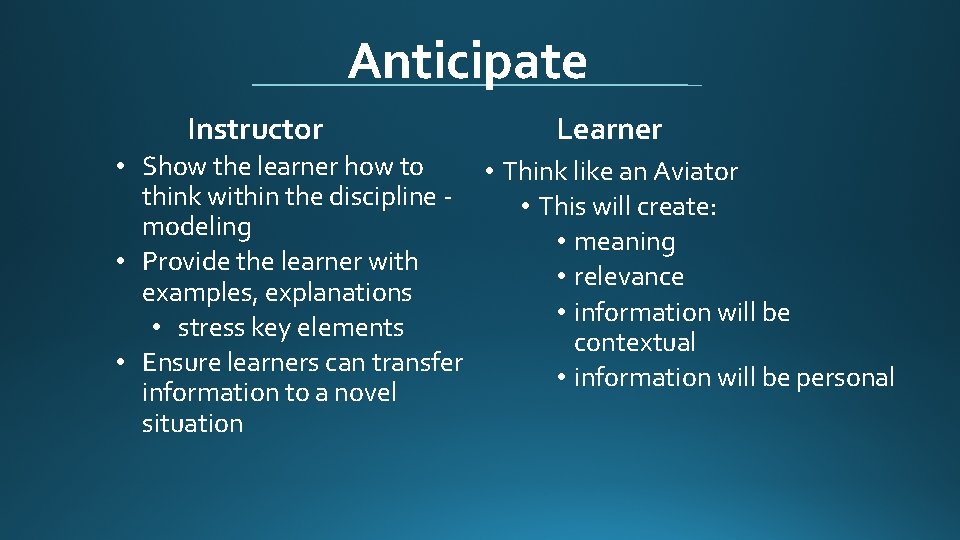
Anticipate Instructor Learner • Show the learner how to • Think like an Aviator think within the discipline • This will create: modeling • meaning • Provide the learner with • relevance examples, explanations • information will be • stress key elements contextual • Ensure learners can transfer • information will be personal information to a novel situation
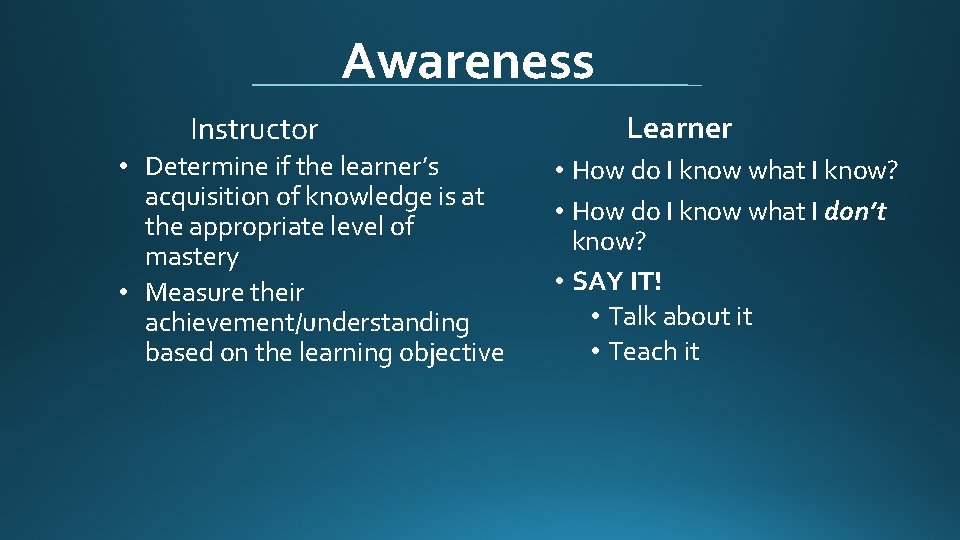
Awareness Instructor • Determine if the learner’s acquisition of knowledge is at the appropriate level of mastery • Measure their achievement/understanding based on the learning objective Learner • How do I know what I know? • How do I know what I don’t know? • SAY IT! • Talk about it • Teach it
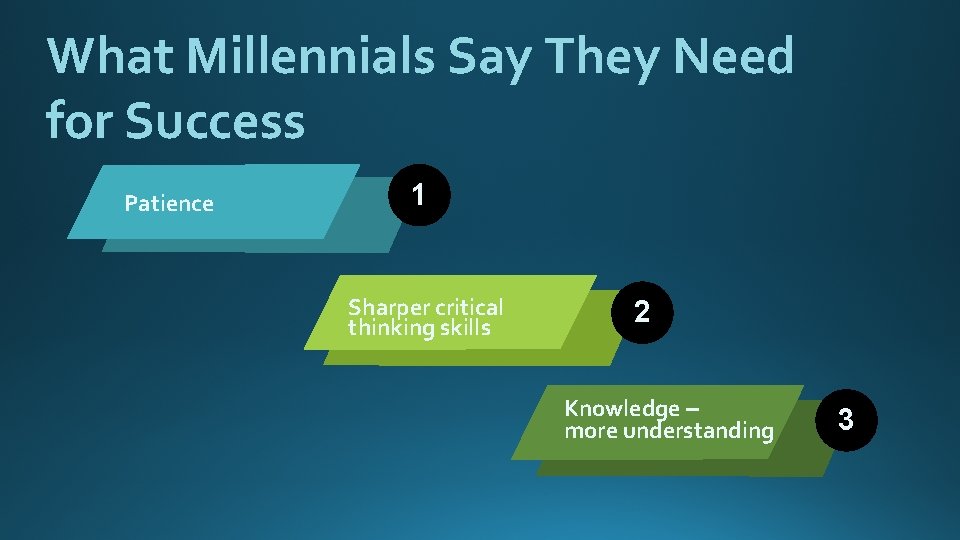
What Millennials Say They Need for Success Patience 1 Sharper critical thinking skills 2 Knowledge – more understanding 3
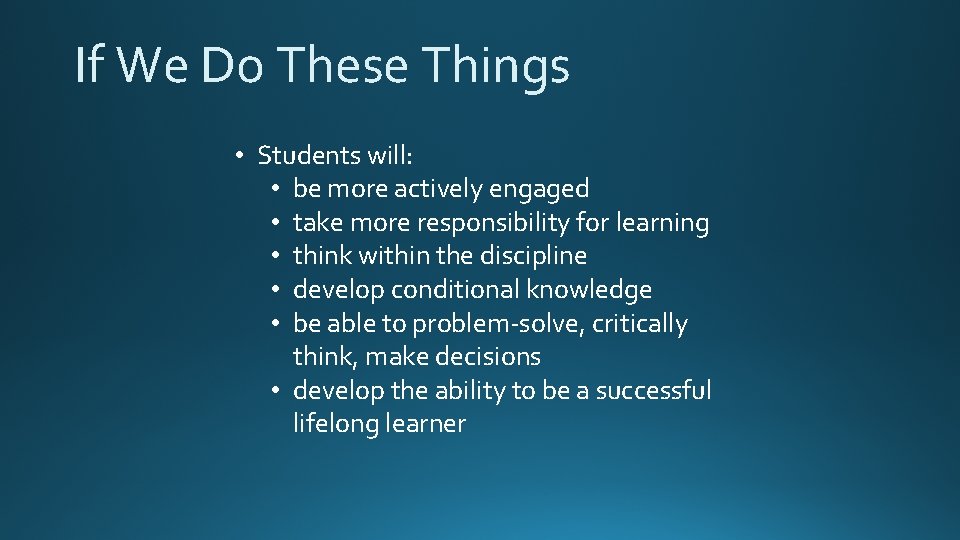
If We Do These Things • Students will: • be more actively engaged • take more responsibility for learning • think within the discipline • develop conditional knowledge • be able to problem-solve, critically think, make decisions • develop the ability to be a successful lifelong learner
Review • Generational Cohorts • Characteristics of the Millennial Generation • 4 A’s of Learning • Instructional Strategies (Gagne’s 9 Events) • What Millennials Say They Need for Success
References • Gagne, R. (1977). The conditions of learning (3 rd ed. ). New York: Holt, Rinehart and Winston. • Niemczyk, M. & Ulrich, J. (2009). Workplace preferences of the millennials in the aviation industry. International Journal of Applied Aviation Studies, (9)2, 207 -219. • Rikleen, L. S. (2016) Your Raised Us – Now Work With Us: Millennials, Career Success, and Building Strong Workplace Teams. American Bar Association. • Twenge, J. (2009). Generational changes and their impact in the classroom: teaching generation me. Medical Education, 43, 398 -405. • Is High School Tough Enough? Center for Public Education, (2012)
References - continued • How to Fix College Grade Inflation, USNews. com, (December 26, 2013) • Millennials: The Me, Me Generation, Newsweek. com, (May 9, 2013) • Mediocre Millennials, Inside Higher Education, (February 17, 2015) • Chapter 3: How Today’s Economy is Affecting Young Adults, Pew. Social. Trends. org, (February 9, 2012) • Attention Span Statistics, Statistics. Brain • Brain Development in a Hyper-Tech World, The Dana Foundation Briefing Paper, (August 2008) • 8 Brutal Truths About Millennials That Determine the Success of Every Business, medium. com, (October 10, 2016)
mary@masteringlearning. com mary. niemczyk@asu. edu
Thank you!