
Generating electricity from natural gas The way forward


- Slides: 19
Generating electricity from natural gas: The way forward for Nigeria A presentation by: NNPC FSTP Class E, study group 3
Presentation outline Introduction Current power generation status in Nigeria Power generation using natural gas Technology and challenges of using natural gas Achieving the target Conclusion
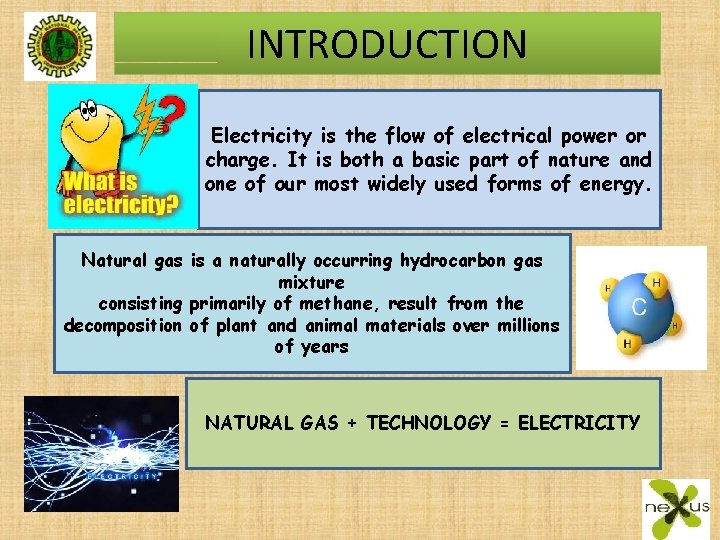
INTRODUCTION Electricity is the flow of electrical power or charge. It is both a basic part of nature and one of our most widely used forms of energy. Natural gas is a naturally occurring hydrocarbon gas mixture consisting primarily of methane, result from the decomposition of plant and animal materials over millions of years NATURAL GAS + TECHNOLOGY = ELECTRICITY
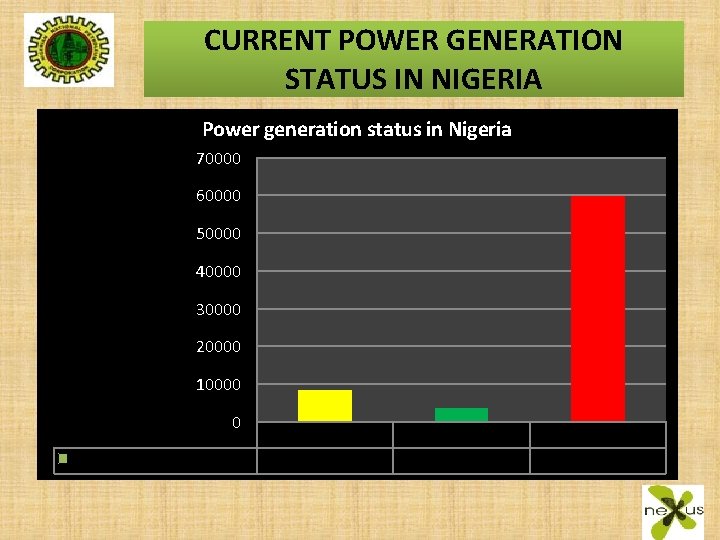
CURRENT POWER GENERATION STATUS IN NIGERIA Power generation status in Nigeria 70000 60000 50000 40000 30000 20000 10000 0 Installed capacity Available capacity Electricity in Mega watts 8644 3800 Demand 60000
Current power status contd… Comparison of power generation and population 250 200 150 100 50 0 Population (In Millions) Electricity supply ('000 MWs) South Africa 50 Brazil 192 Nigeria 150 40 100 3, 8
Issues of power generation in Nigeria Under-Investment Stagnated Power Generation Growth Inadequate Operations and Maintenance Lack of Human Capacity development
Issues of power generation in Nigeria Under utilization of natural resources (natural gas) Seasonal variance due to dependence on Hydro electricity Lack of Private sector involvement
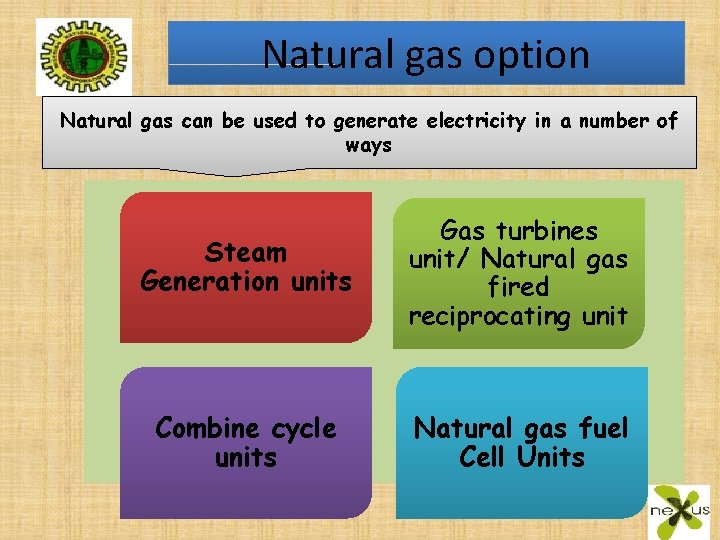
Natural gas option Natural gas can be used to generate electricity in a number of ways Steam Generation units Gas turbines unit/ Natural gas fired reciprocating unit Combine cycle units Natural gas fuel Cell Units
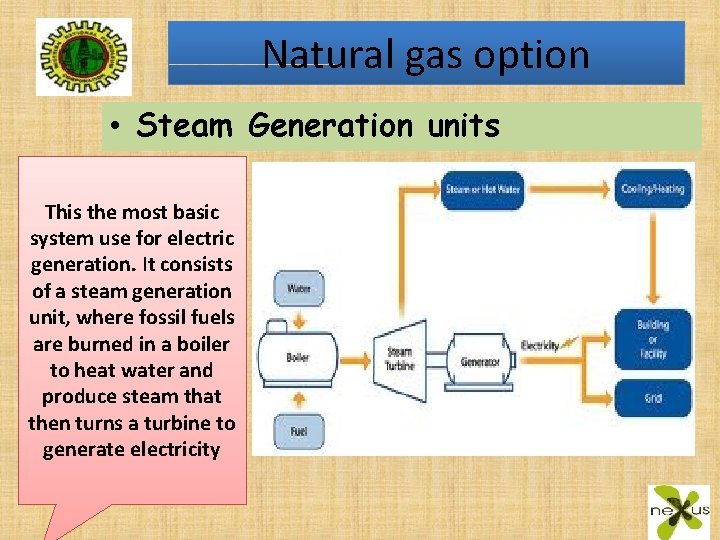
Natural gas option • Steam Generation units This the most basic system use for electric generation. It consists of a steam generation unit, where fossil fuels are burned in a boiler to heat water and produce steam that then turns a turbine to generate electricity
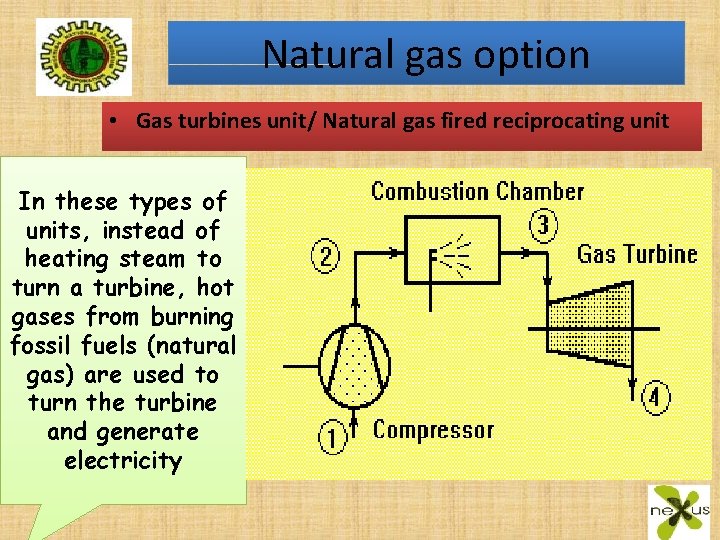
Natural gas option • Gas turbines unit/ Natural gas fired reciprocating unit In these types of units, instead of heating steam to turn a turbine, hot gases from burning fossil fuels (natural gas) are used to turn the turbine and generate electricity
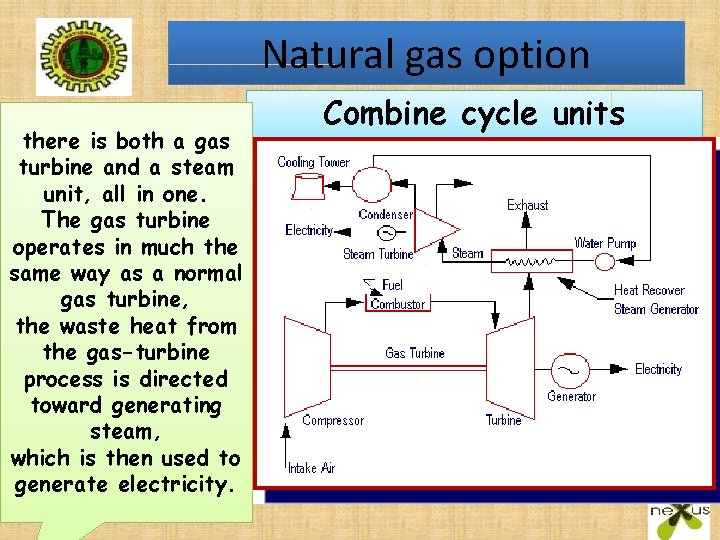
Natural gas option there is both a gas turbine and a steam unit, all in one. The gas turbine operates in much the same way as a normal gas turbine, the waste heat from the gas-turbine process is directed toward generating steam, which is then used to generate electricity. Combine cycle units
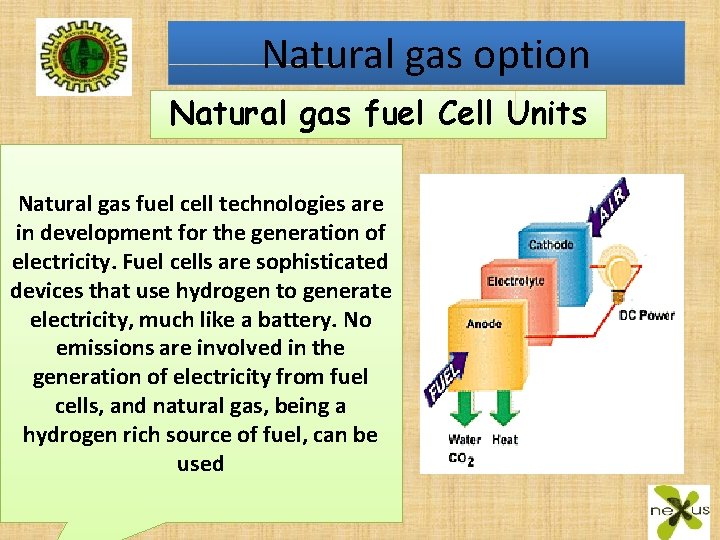
Natural gas option Natural gas fuel Cell Units Natural gas fuel cell technologies are in development for the generation of electricity. Fuel cells are sophisticated devices that use hydrogen to generate electricity, much like a battery. No emissions are involved in the generation of electricity from fuel cells, and natural gas, being a hydrogen rich source of fuel, can be used
Natural gas option The Nigerian Advantage Nigeria holds the 7 th largest natural gas reserves in the world, with 187 trillion cubic feet and a further undiscovered potential of 600 trillion cubic feet of gas.
Natural gas option Advantages of power generation using natural gas Fewer Emissions • Cogeneration Combined Cycle Generation • Cheaper Fuel Cells
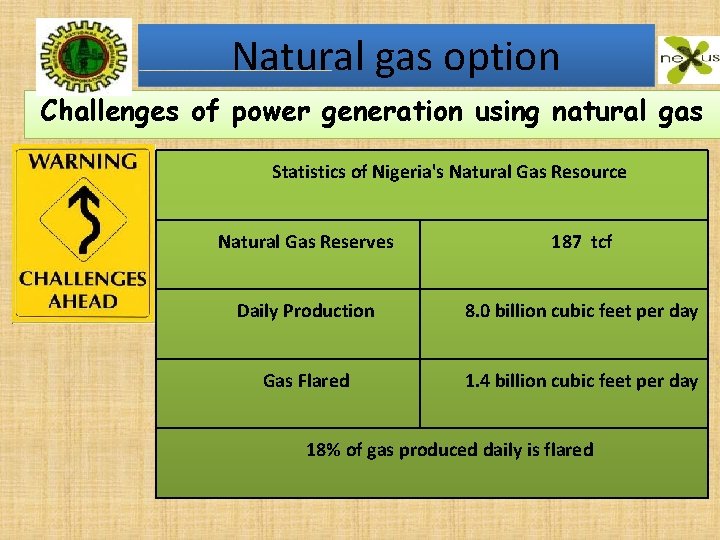
Natural gas option Challenges of power generation using natural gas Statistics of Nigeria's Natural Gas Resource Natural Gas Reserves 187 tcf Daily Production 8. 0 billion cubic feet per day Gas Flared 1. 4 billion cubic feet per day 18% of gas produced daily is flared
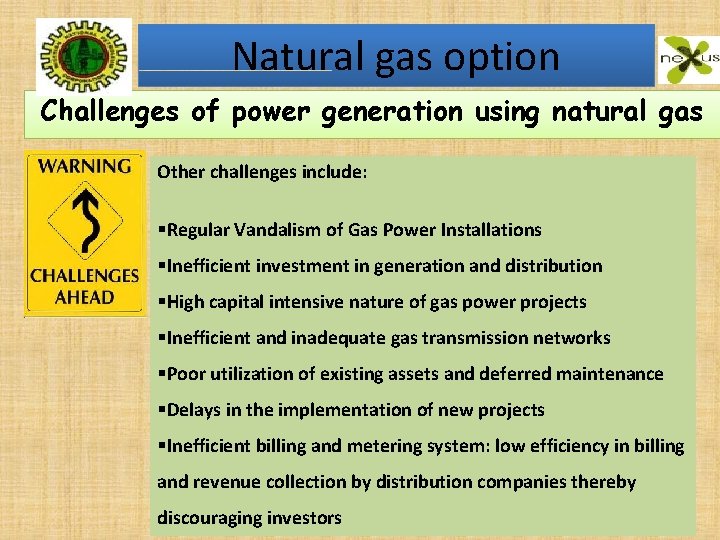
Natural gas option Challenges of power generation using natural gas Other challenges include: §Regular Vandalism of Gas Power Installations §Inefficient investment in generation and distribution §High capital intensive nature of gas power projects §Inefficient and inadequate gas transmission networks §Poor utilization of existing assets and deferred maintenance §Delays in the implementation of new projects §Inefficient billing and metering system: low efficiency in billing and revenue collection by distribution companies thereby discouraging investors
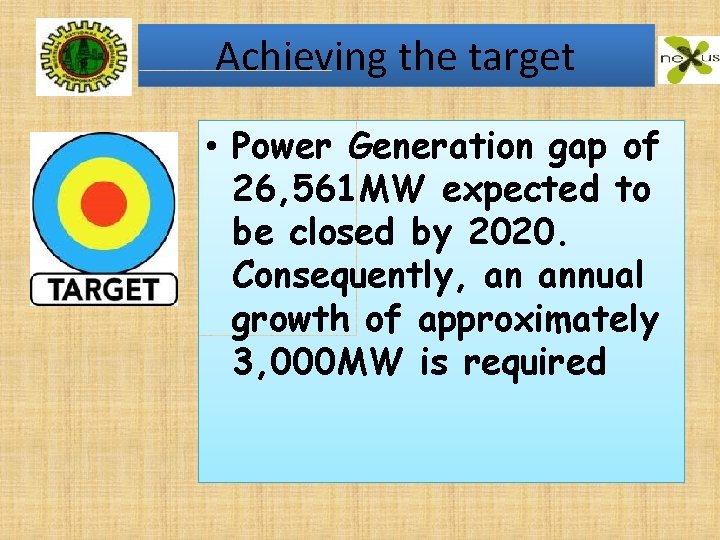
Achieving the target • Power Generation gap of 26, 561 MW expected to be closed by 2020. Consequently, an annual growth of approximately 3, 000 MW is required
Achieving the target (The role of NNPC) • NNPC should encourage the multinational oil companies (JVs and PSCs) in Nigeria to embark on IPPs. • NNPC in collaboration with the oil majors has commenced construction another pipeline system in order to double the capacity • NNPC also supplies natural gas to PHCN at subsidised rate and ahead of payment
Conclusion Thank you for your time Questions