
Generating Electricity Chapter 10 GCSE Science Physics 1
- Slides: 16
Generating Electricity Chapter 10 GCSE Science Physics 1
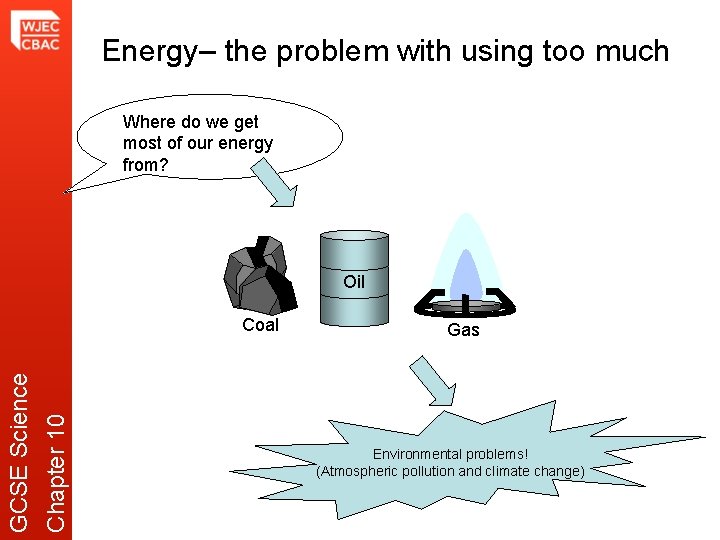
Energy– the problem with using too much Where do we get most of our energy from? Oil Chapter 10 GCSE Science Coal Gas Environmental problems! (Atmospheric pollution and climate change)
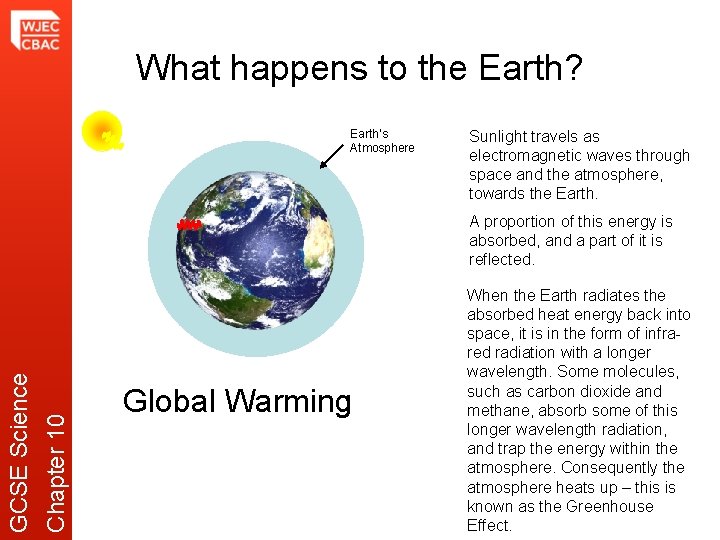
What happens to the Earth? Earth’s Atmosphere Sunlight travels as electromagnetic waves through space and the atmosphere, towards the Earth. Chapter 10 GCSE Science A proportion of this energy is absorbed, and a part of it is reflected. Global Warming When the Earth radiates the absorbed heat energy back into space, it is in the form of infrared radiation with a longer wavelength. Some molecules, such as carbon dioxide and methane, absorb some of this longer wavelength radiation, and trap the energy within the atmosphere. Consequently the atmosphere heats up – this is known as the Greenhouse Effect.
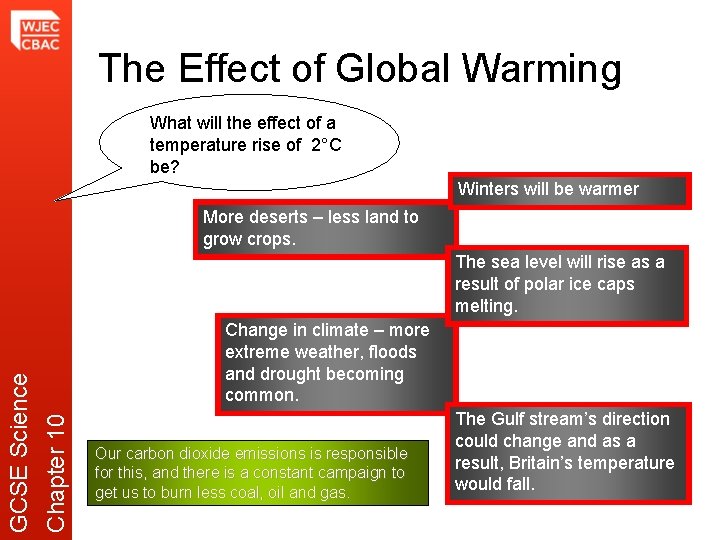
The Effect of Global Warming What will the effect of a temperature rise of 2°C be? Winters will be warmer More deserts – less land to grow crops. Change in climate – more extreme weather, floods and drought becoming common. Chapter 10 GCSE Science The sea level will rise as a result of polar ice caps melting. Our carbon dioxide emissions is responsible for this, and there is a constant campaign to get us to burn less coal, oil and gas. The Gulf stream’s direction could change and as a result, Britain’s temperature would fall.
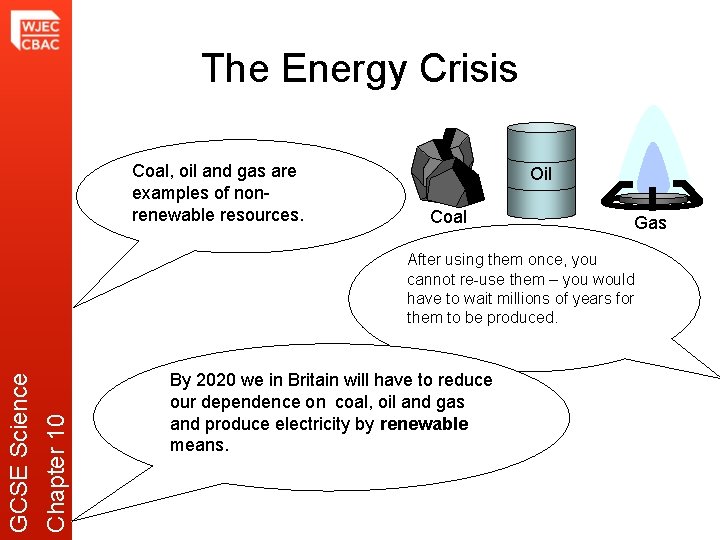
The Energy Crisis Coal, oil and gas are examples of nonrenewable resources. Oil Coal Gas Chapter 10 GCSE Science After using them once, you cannot re-use them – you would have to wait millions of years for them to be produced. By 2020 we in Britain will have to reduce our dependence on coal, oil and gas and produce electricity by renewable means.
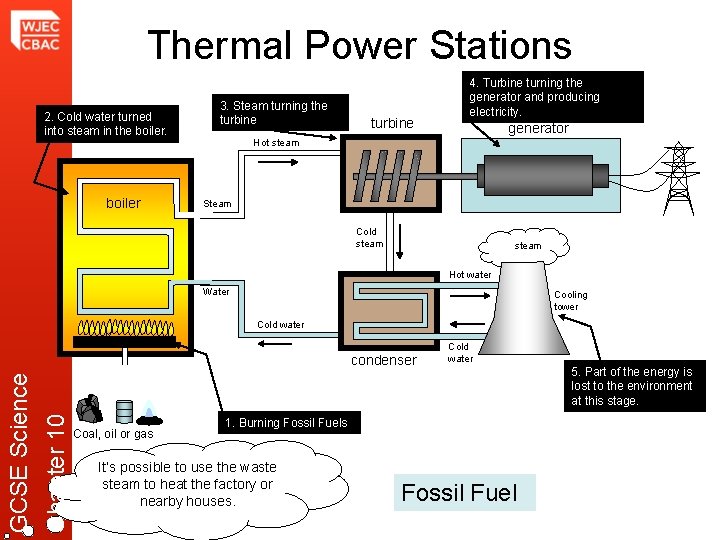
Thermal Power Stations 2. Cold water turned into steam in the boiler 3. Steam turning the turbine 4. Turbine turning the generator and producing electricity. generator Hot steam Steam Cold steam Hot water Water Cooling tower Cold water Chapter 10 GCSE Science condenser Coal, oil or gas Cold water 1. Burning Fossil Fuels It’s possible to use the waste steam to heat the factory or nearby houses. Fossil Fuel 5. Part of the energy is lost to the environment at this stage.
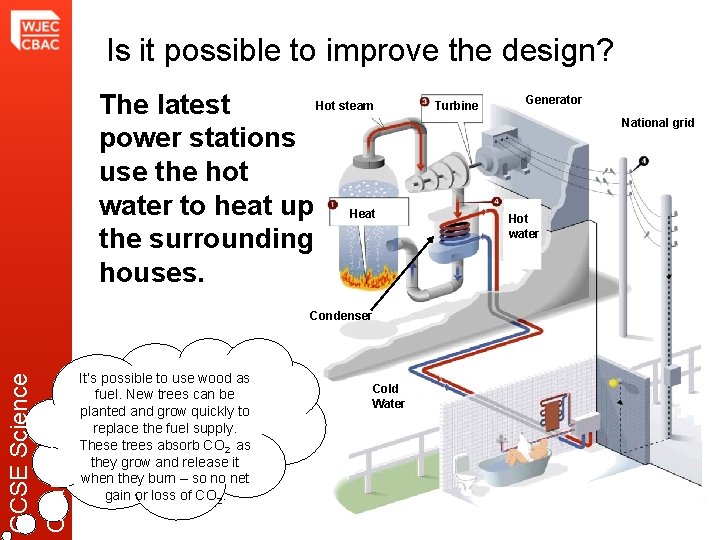
Is it possible to improve the design? Hot steam The latest power stations use the hot water to heat up Heat the surrounding houses. Chapter 10 GCSE Science Condenser It’s possible to use wood as fuel. New trees can be planted and grow quickly to replace the fuel supply. These trees absorb CO 2 as they grow and release it when they burn – so no net gain or loss of CO 2. Cold Water Turbine Generator National grid Hot water
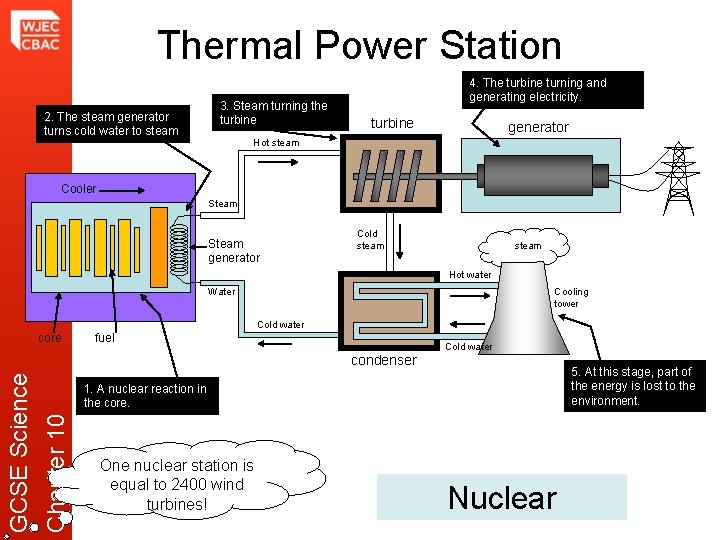
Thermal Power Station 2. The steam generator turns cold water to steam 3. Steam turning the turbine 4. The turbine turning and generating electricity. turbine generator Hot steam Cooler Steam generator Cold steam Hot water Water Cooling tower Cold water core fuel Cold water 5. At this stage, part of the energy is lost to the environment. 1. A nuclear reaction in the core. Chapter 10 GCSE Science condenser One nuclear station is equal to 2400 wind turbines! Nuclear
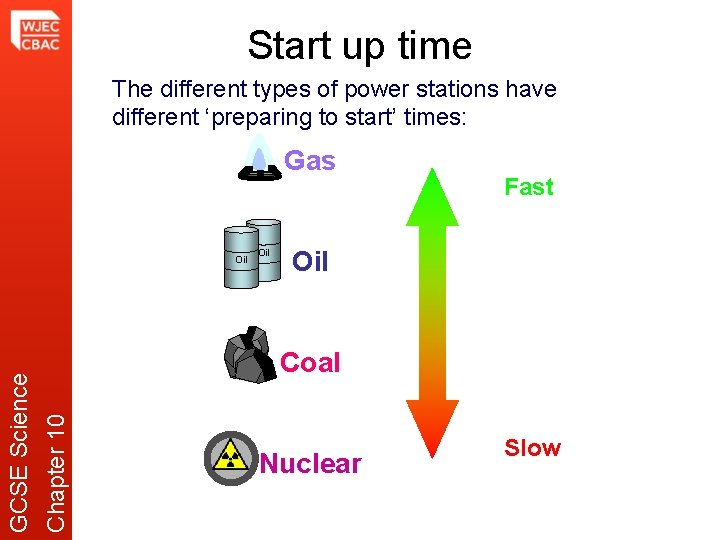
Start up time The different types of power stations have different ‘preparing to start’ times: Gas Oil Coal Chapter 10 GCSE Science Oil Fast Nuclear Slow
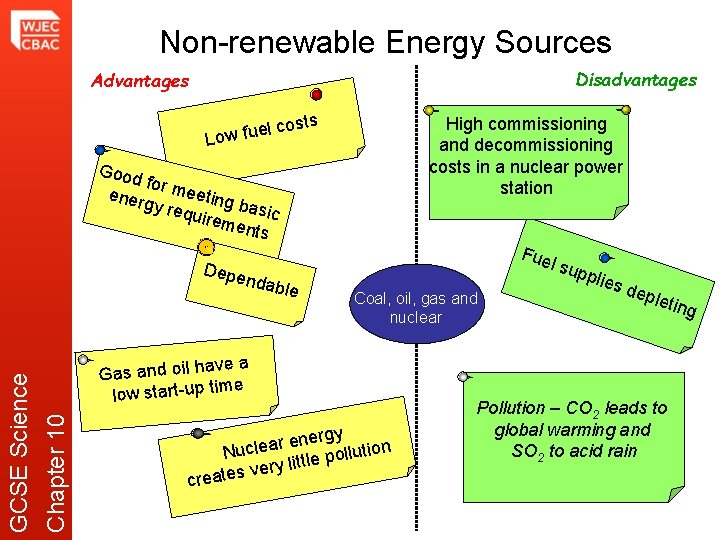
Non-renewable Energy Sources Disadvantages Advantages costs l e u f Low High commissioning and decommissioning costs in a nuclear power station Good for m eet energ y req ing basic uirem ents Depe le Coal, oil, gas and nuclear ave a Gas and oil h me low start-up ti Chapter 10 GCSE Science ndab Fue crea rgy e n e r a lution Nucle l o p e l t y lit tes ver l su ppli es d eple Pollution – CO 2 leads to global warming and SO 2 to acid rain ting
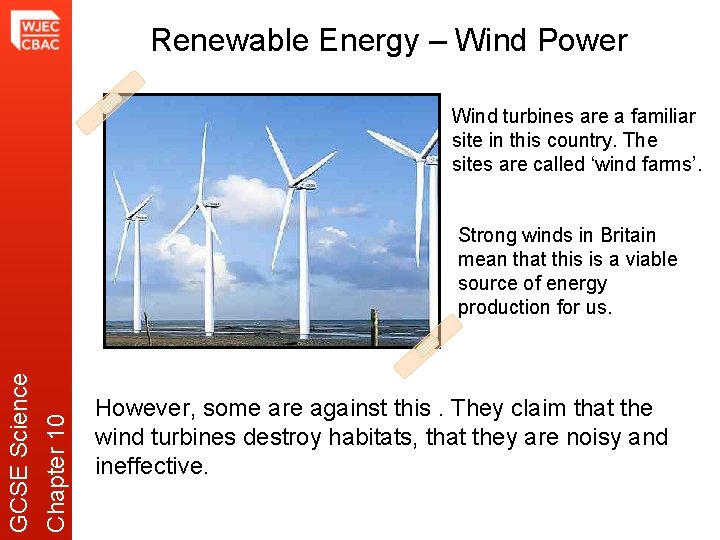
Renewable Energy – Wind Power Wind turbines are a familiar site in this country. The sites are called ‘wind farms’. Chapter 10 GCSE Science Strong winds in Britain mean that this is a viable source of energy production for us. However, some are against this. They claim that the wind turbines destroy habitats, that they are noisy and ineffective.
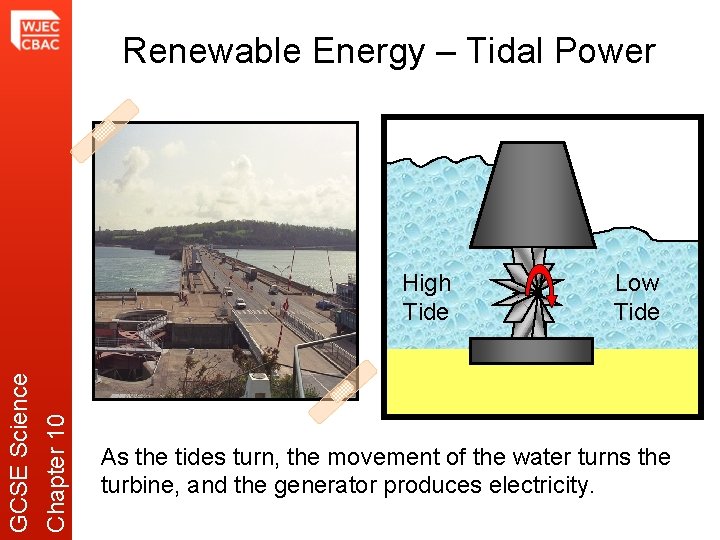
Renewable Energy – Tidal Power Chapter 10 GCSE Science High Tide Low Tide As the tides turn, the movement of the water turns the turbine, and the generator produces electricity.
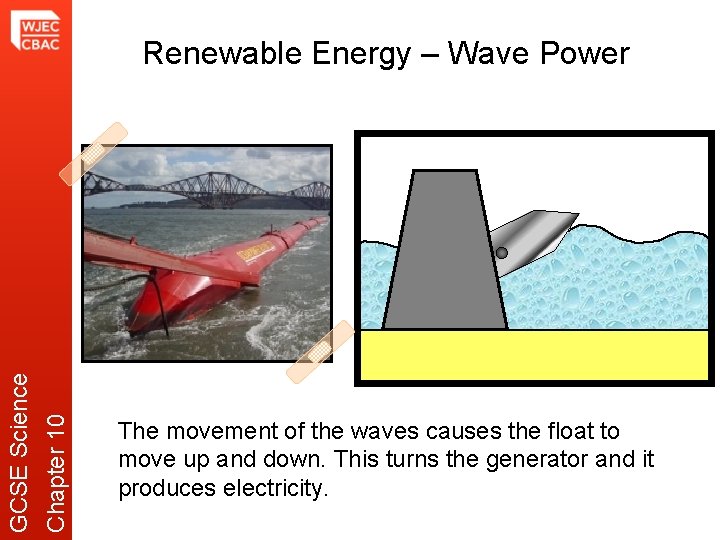
Chapter 10 GCSE Science Renewable Energy – Wave Power The movement of the waves causes the float to move up and down. This turns the generator and it produces electricity.
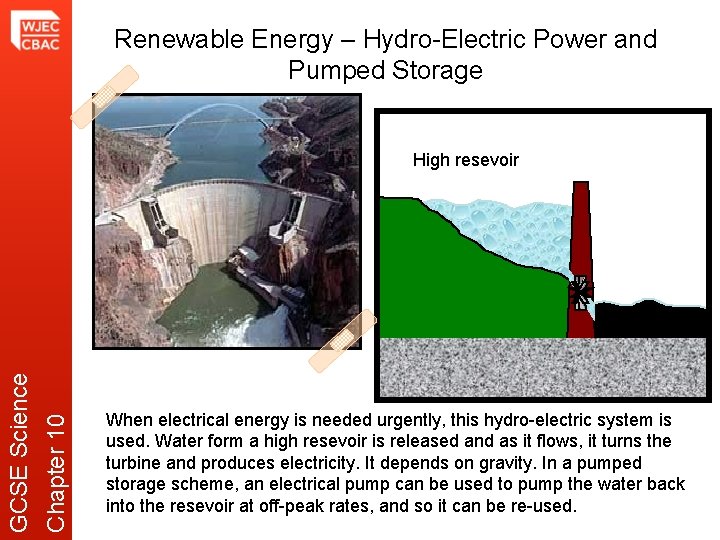
Renewable Energy – Hydro-Electric Power and Pumped Storage Chapter 10 GCSE Science High resevoir When electrical energy is needed urgently, this hydro-electric system is used. Water form a high resevoir is released and as it flows, it turns the turbine and produces electricity. It depends on gravity. In a pumped storage scheme, an electrical pump can be used to pump the water back into the resevoir at off-peak rates, and so it can be re-used.
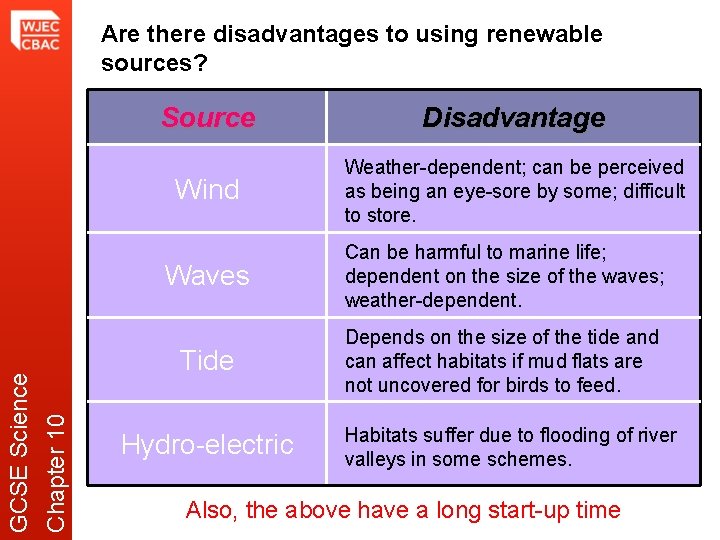
Chapter 10 GCSE Science Are there disadvantages to using renewable sources? Source Disadvantage Wind Weather-dependent; can be perceived as being an eye-sore by some; difficult to store. Waves Can be harmful to marine life; dependent on the size of the waves; weather-dependent. Tide Depends on the size of the tide and can affect habitats if mud flats are not uncovered for birds to feed. Hydro-electric Habitats suffer due to flooding of river valleys in some schemes. Also, the above have a long start-up time
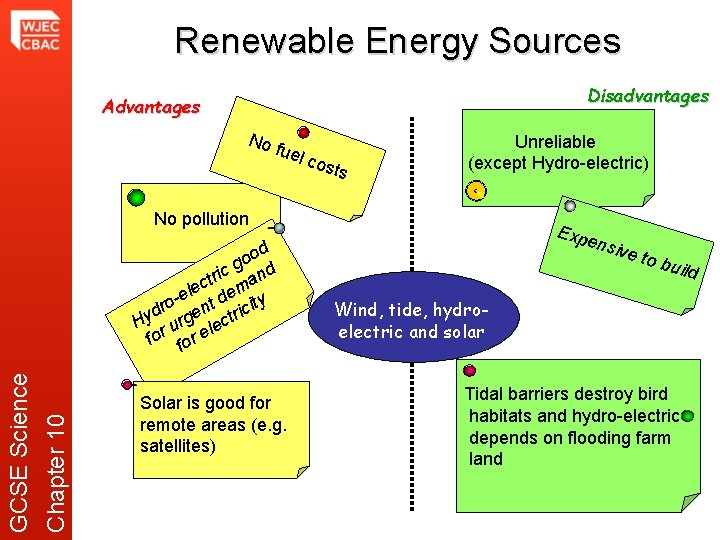
Renewable Energy Sources Disadvantages Advantages No fuel cos ts Unreliable (except Hydro-electric) No pollution Chapter 10 GCSE Science d oo g tric mand c le de e ro ent ricity d Hy r urg lect fo for e Solar is good for remote areas (e. g. satellites) Exp ensi ve to build Wind, tide, hydroelectric and solar Tidal barriers destroy bird habitats and hydro-electric depends on flooding farm land