
Generating data through observation principles and pilots Julia
Generating data through observation: principles and pilots Julia Fotheringham Mid-point review August 2014
Presentation Outline • How and what will I observe? • Uncertainties – conceptual and practical • Pilot plans
Observation Of physical settings and human activities in Colleges and in University Classic tradition of observation – pure objectivity Contemporary observational research - more oriented towards membership and empathy Non-participant – in what sense? My goal? – collaborative, participative, carefully conducted, clearly recorded and intelligently interpreted observations (Angrosino and Rosenberg, 2011)
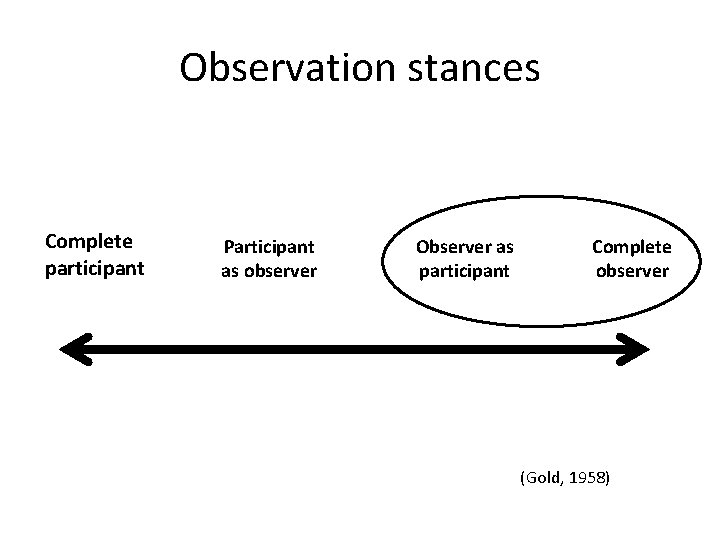
Observation stances Complete participant Participant as observer Observer as participant Complete observer (Gold, 1958)
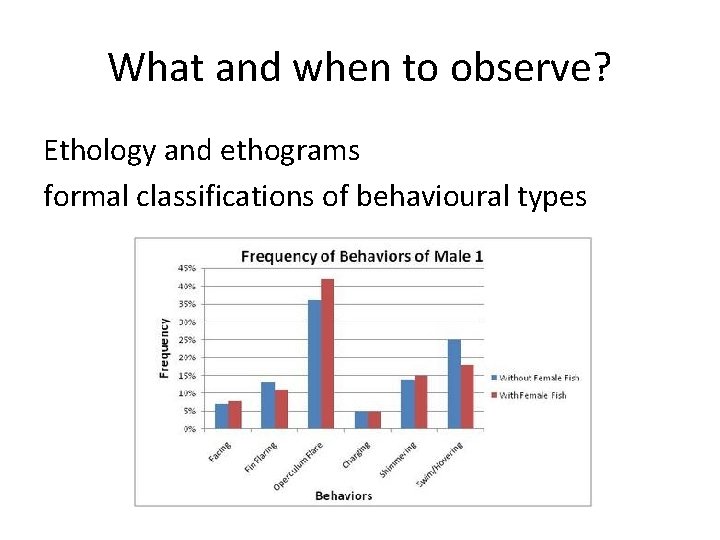
What and when to observe? Ethology and ethograms formal classifications of behavioural types

Learning to observe … Scan sampling and focal sampling
Smithson and Porter (1994) Instructional practices relating to the enacted curriculum for Science and Maths • Daily logs • Self-completed questionnaires • Observer completed observation sheets
Activity types Non-academic activities – announcements, attendance, establishing rapport, handling disruptions Modes of instruction – lecture, demo, wholeclass discussion, group work, independent work Student activity – listen, take notes, discussion, complete tasks, looking at Facebook & phones, student-student chat
Pilots planned Teaching observation in university (Sept 2014) Observation of transition support event – (October ) Focus group with colleagues on use of eportfolios (August)
Thank you Questions?
- Slides: 10