
General Shop Safety What is safety Is it
- Slides: 16
General Shop Safety What is safety? Is it needed? Why do people get hurt?
Safety is a state of mind, it is ; Knowledge of machinery Paying attention to your work
How did safety awareness start? • Injuries occur to many individuals. Some because of lacking awareness. Others because by unsafe machinery. Cluttered work areas can also cause accidents.
1971 an act of congress was enacted it was called O. S. H. A. • Occupational Safety and Health Act • Now called an Administration.
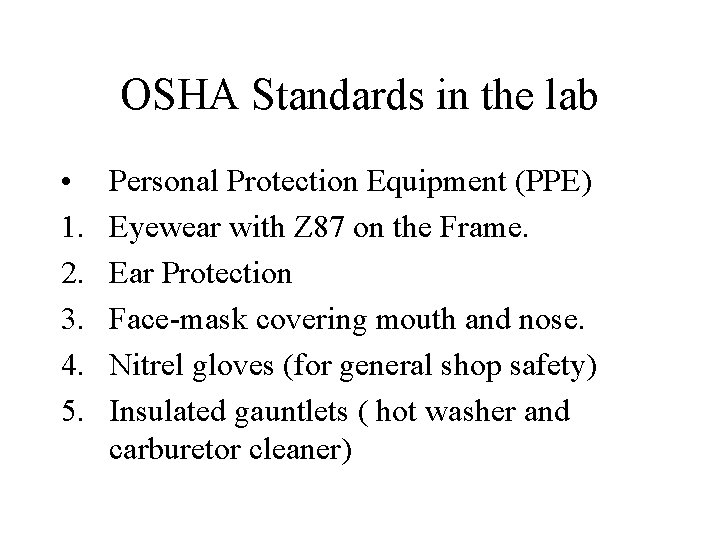
OSHA Standards in the lab • 1. 2. 3. 4. 5. Personal Protection Equipment (PPE) Eyewear with Z 87 on the Frame. Ear Protection Face-mask covering mouth and nose. Nitrel gloves (for general shop safety) Insulated gauntlets ( hot washer and carburetor cleaner)
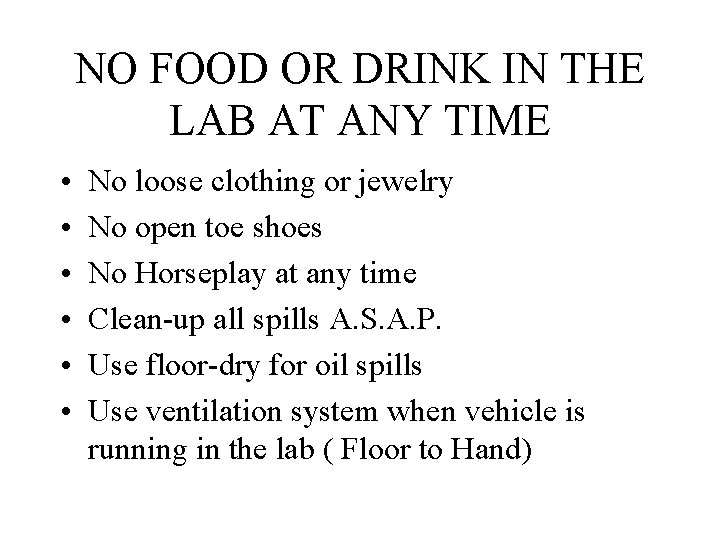
NO FOOD OR DRINK IN THE LAB AT ANY TIME • • • No loose clothing or jewelry No open toe shoes No Horseplay at any time Clean-up all spills A. S. A. P. Use floor-dry for oil spills Use ventilation system when vehicle is running in the lab ( Floor to Hand)
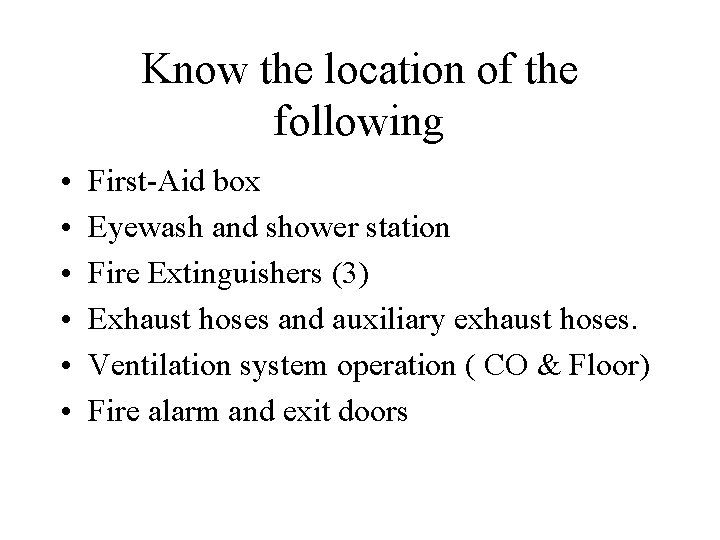
Know the location of the following • • • First-Aid box Eyewash and shower station Fire Extinguishers (3) Exhaust hoses and auxiliary exhaust hoses. Ventilation system operation ( CO & Floor) Fire alarm and exit doors
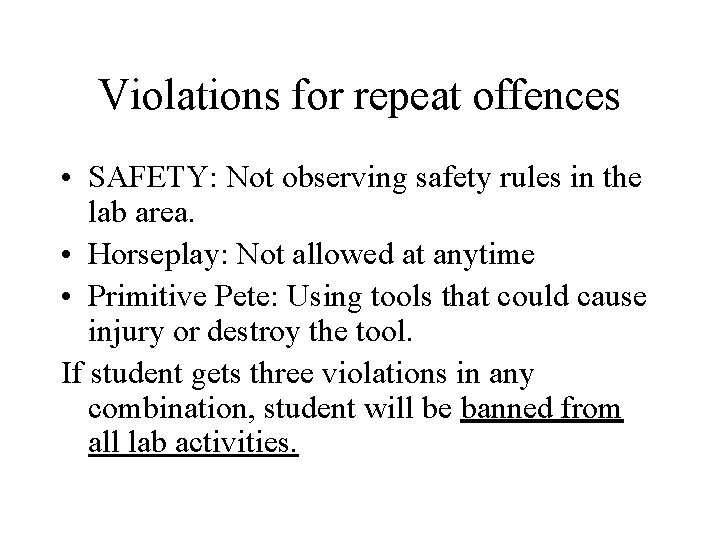
Violations for repeat offences • SAFETY: Not observing safety rules in the lab area. • Horseplay: Not allowed at anytime • Primitive Pete: Using tools that could cause injury or destroy the tool. If student gets three violations in any combination, student will be banned from all lab activities.
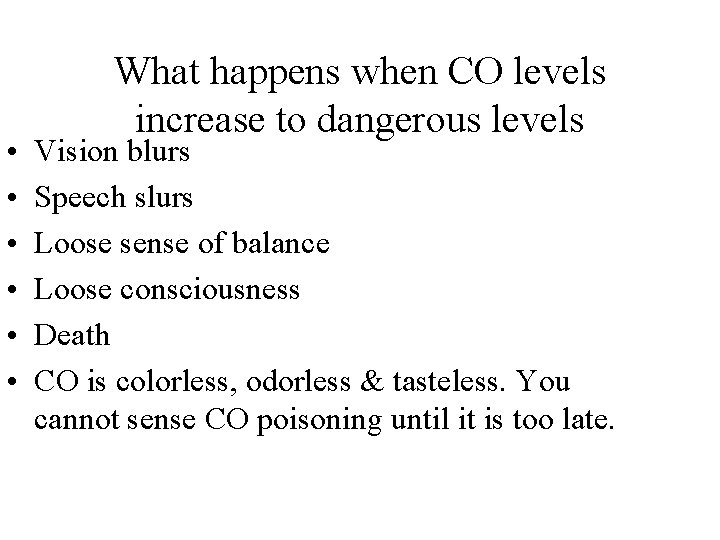
• • • What happens when CO levels increase to dangerous levels Vision blurs Speech slurs Loose sense of balance Loose consciousness Death CO is colorless, odorless & tasteless. You cannot sense CO poisoning until it is too late.
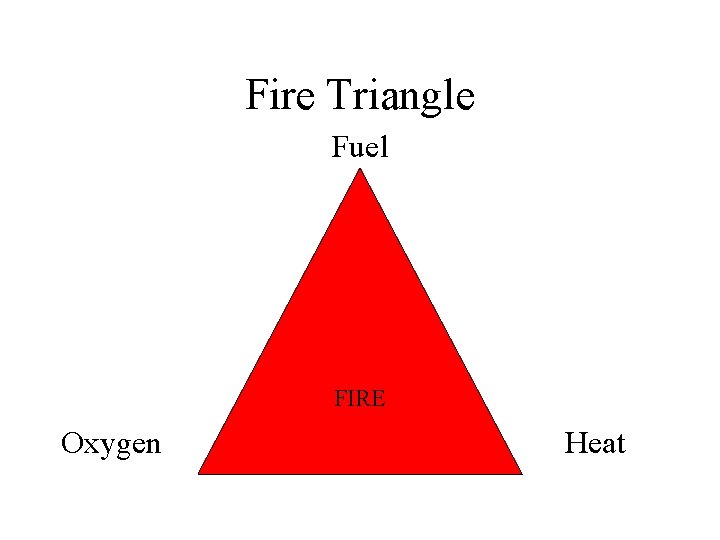
Fire Triangle Fuel FIRE Oxygen Heat
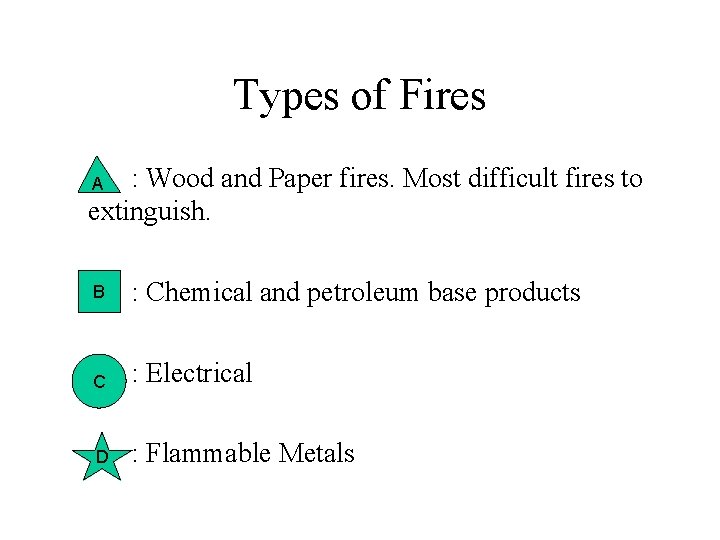
Types of Fires : Wood and Paper fires. Most difficult fires to extinguish. A B : Chemical and petroleum base products C : Electrical D : Flammable Metals
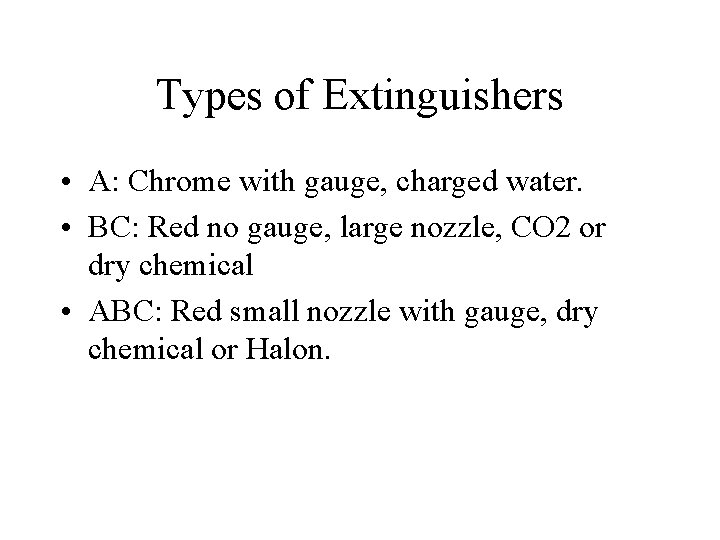
Types of Extinguishers • A: Chrome with gauge, charged water. • BC: Red no gauge, large nozzle, CO 2 or dry chemical • ABC: Red small nozzle with gauge, dry chemical or Halon.
Four fire control methods 1. 2. 3. 4. Cooling. Removing fuel. Removing oxygen. Inhibiting the reaction.
BASIC FIRST AID • ALWAYS use nitrel gloves when giving first aid to another person. • Procedures to stop bleeding: 1. Direct pressure. 2. Elevate limb. 3. Pressure Point.
+Personal Protection Equipment • PPE: as it is referred as, is your equipment that reduces your risk from health and injury on the job site. • Hearing Protection • Eye Protection • Face protection • Hand Protection
• Respiration Protection • Foot Protection