
GENERAL SEMANTICS The Key To Understanding The Brain
“GENERAL SEMANTICS” The Key To Understanding The Brain Charles E Bailey MD 1 9/15/2020
Agenda l Normal Brain Anatomy and Function l Relationship Between Rodent and Human Brain l “Semantics” and the Frontal Lobes
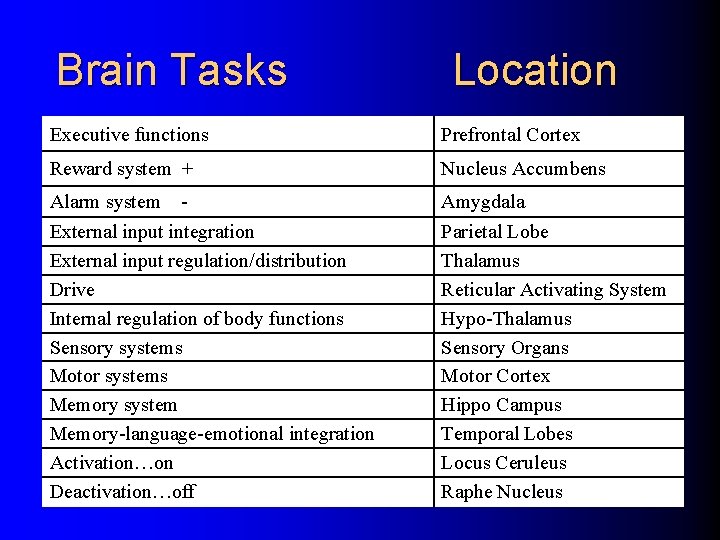
Brain Tasks Location Executive functions Prefrontal Cortex Reward system + Nucleus Accumbens Alarm system External input integration External input regulation/distribution Drive Internal regulation of body functions Sensory systems Motor systems Memory system Memory-language-emotional integration Activation…on Deactivation…off Amygdala Parietal Lobe Thalamus Reticular Activating System Hypo-Thalamus Sensory Organs Motor Cortex Hippo Campus Temporal Lobes Locus Ceruleus Raphe Nucleus
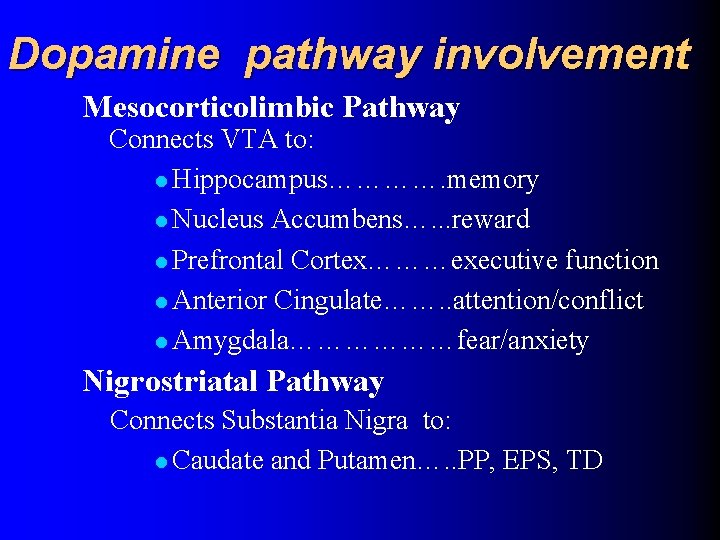
Dopamine pathway involvement Mesocorticolimbic Pathway Connects VTA to: l Hippocampus…………. memory l Nucleus Accumbens…. . . reward l Prefrontal Cortex………executive function l Anterior Cingulate……. . attention/conflict l Amygdala………………fear/anxiety Nigrostriatal Pathway Connects Substantia Nigra to: l Caudate and Putamen…. . PP, EPS, TD
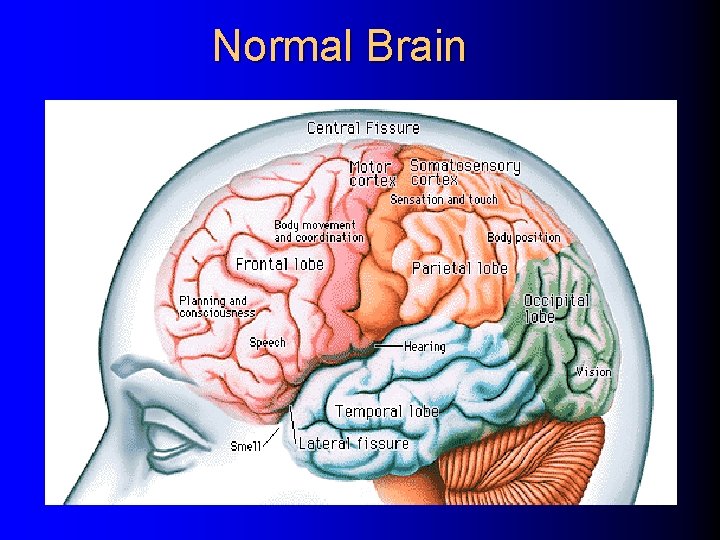
Normal Brain
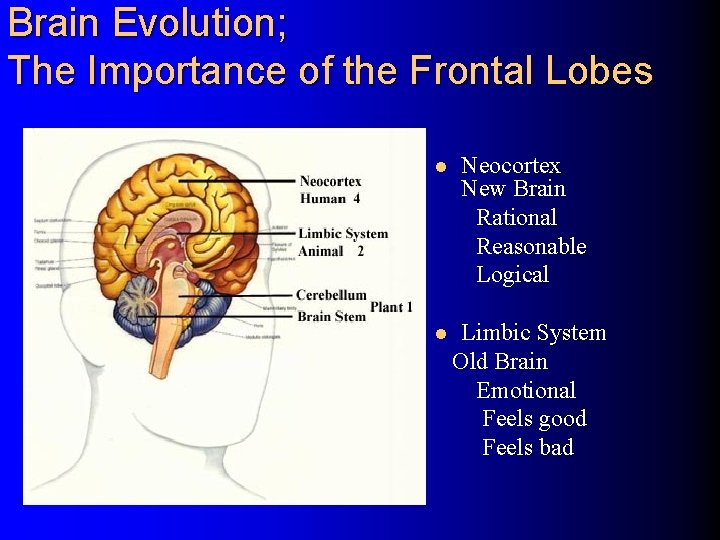
Brain Evolution; The Importance of the Frontal Lobes l l Neocortex New Brain Rational Reasonable Logical Limbic System Old Brain Emotional Feels good Feels bad
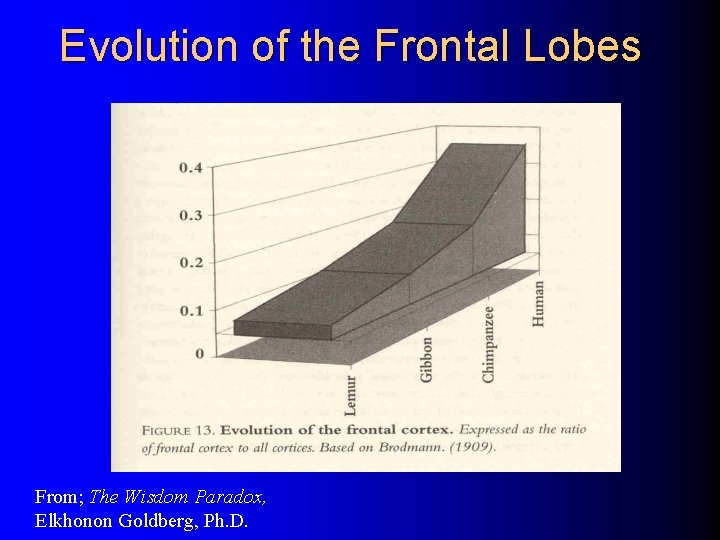
Evolution of the Frontal Lobes From; The Wisdom Paradox, Elkhonon Goldberg, Ph. D.
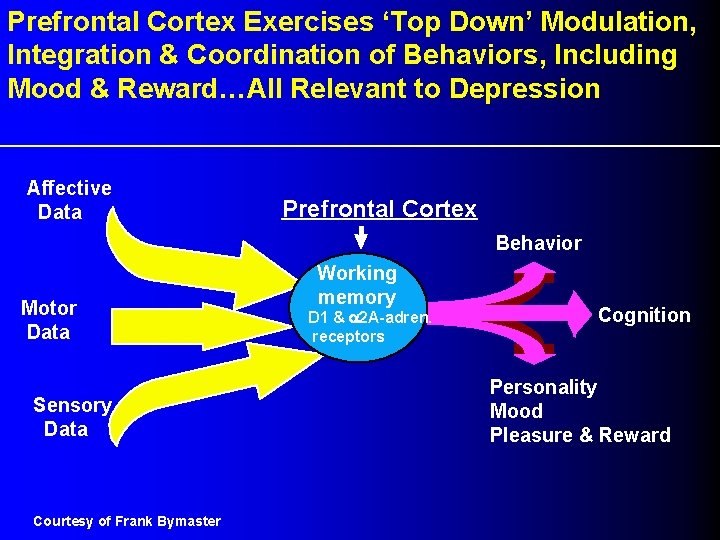
Prefrontal Cortex Exercises ‘Top Down’ Modulation, Integration & Coordination of Behaviors, Including Mood & Reward…All Relevant to Depression Affective Data Prefrontal Cortex Behavior Motor Data Sensory Data Courtesy of Frank Bymaster Working memory D 1 & a 2 A-adren. receptors Cognition Personality Mood Pleasure & Reward

DA~END~NICT

Normal
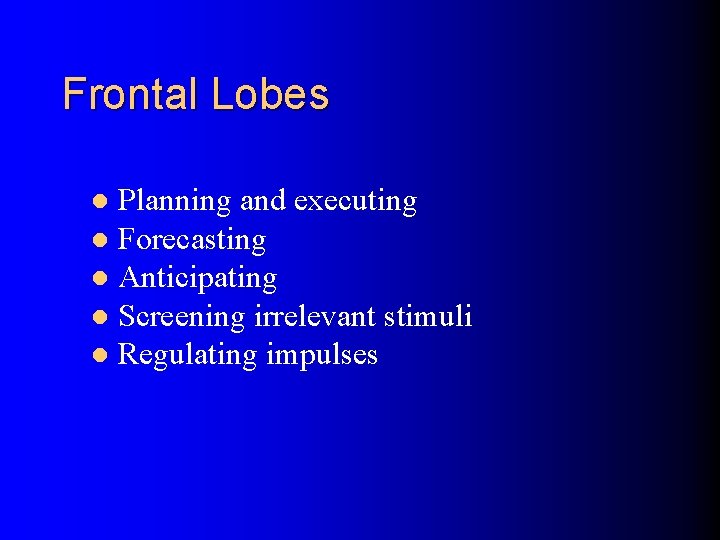
Frontal Lobes Planning and executing l Forecasting l Anticipating l Screening irrelevant stimuli l Regulating impulses l
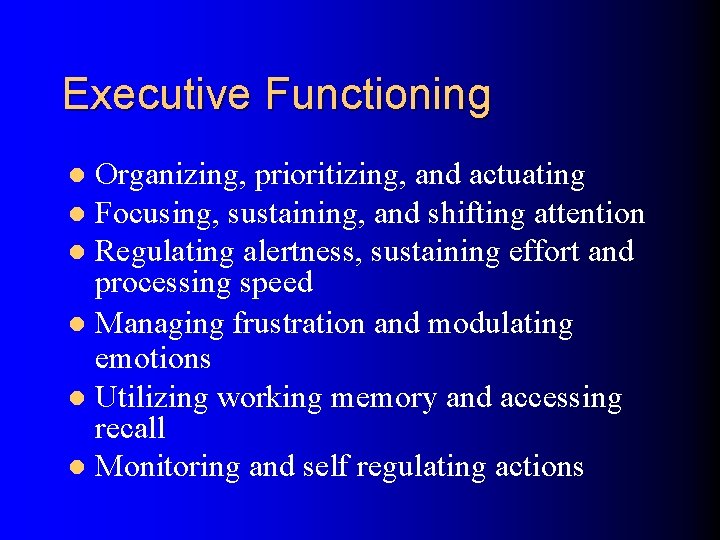
Executive Functioning Organizing, prioritizing, and actuating l Focusing, sustaining, and shifting attention l Regulating alertness, sustaining effort and processing speed l Managing frustration and modulating emotions l Utilizing working memory and accessing recall l Monitoring and self regulating actions l
ADHD Dysexecutive Syndrome
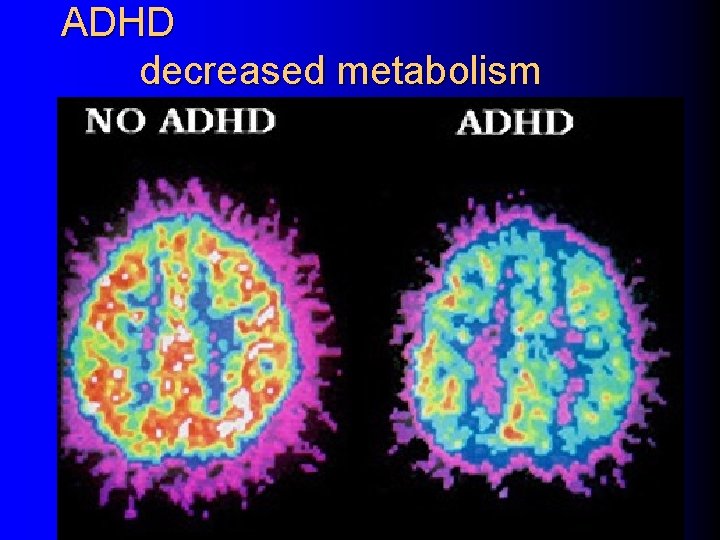
ADHD decreased metabolism
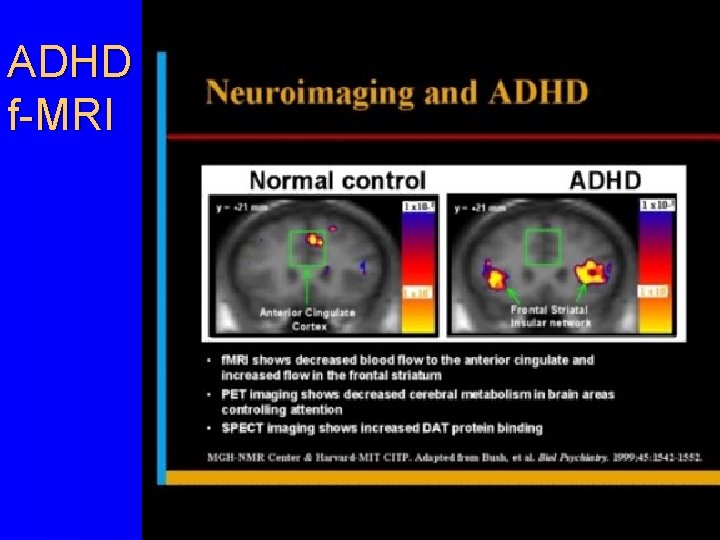
ADHD f-MRI
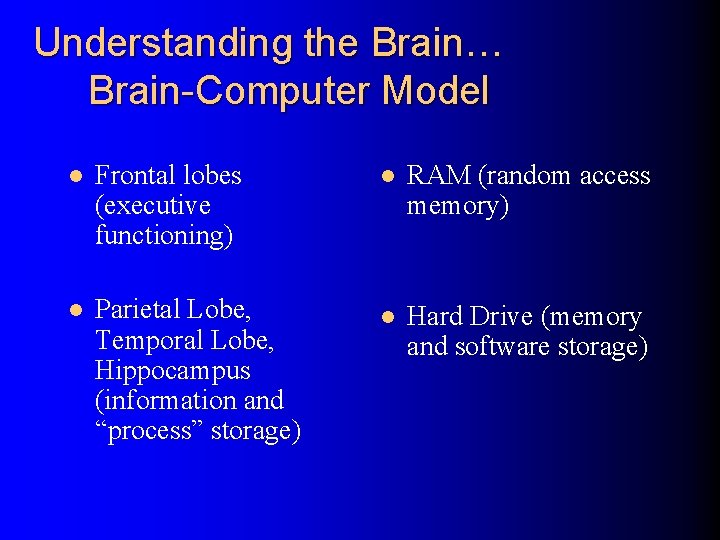
Understanding the Brain… Brain-Computer Model l Frontal lobes (executive functioning) l Parietal Lobe, Temporal Lobe, Hippocampus (information and “process” storage) l RAM (random access memory) l Hard Drive (memory and software storage)
Brain-Computer l The frontal lobes or Prefrontal Cortex (PFC) function much like the RAM of a computer, manipulating data/information that is stored in the memory storage areas of the brain. l The Process information or “how we think” is also stored in these memory areas just like software on a computer. l Changing the information and the way the information is processed contributes to the effectiveness of Cognitive Behavioral Therapy.
Brain-General Semantics GS increases the “accuracy” of the stored information by clarifying irrational assumptions and increases the “accuracy” of information processing by replacing irrational processing with more healthy rational processing…healthy thinking
GENERAL SEMANTICS/CBT Improves Cognitive Accuracy l Information accuracy l Process accuracy l Event level accuracy
Cognitive Behavioral Therapy Rx ADHD l SUDS l AD l MD l BP l SCPT l
CBT Helps In Dealing With Mood l Guilt l Anger l Anxiety l Coping skills l Stress management skills l Communication skills l
CBT l Improves functioning of PFC by enhancing executive skills l Old “irrational” software replaced by new “logical” software”
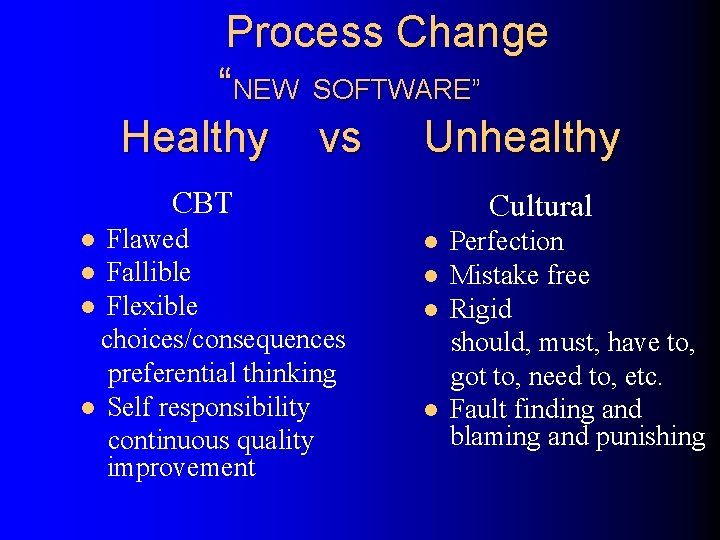
Process Change “NEW SOFTWARE” Healthy vs Unhealthy CBT Flawed l Fallible l Flexible choices/consequences preferential thinking l Self responsibility continuous quality improvement l Cultural l l Perfection Mistake free Rigid should, must, have to, got to, need to, etc. Fault finding and blaming and punishing
You were always on my mind The End
The End
- Slides: 26