
GENERAL SCIENCE MODULE 1 LESSON 1 Tom De


- Slides: 53
GENERAL SCIENCE MODULE 1 LESSON 1 Tom De. Rosa Creation Studies Institute www. creationstudies. org
PART 1 LESSON 1
3
4
5
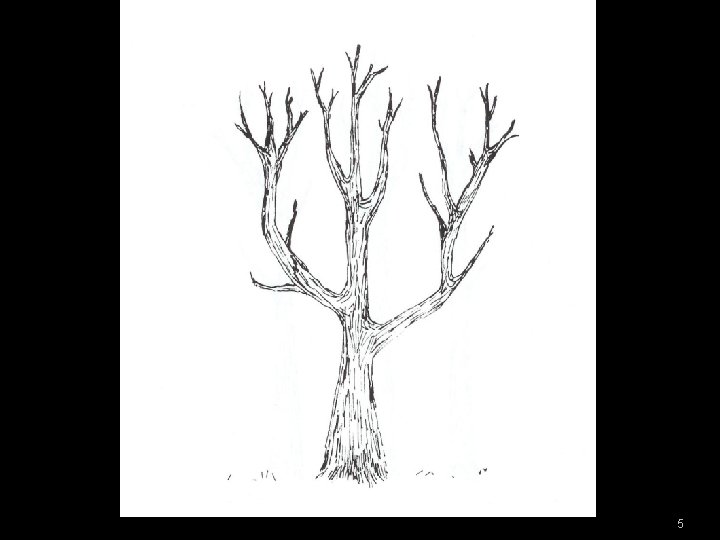
A Frame of Reference What are you going to focus on? 6
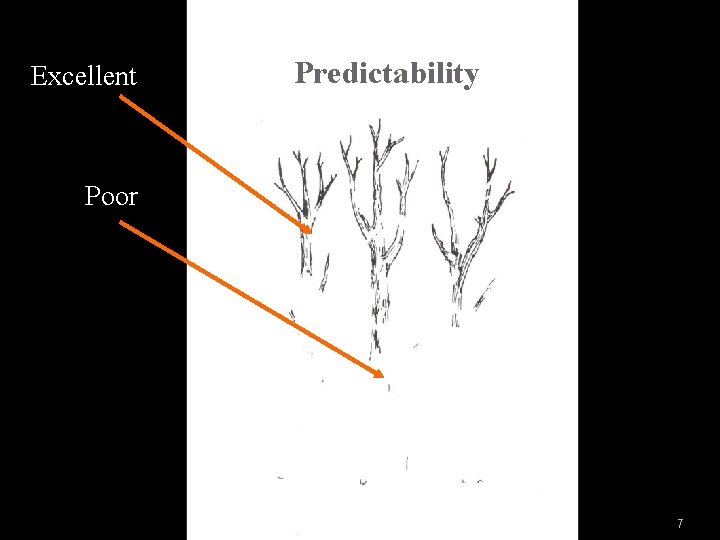
Excellent Predictability Poor 7
Definitions of Science comes from the Latin word “scientia” which means to have knowledge. An endeavor dedicated to the accumulation and classification of observable facts in order to formulate general laws about the natural World. J. Wiley
Science is an organized way of using evidence to learn about the natural world. The word science also refers to the body of knowledge that scientists have built up after years of using this process. Miller and Livine – p 3 Nature: the material world, esp. as surrounding humankind and existing independently of human activities. Note: No such word in Hebrew. 9
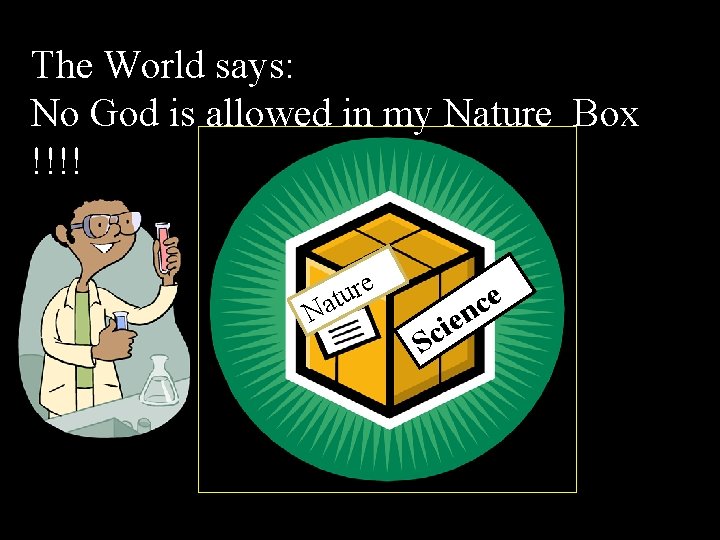
The World says: No God is allowed in my Nature Box !!!! N r u t a e ie c S e c n
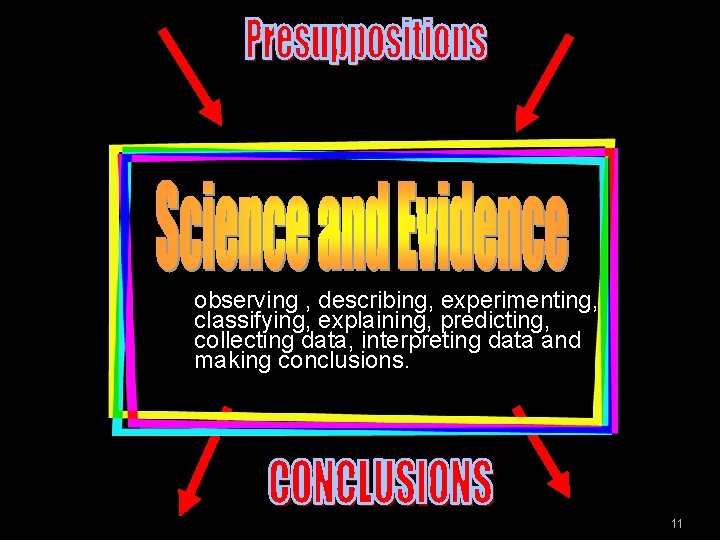
observing , describing, experimenting, classifying, explaining, predicting, collecting data, interpreting data and making conclusions. 11
Science Defined � � Science is following God’s command to rule over the earth by gathering and classifying observable facts that give us a better idea of His creation so that he will be glorified. The better idea is to discover laws and make grand theories of how our Creator made us and the universe.
Science Defined “By the Creator’s Will” It starts with the Creator "You are worthy, our Lord and God, to receive glory and honor and power, for you created all things, and by your will they were created and have their being. " Rev 4: 11 NIV
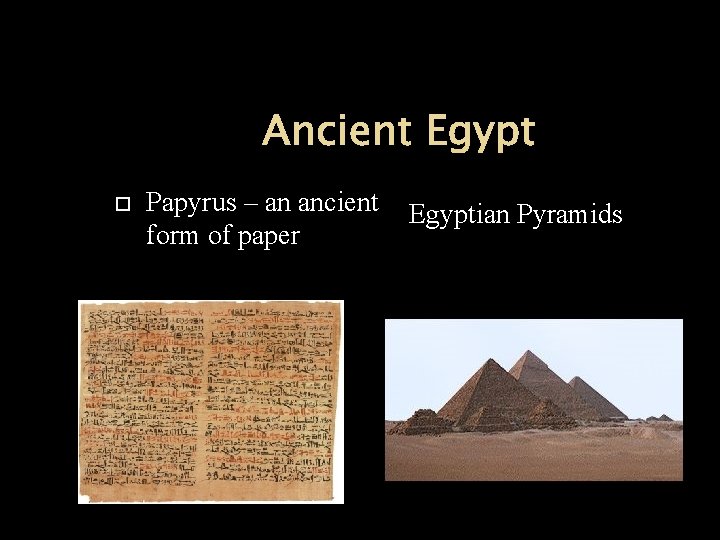
Ancient Egypt Papyrus – an ancient form of paper Egyptian Pyramids
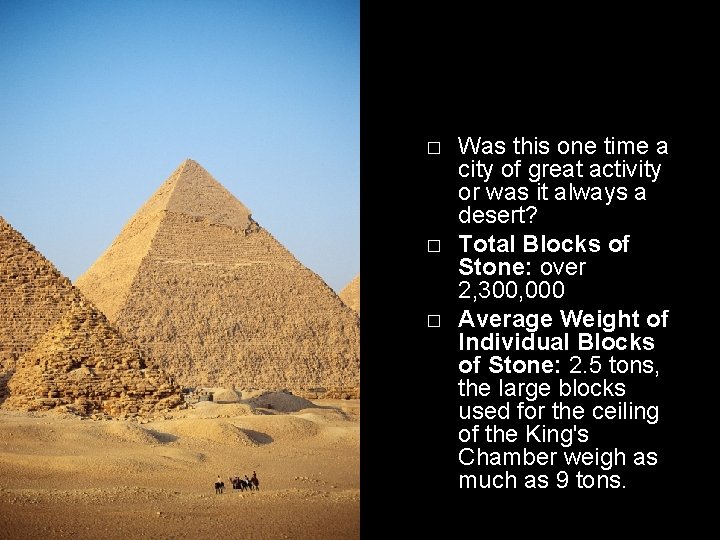
� � � Was this one time a city of great activity or was it always a desert? Total Blocks of Stone: over 2, 300, 000 Average Weight of Individual Blocks of Stone: 2. 5 tons, the large blocks used for the ceiling of the King's Chamber weigh as much as 9 tons.
Some Bad Medical Practices � � Many practices were ineffective or harmful. - 72% of 260 medical prescriptions in the Hearst Papyrus had no known curative elements, and many contained animal dung Being unable to distinguish between the original infection and the unwholesome effects of the feces treatment, they may have been impressed by the few cases when the patient's condition improved
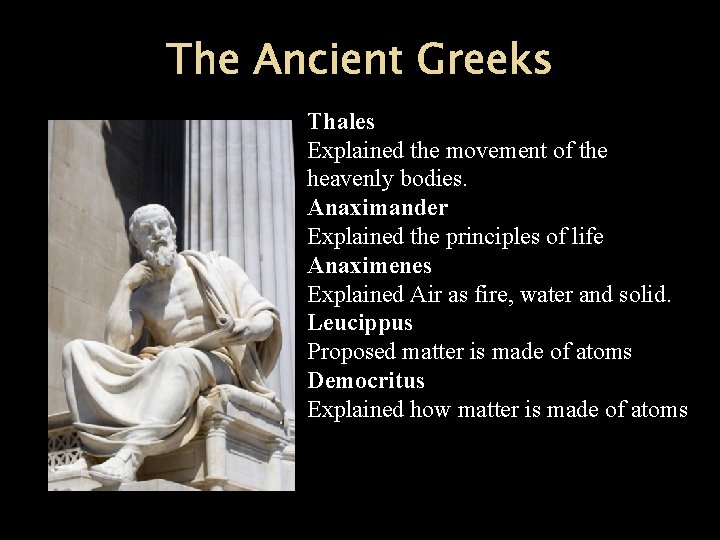
The Ancient Greeks Thales Explained the movement of the heavenly bodies. Anaximander Explained the principles of life Anaximenes Explained Air as fire, water and solid. Leucippus Proposed matter is made of atoms Democritus Explained how matter is made of atoms
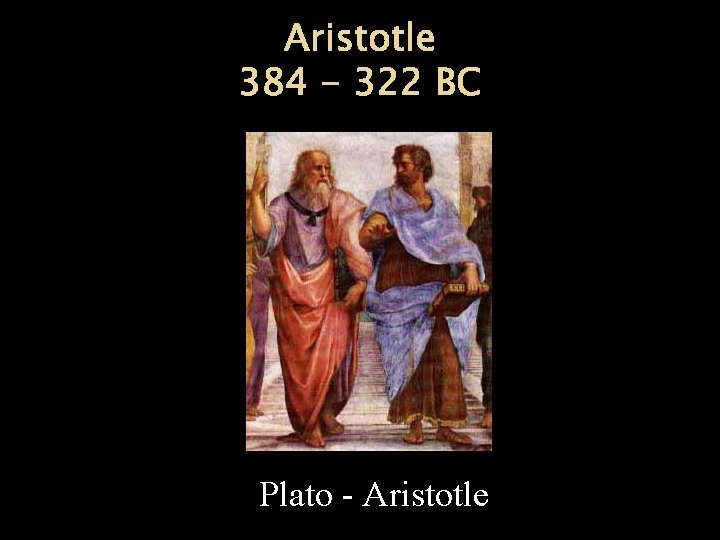
Aristotle 384 - 322 BC Plato - Aristotle
Aristotle Works � � � Classified Animals and Plants He believed the universe had never had a beginning and would never end. Believed in spontaneous generation Non Living things would change to life quickly
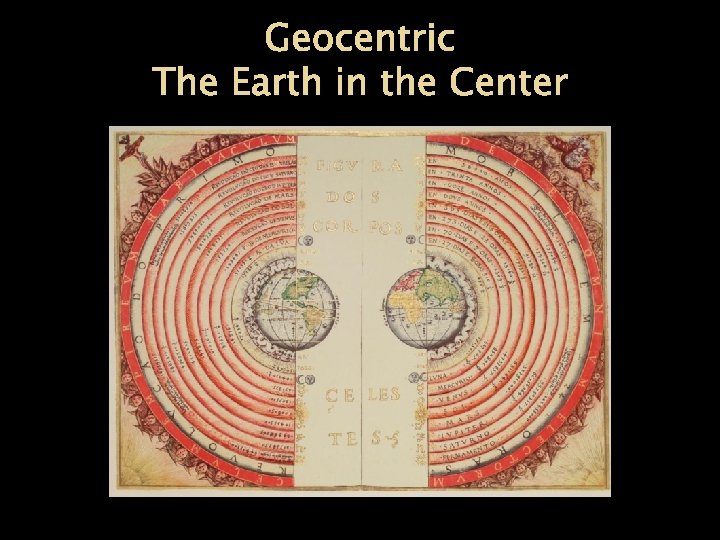
Other Greeks Archimedes Great mathematician Work with liquids and displacement Ptolemy 100 years before Christ believed that the earth was the center of the Universe. This theory is called geocentric The theory lasted 1600 years �
Geocentric The Earth in the Center
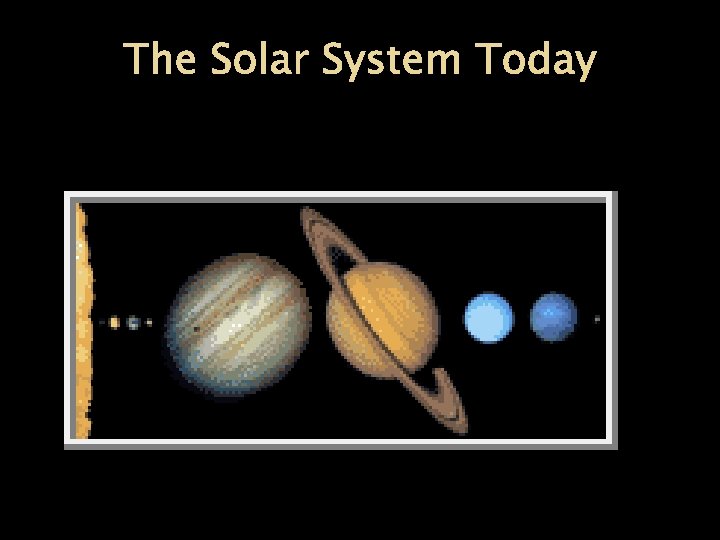
The Solar System Today
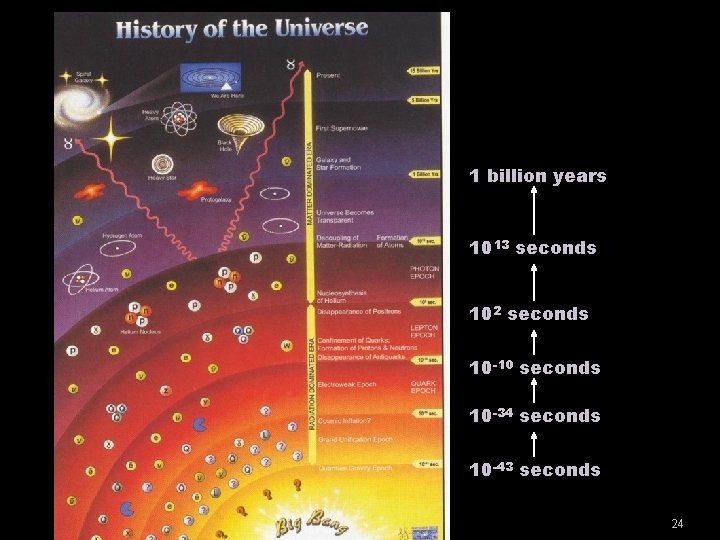
1 billion years 1013 seconds 102 seconds 10 -10 seconds 10 -34 seconds 10 -43 seconds 24
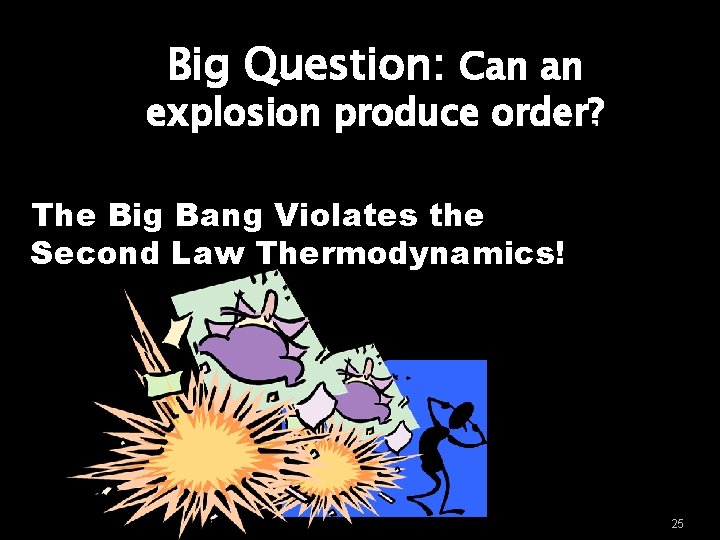
Big Question: Can an explosion produce order? The Big Bang Violates the Second Law Thermodynamics! 25
Part II Lesson 2
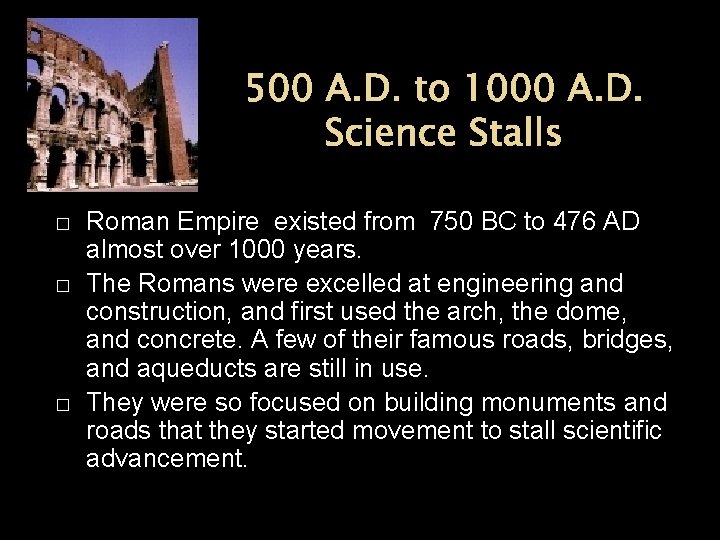
500 A. D. to 1000 A. D. Science Stalls � � � Roman Empire existed from 750 BC to 476 AD almost over 1000 years. The Romans were excelled at engineering and construction, and first used the arch, the dome, and concrete. A few of their famous roads, bridges, and aqueducts are still in use. They were so focused on building monuments and roads that they started movement to stall scientific advancement.
Dark Ages � � � After the Roman empire collapsed the extensive Roman road systems became of ill repair and become unusable. It resulted in people being isolated producing a culture that was moving backwards rather forward. This period was called the Dark Ages The culture and government determines scientific progress.
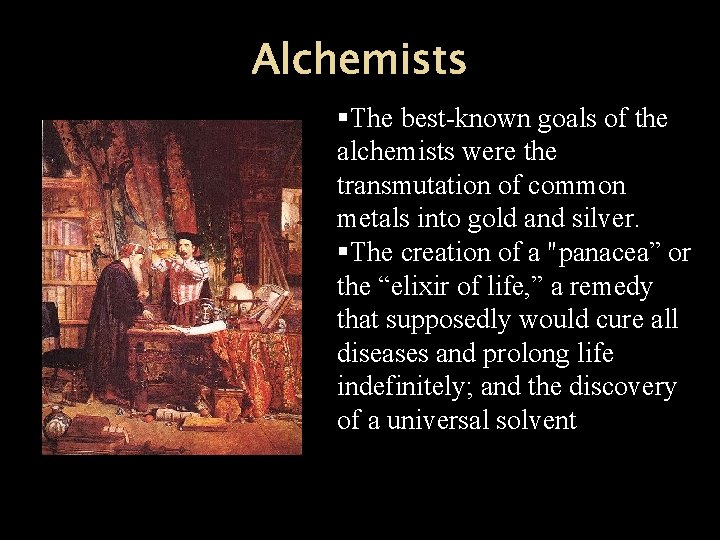
Alchemists §The best-known goals of the alchemists were the transmutation of common metals into gold and silver. §The creation of a "panacea” or the “elixir of life, ” a remedy that supposedly would cure all diseases and prolong life indefinitely; and the discovery of a universal solvent
Astronomy 500 A. D. to 1000 A. D. � � Arabs and Chinese made careful studies of the heavens during this time. Chinese took detailed notes of the stars and 1054 AD noted a “guest star. ” Chinese knew the patterns of stars as seen in the constellations. They reported observations � Supernova � Nebula
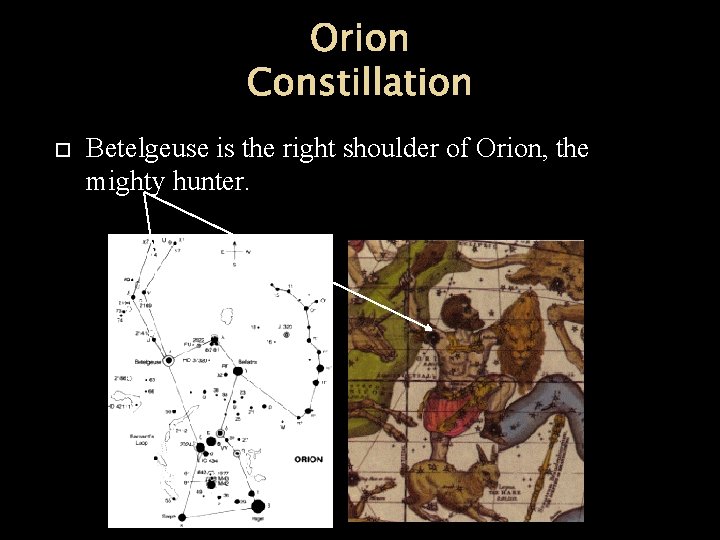
Orion Constillation Betelgeuse is the right shoulder of Orion, the mighty hunter.
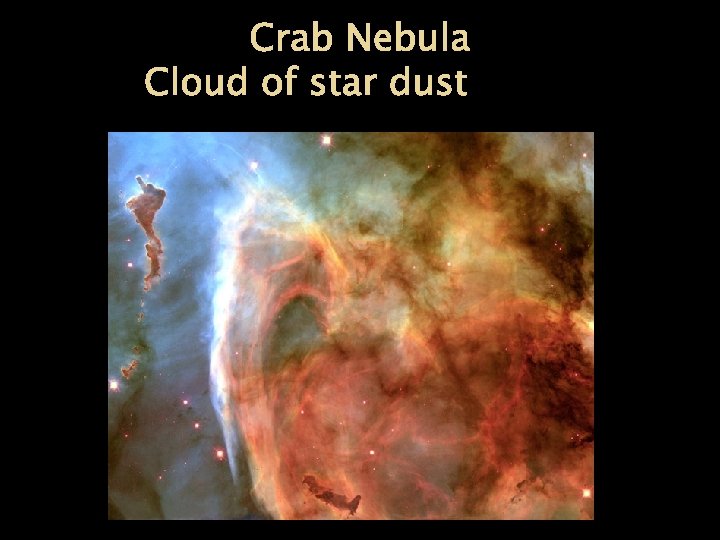
Crab Nebula Cloud of star dust
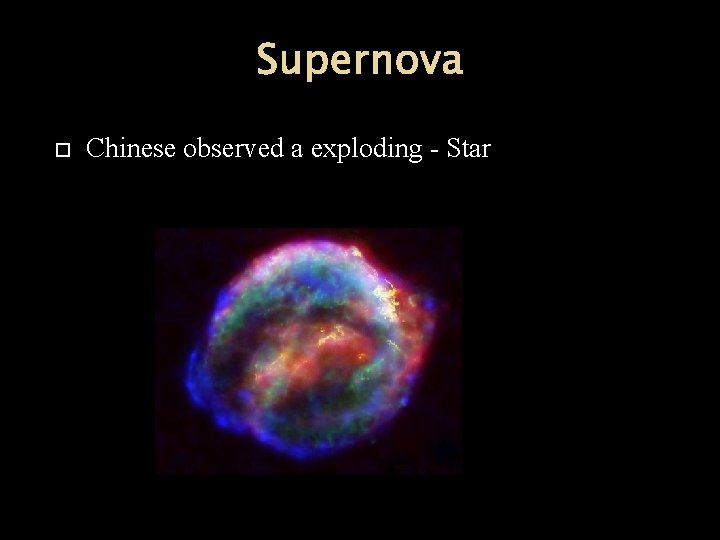
Supernova Chinese observed a exploding - Star
Science 1000 AD to 1500 A. D. Christian Scholars began to promote a Creator of infinite wisdom and a God who was directly involved in His Creation. God’s Law was constant. The Greeks believed in a universe was fixed The Romans had everything changing
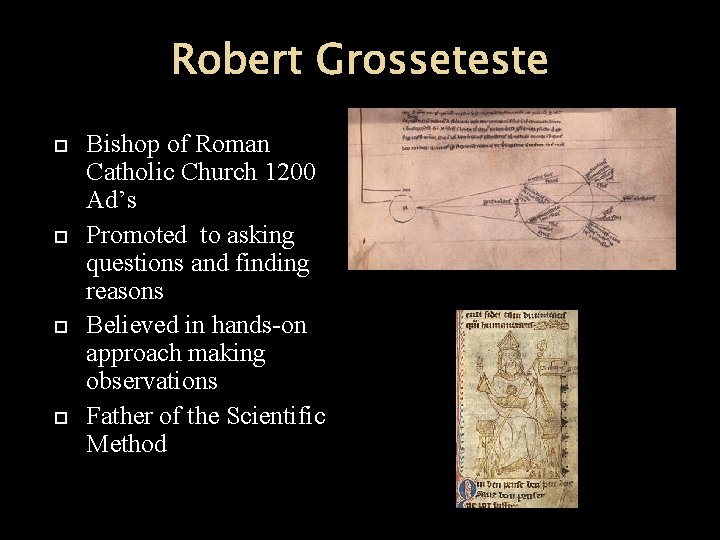
Robert Grosseteste Bishop of Roman Catholic Church 1200 Ad’s Promoted to asking questions and finding reasons Believed in hands-on approach making observations Father of the Scientific Method
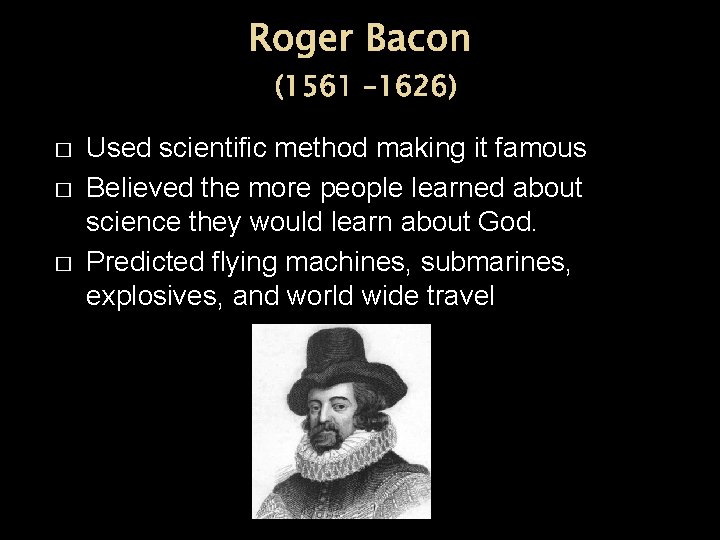
Roger Bacon (1561 – 1626) � � � Used scientific method making it famous Believed the more people learned about science they would learn about God. Predicted flying machines, submarines, explosives, and world wide travel
Thomas Bradwardine 1290 – 1349 � � First Reformer – question the Catholic Church Found problems with Aristotle ideas Examined motion mathematically and found Aristotle was wrong when it came to motion It took 300 years to through out Aristotle work on motion and Bradwardine was the key figure.
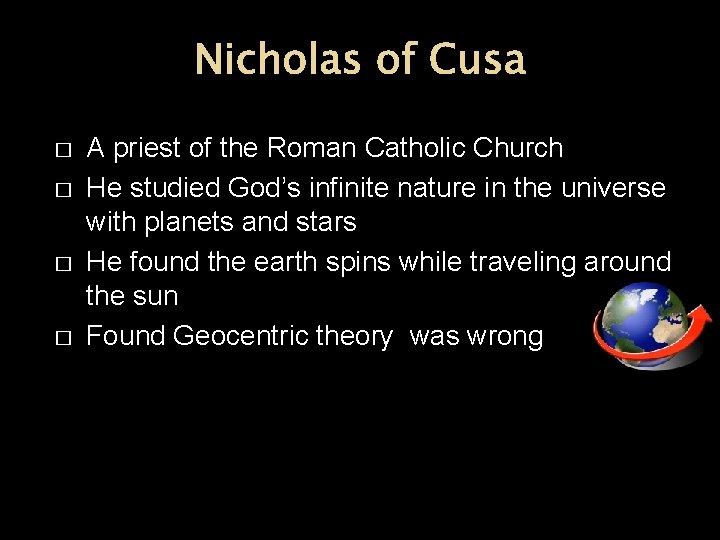
Nicholas of Cusa � � A priest of the Roman Catholic Church He studied God’s infinite nature in the universe with planets and stars He found the earth spins while traveling around the sun Found Geocentric theory was wrong
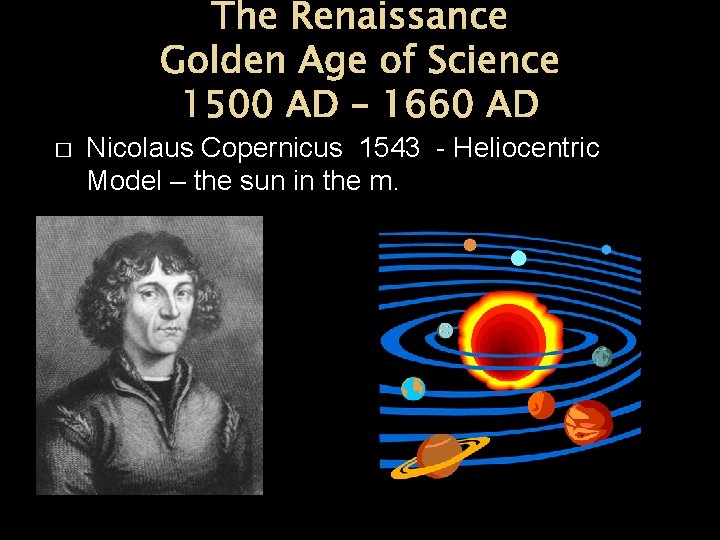
The Renaissance Golden Age of Science 1500 AD – 1660 AD � Nicolaus Copernicus 1543 - Heliocentric Model – the sun in the m.
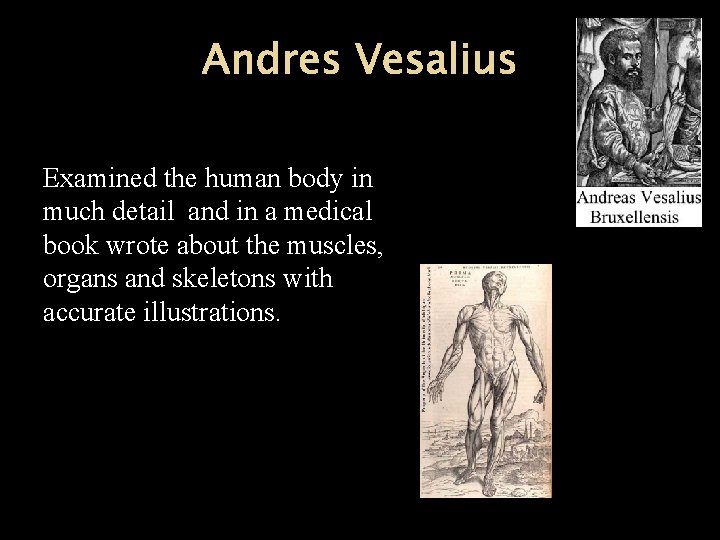
Andres Vesalius Examined the human body in much detail and in a medical book wrote about the muscles, organs and skeletons with accurate illustrations.
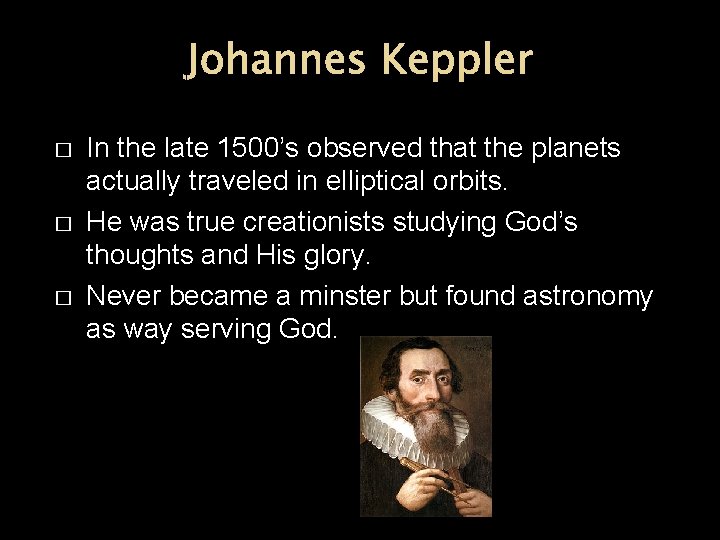
Johannes Keppler � � � In the late 1500’s observed that the planets actually traveled in elliptical orbits. He was true creationists studying God’s thoughts and His glory. Never became a minster but found astronomy as way serving God.
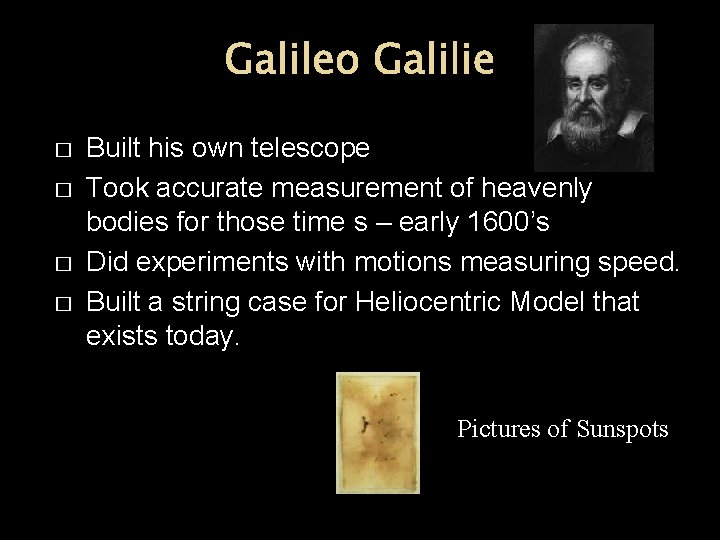
Galileo Galilie � � Built his own telescope Took accurate measurement of heavenly bodies for those time s – early 1600’s Did experiments with motions measuring speed. Built a string case for Heliocentric Model that exists today. Pictures of Sunspots
Blaise Pascal � � Brilliant mathematician , philosopher and scientist. Famous for Pascal’s Wager An argument due to Blaise Pascal for believing, or for at least taking steps to believe in God � Pascal also famous for the effect of Atmospheric Pressure.
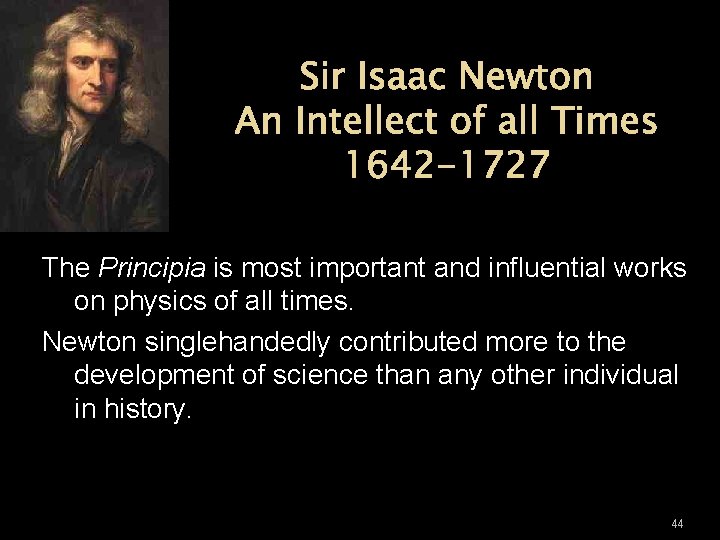
Sir Isaac Newton An Intellect of all Times 1642 -1727 The Principia is most important and influential works on physics of all times. Newton singlehandedly contributed more to the development of science than any other individual in history. 44
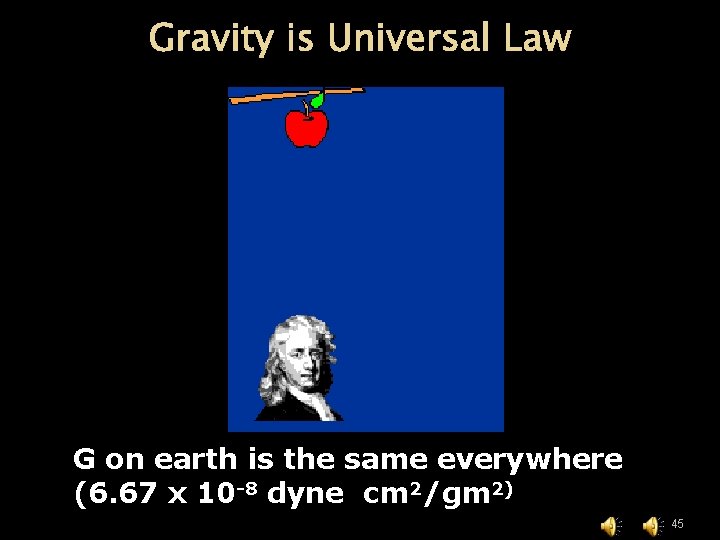
Gravity is Universal Law G on earth is the same everywhere (6. 67 x 10 -8 dyne cm 2/gm 2) 45
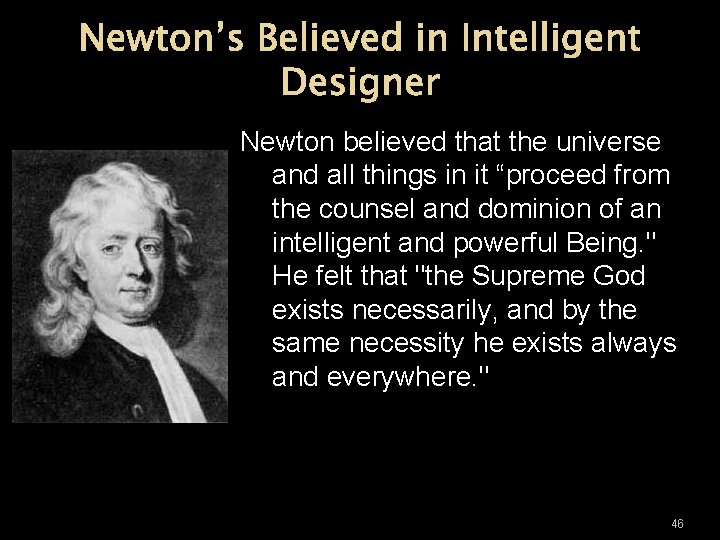
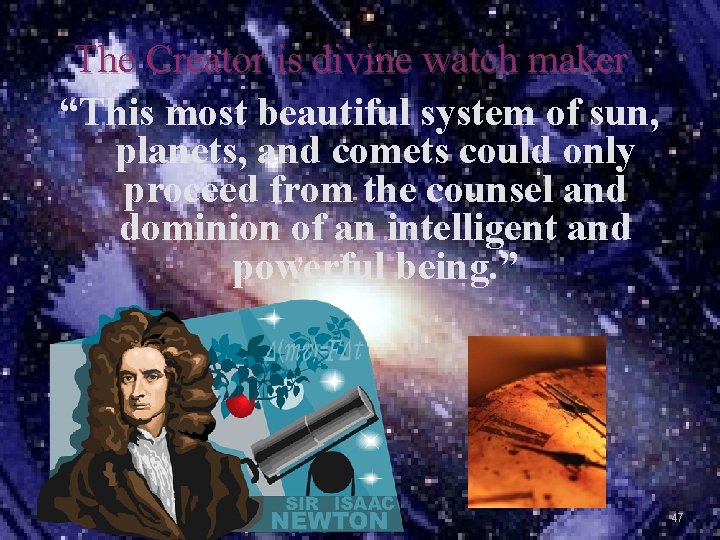
Newton’s Believed in Intelligent Designer Newton believed that the universe and all things in it “proceed from the counsel and dominion of an intelligent and powerful Being. " He felt that "the Supreme God exists necessarily, and by the same necessity he exists always and everywhere. " 46
The Creator is divine watch maker “This most beautiful system of sun, planets, and comets could only proceed from the counsel and dominion of an intelligent and powerful being. ” 47
The Era of Newton 1660 A. D. to 1735 A. D � � Also included Robert Boyle � Founder of Modern Chemistry � Famous for his pressure Law and volume � Dedicated Christian who wrote sermons � Antoni Leeuwenhoek � Build the first microscope � The father of Micrbiology
The Nineteenth Century � � � Charles Darwin : Went against the doctrine of immutability of the species. “after its kind” proposing theory of evolution by natural selection. Louis Pasteur made great advances with microbiology by finally stopping spontaneous generation and discovering the process of pasteurization. Sir Charles Lyell suggested long period of time by slow gradual change
The Nineteenth Century continued Gregor Mendel – the field of Genetics � Michael Faraday - Electricity and Magnetism � James Maxwell – Father of Modern Physics used mathematics to on electromagnetism � James Joule gave us first law of thermodynamics Note all the above where Christians and the last three there is much evidence they were “evangelicals” �
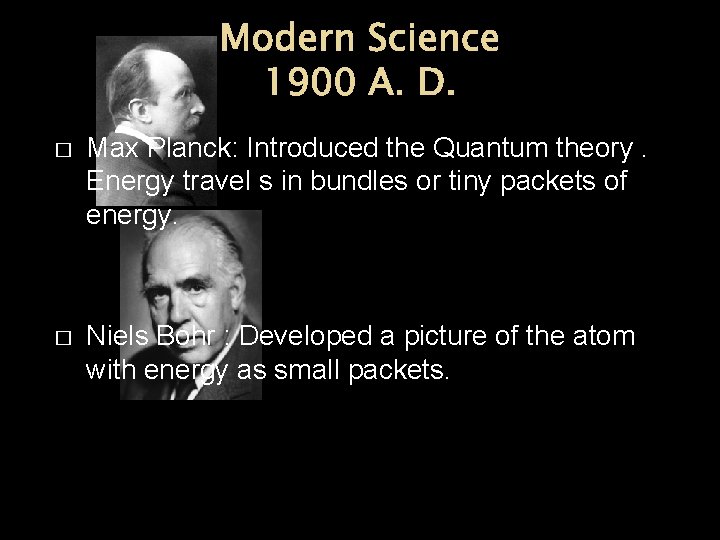
Modern Science 1900 A. D. � Max Planck: Introduced the Quantum theory. Energy travel s in bundles or tiny packets of energy. � Niels Bohr : Developed a picture of the atom with energy as small packets.
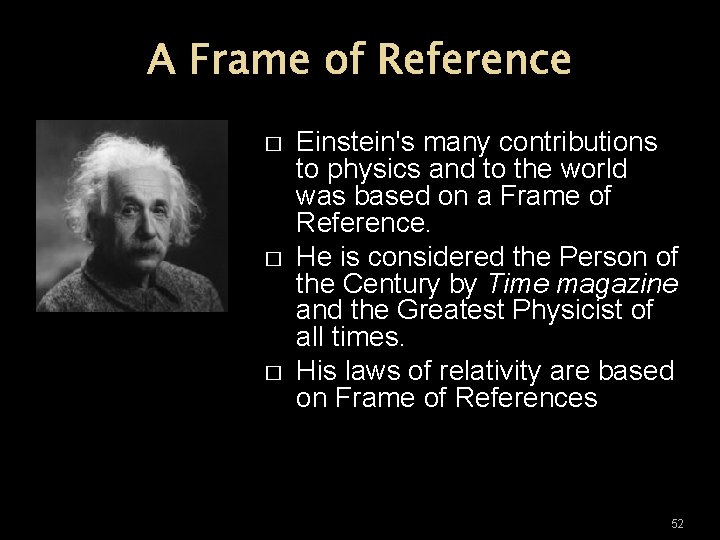
A Frame of Reference � � � Einstein's many contributions to physics and to the world was based on a Frame of Reference. He is considered the Person of the Century by Time magazine and the Greatest Physicist of all times. His laws of relativity are based on Frame of References 52
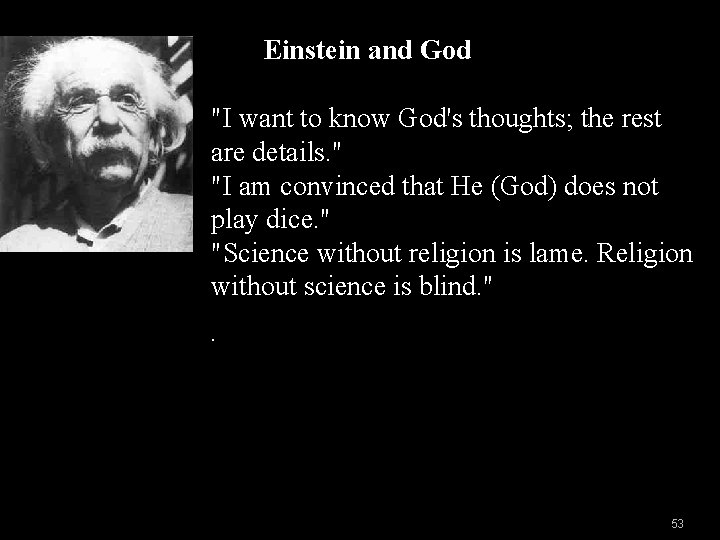
Einstein and God "I want to know God's thoughts; the rest are details. " "I am convinced that He (God) does not play dice. " "Science without religion is lame. Religion without science is blind. ". 53