
General Safety Rules 1 2 3 Listen to
- Slides: 16
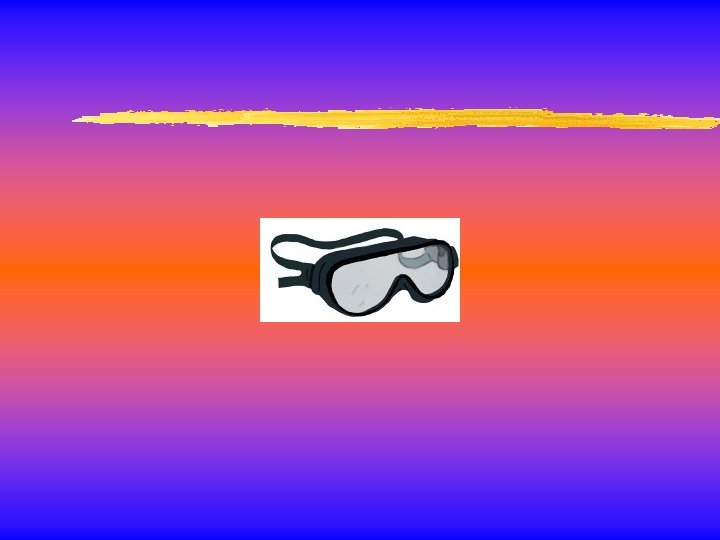
General Safety Rules 1. 2. 3. Listen to or read instructions carefully before attempting to do anything. Wear safety goggles to protect your eyes from chemicals, heated materials, or things that might be able to shatter. Notify your teacher if any spills or accidents occur.
General Safety Rules 4. After handling chemicals, always wash your hands with soap and water. 5. During lab work, keep your hands away from your face. 6. Tie back long hair.
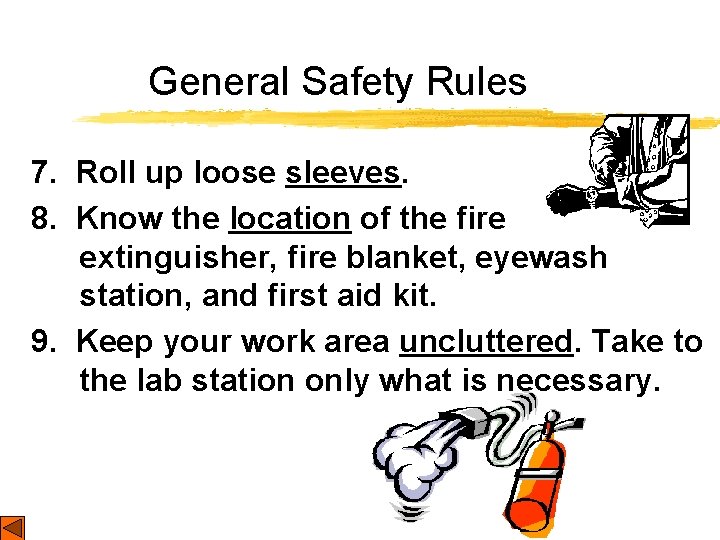
General Safety Rules 7. Roll up loose sleeves. 8. Know the location of the fire extinguisher, fire blanket, eyewash station, and first aid kit. 9. Keep your work area uncluttered. Take to the lab station only what is necessary.
General Safety Rules 10. It is suggested that you wear glasses rather than contact lenses. 11. Never put anything into your mouth during a lab experiment. 12. Clean up your lab area at the conclusion of the laboratory period. 13. Never “horse around” or play practical jokes in the laboratory.
Glassware Safety 1. 2. 3. Chipped or cracked glassware should not be used. Show it to the teacher. Broken glassware should not be disposed of in a classroom trashcan. There is a special glass disposal container for it. When pouring liquids into glassware, make sure the container you are pouring into is resting on a table at least a hands breadth from the edge.
Glassware Safety 4. If a piece of glassware gets broken, do not try to clean it up by yourself. Notify the teacher. 5. Do not place hot glassware in water. Rapid cooling may make it shatter.
Chemical Safety
Chemical Safety
Chemical Safety 5. 6. Follow the instructions of your teacher when disposing of all chemicals. Wash your hands after handling hazardous chemicals.
Heating Safety 1. 2. Use tongs and/or protective gloves to handle hot objects. Never reach across an open flame or burner.
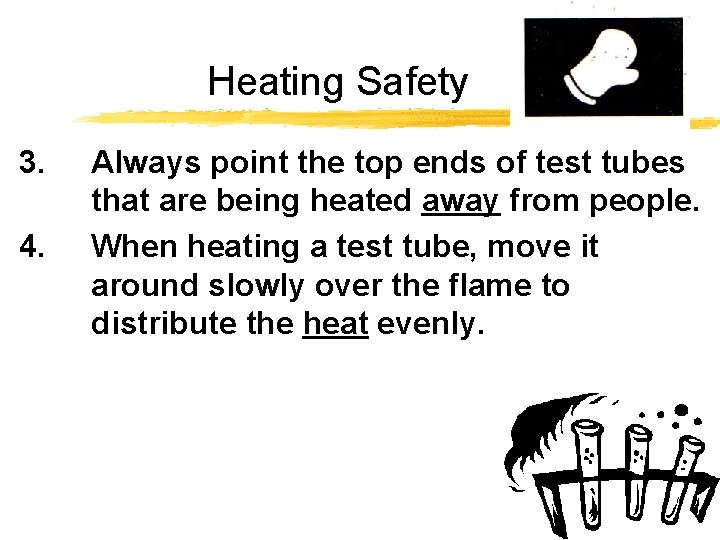
Heating Safety 3. 4. Always point the top ends of test tubes that are being heated away from people. When heating a test tube, move it around slowly over the flame to distribute the heat evenly.
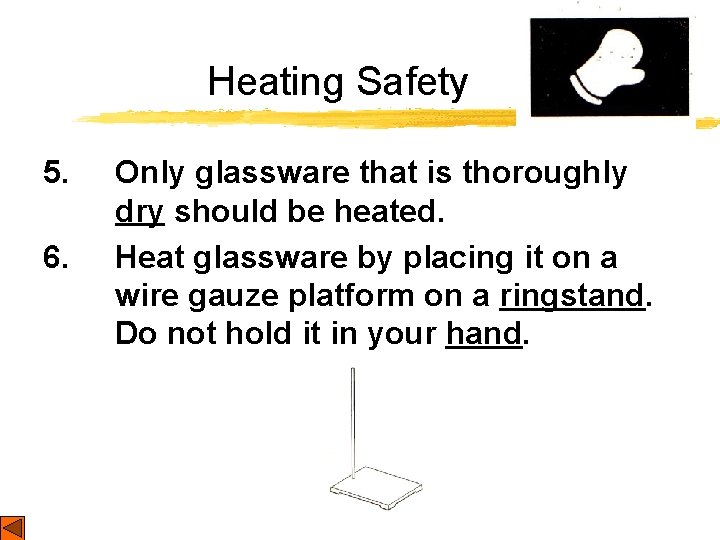
Heating Safety 5. 6. Only glassware that is thoroughly dry should be heated. Heat glassware by placing it on a wire gauze platform on a ringstand. Do not hold it in your hand.
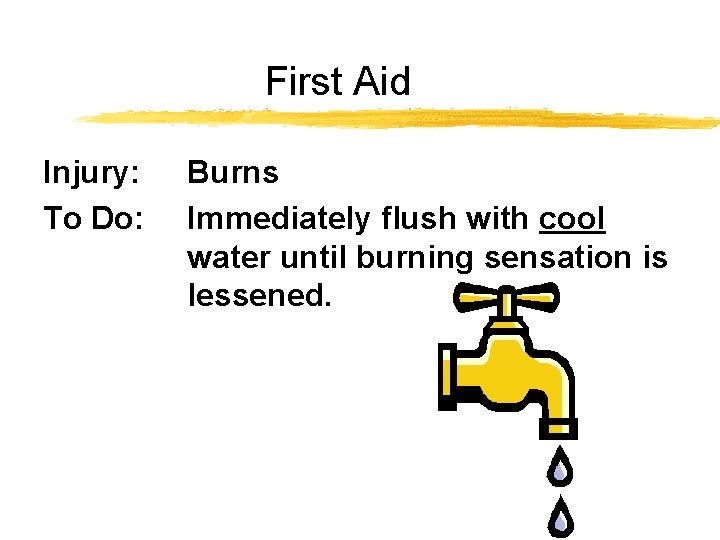
First Aid Injury: To Do: Burns Immediately flush with cool water until burning sensation is lessened.
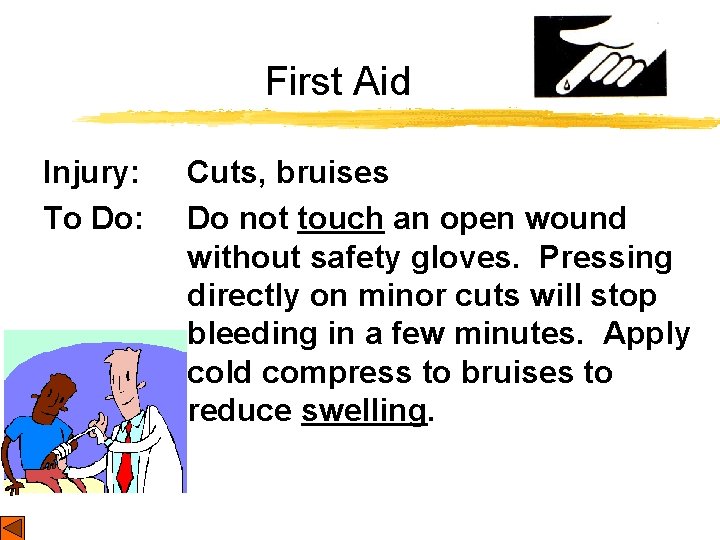
First Aid Injury: To Do: Cuts, bruises Do not touch an open wound without safety gloves. Pressing directly on minor cuts will stop bleeding in a few minutes. Apply cold compress to bruises to reduce swelling.
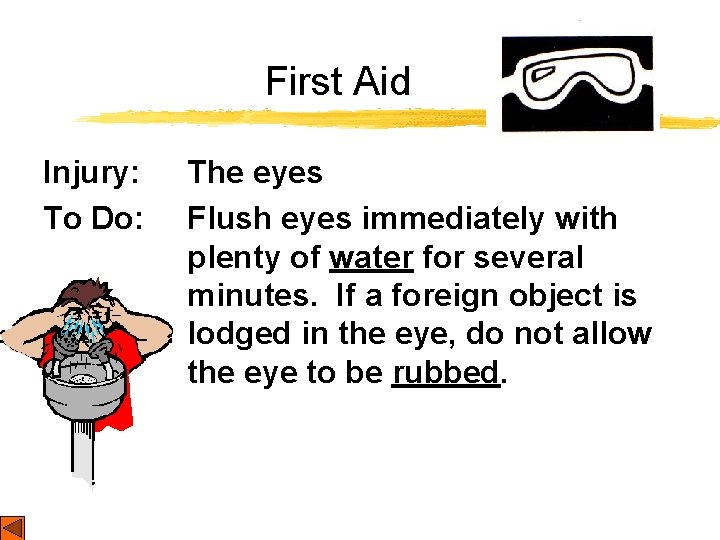
First Aid Injury: To Do: The eyes Flush eyes immediately with plenty of water for several minutes. If a foreign object is lodged in the eye, do not allow the eye to be rubbed.