
GENERAL RISK ASSESSMENT Why we do it How
- Slides: 6
GENERAL RISK ASSESSMENT Why we do it How to do it Ian Dandy Preston and District Astronomical Society
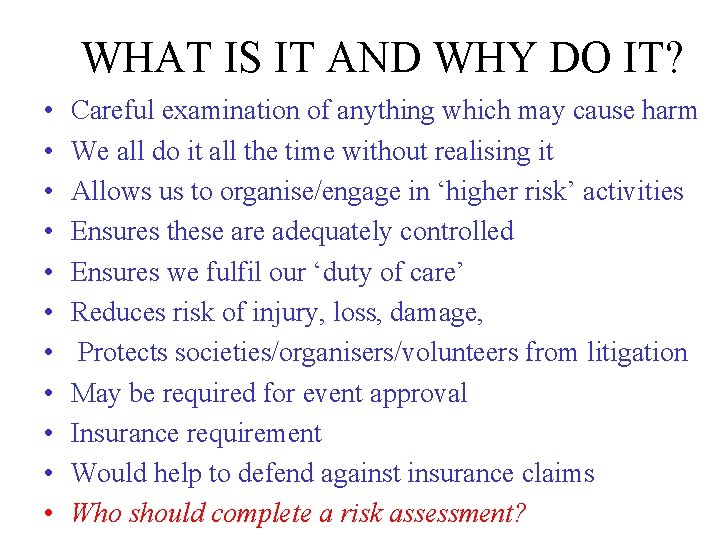
WHAT IS IT AND WHY DO IT? • • • Careful examination of anything which may cause harm We all do it all the time without realising it Allows us to organise/engage in ‘higher risk’ activities Ensures these are adequately controlled Ensures we fulfil our ‘duty of care’ Reduces risk of injury, loss, damage, Protects societies/organisers/volunteers from litigation May be required for event approval Insurance requirement Would help to defend against insurance claims Who should complete a risk assessment?
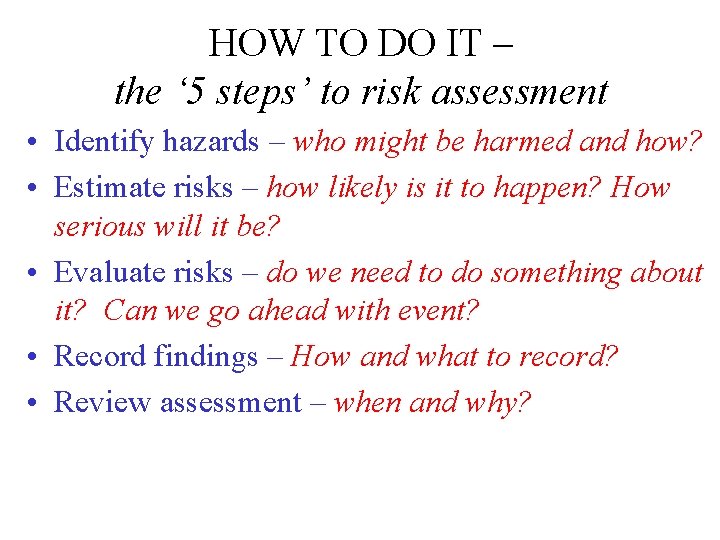
HOW TO DO IT – the ‘ 5 steps’ to risk assessment • Identify hazards – who might be harmed and how? • Estimate risks – how likely is it to happen? How serious will it be? • Evaluate risks – do we need to do something about it? Can we go ahead with event? • Record findings – How and what to record? • Review assessment – when and why?
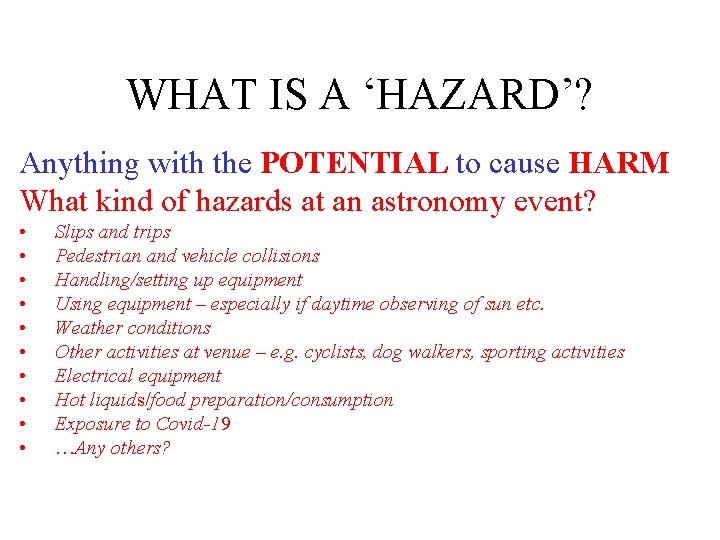
WHAT IS A ‘HAZARD’? Anything with the POTENTIAL to cause HARM What kind of hazards at an astronomy event? • • • Slips and trips Pedestrian and vehicle collisions Handling/setting up equipment Using equipment – especially if daytime observing of sun etc. Weather conditions Other activities at venue – e. g. cyclists, dog walkers, sporting activities Electrical equipment Hot liquids/food preparation/consumption Exposure to Covid-19 …Any others?
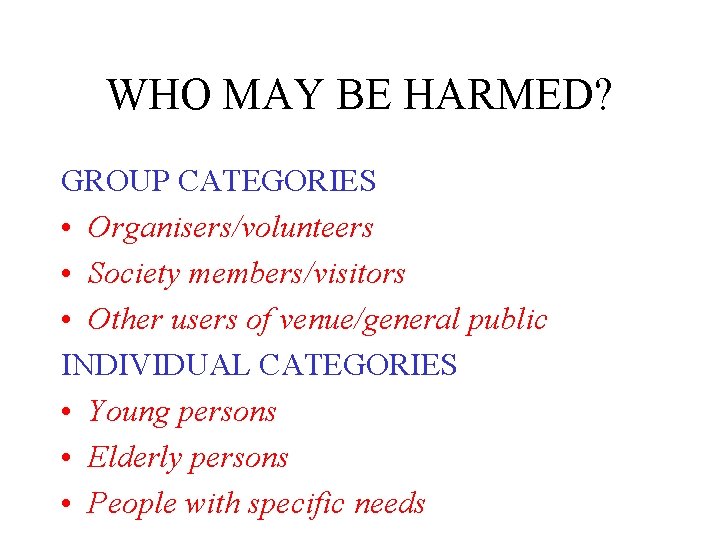
WHO MAY BE HARMED? GROUP CATEGORIES • Organisers/volunteers • Society members/visitors • Other users of venue/general public INDIVIDUAL CATEGORIES • Young persons • Elderly persons • People with specific needs
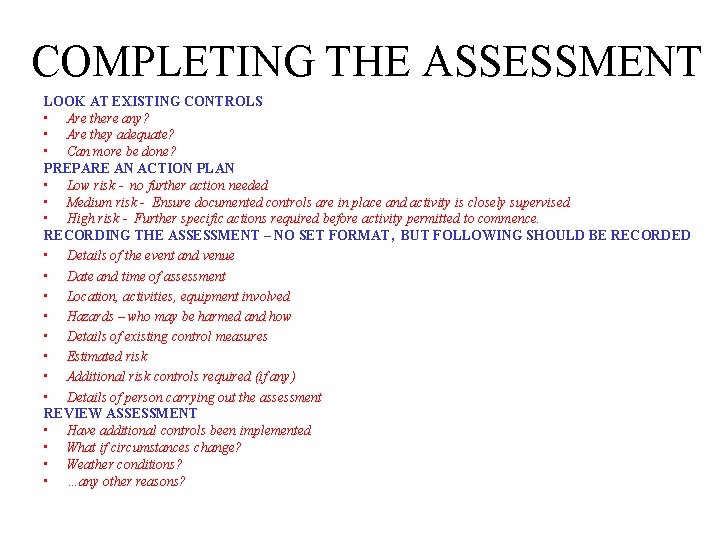
COMPLETING THE ASSESSMENT LOOK AT EXISTING CONTROLS • Are there any? • Are they adequate? • Can more be done? PREPARE AN ACTION PLAN • Low risk - no further action needed • Medium risk - Ensure documented controls are in place and activity is closely supervised • High risk - Further specific actions required before activity permitted to commence. RECORDING THE ASSESSMENT – NO SET FORMAT, BUT FOLLOWING SHOULD BE RECORDED • Details of the event and venue • Date and time of assessment • Location, activities, equipment involved • Hazards – who may be harmed and how • Details of existing control measures • Estimated risk • Additional risk controls required (if any) • Details of person carrying out the assessment REVIEW ASSESSMENT • Have additional controls been implemented • What if circumstances change? • Weather conditions? • …any other reasons?