
GENERAL PROPERTIES OF PROTOZOA HELMINTS Do Dr Hrisi
- Slides: 59
GENERAL PROPERTIES OF PROTOZOA & HELMINTS Doç. Dr. Hrisi BAHAR
GENERAL PROPERTIES OF PROTOZOONS Doç. Dr. Hrisi Bahar
General Characteristics ● Unicellular animal with full functions ● Distribute widely: water, soil, etc. ● Total species 65, 000 n Free-living: majority n Parasitic: about 10, 000
General Characteristics ● Size 2 - 100 micrometers ● Parasitic protozoa are most facultative anaerobes; ● Mostly heterotrophic, chemoorganotrophs ● Nutrients assimilated via phagocytosis, pinocytosis, diffusion ● Digestion may be both extracellular and intracellular.
Medical Protozoa ● Pathogenic protozoa ● Opportunistic parasite n n n Not normally pathogens Become pathogenic due to impairment of host resistance Clinical importance of the AIDS epidemic
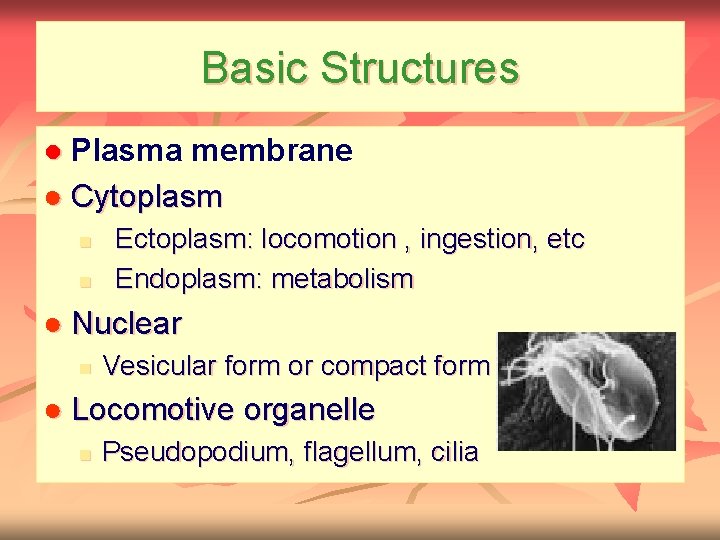
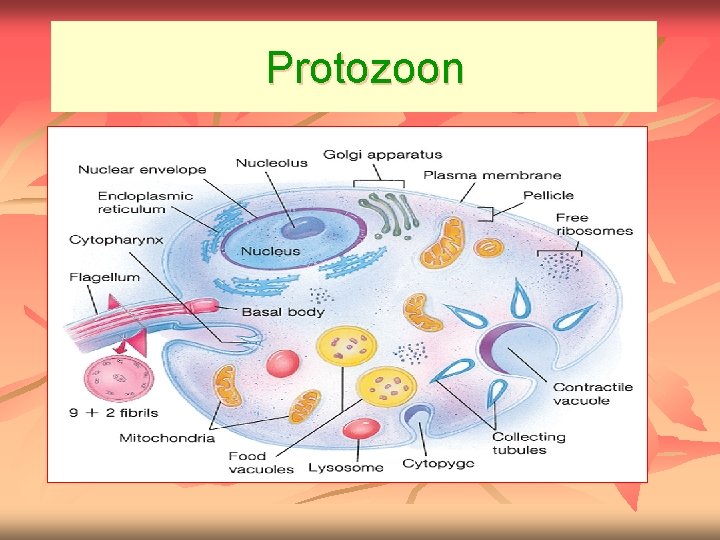
Basic Structures ● Plasma membrane ● Cytoplasm n n Ectoplasm: locomotion , ingestion, etc Endoplasm: metabolism ● Nuclear n Vesicular form or compact form ● Locomotive organelle n Pseudopodium, flagellum, cilia
Protozoon
Mode of Reproduction ●Asexual reproduction n n Binary fission: results in 2 daughter cells Schizogony: multiple fission, results in multiple cells ●Sexual reproduction n n Conjugation: exchange of nuclear materials of 2 cells Gametogony : sexually differentiated cells unit zygote
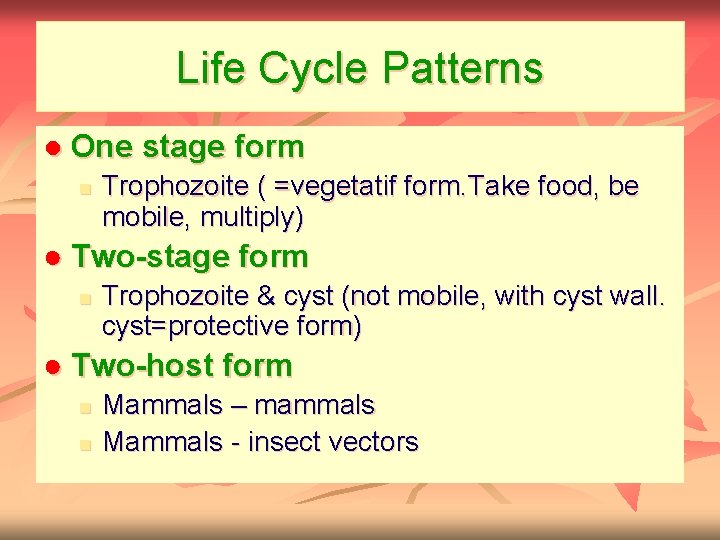
Life Cycle Patterns ● One stage form n Trophozoite ( =vegetatif form. Take food, be mobile, multiply) ● Two-stage form n Trophozoite & cyst (not mobile, with cyst wall. cyst=protective form) ● Two-host form n n Mammals – mammals Mammals - insect vectors
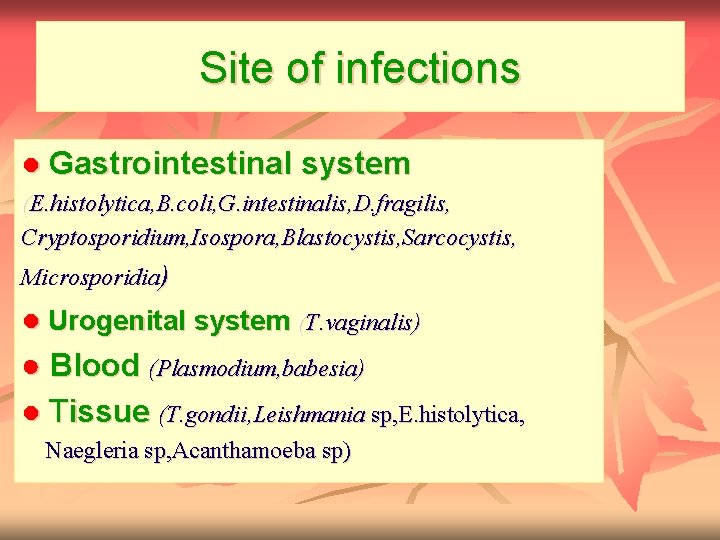
Site of infections ● Gastrointestinal system (E. histolytica, B. coli, G. intestinalis, D. fragilis, Cryptosporidium, Isospora, Blastocystis, Sarcocystis, Microsporidia) ● Urogenital system (T. vaginalis) ● Blood (Plasmodium, babesia) ● Tissue (T. gondii, Leishmania sp, E. histolytica, Naegleria sp, Acanthamoeba sp)
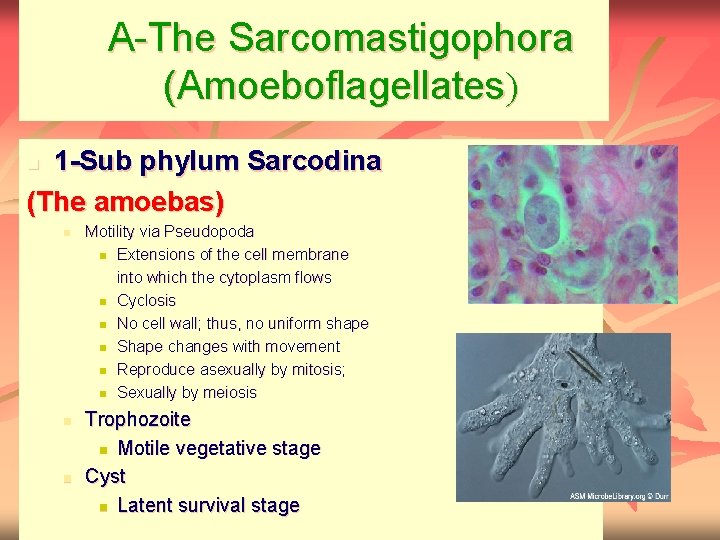
A-The Sarcomastigophora (Amoeboflagellates) 1 -Sub phylum Sarcodina (The amoebas) n n Motility via Pseudopoda n Extensions of the cell membrane into which the cytoplasm flows n Cyclosis n No cell wall; thus, no uniform shape n Shape changes with movement n Reproduce asexually by mitosis; n Sexually by meiosis Trophozoite n Motile vegetative stage Cyst n Latent survival stage
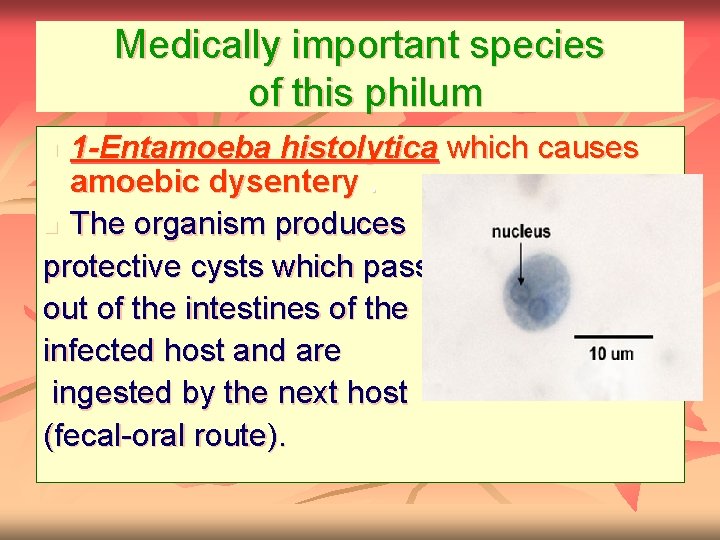
Medically important species of this philum 1 -Entamoeba histolytica which causes amoebic dysentery. n The organism produces protective cysts which pass out of the intestines of the infected host and are ingested by the next host (fecal-oral route). n
Medically important species of this philum n 2 -Acanthamoeba. Can infect the eye, blood, spinal cord, and brain and is transmitted by waterborne cysts picked up while swimming in contaminated water, crossing the mucous membranes.
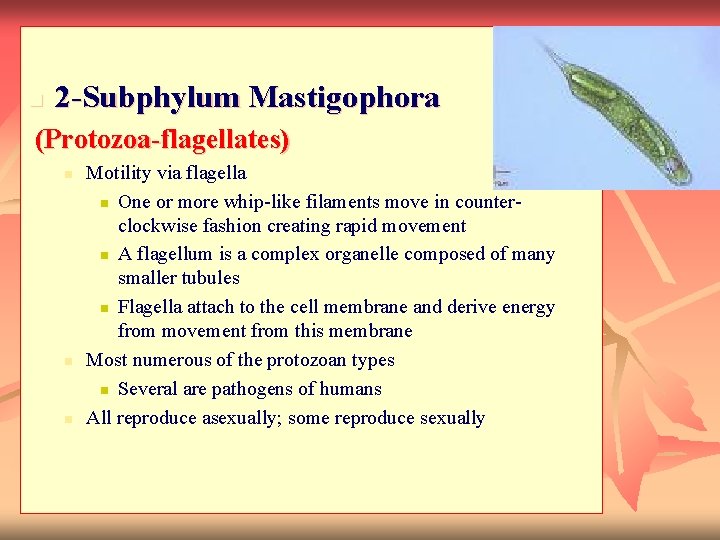
n 2 -Subphylum Mastigophora (Protozoa-flagellates) n n n Motility via flagella n One or more whip-like filaments move in counterclockwise fashion creating rapid movement n A flagellum is a complex organelle composed of many smaller tubules n Flagella attach to the cell membrane and derive energy from movement from this membrane Most numerous of the protozoan types n Several are pathogens of humans All reproduce asexually; some reproduce sexually
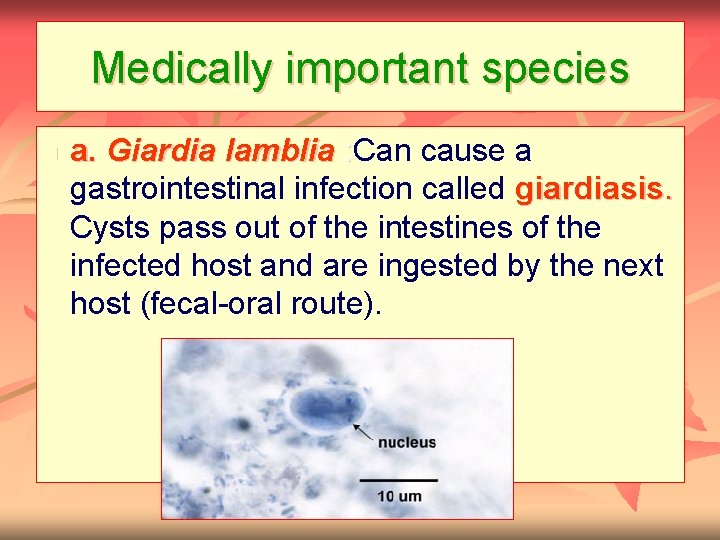
Medically important species n a. Giardia lamblia : Can cause a : gastrointestinal infection called giardiasis. Cysts pass out of the intestines of the infected host and are ingested by the next host (fecal-oral route).
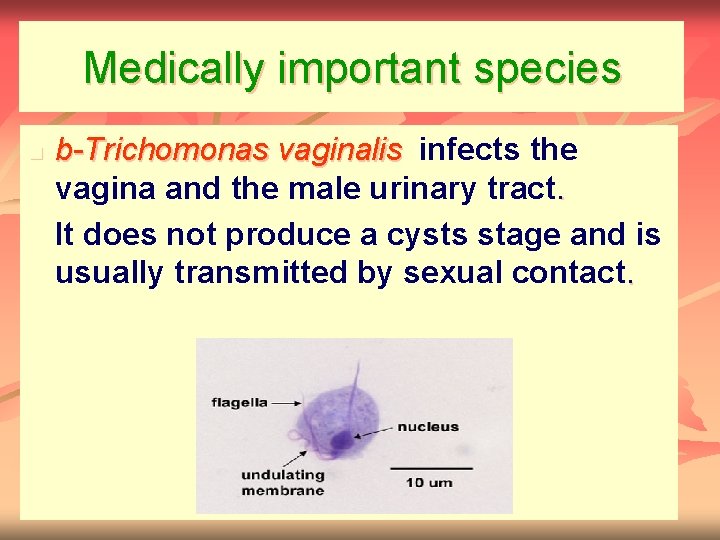
Medically important species n b-Trichomonas vaginalis infects the vagina and the male urinary tract. It does not produce a cysts stage and is usually transmitted by sexual contact.
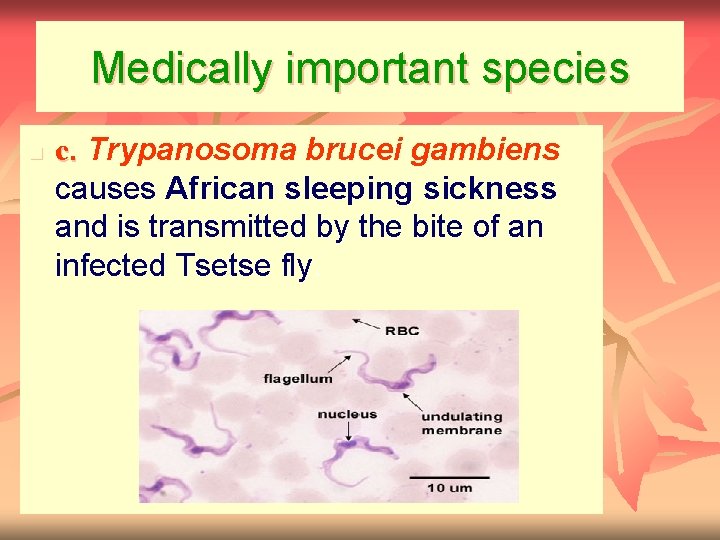
Medically important species n c. Trypanosoma brucei gambiens causes African sleeping sickness and is transmitted by the bite of an infected Tsetse fly.
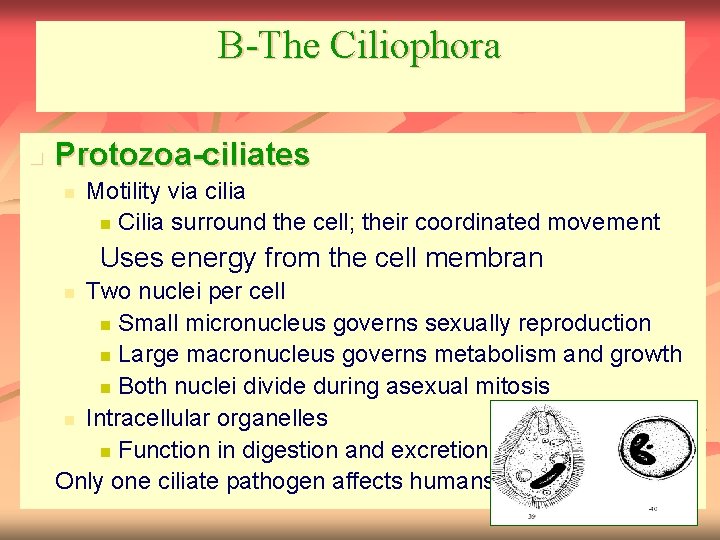
B-The Ciliophora n Protozoa-ciliates n Motility via cilia n Cilia surround the cell; their coordinated movement Uses energy from the cell membran Two nuclei per cell n Small micronucleus governs sexually reproduction n Large macronucleus governs metabolism and growth n Both nuclei divide during asexual mitosis n Intracellular organelles n Function in digestion and excretion Only one ciliate pathogen affects humans n n
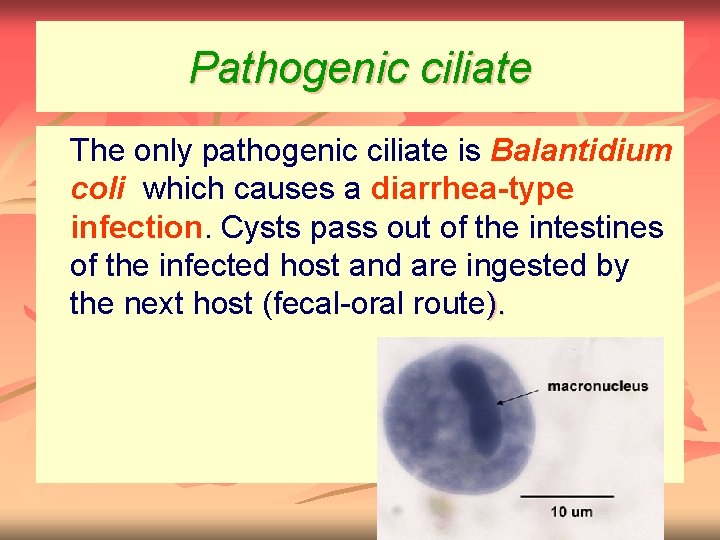
Pathogenic ciliate n The only pathogenic ciliate is Balantidium coli which causes a diarrhea-type infection. Cysts pass out of the intestines of the infected host and are ingested by the next host (fecal-oral route).
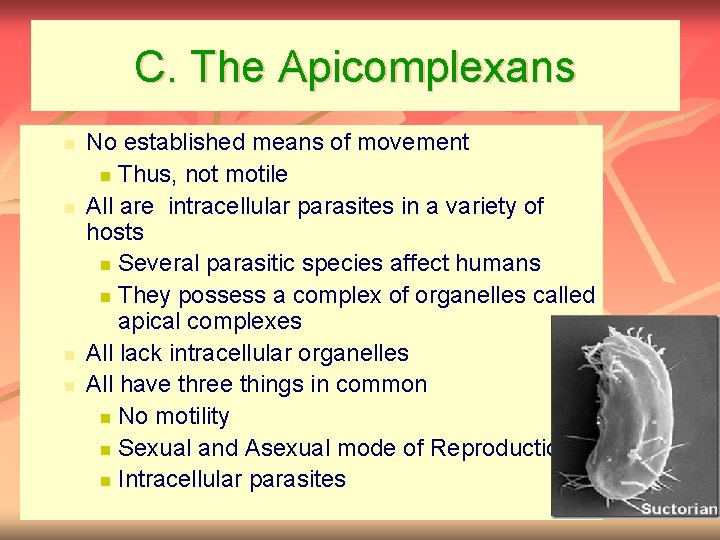
C. The Apicomplexans n n No established means of movement n Thus, not motile All are intracellular parasites in a variety of hosts n Several parasitic species affect humans n They possess a complex of organelles called apical complexes All lack intracellular organelles All have three things in common n No motility n Sexual and Asexual mode of Reproduction n Intracellular parasites
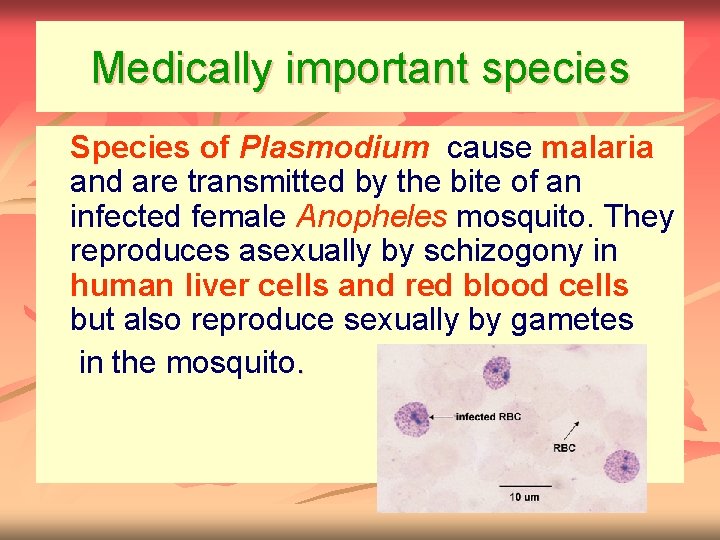
Medically important species n Species of Plasmodium. cause malaria and are transmitted by the bite of an infected female Anopheles mosquito. They reproduces asexually by schizogony in human liver cells and red blood cells but also reproduce sexually by gametes in the mosquito.
Medically important species n n Toxoplasma gondii causes toxoplasmosis It can infect most mammals and is contracted by inhaling or ingesting cysts from the feces of infected domestic cats, where the protozoa reproduce both asexually and sexually, or by ingesting raw meat of an infected animal.
Medically important species n Cryptosporidium is an intracellular parasite that causes diarrhea, although in people who are immunosuppressed it can also cause respiratory and gallbladder infections. It is transmitted by the fecal-oral route
Protozoan Diseases Intestinal Amebiasis. . . . . Entamoeba histolytica Giardiasis. . . . . Giardia lamblia Balantidiasis…………. . . Balantidium coli Crytosporidosis……. …. Cryptosporidium parvum Urogenital Trichomoniasis…………. Trichomonas vaginalis
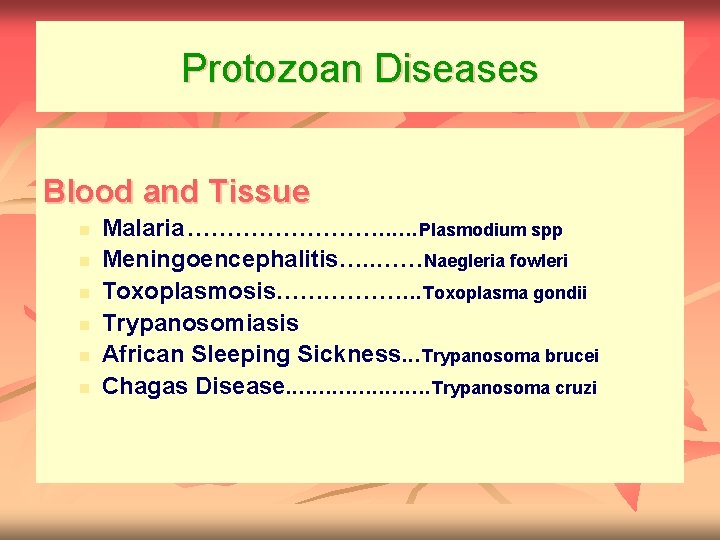
Protozoan Diseases Blood and Tissue n n n Malaria …………. . . Plasmodium spp Meningoencephalitis…. . ……Naegleria fowleri Toxoplasmosis……. ………. . . Toxoplasma gondii Trypanosomiasis African Sleeping Sickness. . . Trypanosoma brucei Chagas Disease. . . . . Trypanosoma cruzi
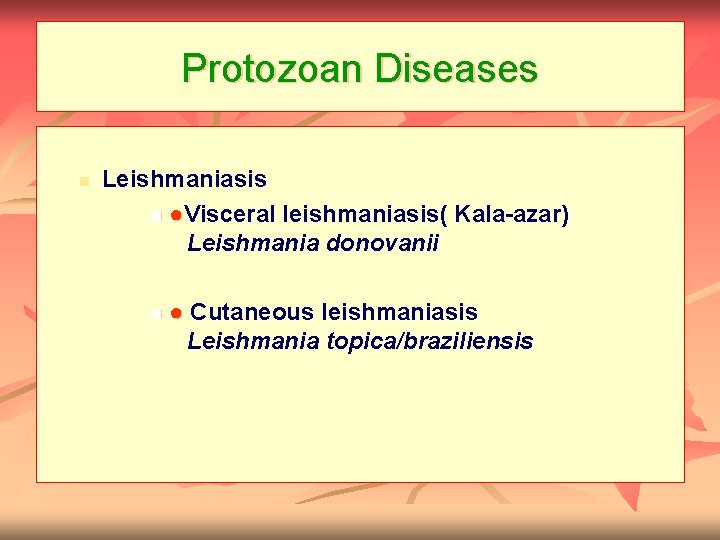
Protozoan Diseases n Leishmaniasis n ●Visceral leishmaniasis( Kala-azar) Leishmania donovanii n ● Cutaneous leishmaniasis Leishmania topica/braziliensis
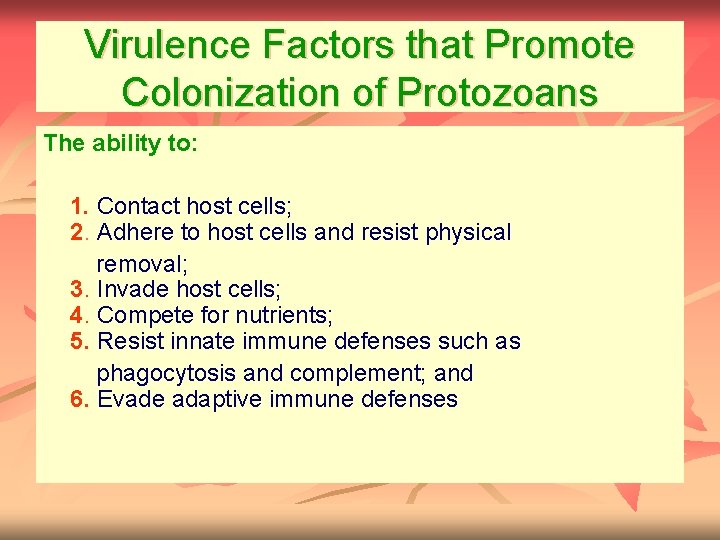
Virulence Factors that Promote Colonization of Protozoans The ability to: 1. Contact host cells; 2. Adhere to host cells and resist physical removal; 3. Invade host cells; 4. Compete for nutrients; 5. Resist innate immune defenses such as phagocytosis and complement; and 6. Evade adaptive immune defenses.
GENERAL PROPERTIES OF HELMINTES
HELMINTHS ●The helminths are worm-like parasites. ● Helminths are separated according to their general external shape and the host organ they inhabit. ● The definitive classification is based on the external and internal morphology of egg, larval, and adult stages ●Helminths are multicellular eukaryotes.
There are three classes of helminths Nematodes – "roundworms" ● Adult and larval roundworms are bisexual, cylindrical worms. ● They inhabit intestinal and extraintestinal sites. ● The nematodes include Trichinella, Ascaris, and Enterobius.
There are three classes of helminths ● Trematodes – "flukes" ● Adult flukes are leaf-shaped flatworms. Prominent oral and ventral suckers help maintain position. ● The life cycle includes an intermediate host. ● An example is the organism that causes schistosomiasis.
There are three classes of helminths Cestodes – pig and cattle "tapeworms" ● Adult tapeworms are elongated, segmented, hermaphroditic flatworms that inhabit the intestinal lumen. ● Larval forms, which are cystic or solid, inhabit extraintestinal tissues
NEMATODES ● Some species require an intermediate host to complete development. ● Intestinal nematodes all mature into adults within the human intestinal tract.
NEMATODES The nematodes (nema: thread) are threadlike, nonsegmented parasites. , n A few mm to 1 m in length, with separated sexes. n They possess a complex tegument and a digestive tract. n
NEMATODES ● The males are usually smaller than the females and are equipped with copulatory organs that often show features specific to each species.
NEMATODES ● Development from the egg includes four larval stages andv four moltings before the adult stage is reached. ● The larval forms of many of these roundworms may be distributed widely throughout the body
NEMATODES Three of the intestinal nematodes are acquired by the ingestion of nematode eggs: ● Trichuris trichiura ("whipworm") ● Ascaris lumbricoides ● Enterobius vermicularis ("pinworm") n
NEMATODES Two worms are acquired when their larvae penetrate through the skin, usually of the foot: ● Necator americanus ("hookworm") ● Strongyloides stercoralis n
NEMATODES n One is acquired by the ingestion of the encysted larvae in muscle (pork meat): Trichinella spiralis
NEMATODES Ascaris lumbricoides (Large Roundworm) Causative agent of “ascariosis”
Ascaris lumbricoides Occurrence ● The human large roundworm occurs worldwide. ● The main endemic regions, with prevalence rates of approx. 10– 90%, include countries in Southeast Asia, Africa, and Latin America. ● Autochthonous infections are rare in central Europe.
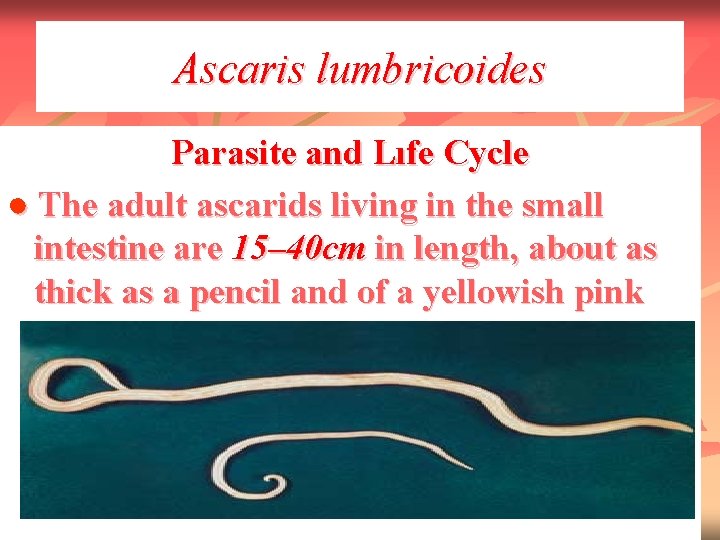
Ascaris lumbricoides Parasite and Lıfe Cycle ● The adult ascarids living in the small intestine are 15– 40 cm in length, about as thick as a pencil and of a yellowish pink color.
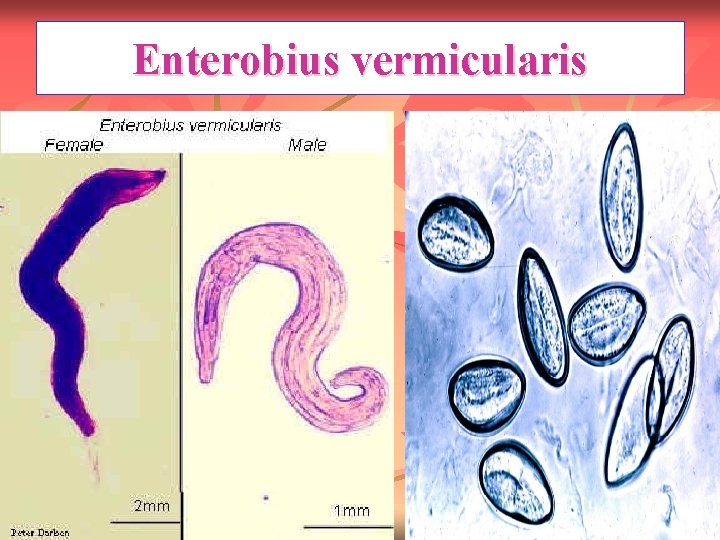
Enterobius vermicularis (Pinworm) Causative agent of enterobiosis (oxyuriosis) Occurrence. The pinworm occurs in all parts of the world and is also a frequent parasite in temperate climate zones and developed countries. The age groups most frequently infected are fiveto nine-year-old children and adults
Enterobius vermicularis Parasite and Lıfe Cycle Enterobius vermicularis which belongs to the Oxyurida has a conspicuous white color. The males are 2– 5 mm long, The females 8– 13 mm. The long, pointed tail of the female gives the pinworm its name.
Enterobius vermicularis
Class Trematoda (Flukes) General characteristics Most of the trematode species that parasitize humans are dorsoventrally flattened with an oval to lancet shape, although others have different shapes such as the threadlike schistosomes. n
Class Trematoda n n Most species are hermaphroditic. Snails are the first intermediate hosts; some species require arthropods or fish as second intermediate hosts
Class Trematoda Schistosoma (Blood Flukes) Causative agents of schistosomosis or bilharziosis. Schistosomosis (bilharziosis) is one of the most frequent tropical diseases with about 200 million infected persons. The occurrence of schistosomosis depends on the presence of suitable intermediate hosts (freshwater snails).
Schistosoma (Blood Flukes) ●Schistosomosis is also known as bilharziosis after the German physician Th. Bilharz, who discovered Schistosoma hematobium in human blood vessels in 1851. ● Schistosomosis occurs endemically in 74 tropical and subtropical countries of Africa, South America, and Asia. ● The number of persons infected with schistosomes is estimated at 200 million(WHO 2008)
Schistosoma (Blood Flukes) ● Human infections result from contact with standing or slow-moving bodies of water (freshwater) when Schistosoma cercariae penetrate the skin. ● Schistosoma hematobium causes urinary schistosomosis. ● S. mansoni, S. japonicum, S. intercalatum, and S. mekongi are the causative agents of intestinal schistosomosis and other forms of the disease.
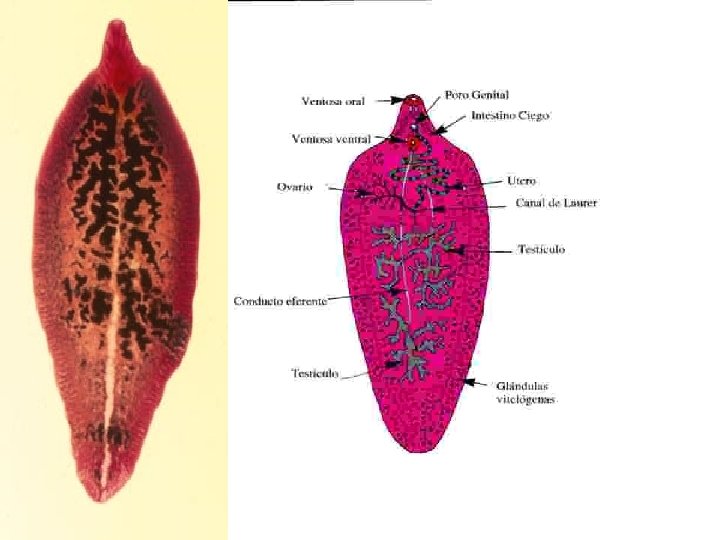
Trematodes Fasciola hepatica Dicrocoelium dendriticum Clonorchis spp Paragonimus spp
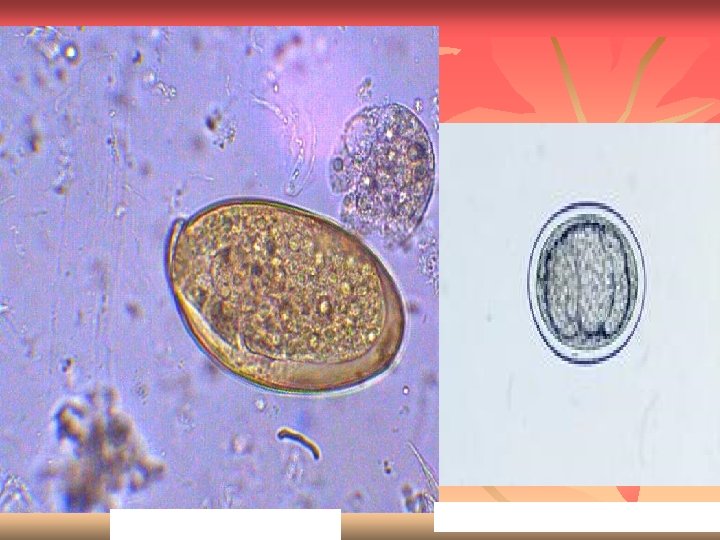
Fasciola hepatica F. hepatica is a flattened, leaf-shaped parasite about 2– 5 cm long and at most 1 cm wide. Dicrocoelium dendriticum The lancet liver fluke (0. 5– 1. 0 ! 0. 2 cm) Fasciola hepatica and F. gigantica are bile duct parasites of domestic ruminants. In their life cycle freshwater snails act as intermediate host Humans become accidentally infected when they eat plants to which infectious parasite stages (metacercariae) adhere Dicrocoelium dendriticum is a bile duct parasite in sheep, cattle, and other herbivores, Its life cycle includes two intermediate hosts (terrestrial snails and ants). Humans become infected accidentally when they ingest ants containing infective metacercariae of the lancet liver fluke.
Fasciola hepatica egg Dicrocoelium dendriticum egg
Cestoda (Tapeworms) Taenia saginata Taenia solium Echinococcus granulosus
Cestoda (Tapeworms) ● General characteristics *Parasitize in the small intestine of humans. * They are hermaphrodites and consist of the head (scolex), followed by an unsegmented germinative section (neck) and a posterior chain of segments (proglottids). *There are no digestive organs, so nutrients are taken up through the absorptive integument.
Cestoda (Tapeworms) *The life cycle of cestodes include one or two intermediate hosts. * Humans can also be infected by larval stages of various tapeworm species (cysticerci, metacestodes). * These stages develop in body tissues and generally cause considerably greater pathological damage than the intestinal cestode stages.
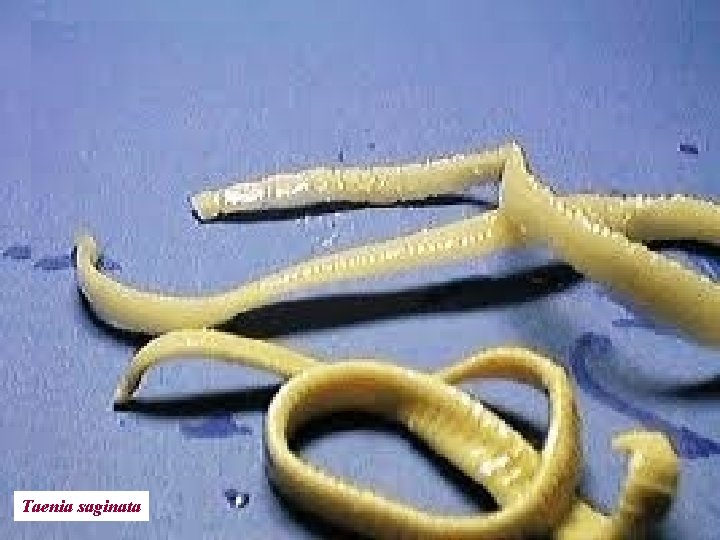
Taenia saginata
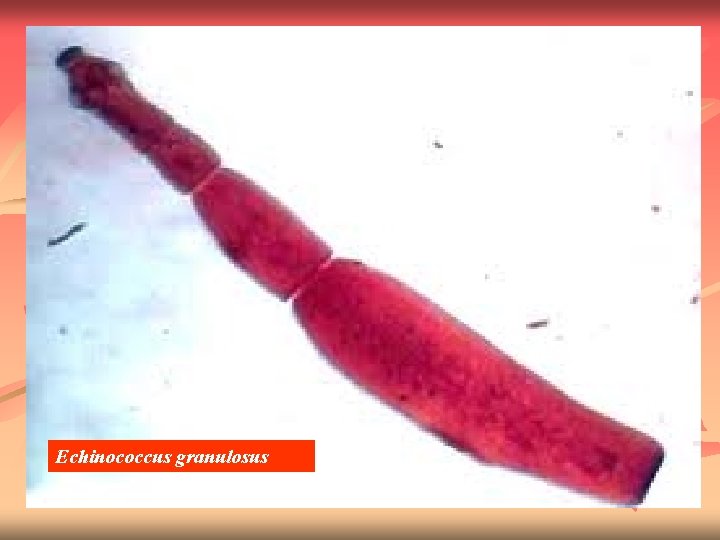
Echinococcus granulosus