
General Physics I Mechanics optics thermal dynamics and
- Slides: 25
General Physics I Mechanics, optics, thermal dynamics, and other basic fundamental things. Tsung. Che Liu R
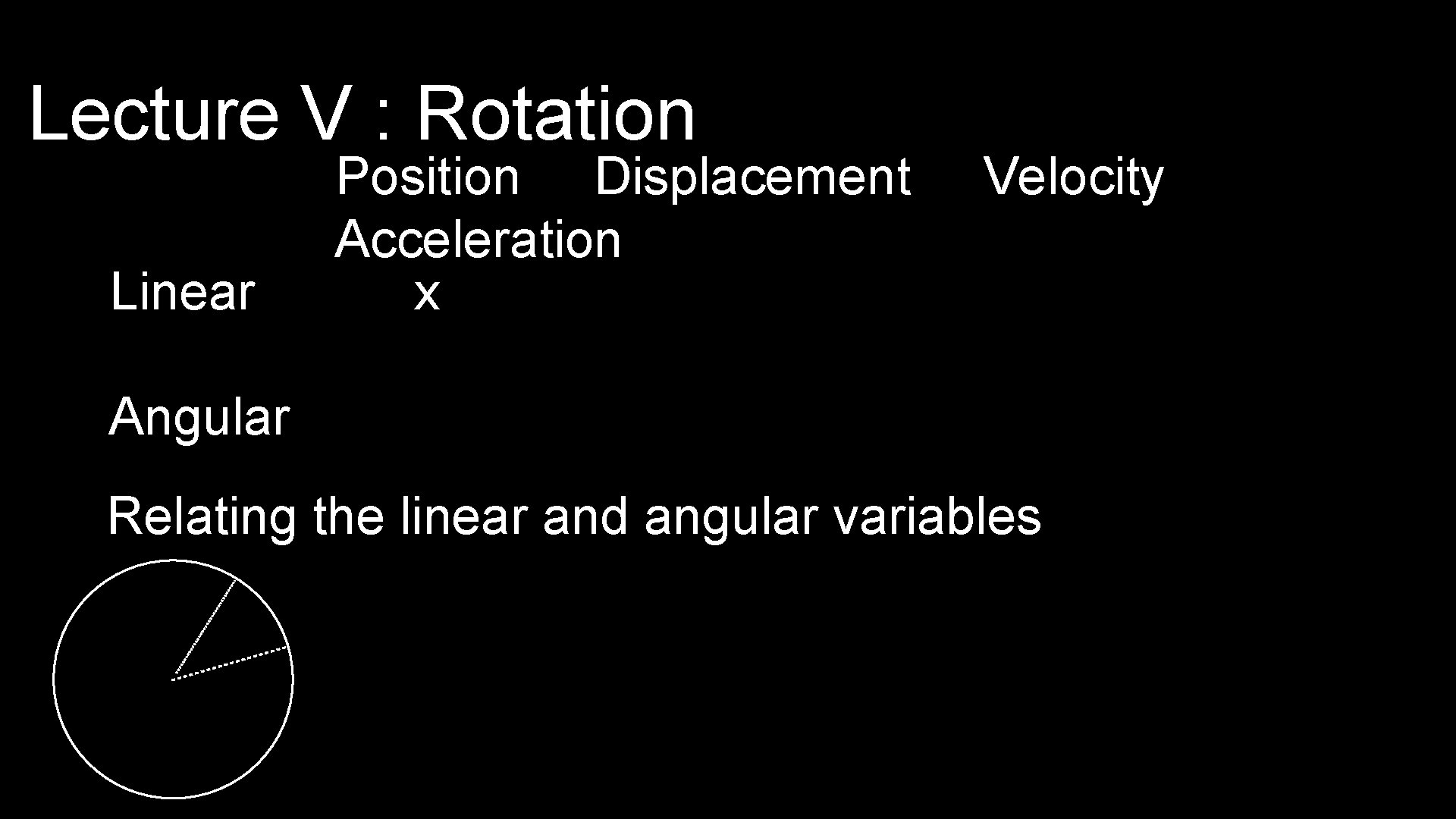
Lecture V : Rotation Linear Position Displacement Acceleration x Velocity Angular Relating the linear and angular variables
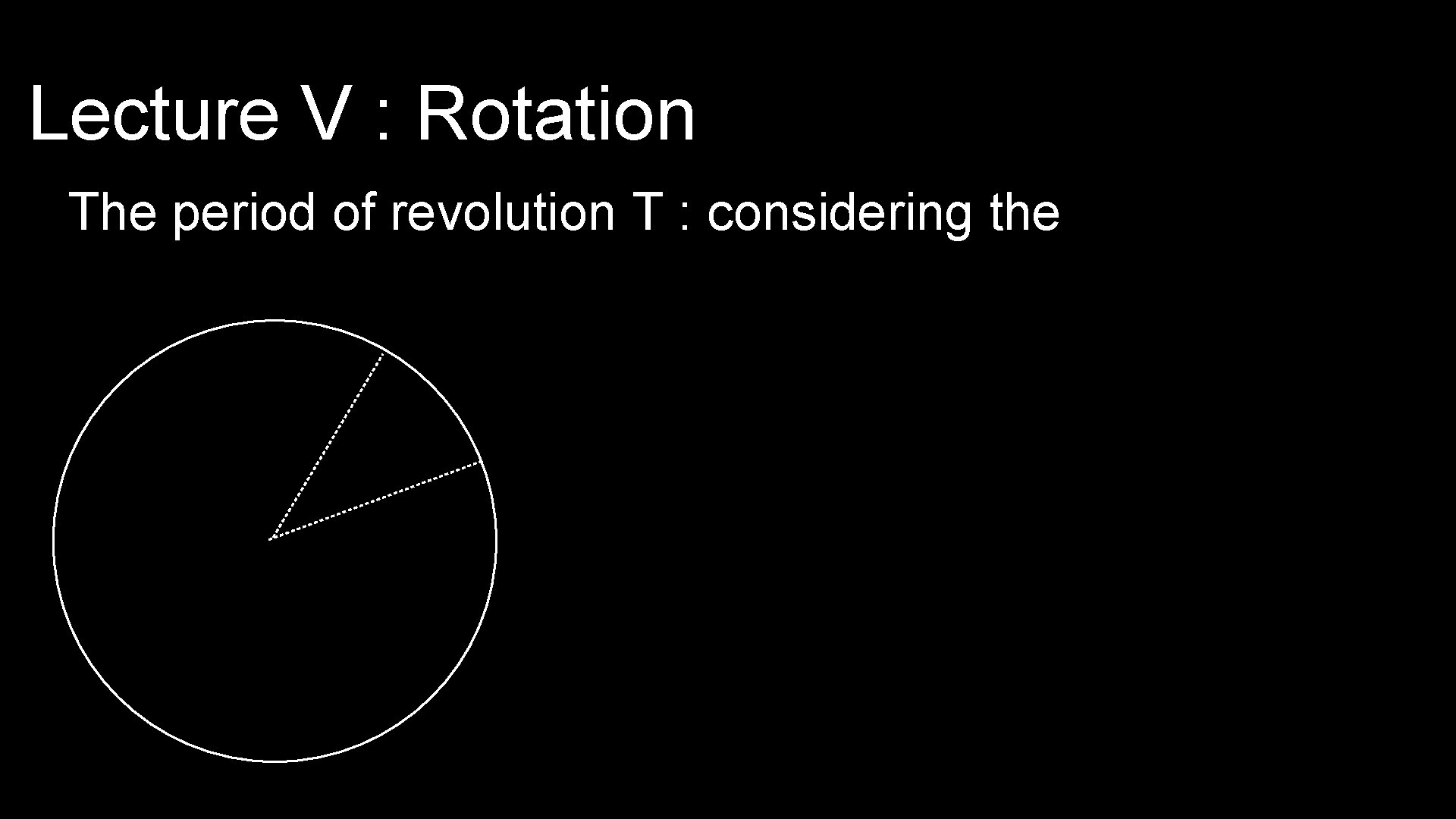
Lecture V : Rotation The period of revolution T : considering the
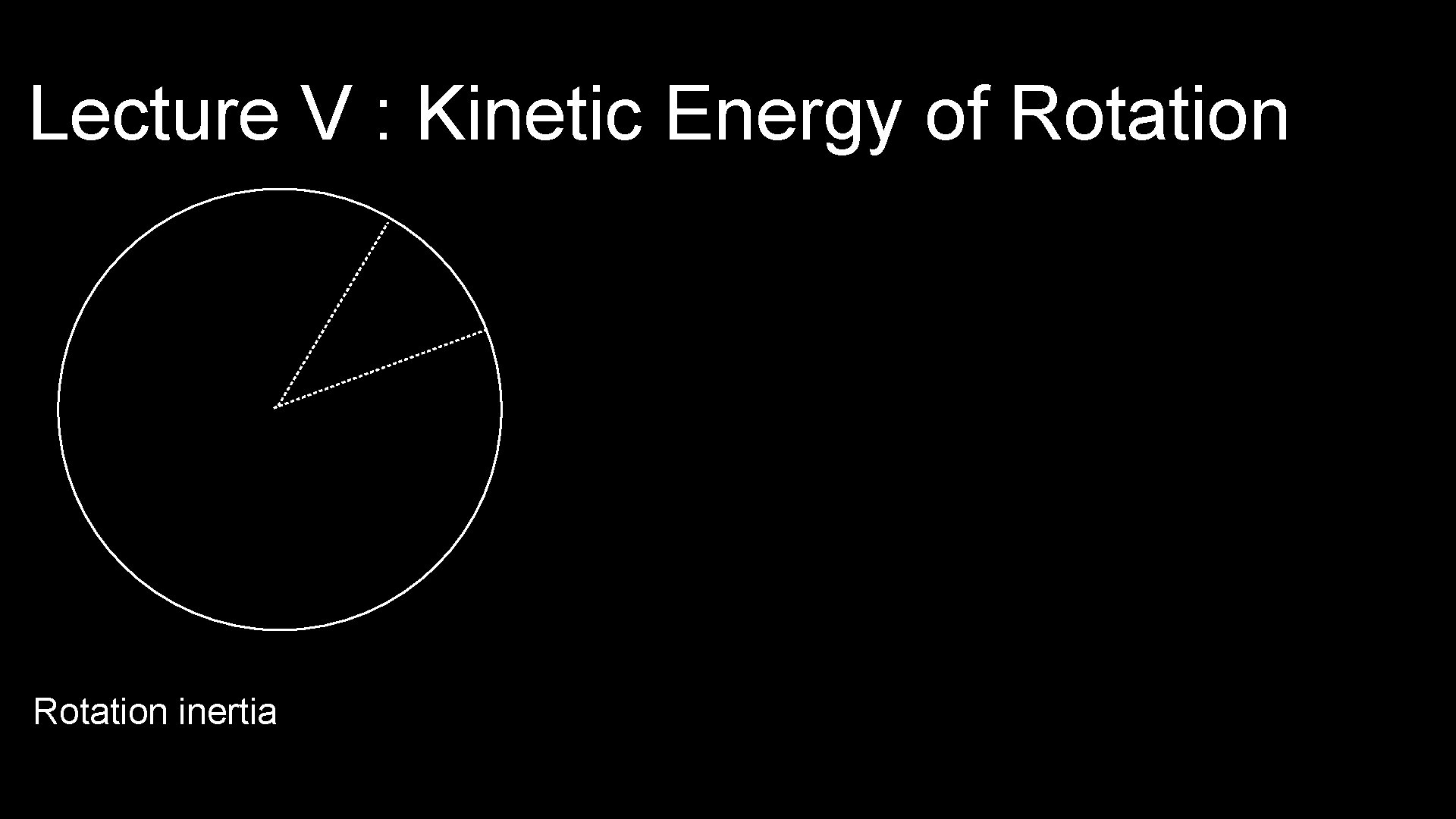
Lecture V : Kinetic Energy of Rotation inertia
Lecture V : Rotation Inertia
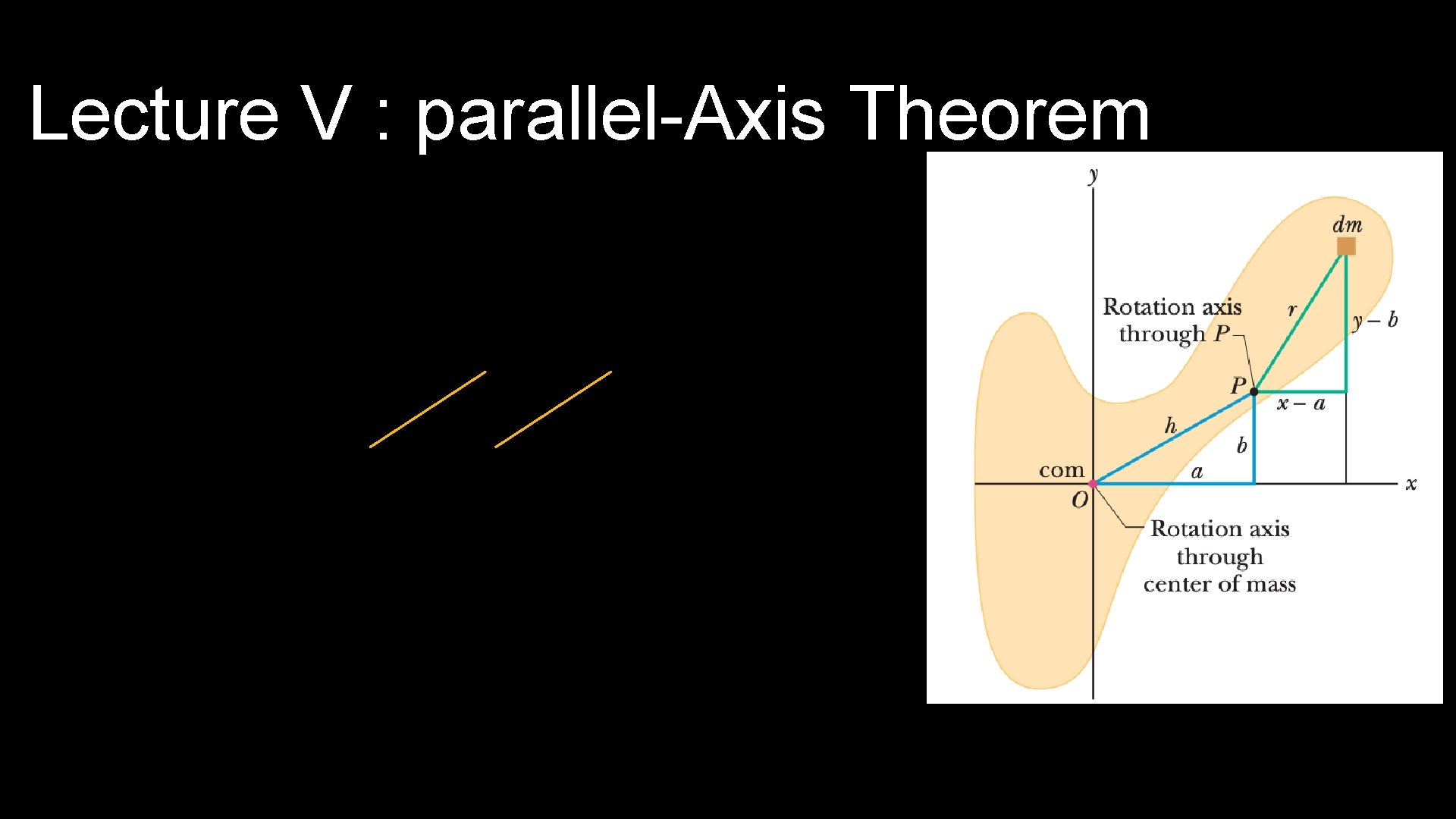
Lecture V : parallel-Axis Theorem
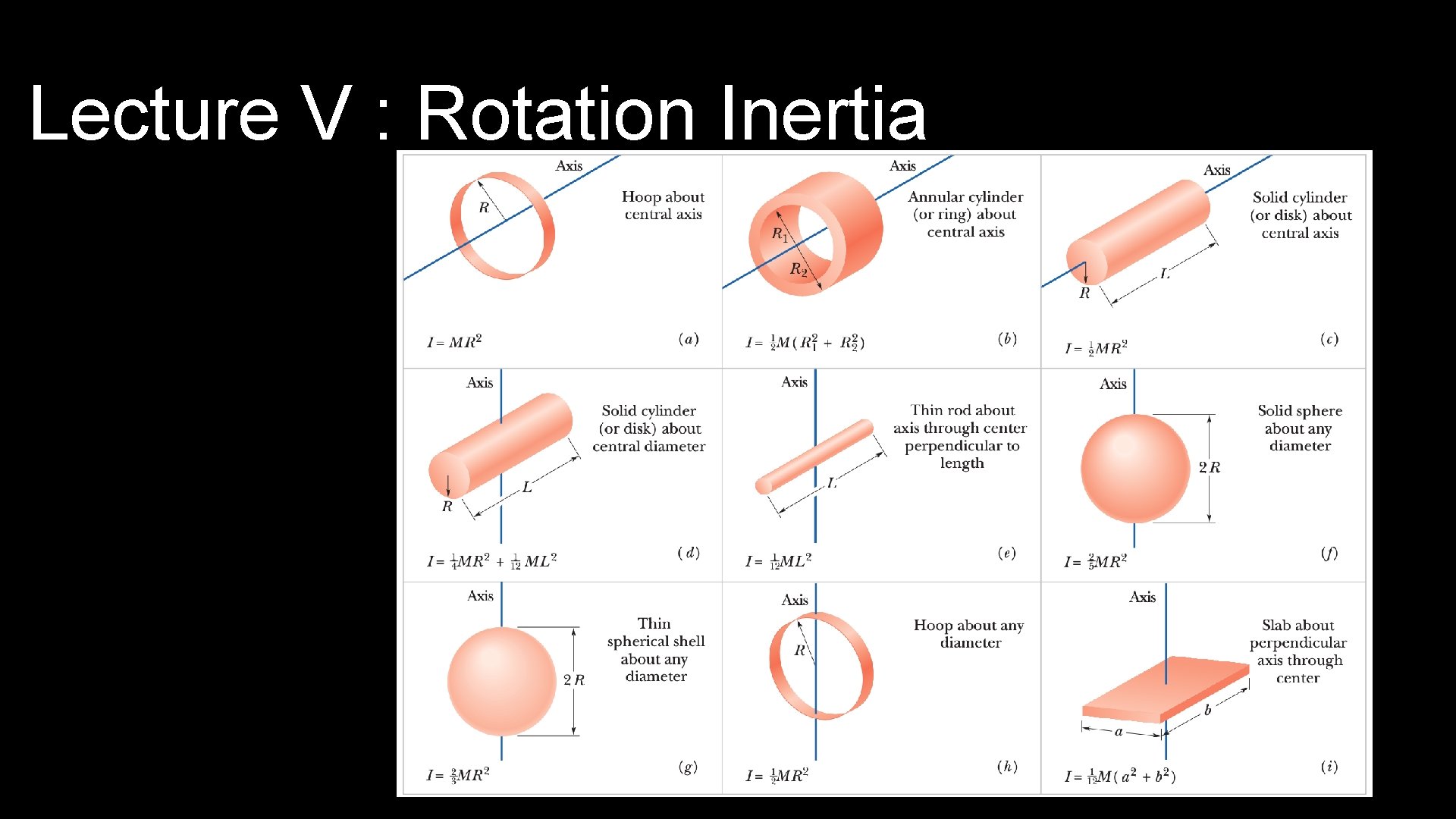
Lecture V : Rotation Inertia
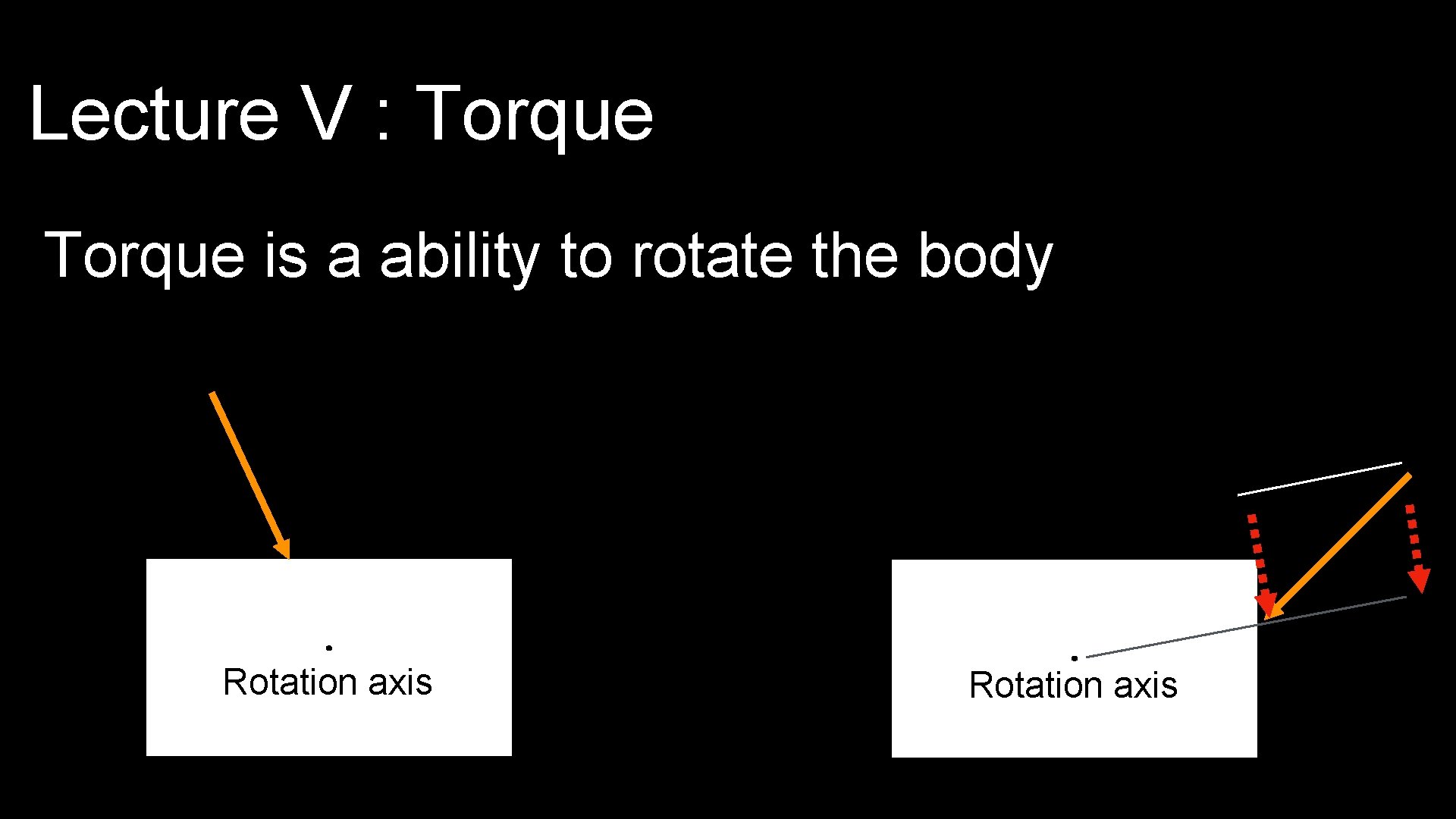
Lecture V : Torque is a ability to rotate the body Rotation axis
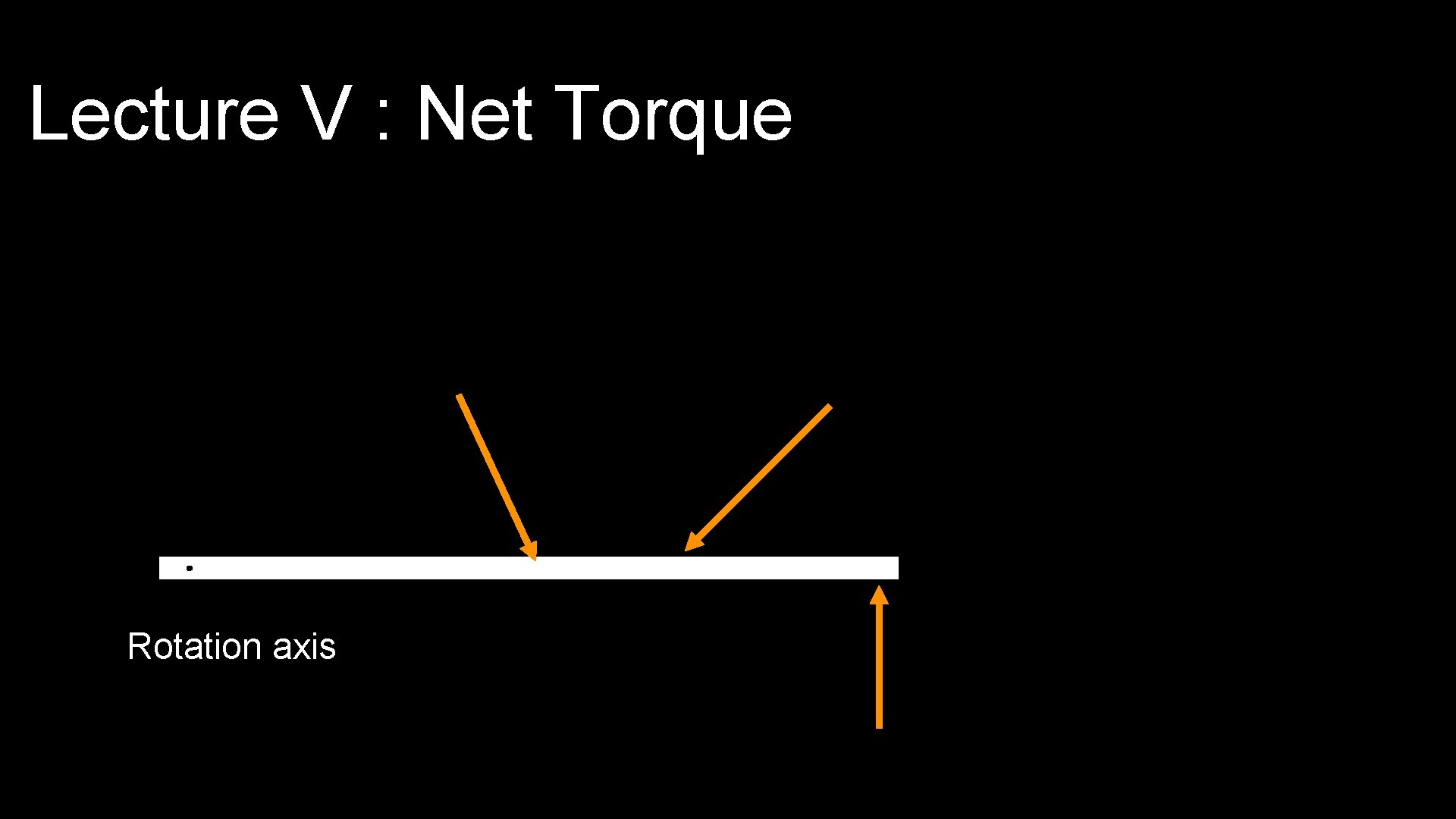
Lecture V : Net Torque Rotation axis
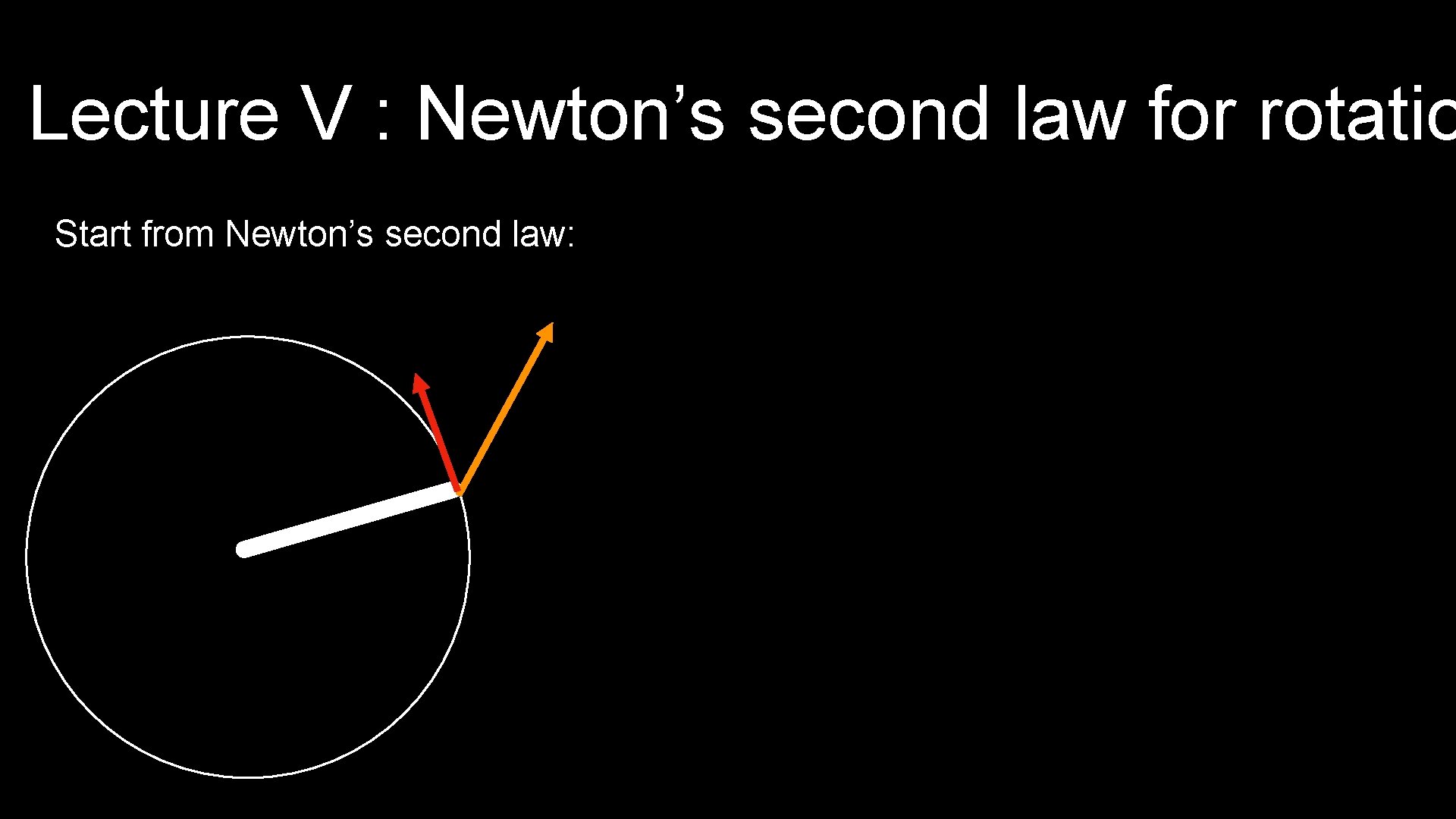
Lecture V : Newton’s second law for rotatio Start from Newton’s second law:
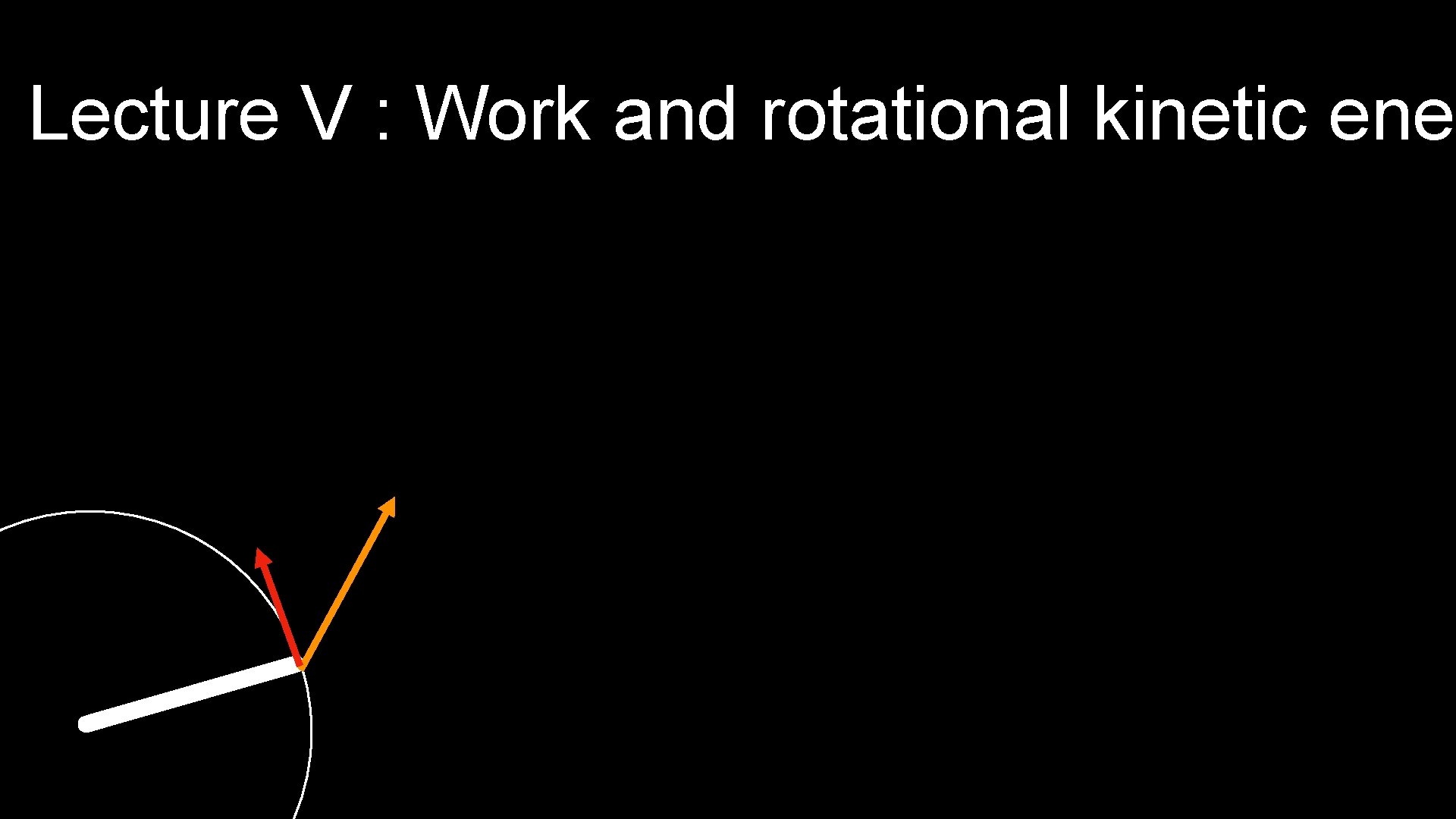
Lecture V : Work and rotational kinetic ener
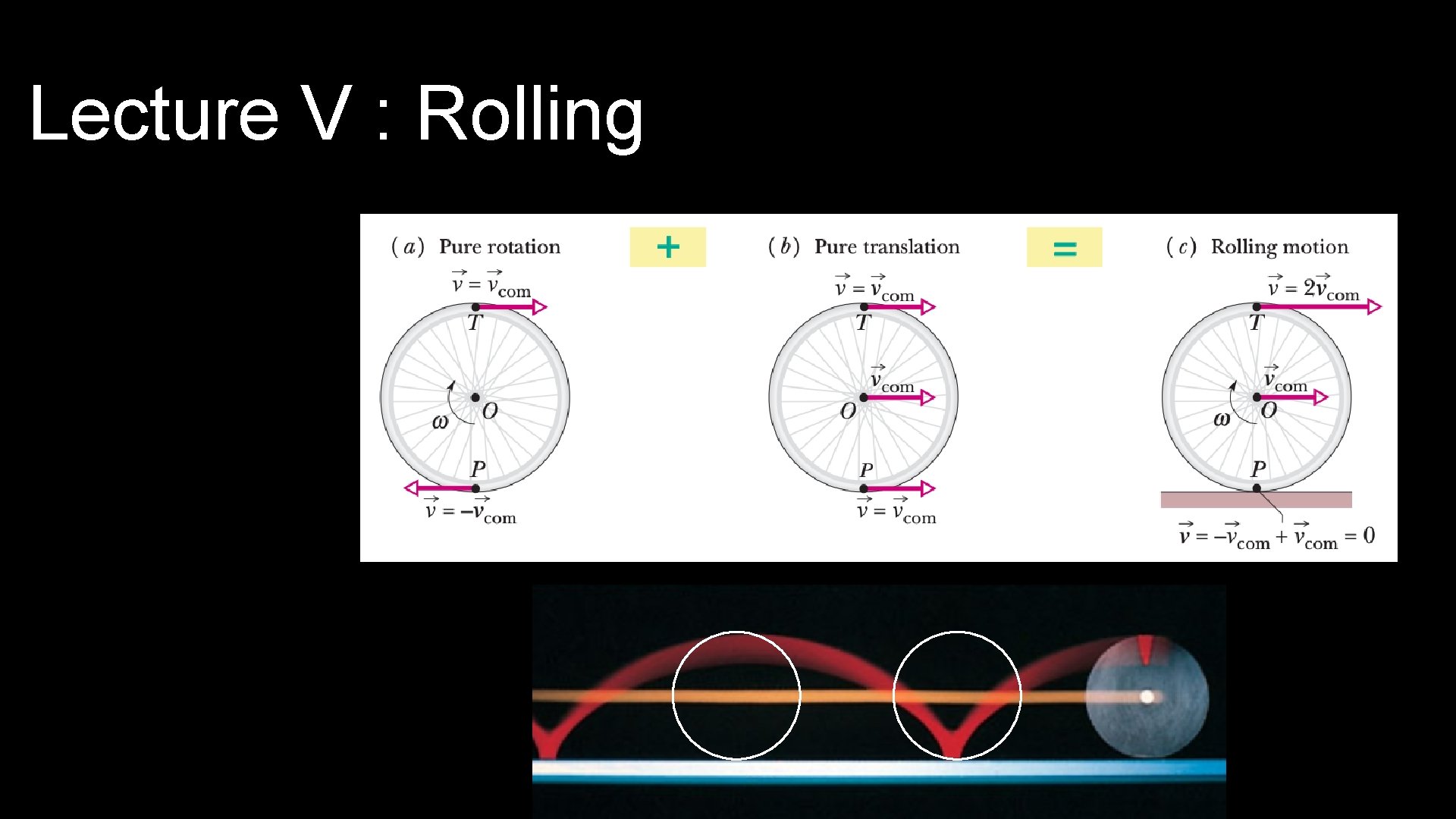
Lecture V : Rolling
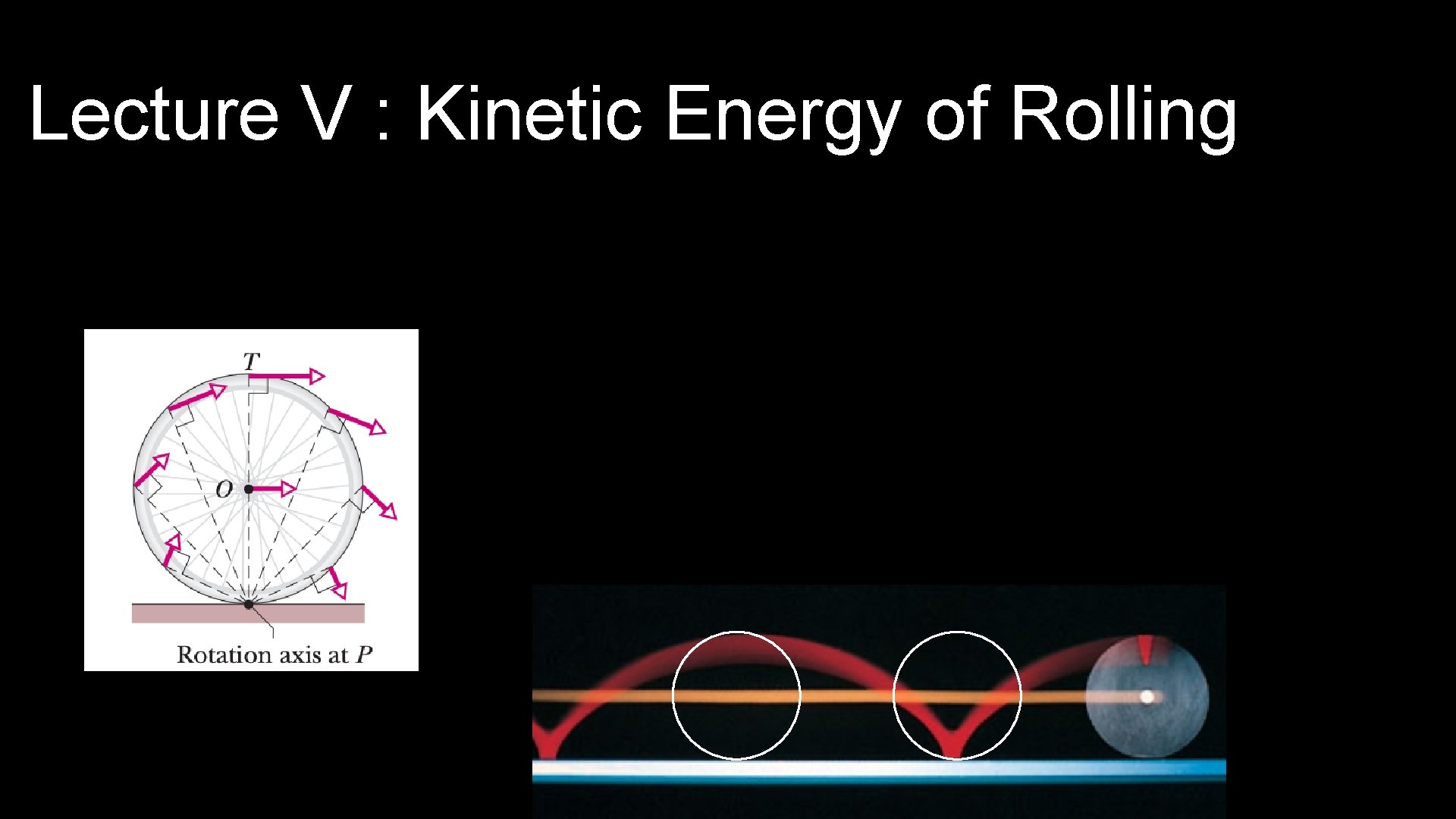
Lecture V : Kinetic Energy of Rolling
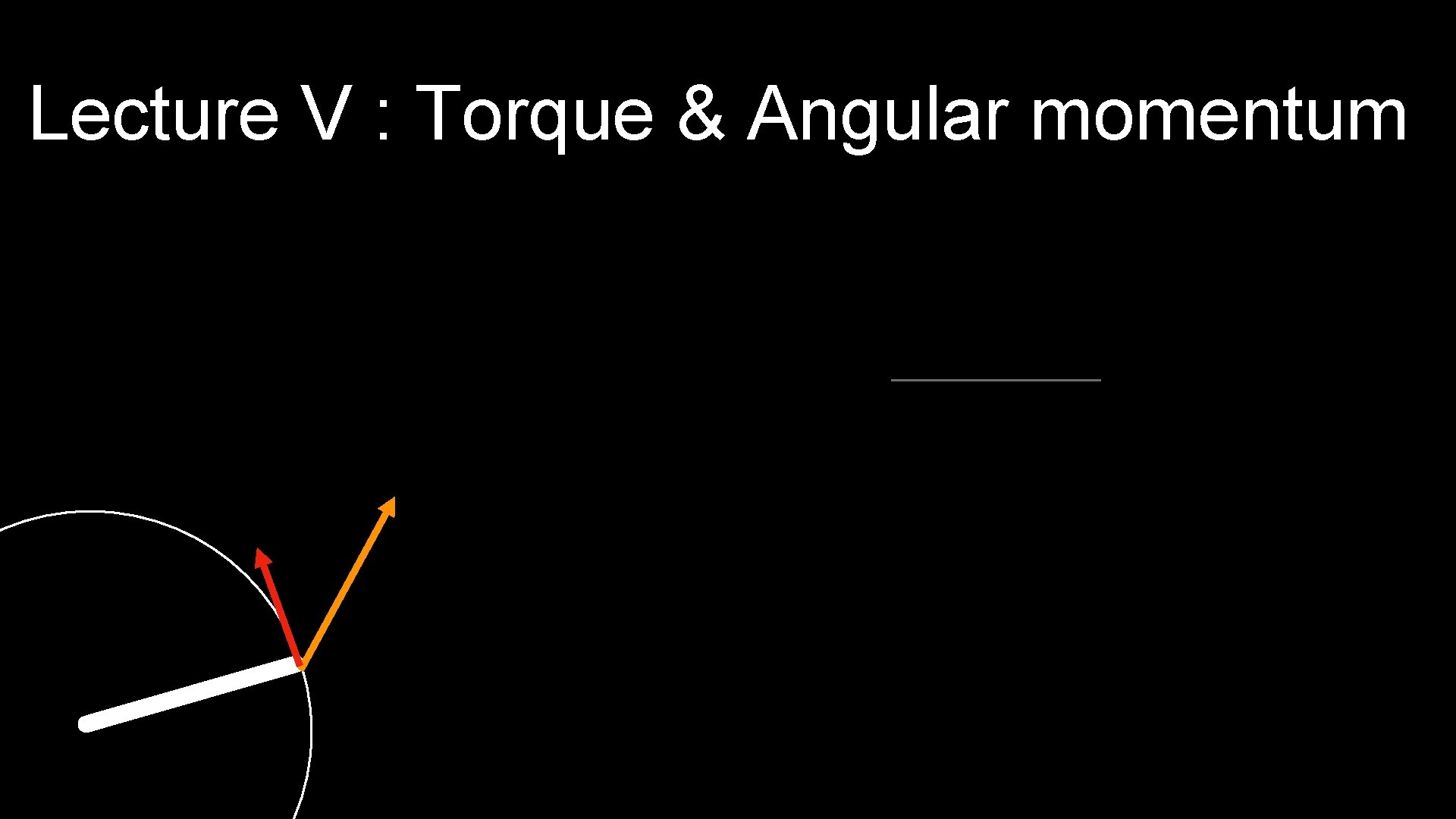
Lecture V : Torque & Angular momentum
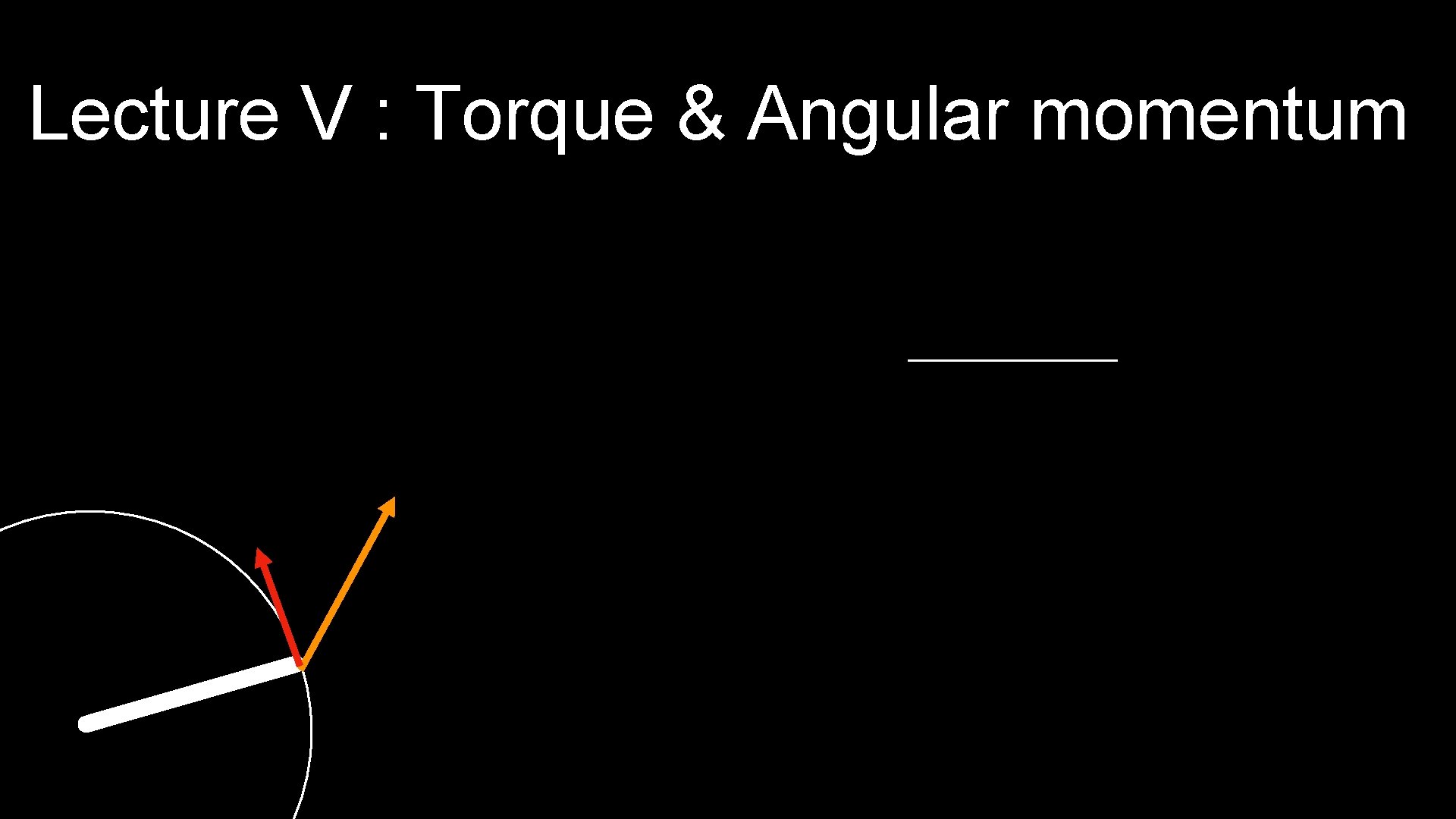
Lecture V : Torque & Angular momentum
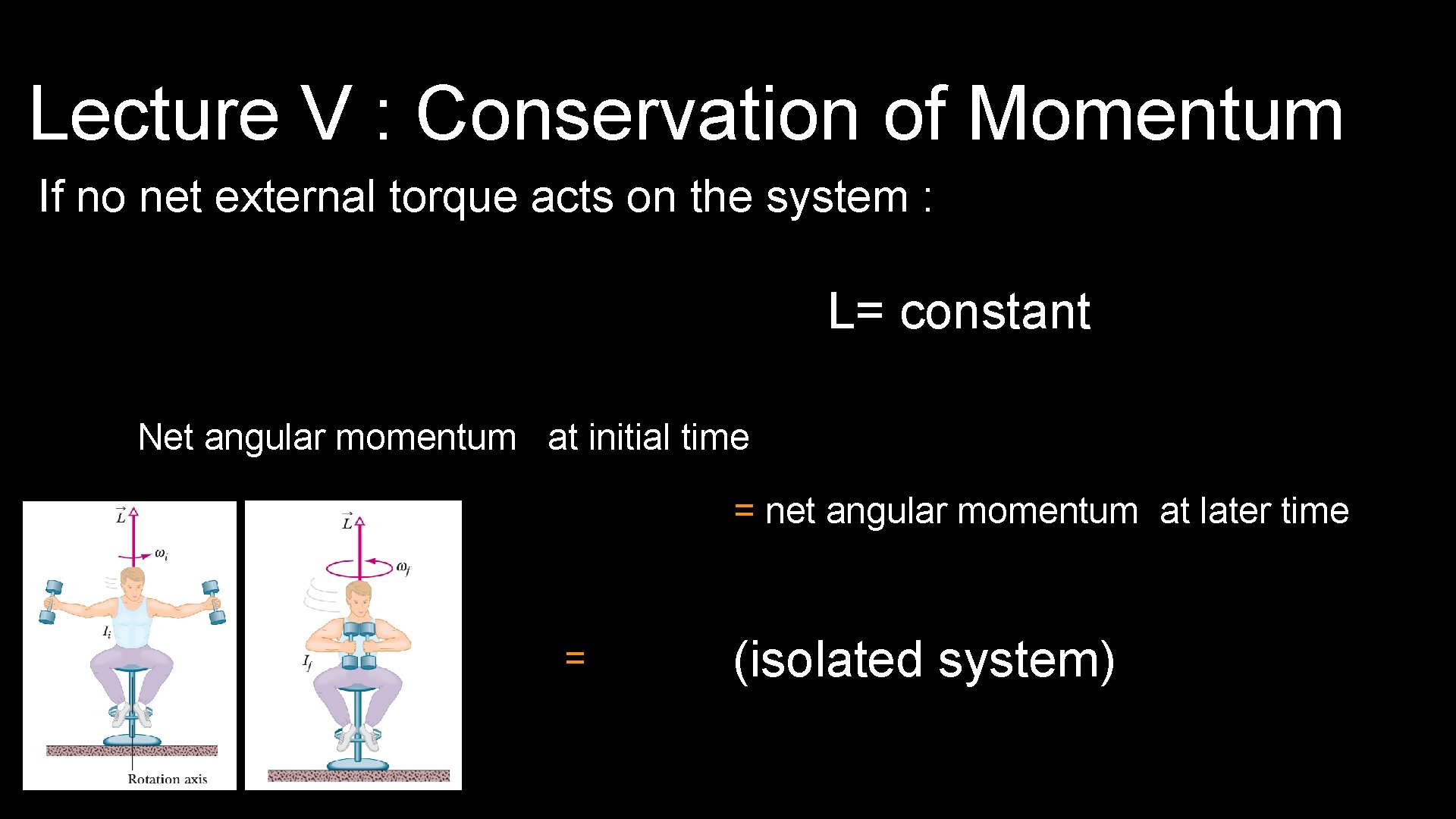
Lecture V : Conservation of Momentum If no net external torque acts on the system : L= constant Net angular momentum at initial time = net angular momentum at later time = (isolated system)
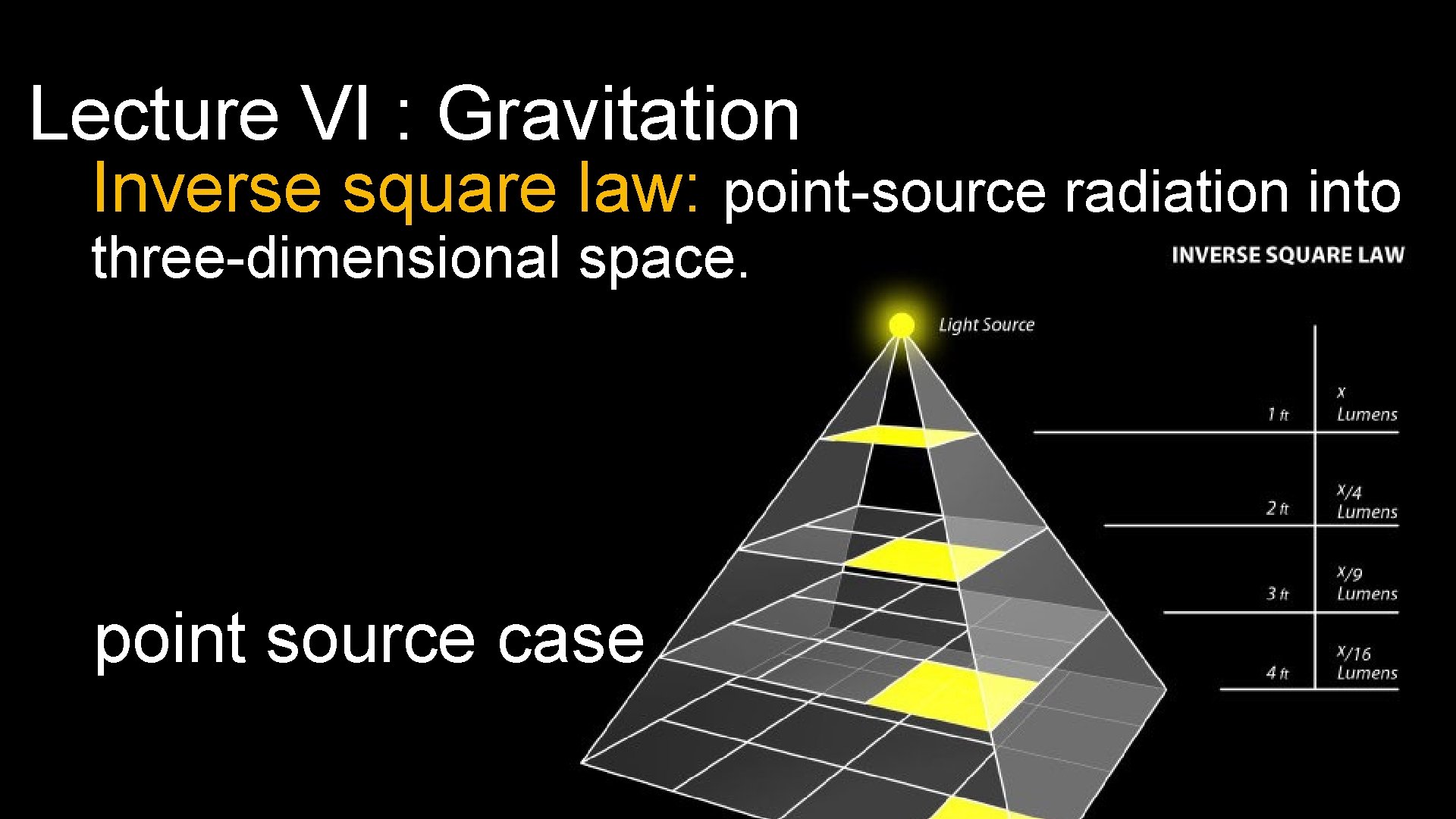
Lecture VI : Gravitation Inverse square law: point-source radiation into three-dimensional space. point source case
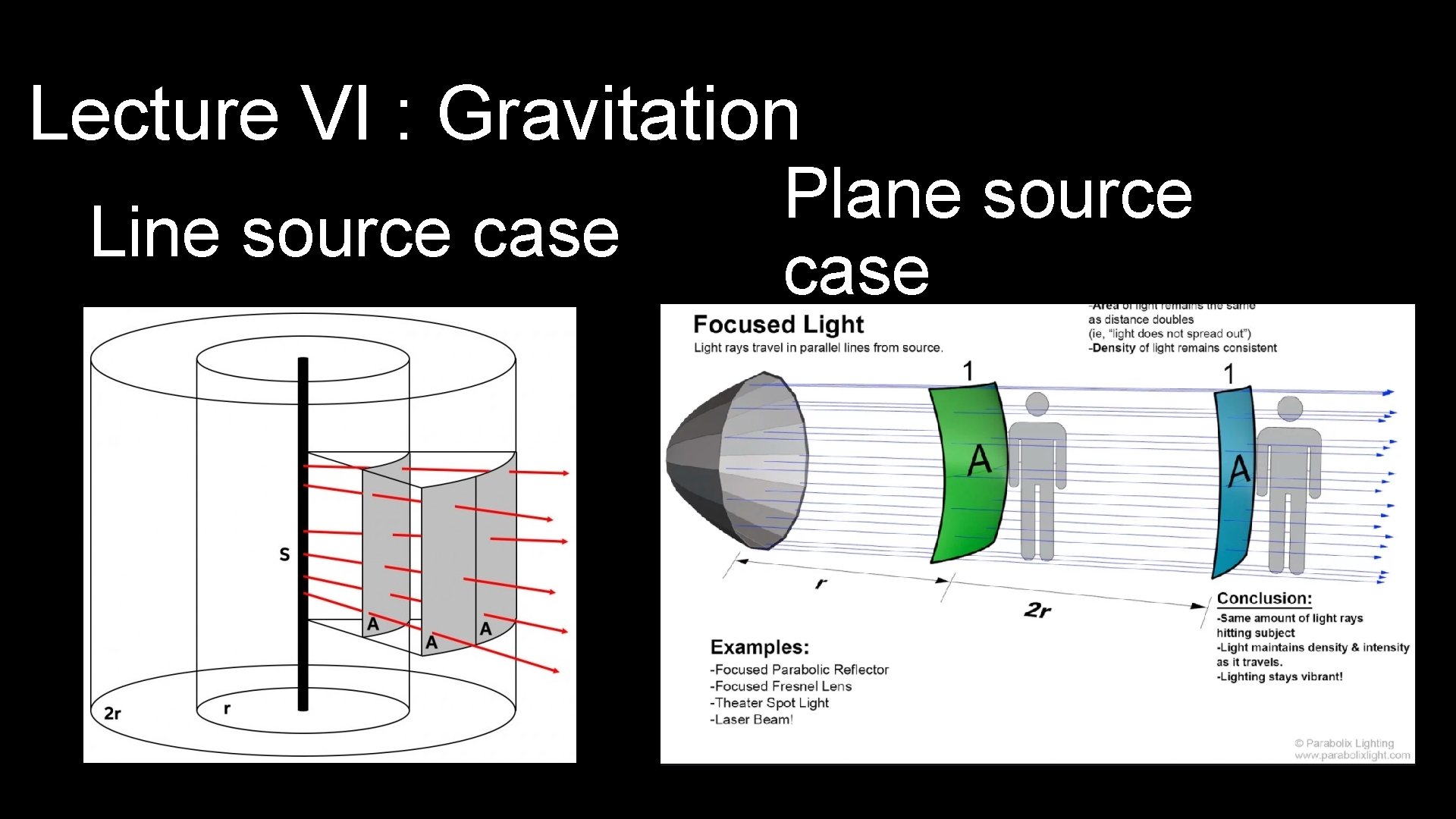
Lecture VI : Gravitation Line source case Plane source case
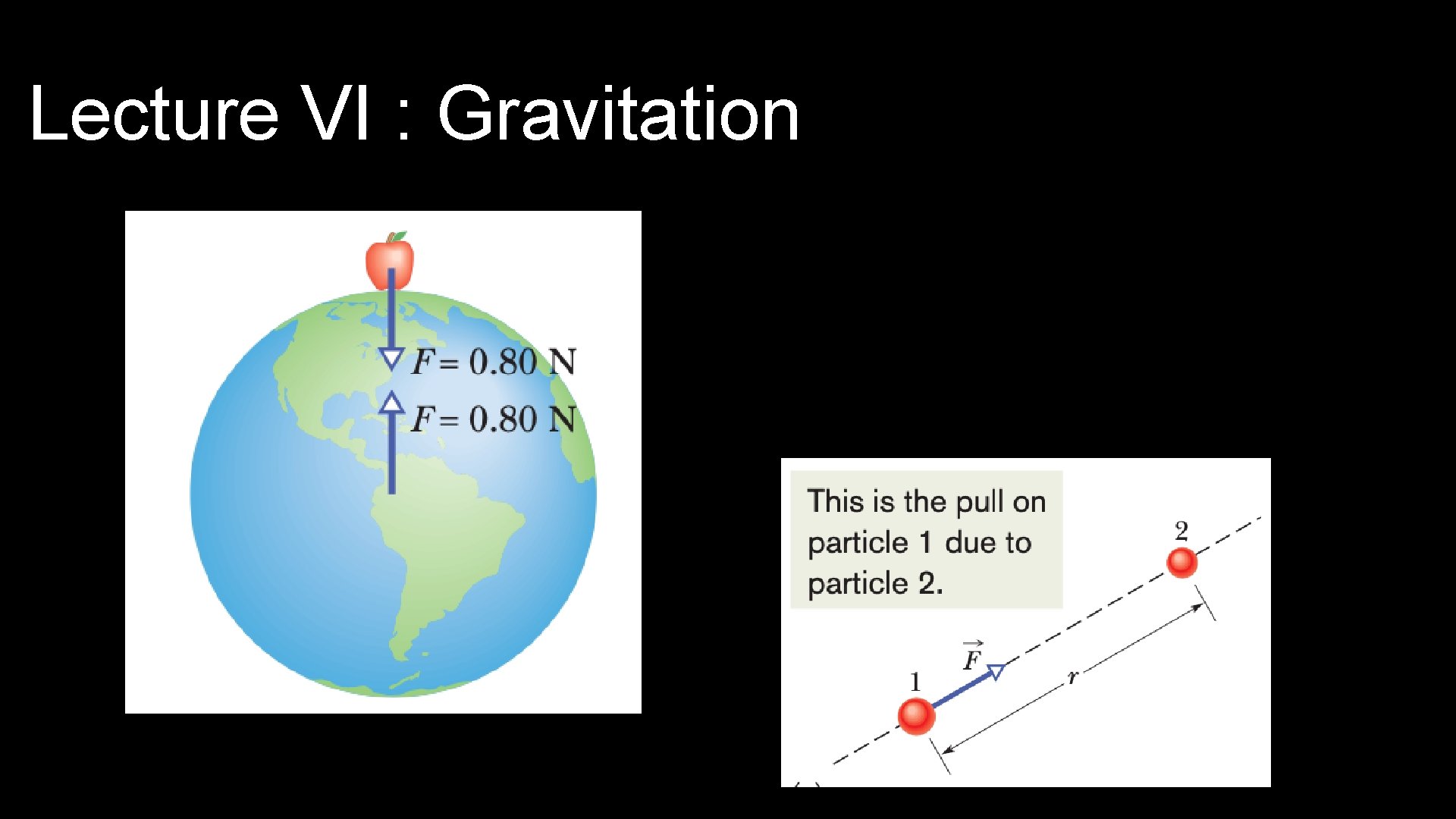
Lecture VI : Gravitation
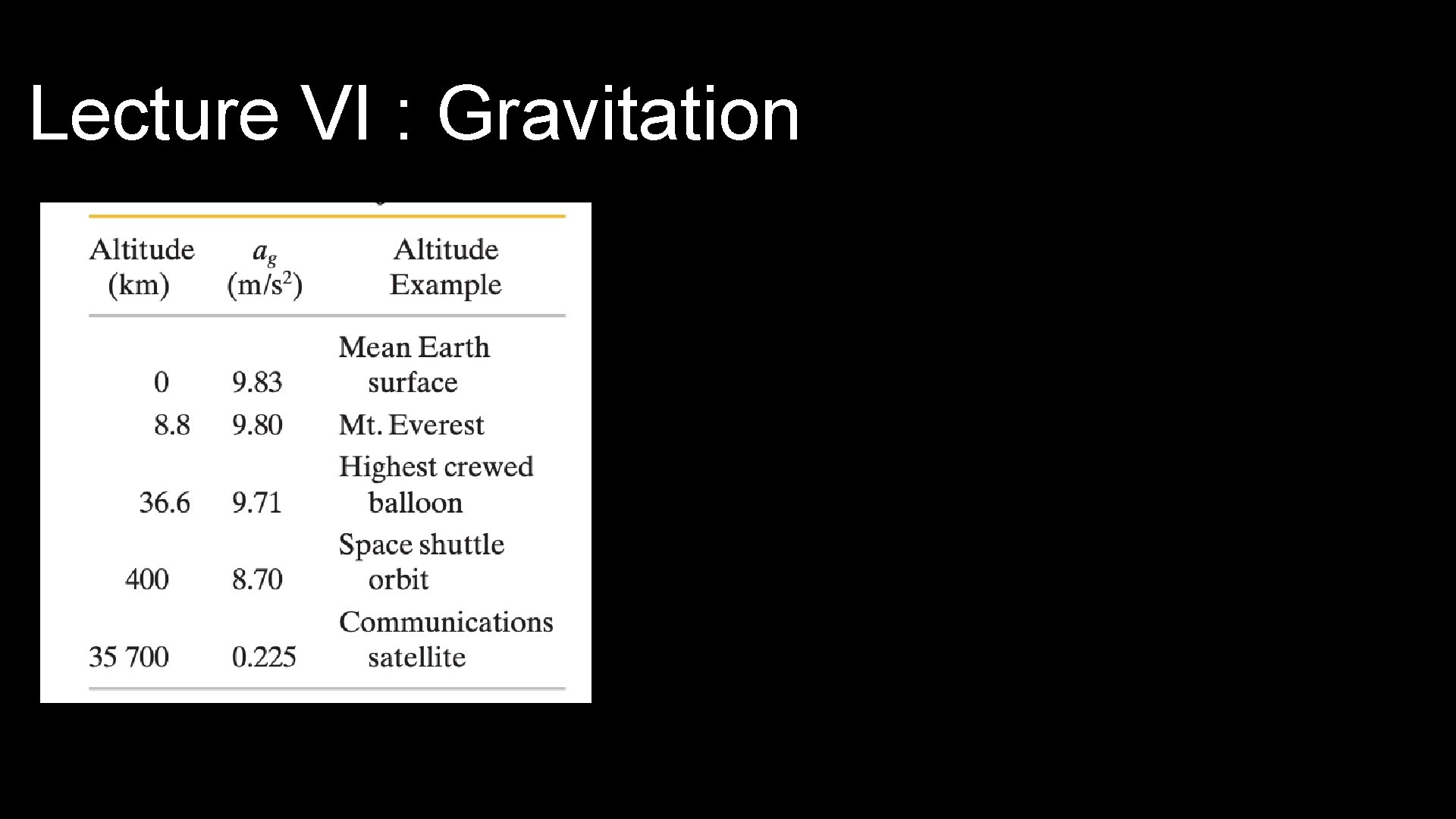
Lecture VI : Gravitation
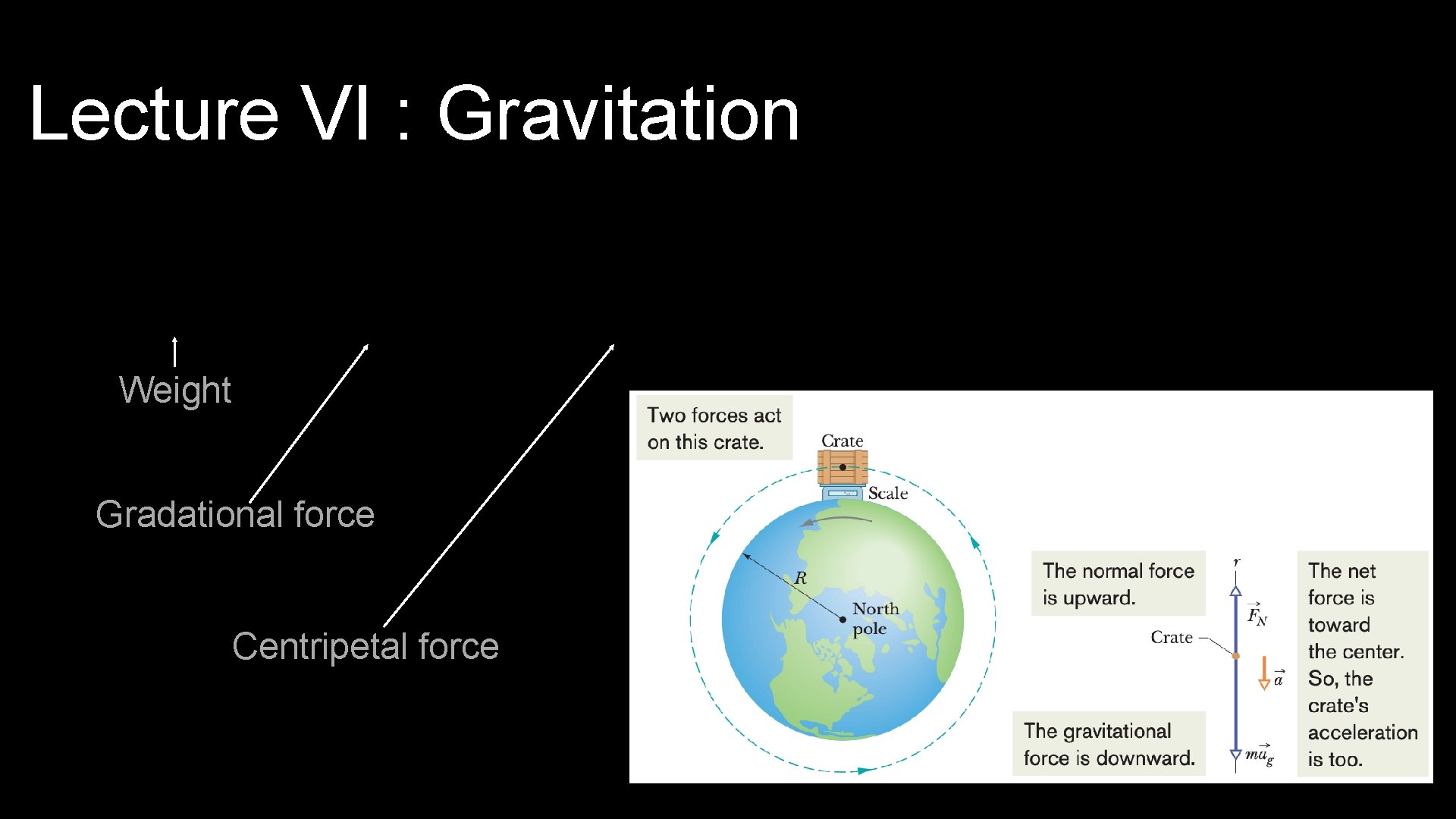
Lecture VI : Gravitation Weight Gradational force Centripetal force
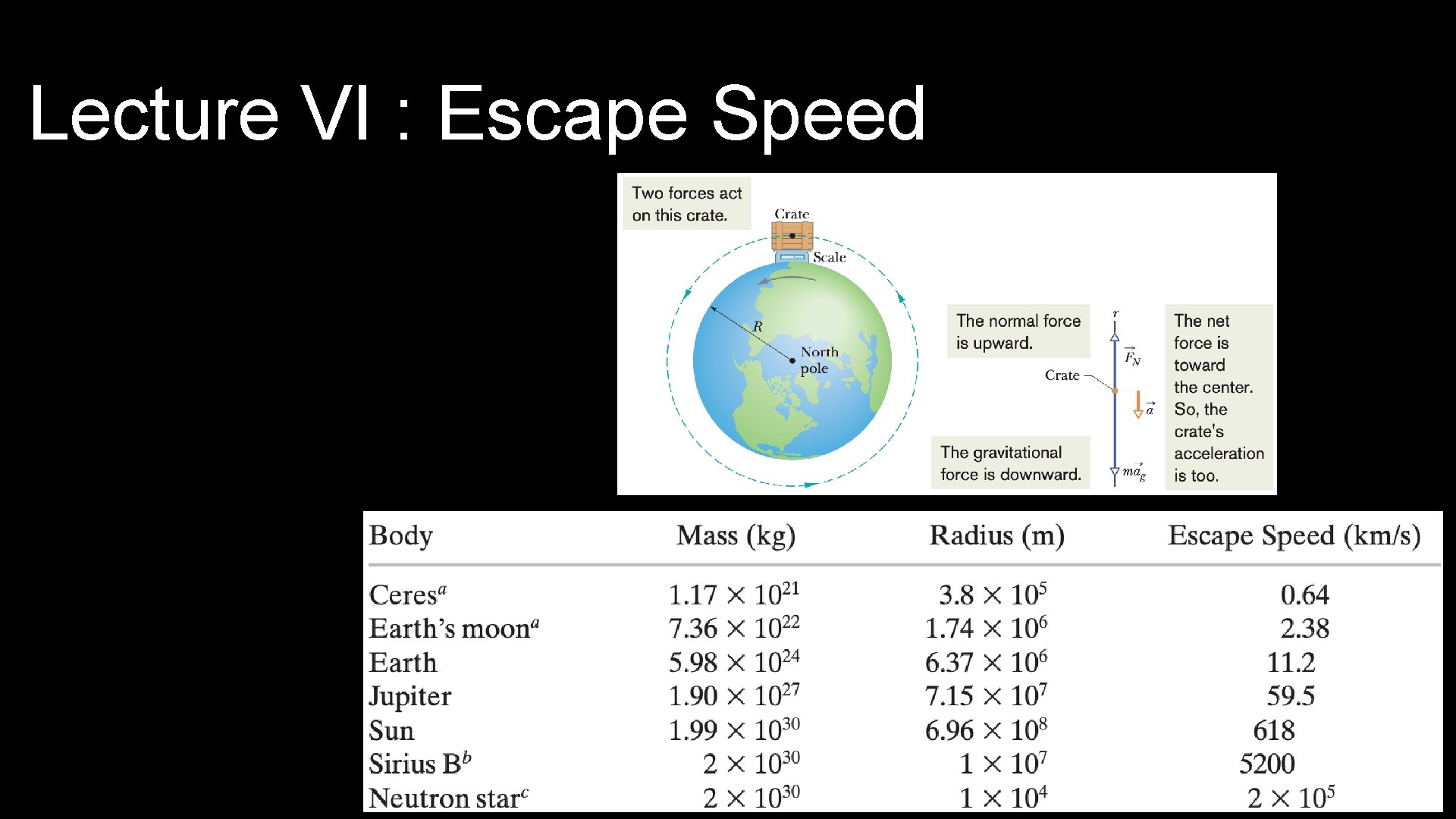
Lecture VI : Escape Speed
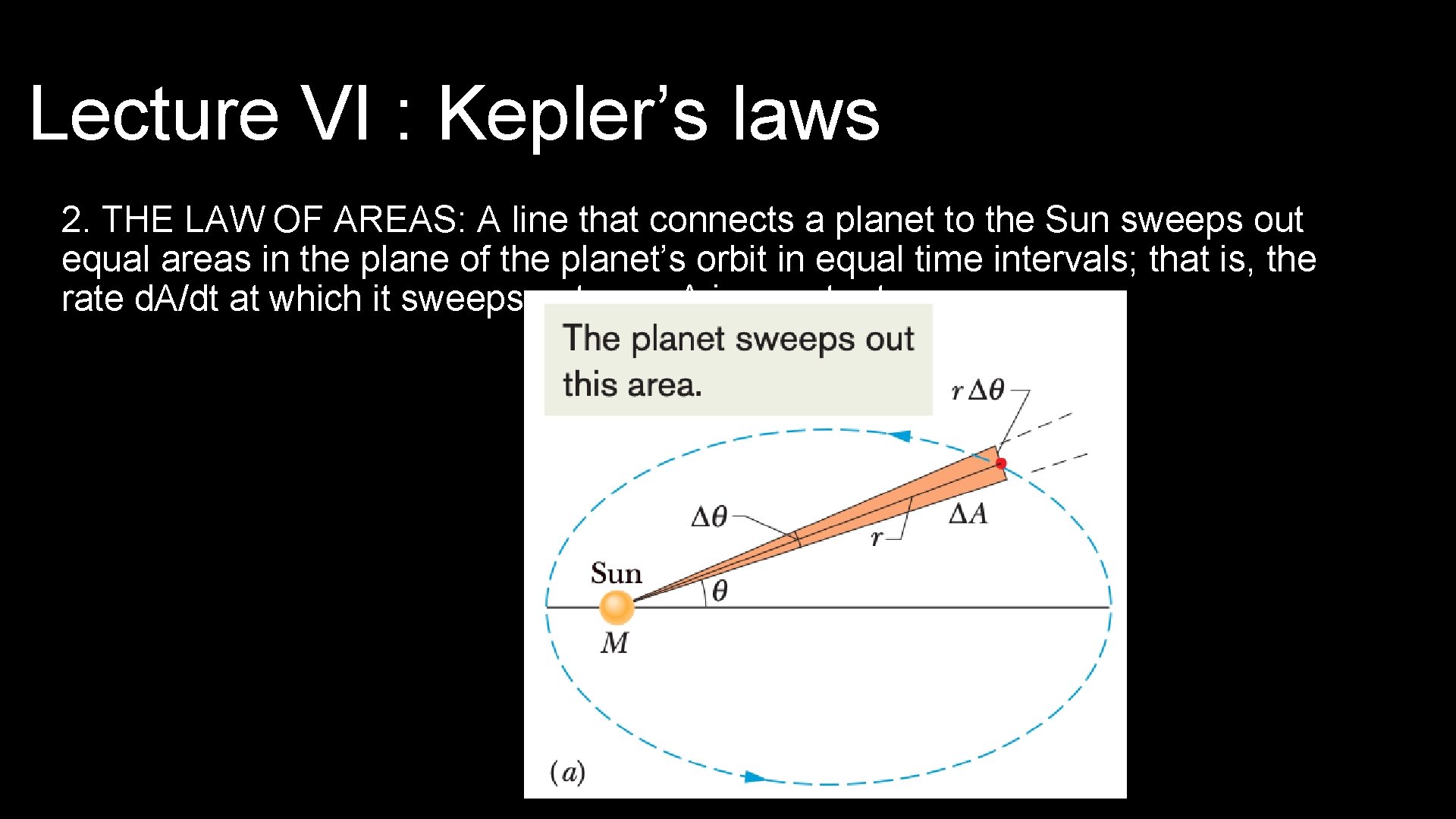
Lecture VI : Kepler’s laws 1. THE LAW OF ORBITS: All planets move in elliptical orbits, with the Sun at one focus. 2. THE LAW OF AREAS: A line that connects a planet to the Sun sweeps out equal areas in the plane of the planet’s orbit in equal time intervals; that is, the rate d. A/dt at which it sweeps out area A is constant. 3. The law of periods: The square of the period of any planet is proportional to the cube of the semi-major axis of its orbit.
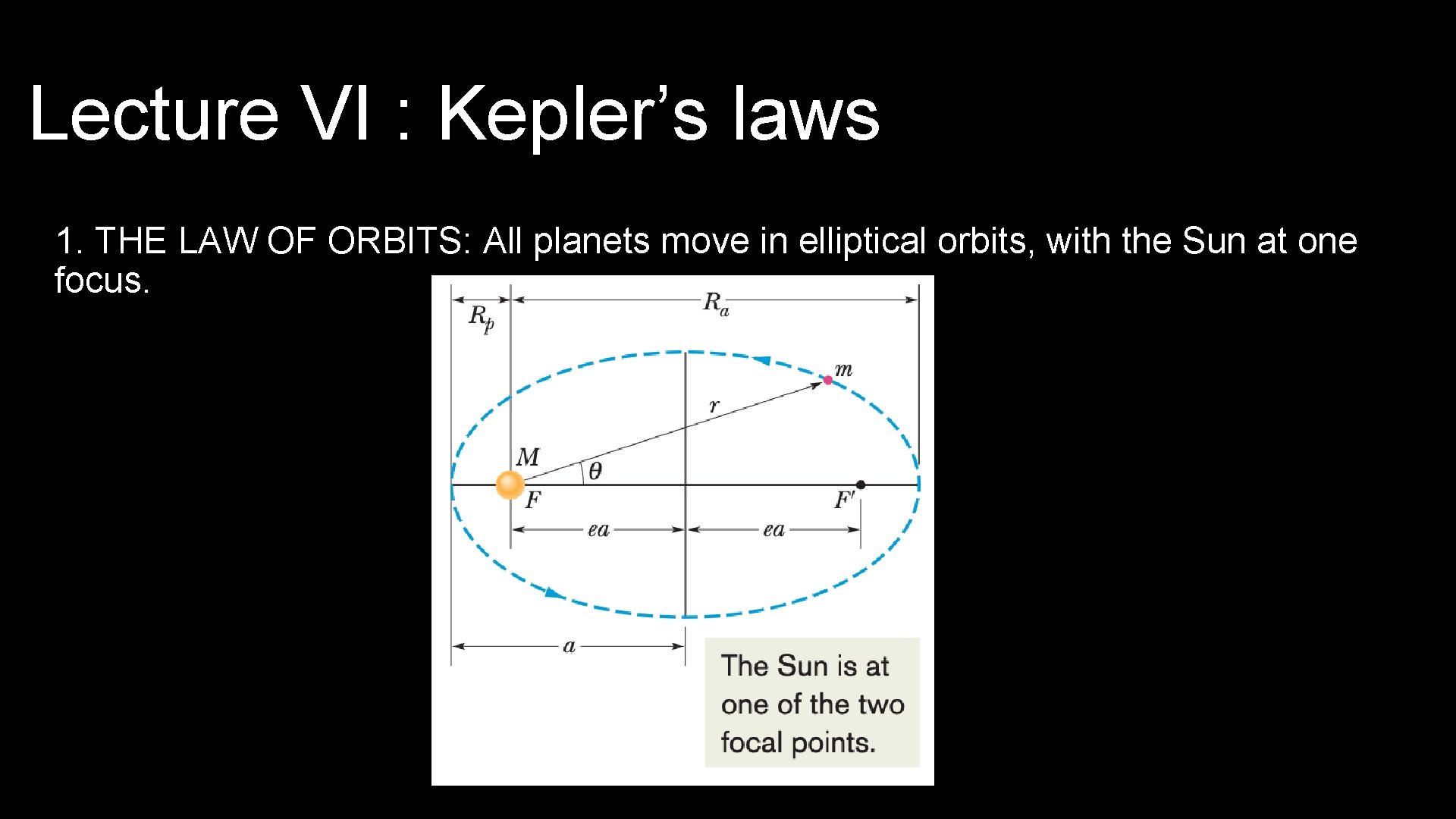
Lecture VI : Kepler’s laws 1. THE LAW OF ORBITS: All planets move in elliptical orbits, with the Sun at one focus.
Lecture VI : Kepler’s laws 2. THE LAW OF AREAS: A line that connects a planet to the Sun sweeps out equal areas in the plane of the planet’s orbit in equal time intervals; that is, the rate d. A/dt at which it sweeps out area A is constant.