
General Pattern of Climates in North America Temperatures
- Slides: 27
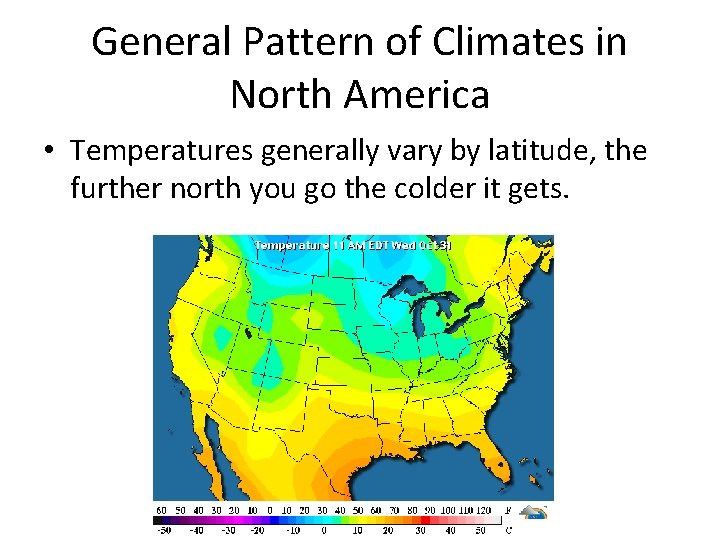
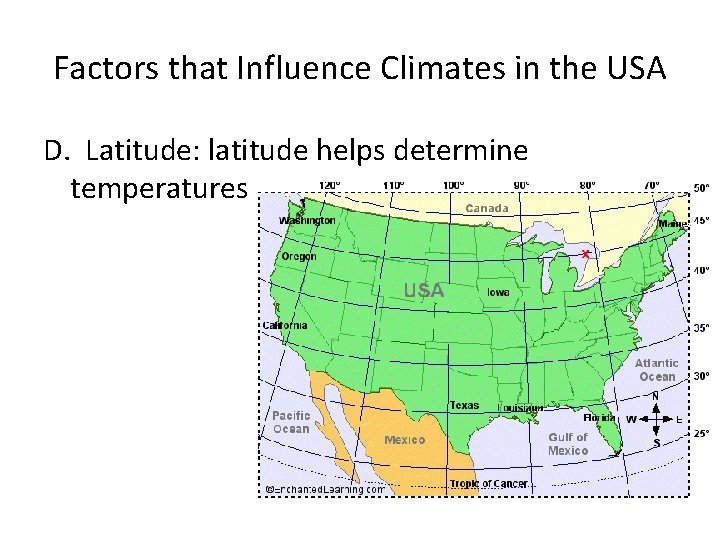
General Pattern of Climates in North America • Temperatures generally vary by latitude, the further north you go the colder it gets.
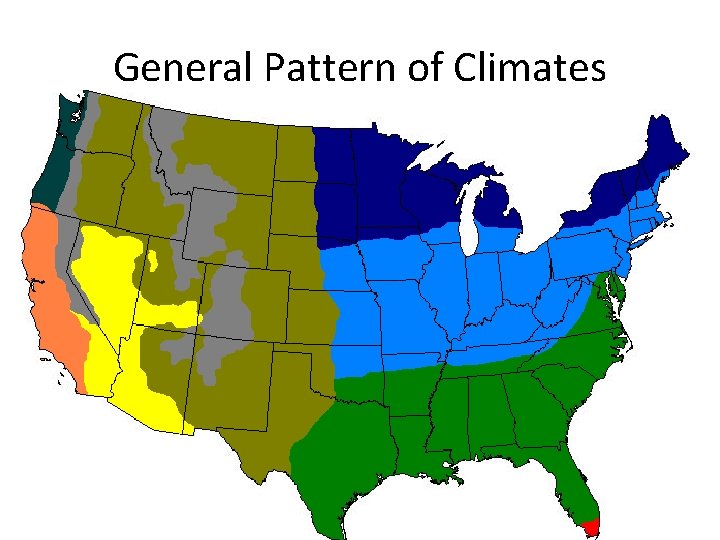
General Pattern of Climates
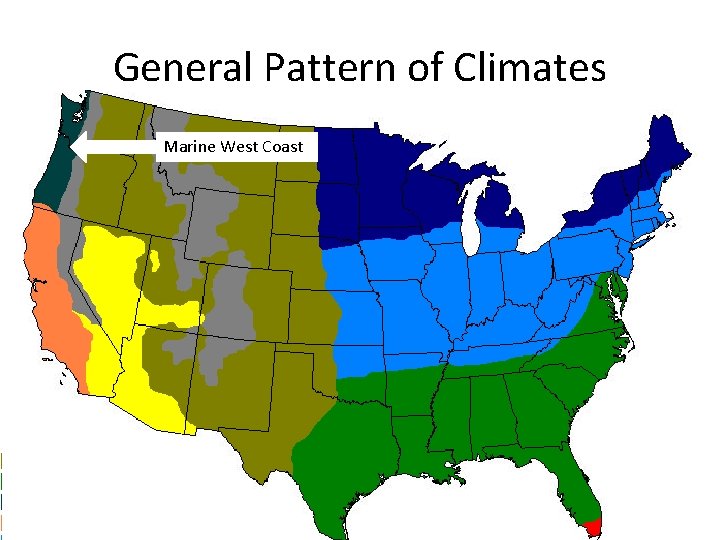
General Pattern of Climates Marine West Coast
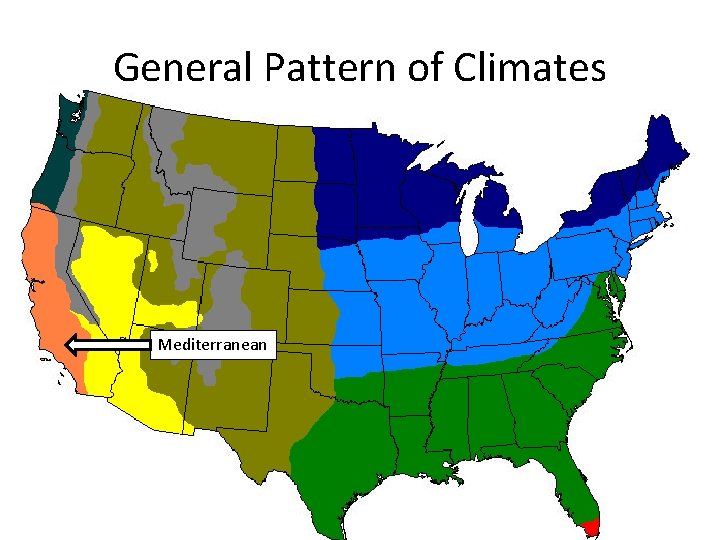
General Pattern of Climates Mediterranean
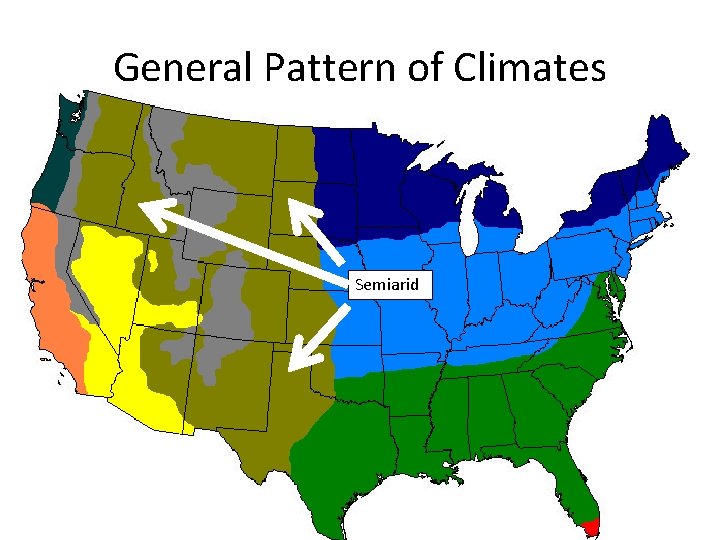
General Pattern of Climates Semiarid
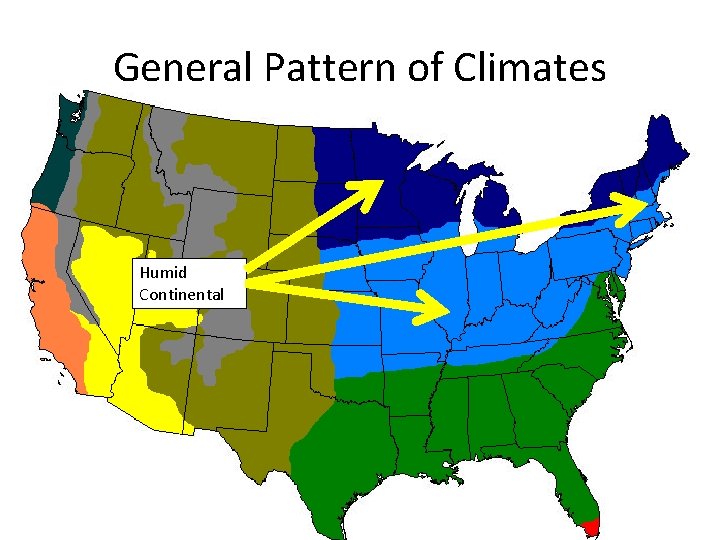
General Pattern of Climates Humid Continental
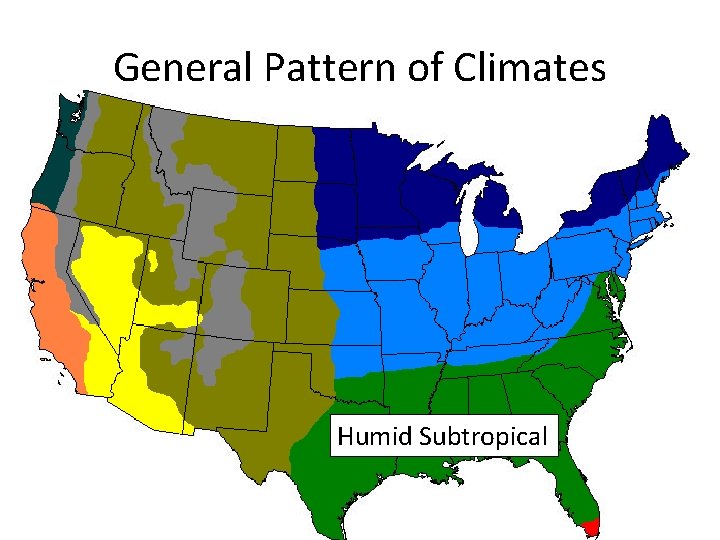
General Pattern of Climates Humid Subtropical
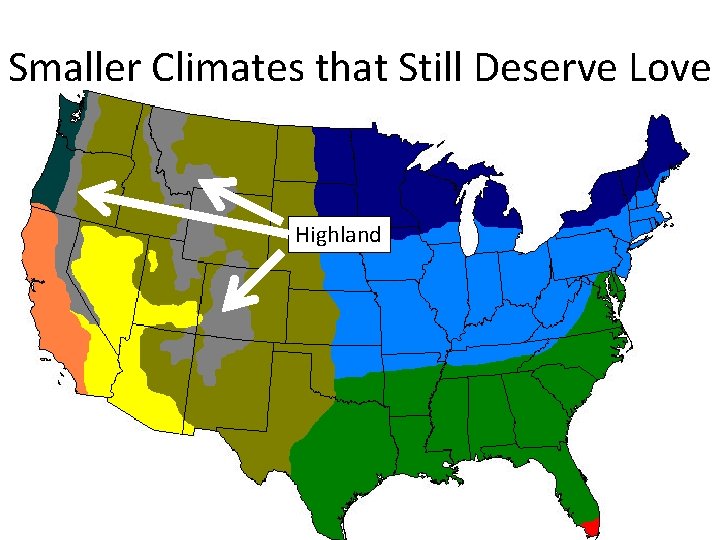
Smaller Climates that Still Deserve Love Highland
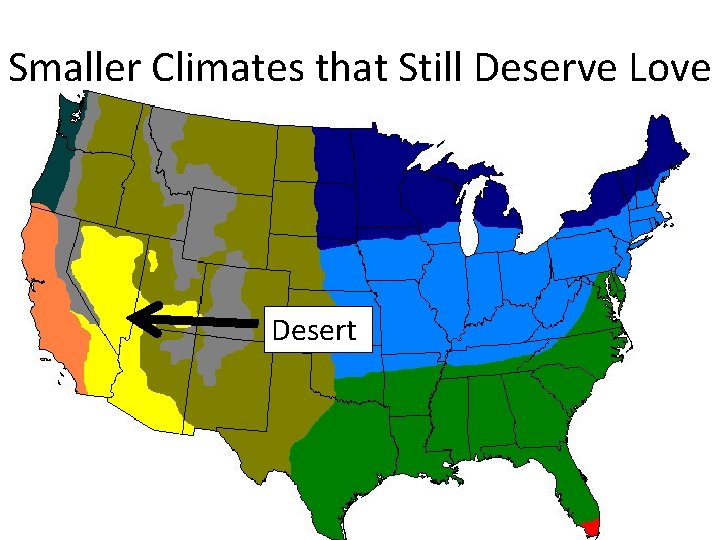
Smaller Climates that Still Deserve Love Desert
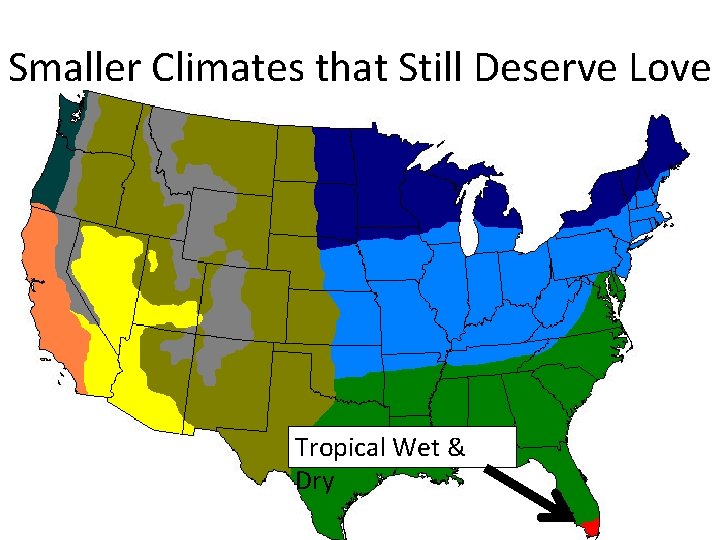
Smaller Climates that Still Deserve Love Tropical Wet & Dry
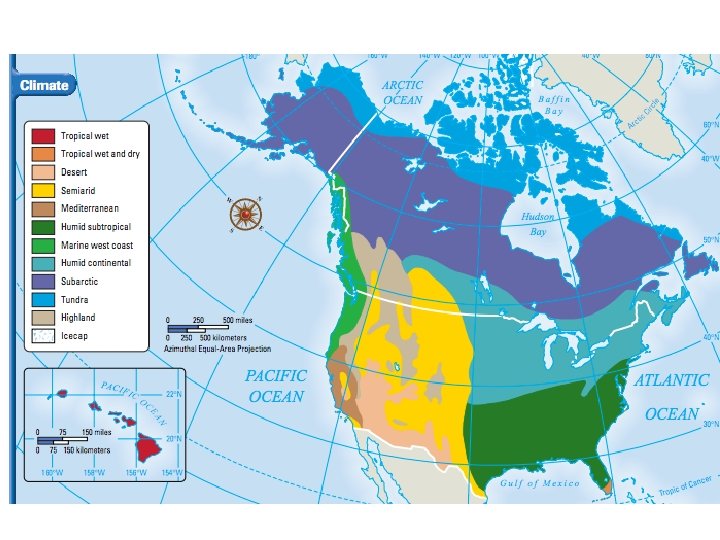
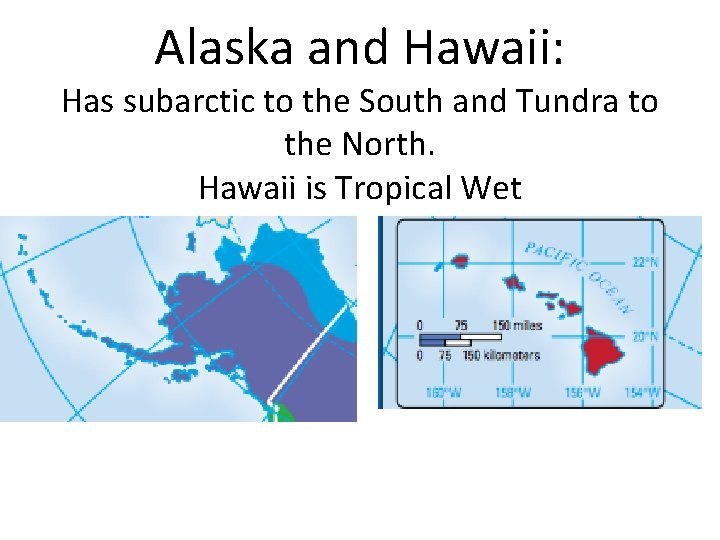
Alaska and Hawaii: Has subarctic to the South and Tundra to the North. Hawaii is Tropical Wet
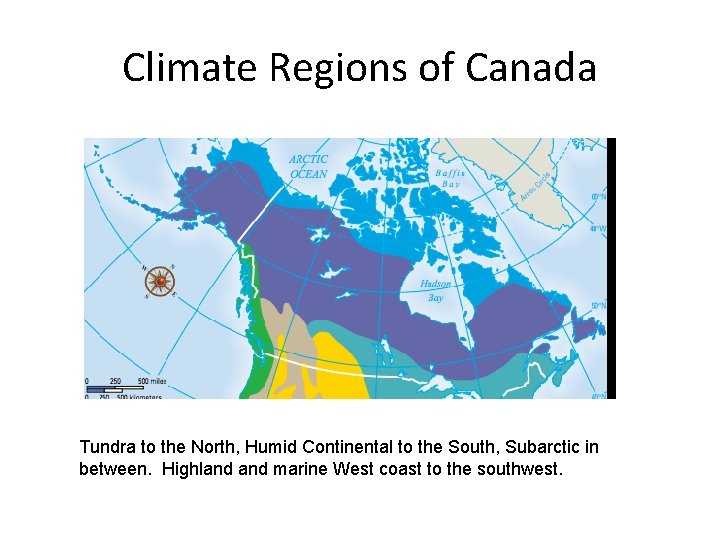
Climate Regions of Canada Tundra to the North, Humid Continental to the South, Subarctic in between. Highland marine West coast to the southwest.
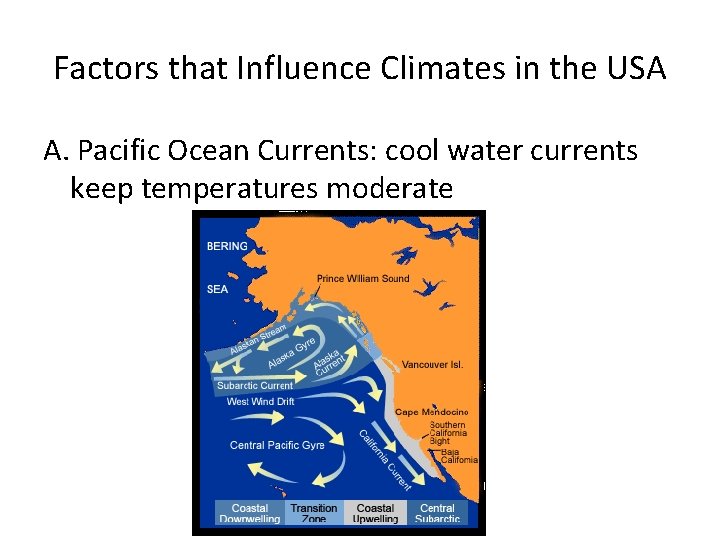
Factors that Influence Climates in the USA A. Pacific Ocean Currents: cool water currents keep temperatures moderate
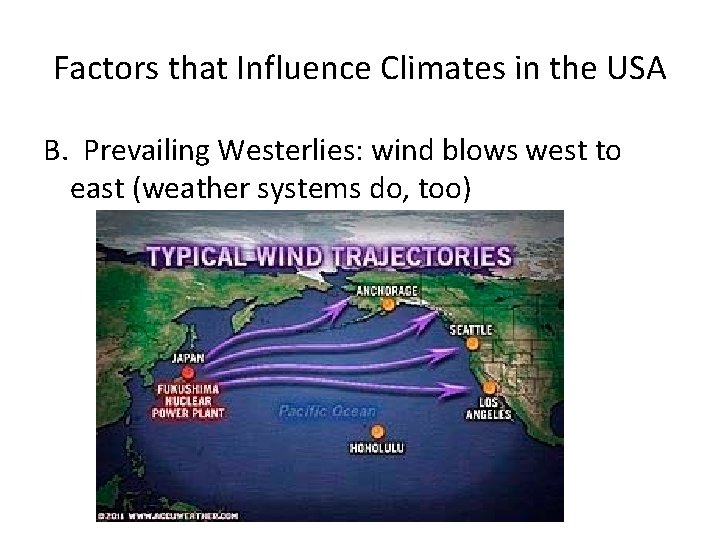
Factors that Influence Climates in the USA B. Prevailing Westerlies: wind blows west to east (weather systems do, too)
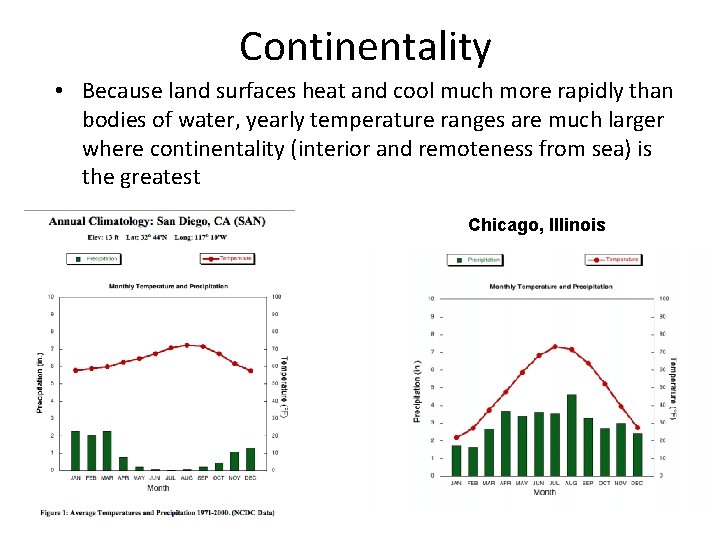
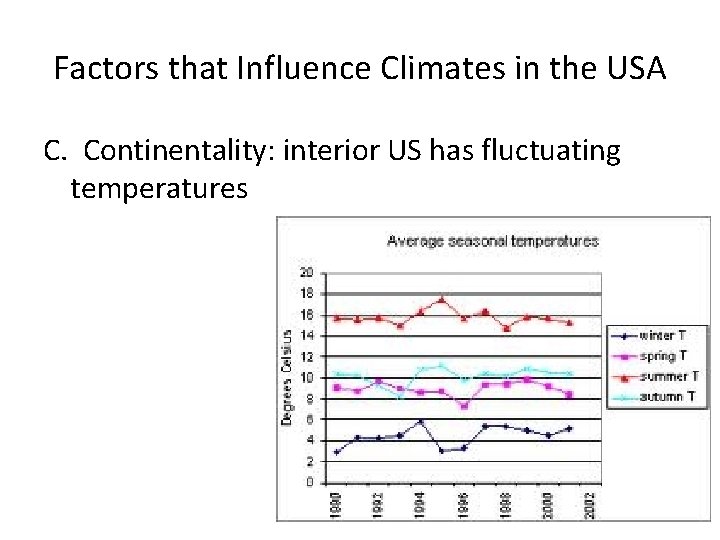
Continentality • Because land surfaces heat and cool much more rapidly than bodies of water, yearly temperature ranges are much larger where continentality (interior and remoteness from sea) is the greatest Chicago, Illinois
Factors that Influence Climates in the USA C. Continentality: interior US has fluctuating temperatures
Factors that Influence Climates in the USA D. Latitude: latitude helps determine temperatures
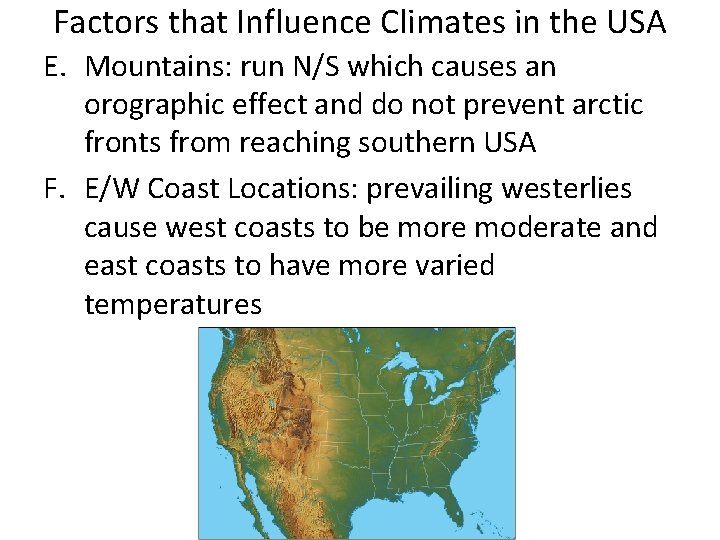
Factors that Influence Climates in the USA E. Mountains: run N/S which causes an orographic effect and do not prevent arctic fronts from reaching southern USA F. E/W Coast Locations: prevailing westerlies cause west coasts to be more moderate and east coasts to have more varied temperatures
USA Natural Hazards
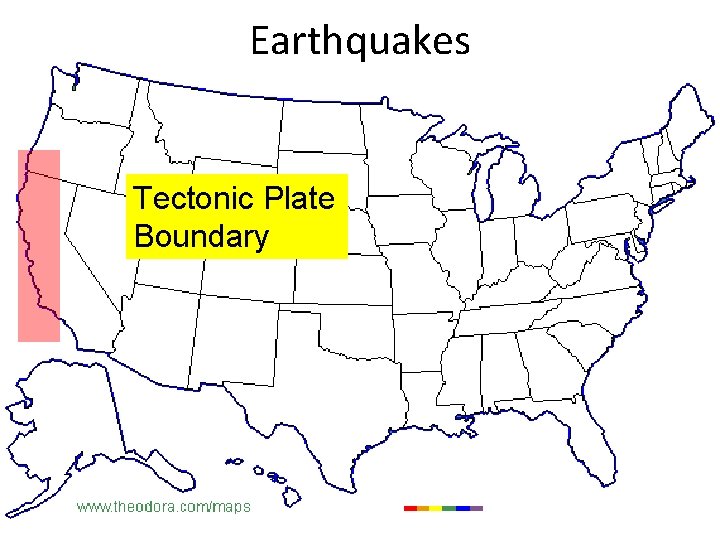
Earthquakes Tectonic Plate Boundary
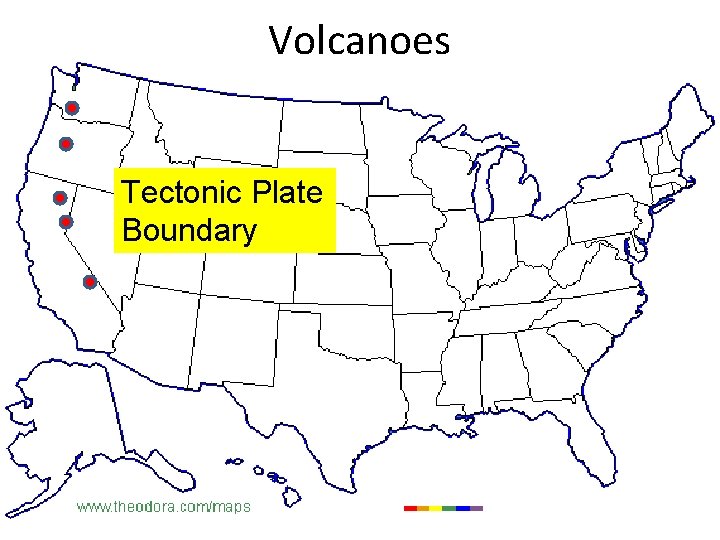
Volcanoes Tectonic Plate Boundary
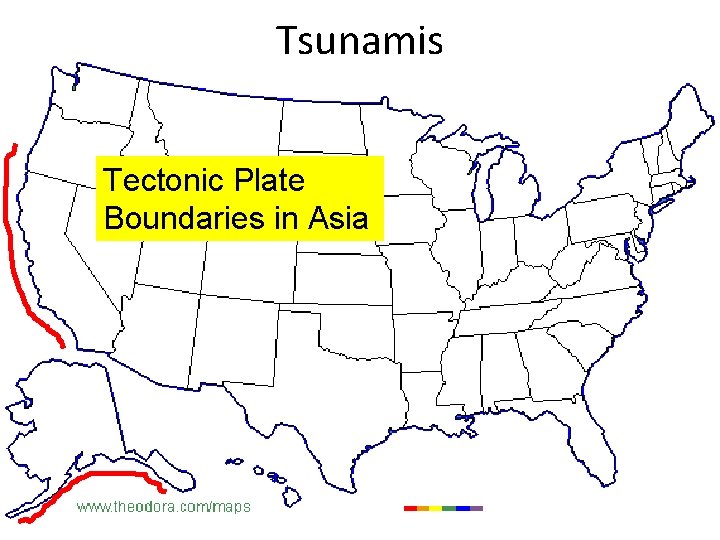
Tsunamis Tectonic Plate Boundaries in Asia
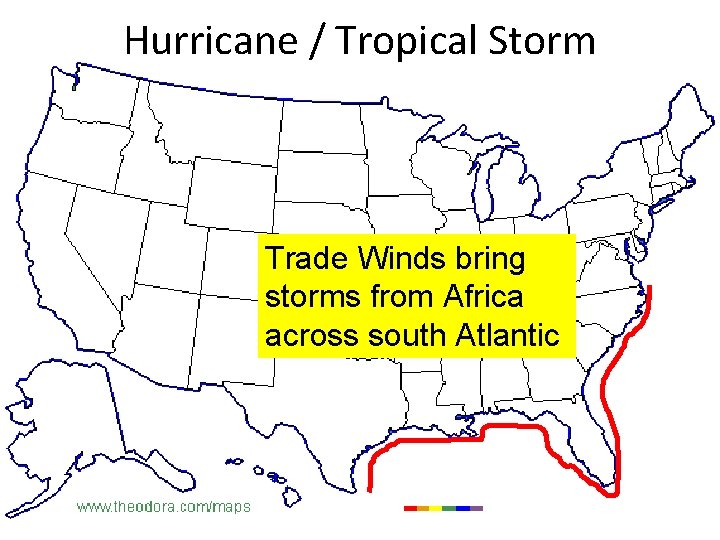
Hurricane / Tropical Storm Trade Winds bring storms from Africa across south Atlantic
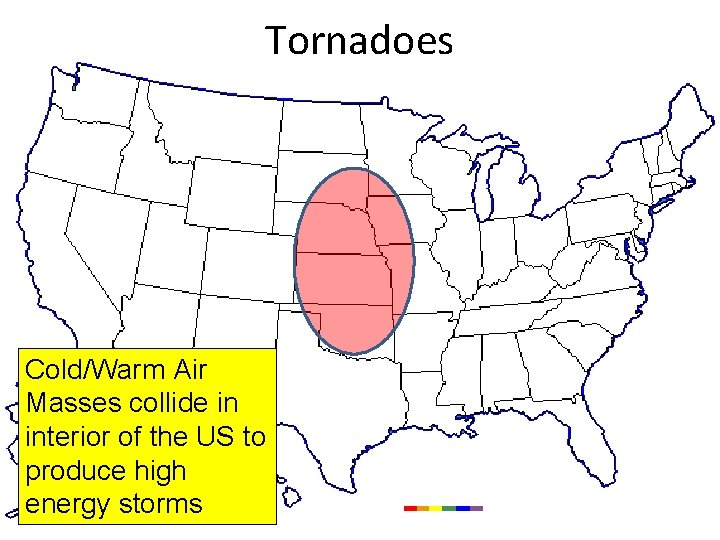
Tornadoes Cold/Warm Air Masses collide in interior of the US to produce high energy storms
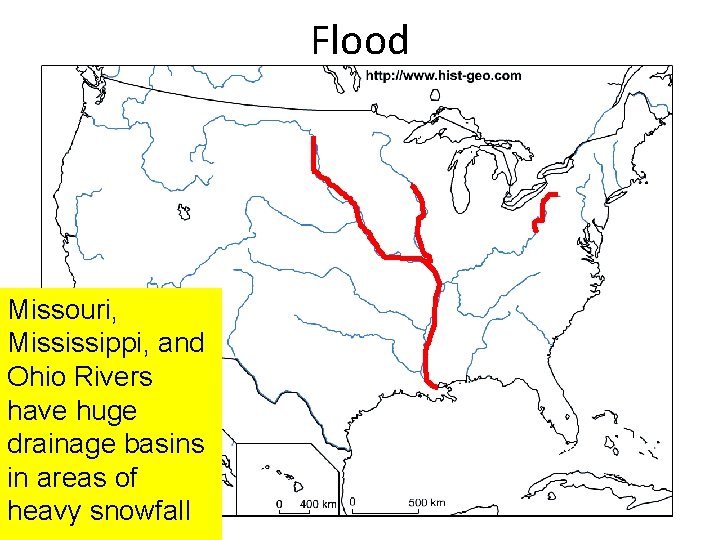
Flood Missouri, Mississippi, and Ohio Rivers have huge drainage basins in areas of heavy snowfall
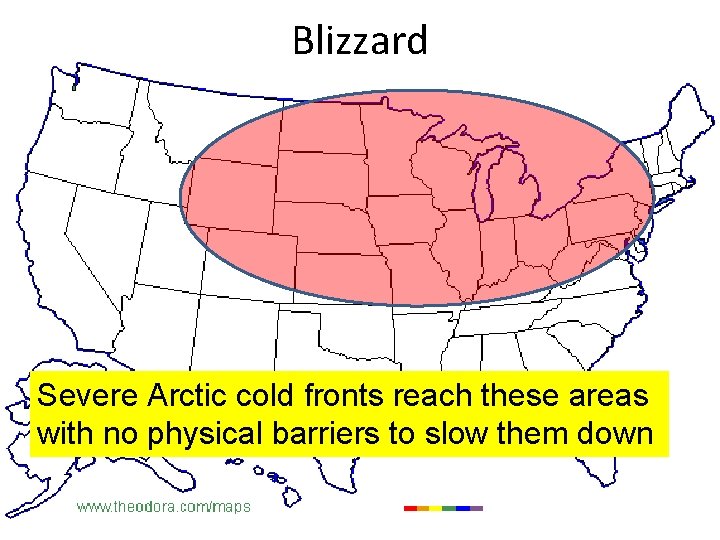
Blizzard Severe Arctic cold fronts reach these areas with no physical barriers to slow them down