
General pattern of cisacting control elements that regulate

- Slides: 53
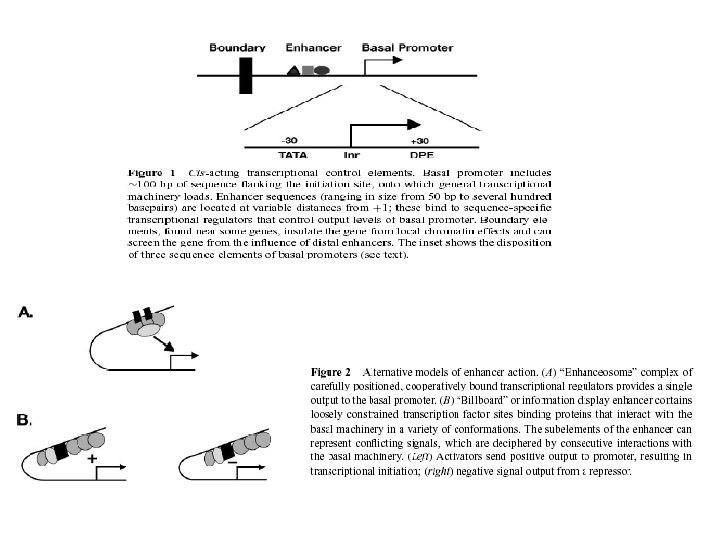
General pattern of cis-acting control elements that regulate gene expression in yeast and metazoans (a) Genes of multicellular organisms contain both promoter-proximal elements and enhancers as well as a TATA box or other promoter element. The latter positions RNA polymerase II to initiate transcription at the start site and influences the rate of transcription. Enhancers may be either upstream or downstream and as far away as 50 kb from the transcription start site. In some cases, promoter-proximal elements occur downstream from the start site as well. (b) Most yeast genes contain only one regulatory region, called an upstream activating sequence (UAS), and a TATA box, which is ≈90 base pairs upstream from the start site.
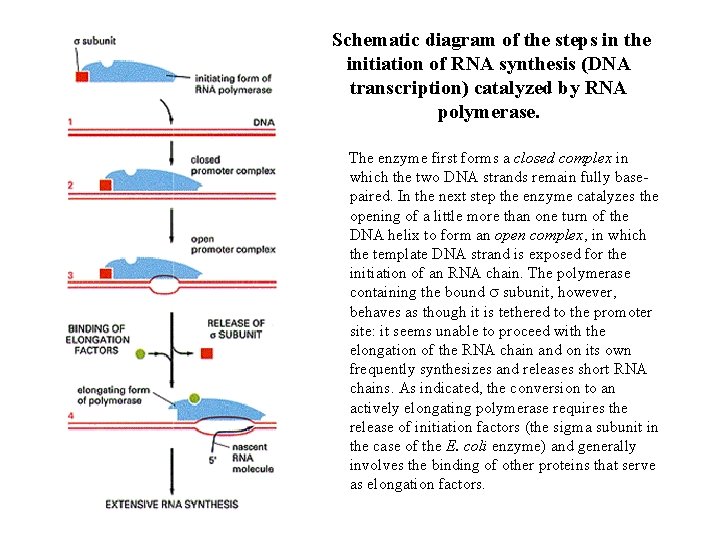
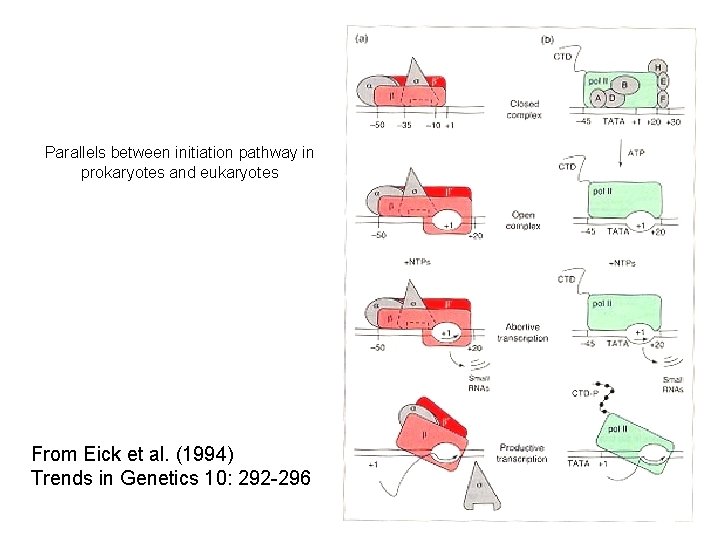
Schematic diagram of the steps in the initiation of RNA synthesis (DNA transcription) catalyzed by RNA polymerase. The enzyme first forms a closed complex in which the two DNA strands remain fully basepaired. In the next step the enzyme catalyzes the opening of a little more than one turn of the DNA helix to form an open complex, in which the template DNA strand is exposed for the initiation of an RNA chain. The polymerase containing the bound s subunit, however, behaves as though it is tethered to the promoter site: it seems unable to proceed with the elongation of the RNA chain and on its own frequently synthesizes and releases short RNA chains. As indicated, the conversion to an actively elongating polymerase requires the release of initiation factors (the sigma subunit in the case of the E. coli enzyme) and generally involves the binding of other proteins that serve as elongation factors.
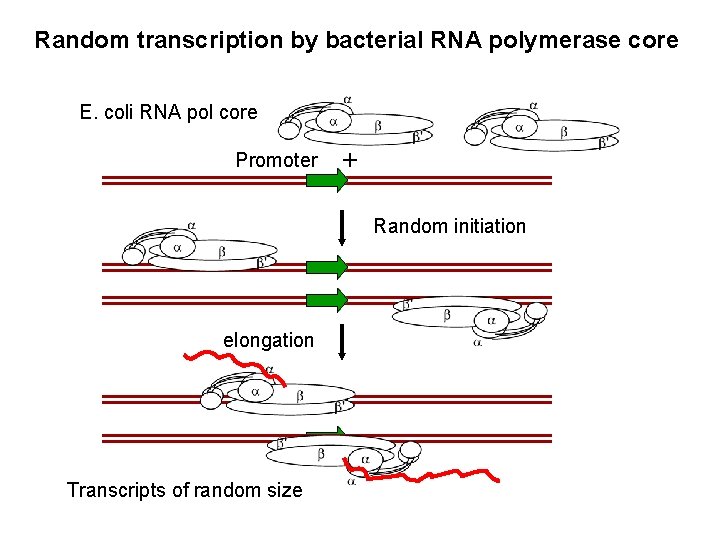
Random transcription by bacterial RNA polymerase core E. coli RNA pol core Promoter + Random initiation elongation Transcripts of random size
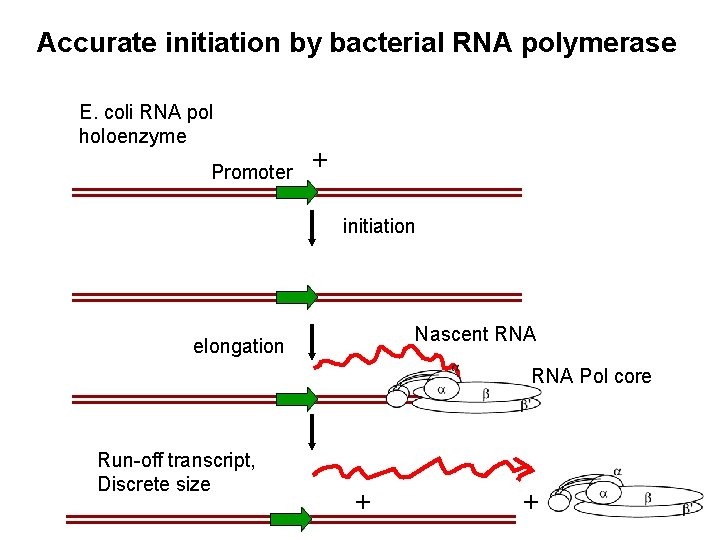
Accurate initiation by bacterial RNA polymerase E. coli RNA pol holoenzyme Promoter + initiation Nascent RNA elongation RNA Pol core Run-off transcript, Discrete size + +
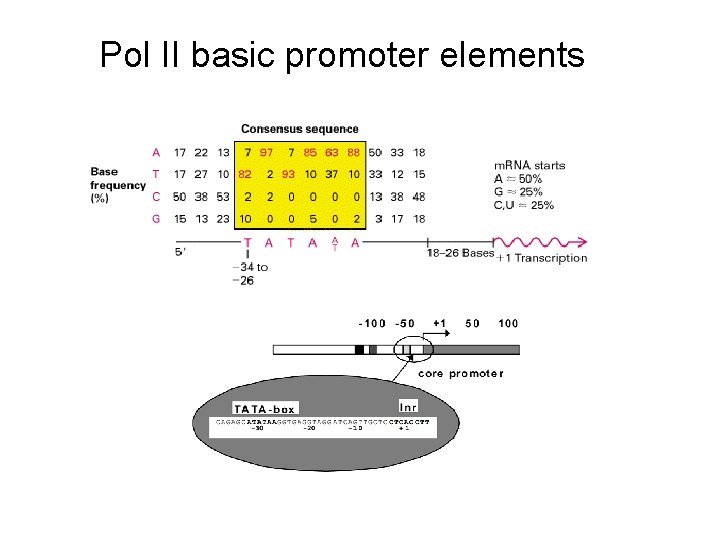
Pol II basic promoter elements
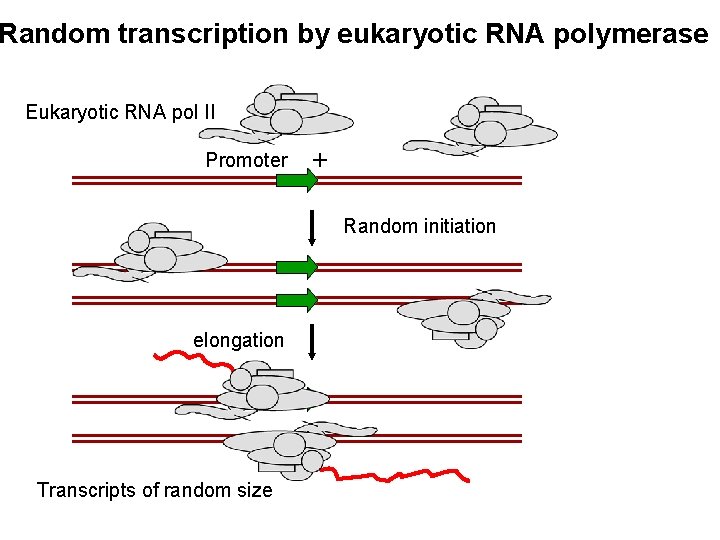
Random transcription by eukaryotic RNA polymerase Eukaryotic RNA pol II Promoter + Random initiation elongation Transcripts of random size
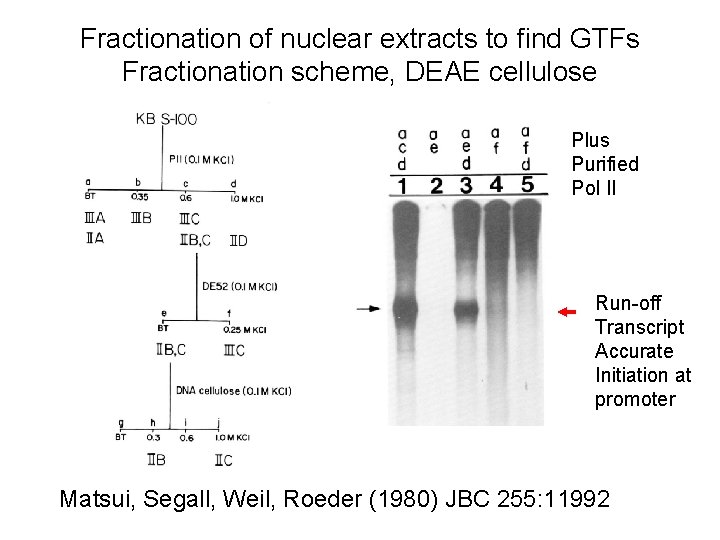
Fractionation of nuclear extracts to find GTFs Fractionation scheme, DEAE cellulose Plus Purified Pol II Run-off Transcript Accurate Initiation at promoter Matsui, Segall, Weil, Roeder (1980) JBC 255: 11992
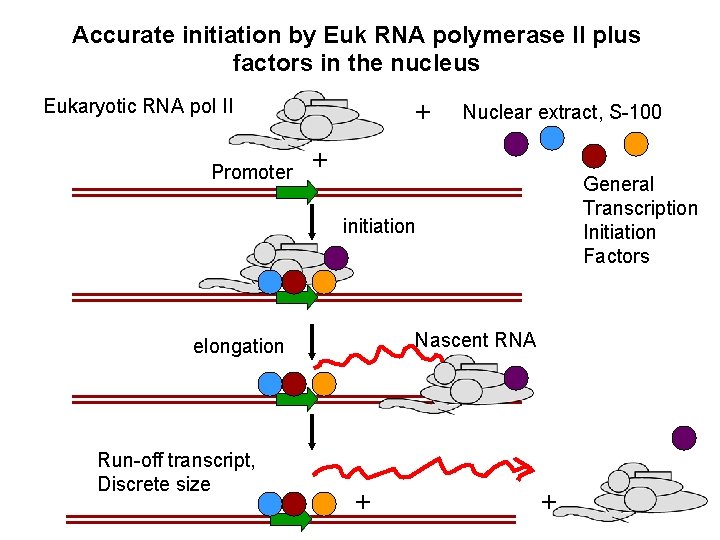
Accurate initiation by Euk RNA polymerase II plus factors in the nucleus Eukaryotic RNA pol II Promoter + Nuclear extract, S-100 + General Transcription Initiation Factors initiation Nascent RNA elongation Run-off transcript, Discrete size + +
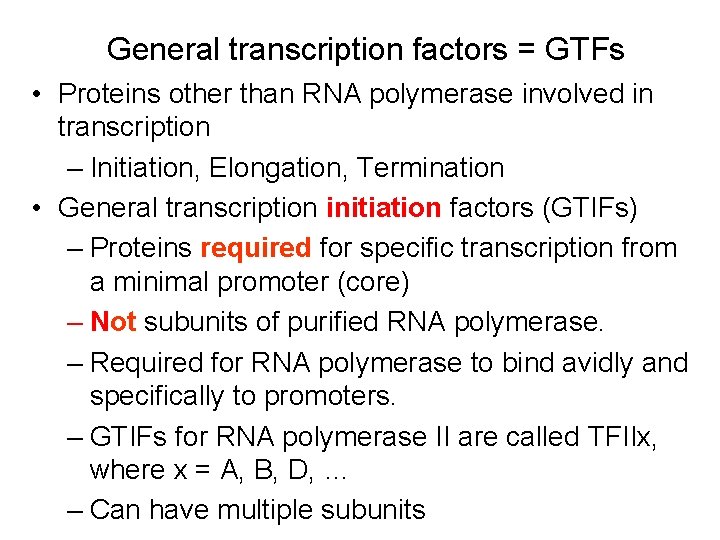
General transcription factors = GTFs • Proteins other than RNA polymerase involved in transcription – Initiation, Elongation, Termination • General transcription initiation factors (GTIFs) – Proteins required for specific transcription from a minimal promoter (core) – Not subunits of purified RNA polymerase. – Required for RNA polymerase to bind avidly and specifically to promoters. – GTIFs for RNA polymerase II are called TFIIx, where x = A, B, D, … – Can have multiple subunits
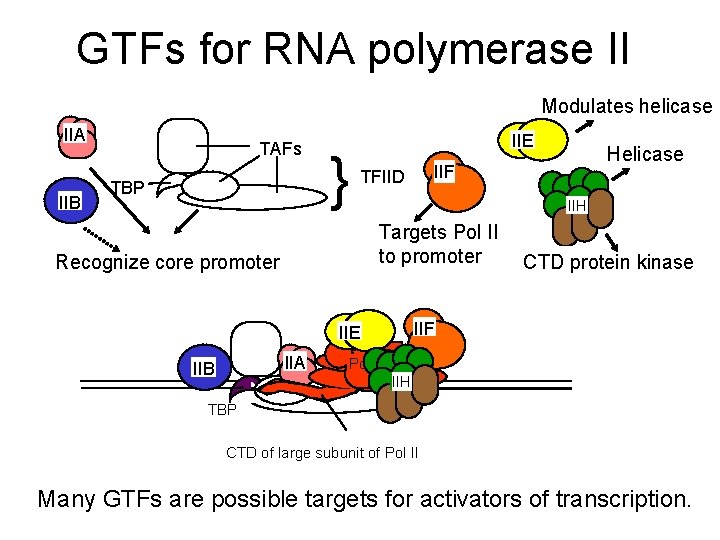
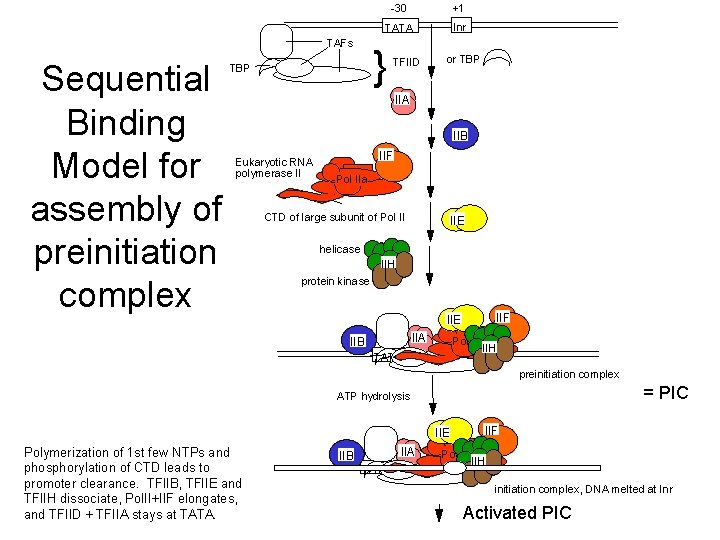
GTFs for RNA polymerase II Modulates helicase IIA IIB TAFs TBP } IIE IIH Targets Pol II to promoter IIA protein kinase CTD protein kinase IIF IIE IIB IIF TFIID Recognize core promoter Helicase helicase Pol IIa Inr IIH TBP CTD of large subunit of Pol II Many GTFs are possible targets for activators of transcription.
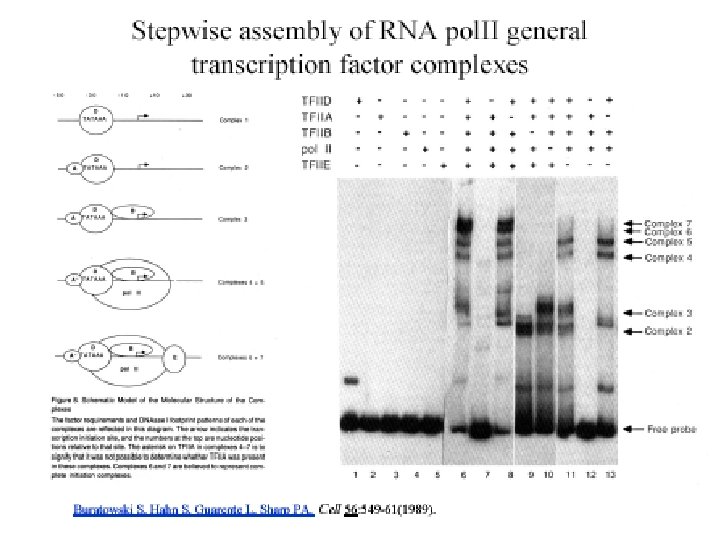
TAFs Sequential Binding Model for assembly of preinitiation complex -30 +1 TATA Inr } TBP TFIID or TBP IIA IIB Eukaryotic RNA polymerase II IIF Pol IIa CTD of large subunit of Pol II IIE helicase IIH protein kinase IIF IIE IIA IIB TATA Inr Pol IIa IIH preinitiation complex = PIC ATP hydrolysis IIE Polymerization of 1 st few NTPs and phosphorylation of CTD leads to promoter clearance. TFIIB, TFIIE and TFIIH dissociate, Pol. II+IIF elongates, and TFIID + TFIIA stays at TATA. IIA IIB TATA IIF Pol IIa IIH Inr initiation complex, DNA melted at Inr Activated PIC
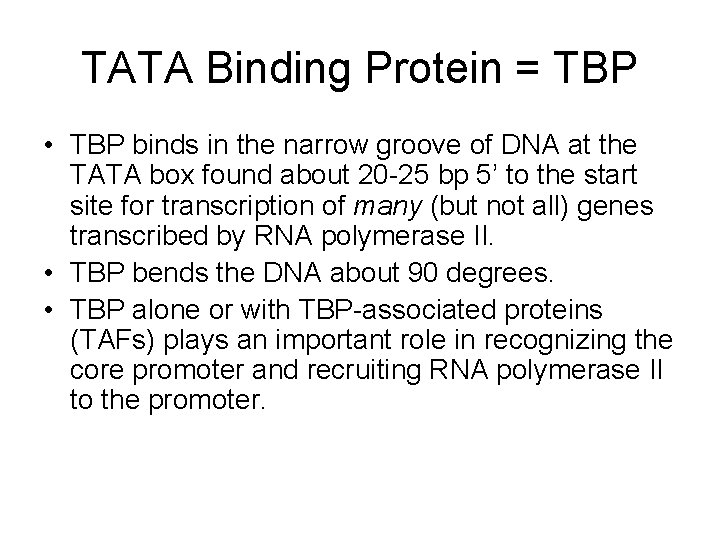
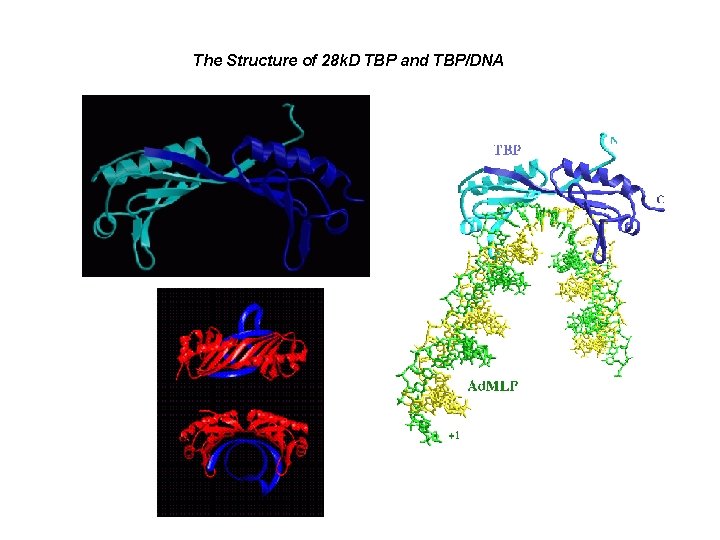
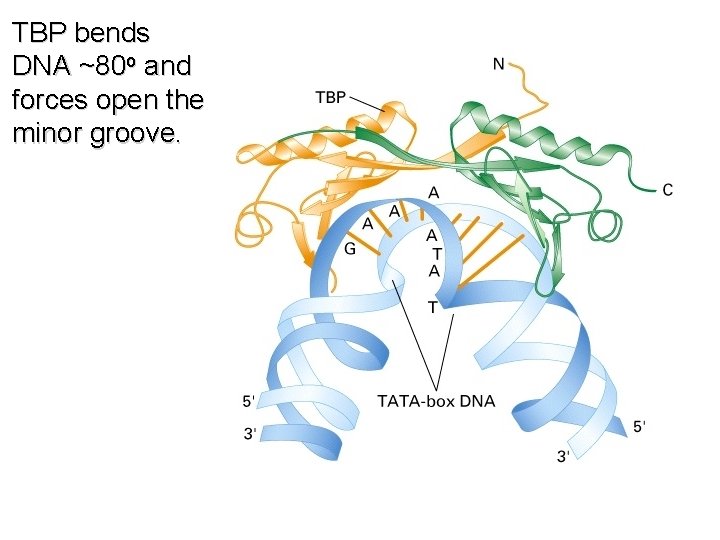
TATA Binding Protein = TBP • TBP binds in the narrow groove of DNA at the TATA box found about 20 -25 bp 5’ to the start site for transcription of many (but not all) genes transcribed by RNA polymerase II. • TBP bends the DNA about 90 degrees. • TBP alone or with TBP-associated proteins (TAFs) plays an important role in recognizing the core promoter and recruiting RNA polymerase II to the promoter.
The Structure of 28 k. D TBP and TBP/DNA
TBP bends DNA ~80 o and forces open the minor groove.
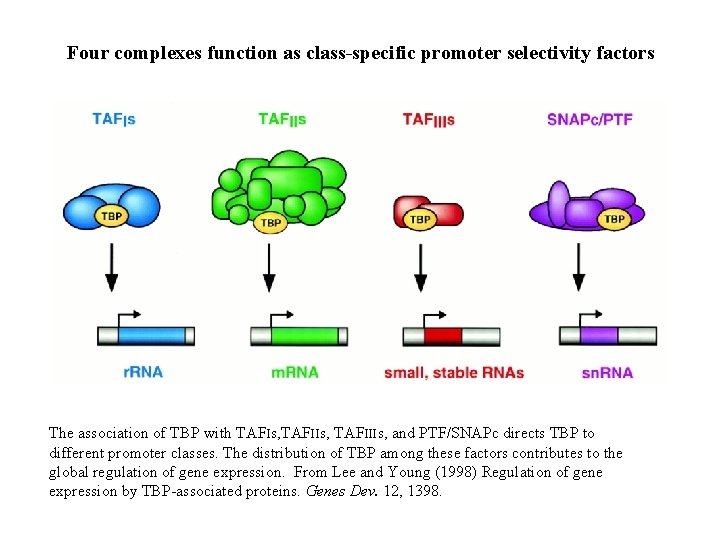
Four complexes function as class-specific promoter selectivity factors The association of TBP with TAFIs, TAFIIIs, and PTF/SNAPc directs TBP to different promoter classes. The distribution of TBP among these factors contributes to the global regulation of gene expression. From Lee and Young (1998) Regulation of gene expression by TBP-associated proteins. Genes Dev. 12, 1398.
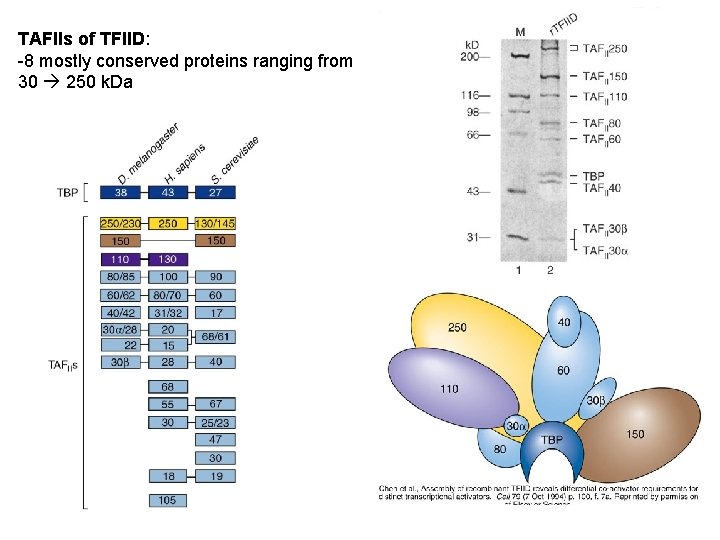
TAFIIs of TFIID: -8 mostly conserved proteins ranging from 30 250 k. Da
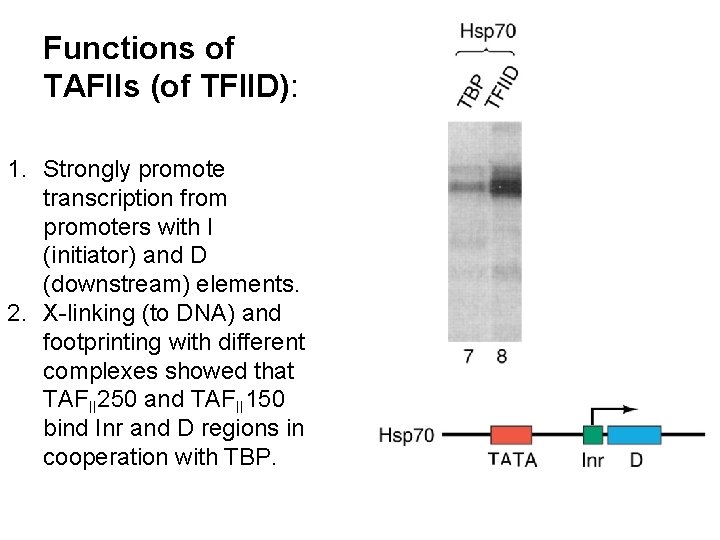
Functions of TAFIIs (of TFIID): 1. Strongly promote transcription from promoters with I (initiator) and D (downstream) elements. 2. X-linking (to DNA) and footprinting with different complexes showed that TAFII 250 and TAFII 150 bind Inr and D regions in cooperation with TBP.
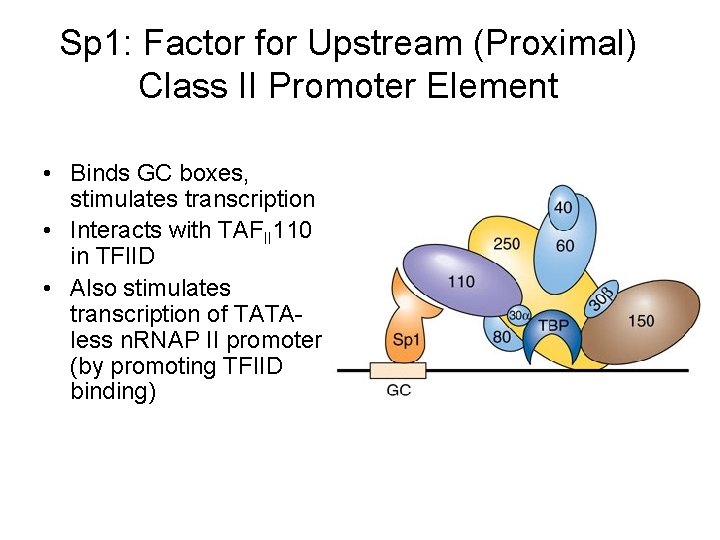
TAFIIs also function to: 1. Promote transcription from some class II promoters that lack a TATA box. 2. Interact with some upstream activators (e. g. , Sp 1), and hence can act as coactivators. • Sp 1 interacts with TAFII 110 • Gal 4 NTF-1 activator works via TAFII 150 and TAFII 60
TFIIA and TFIIB • TFIIA binds to TBP and could be considered a TAFII • TFIIB is needed for the Pol/TFIIF complex to bind to TFIID, and can be though of as a linker between these two. • A current model has TFIIA binding TBP on the upstream side, with TFIIB binding on the downstream side.
TFIIF • 2 subunits, called RAP 70 and RAP 30 (for RNAP associated protein). • Binds to the RNAP, and RAP 30 delivers it to the DAB complex. • Reduces non-specific binding of RNAP to DNA. • Function is analogous to the s factor in E. coli.
TFIIE and TFIIH • TFIIE 1. Binds after Pol/TFIIF binds to the pre- initiation complex. 2. Has 2 different subunits, both needed to stimulate transcription. • TFIIH 1. Required for promoter clearance 2. Complex protein with 9 subunits 3. Has DNA helicase/ATPase activity (RAD 25 gene) for melting DNA at transcription bubble 4. Also has Kinase activity: phosphorylates the carboxyl terminal domain (CTD) of the large subunit of RNAP
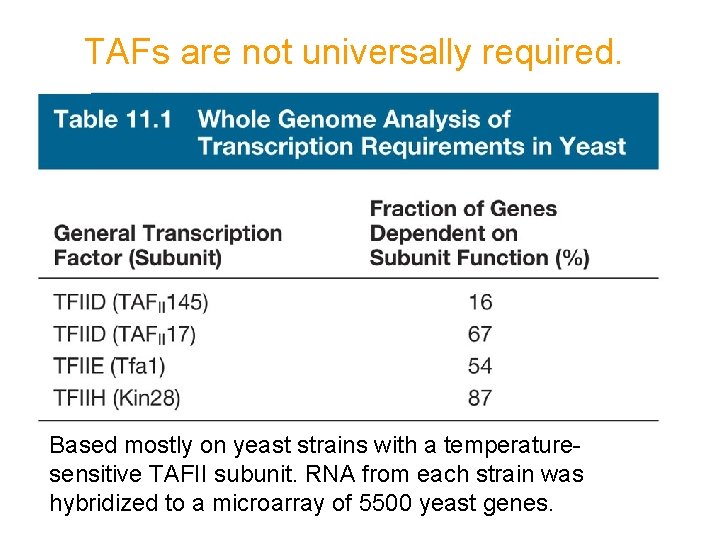
TAFs are not universally required. Based mostly on yeast strains with a temperaturesensitive TAFII subunit. RNA from each strain was hybridized to a microarray of 5500 yeast genes.
RNA Pol II bound to DNA and general transcription initiation factors
Model for RNA Polymerase II Phosphorylation CTD has repeat of (YSPTSPT)26 -50 Phosphorylation of Pol IIa to make Pol IIo is needed to release the polymerase from the initiation complex and allow it to start elongation.
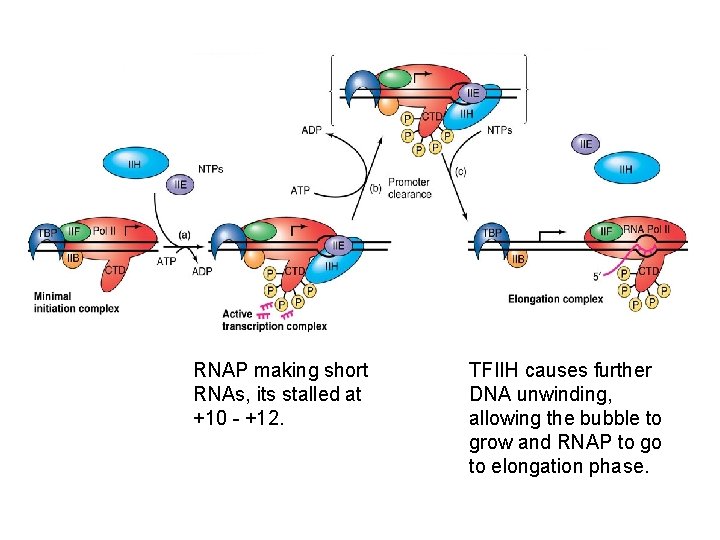
RNAP making short RNAs, its stalled at +10 - +12. TFIIH causes further DNA unwinding, allowing the bubble to grow and RNAP to go to elongation phase.
Other proteins involved in transcription and regulation • In addition to RNA polymerase II and GTFs: • Proteins required for regulation, e. g. – Gal 11: regulation of the GAL operon – Rgr 1: resistance to glucose repression • Srb proteins – Yeast strains with truncations in the CTD of the large subunit of RNA polymerase B are cold-sensitive – SRB genes: when mutated, suppress the phenotype of CTD deletions – Extragenic suppressors: implicated in RNA polymerase function
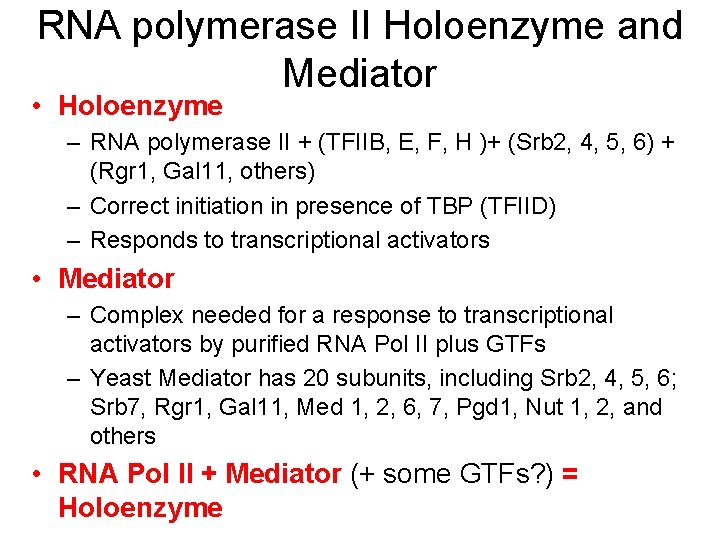
RNA polymerase II Holoenzyme and Mediator • Holoenzyme – RNA polymerase II + (TFIIB, E, F, H )+ (Srb 2, 4, 5, 6) + (Rgr 1, Gal 11, others) – Correct initiation in presence of TBP (TFIID) – Responds to transcriptional activators • Mediator – Complex needed for a response to transcriptional activators by purified RNA Pol II plus GTFs – Yeast Mediator has 20 subunits, including Srb 2, 4, 5, 6; Srb 7, Rgr 1, Gal 11, Med 1, 2, 6, 7, Pgd 1, Nut 1, 2, and others • RNA Pol II + Mediator (+ some GTFs? ) = Holoenzyme
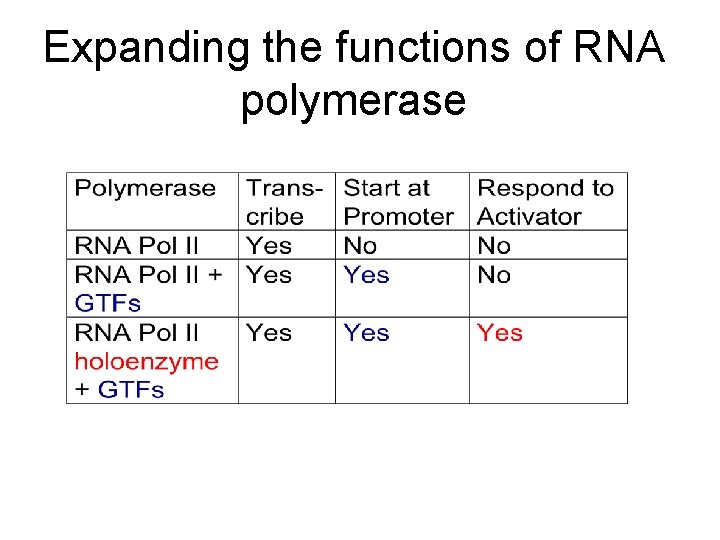
Expanding the functions of RNA polymerase
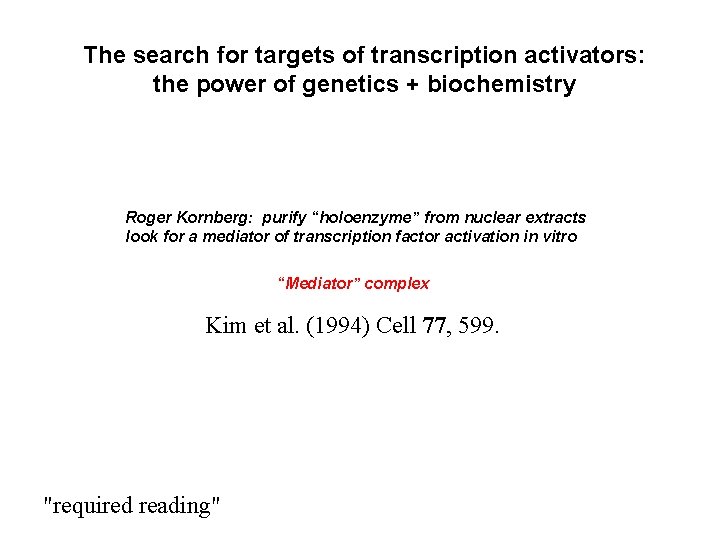
The search for targets of transcription activators: the power of genetics + biochemistry Roger Kornberg: purify “holoenzyme” from nuclear extracts look for a mediator of transcription factor activation in vitro “Mediator” complex Kim et al. (1994) Cell 77, 599. "required reading"
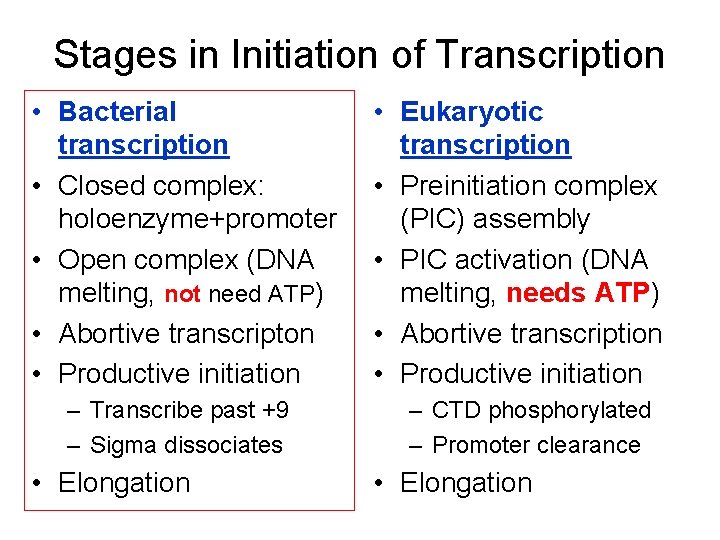
Stages in Initiation of Transcription • Bacterial transcription • Closed complex: holoenzyme+promoter • Open complex (DNA melting, not need ATP) • Abortive transcripton • Productive initiation – Transcribe past +9 – Sigma dissociates • Elongation • Eukaryotic transcription • Preinitiation complex (PIC) assembly • PIC activation (DNA melting, needs ATP) • Abortive transcription • Productive initiation – CTD phosphorylated – Promoter clearance • Elongation
Parallels between initiation pathway in prokaryotes and eukaryotes From Eick et al. (1994) Trends in Genetics 10: 292 -296
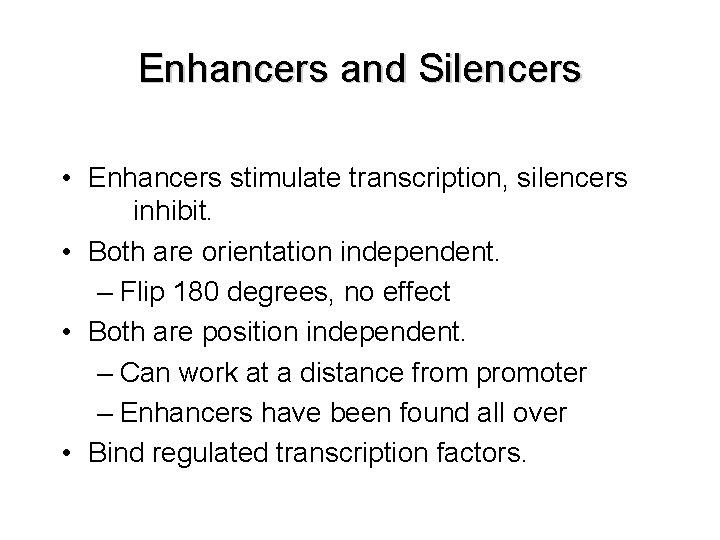
Enhancers and Silencers • Enhancers stimulate transcription, silencers inhibit. • Both are orientation independent. – Flip 180 degrees, no effect • Both are position independent. – Can work at a distance from promoter – Enhancers have been found all over • Bind regulated transcription factors.
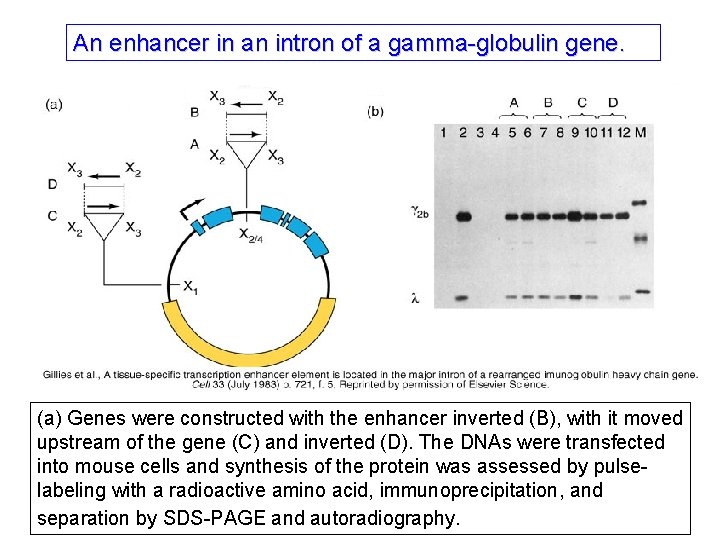
An enhancer in an intron of a gamma-globulin gene. (a) Genes were constructed with the enhancer inverted (B), with it moved upstream of the gene (C) and inverted (D). The DNAs were transfected into mouse cells and synthesis of the protein was assessed by pulselabeling with a radioactive amino acid, immunoprecipitation, and separation by SDS-PAGE and autoradiography.
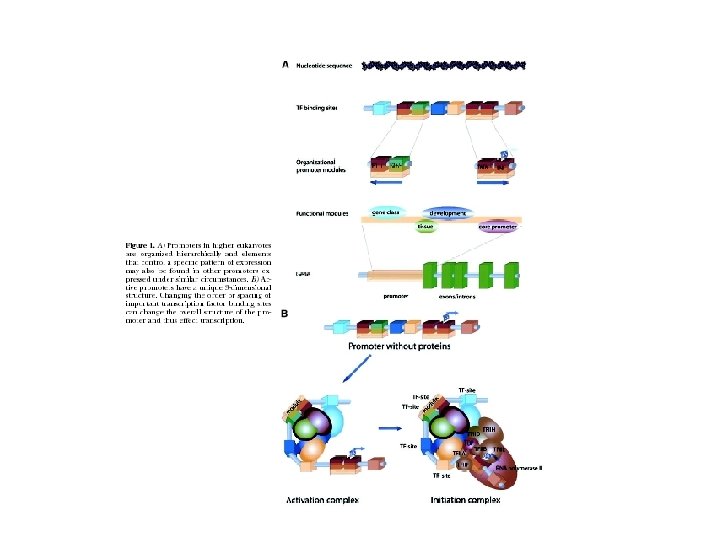
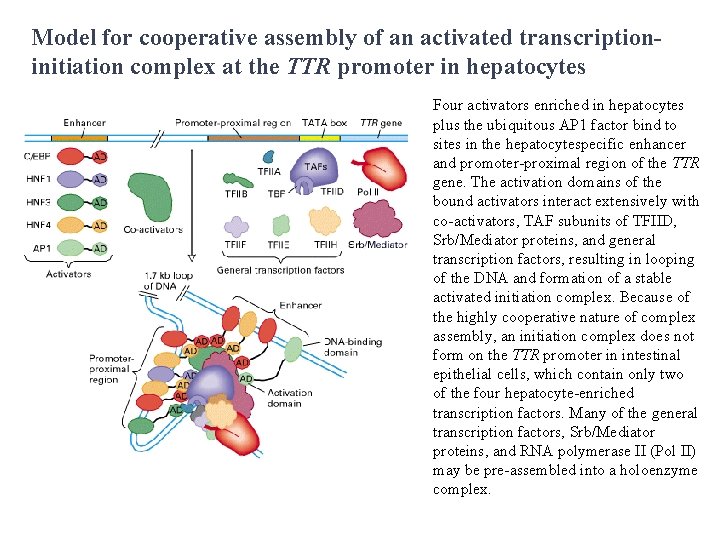
Model for cooperative assembly of an activated transcriptioninitiation complex at the TTR promoter in hepatocytes Four activators enriched in hepatocytes plus the ubiquitous AP 1 factor bind to sites in the hepatocytespecific enhancer and promoter-proximal region of the TTR gene. The activation domains of the bound activators interact extensively with co-activators, TAF subunits of TFIID, Srb/Mediator proteins, and general transcription factors, resulting in looping of the DNA and formation of a stable activated initiation complex. Because of the highly cooperative nature of complex assembly, an initiation complex does not form on the TTR promoter in intestinal epithelial cells, which contain only two of the four hepatocyte-enriched transcription factors. Many of the general transcription factors, Srb/Mediator proteins, and RNA polymerase II (Pol II) may be pre-assembled into a holoenzyme complex.
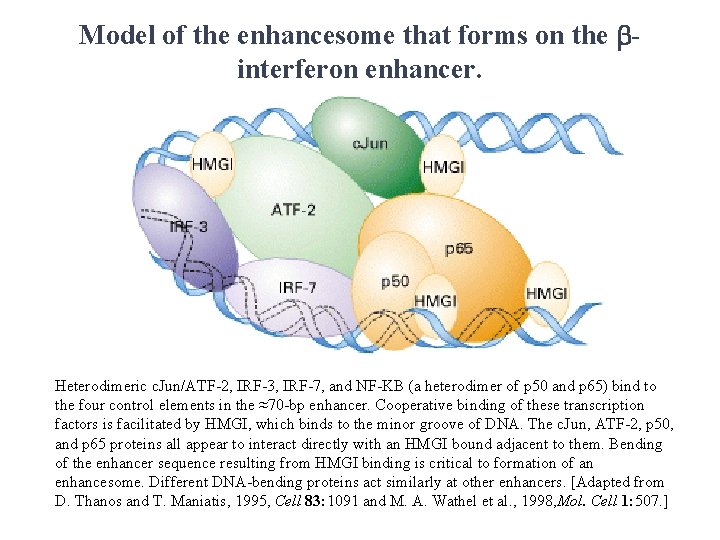
Model of the enhancesome that forms on the binterferon enhancer. Heterodimeric c. Jun/ATF-2, IRF-3, IRF-7, and NF-KB (a heterodimer of p 50 and p 65) bind to the four control elements in the ≈70 -bp enhancer. Cooperative binding of these transcription factors is facilitated by HMGI, which binds to the minor groove of DNA. The c. Jun, ATF-2, p 50, and p 65 proteins all appear to interact directly with an HMGI bound adjacent to them. Bending of the enhancer sequence resulting from HMGI binding is critical to formation of an enhancesome. Different DNA-bending proteins act similarly at other enhancers. [Adapted from D. Thanos and T. Maniatis, 1995, Cell 83: 1091 and M. A. Wathel et al. , 1998, Mol. Cell 1: 507. ]
Sp 1: Factor for Upstream (Proximal) Class II Promoter Element • Binds GC boxes, stimulates transcription • Interacts with TAFII 110 in TFIID • Also stimulates transcription of TATAless n. RNAP II promoter (by promoting TFIID binding)
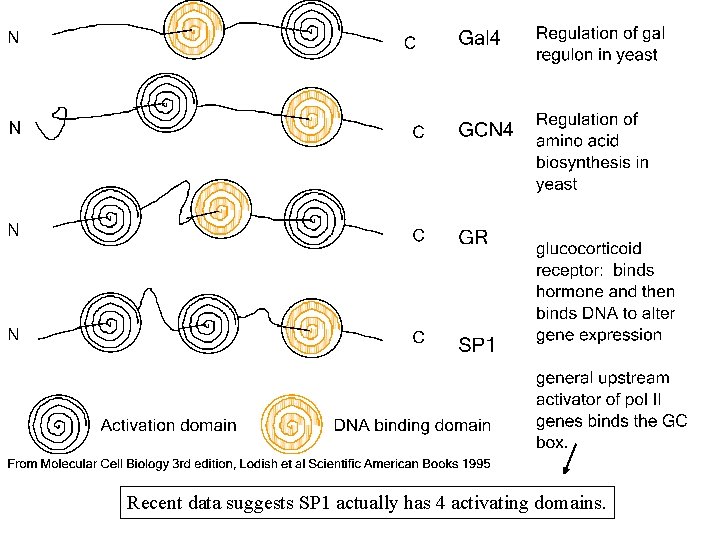
Structure of Eukaryotic Transcription Factors • Many have modular structure: 1. DNA-binding domain 2. Transcription activating domain • • Proteins can have > 1 of each, and they can be in different positions in protein. Many also have a dimerization domain
Recent data suggests SP 1 actually has 4 activating domains.
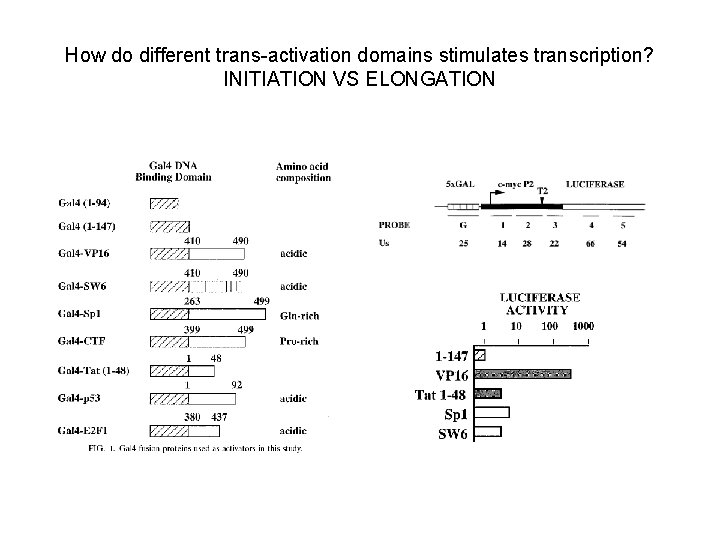
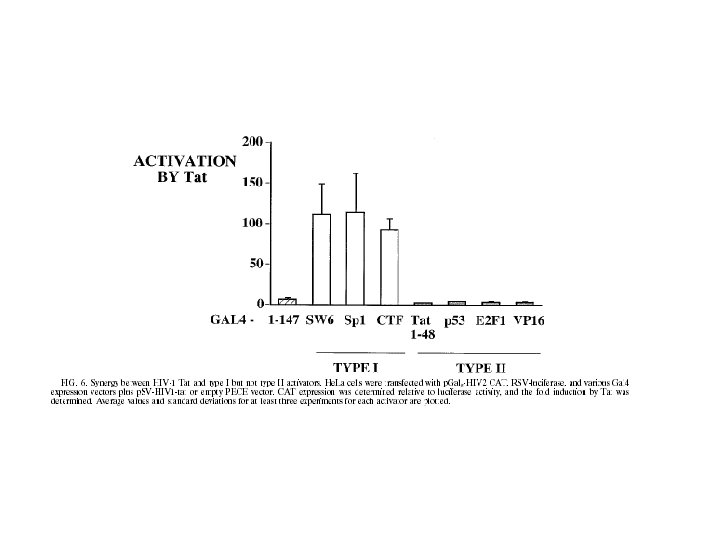
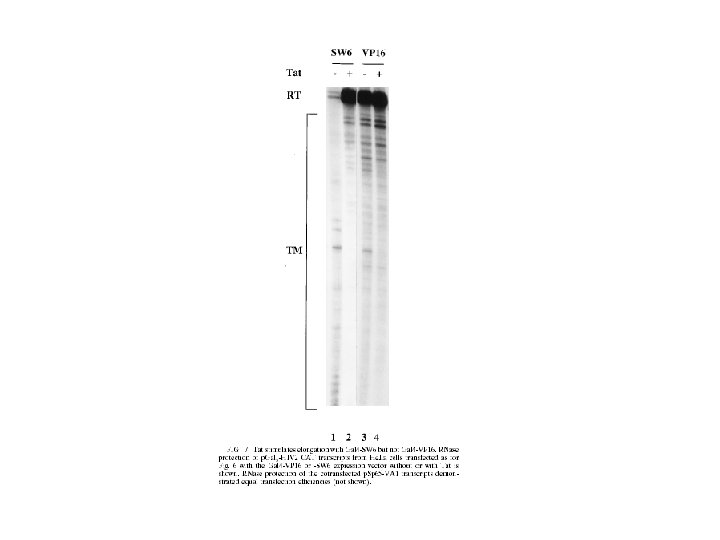
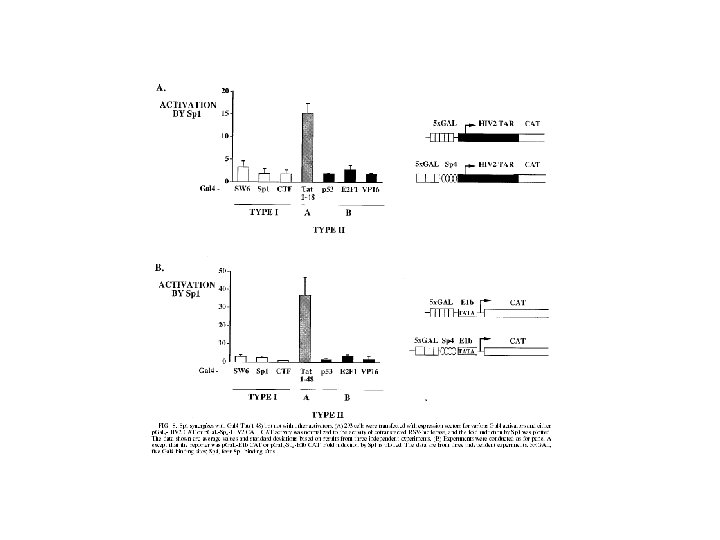
Required reading: Blau et al. , Mol Cell Biol 1996, 16 (5): 204 Three functional Classes of Transcriptional Activation Domains
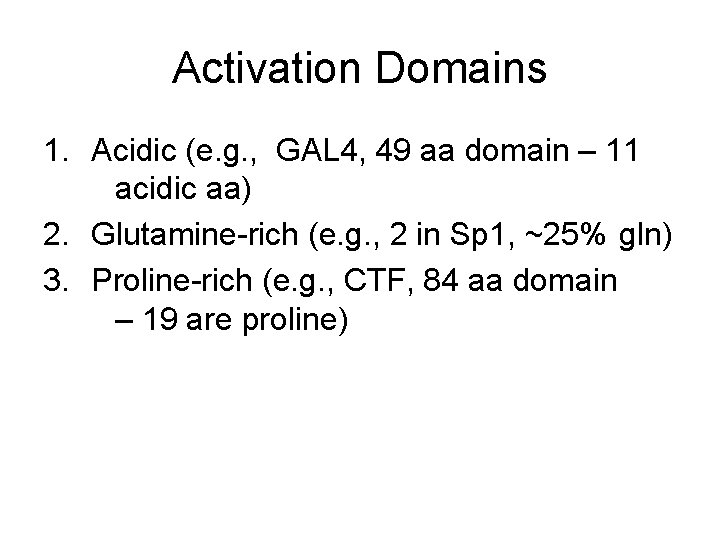
Activation Domains 1. Acidic (e. g. , GAL 4, 49 aa domain – 11 acidic aa) 2. Glutamine-rich (e. g. , 2 in Sp 1, ~25% gln) 3. Proline-rich (e. g. , CTF, 84 aa domain – 19 are proline)
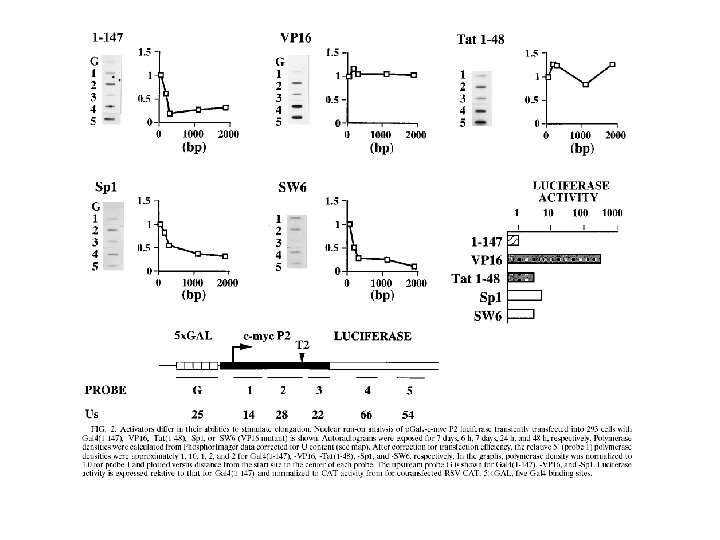
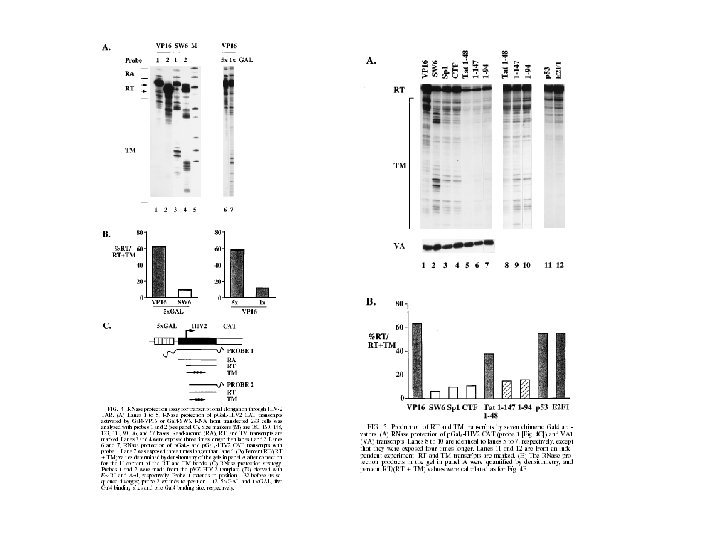
How do different trans-activation domains stimulates transcription? INITIATION VS ELONGATION
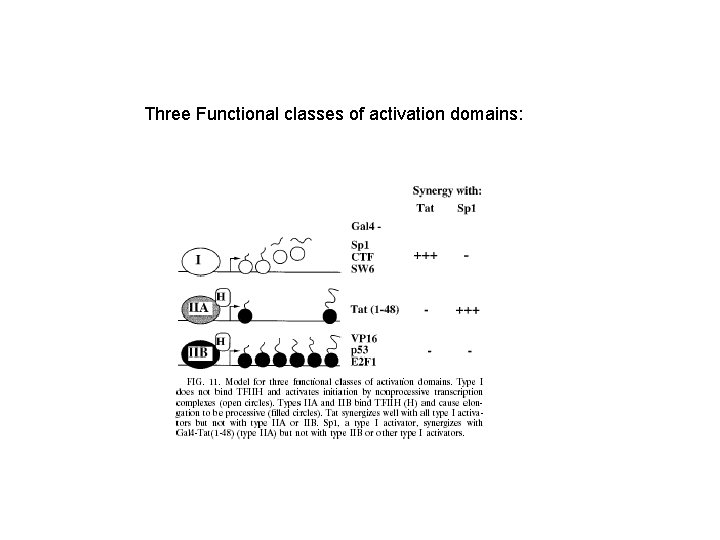
Three Functional classes of activation domains: