
GENERAL OVERVIEW OF ICS Focus on LTC Presented

- Slides: 31
GENERAL OVERVIEW OF ICS Focus on LTC Presented by the Central and West Central MN Healthcare Preparedness Coalitions
WEBEX ETIQUETTE Please The Mute your phones or computers for the presentation. “chat” function is available if you have a question. There are discussion points at end of presentation Discuss the questions in your group and use the chat feature to share your answers with everyone. Make sure to “Select to everyone” so all participants can see your answers
FACILITATOR Don Sheldrew: Central Regional Health Care Preparedness Coordinator
PURPOSE To provide guidance of the use of National Incident Management Systems (NIMS) Incident Command System (ICS) in Long Term Care (LTC) and clinical settings with the understanding that many facilities have minimal staff and proper placement of staff in ICS roles are crucial to effective management of emergencies, evacuation, and/or influx/surge of Senior occupants
OBJECTIVES Review the basic principles of the Incident Command System Describe the role and responsibilities of the Command General Staff with focus on incident commander and public information officer Apply these roles and responsibilities to the LTC and Clinic environment
WHAT IS HICS? The Healthcare Incident Command System: A standardized, on-scene, all-hazard incident management concept that meets the needs of incidents of any size Allows its users to adopt an integrated organizational structure to meet demands of single or multiple incidents without being hindered by jurisdictional boundaries
FEATURES OF ICS Common Language & Terminology Chain of Command Orderly line of authority, lower levels subordinate to higher Every individual is responsible to ONE supervisor during an incident- they should know who this person is and how to contact them Manageable Span of Control Is a management system and not an organizational chart
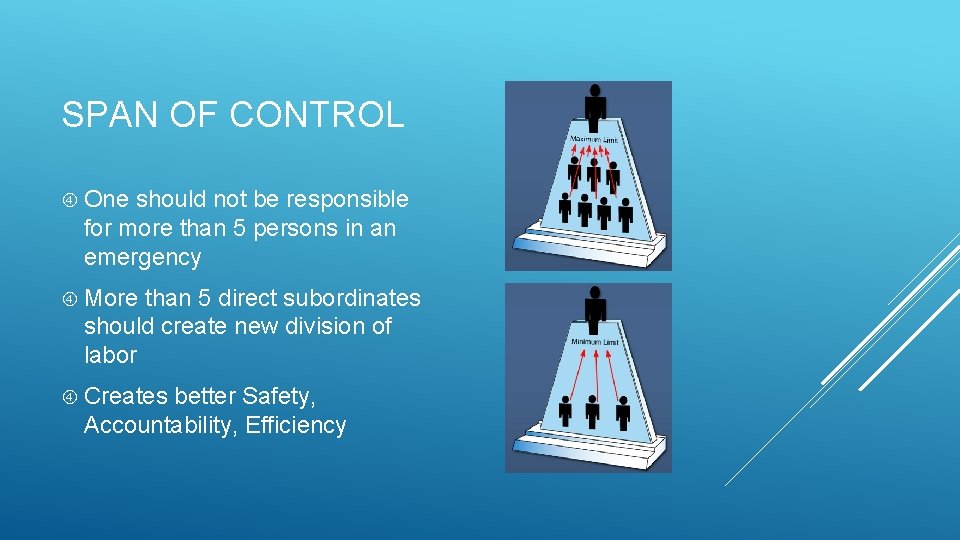
SPAN OF CONTROL One should not be responsible for more than 5 persons in an emergency More than 5 direct subordinates should create new division of labor Creates better Safety, Accountability, Efficiency
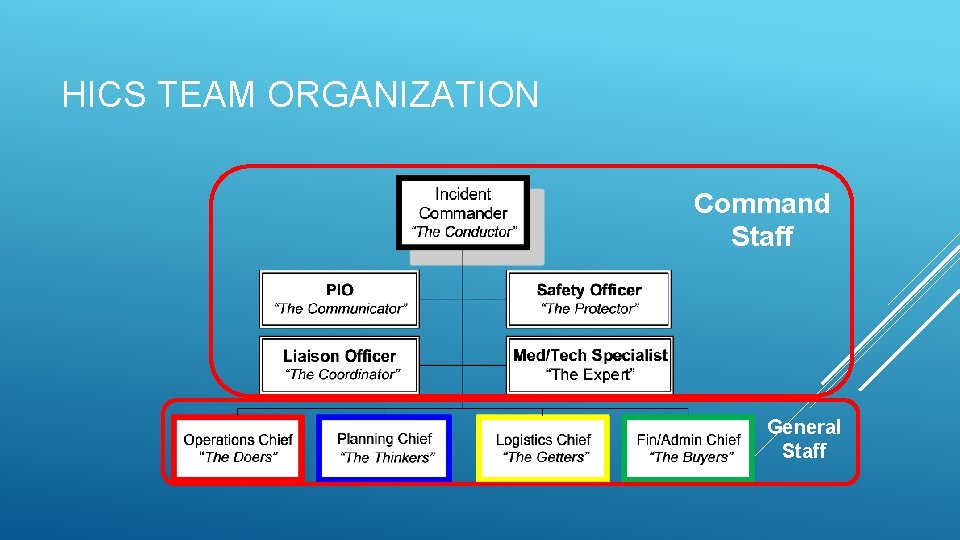
HICS TEAM ORGANIZATION Command Staff General Staff
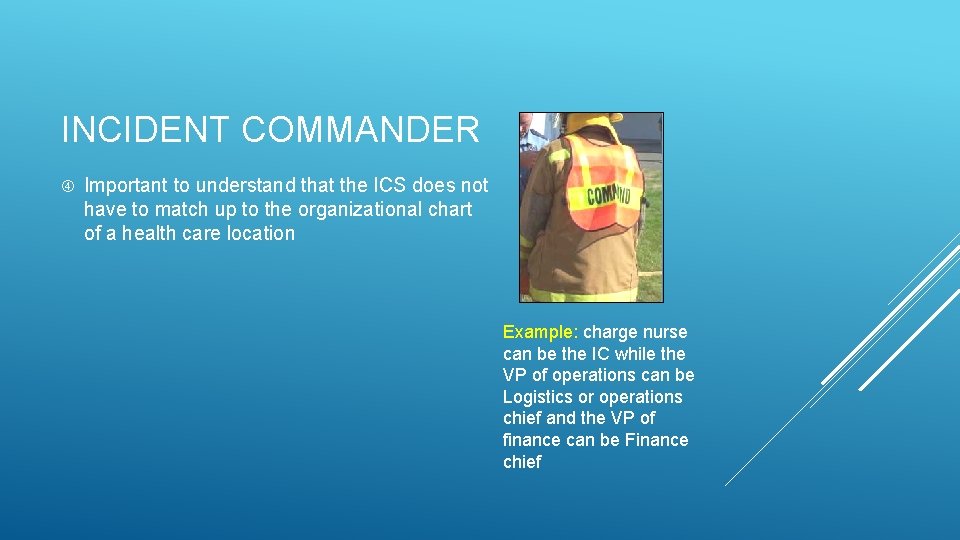
INCIDENT COMMANDER Important to understand that the ICS does not have to match up to the organizational chart of a health care location Example: charge nurse can be the IC while the VP of operations can be Logistics or operations chief and the VP of finance can be Finance chief
INCIDENT COMMANDER ROLE Fore most- Incident Commander (IC) is responsible for all roles in the command general staff Only position ALWAYS staffed Provides overall leadership for incident response Delegates authority to others Takes general direction from agency administrator/official
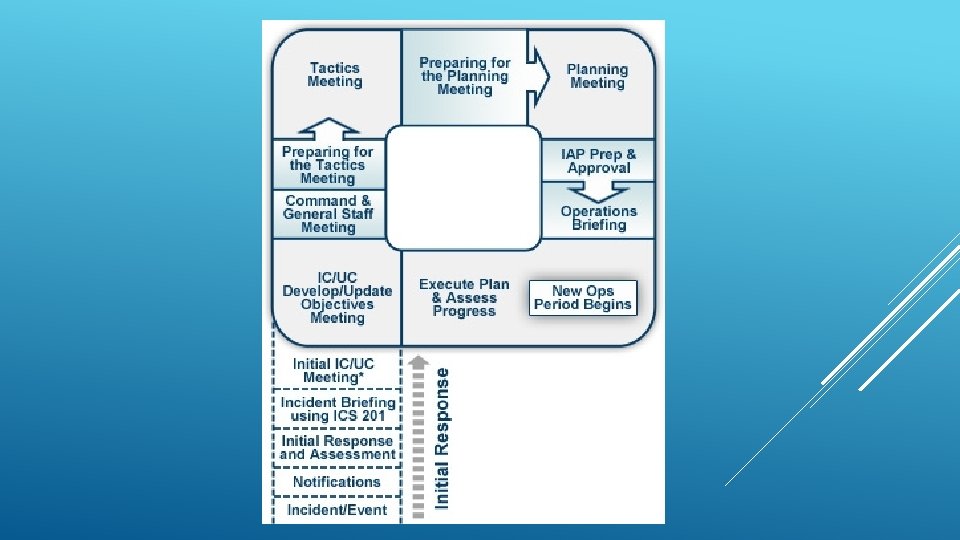
INCIDENT COMMANDER RESPONSIBILITIES Ensuring incident safety Providing information services to internal and external stakeholders Establishing and maintaining liaison with other agencies participating in the incident Assess need for staff Establishes incident objectives Directs staff to develop the Incident Action Plan – these plans are available on the Regional website www. cwchealthcarecoalitions. org
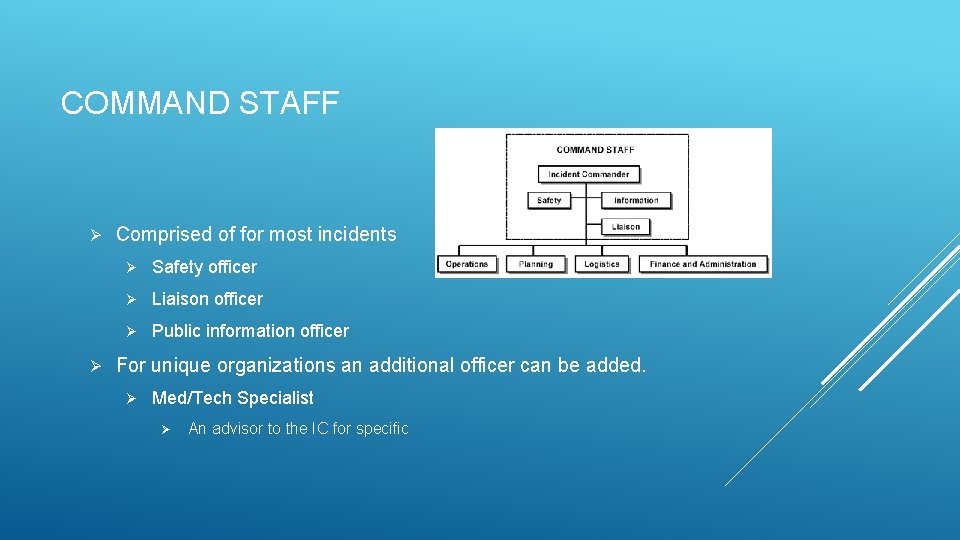
COMMAND STAFF Ø Ø Comprised of for most incidents Ø Safety officer Ø Liaison officer Ø Public information officer For unique organizations an additional officer can be added. Ø Med/Tech Specialist Ø An advisor to the IC for specific
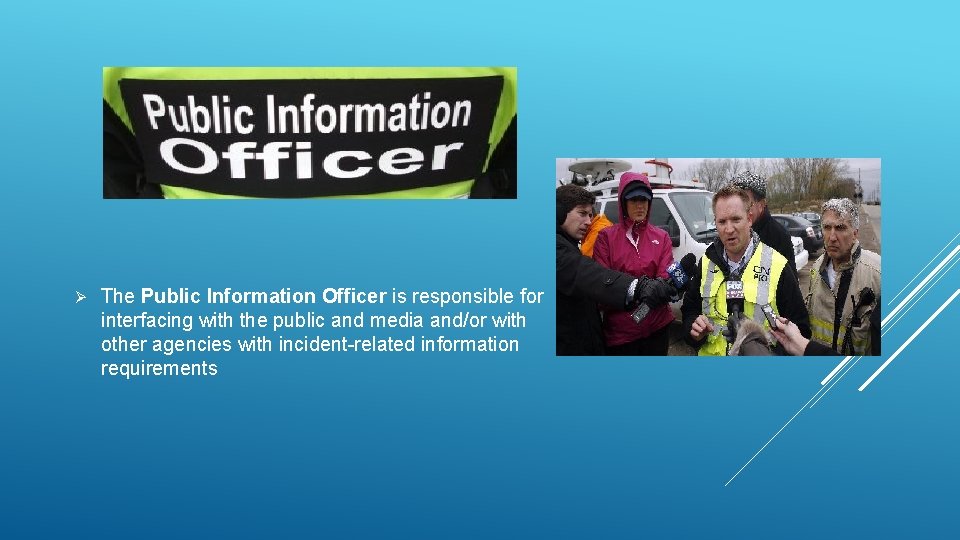
Ø The Public Information Officer is responsible for interfacing with the public and media and/or with other agencies with incident-related information requirements
PUBLIC INFORMATION OFFICER RESPONSIBILITIES Ø Gathers, verifies, coordinates, and disseminates accurate, accessible, and timely information on the incident’s cause, size, and current situation; resources committed; and other matters of general interest for both internal and external audiences Ø May also perform a key public information-monitoring role Ø The Incident Commander/Unified Command must approve the release of all incident-related information Ø In large-scale events the facility PIO should work with other agencies involved to ensure consistency in the provision of information to the public
LIAISON OFFICER “THE COORDINATOR” Ø Conveys information about how the facility is responding to the situation to outside agencies Ø To be a link between the facility command center and other response organizations (healthcare facilities, emergency management, EMS, etc. )
SAFETY
SAFETY OFFICER “THE PROTECTOR” Ø Ensure the health and safety of patients, facility personnel, and visitors Ø Identify and mitigate hazardous conditions Ø Comply with appropriate regulations Ø Document injuries or accidents Ø Exercise emergency authority to stop response for unsafe conditions Ø Prepare the IAP Safety Analysis (HICS 215 A) Ø Review and approve the Staff Medical Plan (HICS 206)
MEDICAL/TECHNICAL SPECIALIST Ø Advisory position to provide the IC with specific Guidance Ø Typically this person is the individual/agency that you would call to ask specific questions: Ø Infection Prevention Ø Medical director Ø Minnesota Department of health Ø Infrastructure damage questions
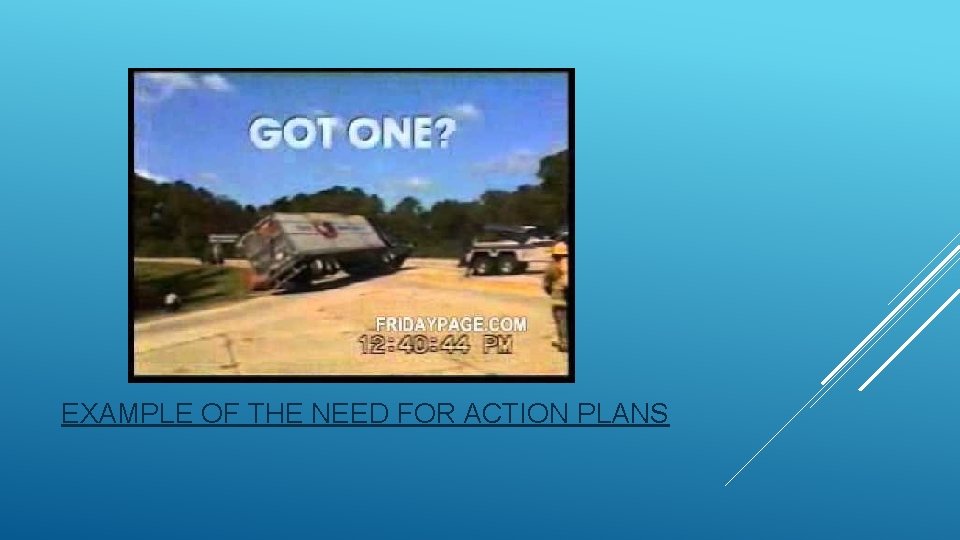
EXAMPLE OF THE NEED FOR ACTION PLANS
OPERATIONS – THE DOERS!! Ø Operations is in charge of carrying out the facility objectives Ø The chief will develop strategy and goals to complete the objectives Ø Operations section is broken down into teams (if you have the staff available) Ø Patient Care Branch Ø Infrastructure Branch Ø Security Branch Ø Hazard Mat Branch Ø Business Continuity Branch Ø Patient Family Assistance Branch
PLANNING SECTION Ø Responsibilities Ø Collecting, evaluating, and displaying incident intelligence and information Ø Preparing and documenting incident action plans Ø Tracking resources assigned to the incident Ø Maintaining incident documentation Ø Developing plans for demobilization
PLANNING RESOURCES Ø Resources are defined as units Ø Units found in planning are: Ø Resources unit Ø Situation unit Ø Demobilization unit Ø Documentation unit
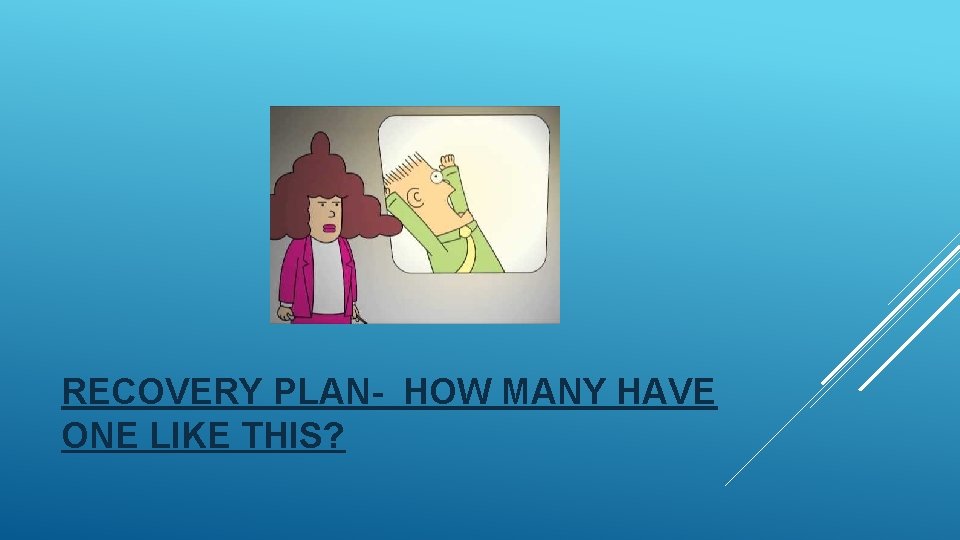
RECOVERY PLAN- HOW MANY HAVE ONE LIKE THIS?
LOGISTICS SECTION Ø Responsibilities Ø Ordering, obtaining, maintaining, and accounting for essential personnel, equipment, and supplies Ø Providing communication planning and resources Ø Setting up food services for responders Ø Setting up and maintaining incident facilities Ø Providing support transportation Ø Providing medical services to incident personnel
LOGISTICS RESOURCES Depending upon staffing, one person may be responsible for all: Ø Resources defined as Units Ø Supply unit Ø Ground support unit Ø Facilities unit Ø Food unit Ø Communication unit Ø Medical unit
FINANCE/ADMINISTRATION SECTION Ø IC will always determine if any section needs to stand up Ø Responsibilities Ø Contract negotiation and monitoring Ø Timekeeping Ø Cost analysis Ø Compensation for injury or damage to property Ø Documentation for reimbursement (e. g. , under mutual aid agreements and assistance agreements) Ø Business continuity
REVIEW Ø Incident command system is flexible starting with the incident commander Ø Dependent on the phase, incident(s), resources needed the IC management structure can increase and decrease as needed Ø One person can do more than one position dependent on Span of Control
DISCUSSION Ø With the provided power point information a disaster has occurred and your facility will be either evacuating or inflexing of patients Ø Take 5 -10 minutes with yourself or your group to discuss who could be in the ICS structure and how many roles could each person potentially manage effectively
QUESTIONS?