
General Orientation to Safety in Mechanical Engineering Presented

- Slides: 38
General Orientation to Safety in Mechanical Engineering Presented by: Dr. Albert H. Vette Assistant Professor & Chair of Safety Committee 1
Seminar Outline • Policies – province, University of Alberta, and department • Procedures – contacts and resources – training – working alone & hazard assessment – personal protective equipment (PPE), transport of dangerous goods (TDG) – laboratory conduct 2
Safety Policies 3
Provincial Legislation • Occupational Health and Safety (OH&S) Act, Code and Regulation – Government of Alberta • Website: Employment Alberta – https: //www. alberta. ca/ohs-act-regulationcode. aspx/ – OH&S Act outlines responsibilities: • Employer • Worker 4
Provincial Legislation • Highlights from OH&S Act: – basic responsibilities • employer – ensure health and safety of workers – make workers aware of responsibilities and duties (Act, Code, and Regulation) • worker – ensure health and safety of self and co-workers – co-operate with employer to protect health and safety 5
Provincial Legislation • Specifics (OH&S Act) – refusal of unsafe work (imminent danger) • responsibility of workers • duty to report to employer – orientation and training • orientation to work site (supervisor) • training (WHMIS – see below; PPE) • emergencies (reaction and reporting) 6
Provincial Legislation • Reporting – ALWAYS report incidents – Worker Compensation Board (WCB) • incidents need to be reported WITHIN 72 HOURS • an ‘incident’ is defined as an injury that required professional medical attention 7
University Policy • University policy set by Environmental Health and Safety – See website: www. ehs. ualberta. ca • Guided by provincial regulations, acts, and codes 8
Department Policy – Safety concerns addressed by Department Council through Safety Committee and its members (which includes 2 graduate students) – All graduate students attend introductory safety seminar 9
Safety Procedures 10
Contacts • People: Best safety resource • Know your lab mates • Know your department safety representatives 11
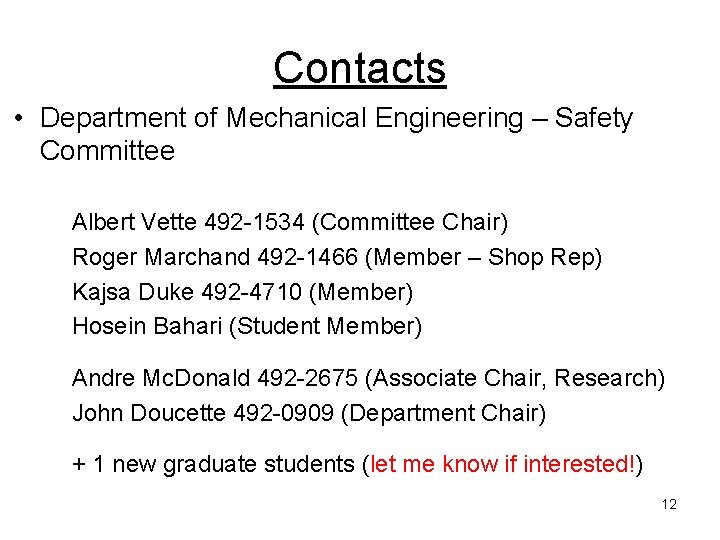
Contacts • Department of Mechanical Engineering – Safety Committee Albert Vette 492 -1534 (Committee Chair) Roger Marchand 492 -1466 (Member – Shop Rep) Kajsa Duke 492 -4710 (Member) Hosein Bahari (Student Member) Andre Mc. Donald 492 -2675 (Associate Chair, Research) John Doucette 492 -0909 (Department Chair) + 1 new graduate students (let me know if interested!) 12
Safety Committee • Please contact committee for: – information – reporting an incident (machine shop staff or me) – ordering safety equipment (Roger Marchand or machine shop staff) 13
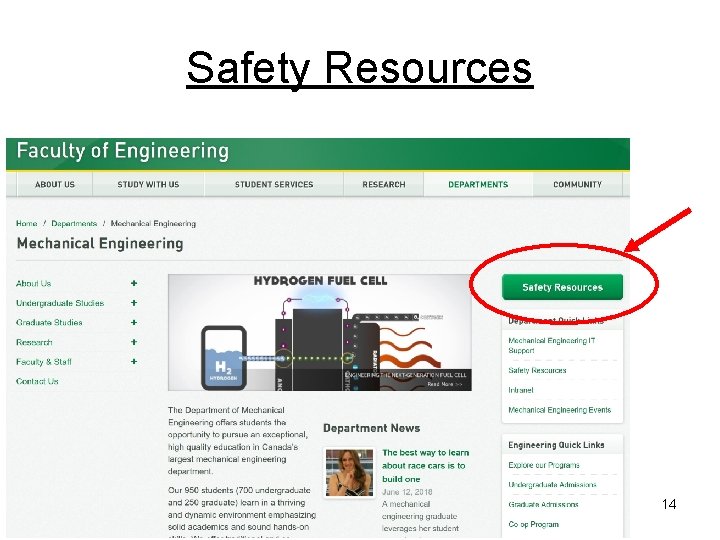
Safety Resources 14
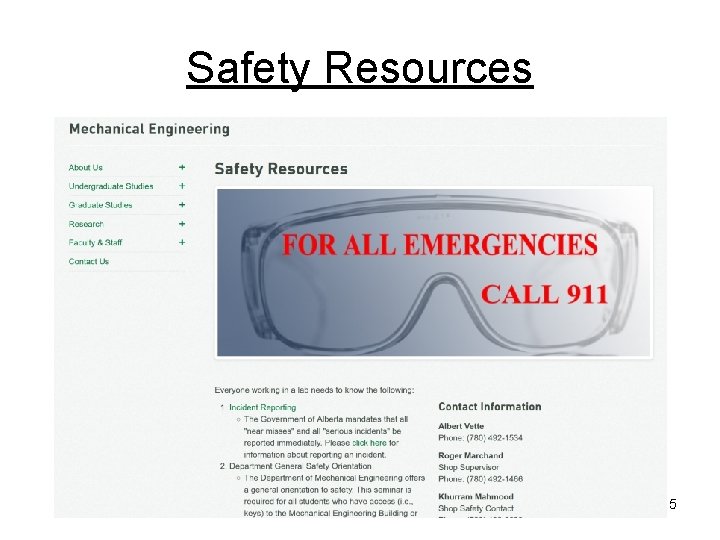
Safety Resources 15
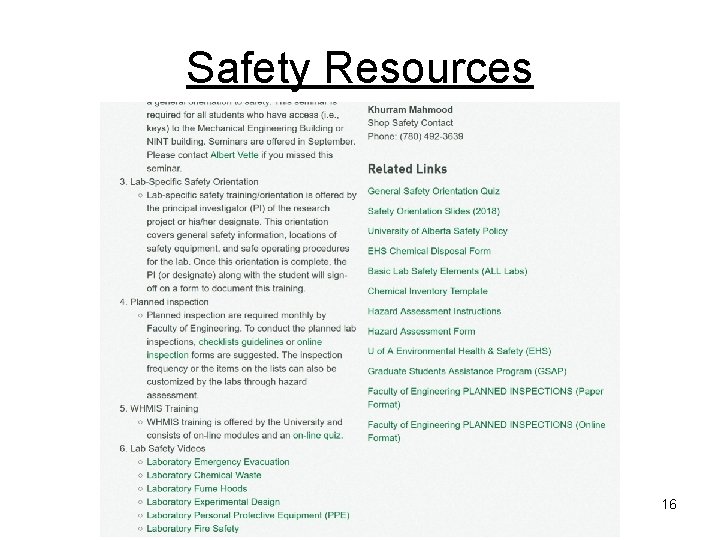
Safety Resources 16
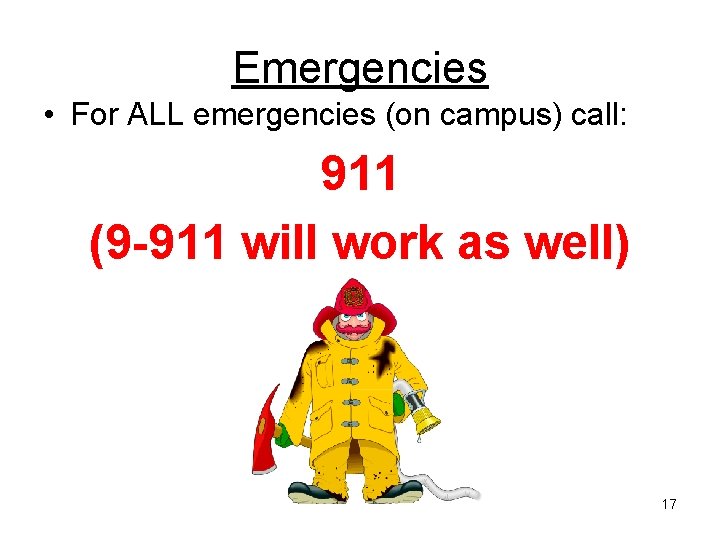
Emergencies • For ALL emergencies (on campus) call: 911 (9 -911 will work as well) 17
Emergency Procedures • Mechanical engineering procedure – Medical: Life threatening (911); Serious, but mobile (Health Centre or Hospital); Minor (First Aid Kit) – Fire: Activate alarm while exiting; Close doors; Evacuate building; Call 911; Meet fire department at main entrance 18
Emergency Procedures • Mechanical engineering procedure – Chemical spill: • MINOR – Attend to it in person; Get help; If possible, use spill mix; Contact Roger Marchand (492 -1466) for proper disposal • MAJOR – Call 911 19
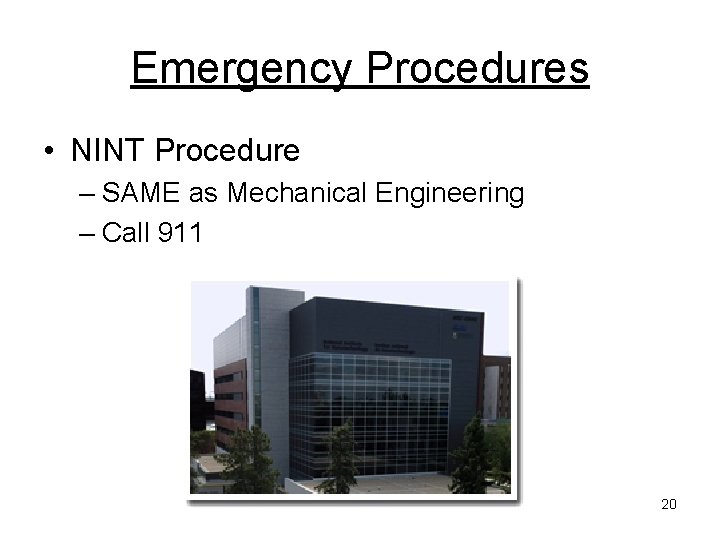
Emergency Procedures • NINT Procedure – SAME as Mechanical Engineering – Call 911 20
Incident Reporting • Mechanical engineering procedure – ALL incidents (including workplace violence) – ALL incidents reported and documented • download Incident & Investigation Report (EHS or Mec E website) • or see Albert Vette 21
Training & Seminars • General orientation to safety – this seminar • Training – WHMIS training – Shop training – Laboratory and Chemical safety • Lab-Specific Training – given by your supervisor – introduction to lab (and its special features) 22
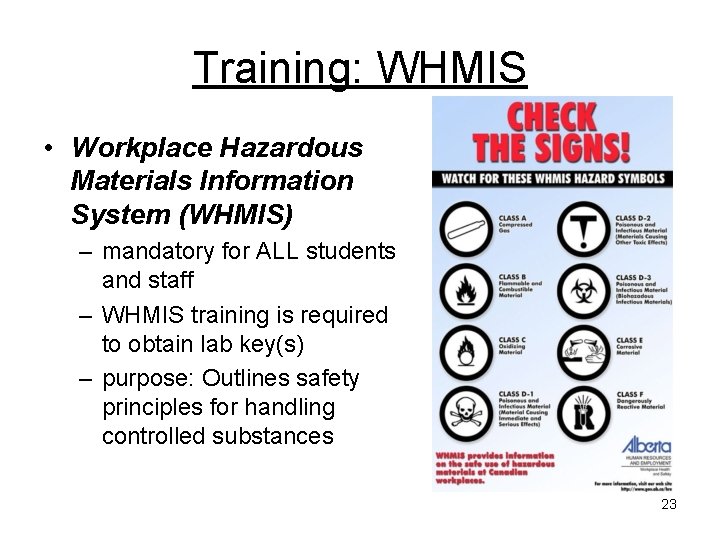
Training: WHMIS • Workplace Hazardous Materials Information System (WHMIS) – mandatory for ALL students and staff – WHMIS training is required to obtain lab key(s) – purpose: Outlines safety principles for handling controlled substances 23
Training: WHMIS • On-line training – go to: www. ualberta. ca/environment-health-safety/Training/WHMIS. aspx (Link on Mec. E Safety Website) • Basic elements: 1. proper labels 2. current Material Safety Data Sheets (MSDS) a. readily available to ALL workers b. updated every 3 years OR c. computer with printer available in lab 24
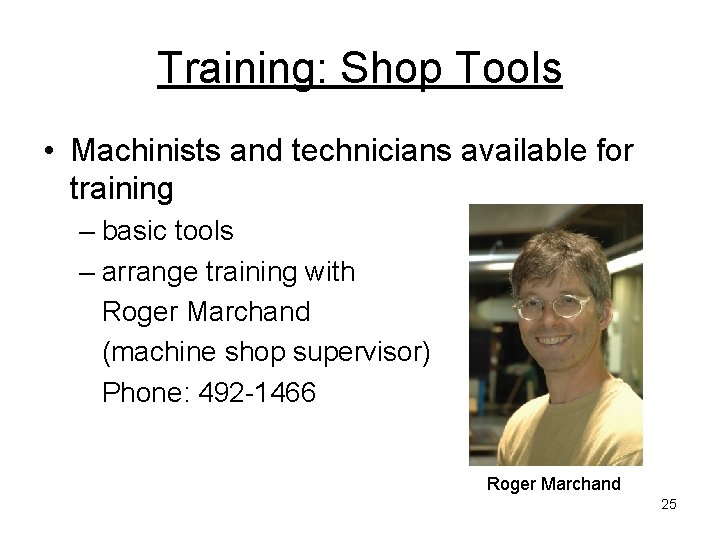
Training: Shop Tools • Machinists and technicians available for training – basic tools – arrange training with Roger Marchand (machine shop supervisor) Phone: 492 -1466 Roger Marchand 25
Basic Lab & Chemical Safety Elements 1. 2. 3. 4. 5. 6. Chemical inventory Material Safety Data Sheets (MSDS) Hazard assessment Working alone protocol Chemical spill kit First Aid Kit 26
Working Alone • Definition: Working without readily available assistance • Avoid working alone IF possible • Notify people of your intentions • Customized procedure for each lab developed by your supervisor 27
Hazard Assessment • Hazard assessments needed for each lab (done by your supervisor) • Steps: – review work activities – identify hazard (probability and severity) – control hazards • • • elimination substitution engineering controls administrative controls personal protective equipment (PPE) – safe operating procedures (SOP) 28
Hazardous Materials • Chemical inventories needed for all labs – specify contact and chemical information – aides emergency personnel – download form from Mec E Safety website 29
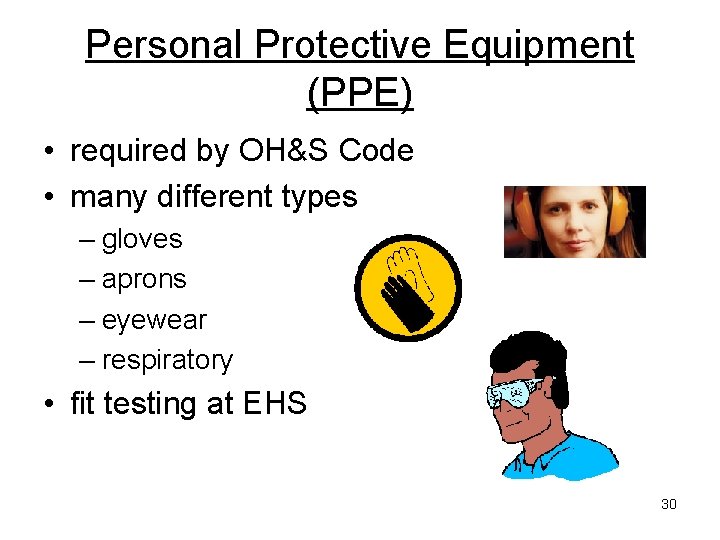
Personal Protective Equipment (PPE) • required by OH&S Code • many different types – gloves – aprons – eyewear – respiratory • fit testing at EHS 30
Transportation of Dangerous Goods (TDG) • receiving dangerous goods, e. g. , chemicals – need TDG training and certification – receive ALL chemicals through shop – ship ALL chemicals through shop (use proper forms and procedures) 31
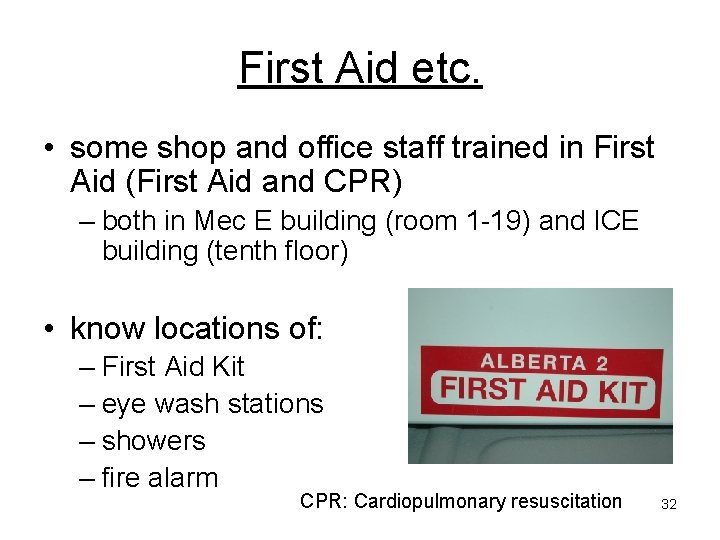
First Aid etc. • some shop and office staff trained in First Aid (First Aid and CPR) – both in Mec E building (room 1 -19) and ICE building (tenth floor) • know locations of: – First Aid Kit – eye wash stations – showers – fire alarm CPR: Cardiopulmonary resuscitation 32
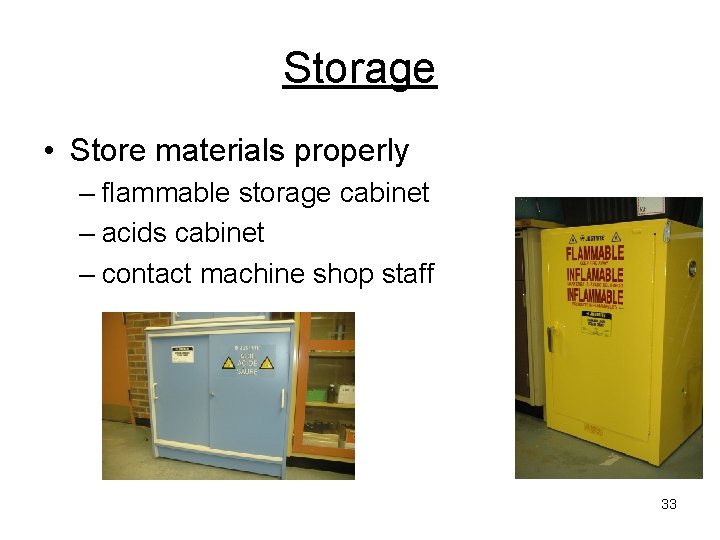
Storage • Store materials properly – flammable storage cabinet – acids cabinet – contact machine shop staff 33
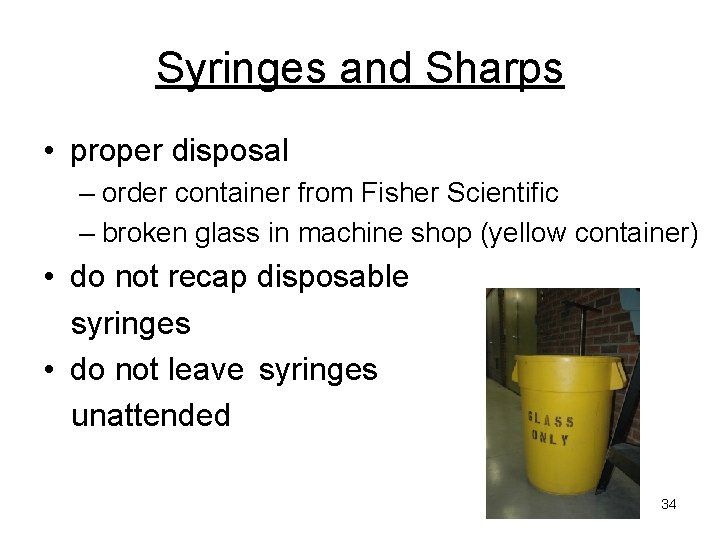
Syringes and Sharps • proper disposal – order container from Fisher Scientific – broken glass in machine shop (yellow container) • do not recap disposable syringes • do not leave syringes unattended 34
Chemical Disposal • limit use of chemicals • purchase smallest quantity practical • see MSDS for handling and disposal • contact EHS for pick up 35
In Your Lab • Housekeeping rules – general cleanliness – avoid clutter – no gloves or lab coats outside of lab – label containers (so others know if substance is hazardous) – report unsafe conditions to supervisor or Safety Committee member 36
To get your keys: – WHMIS (link on Mec E website): www. ualberta. ca/environment-health-safety/Training/WHMIS. aspx – Laboratory & Chemical Safety (link on Mec E website): www. ualberta. ca/environment-health-safety/training/laboratory-andchemical-safety – General Safety Orientation Quiz (link on Mec E website): www 01. engineering. ualberta. ca/mece/index. php//exam/displa y_exam/1 – supervisors need to approve the forms – bring the forms to Mec E front desk (& $50 deposit) and ask for keys 37
Questions? • Albert Vette Office: 10 -326 Donadeo Innovation Centre for Engineering Phone: 780 -492 -1534 Email: vette@ualberta. ca 38