
General Neurophysiology Axonal transport Transduction of signals at



- Slides: 46
General Neurophysiology Axonal transport Transduction of signals at the cellular level Classification of nerve fibres Olga Vajnerová, Department of physiology, 2 nd Medical School Charles University Prague
Axonal transport (axoplasmatic transport) Anterograde Proteosynthesis in the cell body only (ER, Golgi apparatus) Retrograde Moving the chemical signals from periphery
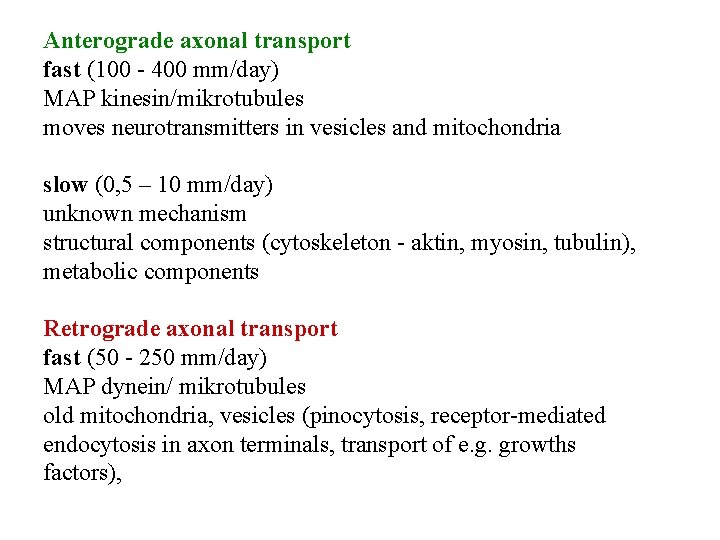
Anterograde axonal transport fast (100 - 400 mm/day) MAP kinesin/mikrotubules moves neurotransmitters in vesicles and mitochondria slow (0, 5 – 10 mm/day) unknown mechanism structural components (cytoskeleton - aktin, myosin, tubulin), metabolic components Retrograde axonal transport fast (50 - 250 mm/day) MAP dynein/ mikrotubules old mitochondria, vesicles (pinocytosis, receptor-mediated endocytosis in axon terminals, transport of e. g. growths factors),
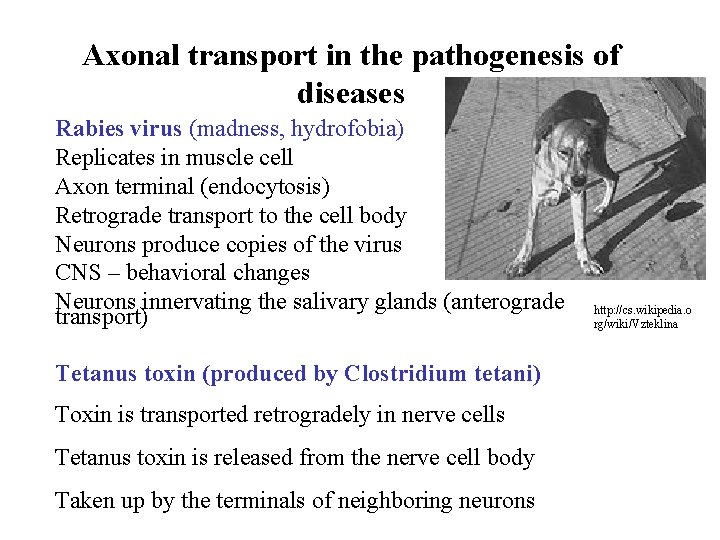
Axonal transport in the pathogenesis of diseases Rabies virus (madness, hydrofobia) Replicates in muscle cell Axon terminal (endocytosis) Retrograde transport to the cell body Neurons produce copies of the virus CNS – behavioral changes Neurons innervating the salivary glands (anterograde transport) Tetanus toxin (produced by Clostridium tetani) Toxin is transported retrogradely in nerve cells Tetanus toxin is released from the nerve cell body Taken up by the terminals of neighboring neurons http: //cs. wikipedia. o rg/wiki/Vzteklina
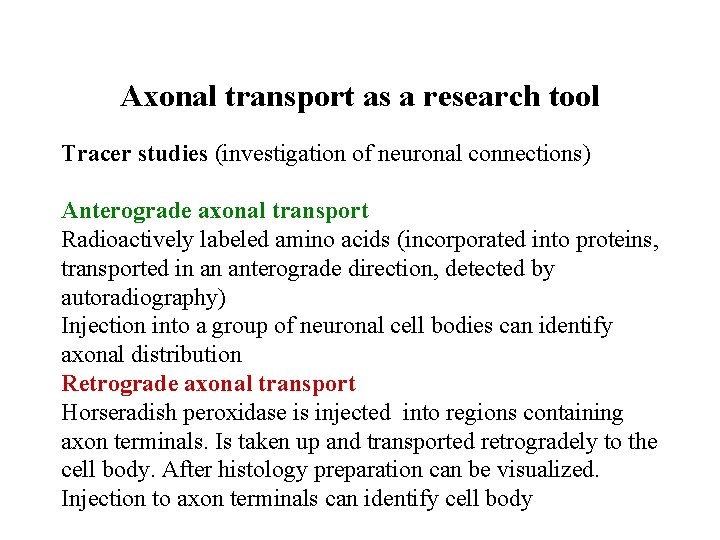
Axonal transport as a research tool Tracer studies (investigation of neuronal connections) Anterograde axonal transport Radioactively labeled amino acids (incorporated into proteins, transported in an anterograde direction, detected by autoradiography) Injection into a group of neuronal cell bodies can identify axonal distribution Retrograde axonal transport Horseradish peroxidase is injected into regions containing axon terminals. Is taken up and transported retrogradely to the cell body. After histology preparation can be visualized. Injection to axon terminals can identify cell body
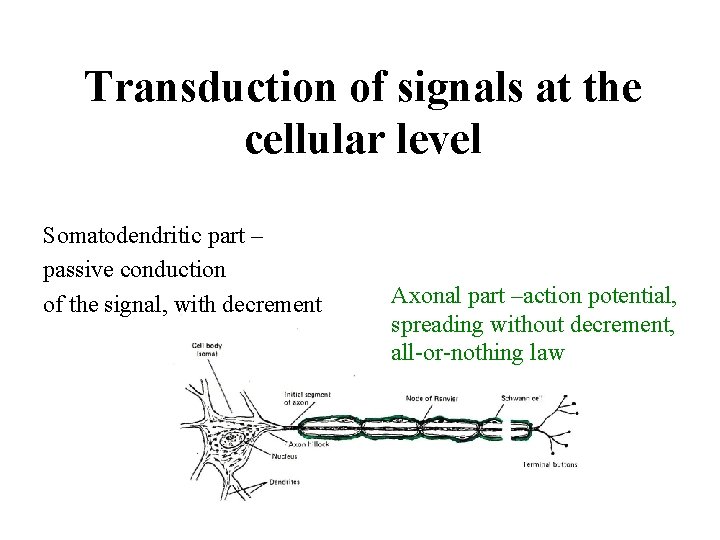
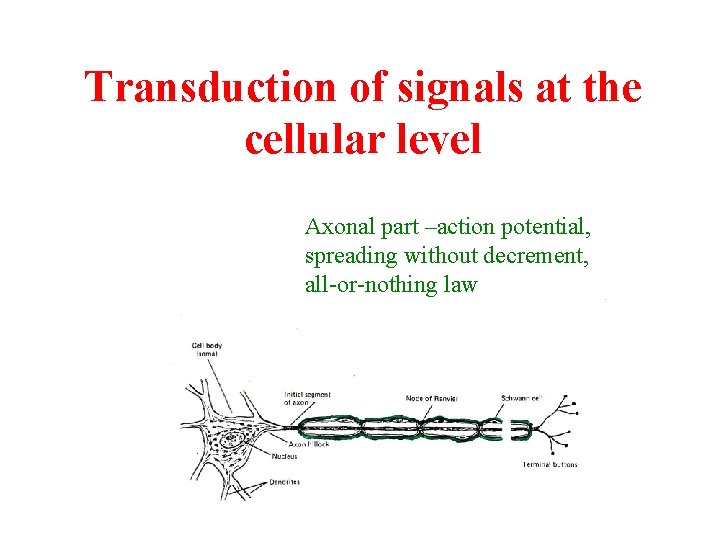
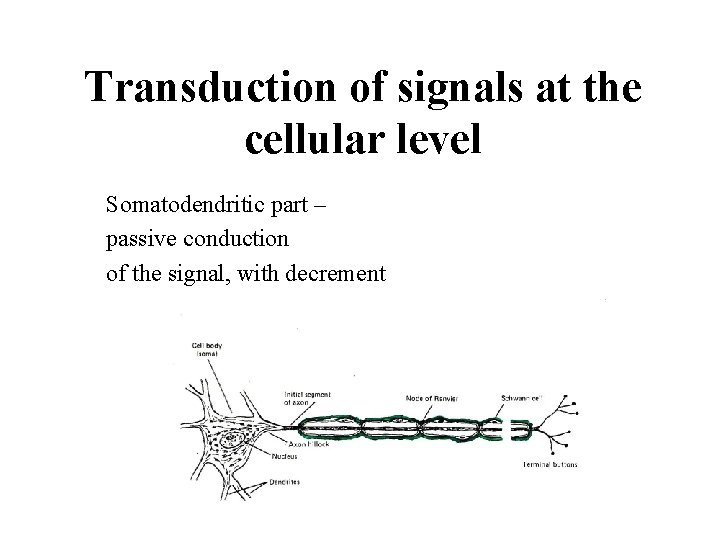
Transduction of signals at the cellular level Somatodendritic part – passive conduction of the signal, with decrement Axonal part –action potential, spreading without decrement, all-or-nothing law
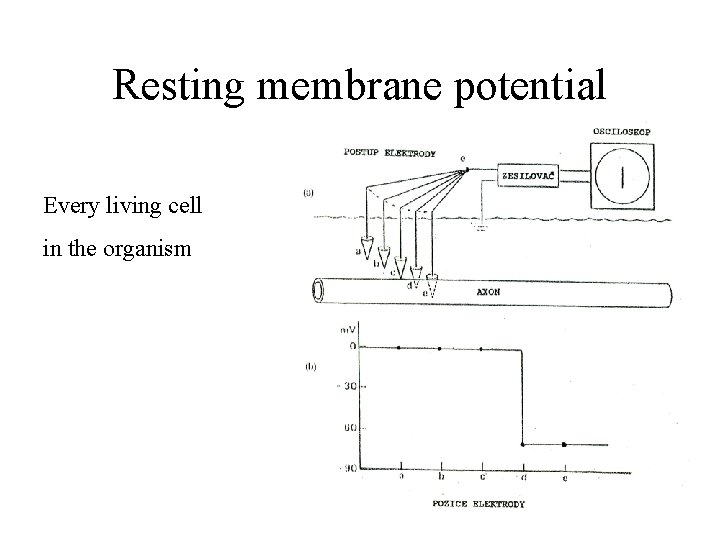
Resting membrane potential Every living cell in the organism
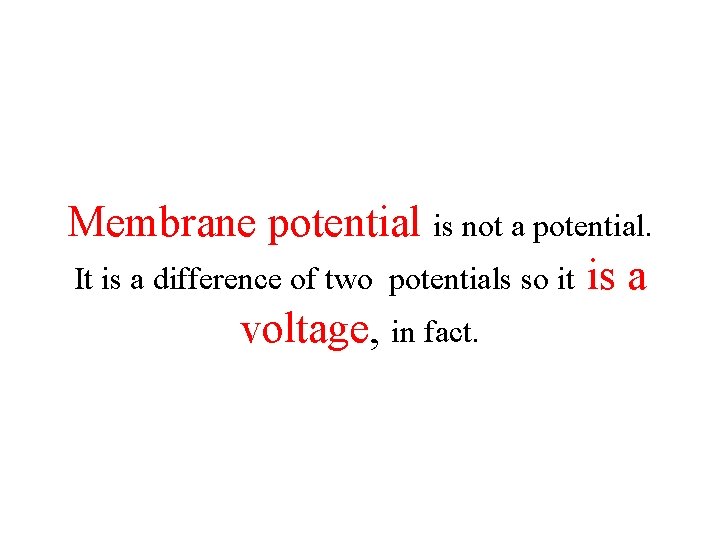
Membrane potential is not a potential. It is a difference of two potentials so it is a voltage, in fact.
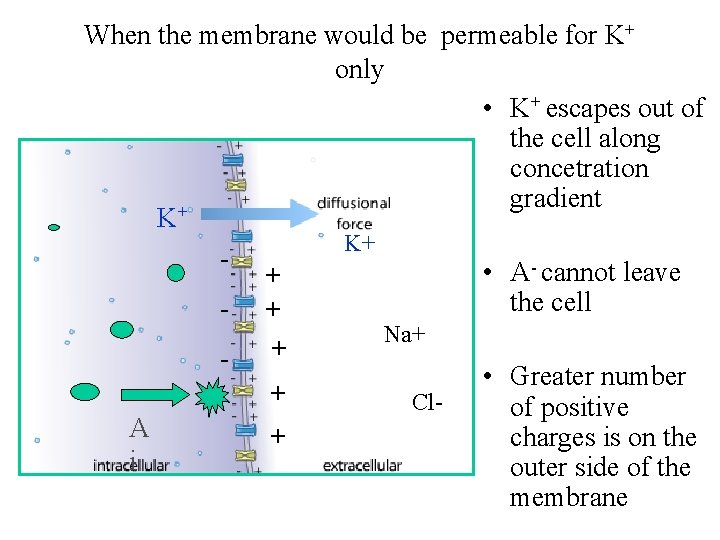
When the membrane would be permeable for K+ only • K+ escapes out of the cell along concetration gradient + K K+ • A- cannot leave + the cell - + Na+ - + • Greater number + Clof positive A + charges is on the i outer side of the membrane
Transduction of signals at the cellular level Axonal part –action potential, spreading without decrement, all-or-nothing law
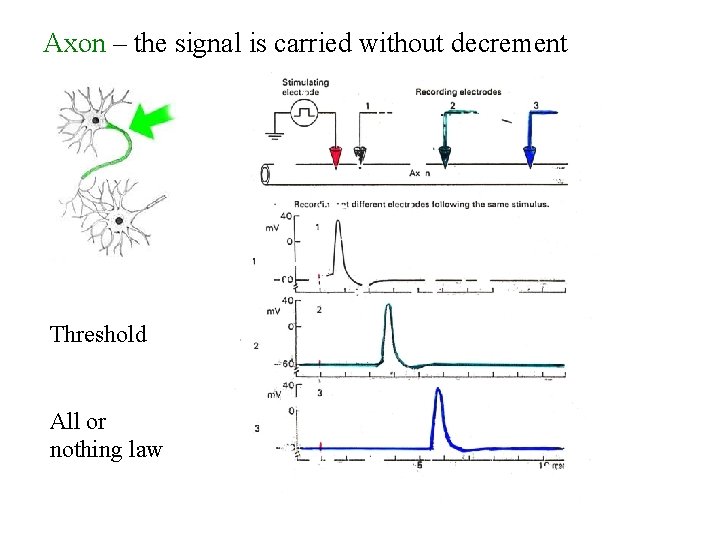
Axon – the signal is carried without decrement Threshold All or nothing law
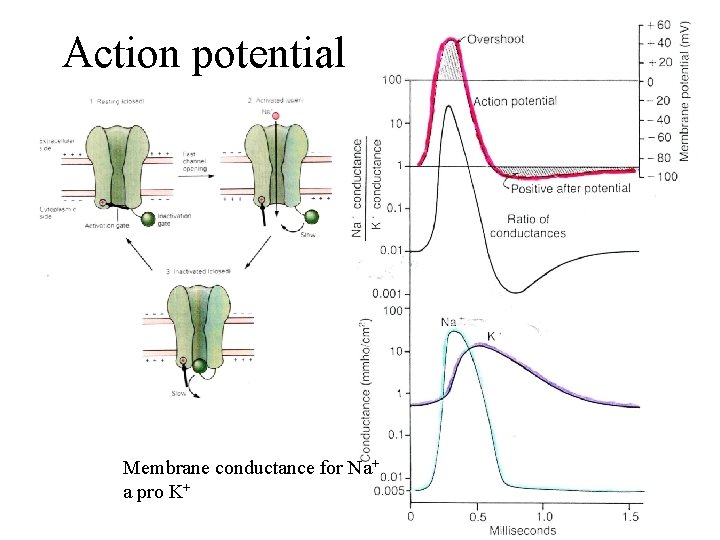
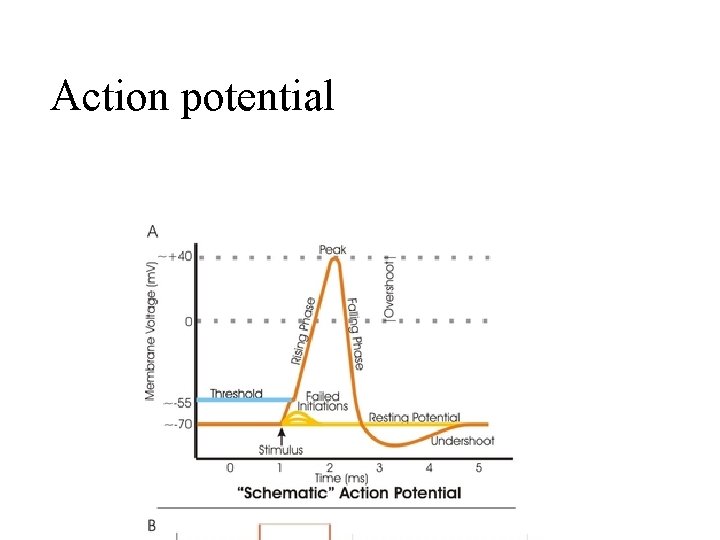
Action potential Membrane conductance for Na+ a pro K+
Action potential
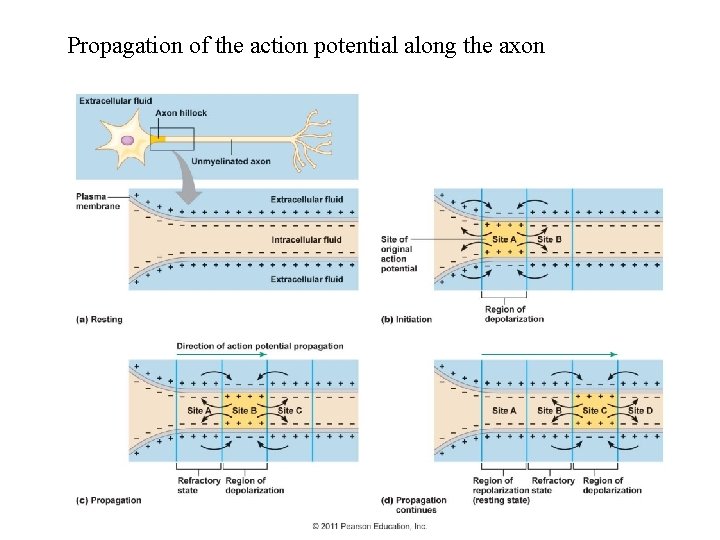
Propagation of the action potential along the axon
Transduction of signals at the cellular level Somatodendritic part – passive conduction of the signal, with decrement
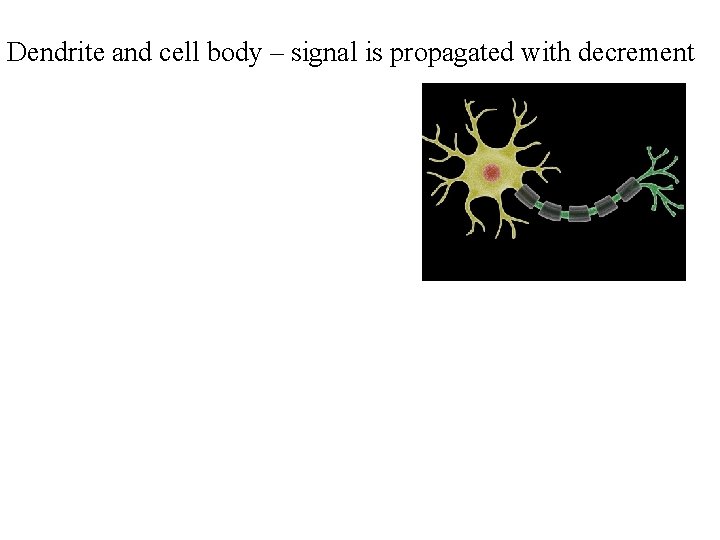
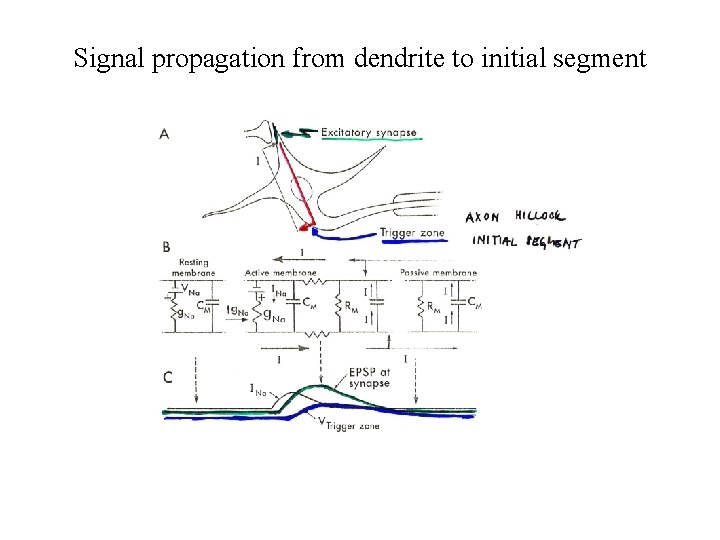
Dendrite and cell body – signal is propagated with decrement
Signal propagation from dendrite to initial segment
Origin of the electrical signal electrical stimulus sensory input neurotransmitter on synapses
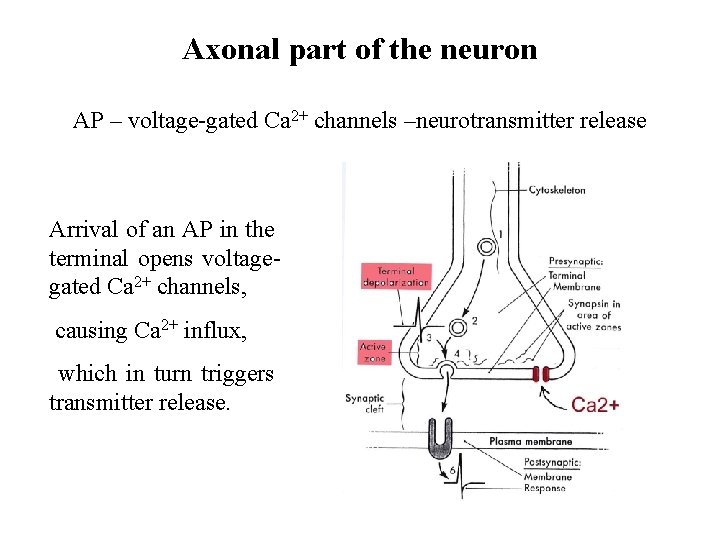
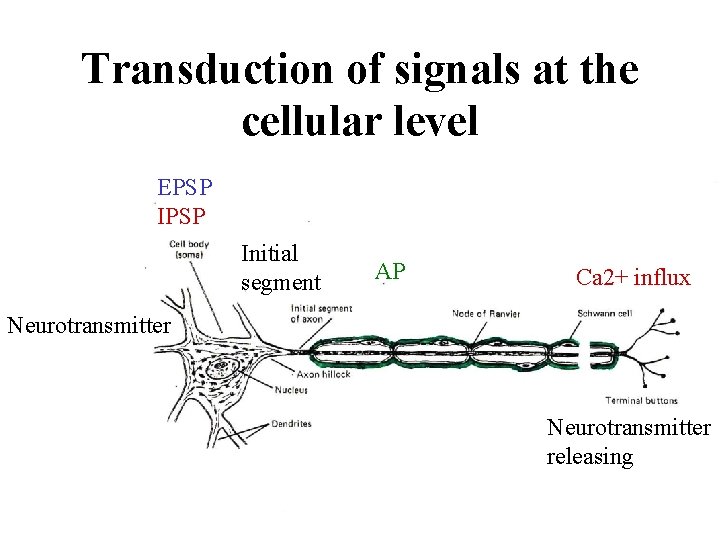
Axonal part of the neuron AP – voltage-gated Ca 2+ channels –neurotransmitter release Arrival of an AP in the terminal opens voltagegated Ca 2+ channels, causing Ca 2+ influx, which in turn triggers transmitter release.
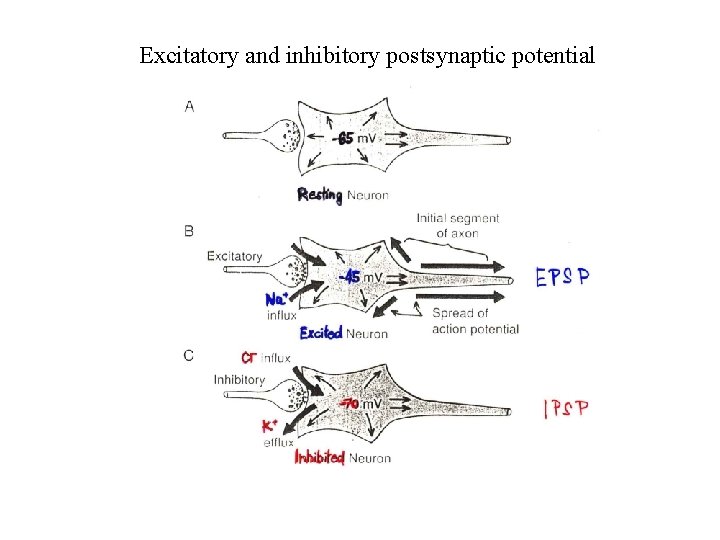
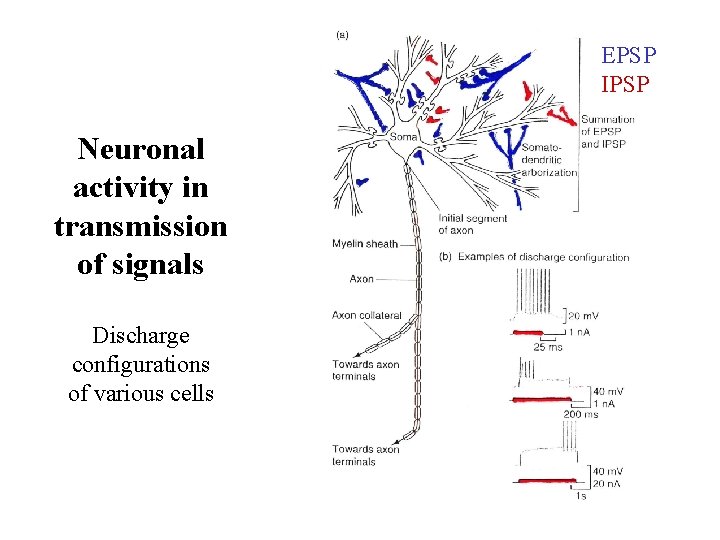
Somatodendritic part of neuron Receptors on the postsynaptic membrane • Excitatory receptors open Na+, Ca 2+ channels membrane depolarization • Inhibitory receptors open K+, Cl- channels membrane hyperpolarization • EPSP – excitatory postsynaptic potential • IPSP – inhibitory postsynaptic potential
Excitatory and inhibitory postsynaptic potential
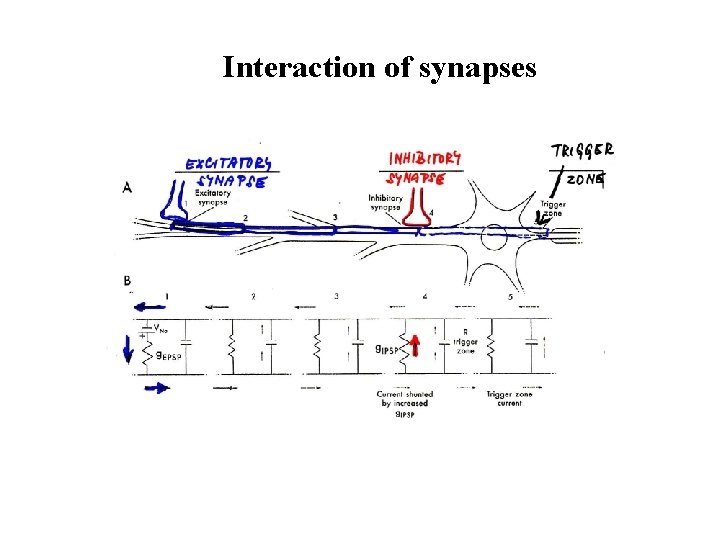
Interaction of synapses
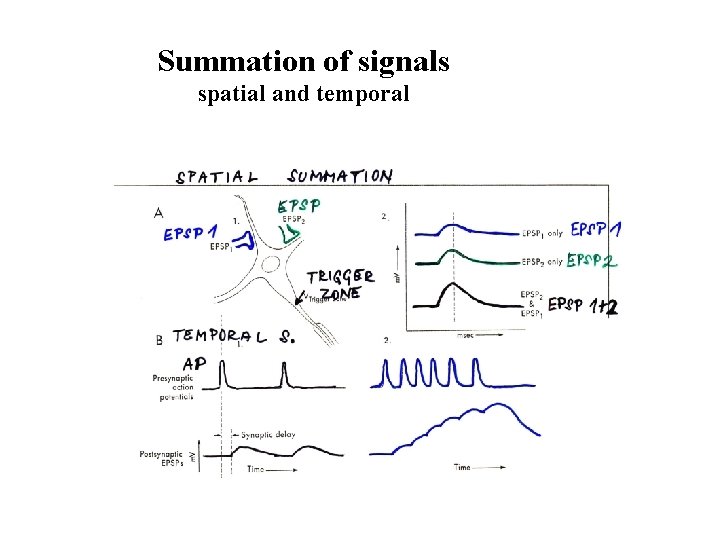
Summation of signals spatial and temporal
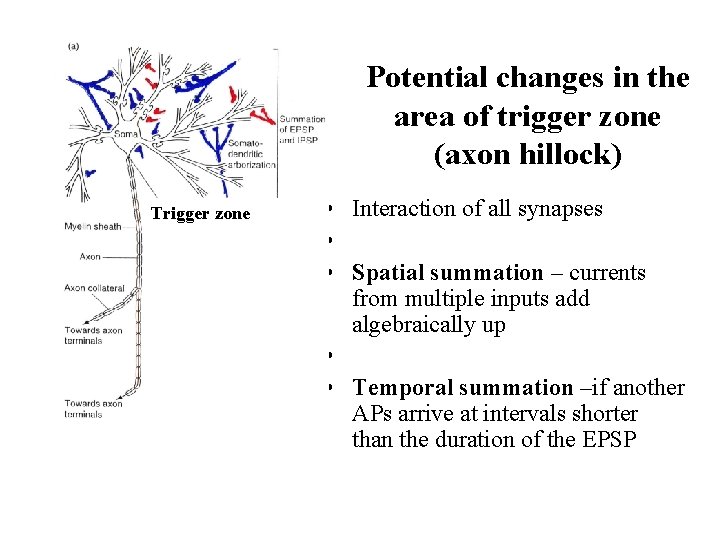
Potential changes in the area of trigger zone (axon hillock) Trigger zone • Interaction of all synapses • • Spatial summation – currents from multiple inputs add algebraically up • • Temporal summation –if another APs arrive at intervals shorter than the duration of the EPSP
Transduction of signals at the cellular level EPSP Initial segment AP Ca 2+ influx Neurotransmitter releasing
EPSP IPSP Neuronal activity in transmission of signals Discharge configurations of various cells
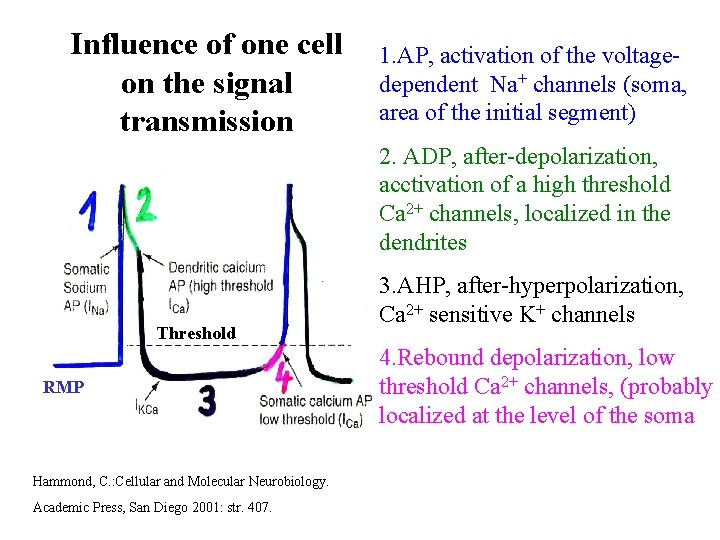
Influence of one cell on the signal transmission 1. AP, activation of the voltagedependent Na+ channels (soma, area of the initial segment) 2. ADP, after-depolarization, acctivation of a high threshold Ca 2+ channels, localized in the dendrites Threshold RMP Hammond, C. : Cellular and Molecular Neurobiology. Academic Press, San Diego 2001: str. 407. 3. AHP, after-hyperpolarization, Ca 2+ sensitive K+ channels 4. Rebound depolarization, low threshold Ca 2+ channels, (probably localized at the level of the soma
Origin of the electrical signal electrical stimulus sensory input neurotransmitter on synapses
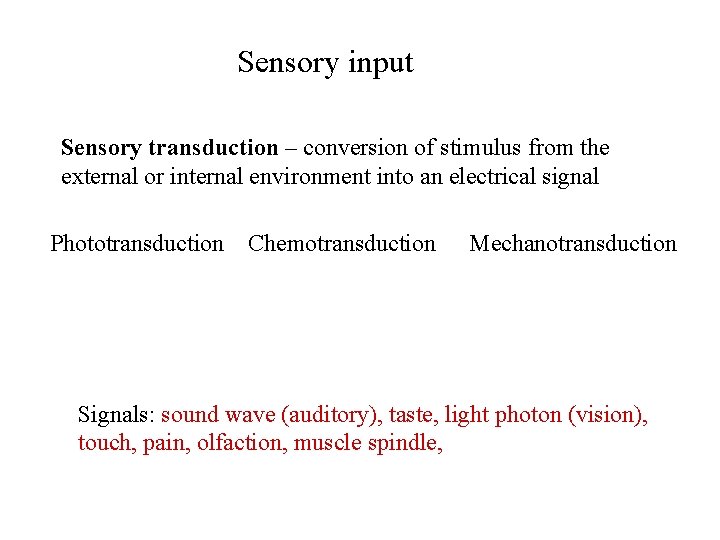
Sensory input Sensory transduction – conversion of stimulus from the external or internal environment into an electrical signal Phototransduction Chemotransduction Mechanotransduction Signals: sound wave (auditory), taste, light photon (vision), touch, pain, olfaction, muscle spindle,
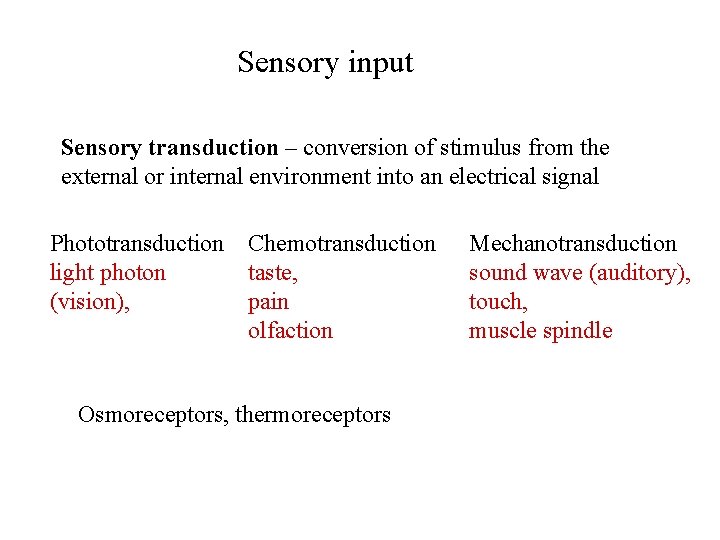
Sensory input Sensory transduction – conversion of stimulus from the external or internal environment into an electrical signal Phototransduction Chemotransduction light photon taste, (vision), pain olfaction Osmoreceptors, thermoreceptors Mechanotransduction sound wave (auditory), touch, muscle spindle
Classification of nerve fibres
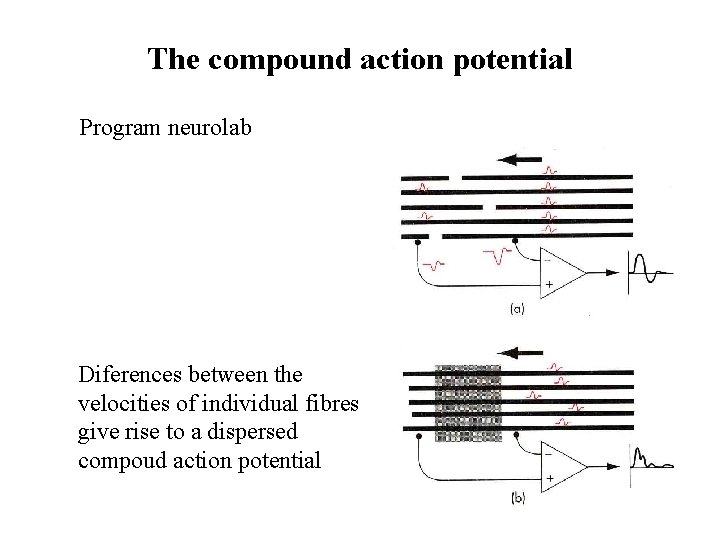
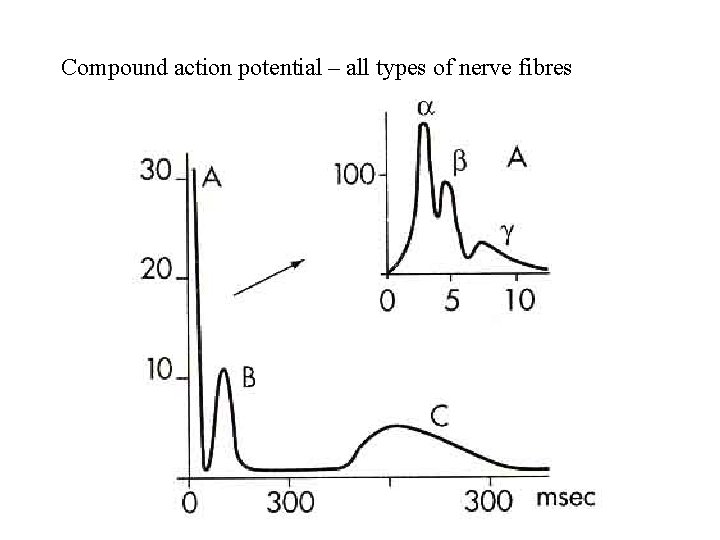
The compound action potential Program neurolab Diferences between the velocities of individual fibres give rise to a dispersed compoud action potential
Compound action potential – all types of nerve fibres
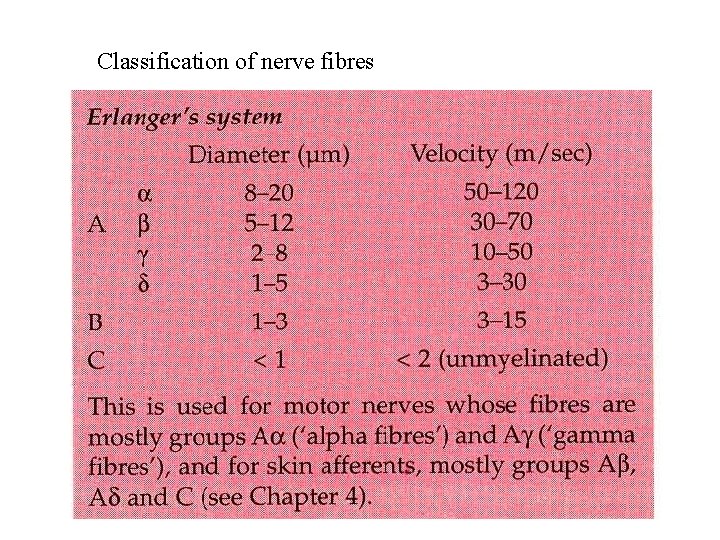
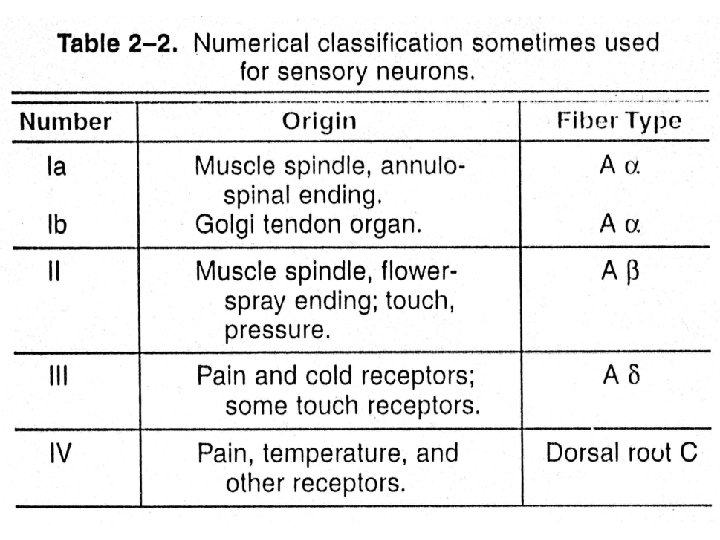
Classification of nerve fibres
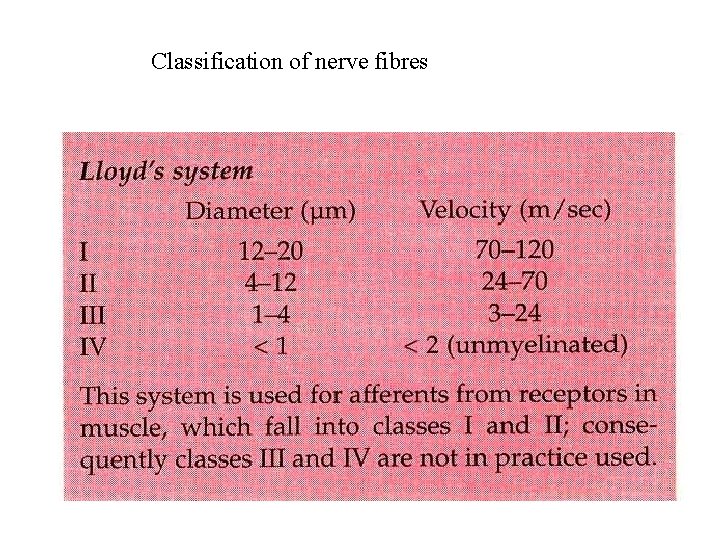
Classification of nerve fibres
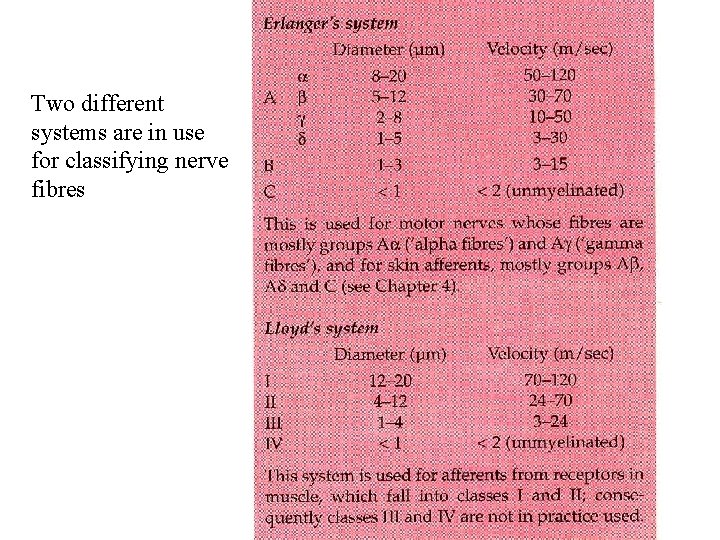
Two different systems are in use for classifying nerve fibres
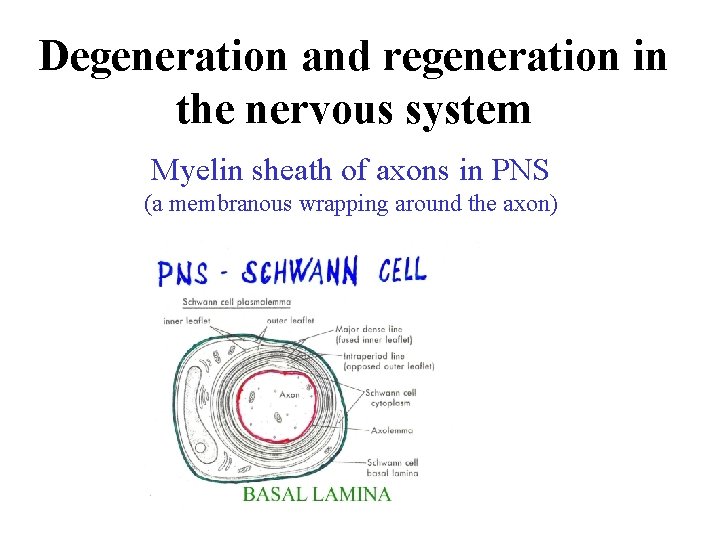
Degeneration and regeneration in the nervous system Myelin sheath of axons in PNS (a membranous wrapping around the axon)
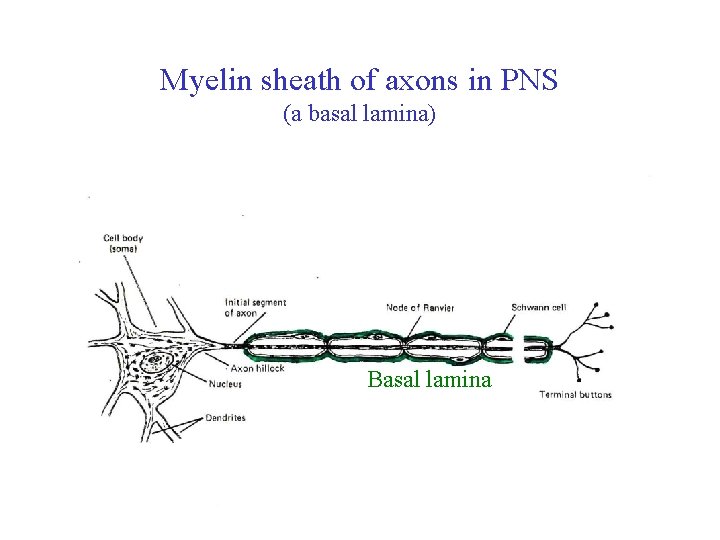
Myelin sheath of axons in PNS (a basal lamina) Basal lamina
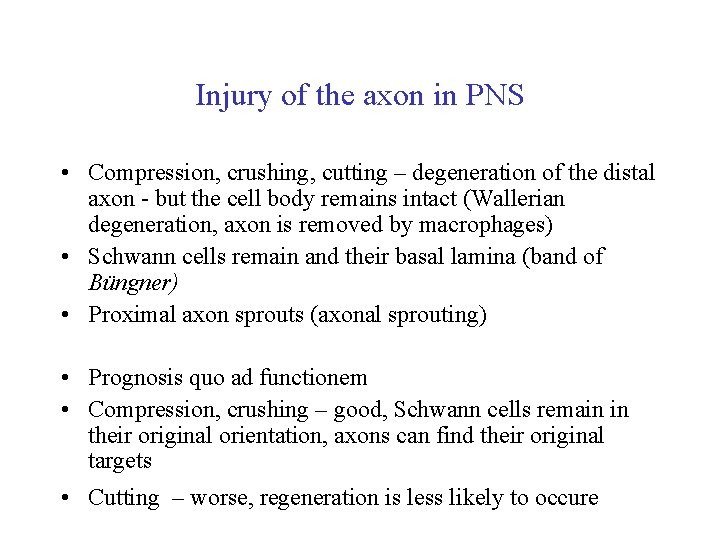
Injury of the axon in PNS • Compression, crushing, cutting – degeneration of the distal axon - but the cell body remains intact (Wallerian degeneration, axon is removed by macrophages) • Schwann cells remain and their basal lamina (band of Büngner) • Proximal axon sprouts (axonal sprouting) • Prognosis quo ad functionem • Compression, crushing – good, Schwann cells remain in their original orientation, axons can find their original targets • Cutting – worse, regeneration is less likely to occure
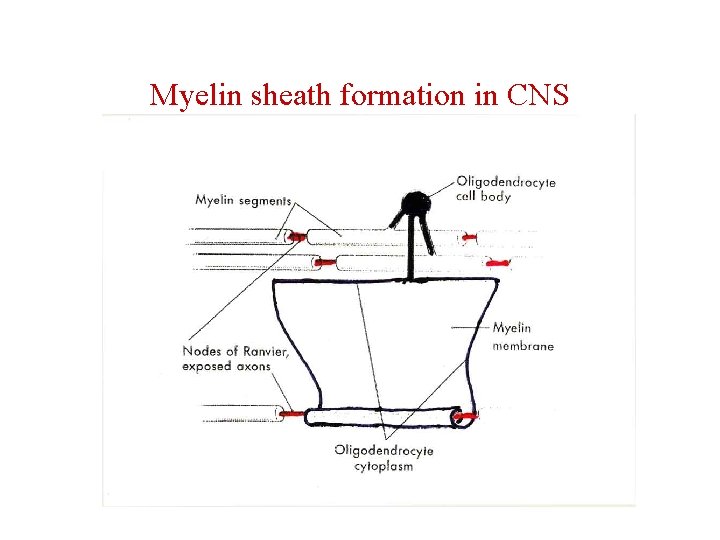
Myelin sheath formation in CNS
Injury of the axon in CNS • Oligodendrocytes do not create a basal lamina and a band of Büngner • Regeneration to a functional state is impossible Trauma of the CNS • proliferation and hypertrophy of astrocytes, astrocytic scar
Injury of the axon in PNS after amputation • Amputation of the limb • Proximal stump fail to enter the Schwann cell tube, instead ending blindly in connective tissue • Blind ends rolle themselves into a ball and form a neuroma – phantom pain