
General Microbiology Lab Bacterial Staining Dr Mohammad Abu
General Microbiology Lab Bacterial Staining Dr. Mohammad Abu Lubad Department of Microbiology and immunology Faculty of Medicine, Mu’tah University Lab 2
Staining preparations Objectives To understand the medical importance of bacterial staining To understand theoretical basis for staining techniques Understand the meaning of differential staining To explain the procedure for selected bacterial staining techniques

Safety considerations Be careful with the Bunsen burner flame Volatile and flammable liquids (ethanol, isopropanol-acetone) Do not use them near an open flame Be carful of your clothes Hold all slides with forceps or a clothespin when heat-fixing Wear suitable protective gloves.
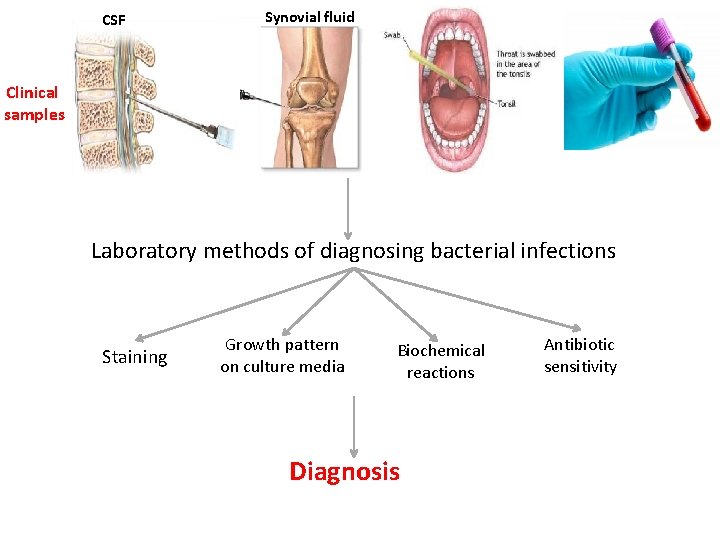
CSF Synovial fluid Clinical samples Laboratory methods of diagnosing bacterial infections Staining Growth pattern on culture media Biochemical reactions Diagnosis Antibiotic sensitivity
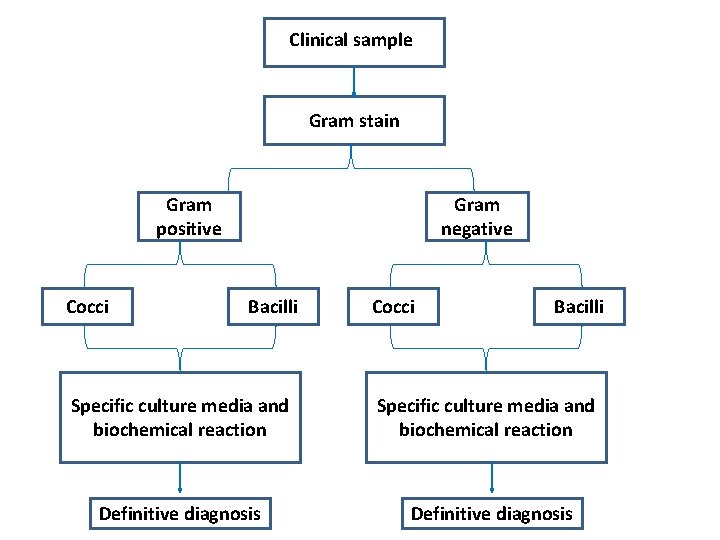
Clinical sample Gram stain Gram positive Cocci Gram negative Bacilli Specific culture media and biochemical reaction Definitive diagnosis Cocci Bacilli Specific culture media and biochemical reaction Definitive diagnosis
Why should be stain bacteria? Bacteria have nearly the same refractive index as water, therefore, when they are observed under a microscope they are opaque or nearly invisible to the naked eye. Different types of staining methods are used make cells visible under light microscope Source of samples for staining 1. Direct body samples (Blood, CSF, synovial fluid, swabs, …etc) 2. From cultured bacteria (Broth, agar)
3 Types of Staining Procedures • Simple Staining (shapes and arrangements) • Differential Staining • Special Staining (Capsule, flagella, spores)
Medical Application of bacterial staining - It is the first step to determine the identity of a particular bacterial sample - Performed on body fluid when infection is suspected - It yields results much more quickly than culture - Important for empirical therapy

CSF (2 days) Treatment is prescribed before the definitive lab diagnose is achieved (called Empirical therapy ) Lab diagnosis
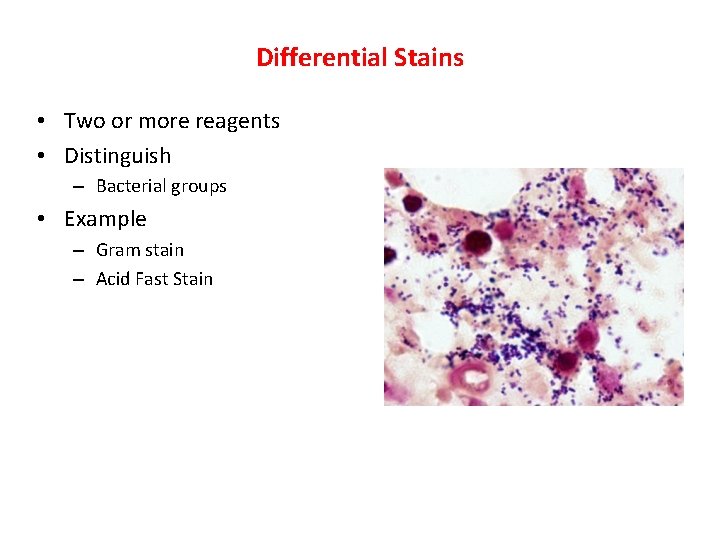
Differential Stains • Two or more reagents • Distinguish – Bacterial groups • Example – Gram stain – Acid Fast Stain

Staining Procedure Slide Preparation • Clean slide • LABEL !!! • Heat fix (usually) – Kill organism – Adhere to slide – Accepts dye • Problems – Too thick – Wash off specimen

Gram staining
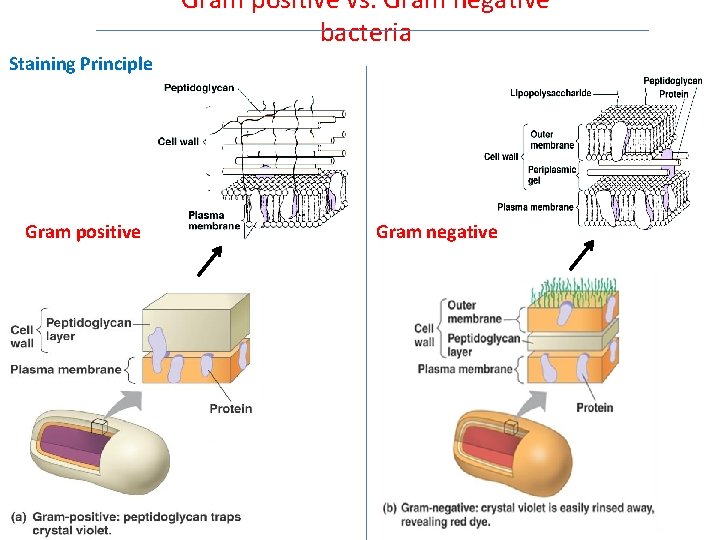
Gram positive vs. Gram negative bacteria Staining Principle Gram positive Gram negative
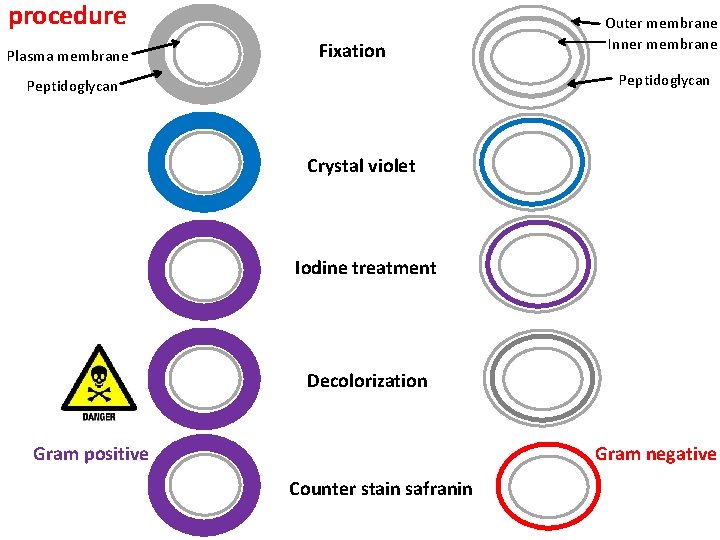
procedure Plasma membrane Fixation Outer membrane Inner membrane Peptidoglycan Crystal violet Iodine treatment Decolorization Gram positive Gram negative Counter stain safranin
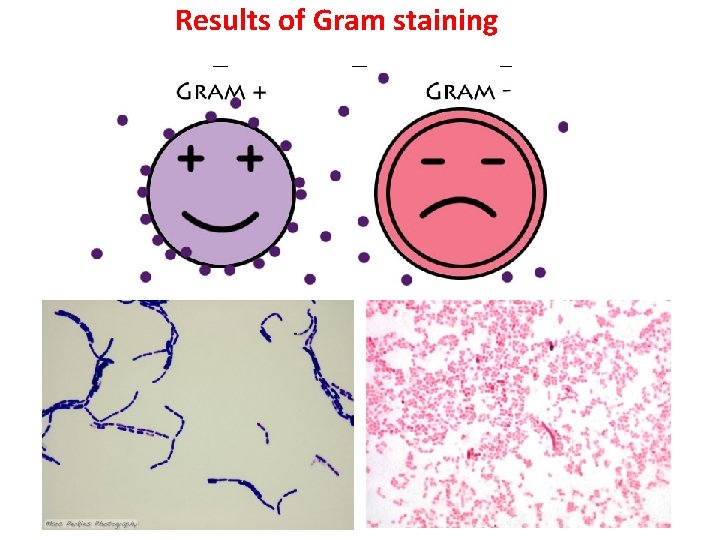
Results of Gram staining
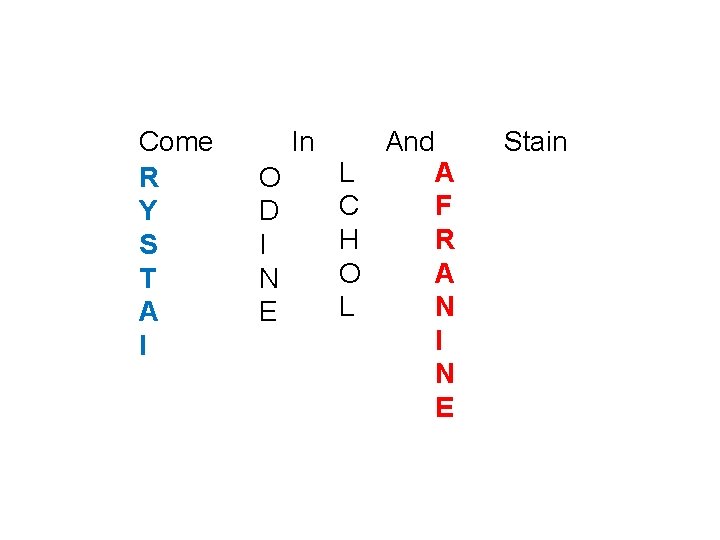
Come R Y S T A l In O D I N E L C H O L And A F R A N I N E Stain
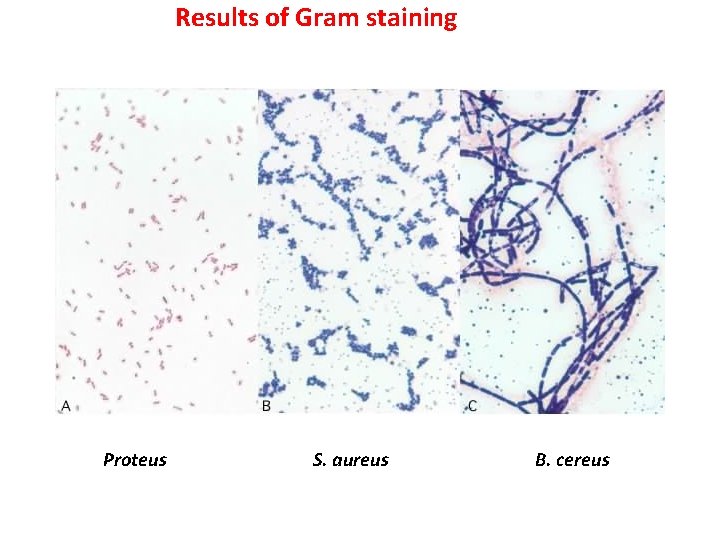
Results of Gram staining Proteus S. aureus B. cereus
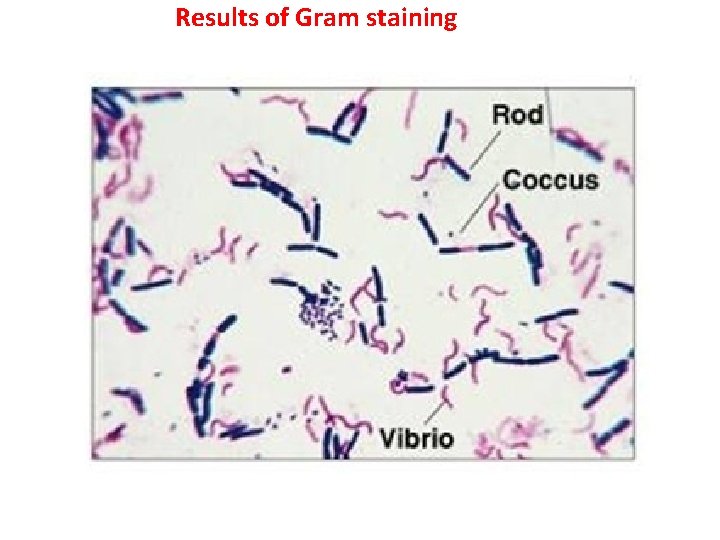
Results of Gram staining
Acid fast staining Medical Application Important in identifying bacteria and parasites such as: • Mycobacterium; specifically M. leprae (leprosy) and M. tuberculosis. • The aerobic actinomycete genus Nocardia; specifically, the opportunistic pathogens N. brasiliensis and N. asteroids that cause the lung disease nocardiosis. • The potozoan parasite Cryptosporidium that causes diarrhea in humans (cryptosporidiosis)
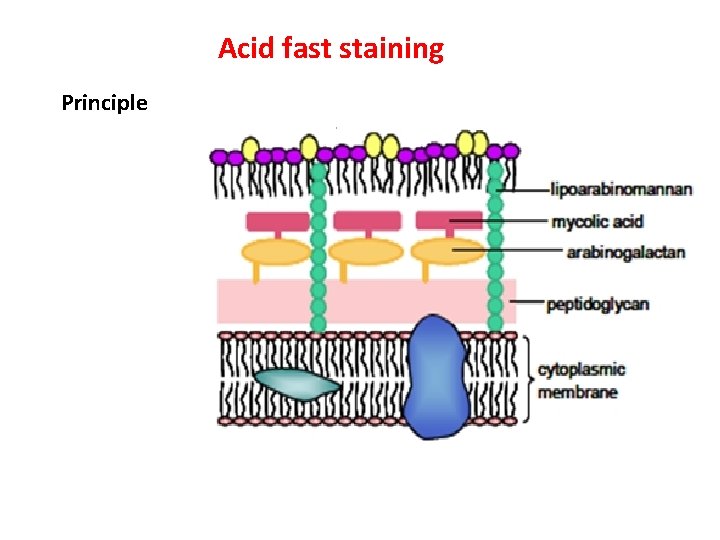
Acid fast staining Principle
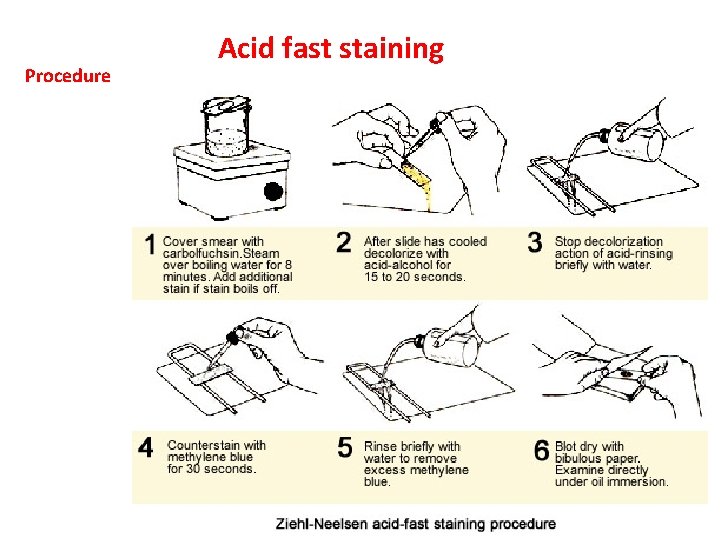
Procedure Acid fast staining
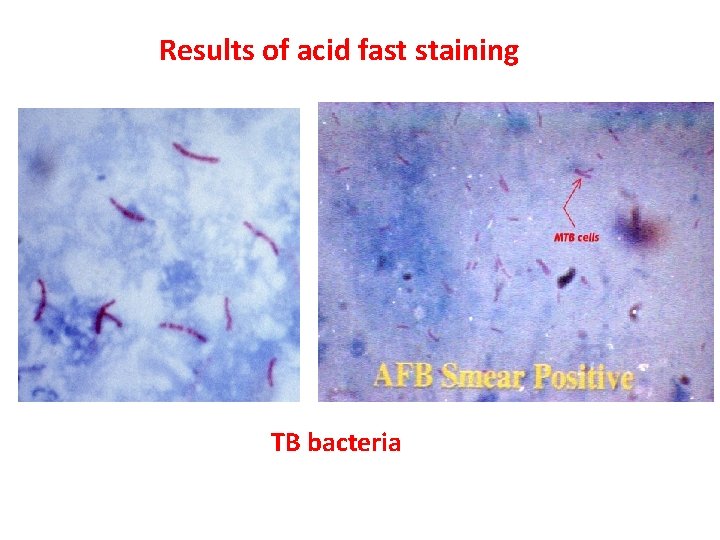
Results of acid fast staining TB bacteria
- Slides: 22