
General Microbiology 2020 2021 Orientation to Gram Positive
General Microbiology 2020 -2021 Orientation to Gram Positive Bacteria of Medical Importance Dr. Mohammad Odibate Department of Microbiology and immunology Faculty of Medicine, Mu’tah University
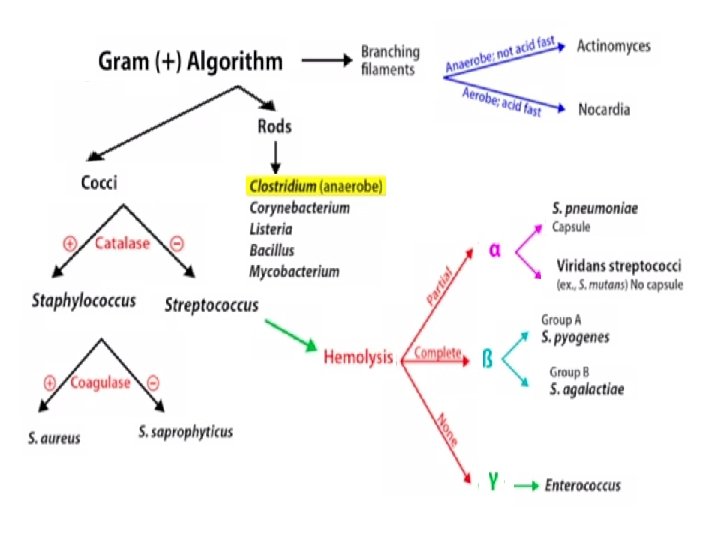
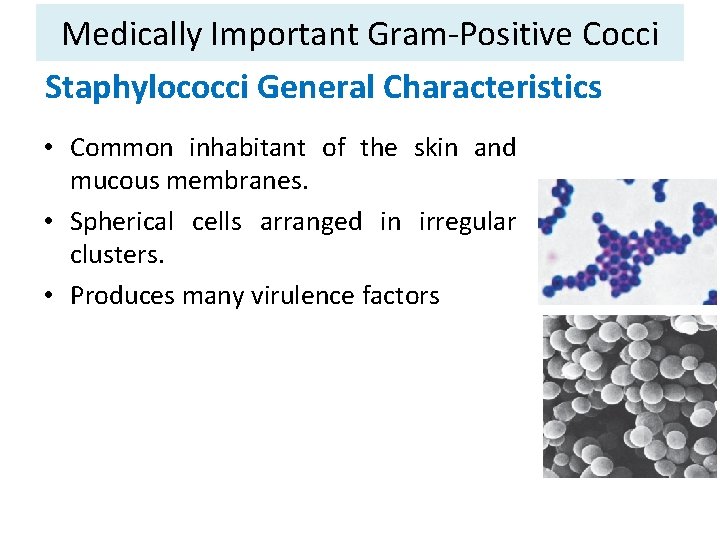
Medically Important Gram-Positive Cocci Staphylococci General Characteristics • Common inhabitant of the skin and mucous membranes. • Spherical cells arranged in irregular clusters. • Produces many virulence factors
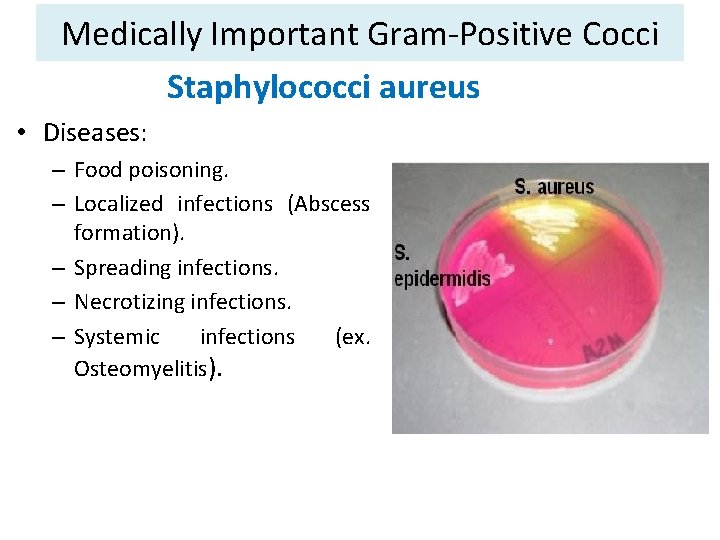
Medically Important Gram-Positive Cocci Staphylococci aureus • Diseases: – Food poisoning. – Localized infections (Abscess formation). – Spreading infections. – Necrotizing infections. – Systemic infections (ex. Osteomyelitis).
Medically Important Gram-Positive Cocci Coagulase-negative staphylococcus • Frequently involved in nosocomial and opportunistic infections. • S. epidermidis – lives on skin and mucous membranes; endocarditis, bacteremia, UTI. • S. saprophyticus – infrequently lives on skin, intestine, vagina; UTI.
Medically Important Gram-Positive Cocci Streptococci Gram-positive cocci Catalase & Coagulase negative Sensitive to drying, heat, and disinfectants Classification -hemolytic: partial hemolysis of RBCs -hemolytic: complete hemolysis of RBCs -hemolytic: no hemolysis of RBCs
Medically Important Gram-Positive Cocci Streptococci S. pyogenes (Group A sterp): o Group-A streptococci (GAS). o - hemolytic. o Most serious streptococcal pathogen. o Inhabits throat, nasopharynx, occasionally skin. o Diseases: o Pharyngitis. o Skin infections. o Necrotizing infections. o Systemic infections
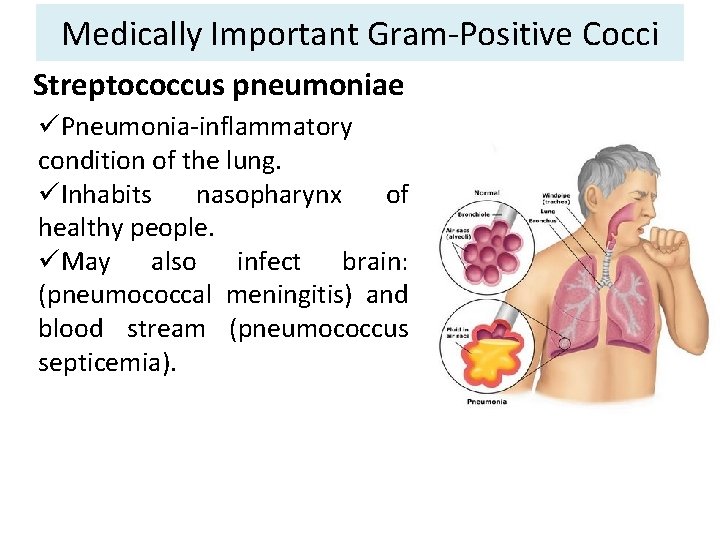
Medically Important Gram-Positive Cocci Streptococcus pneumoniae üPneumonia-inflammatory condition of the lung. üInhabits nasopharynx of healthy people. üMay also infect brain: (pneumococcal meningitis) and blood stream (pneumococcus septicemia).
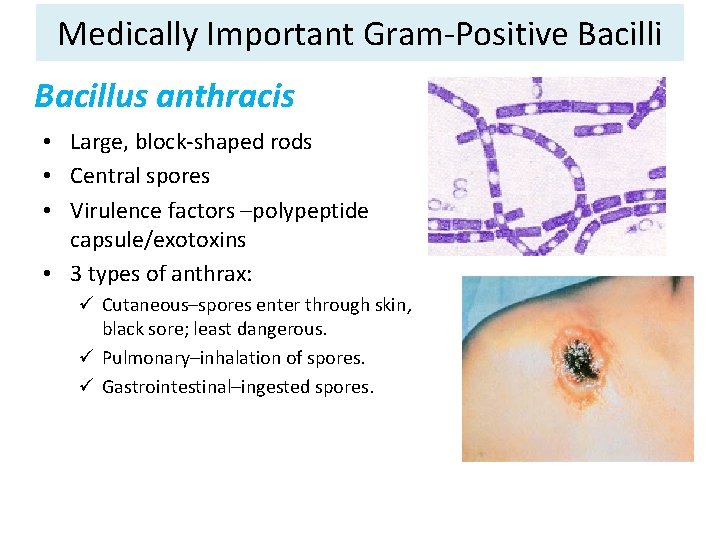
Medically Important Gram-Positive Bacilli Bacillus anthracis • Large, block-shaped rods • Central spores • Virulence factors –polypeptide capsule/exotoxins • 3 types of anthrax: ü Cutaneous–spores enter through skin, black sore; least dangerous. ü Pulmonary–inhalation of spores. ü Gastrointestinal–ingested spores.
Medically Important Gram-Positive Bacilli Bacillus cereus • Grows in foods, spores survive cooking/ reheating. • Ingestion of toxin-containing food causes nausea, vomiting, abdominal cramps, diarrhea; 24 hour duration. • No treatment. • Increasingly reported in immunosuppressed.
Medically Important Gram-Positive Bacilli Clostridium difficile • Normal flora colon, in low numbers. • Causes antibiotic associated colitis • Due to treatment with broad-spectrum antibiotics that kills other bacteria: C. difficile overgrowth • Enterotoxins that damage intestines. • Major cause of diarrhea in hospitals. • Treatment: stop antimicrobials/fluid electrolyte replacement.
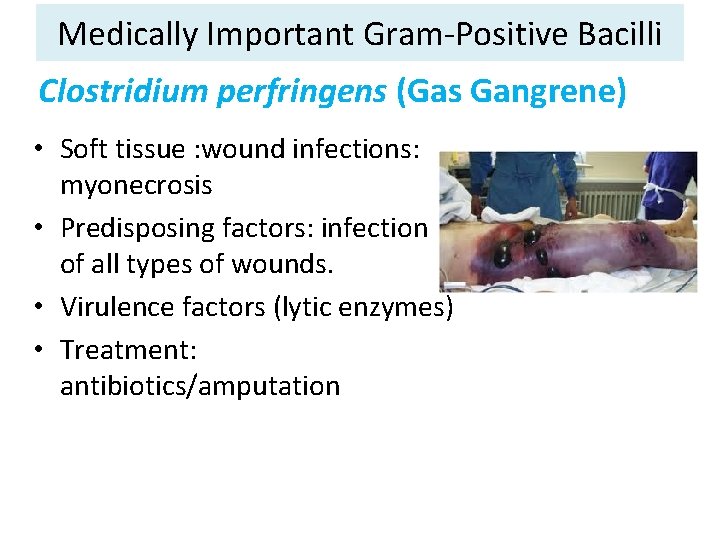
Medically Important Gram-Positive Bacilli Clostridium perfringens (Gas Gangrene) • Soft tissue : wound infections: myonecrosis • Predisposing factors: infection of all types of wounds. • Virulence factors (lytic enzymes) • Treatment: antibiotics/amputation
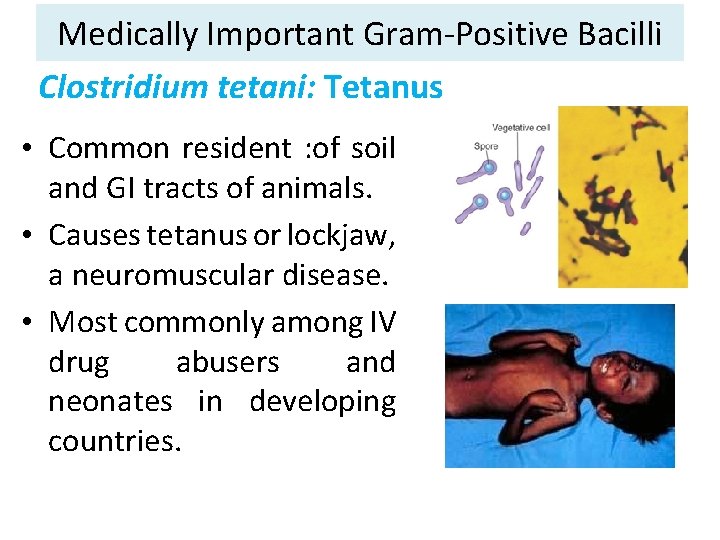
Medically Important Gram-Positive Bacilli Clostridium tetani: Tetanus • Common resident : of soil and GI tracts of animals. • Causes tetanus or lockjaw, a neuromuscular disease. • Most commonly among IV drug abusers and neonates in developing countries.
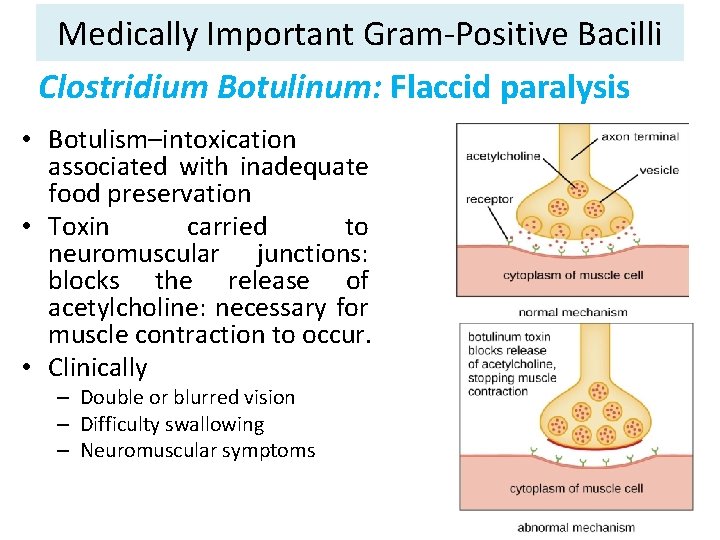
Medically Important Gram-Positive Bacilli Clostridium Botulinum: Flaccid paralysis • Botulism–intoxication associated with inadequate food preservation • Toxin carried to neuromuscular junctions: blocks the release of acetylcholine: necessary for muscle contraction to occur. • Clinically – Double or blurred vision – Difficulty swallowing – Neuromuscular symptoms
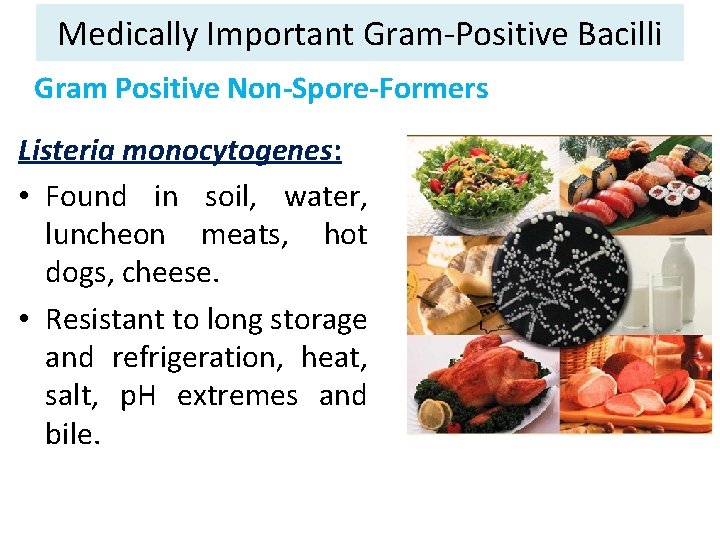
Medically Important Gram-Positive Bacilli Gram Positive Non-Spore-Formers Listeria monocytogenes: • Found in soil, water, luncheon meats, hot dogs, cheese. • Resistant to long storage and refrigeration, heat, salt, p. H extremes and bile.
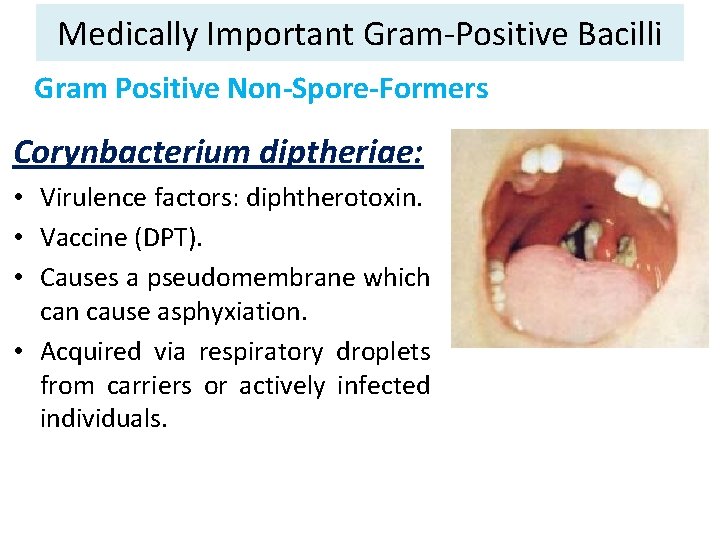
Medically Important Gram-Positive Bacilli Gram Positive Non-Spore-Formers Corynbacterium diptheriae: • Virulence factors: diphtherotoxin. • Vaccine (DPT). • Causes a pseudomembrane which can cause asphyxiation. • Acquired via respiratory droplets from carriers or actively infected individuals.
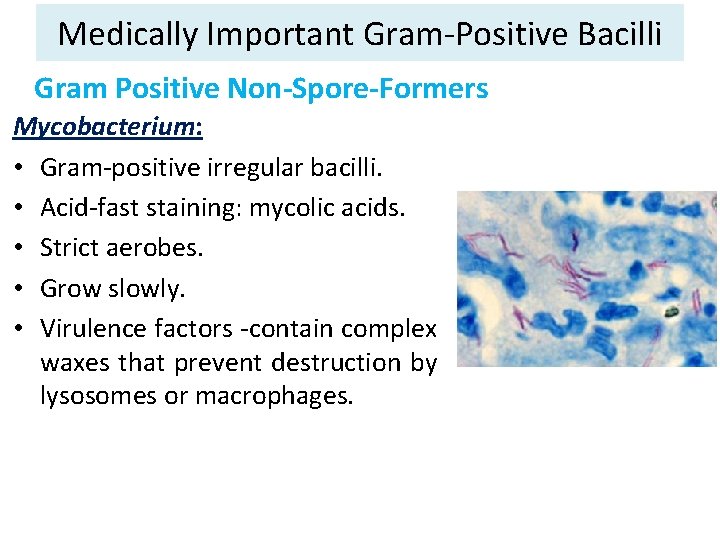
Medically Important Gram-Positive Bacilli Gram Positive Non-Spore-Formers Mycobacterium: • Gram-positive irregular bacilli. • Acid-fast staining: mycolic acids. • Strict aerobes. • Grow slowly. • Virulence factors -contain complex waxes that prevent destruction by lysosomes or macrophages.

Medically Important Gram-Positive Bacilli
- Slides: 18