
General Mechanisms of Hormone Actions By Dr Ahmed
General Mechanisms of Hormone Actions By Dr. Ahmed Hussain A. Mujamammi Clinical Chemistry Unit Pathology Department College of Medicine, KSU
OBJECTIVES By the end of this lecture, students should be able to: Acquire the knowledge for general consequence of hormone-receptor interaction Understand different mechanisms of action of hormones Recognize the biomedical importance due to disturbance in the normal mechanisms of hormonal action
Lecture Outlines �Background �Factors determining the response of a target cell to a hormone �Hormone-receptor interaction �General features of hormone classes �Classification of hormones by mechanism of action �Biomedical importance
Background Multicellular organisms depend in their survival on their adaptation to a constantly changing environment Intercellular communication is necessary for this adaptation to take place Human body synthesizes many hormones that can act specifically on different cells of the body
Background More than one hormone can affect a given cell type Hormones can exert many different effects in one cell or in different cells A target is any cell in which the hormone (ligand) binds to its receptor
Factors determining the response of a target cell to a hormone The rate of synthesis & secretion of the hormones The conversion of inactive forms of the hormone into the fully active form The rate of hormone clearance from plasma (halflife & excretion) The number, relative activity, and state of occupancy of the specific receptors Post-receptor factors
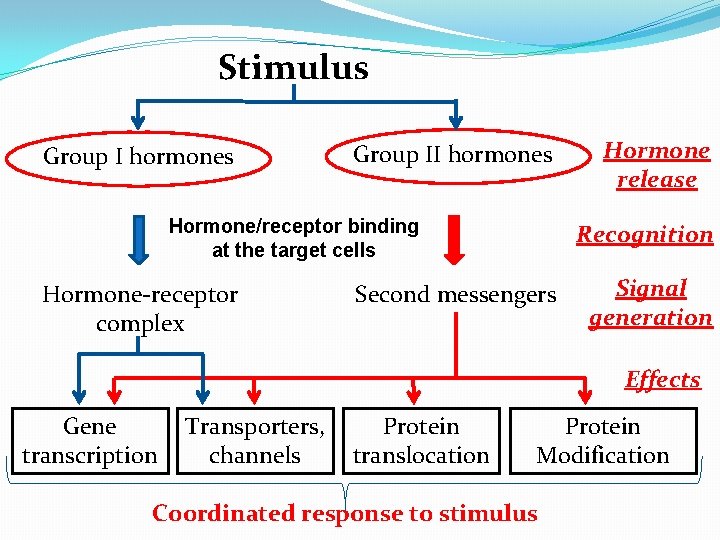
Stimulus Group I hormones Group II hormones Hormone/receptor binding at the target cells Hormone-receptor complex Hormone release Recognition Second messengers Signal generation Effects Gene transcription Transporters, channels Protein translocation Protein Modification Coordinated response to stimulus
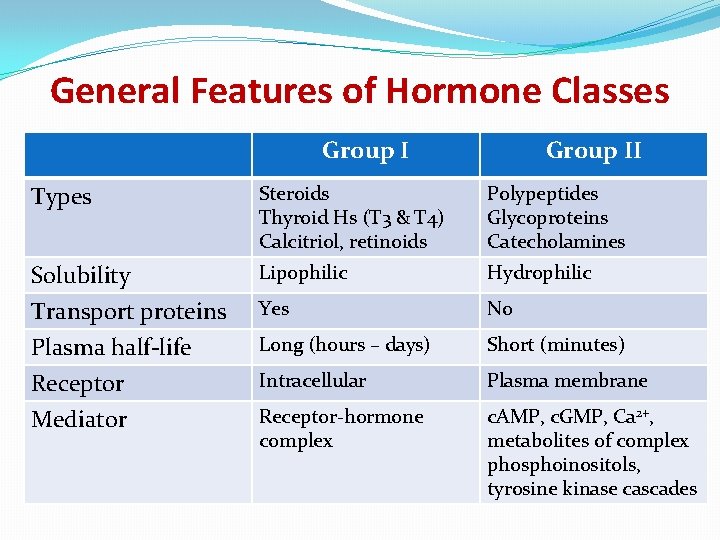
General Features of Hormone Classes Group II Types Steroids Thyroid Hs (T 3 & T 4) Calcitriol, retinoids Polypeptides Glycoproteins Catecholamines Solubility Transport proteins Plasma half-life Receptor Lipophilic Hydrophilic Yes No Long (hours – days) Short (minutes) Intracellular Plasma membrane Mediator Receptor-hormone complex c. AMP, c. GMP, Ca 2+, metabolites of complex phosphoinositols, tyrosine kinase cascades
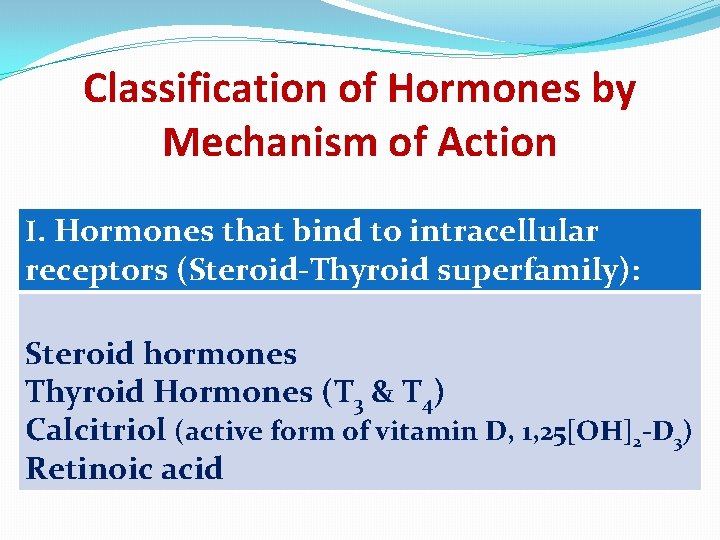
Classification of Hormones by Mechanism of Action I. Hormones that bind to intracellular receptors (Steroid-Thyroid superfamily): Steroid hormones Thyroid Hormones (T 3 & T 4) Calcitriol (active form of vitamin D, 1, 25[OH]2 -D 3) Retinoic acid
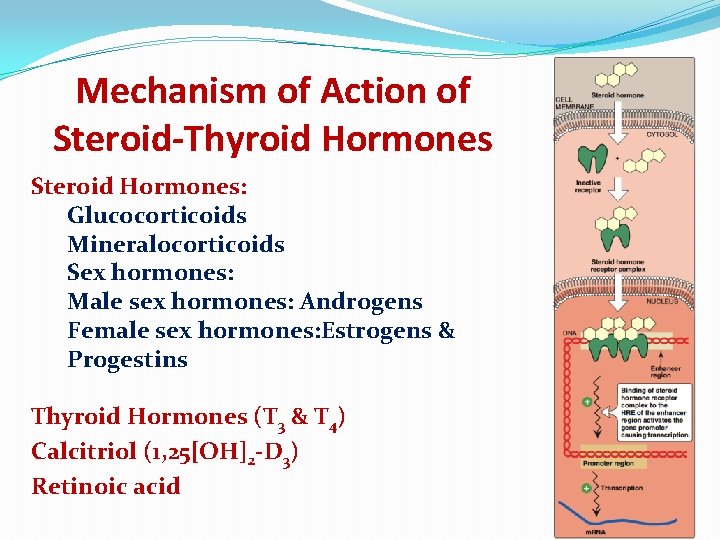
Mechanism of Action of Steroid-Thyroid Hormones Steroid Hormones: Glucocorticoids Mineralocorticoids Sex hormones: Male sex hormones: Androgens Female sex hormones: Estrogens & Progestins Thyroid Hormones (T 3 & T 4) Calcitriol (1, 25[OH]2 -D 3) Retinoic acid
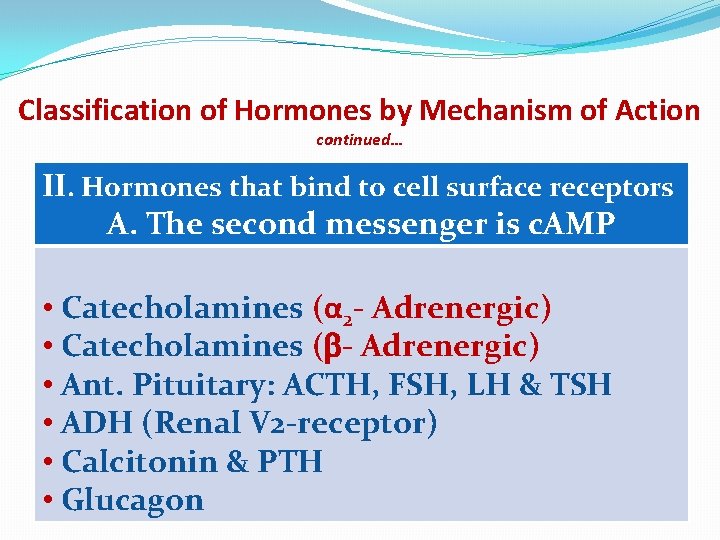
Classification of Hormones by Mechanism of Action continued… II. Hormones that bind to cell surface receptors A. The second messenger is c. AMP • Catecholamines (α 2 - Adrenergic) • Catecholamines ( - Adrenergic) • Ant. Pituitary: ACTH, FSH, LH & TSH • ADH (Renal V 2 -receptor) • Calcitonin & PTH • Glucagon
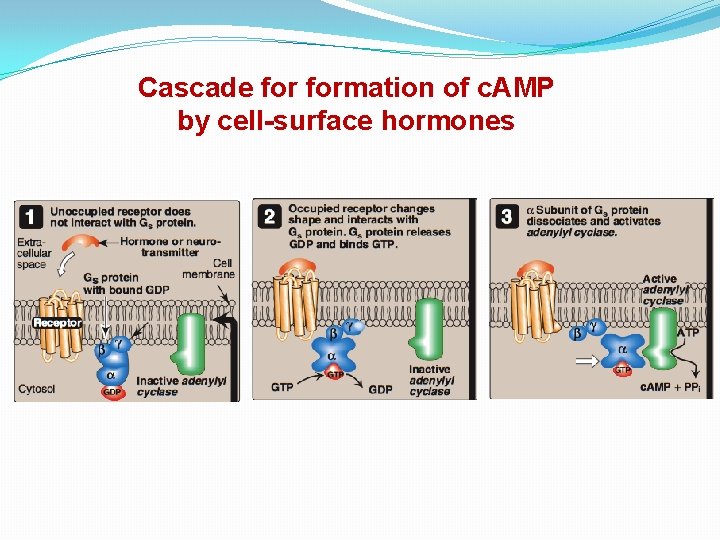
Cascade formation of c. AMP by cell-surface hormones
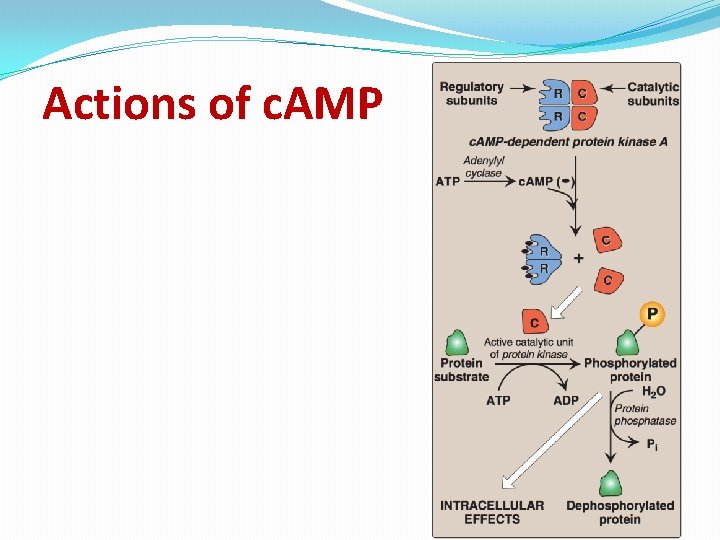
Actions of c. AMP
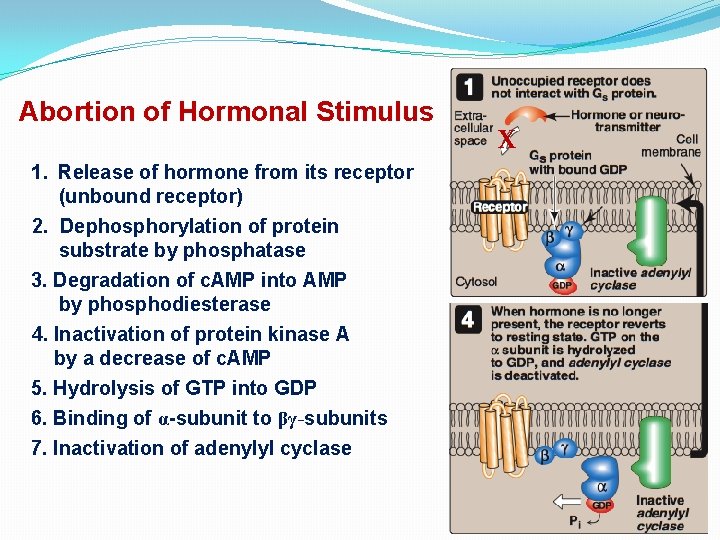
Abortion of Hormonal Stimulus 1. Release of hormone from its receptor (unbound receptor) 2. Dephosphorylation of protein substrate by phosphatase 3. Degradation of c. AMP into AMP by phosphodiesterase 4. Inactivation of protein kinase A by a decrease of c. AMP 5. Hydrolysis of GTP into GDP 6. Binding of α-subunit to βγ-subunits 7. Inactivation of adenylyl cyclase Х
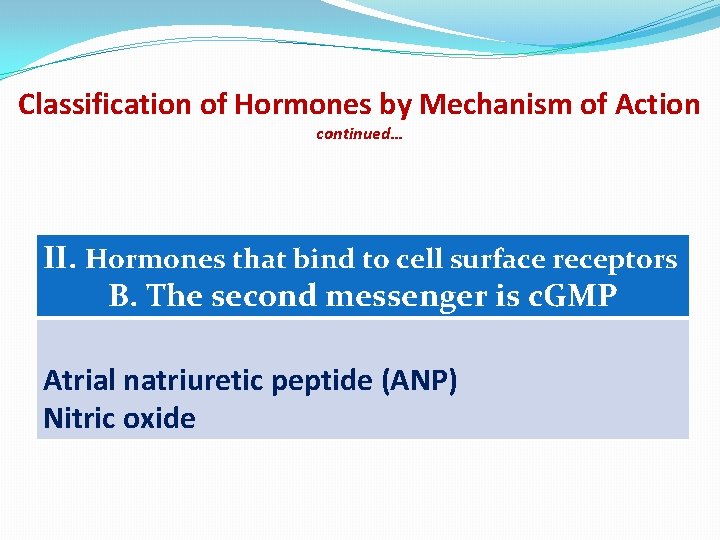
Classification of Hormones by Mechanism of Action continued… II. Hormones that bind to cell surface receptors B. The second messenger is c. GMP Atrial natriuretic peptide (ANP) Nitric oxide
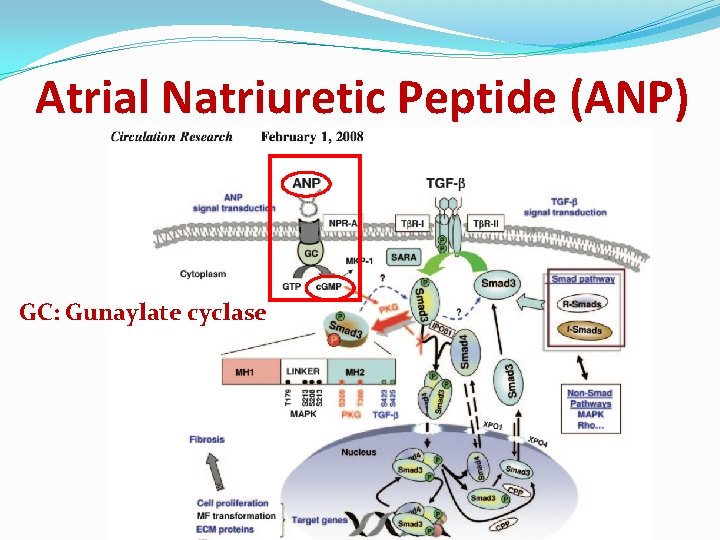
Atrial Natriuretic Peptide (ANP) GC: Gunaylate cyclase
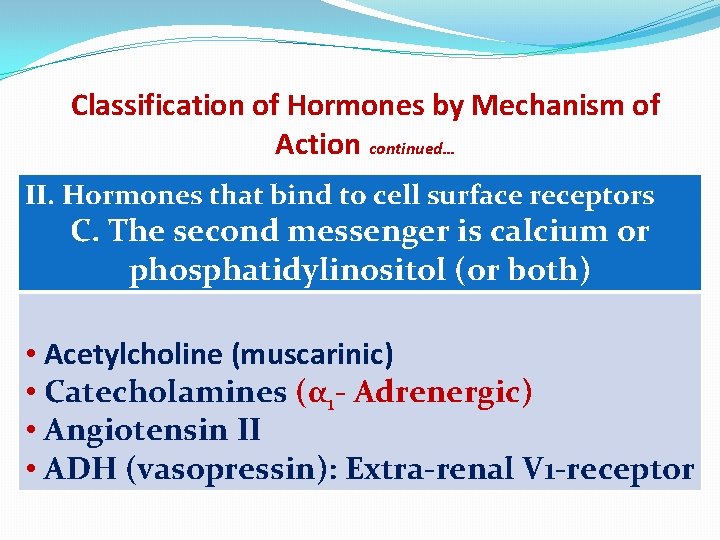
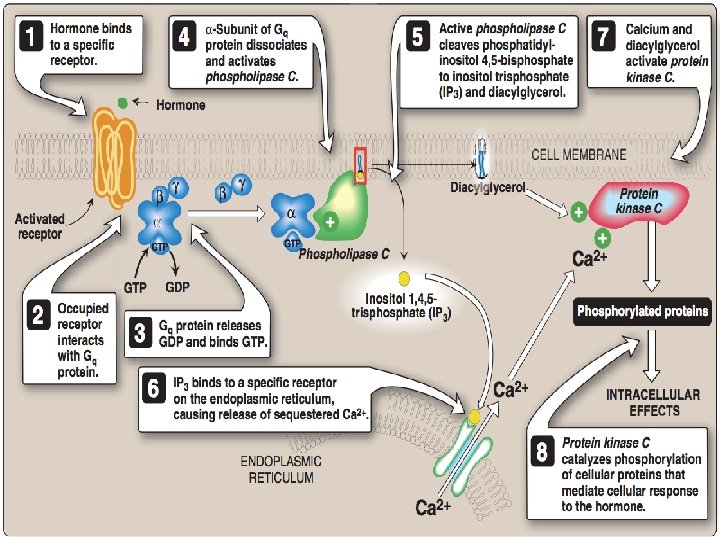
Classification of Hormones by Mechanism of Action continued… II. Hormones that bind to cell surface receptors C. The second messenger is calcium or phosphatidylinositol (or both) • Acetylcholine (muscarinic) • Catecholamines (α 1 - Adrenergic) • Angiotensin II • ADH (vasopressin): Extra-renal V 1 -receptor
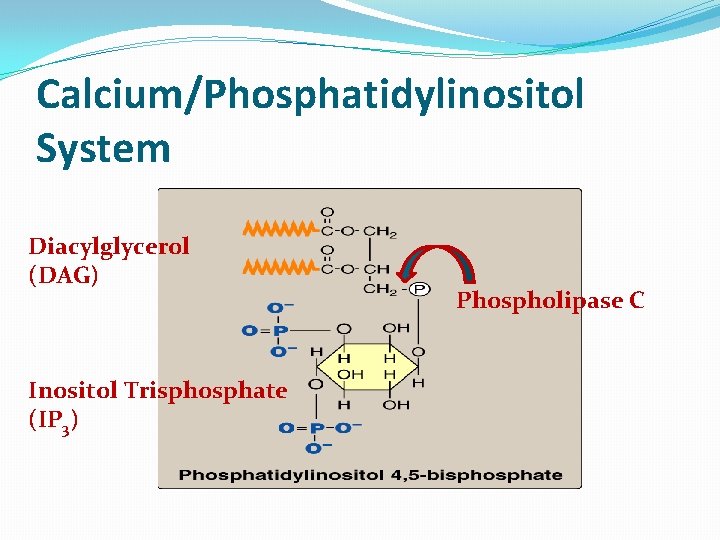
Calcium/Phosphatidylinositol System Diacylglycerol (DAG) Inositol Trisphosphate (IP 3) Phospholipase C
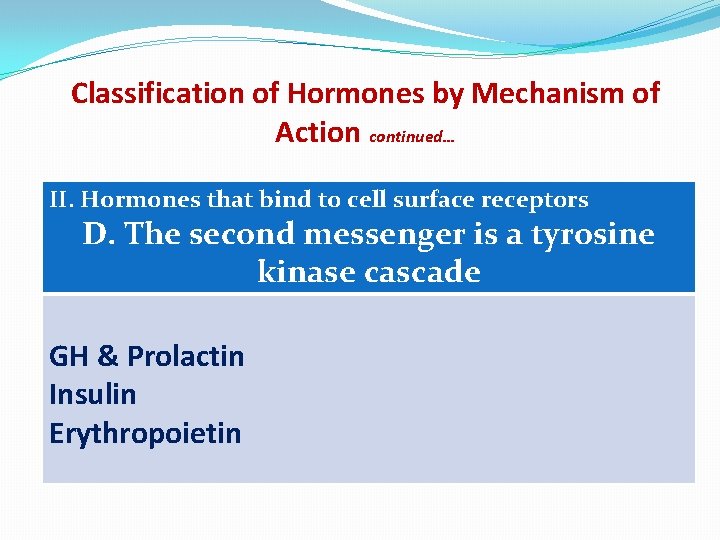
Classification of Hormones by Mechanism of Action continued… II. Hormones that bind to cell surface receptors D. The second messenger is a tyrosine kinase cascade GH & Prolactin Insulin Erythropoietin
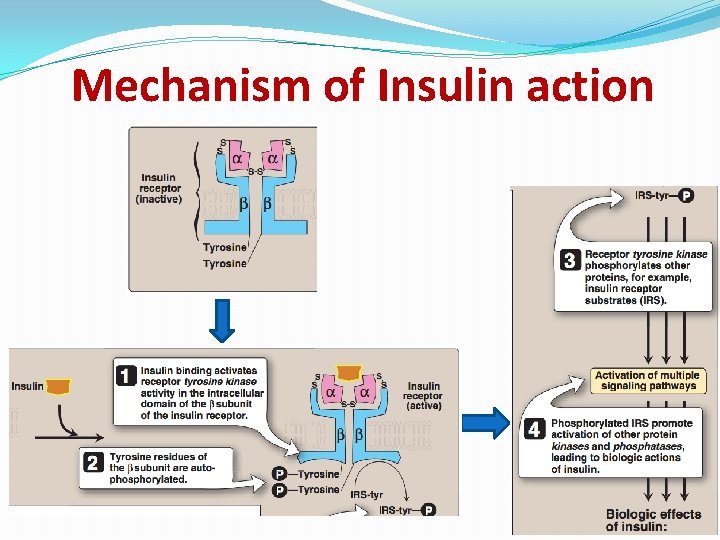
Mechanism of Insulin action
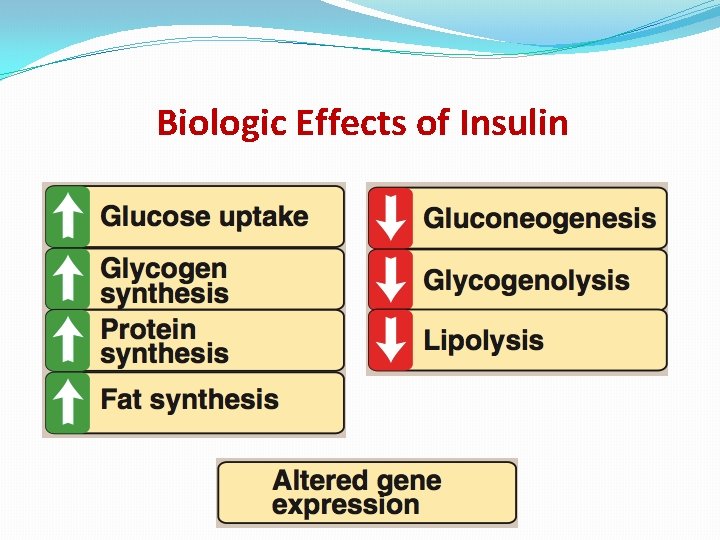
Biologic Effects of Insulin
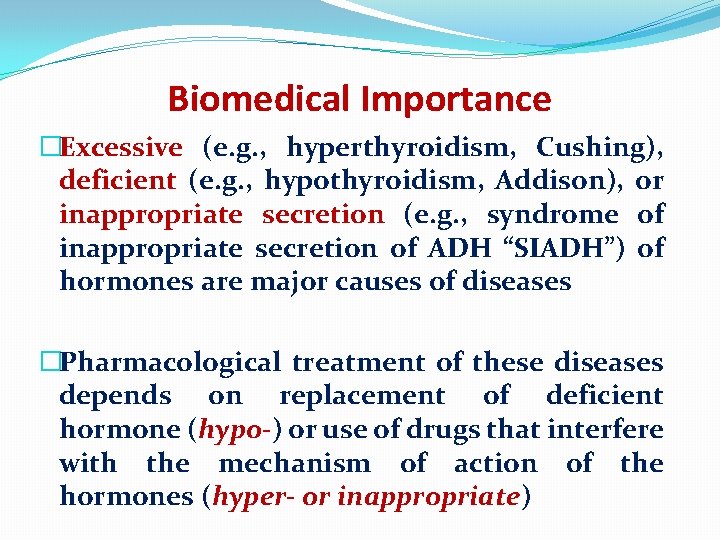
Biomedical Importance �Excessive (e. g. , hyperthyroidism, Cushing), deficient (e. g. , hypothyroidism, Addison), or inappropriate secretion (e. g. , syndrome of inappropriate secretion of ADH “SIADH”) of hormones are major causes of diseases �Pharmacological treatment of these diseases depends on replacement of deficient hormone (hypo-) or use of drugs that interfere with the mechanism of action of the hormones (hyper- or inappropriate)
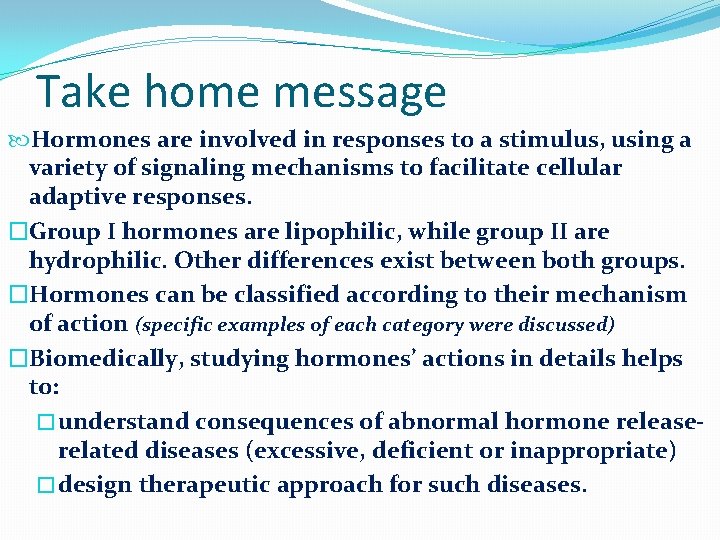
Take home message Hormones are involved in responses to a stimulus, using a variety of signaling mechanisms to facilitate cellular adaptive responses. �Group I hormones are lipophilic, while group II are hydrophilic. Other differences exist between both groups. �Hormones can be classified according to their mechanism of action (specific examples of each category were discussed) �Biomedically, studying hormones’ actions in details helps to: � understand consequences of abnormal hormone releaserelated diseases (excessive, deficient or inappropriate) � design therapeutic approach for such diseases.

THANK YOU
- Slides: 25