
General Engineering Maturity Measure A framework to assess
- Slides: 20
General Engineering Maturity Measure A framework to assess project technical progress
What is GEMM? � General Engineering Maturity Measure ◦ A practical measure for Technical development activities ◦ Based on Systems Engineering principals ◦ Provide independent and unambiguous measure of progress �Not subjective estimate of completion � Not CMMI ◦ Measures the activity, not the business
Objectives in Building GEMM ◦ A practical and pragmatic measure for projects and programmes ◦ Scalable across technical problems �With modest tailoring ◦ Easy to deploy �Little training burden �Obvious and intuitive �Driven by existing or easily derived data �From PLM, MBSE and other common SE tools
What is GEMM for? � An evidence based measure of programme maturity ◦ For technical development activities ◦ Provides Evidence based decision making for: �Risk reduction �Resource management � Any programme ◦ Supports unambiguous P 3 M measures ◦ Great value on large complex programmes � In the context of broader business processes
Objectives � Widely Applicable ◦ Broader engineering processes ◦ Built on Systems Engineering principals � Reduce dependence on high levels of SE knowledge ◦ Straight forward application against familiar document set ◦ Naturally available from SE tools and techniques � Controlled review points ◦ Unambiguous objective measures ◦ Against planned expectations � Potential for Automation
Background � Derived from the Principals of EPa. RT ◦ (Became GEAR) � EPa. RT = Engineering Planning and Review Tool ◦ Planning and Review ◦ Status Audit ◦ Progress reporting � GEAR – Guidance to Engineering Activity and Review ◦ Focussed on Engineering artefacts ◦ In a procurement context
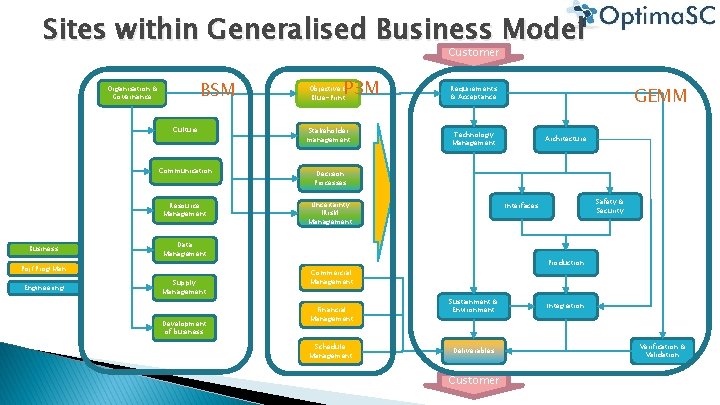
Sites within Generalised Business Model Customer BSM Organisation & Governance Business Culture Stakeholder management Communication Decision Processes Resource Management Uncertainty (Risk) Management Supply Management Development of business GEMM Requirements & Acceptance Technology Management Architecture Safety & Security Interfaces Data Management Poj/Prog Man Engineering P 3 M Objective & Blue-Print Production Commercial Management Financial Management Schedule Management Sustainment & Environment Deliverables Customer Integration Verification & Validation
Codification of SE principals � Enshrined experience of Systems Engineering ◦ A more objective basis of assessment ◦ With recognisable Systems Engineering taxonomy � Based on tangible outputs ◦ Defined metrics ◦ Defined documentation set � Robust, Tailorable and Scalable ◦ Dual Independent measures ◦ Loosely coupled sources ◦ Common Tailoring model
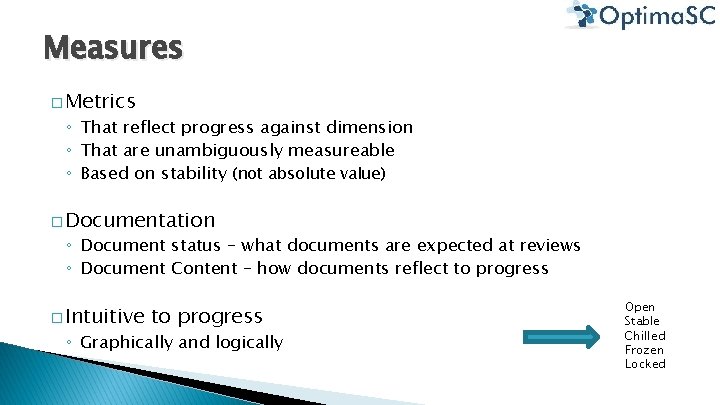
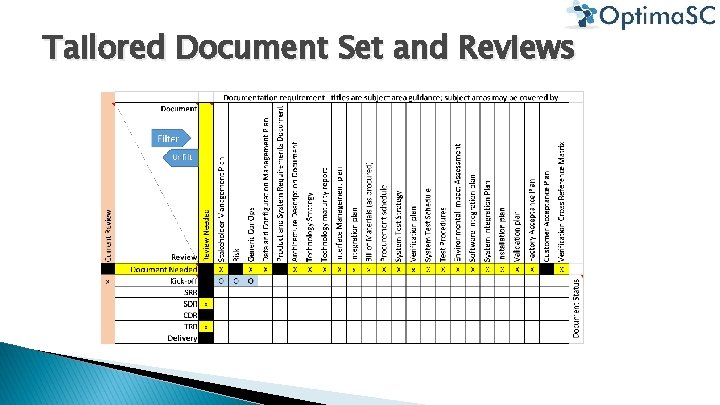
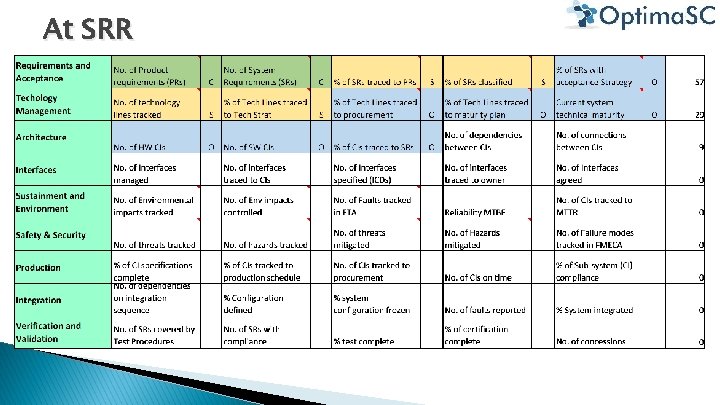
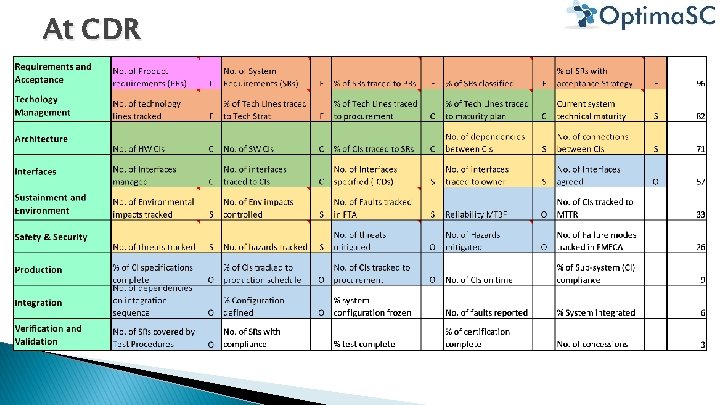
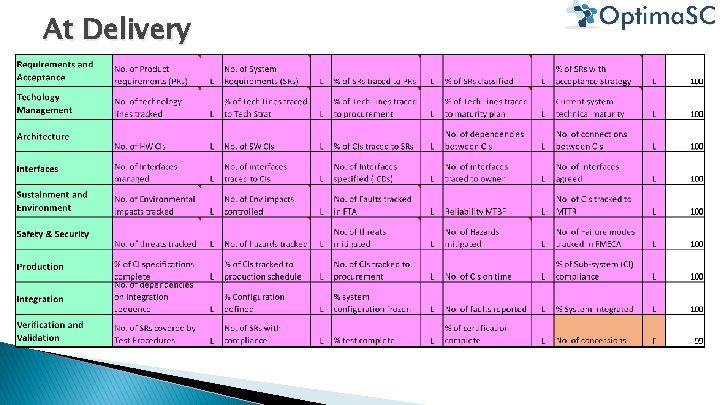
Measures � Metrics ◦ That reflect progress against dimension ◦ That are unambiguously measureable ◦ Based on stability (not absolute value) � Documentation ◦ Document status – what documents are expected at reviews ◦ Document Content – how documents reflect to progress � Intuitive to progress ◦ Graphically and logically Open Stable Chilled Frozen Locked
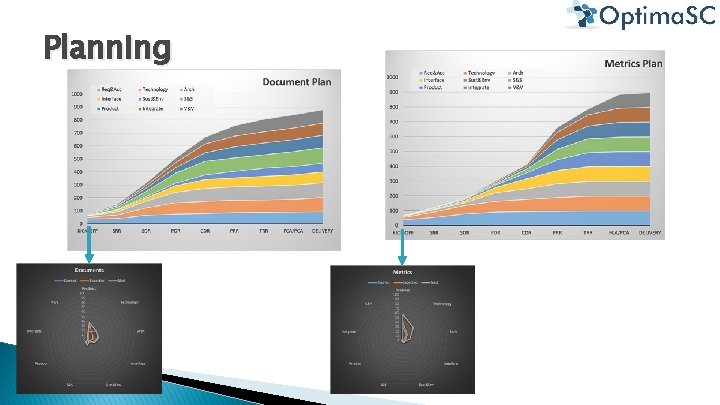
Planning
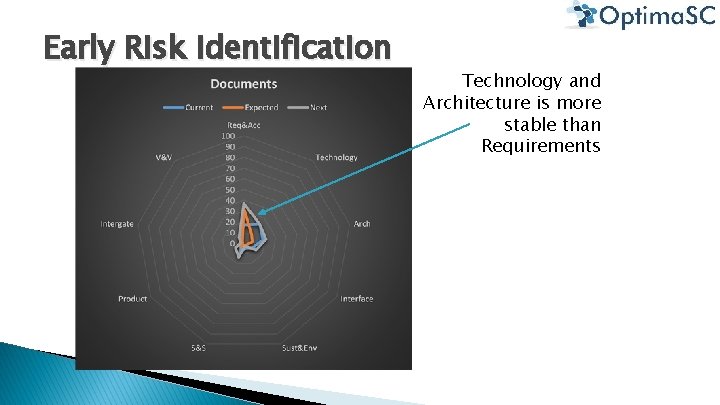
Early Risk Identification Technology and Architecture is more stable than Requirements
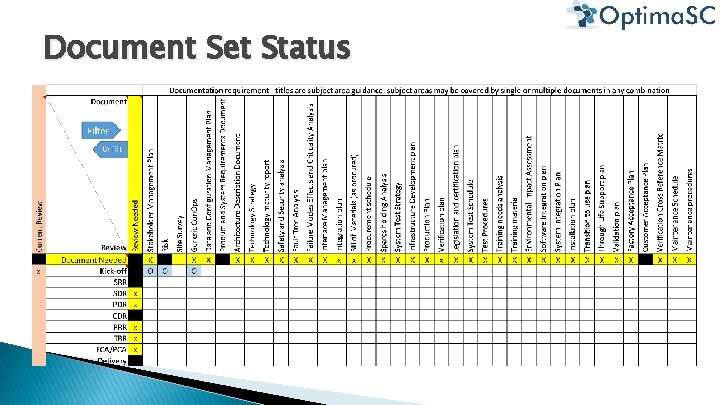
Document Set Status
Tailored Document Set and Reviews
At SRR
At CDR
At Delivery
Benefits � Specific Review Agendas ◦ Clarity of expectation at all review ◦ In the same form � Common graphical presentation � Connects to Project and Programme Management ◦ Supports immediate planning ◦ Supports trend analysis ◦ Project to project comparison ◦ Support to Earned Value Management
GEMM capability � Unambiguous input to EVM/P 3 M processes � Traceable evidence based reviews ◦ Removes anecdotal and subjective maturity assessment ◦ Helps identify risks early � Relates to wider business context ◦ Communications… Data Management… Decision Making…
Questions
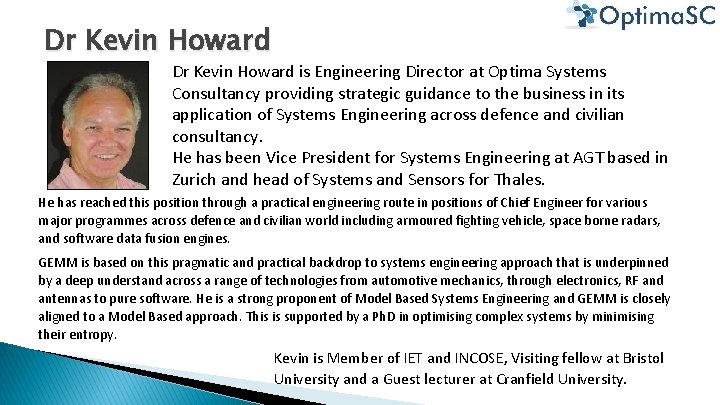
Dr Kevin Howard is Engineering Director at Optima Systems Consultancy providing strategic guidance to the business in its application of Systems Engineering across defence and civilian consultancy. He has been Vice President for Systems Engineering at AGT based in Zurich and head of Systems and Sensors for Thales. He has reached this position through a practical engineering route in positions of Chief Engineer for various major programmes across defence and civilian world including armoured fighting vehicle, space borne radars, and software data fusion engines. GEMM is based on this pragmatic and practical backdrop to systems engineering approach that is underpinned by a deep understand across a range of technologies from automotive mechanics, through electronics, RF and antennas to pure software. He is a strong proponent of Model Based Systems Engineering and GEMM is closely aligned to a Model Based approach. This is supported by a Ph. D in optimising complex systems by minimising their entropy. Kevin is Member of IET and INCOSE, Visiting fellow at Bristol University and a Guest lecturer at Cranfield University.