
General Education Class Hospital Instruction Inclusion Collaborative Team
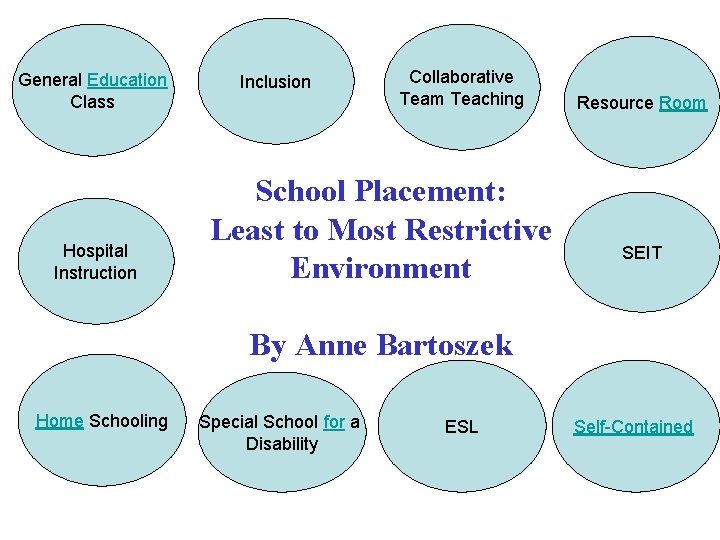
General Education Class Hospital Instruction Inclusion Collaborative Team Teaching School Placement: Least to Most Restrictive Environment Resource Room SEIT By Anne Bartoszek Home Schooling Special School for a Disability ESL Self-Contained
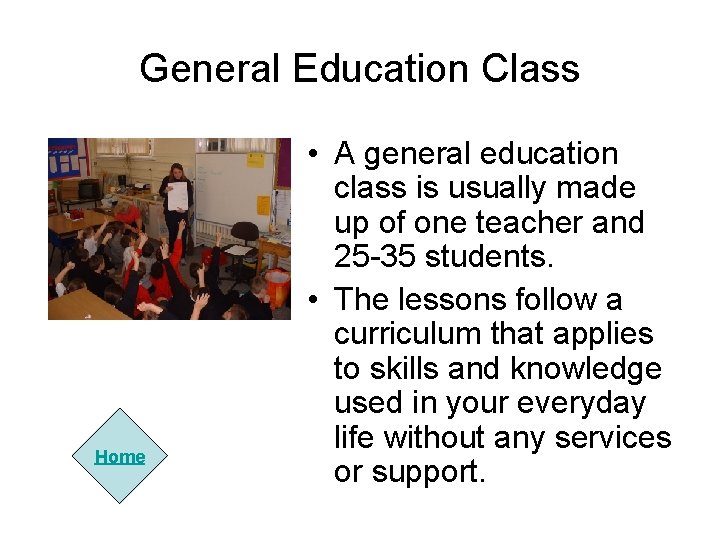
General Education Class Home • A general education class is usually made up of one teacher and 25 -35 students. • The lessons follow a curriculum that applies to skills and knowledge used in your everyday life without any services or support.
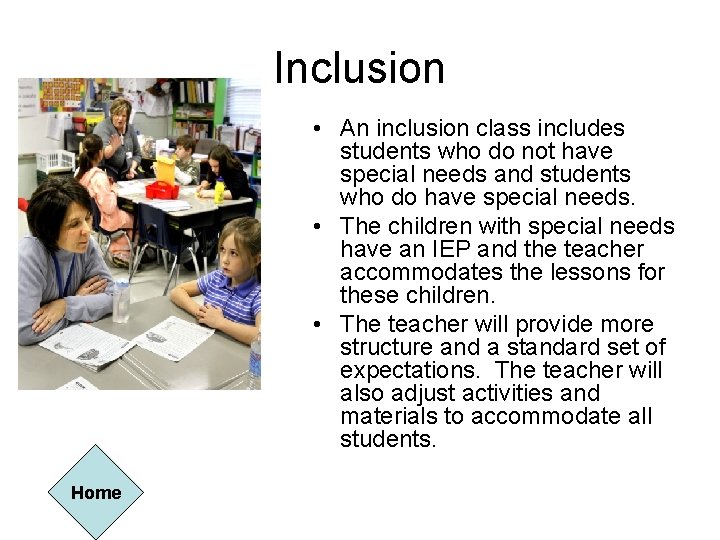
Inclusion • An inclusion class includes students who do not have special needs and students who do have special needs. • The children with special needs have an IEP and the teacher accommodates the lessons for these children. • The teacher will provide more structure and a standard set of expectations. The teacher will also adjust activities and materials to accommodate all students. Home
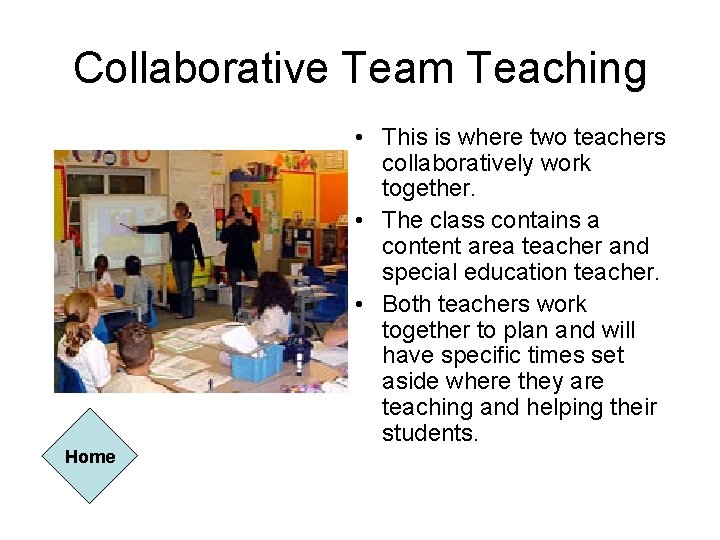
Collaborative Team Teaching Home • This is where two teachers collaboratively work together. • The class contains a content area teacher and special education teacher. • Both teachers work together to plan and will have specific times set aside where they are teaching and helping their students.
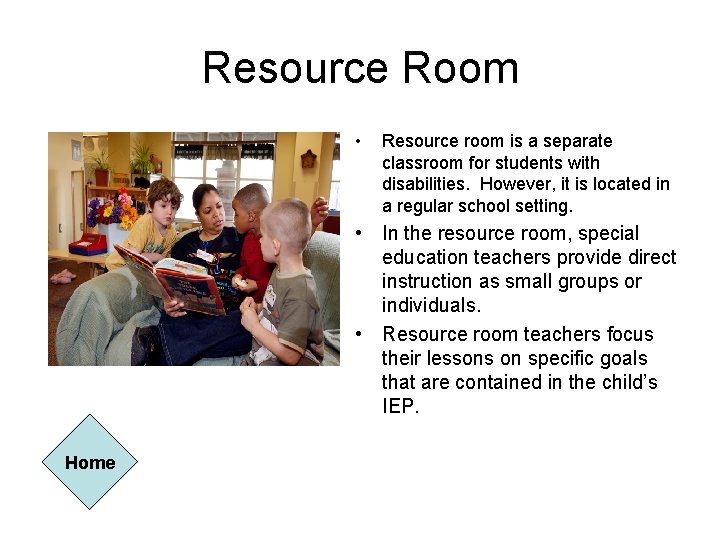
Resource Room • Resource room is a separate classroom for students with disabilities. However, it is located in a regular school setting. • In the resource room, special education teachers provide direct instruction as small groups or individuals. • Resource room teachers focus their lessons on specific goals that are contained in the child’s IEP. Home
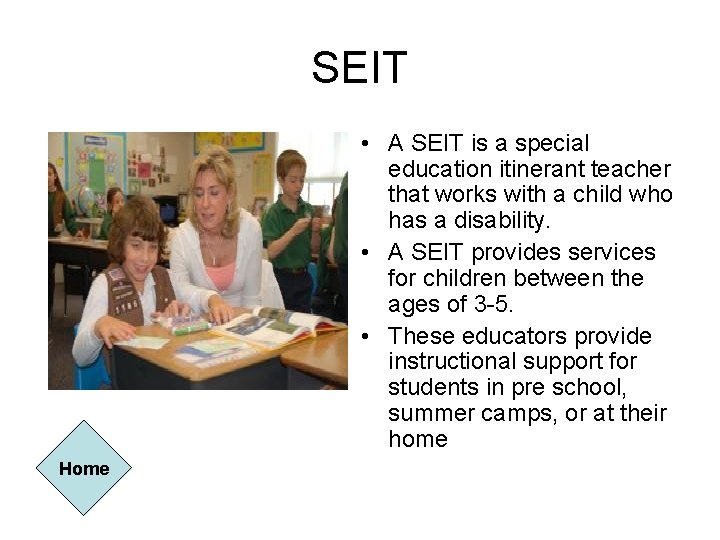
SEIT • A SEIT is a special education itinerant teacher that works with a child who has a disability. • A SEIT provides services for children between the ages of 3 -5. • These educators provide instructional support for students in pre school, summer camps, or at their home Home
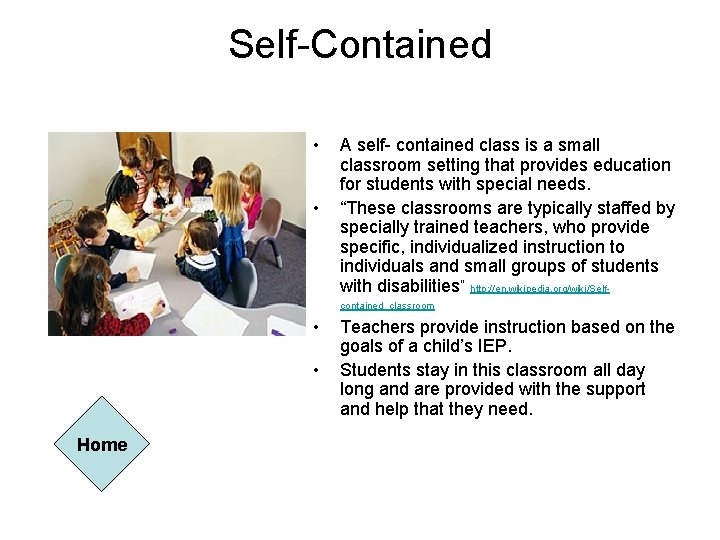
Self-Contained • • A self- contained class is a small classroom setting that provides education for students with special needs. “These classrooms are typically staffed by specially trained teachers, who provide specific, individualized instruction to individuals and small groups of students with disabilities” http: //en. wikipedia. org/wiki/Selfcontained_classroom • • Home Teachers provide instruction based on the goals of a child’s IEP. Students stay in this classroom all day long and are provided with the support and help that they need.
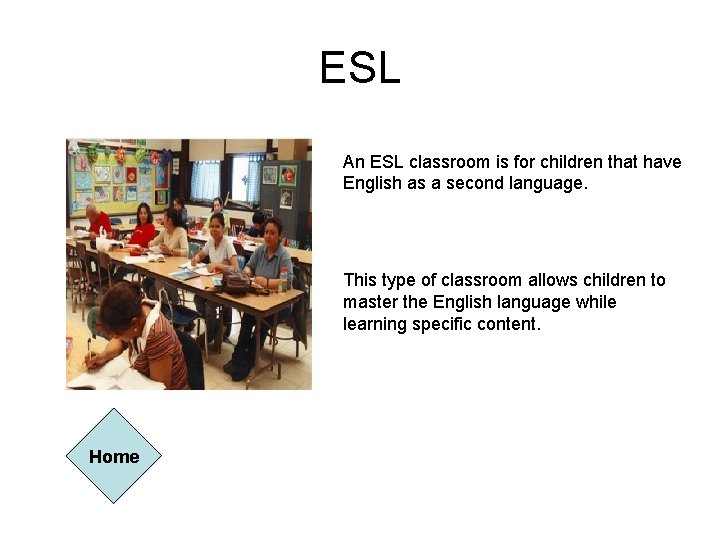
ESL An ESL classroom is for children that have English as a second language. This type of classroom allows children to master the English language while learning specific content. Home
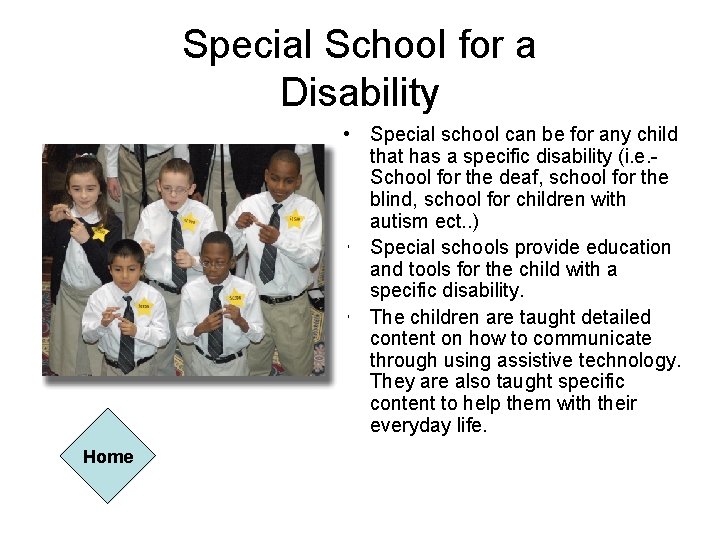
Special School for a Disability • Special school can be for any child that has a specific disability (i. e. School for the deaf, school for the blind, school for children with autism ect. . ) • Special schools provide education and tools for the child with a specific disability. • The children are taught detailed content on how to communicate through using assistive technology. They are also taught specific content to help them with their everyday life. Home
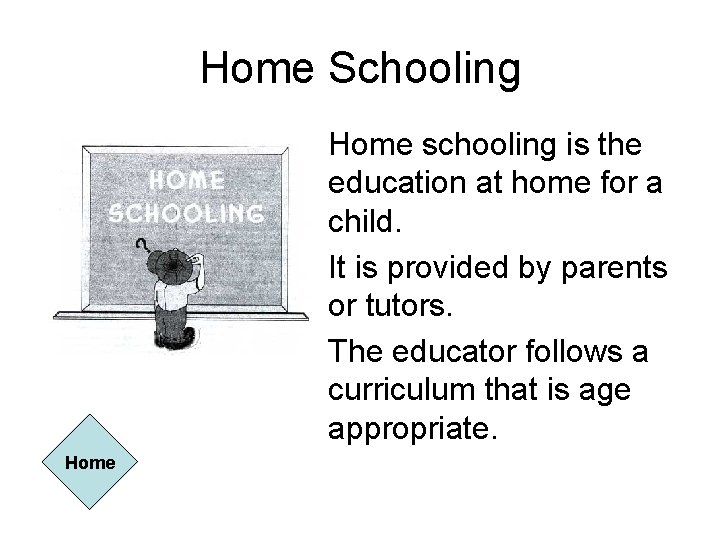
Home Schooling • Home schooling is the education at home for a child. • It is provided by parents or tutors. • The educator follows a curriculum that is age appropriate. Home
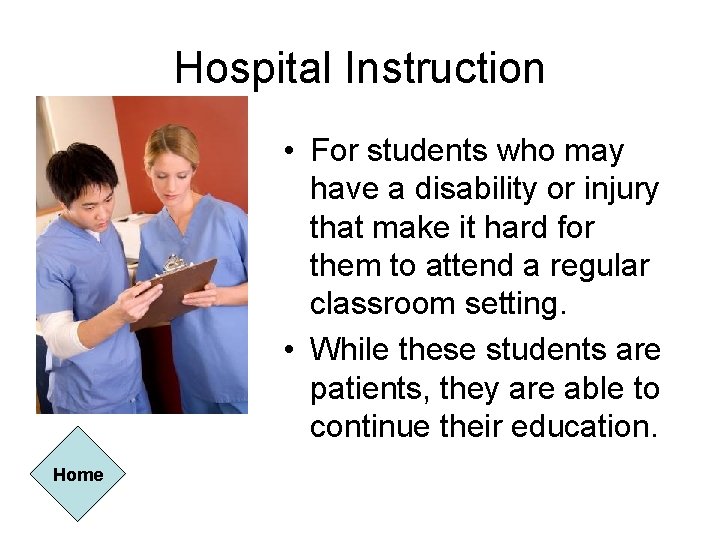
Hospital Instruction • For students who may have a disability or injury that make it hard for them to attend a regular classroom setting. • While these students are patients, they are able to continue their education. Home
- Slides: 11