
GENERAL CHARACTERS OF PTERIDOPHYTA BY Dr Shraddha Tiwari
GENERAL CHARACTERS OF PTERIDOPHYTA BY Dr. Shraddha Tiwari Department of Botany
� Pteridophyta originated from. Pteron- feather like Phyton- plants � They are also known as vascular Cryptogams � According to Parihar- pteridophytes are the most primitive living and fossil vascular plants � According to Masahiro Kato (2005) , a Japanese Pteridologist- free sporing vascular land plants that evolutionarily link bryophytes and seed plants.
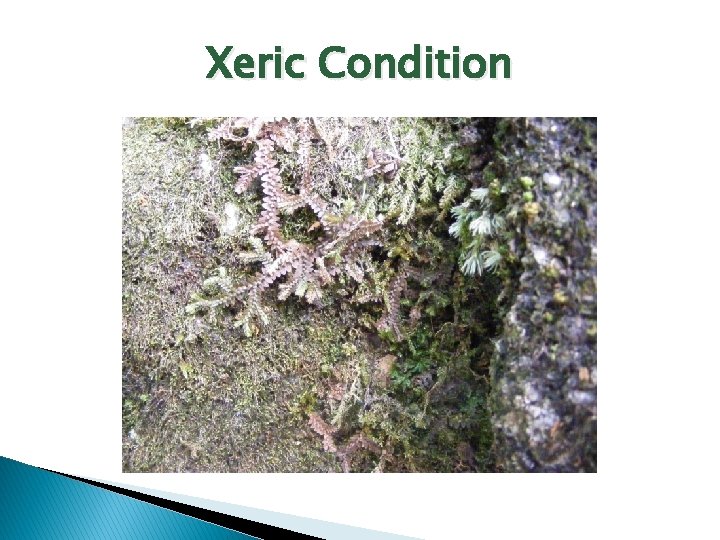
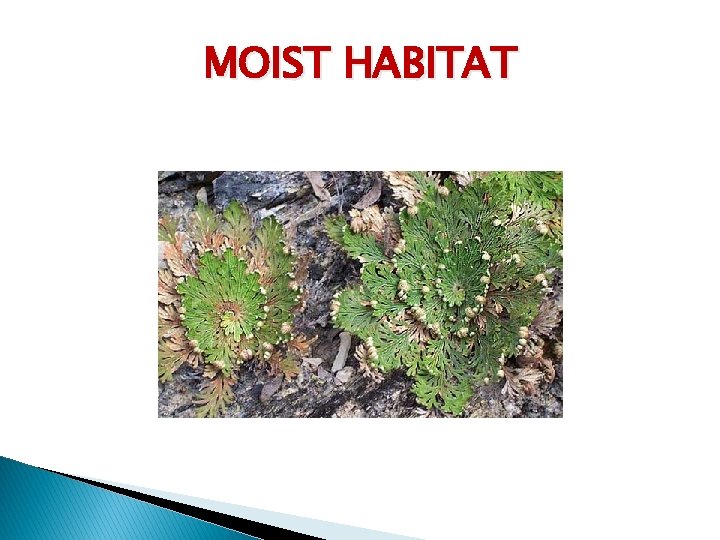
Occurrence � 1. Most pteridophytes are terrestrial and grow in moist and shady places while some flourish well in open, dry places especially in xeric conditions. Some pteridophytes are aquatic and some are epiphytes.
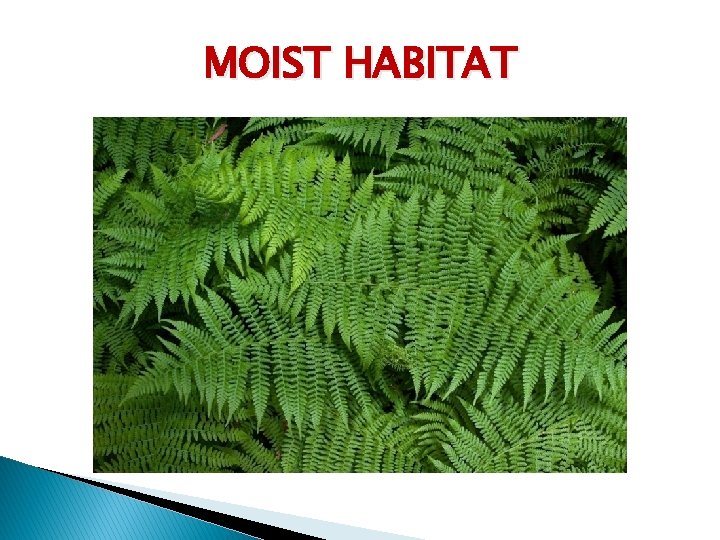
MOIST HABITAT
Xeric Condition
MOIST HABITAT
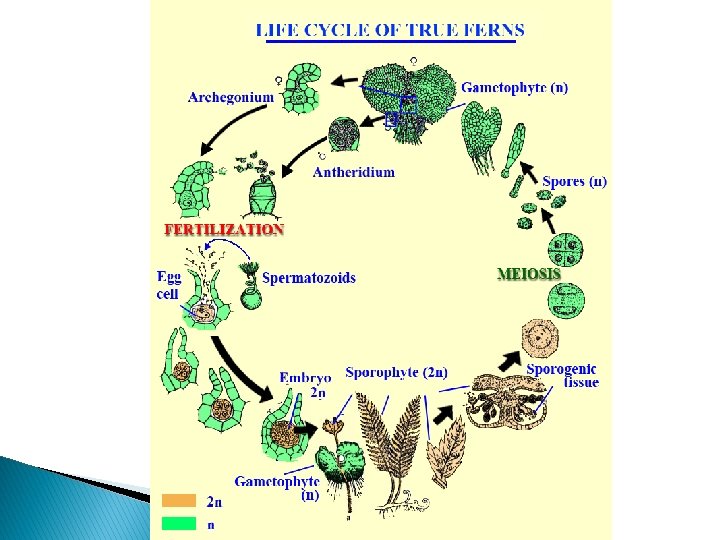
� 2. The sporophyte is the conspicuous and familiar plant body. It develops from the zygote, a diploid cell which results from the fertilization of the egg and antherozoid.
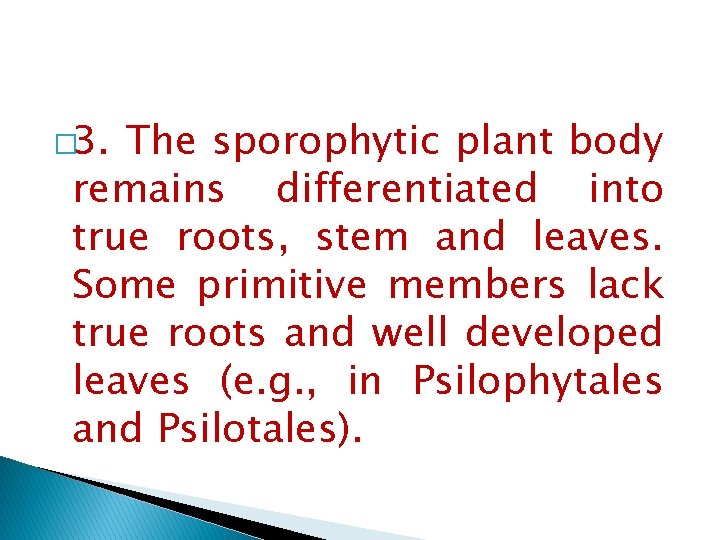
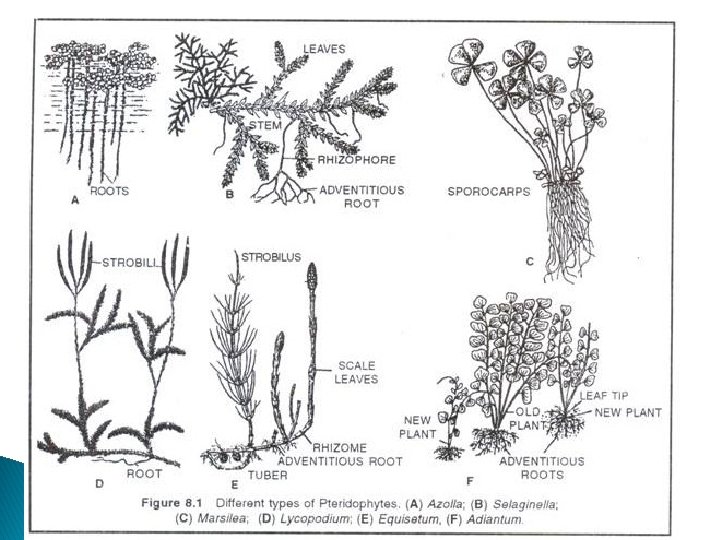
� 3. The sporophytic plant body remains differentiated into true roots, stem and leaves. Some primitive members lack true roots and well developed leaves (e. g. , in Psilophytales and Psilotales).

Psilotum
� 4. The branching of the stem may be of monopodial or dichotomous type. � 5. There are two main categories of form and structure, one category comprises of megaphyllous types, in which the leaves are large in relation to the stem (e. g. , ferns); the second comprises of microphyllous types in which the leaves are quite small in relation to the stem (e. g. , Lycopods and Horse-tails).

Microphyllous- Lycopodium

Microphyllous- Lycopodium
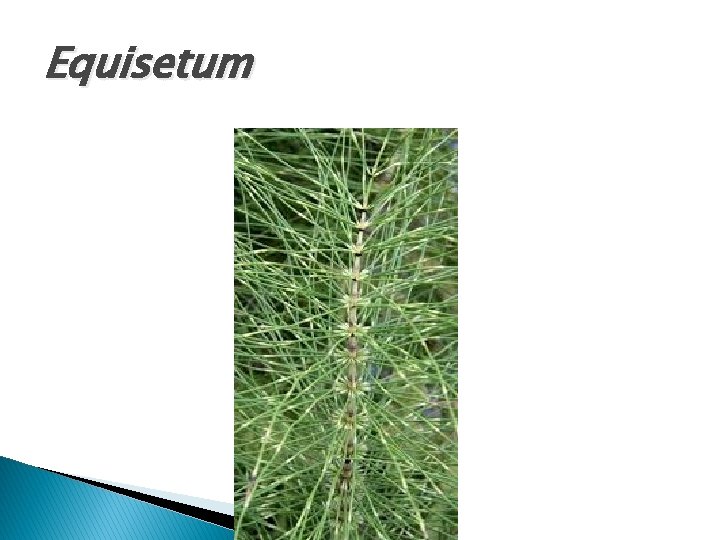
Equisetum
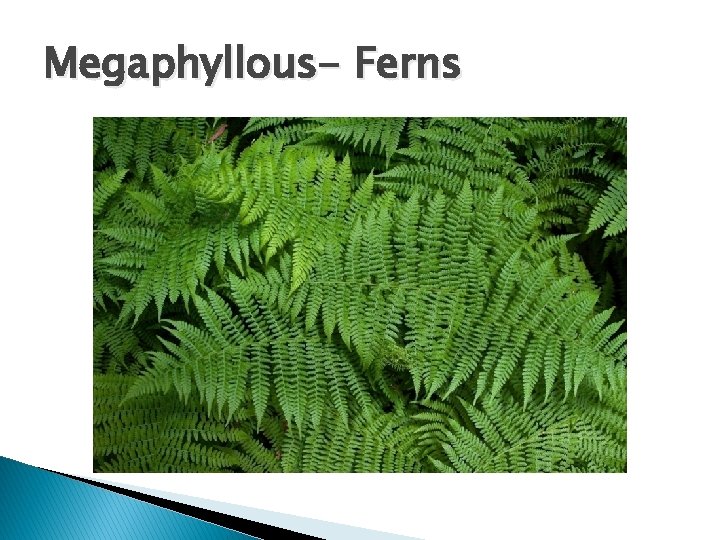
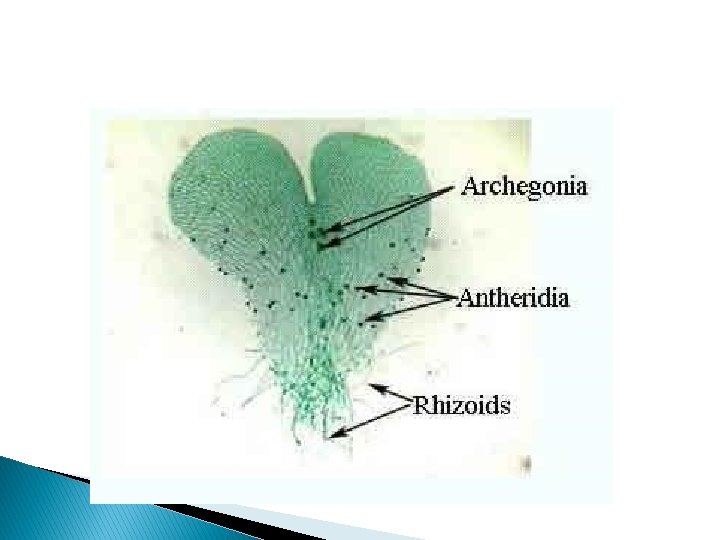
Megaphyllous- Ferns
Leaves � Trophophyll- does not produce sporophyll, only sugars by photosynthesis � Sporophyll- produces spores � Brophophyll- produces abnormally large amount of spores
� Trophopod- a food storage organ formed by the enlarged and modified leaf bases- Asplenium platyneuron, Dryopteris fragarans Carotenoids- Czeezuga 1985 - reported 27 carotenoids in 66 representatives of pteridophyta- β carotene, β cryptoxanthin, zeaxanthin etc
� 6. All the vegetative parts of the sporophyte possess vascular supply. �A well developed vascular system �Cambium is generally absent �stele
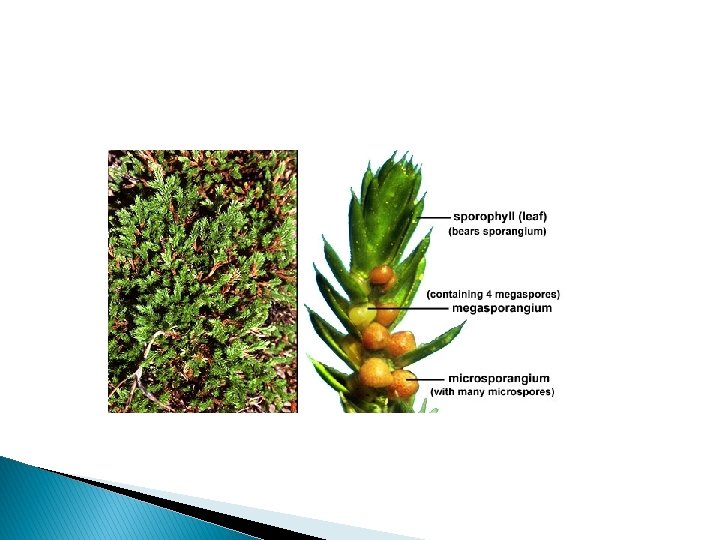
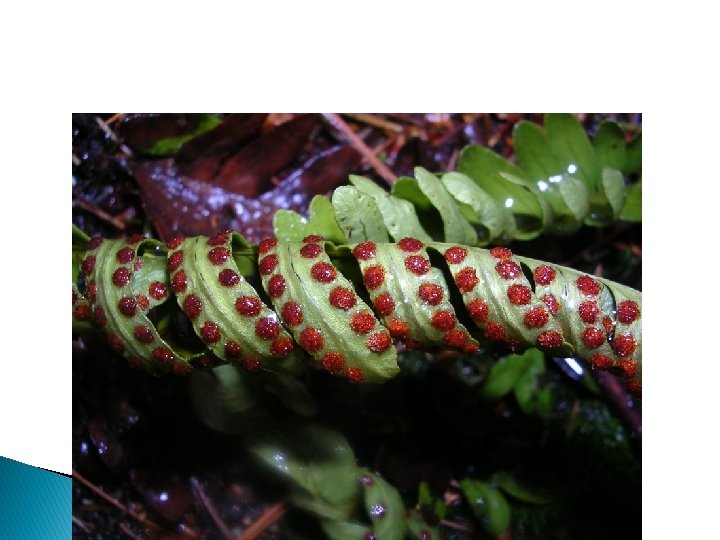
� 7. Reproduction The sporophytes reproduce by spores which are produced within sporangia. � 8. In some pteridophytes the sporangia develop on stems (i. e. , cauline in origin) while in other they are borne either on the leaves (foliar) or in the axils of the leaves. The leaves that bear sporangia are known as sporophylls.
Spores
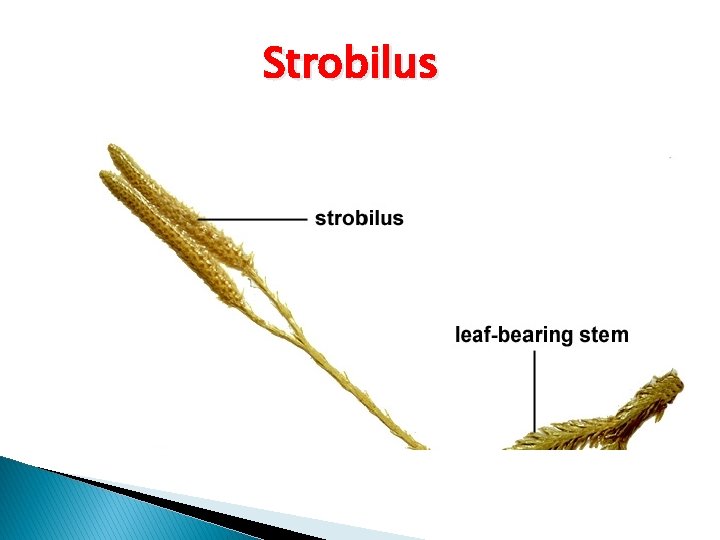
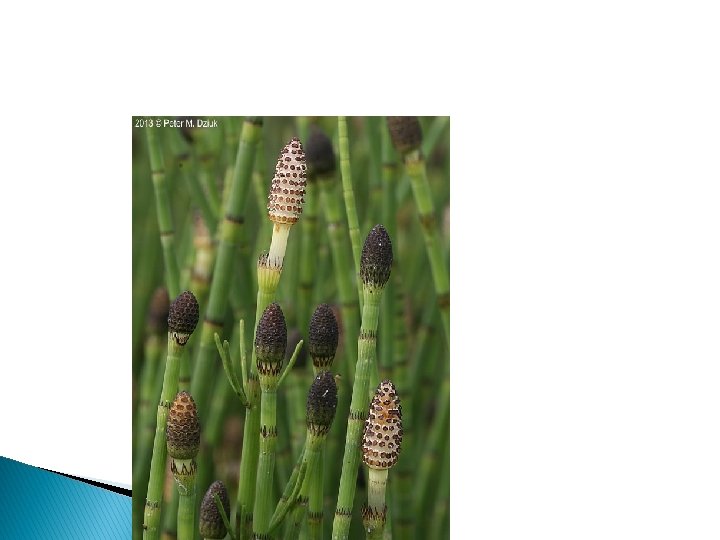
� 9. The sporophylls may be widely scattered on a plant (e. g. , ferns) or may be clustered in definite areas and structures called cones or strobili (Selaginella, Equisetum).
Strobilus
� 10. In certain pteridophytes the sporangia are produced within specialized structure, the sporocarps (e. g. , Marsilea, Salvinia, and Azolla).
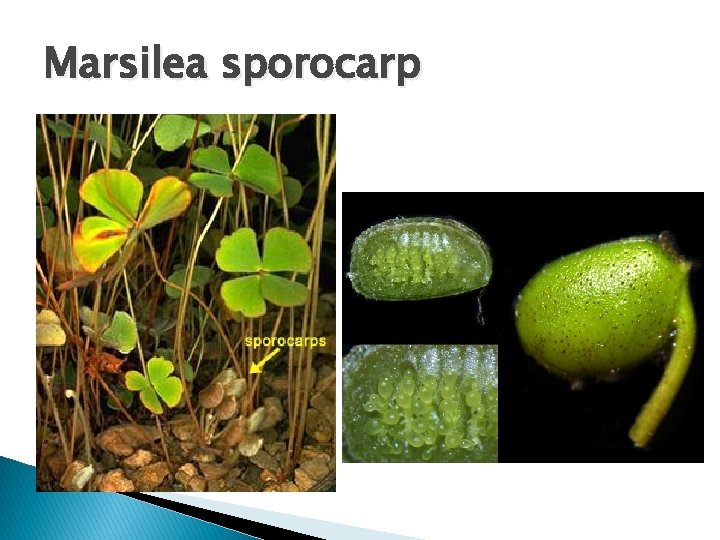
Marsilea sporocarp
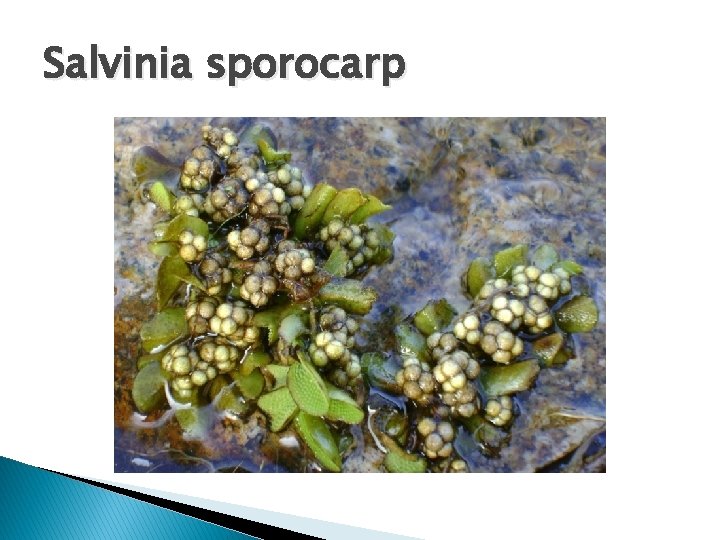
Salvinia sporocarp
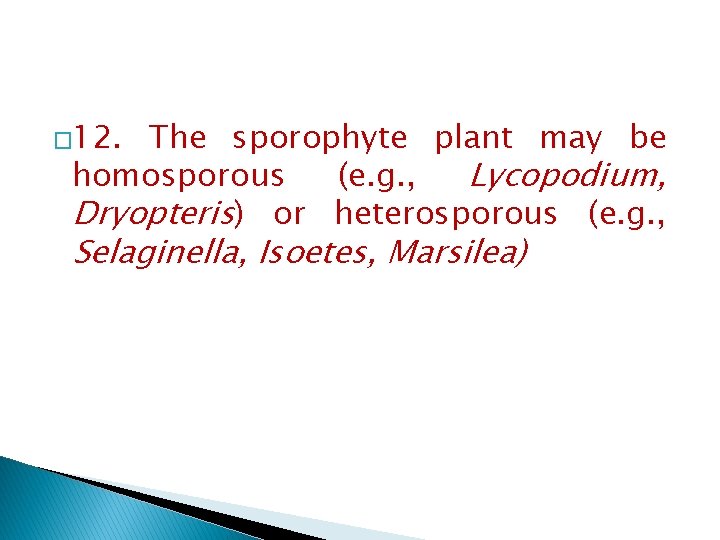
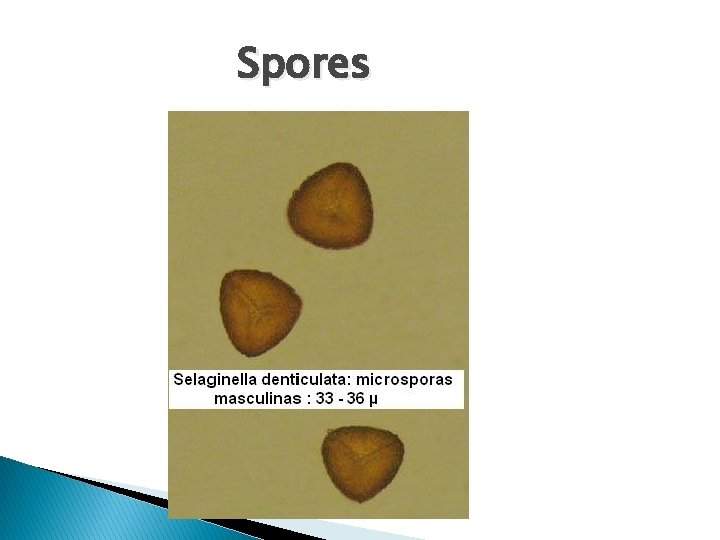
� 12. The sporophyte plant may be homosporous (e. g. , Lycopodium, Dryopteris) or heterosporous (e. g. , Selaginella, Isoetes, Marsilea)
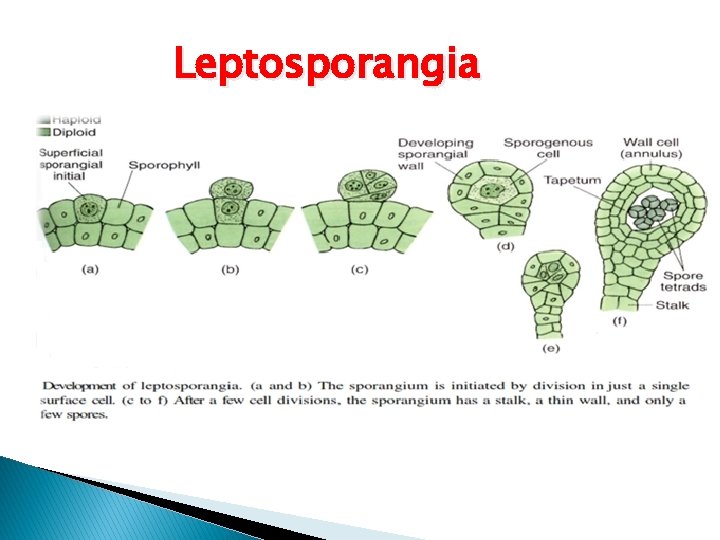
Leptosporangia
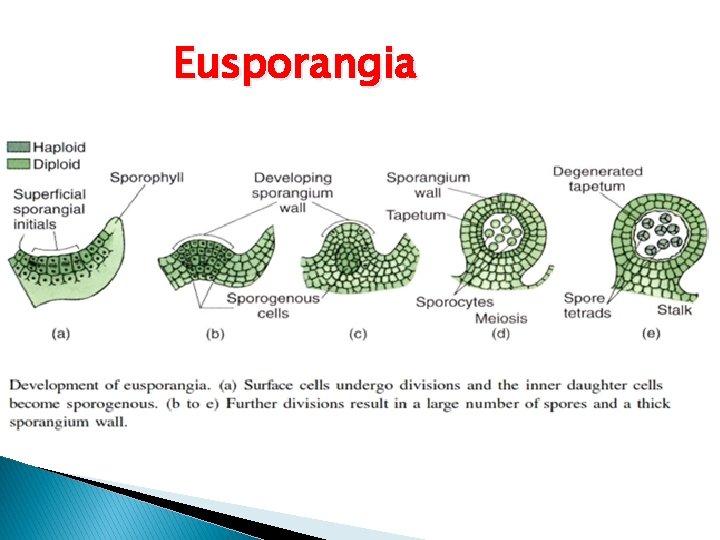
Eusporangia

Lycopodium- homospore

Heterospore
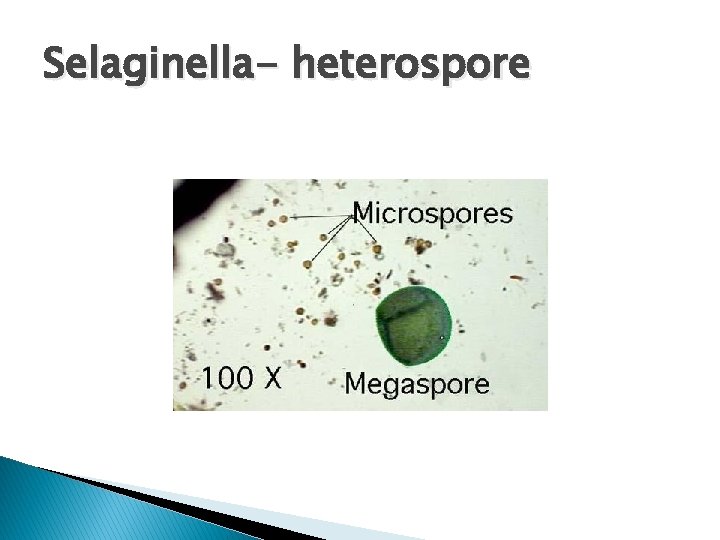
Selaginella- heterospore
The gametophyte � 13. The spores on germination give rise to the haploid gametophytes or prothalli which are small and inconspicuous. The gametophytes in some pteridophytes are subterranean and in others they are retained within the resistant wall of the spore.
�It is notable that wherever the gametophyte is retained within the spores are of different sizes (heterosporous). The larger megaspores give rise to female prothalli which bear only archegonia, and the smaller microspores giving rise to male prothalli which bear only antheridia
� 14. The gametophyte or prothallus bears the sex organs, antheridia and archegonia. Normally, the gametophytes formed from the homospores are monoecious, that is both antheridia and archegonia are borne on the same gametophyte or prothallus. The gametophytes formed from the heterospores are dioecious, e. g. , the antheridia and archegonia develop in separate male and female gametophytes.
The antheridia � 15. The antheridia may be embedded in the gametophyte or they may project from it. The embedded antheridia are commonly found in eusporangiate pteridophytes while the projecting ones are usually found in the leptosporangiate ferns.
�The mature antheridium is globular and consists of an outer sterile wall inside which are found a large number of androcytes. Each androcyte metamorphoses into a single motile antherozoid.
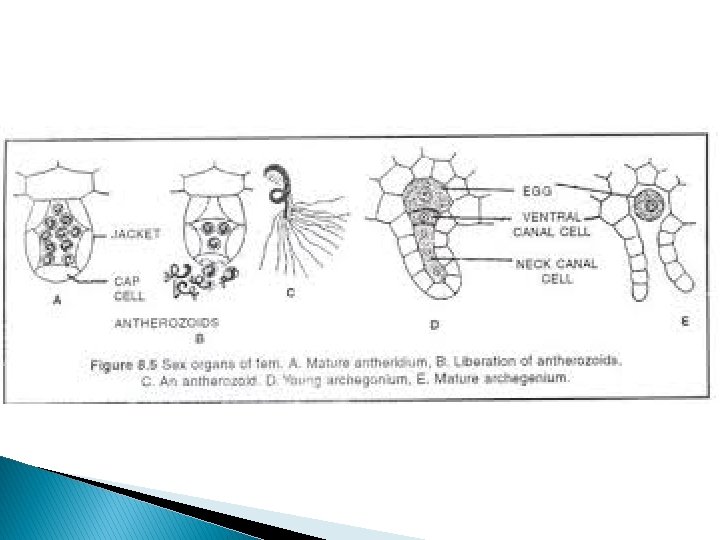
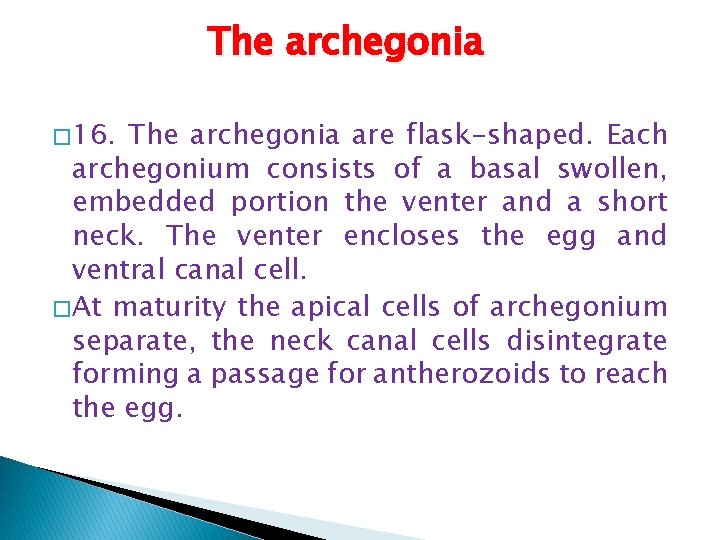
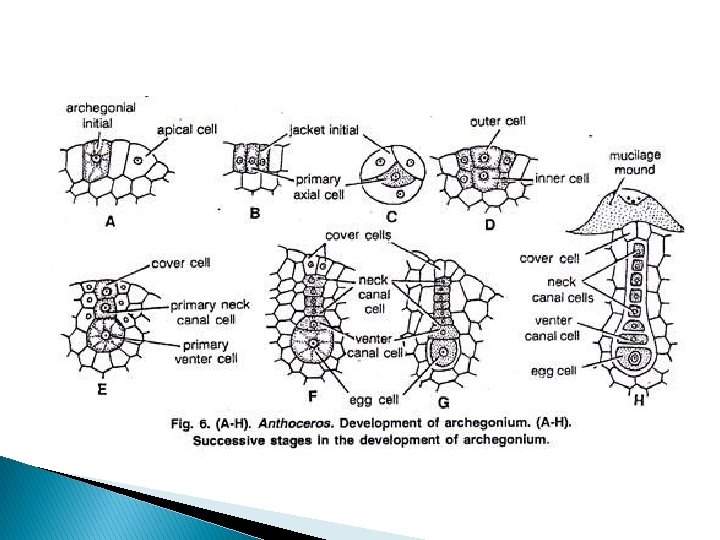
The archegonia � 16. The archegonia are flask-shaped. Each archegonium consists of a basal swollen, embedded portion the venter and a short neck. The venter encloses the egg and ventral canal cell. � At maturity the apical cells of archegonium separate, the neck canal cells disintegrate forming a passage for antherozoids to reach the egg.
Fertilization � 17. In all cases the fertilization is accomplished by the agency of water. With the result of the fusion of male gamete and female egg a diploid zygote (2 n) is formed.
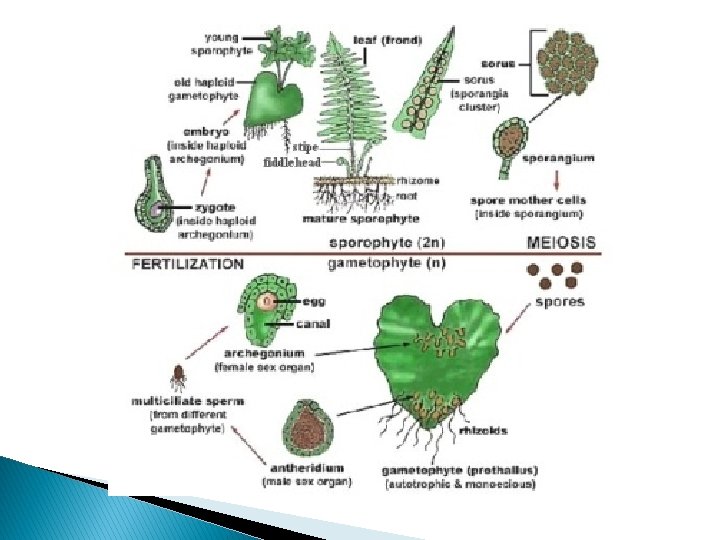
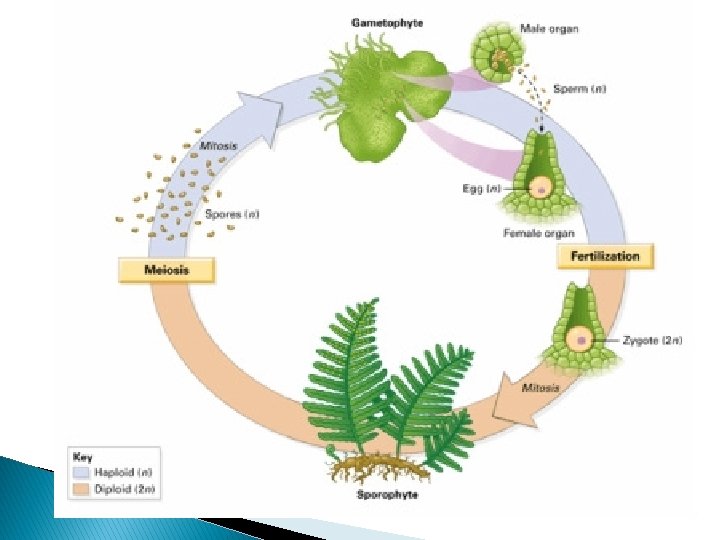
The embryo (The young sporophyte � 18. The zygote undergoes repeated divisions to form a new sporophyte. The young sporophyte remains attached to the gametophyte by means of a foot and draws nourishment from the prothallus until it develops its own stem, roots and leaves. The sporophyte is dependent on the gametophyte only during its early stages.

- Slides: 49