
GENERAL BIOLOGY II LAB Bacteria Protists Fungi Taxonomy

GENERAL BIOLOGY II LAB Bacteria, Protists, Fungi
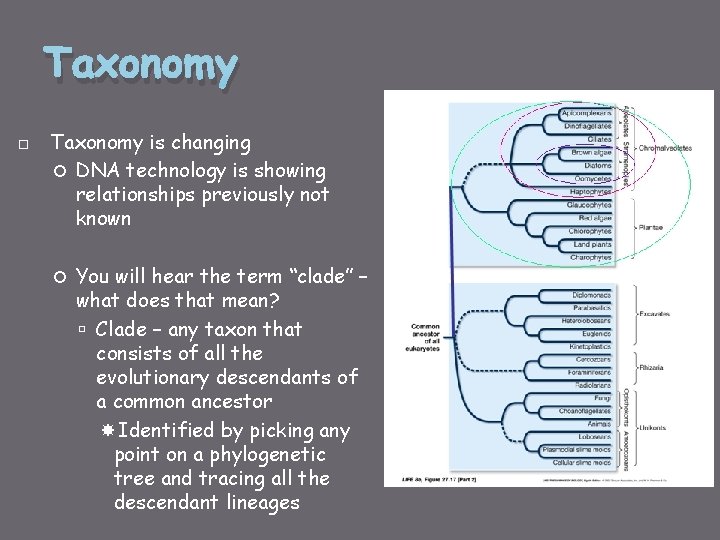
Taxonomy is changing DNA technology is showing relationships previously not known You will hear the term “clade” – what does that mean? Clade – any taxon that consists of all the evolutionary descendants of a common ancestor Identified by picking any point on a phylogenetic tree and tracing all the descendant lineages
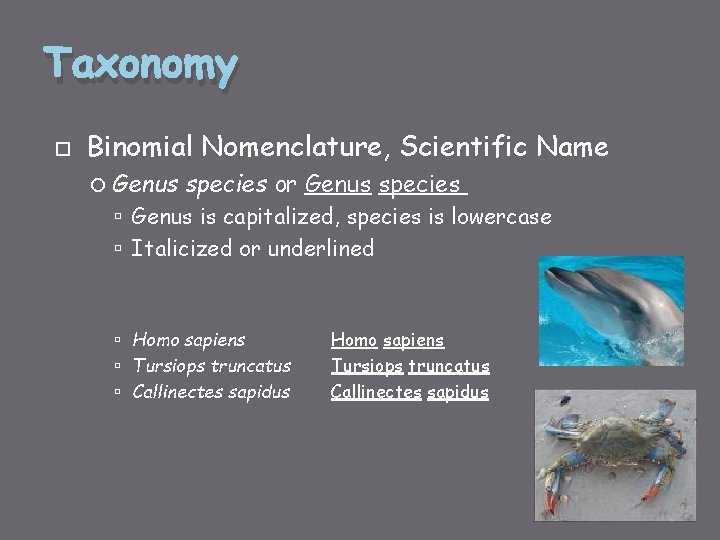
Taxonomy Binomial Nomenclature, Scientific Name Genus species or Genus species Genus is capitalized, species is lowercase Italicized or underlined Homo sapiens Tursiops truncatus Callinectes sapidus Homo sapiens Tursiops truncatus Callinectes sapidus
The Domains Domain Bacteria – unicellular prokaryotes Bacteria Cyanobacteria Domain Archaea – unicellular prokaryotes Includes “extremophiles” Domain Eukarya – eukaryotes Kingdom Protista Kingdom Fungi Kingdom Plantae Kingdom Animalia
Yes, you will HAVE to use the Microscope! Tips: Start on Scanning objective, look for color Center and focus Move to the 10 x objective Center and focus Move to the 40 x objective Center and focus If necessary, move to oil immersion Place drop of oil on slide and move oil lens into the oil DO NOT get oil on any of the other lenses Be sure to WIPE oil off of lens when done!!!!! (with lens paper!)
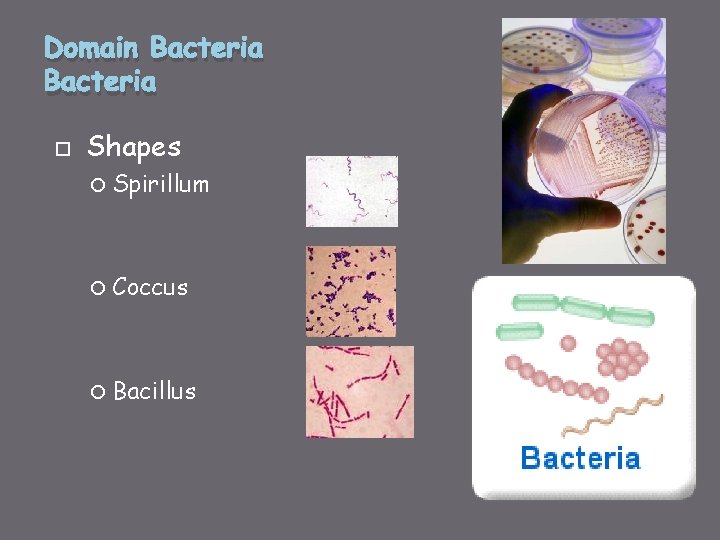
Domain Bacteria Shapes Spirillum Coccus Bacillus
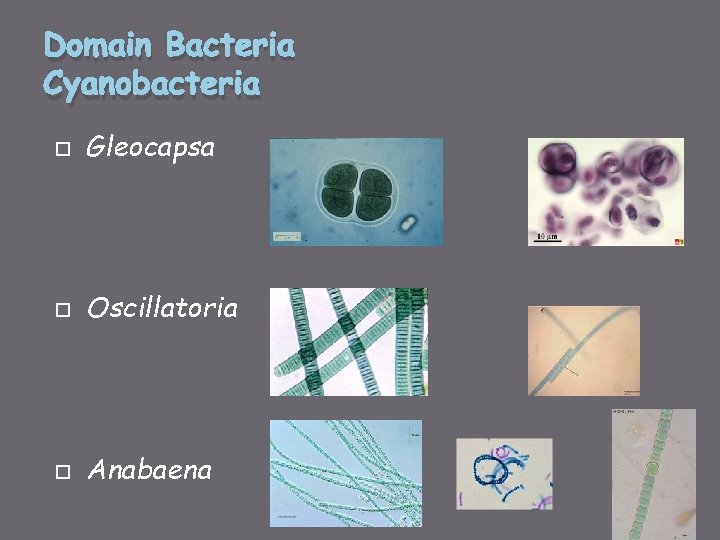
Domain Bacteria Cyanobacteria Gleocapsa Oscillatoria Anabaena
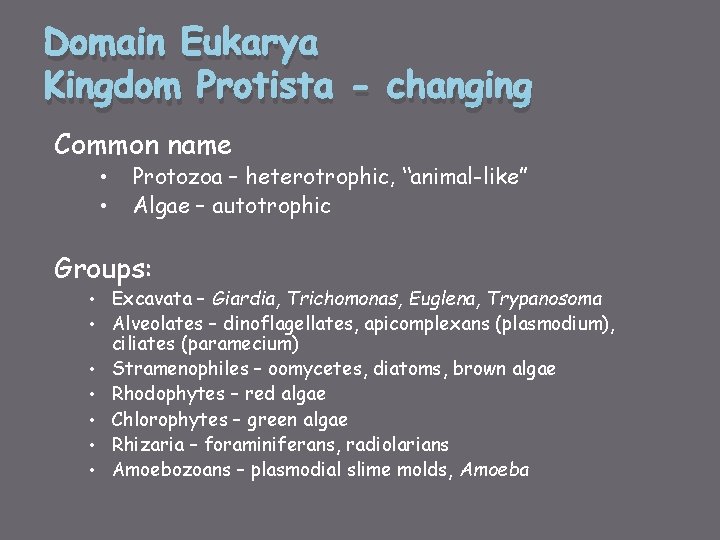
Domain Eukarya Kingdom Protista - changing Common name • • Protozoa – heterotrophic, “animal-like” Algae – autotrophic Groups: • • Excavata – Giardia, Trichomonas, Euglena, Trypanosoma Alveolates – dinoflagellates, apicomplexans (plasmodium), ciliates (paramecium) Stramenophiles – oomycetes, diatoms, brown algae Rhodophytes – red algae Chlorophytes – green algae Rhizaria – foraminiferans, radiolarians Amoebozoans – plasmodial slime molds, Amoeba
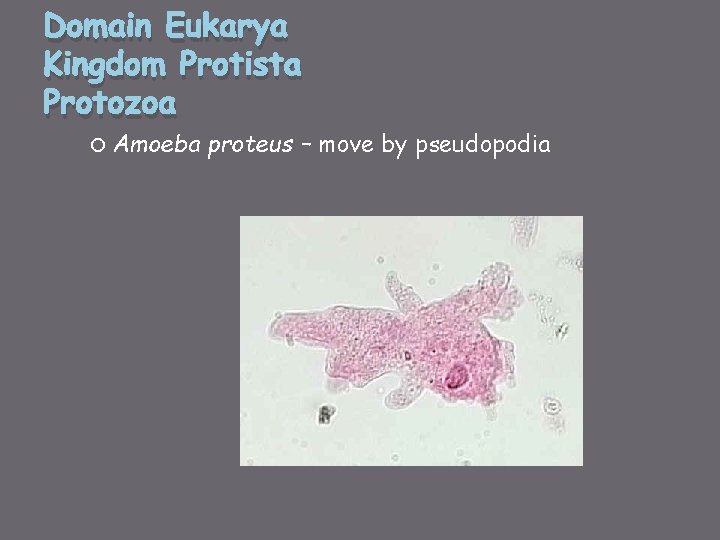
Domain Eukarya Kingdom Protista Protozoa Amoeba proteus – move by pseudopodia
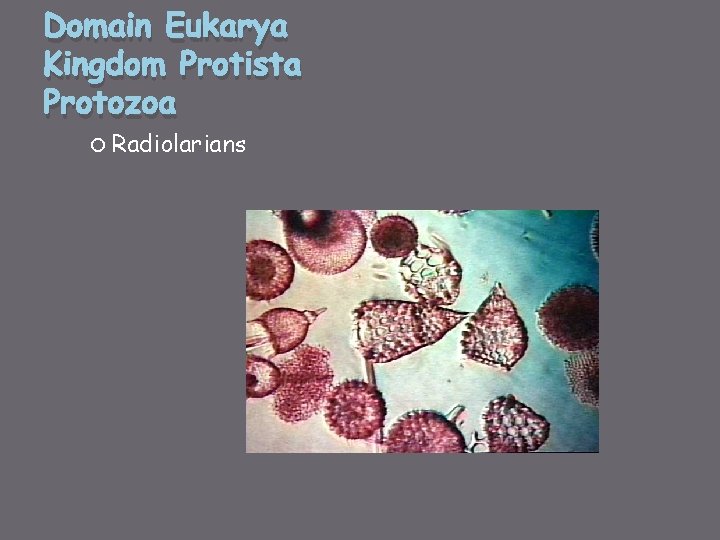
Domain Eukarya Kingdom Protista Protozoa Radiolarians
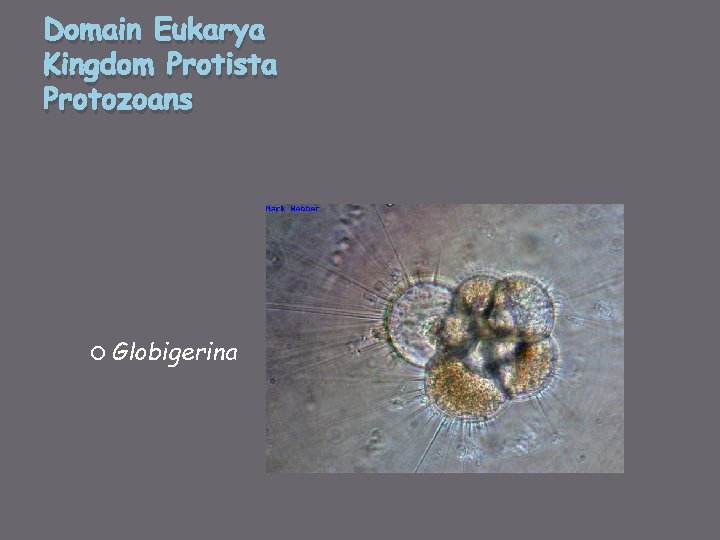
Domain Eukarya Kingdom Protista Protozoans Globigerina
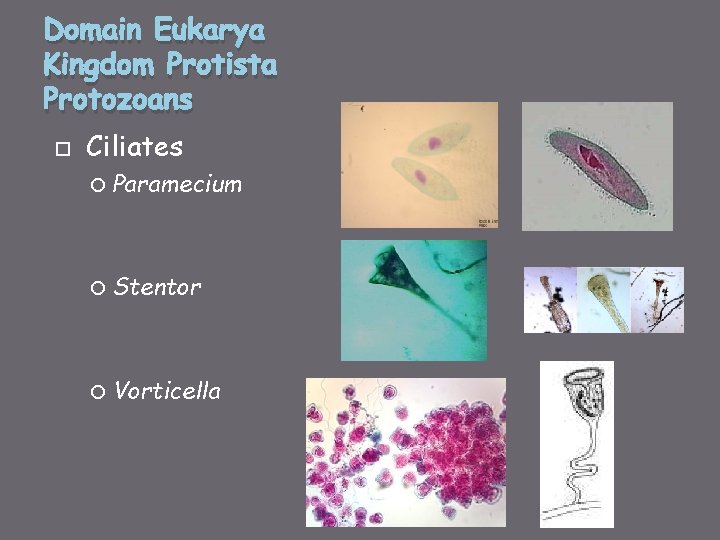
Domain Eukarya Kingdom Protista Protozoans Ciliates Paramecium Stentor Vorticella
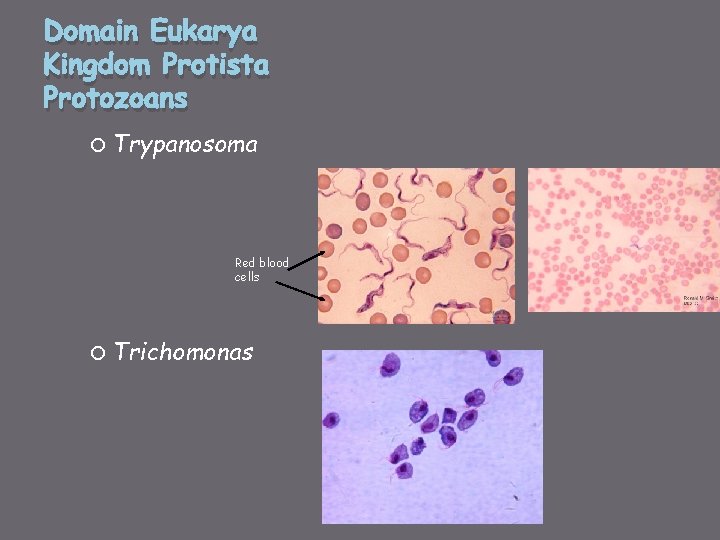
Domain Eukarya Kingdom Protista Protozoans Trypanosoma Red blood cells Trichomonas
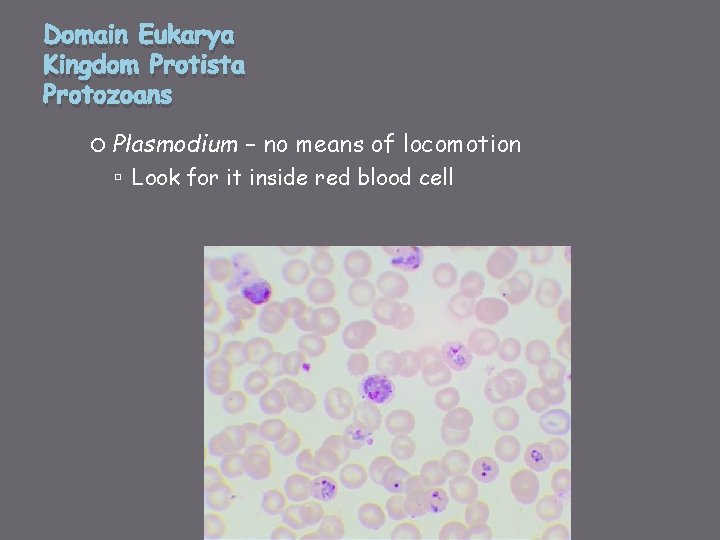
Domain Eukarya Kingdom Protista Protozoans Plasmodium – no means of locomotion Look for it inside red blood cell
DOMAIN EUKARYA KINGDOM PROTISTA ALGAE Microscopic algae Phytoplankton Macroscopic algae “seaweed”
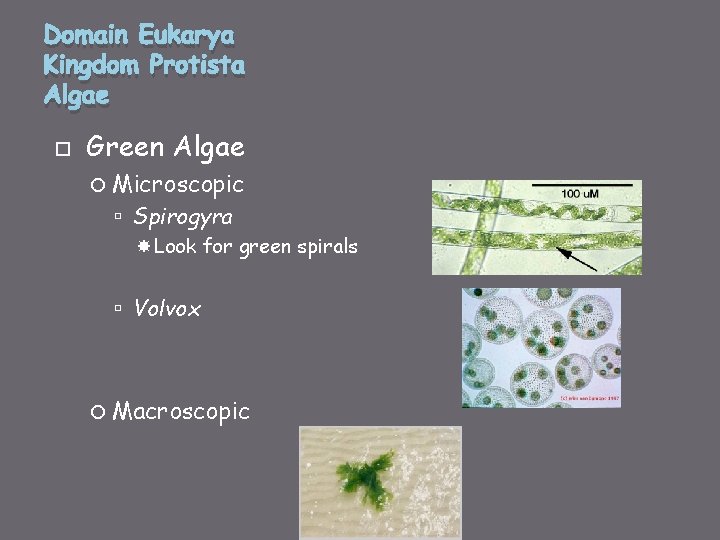
Domain Eukarya Kingdom Protista Algae Green Algae Microscopic Spirogyra Look for green spirals Volvox Macroscopic
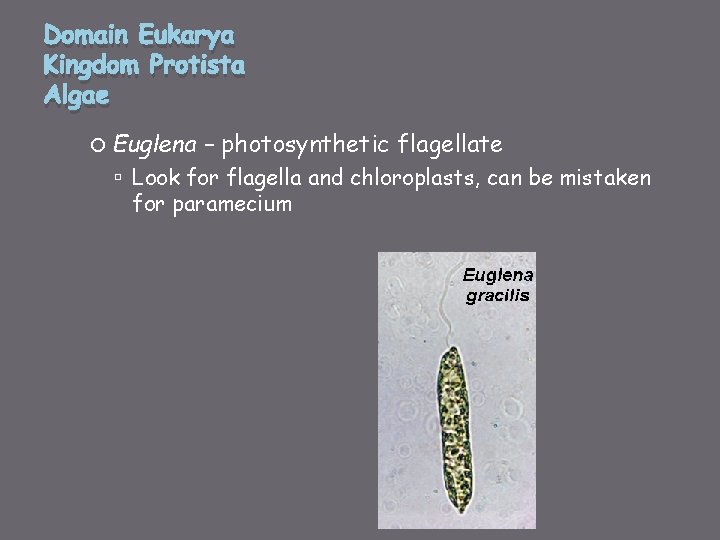
Domain Eukarya Kingdom Protista Algae Euglena – photosynthetic flagellate Look for flagella and chloroplasts, can be mistaken for paramecium
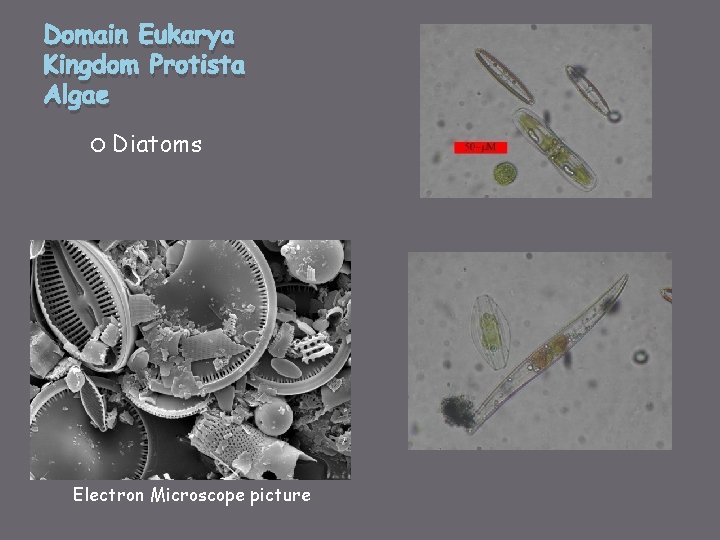
Domain Eukarya Kingdom Protista Algae Diatoms Electron Microscope picture
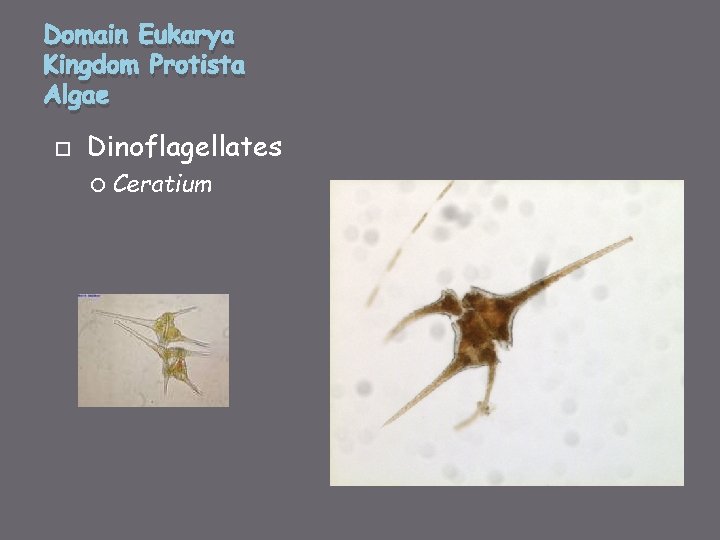
Domain Eukarya Kingdom Protista Algae Dinoflagellates Ceratium
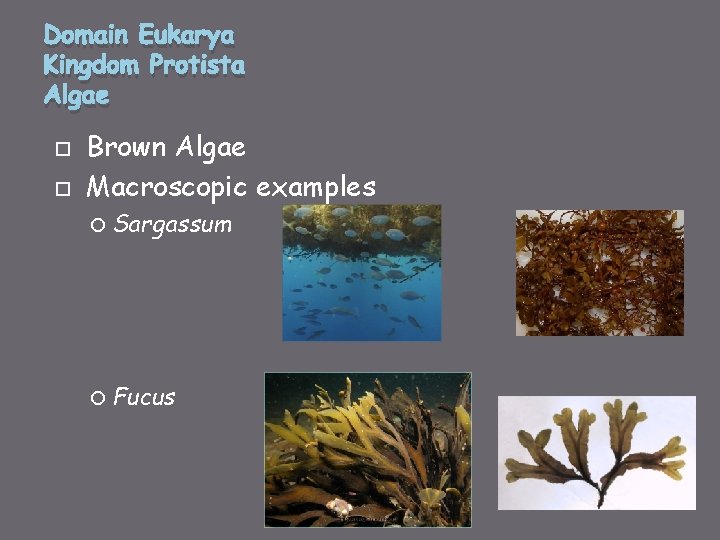
Domain Eukarya Kingdom Protista Algae Brown Algae Macroscopic examples Sargassum Fucus
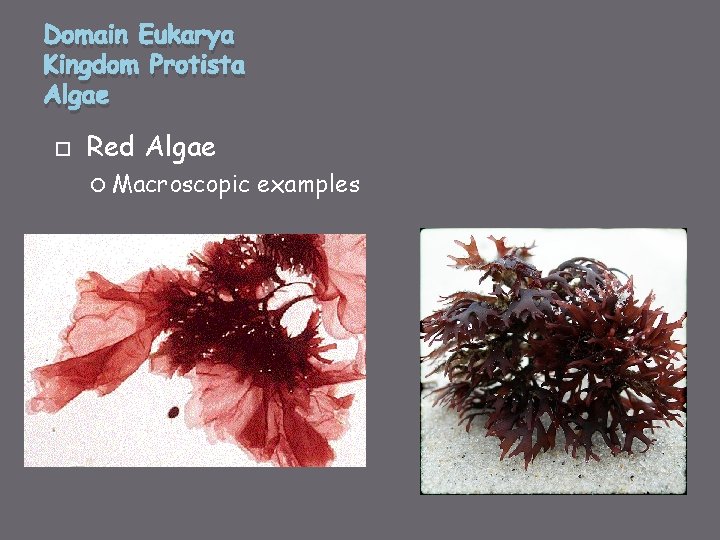
Domain Eukarya Kingdom Protista Algae Red Algae Macroscopic examples
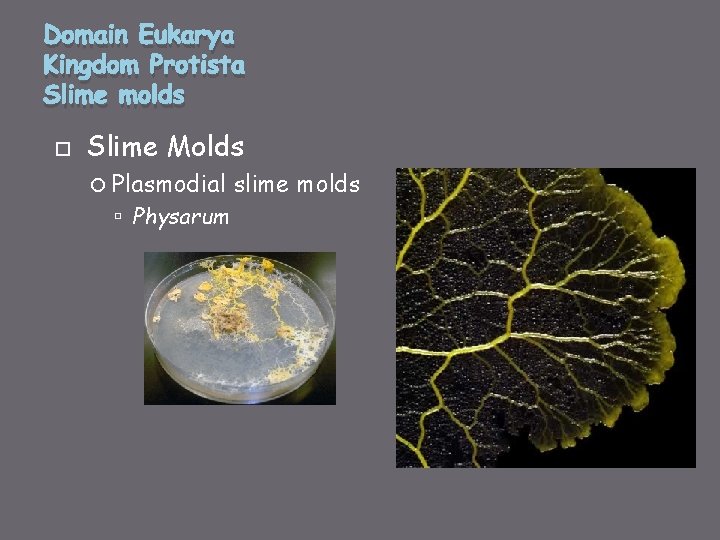
Domain Eukarya Kingdom Protista Slime molds Slime Molds Plasmodial Physarum slime molds
Before you leave the lab: For the Bacteria: Did you observe the 3 common shapes under the microscope? What are the 3 common shapes? Did you observe the bacterial colonies growing on the petri dish? Cyanobacteria – can you identify Oscillatoria and Anabaena under the microscope? For the protists: What Domain are protists in? What is the common name of a heterotrophic protest? An autotrophic protest? Can you identify the group of macroscopic algae on the lab benches? Can you identify the microscopic protists under the microscope? Did you observe the Physarum growing in the petri dish? Microscope slides: Bacteria: Bacterial shapes Cyanobacteria: Oscillatoria, Anabaena Protists: Protozoans: Amoeba Radiolarians Globigernia Ciliates: Paramecium, Stentor, Vorticella Trypanosoma Trichomonas Plasmodium Algae: Spirogyra Volvox Euglena Diatoms Ceratium (dinoflagellate)
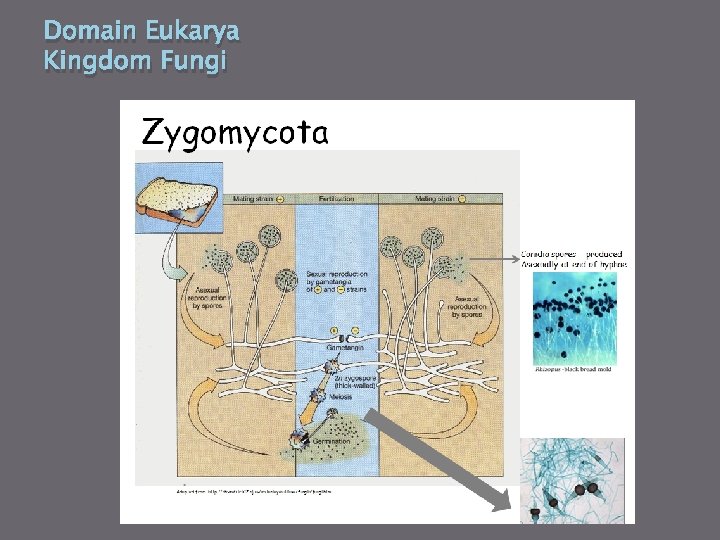
Domain Eukarya Kingdom Fungi
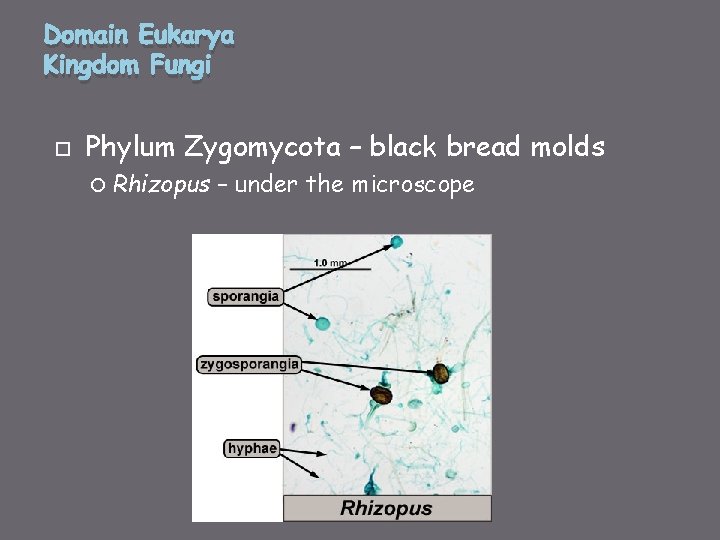
Domain Eukarya Kingdom Fungi Phylum Zygomycota – black bread molds Rhizopus – under the microscope
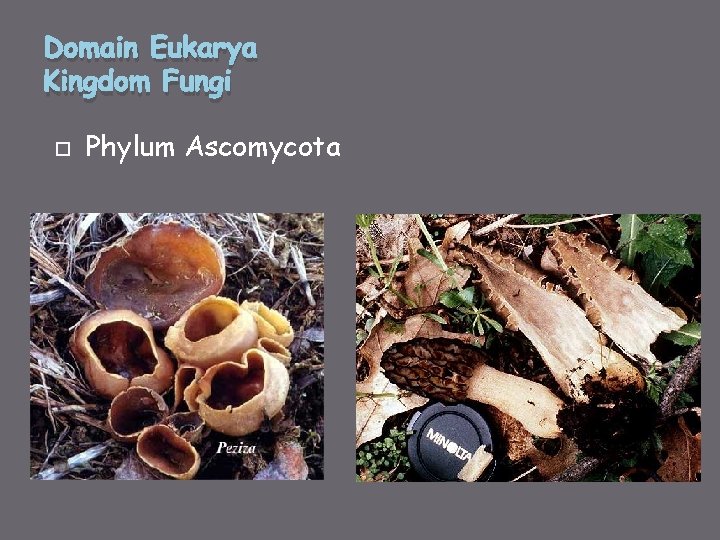
Domain Eukarya Kingdom Fungi Phylum Ascomycota
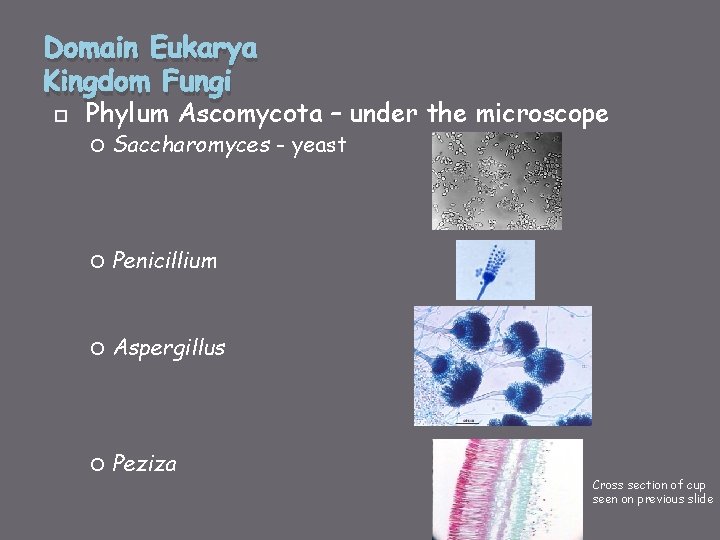
Domain Eukarya Kingdom Fungi Phylum Ascomycota – under the microscope Saccharomyces - yeast Penicillium Aspergillus Peziza Cross section of cup seen on previous slide
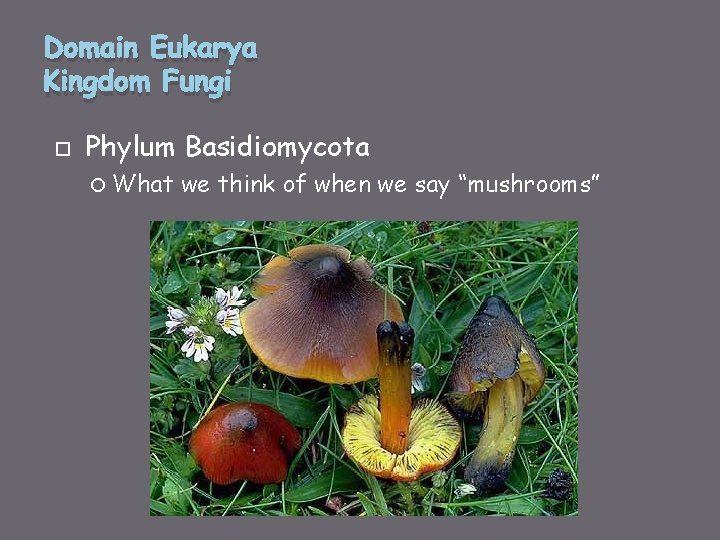
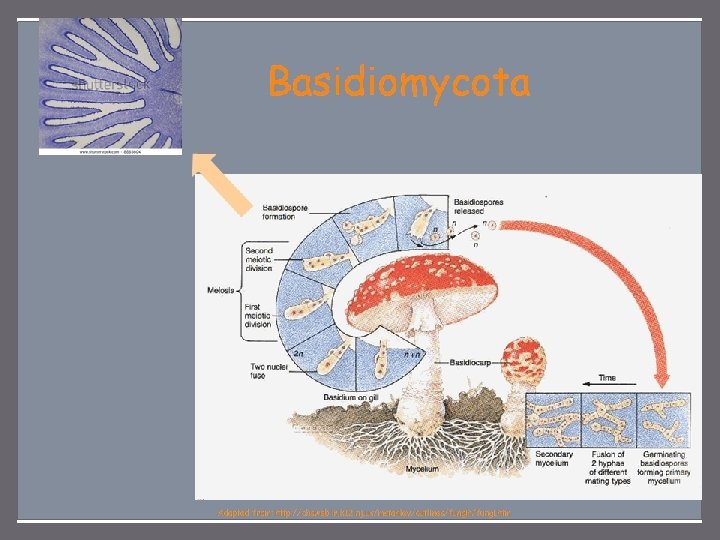
Domain Eukarya Kingdom Fungi Phylum Basidiomycota What we think of when we say “mushrooms”
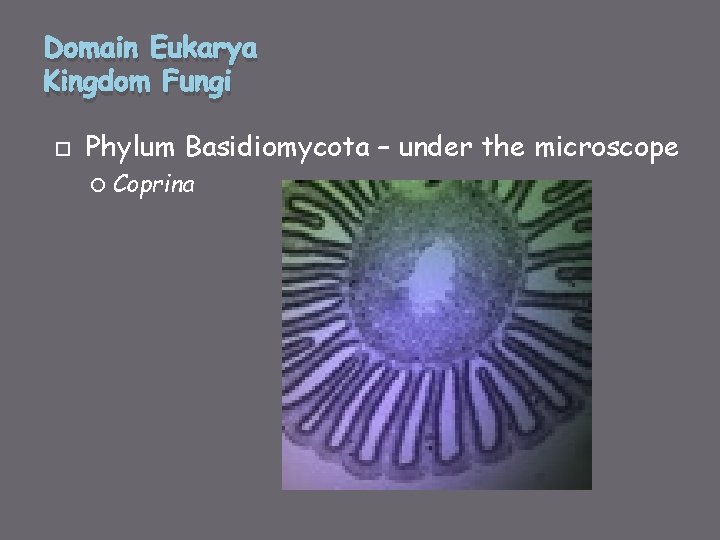
Domain Eukarya Kingdom Fungi Phylum Basidiomycota – under the microscope Coprina
Make Notecards!!!!! On one side write: On the other side: Picture of the organism On Handout Domain Kingdom Group Genus Characteristics Know what is prokaryotic and what is eukaryotic! Domain is capitalized Group is in bold print Genus is underlined (# is the slide #)
Before you leave the lab: Did you look at the representative of the 3 fungal groups on the lab bench? Can you identify the different species of fungi under the microscope? Do you understand the life cycle of all 3 groups? Did you take a look at the lichen example? Microscope slides: Zygomycota Rhizopus Note the zygospores (from sexual reproduction) and the asexual spores Ascomycota Saccharomyces Penicillin Peziza Aspergillus Basidiomycota Coprinus
Images from: microbewiki. kenyon. edu/index. php/Spirillum www. life. umd. edu/CBMG/faculty/asmith/smith 2. html commons. wikimedia. org/wiki/File: Bacillus_subt. . . www. vcbio. science. ru. nl/. . . /labels/print/PL 0013/ botit. botany. wisc. edu/. . . /Oscillatoria_MC. html fnie-educationalmedia. pbwiki. com/Cyanobacteria faculty. clintoncc. suny. edu/. . . /protists. htm bio 1903. nicerweb. com/. . . /lab/diversity/protista/ https: /. . . /qry_media_id. php? media_id=2340 www. mccc. edu/%7 Esmithro/Prokaryotes%20 and%20 P. . . www. microscopy-uk. org. uk/. . . /wdstentor 2. html http: //www. biology-resources. com/drawing-paramecium-vorticella. html io. uwinnipeg. ca/. . . /16 cm 05/1116/16 protis. htm Noaa. gov www. bioweb. uncc. edu/. . . /labpics/lab 1 pics. htm workforce. cup. edu/buckelew/Plasmodium%20 vivax. . . http: //www. estrellamountain. edu/faculty/farabee/biobk/a. M. _conica_tjv. jpg http: //www. gltech. org/library/htmlaps/scannell/images/conica. jpg www. plantsci. cam. ac. uk/. . . /page 18. html
- Slides: 34