
General architecture of Functional Discourse Grammar The components

- Slides: 27
General architecture of Functional Discourse Grammar
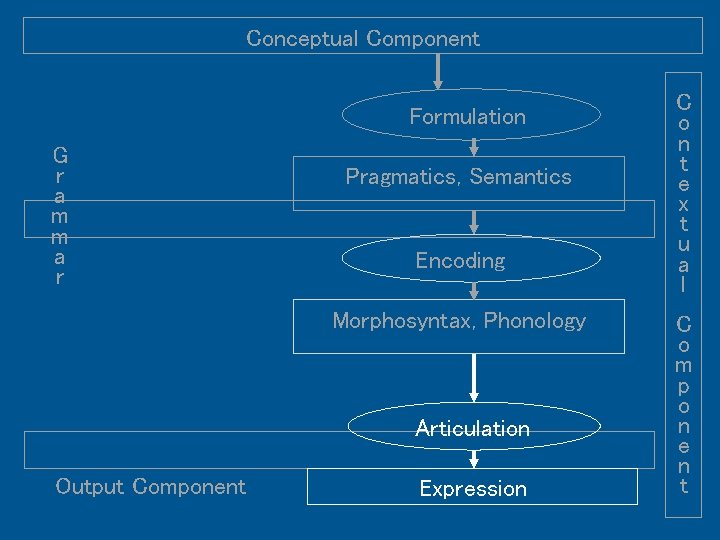
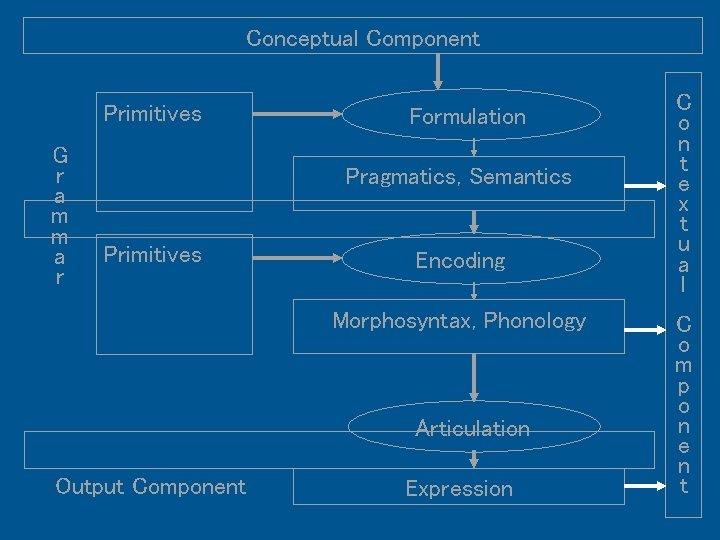
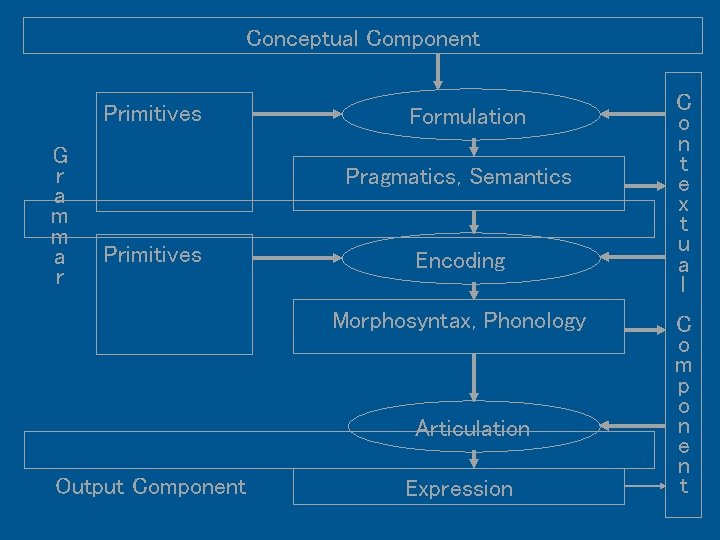
The components • The grammatical component of FDG interacts with three additional components: – the conceptual component – the contextual component – the output component
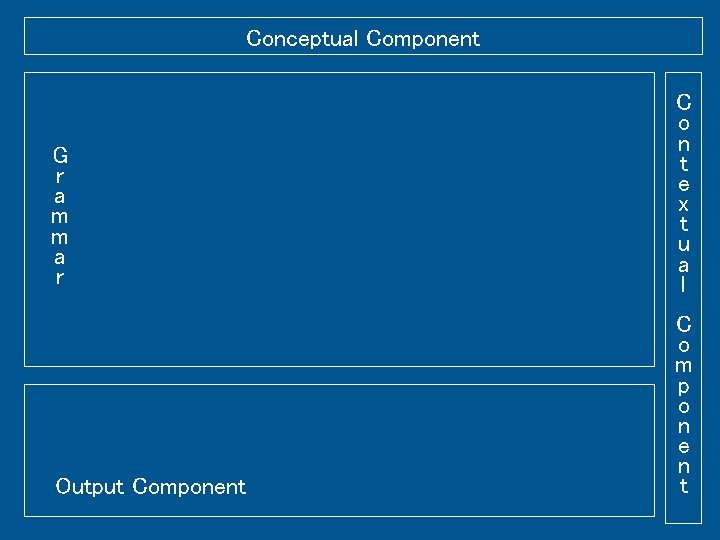
The components • The conceptual component drives the grammar, since it is within this component that a communicative intention and the corresponding mental representation arise • The contextual component stores the information available to Speaker and Addressee at any point in discourse, thus enabling subsequent reference to the various kinds of entity introduced into the discourse • The output component converts the output of the grammar into audible or visual form
Conceptual Component G r a m m a r C o n t e x t u a l Output Component C o m p o n e n t
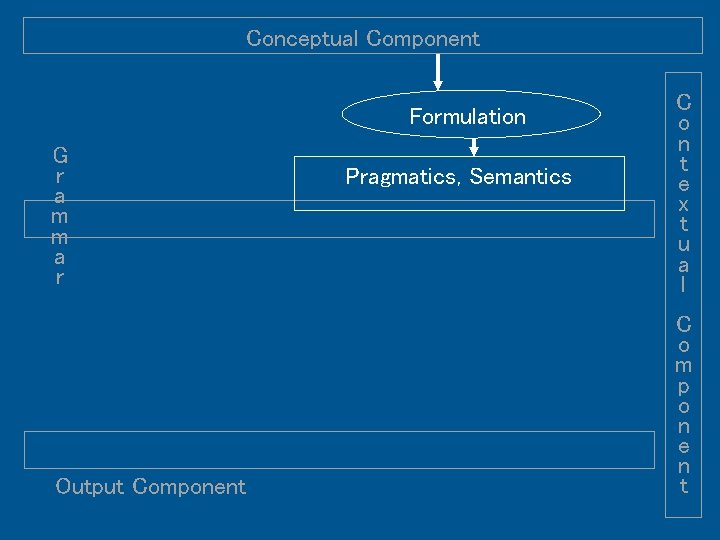
Formulation The operation of formulation converts the communicative intention (e. g. issuing a warning) and the corresponding mental representation (e. g. of the event causing danger) arising at the pre-linguistic conceptual level into interpersonal (=pragmatic) and representational (=semantic) representations
Conceptual Component Formulation G r a m m a r Output Component Pragmatics, Semantics C o n t e x t u a l C o m p o n e n t
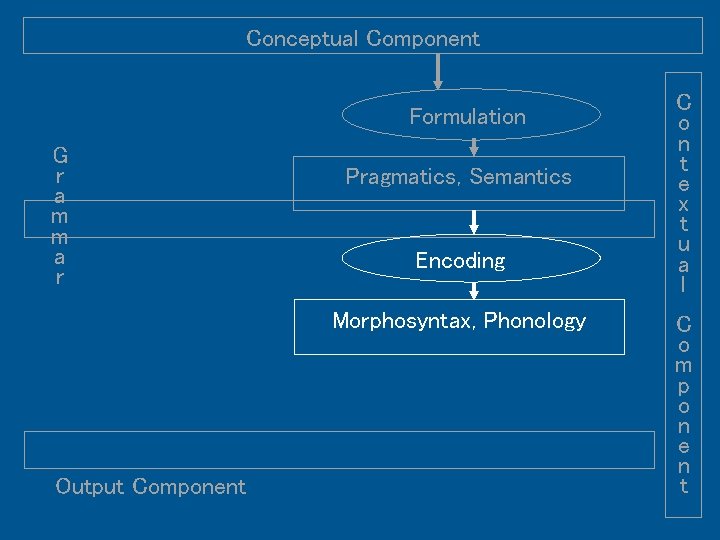
Encoding The operation of encoding maps interpersonal and representational representations onto the appropriate morphosyntactic and phonological representations
Conceptual Component Formulation G r a m m a r Pragmatics, Semantics Encoding Morphosyntax, Phonology Output Component C o n t e x t u a l C o m p o n e n t
Articulation • The output of the grammar is input to the operation of articulation, which, in the case of an acoustic output, contains the phonetic rules necessary for producing an adequate utterance
Conceptual Component Formulation G r a m m a r Pragmatics, Semantics Encoding Morphosyntax, Phonology Articulation Output Component Expression C o n t e x t u a l C o m p o n e n t
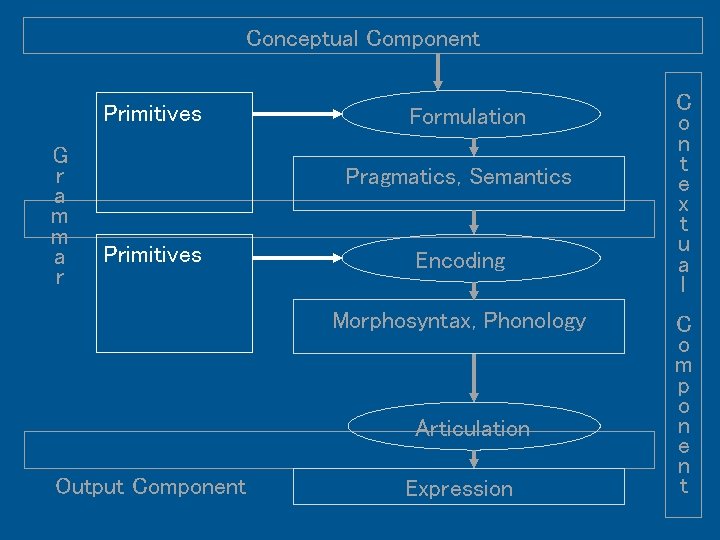
Primitives Every operation within the grammar makes us of its own set of primitives, which are the basic building blocks used by those operations in producing (intermediate) levels of representation
Conceptual Component Primitives G r a m m a r Formulation Pragmatics, Semantics Primitives Encoding Morphosyntax, Phonology Articulation Output Component Expression C o n t e x t u a l C o m p o n e n t
Feeding the contextual component Each level of representation feeds into the contextual component, enabling subsequent reference to the various kinds of entity relevant at each level as soon as they are introduced into the discourse
Conceptual Component Primitives G r a m m a r Formulation Pragmatics, Semantics Primitives Encoding Morphosyntax, Phonology Articulation Output Component Expression C o n t e x t u a l C o m p o n e n t
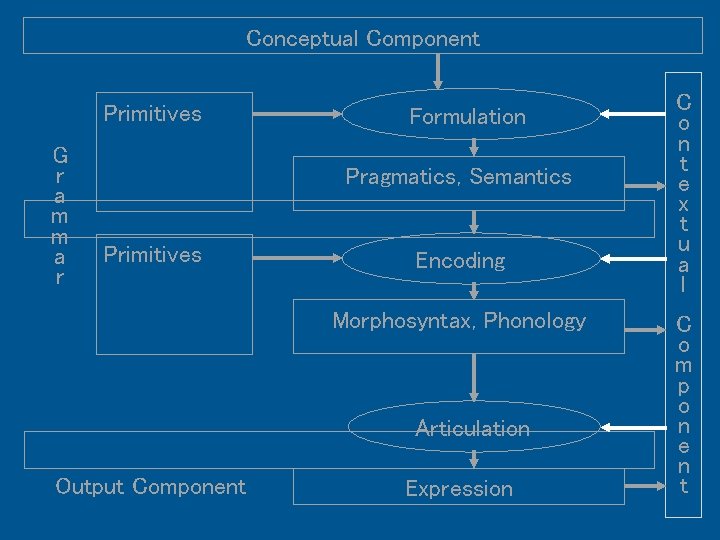
Drawing on the contextual component The formulator draws on the contextual component, so that the availability of antecedents and visible referents may influence the composition of (subsequent) discourse acts
Conceptual Component Primitives G r a m m a r Formulation Pragmatics, Semantics Primitives Encoding Morphosyntax, Phonology Articulation Output Component Expression C o n t e x t u a l C o m p o n e n t
The full picture This leads to the following overall picture:
Conceptual Component Primitives G r a m m a r Formulation Pragmatics, Semantics Primitives Encoding Morphosyntax, Phonology Articulation Output Component Expression C o n t e x t u a l C o m p o n e n t
The organization of the grammatical component in Functional Discourse Grammar
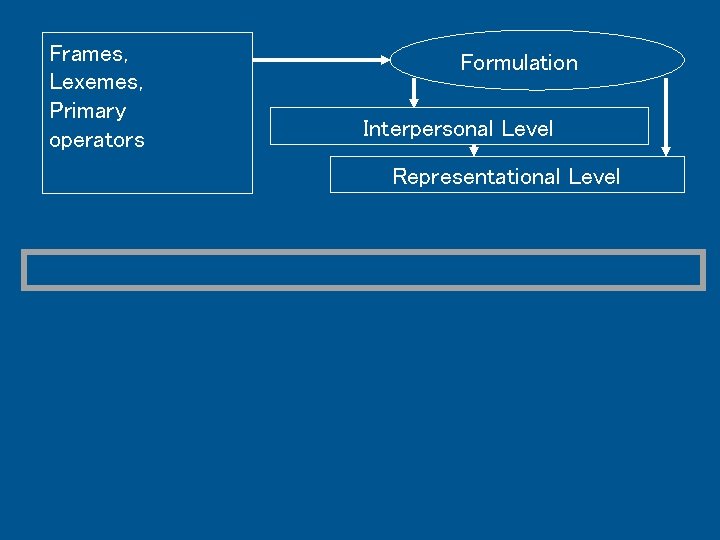
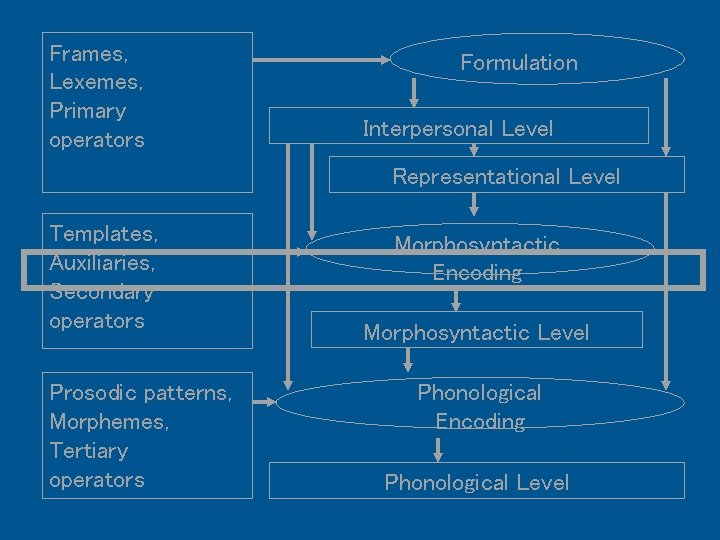
Formulation The operation of formulation translates the communicative intention of the Speaker into an interpersonal representation, and the corresponding mental picture into a representational representation. It makes use of a set of primitives that consists of frames, lexemes, and primary operators
Frames, Lexemes, Primary operators Formulation Interpersonal Level Representational Level
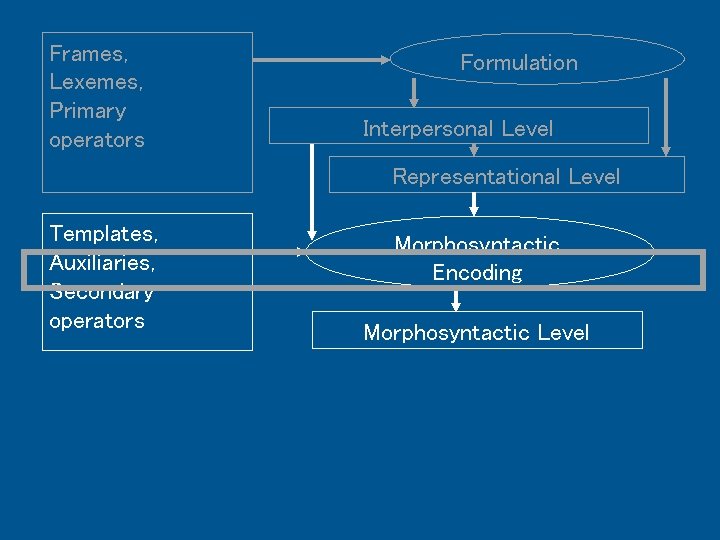
Morphosyntactic encoding The operation of morphosyntactic encoding creates a morphosyntactic representation on the basis of the information created at the interpersonal and representational levels. It makes use of a set of primitives consisting of morphosyntactic templates, free grammatical words, and secondary operators anticipating bound grammatical forms
Frames, Lexemes, Primary operators Formulation Interpersonal Level Representational Level Templates, Auxiliaries, Secondary operators Morphosyntactic Encoding Morphosyntactic Level
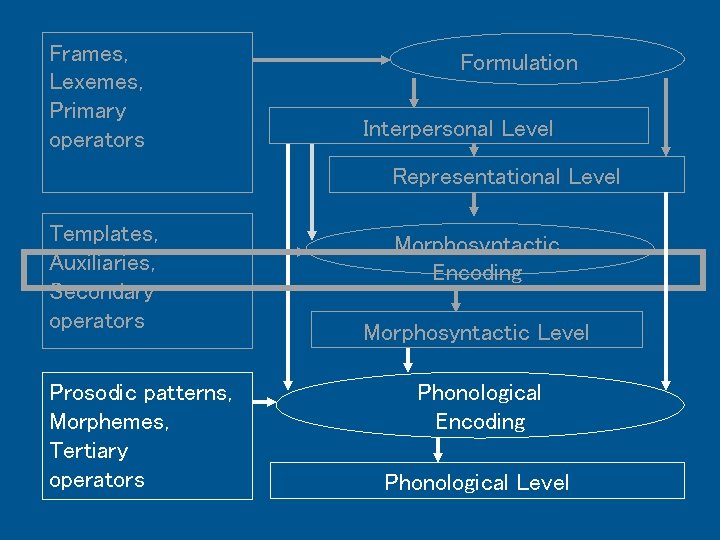
Phonological encoding The operation of phonological encoding creates a phonological representation on the basis of the information created at the interpersonal, the representational, and the morphosyntactic levels. It makes use of a set of primitives consisting of prosodic patterns, bound grammatical morphemes, and secondary operators anticipating acoustic means of expression that are not a direct reflection of a primary operator
Frames, Lexemes, Primary operators Formulation Interpersonal Level Representational Level Templates, Auxiliaries, Secondary operators Prosodic patterns, Morphemes, Tertiary operators Morphosyntactic Encoding Morphosyntactic Level Phonological Encoding Phonological Level
The full picture The resulting overall model is as follows:
Frames, Lexemes, Primary operators Formulation Interpersonal Level Representational Level Templates, Auxiliaries, Secondary operators Prosodic patterns, Morphemes, Tertiary operators Morphosyntactic Encoding Morphosyntactic Level Phonological Encoding Phonological Level