
GENERAL AND REGIONAL ANAESTHESIA Katarina Zadrazilova FN Brno
GENERAL AND REGIONAL ANAESTHESIA Katarina Zadrazilova FN Brno, 2014
. . aims • What do anaesthetists do • Basic anaesthetic management • Drugs, gases, monitoring, machines
The role of anaesthetist • Ensures safe anaesthesia for surgery • Is responsible for patient safety in theatre • Ensures the anaesthetic machine and drugs are checked and correct • Liase with the surgeon and scrub team – ensure that the operation can proceed smoothly • Keep an anaesthetic record • Makes a postoperative plan
Anaesthetic plan • Preoperative • Intraoperative • And postoperative management
Anaesthetic plan • Preoperative • Intraoperative • And postoperative management
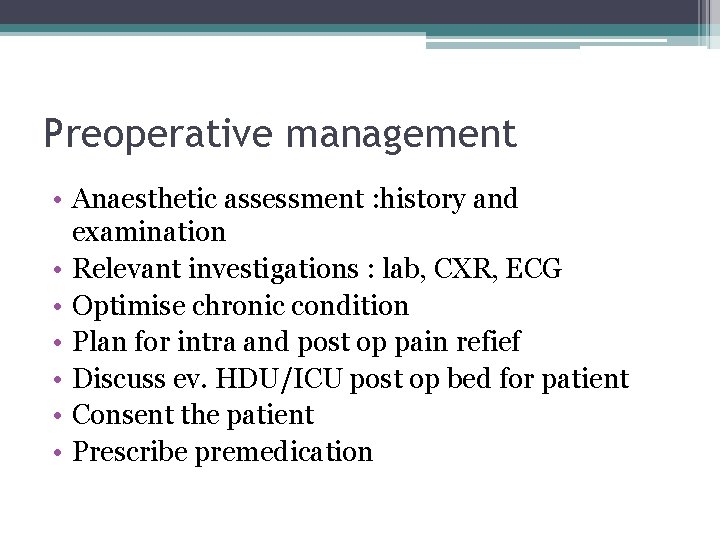
Preoperative management • Anaesthetic assessment : history and examination • Relevant investigations : lab, CXR, ECG • Optimise chronic condition • Plan for intra and post op pain refief • Discuss ev. HDU/ICU post op bed for patient • Consent the patient • Prescribe premedication
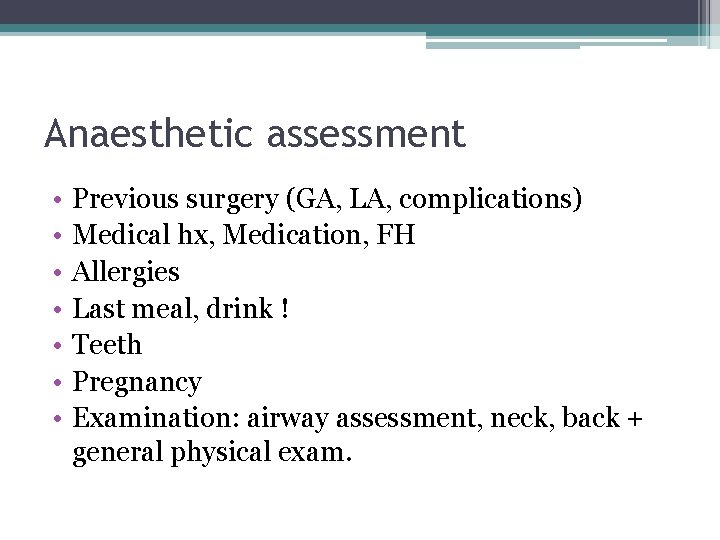
Anaesthetic assessment • • Previous surgery (GA, LA, complications) Medical hx, Medication, FH Allergies Last meal, drink ! Teeth Pregnancy Examination: airway assessment, neck, back + general physical exam.
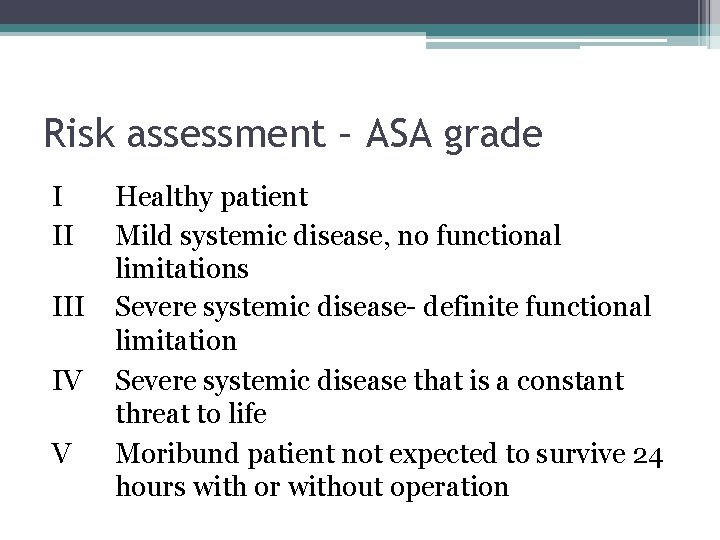
Risk assessment – ASA grade I II IV V Healthy patient Mild systemic disease, no functional limitations Severe systemic disease- definite functional limitation Severe systemic disease that is a constant threat to life Moribund patient not expected to survive 24 hours with or without operation
Premedication • Sedation/anxiolysis (Benzodiazepines) • Analgesia only if pain (opioids) • Reduce airway secretions + heart rate control + hemodynamic stability • Prevent bronchospasm • Prevent and/or minimize the impact of aspiration • Decrease post-op nausea/vomiting
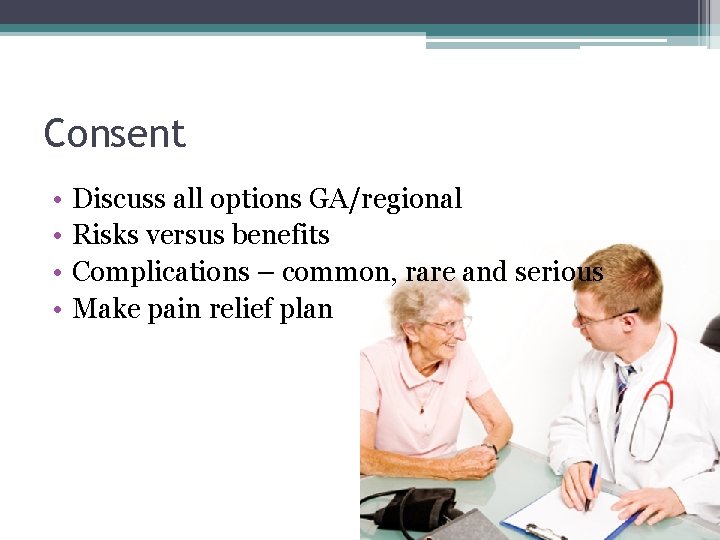
Consent • • Discuss all options GA/regional Risks versus benefits Complications – common, rare and serious Make pain relief plan
Complications NO RISK = NO ANAESTHESIA • Common (someone in a street) ▫ PONV, sore throat, backache, headache, dizziness • Rare and serious (someone in a big town) ▫ Damage to the eyes, anaphylactic shock, death, equipment failure
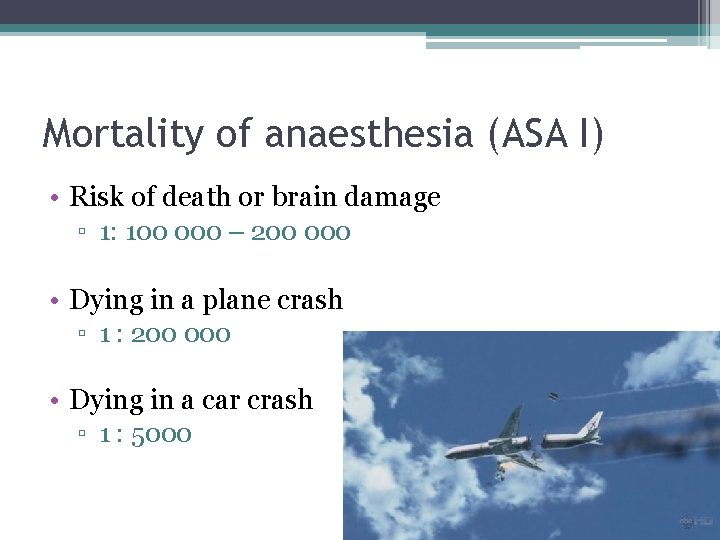
Mortality of anaesthesia (ASA I) • Risk of death or brain damage ▫ 1: 100 000 – 200 000 • Dying in a plane crash ▫ 1 : 200 000 • Dying in a car crash ▫ 1 : 5000
Anaesthetic plan • Preoperative • Intraoperative • And postoperative management
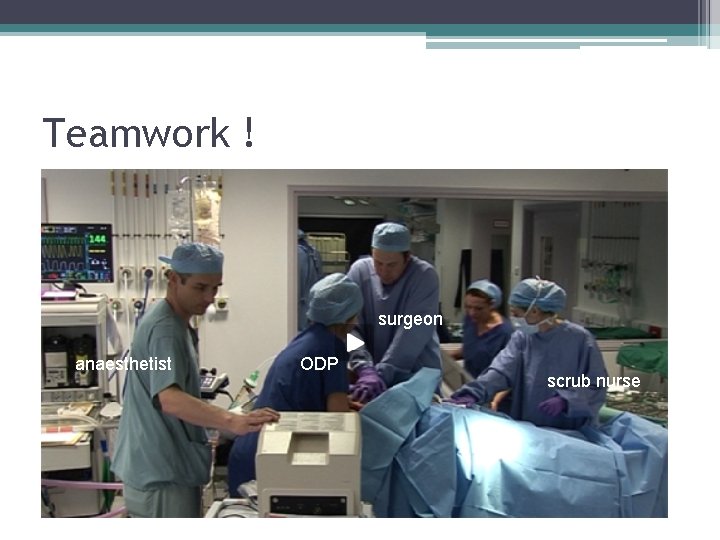
Teamwork ! surgeon anaesthetist ODP scrub nurse
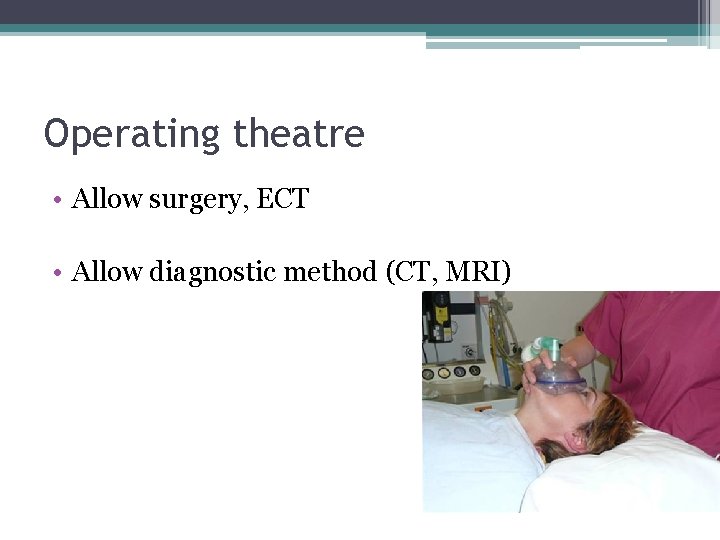
Operating theatre • Allow surgery, ECT • Allow diagnostic method (CT, MRI)
Anaesthesia = loss of sensation • General (narcosis) • Local / regional • Combined
Anaesthesia = loss of sensation • General (narcosis) • Local / regional • Combined
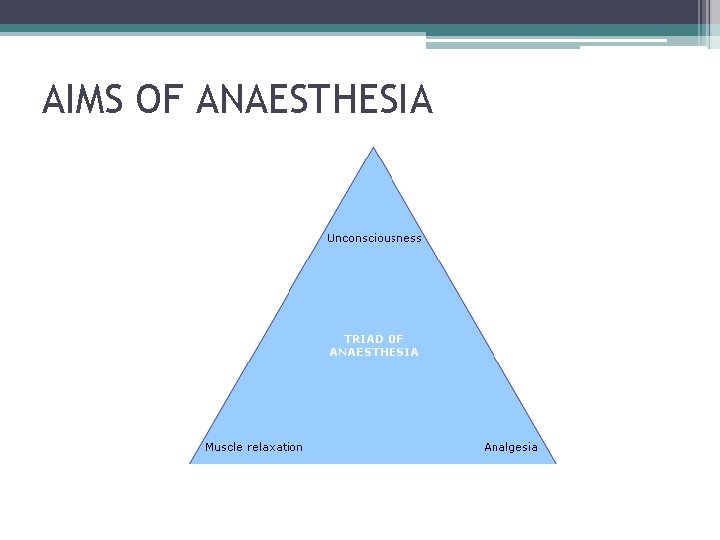
AIMS OF ANAESTHESIA

Triad of anaesthesia • Neuromuscular blocking agents for muscle relaxation • Analgesics/regional anaesthesia for analgesia • Anaesthetic agents to produce unconsciousness
Stages of anaesthetics • Induction – putting asleep • Maintenance – keeping the patient asleep • Reversal – waking up the patient
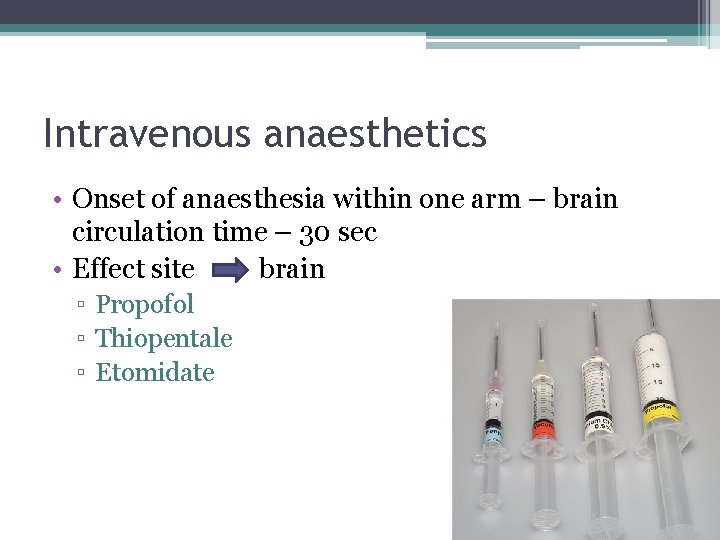
Intravenous anaesthetics • Onset of anaesthesia within one arm – brain circulation time – 30 sec • Effect site brain ▫ Propofol ▫ Thiopentale ▫ Etomidate
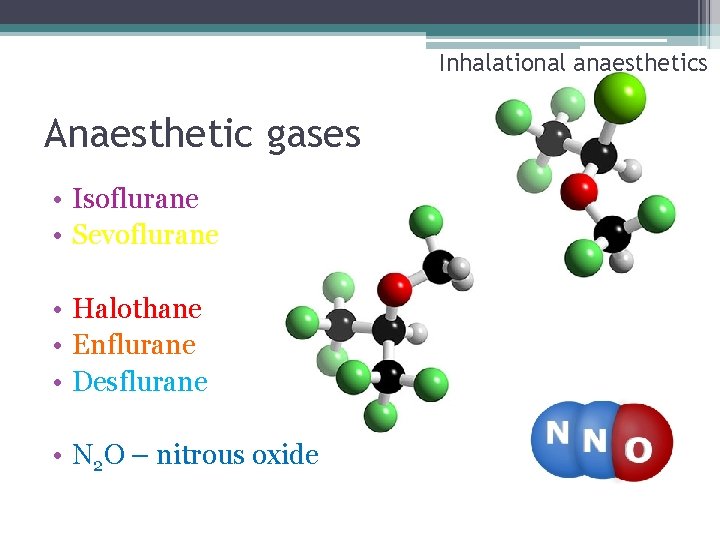
Inhalational anaesthetics Anaesthetic gases • Isoflurane • Sevoflurane • Halothane • Enflurane • Desflurane • N 2 O – nitrous oxide
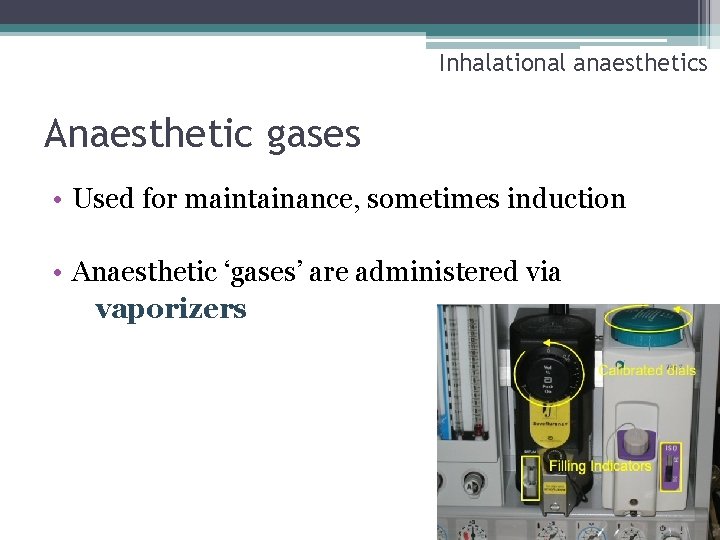
Inhalational anaesthetics Anaesthetic gases • Used for maintainance, sometimes induction • Anaesthetic ‘gases’ are administered via vaporizers
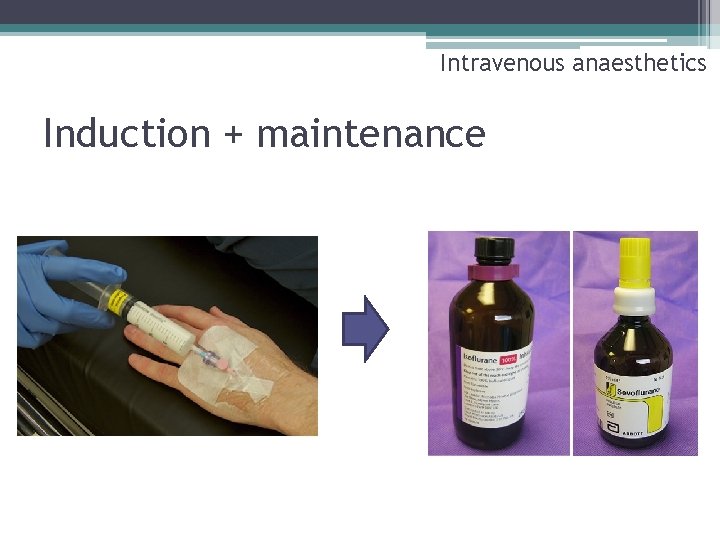
Intravenous anaesthetics Induction + maintenance
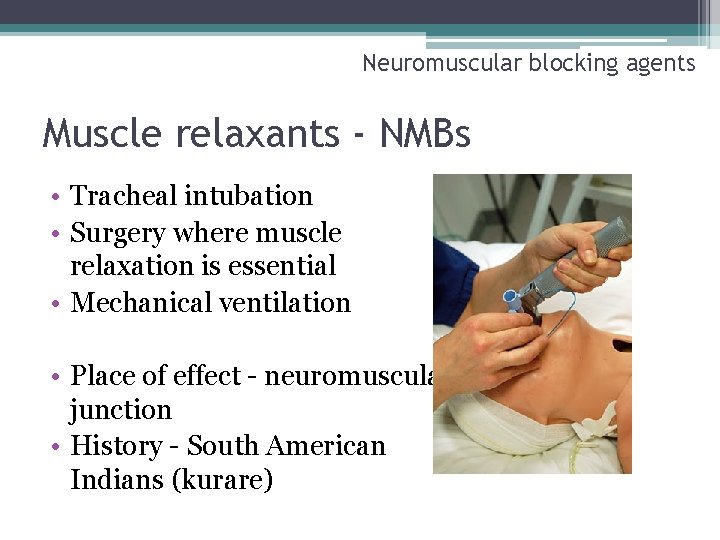
Neuromuscular blocking agents Muscle relaxants - NMBs • Tracheal intubation • Surgery where muscle relaxation is essential • Mechanical ventilation • Place of effect - neuromuscular junction • History - South American Indians (kurare)
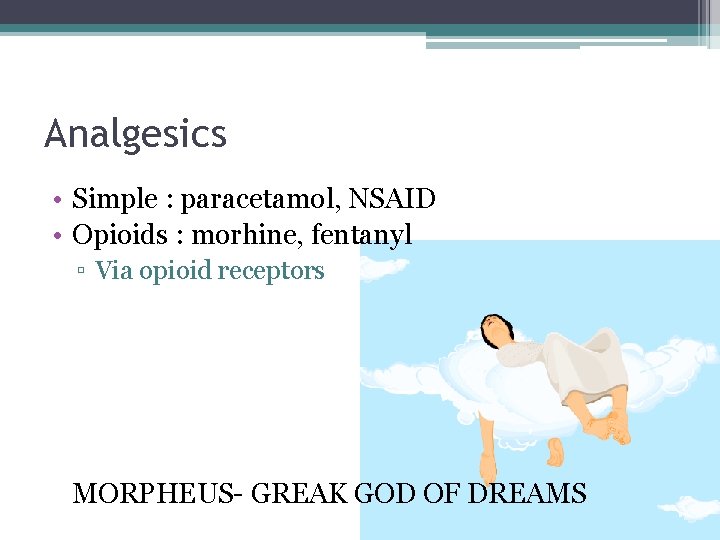
Analgesics • Simple : paracetamol, NSAID • Opioids : morhine, fentanyl ▫ Via opioid receptors MORPHEUS- GREAK GOD OF DREAMS
Monitoring • Basic: ▫ NIBP, ECG, Sat, ETCO 2, Fi. O 2 • Extended: ▫ Nerve stimulator, temperature, diuresis, IBP, CO, CVP, perioperative acid-base, lab
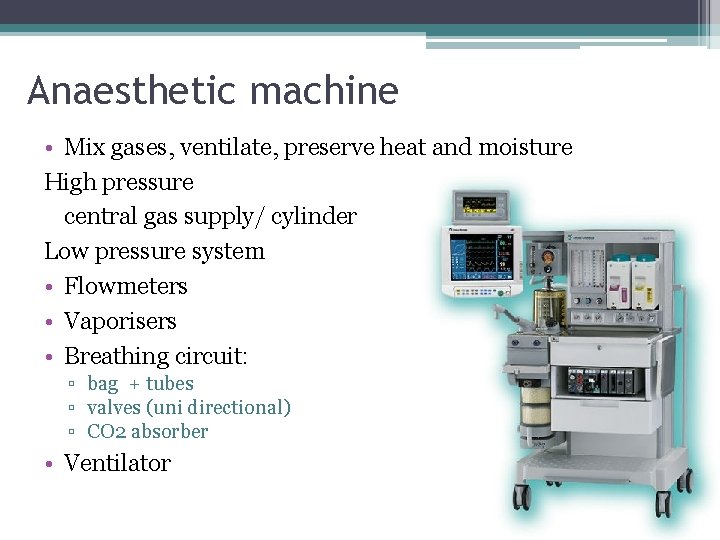
Anaesthetic machine • Mix gases, ventilate, preserve heat and moisture High pressure central gas supply/ cylinder Low pressure system • Flowmeters • Vaporisers • Breathing circuit: ▫ bag + tubes ▫ valves (uni directional) ▫ CO 2 absorber • Ventilator
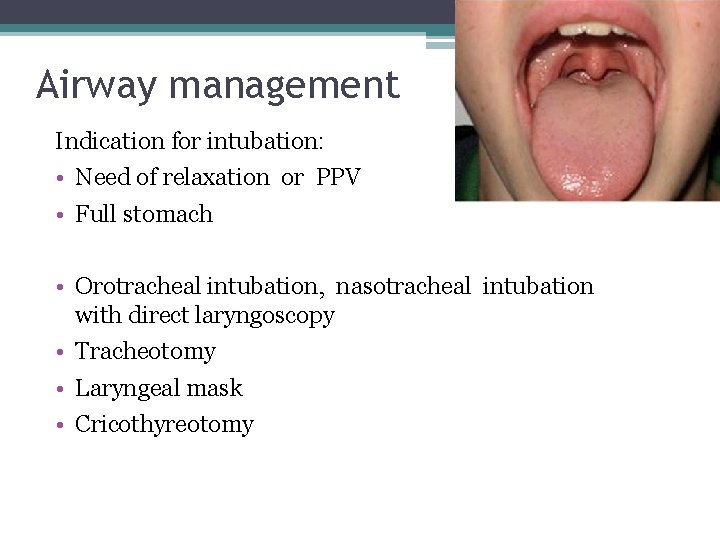
Airway management Indication for intubation: • Need of relaxation or PPV • Full stomach • Orotracheal intubation, nasotracheal intubation with direct laryngoscopy • Tracheotomy • Laryngeal mask • Cricothyreotomy
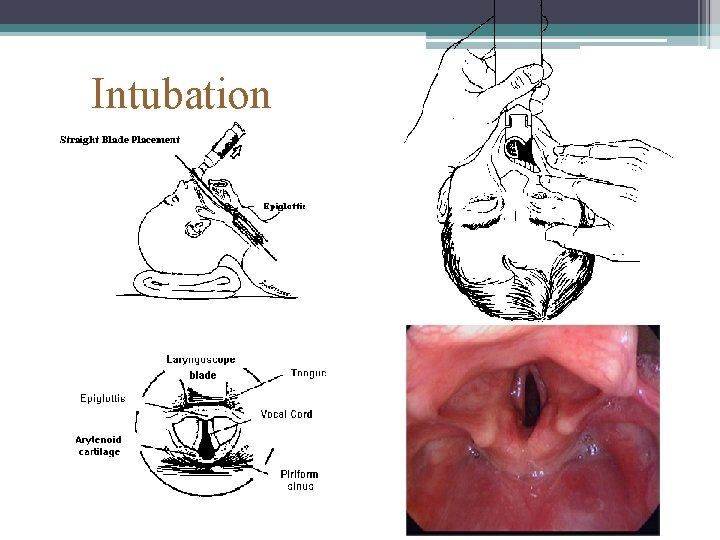
Intubation
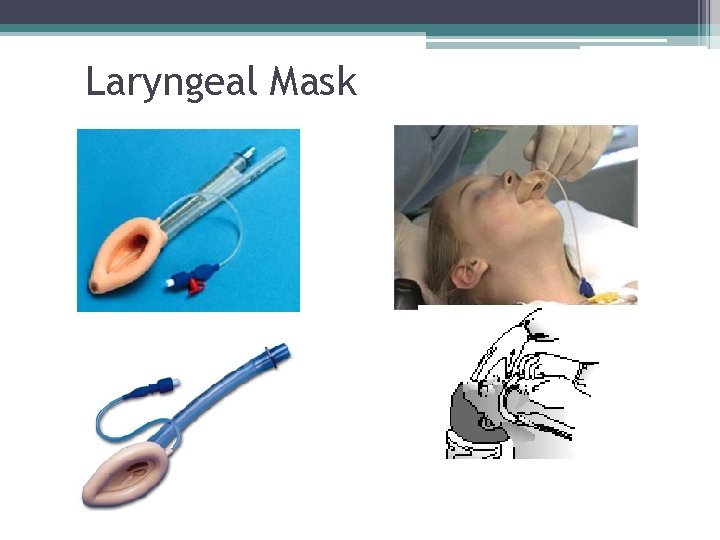
Laryngeal Mask
Anaesthesia = loss of sensation • General (narcosis) • Local / regional • Combined
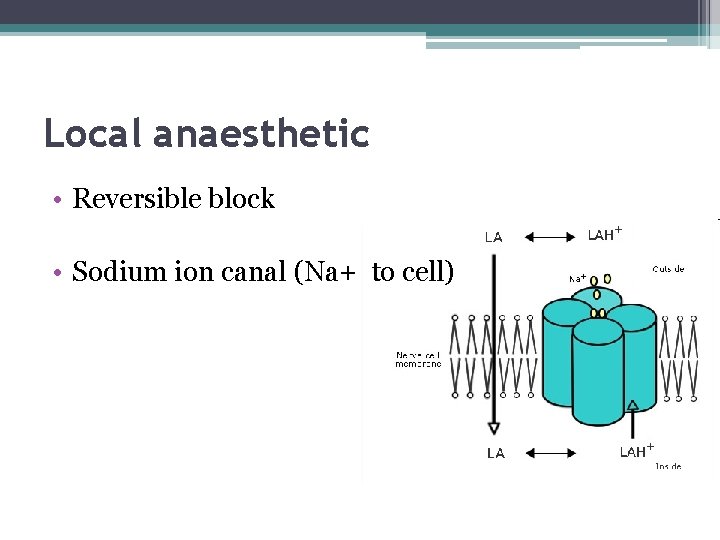
Local anaesthetic • Reversible block • Sodium ion canal (Na+ to cell)
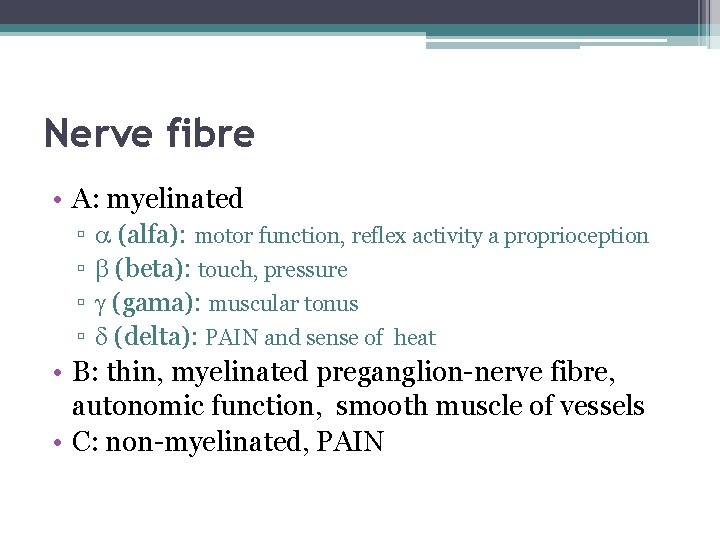
Nerve fibre • A: myelinated ▫ ▫ (alfa): motor function, reflex activity a proprioception (beta): touch, pressure (gama): muscular tonus (delta): PAIN and sense of heat • B: thin, myelinated preganglion-nerve fibre, autonomic function, smooth muscle of vessels • C: non-myelinated, PAIN
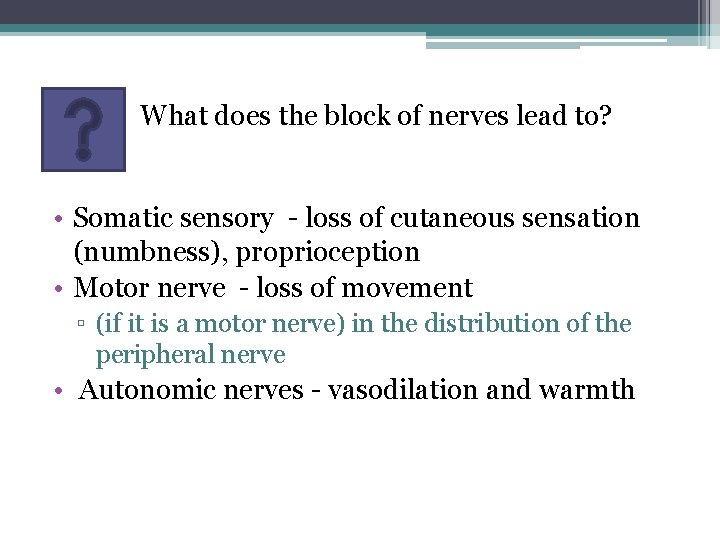
What does the block of nerves lead to? • Somatic sensory - loss of cutaneous sensation (numbness), proprioception • Motor nerve - loss of movement ▫ (if it is a motor nerve) in the distribution of the peripheral nerve • Autonomic nerves - vasodilation and warmth
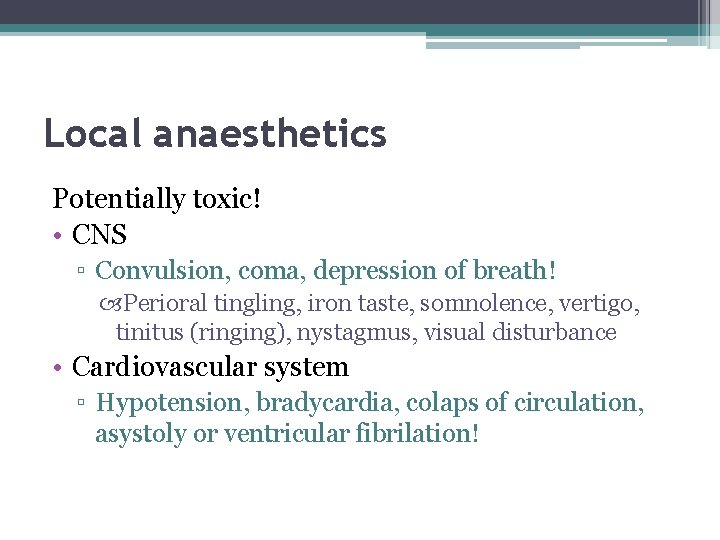
Local anaesthetics Potentially toxic! • CNS ▫ Convulsion, coma, depression of breath! Perioral tingling, iron taste, somnolence, vertigo, tinitus (ringing), nystagmus, visual disturbance • Cardiovascular system ▫ Hypotension, bradycardia, colaps of circulation, asystoly or ventricular fibrilation!
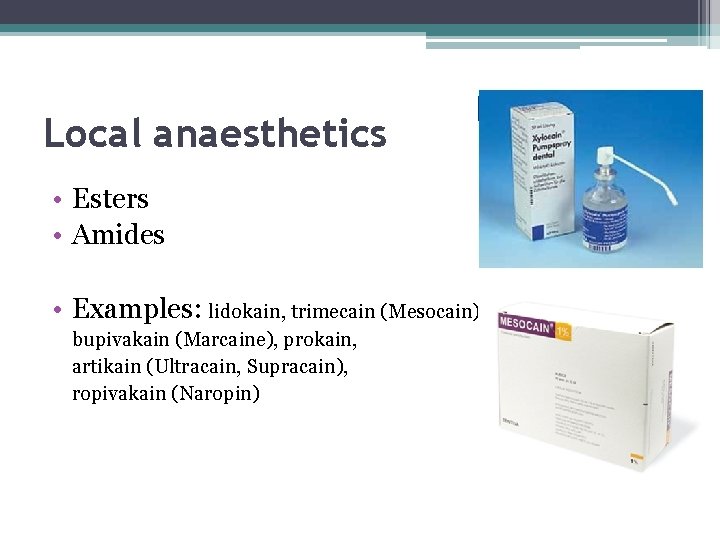
Local anaesthetics • Esters • Amides • Examples: lidokain, trimecain (Mesocain), bupivakain (Marcaine), prokain, artikain (Ultracain, Supracain), ropivakain (Naropin)
Use of RA • Analgesia, e. g. fractured femur, fractured ribs • As the sole anaesthetic for surgery with or without sedation, e. g. hand surgery • In combination with GA, e. g. total knee replacement • For postoperative analgesia
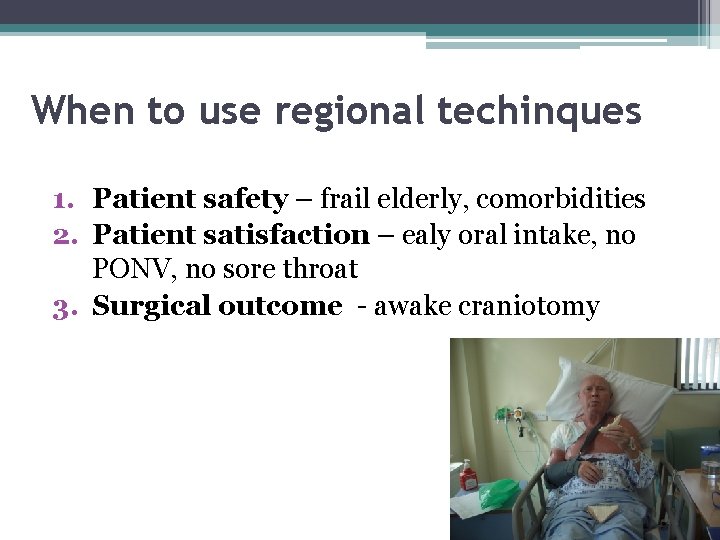
When to use regional techinques 1. Patient safety – frail elderly, comorbidities 2. Patient satisfaction – ealy oral intake, no PONV, no sore throat 3. Surgical outcome - awake craniotomy

Most common regional anaesthesia Caesarian section ▫ Patient safety Control of airway ▫ Patient satisfaction Awake during the delivery of the child Presence of partner ▫ Surgical outcome Intraoperative bleeding is reduced Reduced stress response
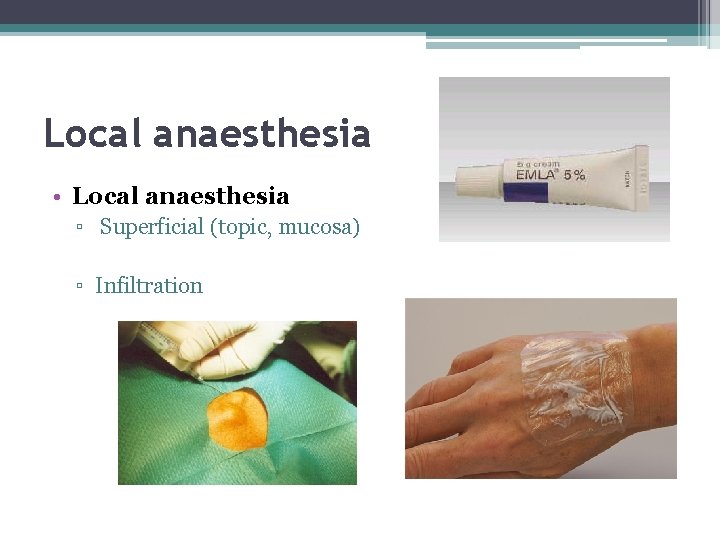
Local anaesthesia • Local anaesthesia ▫ Superficial (topic, mucosa) ▫ Infiltration
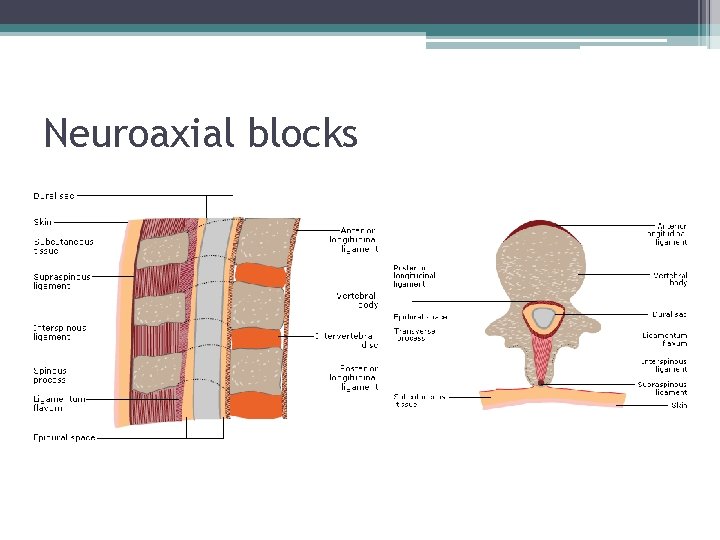
Neuroaxial blocks
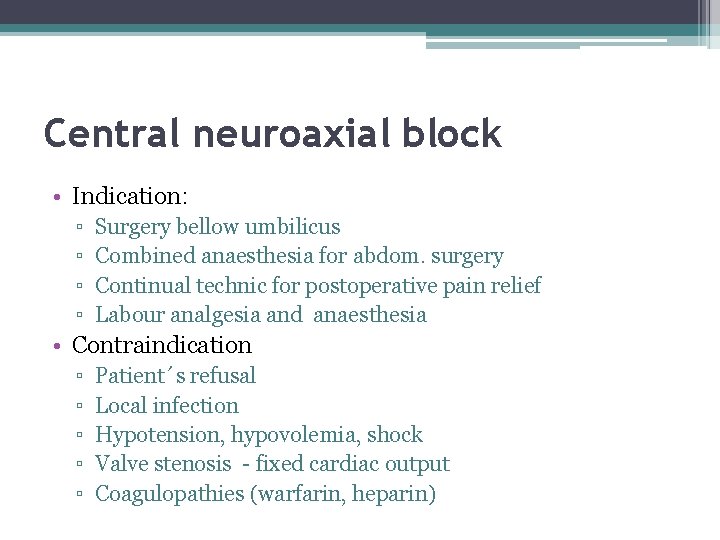
Central neuroaxial block • Indication: ▫ ▫ Surgery bellow umbilicus Combined anaesthesia for abdom. surgery Continual technic for postoperative pain relief Labour analgesia and anaesthesia • Contraindication ▫ ▫ ▫ Patient´s refusal Local infection Hypotension, hypovolemia, shock Valve stenosis - fixed cardiac output Coagulopathies (warfarin, heparin)
Systemic effect of central blockade • Cardiovascular system ▫ Sympathetic block Hypotension Reduced venous return Relative hypovolemia • Ventilation: small influence • Urination: urinary retention
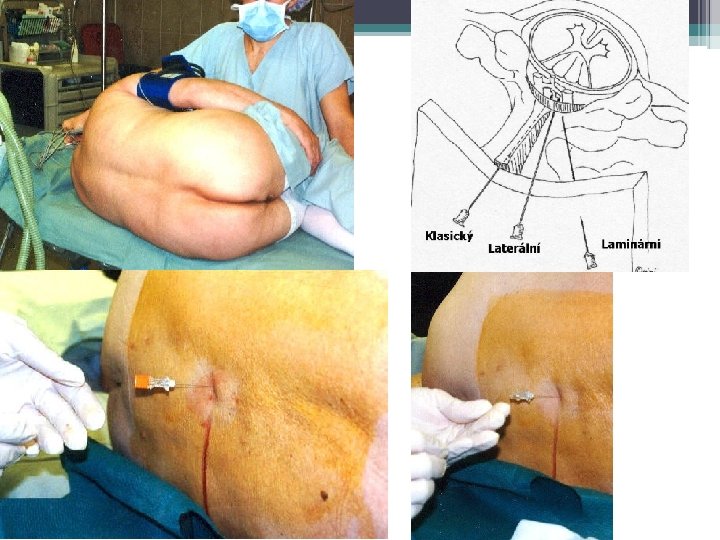
Lumbal epidural block
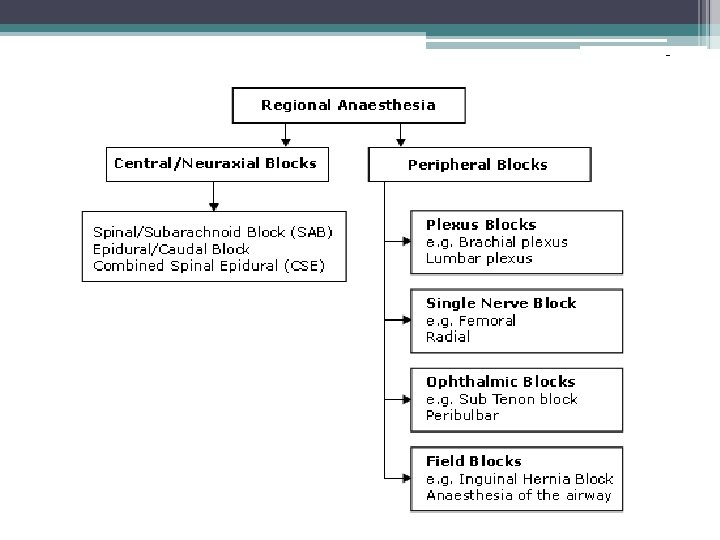
Peripheral blocks • Single nerves • Nerve plexuses
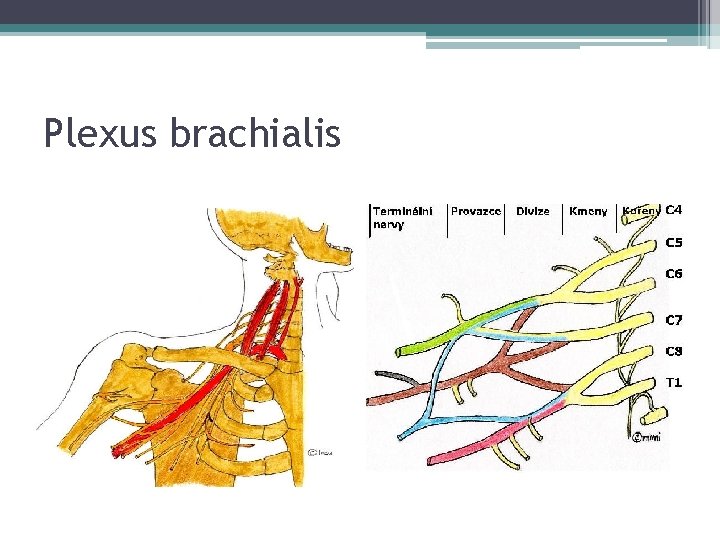
Plexus brachialis
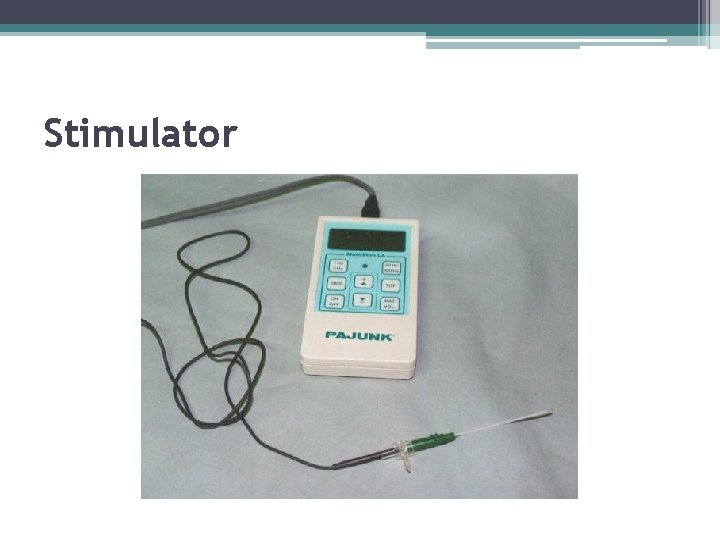
Stimulator
Anaesthetic plan • Preoperative • Intraoperative • And postoperative management
Postoperative care • ICU/HDU or ward • Monitoring according to type of surgery and patient’s condition • Post-operative pain control • Lab check up • Infusion therapy, blood loss monitoring
Questions ?
- Slides: 53