
Genealogies I Introduction to Coalescent Theory Jon Wilkins
![The Shapes of Genealogies E[T 2] = 2 N E[T 3] = 2 N/3](https://slidetodoc.com/presentation_image_h2/d1b10833615450e40476b76e62f7494e/image-9.jpg "The Shapes of Genealogies E[T 2] = 2 N E[T 3] = 2 N/3")

- Slides: 23
Genealogies I: Introduction to Coalescent Theory Jon Wilkins Santa Fe Institute wilkins@santafe. edu Beijing CSSS 2008
Ingredients of Natural Selection • Heritable variation • Differential reproductive success • Causal connection between the two
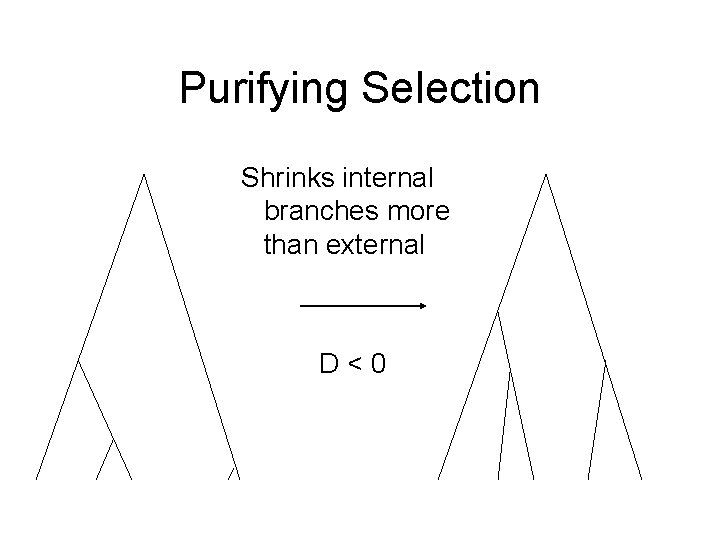
Population Genetics • How is variation generated and maintained in a population? • What can patterns of genetic diversity tell us about the history of a population? – Demography (migration, reproduction, etc. ) – Molecular events (mutation, recombination, etc. ) – Natural selection (directional, purifying, etc. )
Why diversity? • Muller - mutation drives deviations from the optimal phenotype • Dobzhansky - heterogeneous environments / frequency dependent effects • Lewontin-Hubby experiments (mid 1960 s) – Too much variation for either explanation • Kimura - neutral theory
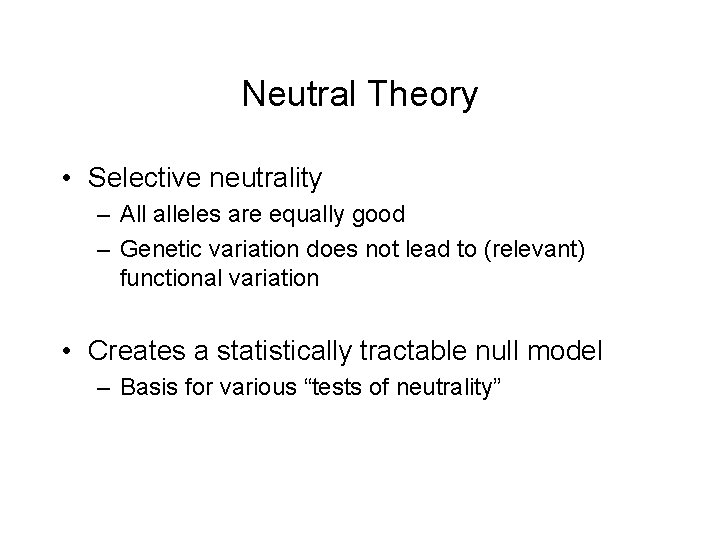
Neutral Theory • Selective neutrality – All alleles are equally good – Genetic variation does not lead to (relevant) functional variation • Creates a statistically tractable null model – Basis for various “tests of neutrality”
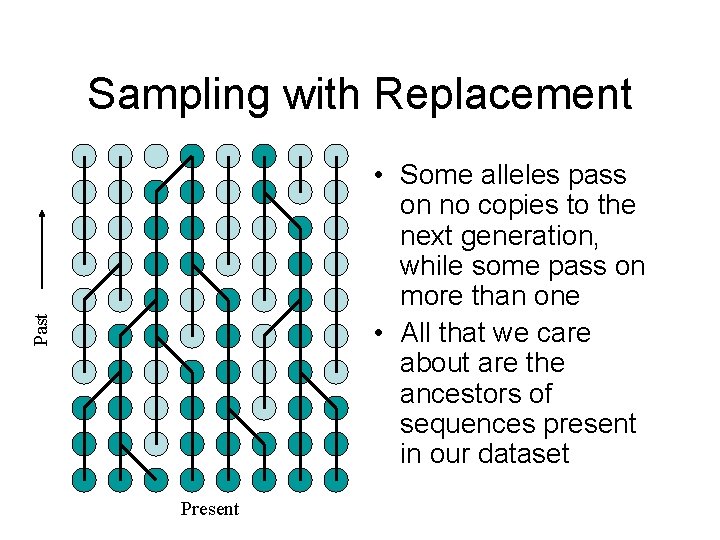
Sampling with Replacement Past • Some alleles pass on no copies to the next generation, while some pass on more than one • All that we care about are the ancestors of sequences present in our dataset Present
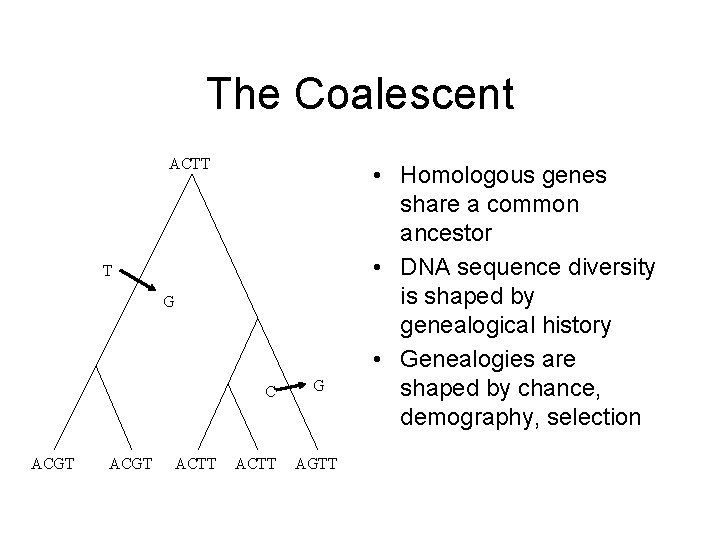
The Coalescent ACTT T G C ACGT ACTT G AGTT • Homologous genes share a common ancestor • DNA sequence diversity is shaped by genealogical history • Genealogies are shaped by chance, demography, selection
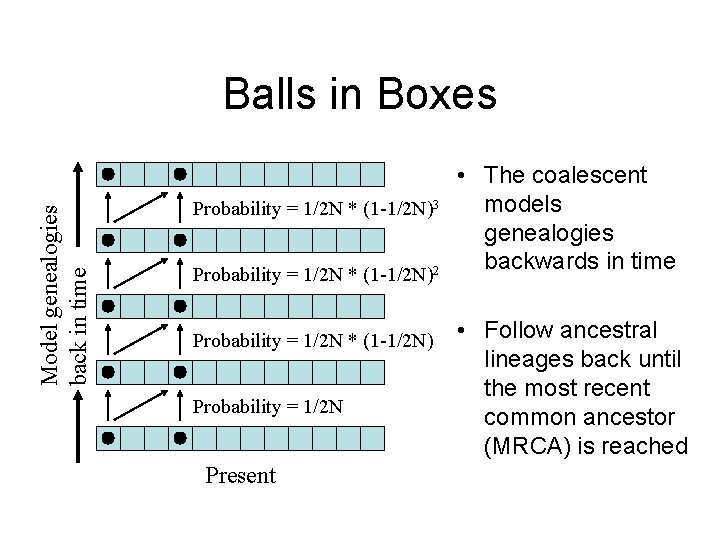
Model genealogies back in time Balls in Boxes • The coalescent models Probability = 1/2 N * (1 -1/2 N)3 genealogies backwards in time Probability = 1/2 N * (1 -1/2 N)2 Probability = 1/2 N * (1 -1/2 N) Probability = 1/2 N Present • Follow ancestral lineages back until the most recent common ancestor (MRCA) is reached
The Shapes of Genealogies E[T 2] = 2 N E[T 3] = 2 N/3 E[T 4] = 2 N/6 E[T 5] = 2 N/10 • Time to the MRCA of a pair of sequences is exponentially distributed with mean time of 2 N generations • Time to the next coalescent event for a sample of n sequences is exponential with mean 2 N/ generations
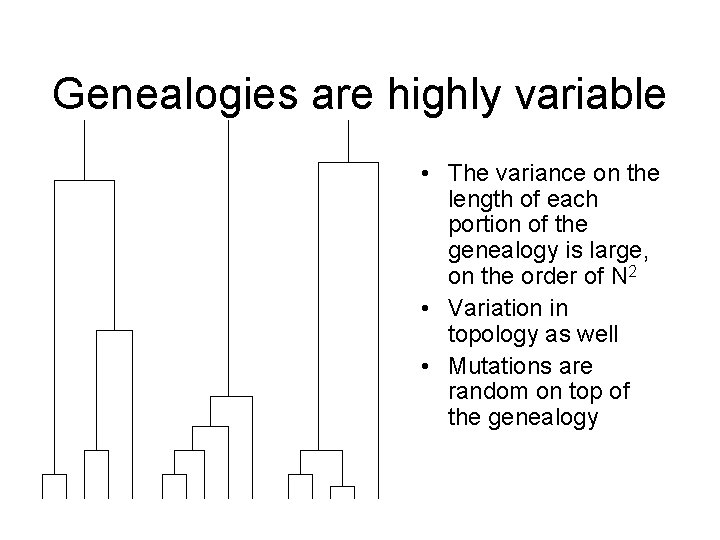
Genealogies are highly variable • The variance on the length of each portion of the genealogy is large, on the order of N 2 • Variation in topology as well • Mutations are random on top of the genealogy
The problem • Want to infer the underlying processes that have shaped genetic diversity, but • The inherent stochasticity means that any given genealogy is consistent with a wide range of demographic processes • How do we estimate parameters, and how do we know how good our estimates are?
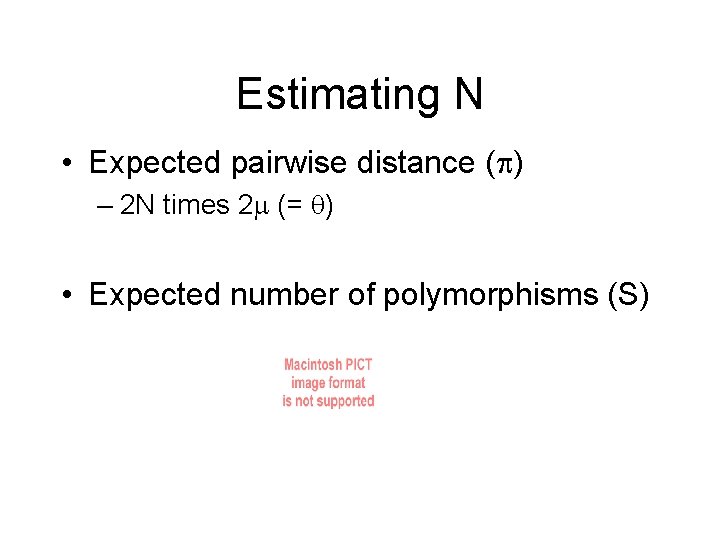
Estimating N • Expected pairwise distance ( ) – 2 N times 2 (= ) • Expected number of polymorphisms (S)
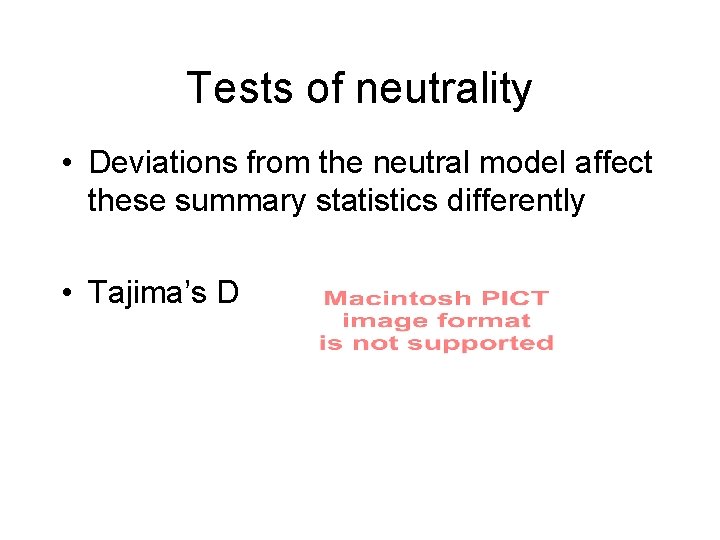
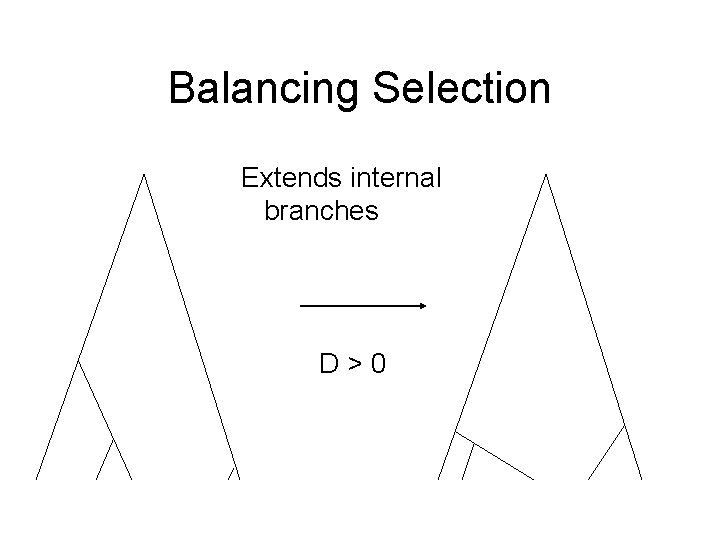
Tests of neutrality • Deviations from the neutral model affect these summary statistics differently • Tajima’s D
Purifying Selection Shrinks internal branches more than external D<0
Balancing Selection Extends internal branches D>0
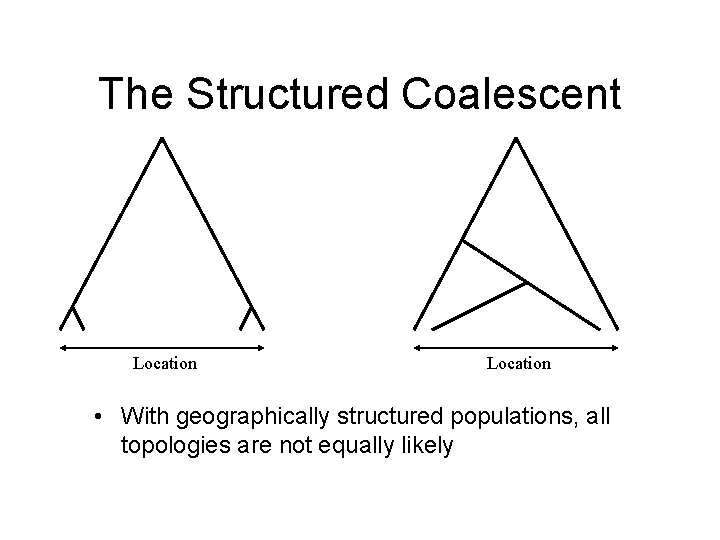
The Structured Coalescent Location • With geographically structured populations, all topologies are not equally likely
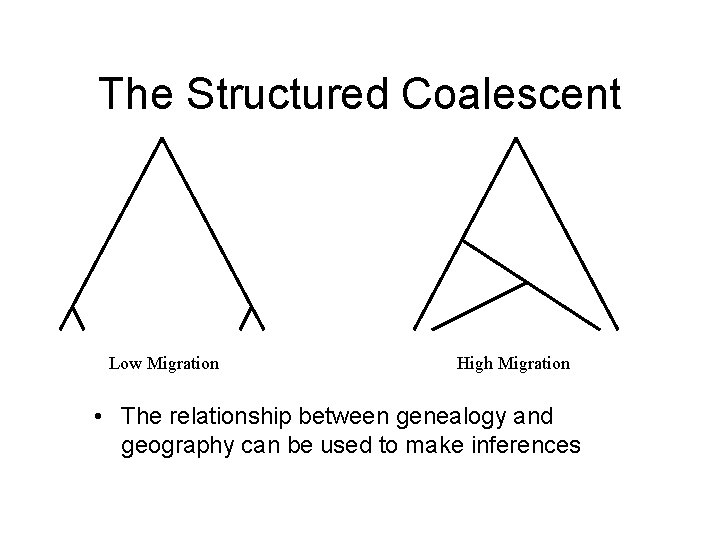
The Structured Coalescent Low Migration High Migration • The relationship between genealogy and geography can be used to make inferences
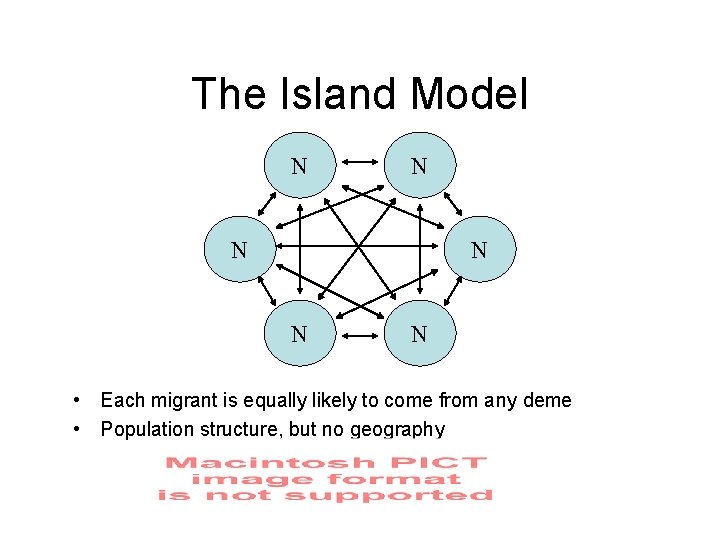
The Island Model N N N • Each migrant is equally likely to come from any deme • Population structure, but no geography
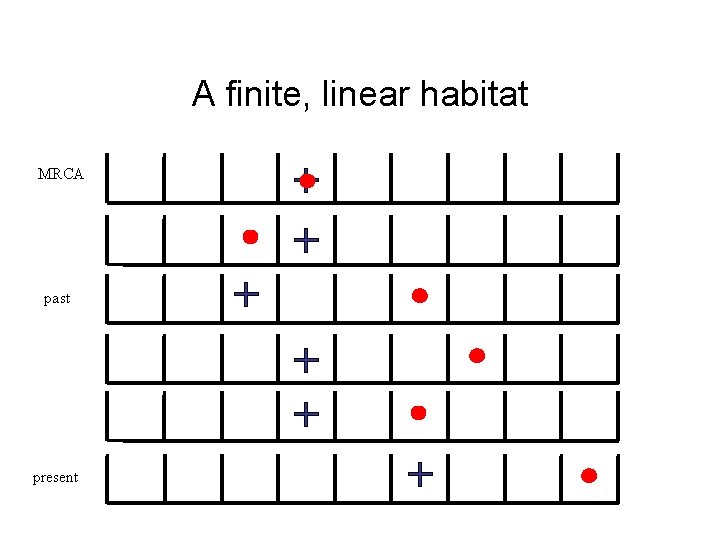
A finite, linear habitat MRCA past present
The Solution Not trivial to extend to > 1 dimension Not trivial to extend to > 2 sequences
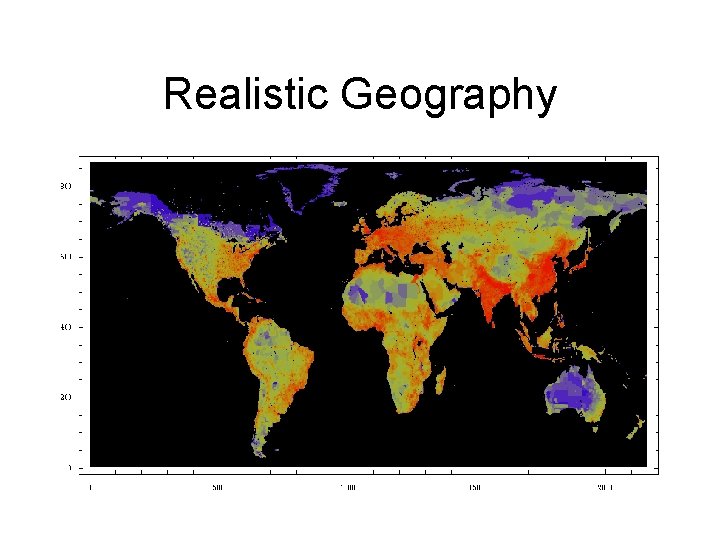
Realistic Geography
Coalescent Simulations • In most systems of interest, analytic solutions are too cumbersome • The coalescent provides an efficient framework in which to do simulations • Must understand how to relate the forward-time system to a corresponding backward-time process
Take-home messages • The coalescent provides a convenient approach to modeling evolutionary processes – Well suited to dealing with data • Analytic results are accessible only for very simple models – In other cases, it produces efficient simulations • Leaves the question of how to make inferences – Come back on Friday