
Gene Mutations Sickle Cell Anemia What is a
- Slides: 17
Gene Mutations Sickle Cell Anemia
What is a gene mutation? • Mutations are changes in genetic material – changes in DNA code – thus a change in a gene(s) • In gene mutations, the DNA code will have a base (or more) missing, added, or exchanged in a codon.
How common are mutations? • Mutations occurs at a frequency of about 1 in every 1 billion base pairs • Everybody has about 6 mutations in each cell in their body!
If I have that many mutations, why don’t I look weird? • Mutations are not always seen. The affected gene may still function. • Mutations may be harmful • Mutations may be beneficial • Mutations may have no effect on the organism
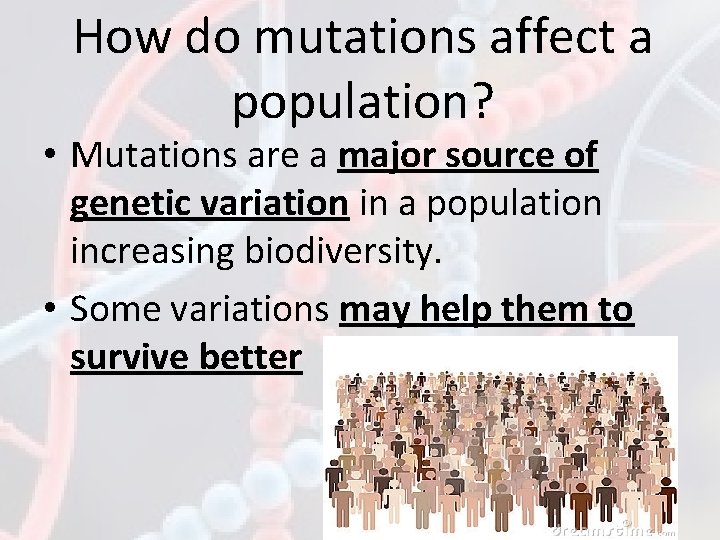
How do mutations affect a population? • Mutations are a major source of genetic variation in a population increasing biodiversity. • Some variations may help them to survive better
How are mutations inherited? • Only mutations in gametes (egg & sperm) are passed onto offspring. • Mutations in body cells only affect the organism in which they occur and are not passed onto offspring.
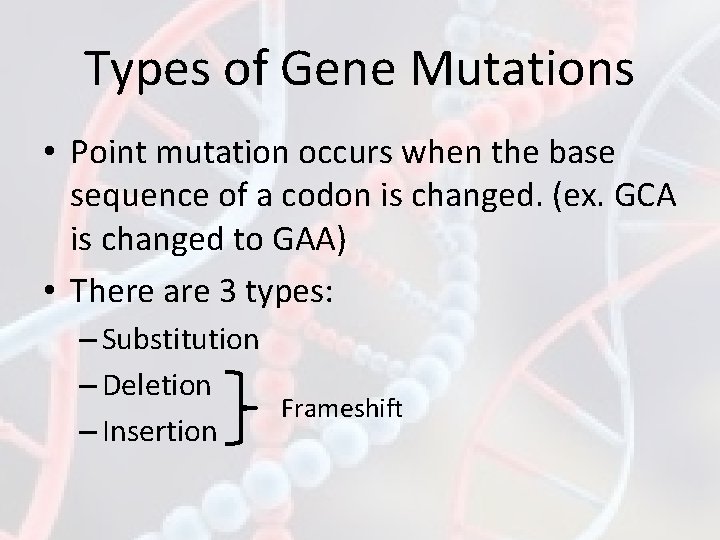
Types of Gene Mutations • Point mutation occurs when the base sequence of a codon is changed. (ex. GCA is changed to GAA) • There are 3 types: – Substitution – Deletion Frameshift – Insertion
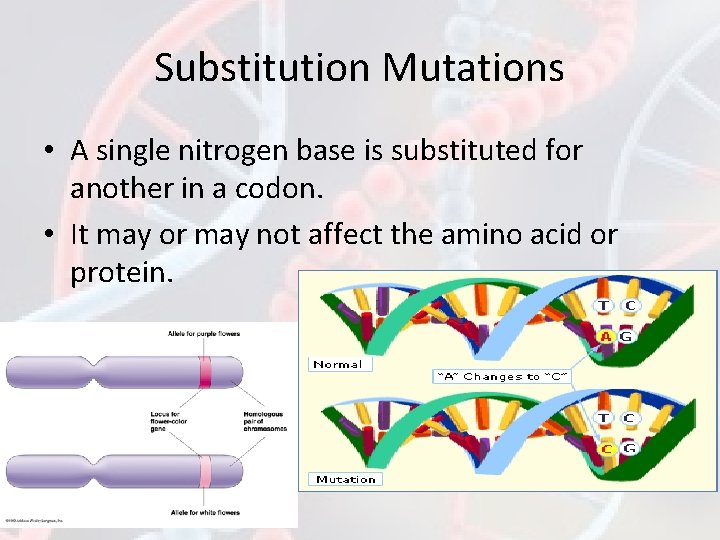
Substitution Mutations • A single nitrogen base is substituted for another in a codon. • It may or may not affect the amino acid or protein.
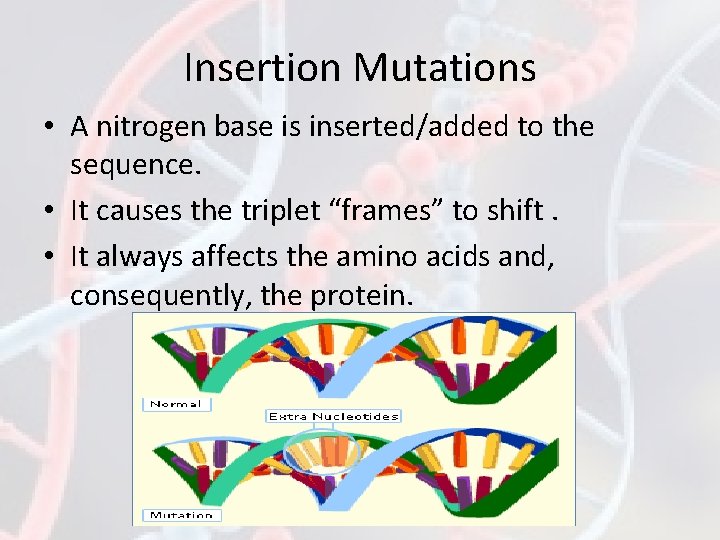
Insertion Mutations • A nitrogen base is inserted/added to the sequence. • It causes the triplet “frames” to shift. • It always affects the amino acids and, consequently, the protein.
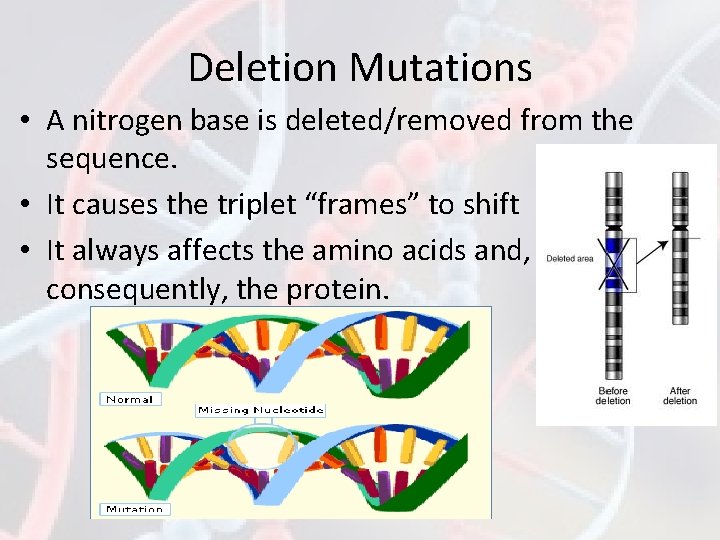
Deletion Mutations • A nitrogen base is deleted/removed from the sequence. • It causes the triplet “frames” to shift • It always affects the amino acids and, consequently, the protein.
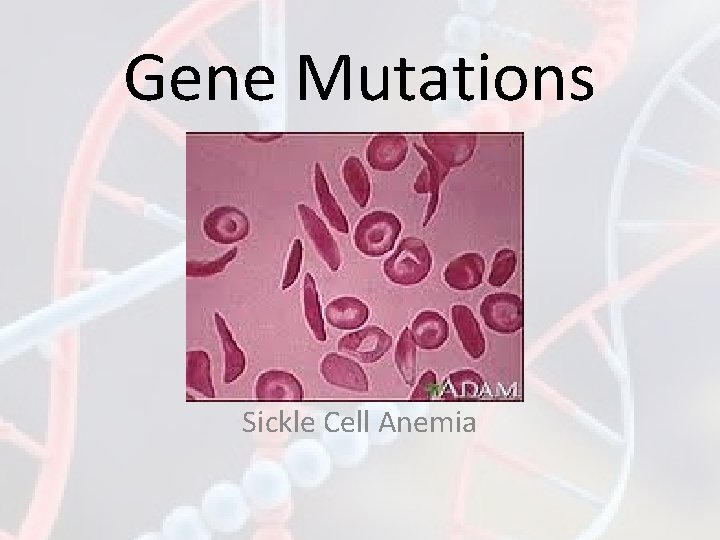
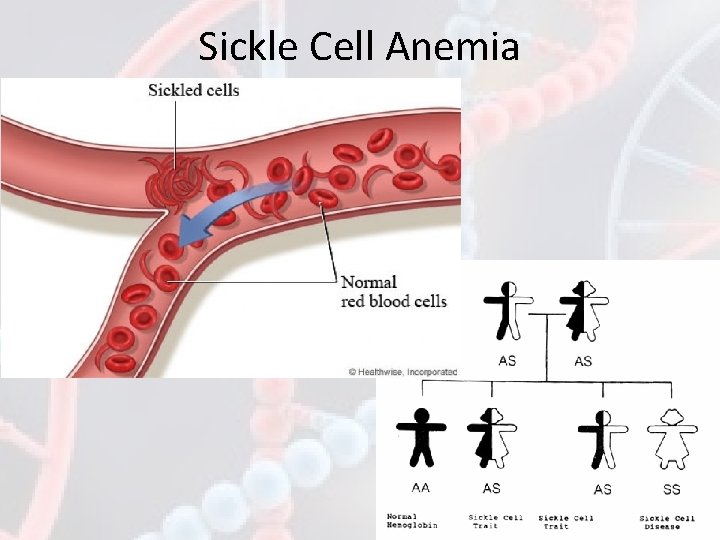
Gene Mutations • Which mutation would have the least affect on an organism? • Substitution: because it changes only one amino acid or it may change no amino acid • Example: sickle cell anemia • Only one amino acid changes in the hemoglobin. • The hemoglobin still functions but it folds differently changing the shape of the rbc.
Sickle Cell Anemia
Gene Mutations • Which mutation would have the most affect on an organism? • Insertion and deletion: because they affect many amino acids and consequently the whole protein
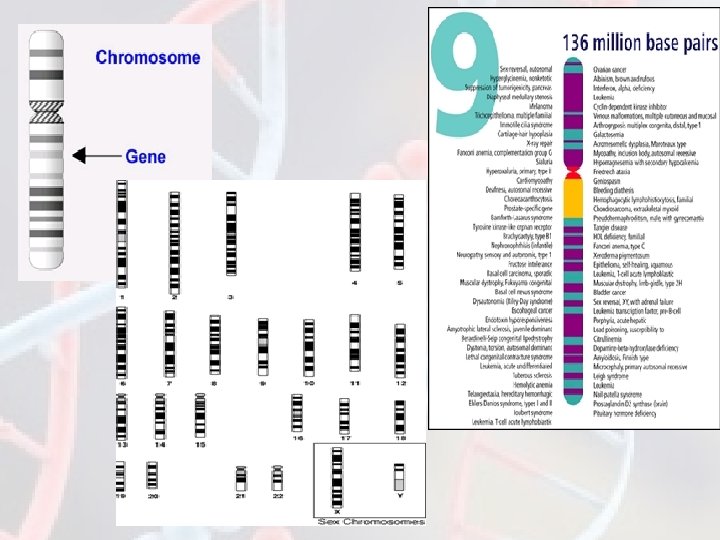
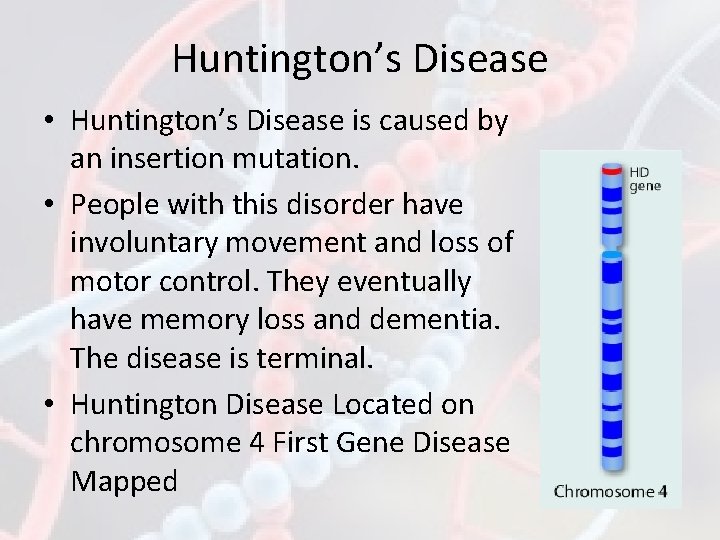
Huntington’s Disease • Huntington’s Disease is caused by an insertion mutation. • People with this disorder have involuntary movement and loss of motor control. They eventually have memory loss and dementia. The disease is terminal. • Huntington Disease Located on chromosome 4 First Gene Disease Mapped
Gene Mutations • When does a gene mutation have the greatest affect on an organism? • When it occurs in the gamete (egg or sperm) or early in embryonic development (in stem cells or first few days).
What causes mutations? • Mutagens: something that causes the DNA code to change (mutate) • Natural errors or an environmental event – x-ray, chemicals, UV light, radiation, etc