
Gene Mutations 5 year old boy with genetic
Gene Mutations
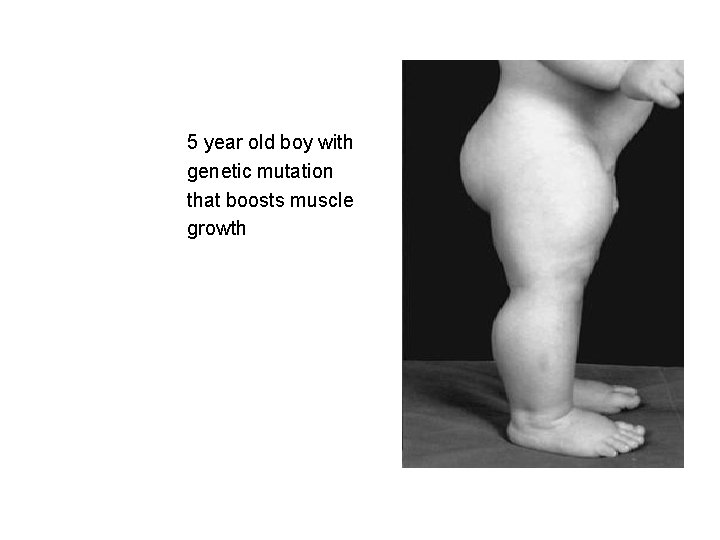
5 year old boy with genetic mutation that boosts muscle growth
Mutation = mutare in Latin “to change” • Any change in the sequence of bases along a DNA strand that makes up a gene
• Gene mutation → altered protein → abnormal function → genetic disease
• A gene mutation can change the message transcribed into m. RNA which can change the structure of the protein that the cell makes
• Not all gene mutations are harmful • Gene mutations can be harmful, beneficial or have no effect • Beneficial mutations can lead to evolution

Example: Sickle Cell Anemia • A mutation in the gene that codes for the production of hemoglobin Gene is made up of 438 bases (codes for 146 amino acids) normal gene mutated gene • CCT-GAG CCT-GTG-GAG Pro Glu Pro Val Glu
• One nucleotide is substituted for another • Results in malformed red blood cells (sickle shape) • Sickle shaped RBCs cannot transport oxygen as well as normal RBCs • Results in painful swelling, infections • 1/600 African-Americans are born with sickle cell anemia

• http: //www. pbs. org/wgbh/evolution/library/ 01/2/l_012_02. html
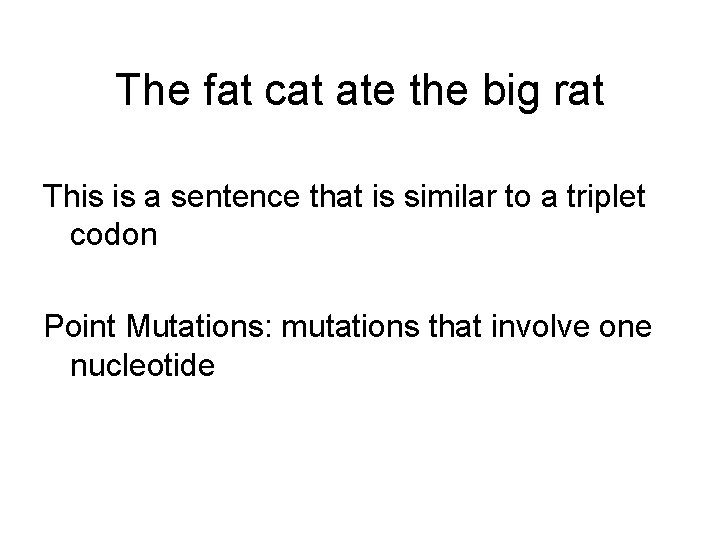
The fat cat ate the big rat This is a sentence that is similar to a triplet codon Point Mutations: mutations that involve one nucleotide
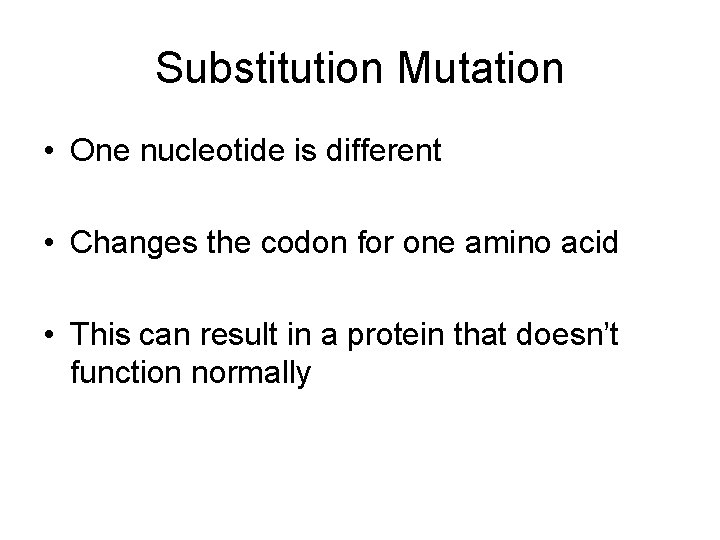
Substitution Mutation • One nucleotide is different • Changes the codon for one amino acid • This can result in a protein that doesn’t function normally
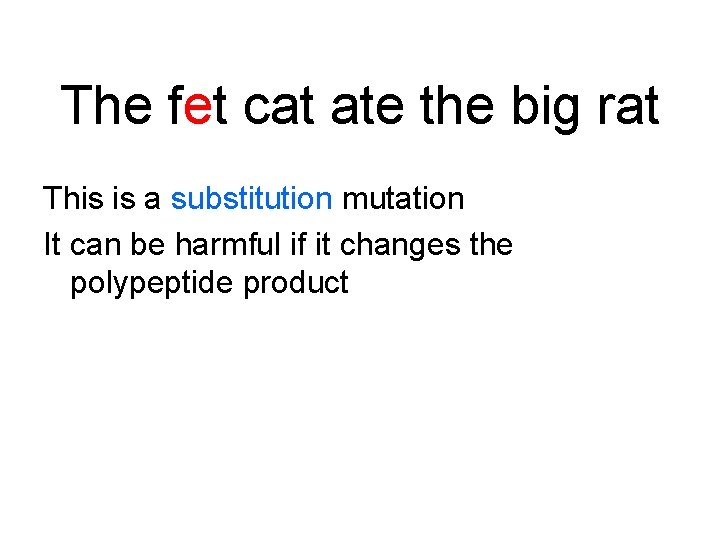
The fet cat ate the big rat This is a substitution mutation It can be harmful if it changes the polypeptide product
Deletion (Subtraction) Mutation • Frameshift mutation: all of the triplet codons beyond the missing nucleotide are changed • Usually results in a protein that doesn’t work • Can result in a serious genetic disorder
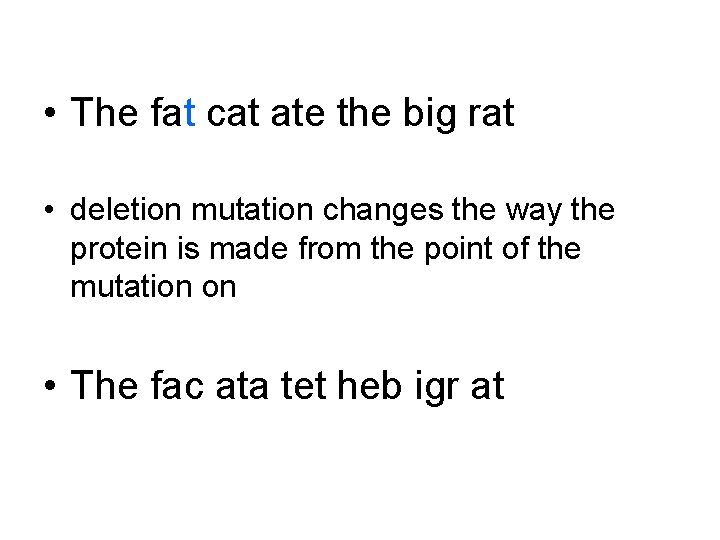
• The fat cat ate the big rat • deletion mutation changes the way the protein is made from the point of the mutation on • The fac ata tet heb igr at
Addition (Insertion) Mutation • Also a frameshift mutation • All nucleotides after the added nucleotide are affected
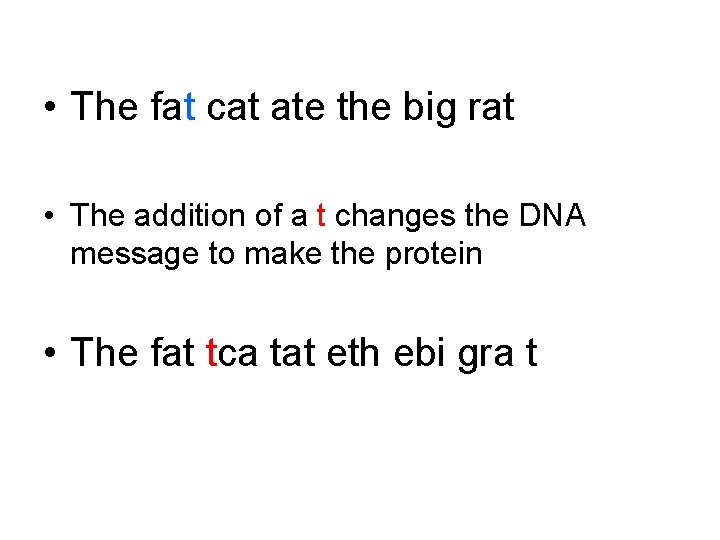
• The fat cat ate the big rat • The addition of a t changes the DNA message to make the protein • The fat tca tat eth ebi gra t
Mutagens • Factors in the environment that cause mutations

• X-rays • UV light (skin cancer) • Chemicals (formaldehyde, asbestos, benzene, tobacco)
Gene mutations can occasionally form in all cells of the body If the mutation is in a somatic (body) cell it is not passed on to the offspring
• If gene mutations are in sex cells (sperm and egg) they can be passed on to the person’s children (all of the child’s cells would have the mutation)
- Slides: 23